
Understanding Your Options for Benzodiazepine Detox
Benzo detox centers provide medically supervised withdrawal management for individuals dependent on benzodiazepines like Xanax, Valium, Ativan, or Klonopin. Here’s what you need to know:
What Benzo Detox Centers Offer:
- Medical Supervision: 24/7 monitoring to manage potentially dangerous withdrawal symptoms, including seizures
- Gradual Tapering: Safely reducing your dosage over time to minimize discomfort
- Symptom Management: Medications and therapies to ease anxiety, insomnia, and physical symptoms
- Dual Diagnosis Care: Treatment for co-occurring mental health conditions
- Aftercare Planning: Connecting you to ongoing support for long-term recovery
Key Facts:
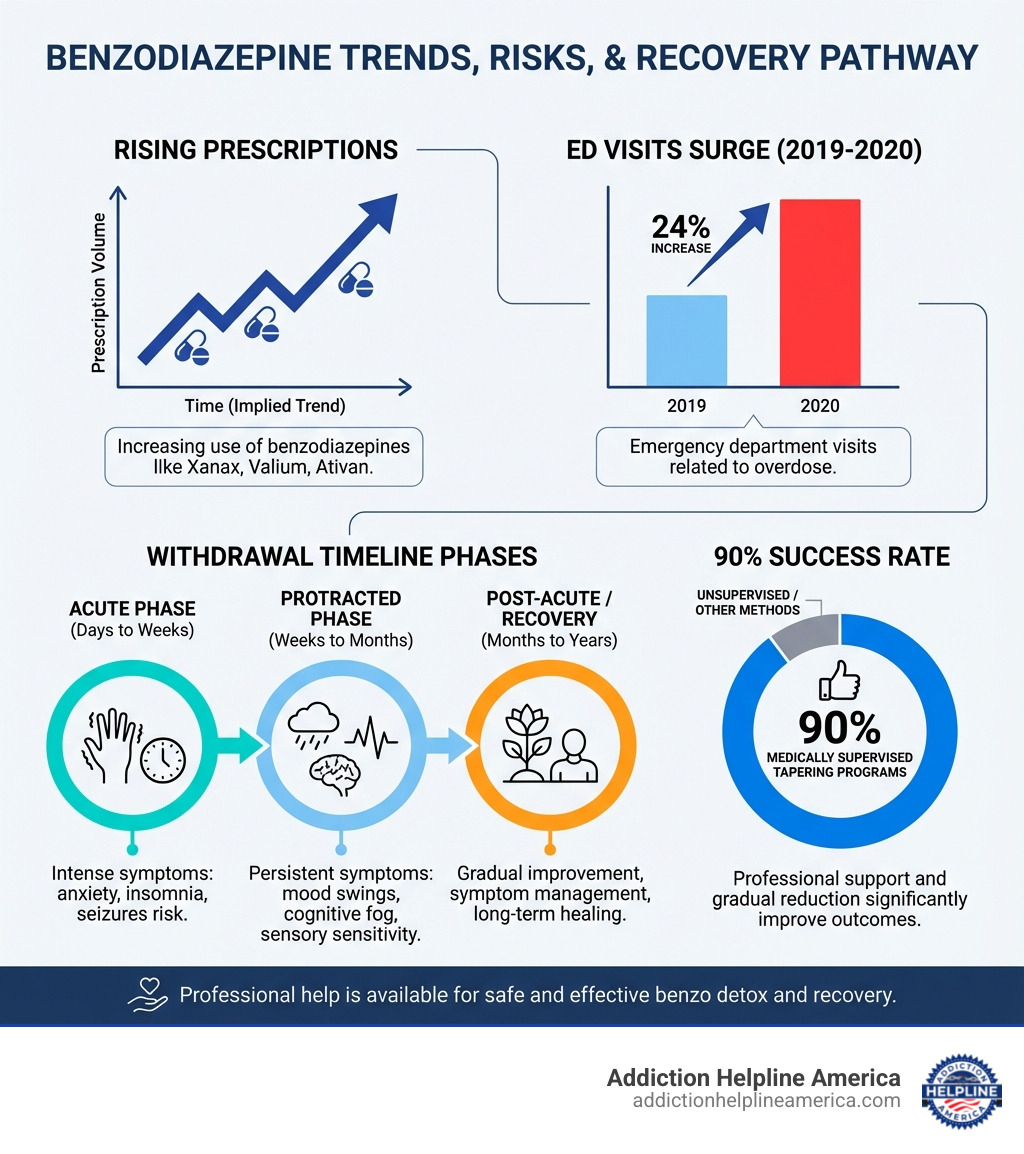
- Emergency department visits for benzo overdoses increased 24% from 2019 to 2020
- 50-80% of people taking benzos for 6+ months experience withdrawal symptoms
- Medical detox has a 90% success rate with proper tapering protocols
- Withdrawal can be life-threatening without professional supervision
If you’re considering stopping benzodiazepines, you’re making a courageous first step. Whether dependence developed from a prescription or from misuse, you are not alone. However, withdrawal from benzos is not something you should attempt on your own. The good news is that professional detox centers are designed to guide you through this process safely and comfortably. They understand the unique risks of benzo withdrawal and use proven methods to support your recovery.
At Addiction Helpline America, we’ve helped thousands of individuals and families steer the path to recovery from benzodiazepine dependence. Our free, confidential service connects you with benzo detox centers that match your specific needs, insurance, and location. Call us 24/7 at 844-561-0606—there’s no judgment, just support.
Benzo detox centers further reading:
Understanding Benzodiazepines: Use, Dependence, and Addiction
Benzodiazepines, or “benzos,” are sedatives that calm the central nervous system by enhancing the effects of GABA, the brain’s primary inhibitory neurotransmitter. This action slows brain function and reduces nerve excitability.
They are typically prescribed for various conditions, including:
- Anxiety and panic disorders: Benzos like Xanax (alprazolam), Klonopin (clonazepam), and Valium (diazepam) are effective in quickly alleviating severe anxiety and preventing panic attacks.
- Insomnia: Shorter-acting benzos such as Ativan (lorazepam) can help initiate and maintain sleep.
- Seizure disorders: Certain benzodiazepines are used to control seizures.
- Muscle spasms: Their muscle-relaxant properties can help with muscle tension.
- Alcohol withdrawal management: They are crucial in preventing severe complications during alcohol detox.
According to the 2021 National Survey on Drug Use and Health, over 25 million people aged 12 and older used prescription benzos in the last year. Despite their benefits, the DEA classifies them as a Schedule IV controlled substance due to their potential for abuse and dependence. Prolonged use, even as prescribed, can lead to tolerance and physical dependence, while misuse significantly increases the risk of addiction.
Long-term benzo abuse can be devastating, causing severe health problems, cognitive impairment, coordination issues, and mood swings. The risk of overdose is high, especially when mixed with alcohol or opioids. This danger is highlighted by a 24 percent increase in emergency department visits for benzo-related overdoses from 2019 to 2020.
Physical Dependence vs. Addiction: A Critical Distinction
It’s crucial to understand the difference between physical dependence and addiction. It is important to note that physical dependence and addiction are not synonymous, though they can co-exist.
- Physical Dependence: This is a natural adaptation where the body gets used to a drug and experiences withdrawal if it’s stopped. It can happen even when taking medication as prescribed, a condition known as iatrogenic dependence (caused by medical treatment).
- Addiction: This is a complex brain disease characterized by compulsive drug-seeking and use despite harmful consequences. It involves changes in the brain’s reward, motivation, and memory circuits. While physical dependence can be part of addiction, a person can be dependent without being addicted.
This distinction is vital, as someone with iatrogenic dependence may need a different approach than someone with an addiction. Traditional rehabs may not always be equipped for these nuances, and prescribers must understand these differences to avoid wrongly equating dependence with addiction.
Signs and Symptoms of Benzodiazepine Addiction
Recognizing the signs of benzodiazepine addiction is the first step toward seeking help. Whether it stems from misuse or a long-term prescription, the impact on a person’s life can be profound.

Here are common signs and symptoms to look for:
Behavioral Signs:
- Doctor shopping: Visiting multiple doctors to obtain more prescriptions.
- Secretive behavior: Hiding drug use from family and friends.
- Neglecting responsibilities: Failing to meet obligations at work, school, or home.
- Loss of interest: Giving up hobbies or activities once enjoyed.
- Continued use despite harm: Persisting in using benzos even when it causes problems in relationships, health, or finances.
- Increased time spent obtaining/using: Spending excessive time and effort to get and use the drug.
Physical Signs:
- Drowsiness or lethargy: Persistent tiredness or sedation.
- Impaired motor coordination: Unsteadiness, clumsiness, or difficulty with balance.
- Slurred speech: Difficulty articulating words clearly.
- Slow reflexes: Delayed reactions to stimuli.
- Dizziness or vertigo: Feeling lightheaded or off-balance.
- Loss of appetite: Unexplained weight loss.
- Tolerance: Needing higher doses to achieve the same effects.
- Withdrawal symptoms: Experiencing physical discomfort when trying to stop or reduce use.
Psychological Signs:
- Mood swings: Rapid and unpredictable changes in mood.
- Increased anxiety or panic: Paradoxically, long-term benzo use can worsen anxiety.
- Irritability: Becoming easily agitated or annoyed.
- Confusion or memory loss: Difficulty remembering events or conversations.
- Inability to stop or control use: Despite a desire to quit, feeling unable to do so.
- Cravings: Intense urges to use the drug.
If you or a loved one exhibit these signs, it’s a strong indicator that professional help is needed. We understand how overwhelming this can feel, but please know that recovery is possible, and we are here to guide you to the right support.
The Benzodiazepine Detox Journey: What to Expect
Detox is the crucial first step in overcoming benzodiazepine dependence, where the drug is safely removed from the body while managing withdrawal symptoms. The goal is physical stabilization before further treatment. Because benzos alter brain chemistry, stopping use causes a central nervous system “rebound effect” that leads to withdrawal. Quitting “cold turkey” is extremely dangerous due to this rebound.
Preparing for detox involves a comprehensive medical and psychological assessment to create an individualized plan. This assessment will consider the type of benzo used, dosage, duration of use, any co-occurring mental health conditions, and overall physical health. For more general information on detox programs, you can explore our Drug Detox Programs Guide.
Common Benzodiazepine Withdrawal Symptoms
Benzodiazepine withdrawal involves a wide array of symptoms that vary in severity. Without proper support, the experience can be uncomfortable and frightening.

Common withdrawal symptoms associated with benzodiazepines include:
- Insomnia: Difficulty falling or staying asleep, often more severe than pre-benzo use.
- Rebound anxiety: A sudden and intense return of anxiety, often worse than the initial anxiety for which the benzos were prescribed.
- Panic attacks: Episodes of intense fear or discomfort accompanied by physical symptoms.
- Muscle cramping and pain: Aches, stiffness, and involuntary muscle contractions.
- Nausea or vomiting: Gastrointestinal distress.
- Headaches: Ranging from mild to severe.
- Seizures: A potentially life-threatening symptom, especially during abrupt cessation of high doses.
- Hallucinations: Seeing or hearing things that aren’t there, a sign of severe withdrawal.
- Agitation and irritability: Heightened emotional reactivity.
- Sweating: Excessive perspiration.
- Heart palpitations and increased heart rate: A feeling of a racing heart.
- Blurred vision: Temporary visual disturbances.
- Difficulty concentrating and clouded thinking: Cognitive impairments.
- Drug cravings: Intense urges to use benzodiazepines again.
These symptoms highlight why medically supervised detox is not just beneficial, but often essential for safety and comfort. For more on managing withdrawal symptoms across different substances, refer to our Alcohol Detox Treatment Centers Ultimate Guide.
Benzodiazepine Withdrawal Timeline
The withdrawal timeline is highly individual and depends on the type of benzo, dosage, duration of use, and personal metabolism. However, it generally follows a few common phases:
-
Early Withdrawal (Onset):
- Symptoms begin within 6-24 hours for short-acting benzos (Xanax, Ativan) or 1-4 days for long-acting ones (Valium, Klonopin).
- Initial symptoms often include rebound anxiety and insomnia.
-
Acute Withdrawal Phase (Peak Symptoms):
- Symptoms peak within 1-2 days for short-acting benzos or during the second week for long-acting ones.
- This is the most dangerous period, with intense symptoms like seizures, severe anxiety, and panic attacks, which is why medical supervision is critical.
-
Second Phase (Subacute Withdrawal):
- After the peak, symptoms lessen over the next few weeks. While most acute symptoms subside within 2-4 weeks, some discomfort like anxiety and insomnia may linger.
-
Post-Acute Withdrawal Syndrome (PAWS) / Protracted Withdrawal:
- For some, especially with long-term use, withdrawal symptoms can persist for months or years. Known as PAWS, these fluctuating symptoms can include anxiety, insomnia, cognitive issues, and depression.
- Research suggests that 10-25% of long-term benzo users may experience these protracted symptoms.
Individual experiences vary greatly, but an estimated 50-80% of people taking benzos for six months or more will experience withdrawal. This complex and unpredictable timeline makes professional medical guidance indispensable.
Why Professional Benzo Detox Centers Are the Safest Choice
Safety is paramount during benzodiazepine withdrawal. The unique risks make professional, medically supervised detox a necessity. Benzo detox centers provide 24/7 monitoring by healthcare professionals to immediately address severe symptoms like seizures. This controlled environment prevents relapse and ensures safety, in line with recommendations from the Substance Abuse and Mental Health Services Administration (SAMHSA). Medical supervision significantly reduces dangerous complications and keeps individuals on the path to recovery.
The Dangers of Detoxing at Home
Attempting to detox from benzodiazepines at home is extremely risky and strongly discouraged by medical professionals, as the consequences can be severe or even fatal.
- Risk of fatal seizures: Abruptly stopping benzodiazepines, especially after prolonged or high-dose use, can trigger life-threatening seizures. Without immediate medical intervention, these can be fatal.
- Severe medical complications: Beyond seizures, individuals may experience extreme blood pressure fluctuations, heart problems, and other severe physical reactions that require urgent medical care.
- Unmanaged psychological distress: Intense anxiety, panic attacks, psychosis, and suicidal ideation are common during withdrawal. Without professional support, these can lead to profound suffering and dangerous behaviors.
- High chance of relapse: The intense discomfort and psychological distress of unsupervised withdrawal often lead individuals to relapse, seeking relief by resuming benzo use. This is particularly dangerous as a reduced tolerance after a period of abstinence increases the risk of overdose.
- Lack of professional support: At home, there’s no immediate access to medications that can ease symptoms or to mental health professionals who can provide crucial emotional support and crisis intervention.
Given these dangers, we urge anyone considering stopping benzodiazepines to seek professional help. Your safety is our top priority. If you’re looking for support, you can find a local detox center near you through our resources.
The Benefits of Medically Supervised Detox
A medically supervised detox program offers numerous benefits, turning a dangerous process into a safer, more manageable first step toward recovery.
Key benefits include:
- Safety and comfort: Under the care of medical professionals, withdrawal symptoms are closely monitored and managed, ensuring your physical and psychological safety. Medications can be administered to alleviate discomfort, making the process as tolerable as possible.
- Medication-assisted treatment (MAT): Healthcare providers can prescribe specific medications to ease withdrawal symptoms, reduce cravings, and prevent severe complications like seizures. This often involves a carefully managed tapering schedule.
- Tapering schedules: Instead of abruptly stopping, which is dangerous, detox centers implement gradual tapering plans. This involves slowly reducing the benzodiazepine dosage over time, allowing the brain and body to adjust, minimizing the intensity of withdrawal. Dr. Heather Ashton reports a 90% success rate for her stepwise, gradual, patient-controlled taper plan.
- Nutritional support: Proper nutrition is vital during detox. Centers often provide balanced meals and supplements to help the body heal and regain strength.
- Immediate medical intervention: In the rare event of severe complications, medical staff are on-site 24/7 to provide immediate and appropriate care.
- Peer support: Being in a supportive environment with others undergoing similar experiences can foster a sense of community and reduce feelings of isolation.
By choosing a medically supervised detox, you’re not just getting clean; you’re setting a solid foundation for lasting recovery.
Inside a Professional Detox Facility: Treatment and Therapies
Professional benzo detox centers use a comprehensive model to address the physical and psychological aspects of dependence. They provide a therapeutic environment with individualized treatment plans custom to each person’s unique needs and history. This structured, supportive setting helps foster healing away from external triggers. Both residential (24/7) and flexible outpatient programs are available. You can learn more about comparing residential and outpatient programs to find the right fit.
How Benzo Detox Centers Manage Cravings and Withdrawal Symptoms
Managing cravings and withdrawal symptoms is at the core of what benzo detox centers do. Their approach is multifaceted, combining medical interventions with therapeutic techniques to ensure patient comfort and safety.
- Medication management: The primary strategy involves a carefully controlled tapering schedule. Clinicians will either gradually reduce the dose of the same benzodiazepine or switch the patient to a longer-acting benzo (like diazepam) and then taper from there. This slow reduction allows the body to gradually readjust.
- Adjunctive medications: To further ease discomfort, other medications may be used to target specific withdrawal symptoms. These can include:
- Carbamazepine or gabapentin for nerve pain and seizure prevention.
- Propranolol for anxiety, tremors, and heart palpitations.
- Trazodone or quetiapine for insomnia.
- Holistic therapies: Many centers incorporate holistic approaches to support overall well-being and help manage anxiety and stress without medication. These can include:
- Yoga and mindfulness meditation for relaxation and mental clarity.
- Stress management techniques to develop healthy coping mechanisms.
- Therapeutic recreation to re-engage the brain’s reward system naturally.
- Nutritional therapy to support physical healing and brain function.
Gradual tapering is highly effective. The Ashton Manual, a guide from leading expert Dr. Heather Ashton, reports a 90% success rate with its patient-controlled taper plan. This highlights the importance of a slow, patient-centered approach over rapid or “cold turkey” methods.
Handling Co-Occurring Mental Health Disorders
Many people with benzodiazepine dependence also have co-occurring mental health disorders like anxiety or depression, known as a dual diagnosis. Professional benzo detox centers are equipped for this with integrated treatment, addressing both the substance use and mental health disorders simultaneously. This approach is more effective and reduces the risk of relapse.
Treatment for dual diagnosis typically involves:
- Individual therapy: Providing a safe space to explore the root causes of both the addiction and mental health issues, develop coping strategies, and process trauma.
- Group therapy: Offering peer support and a sense of community, allowing individuals to share experiences and learn from others.
- Specialized therapies: Cognitive Behavioral Therapy (CBT), Dialectical Behavioral Therapy (DBT), and trauma-informed care are commonly used to address specific mental health challenges.
We understand that navigating mental health concerns alongside addiction can be daunting. For help with dual diagnosis or general mental health support, you can find valuable resources and information through our mental health helpline information. Our goal is to connect you with centers that offer comprehensive care for your unique situation.
Life After Detox: The Importance of Aftercare and Ongoing Support
Detox is a critical first step, but recovery is a lifelong journey. Transitioning to comprehensive rehab and ongoing support is vital for preventing relapse. After detox, individuals often move to inpatient or intensive outpatient programs. The focus shifts to the psychological and social aspects of addiction, including creating a long-term recovery plan, developing relapse prevention strategies, and building a sober support network. For those needing longer-term structured care, you can explore 90-day rehab programs.
How to Choose the Right Benzo Detox Centers for You
Choosing the right benzo detox centers is a personal decision that significantly impacts your recovery journey. With many options available nationwide, it’s important to consider several key factors to find the best fit for you.
Here’s a table comparing key features to help guide your decision:
| Feature | Description |
|---|---|
| Licensing & Accreditation | Ensure the center is licensed by the state and accredited by reputable organizations (e.g., CARF, Joint Commission). This indicates adherence to high standards of care. |
| Staff Credentials | Look for medical doctors (addictionologists, psychiatrists), nurses, and therapists with specific experience in benzodiazepine withdrawal and addiction. Inquire about their expertise in tapering protocols. |
| Treatment Approach | Prioritize centers that use evidence-based, gradual tapering strategies for benzo detox, like those inspired by The Ashton Manual. Avoid facilities promoting rapid detox or “cold turkey” methods, which are dangerous for benzodiazepine withdrawal. |
| Dual Diagnosis Capabilities | If co-occurring mental health disorders are present, choose a center that offers integrated treatment for dual diagnosis. |
| Aftercare Planning | A strong aftercare program, including ongoing therapy, support groups, and sober living connections, is crucial for long-term success. |
Navigating these choices can be overwhelming. Addiction Helpline America offers free, confidential guidance to help. We can assist you in verifying your insurance coverage for treatment—verify your insurance for rehab through our simple service. For a personalized assessment to find the right program, call us today at 844-561-0606. We’re here to help.
How Families Can Support a Loved One’s Recovery
Family support is a powerful catalyst for healing during a loved one’s benzo detox and recovery. While it’s a challenging time for everyone, families can play a crucial role with the right approach.
Here’s how families can offer meaningful support:
- Participate in family therapy: Many benzo detox centers and rehab programs offer family therapy sessions. This provides a safe space to address communication breakdowns, heal relationships, and learn how addiction has impacted the family system.
- Educate yourselves on addiction: Understanding the nature of benzodiazepine dependence and addiction can help family members approach the situation with empathy and reduce stigma. Learning about the withdrawal process, treatment options, and relapse prevention strategies empowers families to be better advocates and supporters.
- Set healthy boundaries: While support is vital, enabling behavior can hinder recovery. Establishing clear, consistent boundaries protects both the recovering individual and family members.
- Improve communication skills: Learning to communicate openly, honestly, and non-judgmentally can strengthen family bonds and create a more supportive environment.
- Encourage participation in support groups: For the recovering individual, groups like NA or SMART Recovery offer peer support. For family members, Al-Anon or Nar-Anon provide a space to share experiences and receive support from others facing similar challenges.
- Seek professional help for interventions: If a loved one is resistant to treatment, a professional intervention specialist can guide the family through a structured conversation that encourages the individual to seek help. If you need assistance, we can help you with finding an intervention specialist.
Supporting a loved one is a marathon, not a sprint. It’s essential for family members to also practice self-care and seek their own support to avoid burnout.
Frequently Asked Questions about Benzo Detox
We know you likely have many questions about benzodiazepine detox. Here, we address some of the most common concerns.
How long does benzo detox take?
The duration of benzo detox varies. Initial stabilization in a medical setting typically takes 7 to 14 days. However, for long-term users, a full tapering process can last several months to over a year to minimize severe withdrawal symptoms and the risk of PAWS. The exact timeline depends on the type of benzo, dosage, duration of use, and individual health factors.
Is benzo withdrawal really dangerous?
Yes, benzodiazepine withdrawal can be extremely dangerous and even fatal if attempted without medical supervision. The primary risk is life-threatening seizures, but other severe complications include psychosis and cardiovascular distress. Medically supervised detox is critical to mitigate these dangers. Professionals monitor vital signs, manage symptoms with medication, and ensure the process is safe, preventing an unpredictable and life-threatening central nervous system rebound.
What happens after detox is complete?
Completing detox is a monumental achievement, but it’s only the first step. Sustained recovery depends on what comes next. After detox, individuals usually transition to a lower level of care, which might include:
- Inpatient or residential rehab: Providing a structured environment with intensive therapy and support.
- Partial Hospitalization Programs (PHP): Offering daily treatment while allowing individuals to return home in the evenings.
- Intensive Outpatient Programs (IOP): Providing regular therapy sessions several times a week, suitable for those with strong support systems.
- Outpatient therapy: Ongoing individual and group counseling to address underlying issues and develop coping skills.
- Support groups: Participation in 12-step programs (like NA) or other peer support groups offers a community of understanding and shared experience.
A comprehensive aftercare plan is developed during treatment, outlining these next steps and providing resources for long-term support. This planning is essential for maintaining sobriety, preventing relapse, and building a healthy, fulfilling life in recovery.
Conclusion: Your Path to a Benzo-Free Life Starts Now
Overcoming benzodiazepine dependence is a courageous journey you don’t have to take alone. As we’ve explored, professional benzo detox centers offer the safest, most effective path through withdrawal. They provide expert medical supervision, tapering plans, and comprehensive support for your physical and mental well-being. Given the significant dangers of detoxing at home, medically supervised care is an essential choice.
Recovery is about more than getting clean—it’s about healing, learning new coping skills, and building a foundation for a healthier life. With the right support, you can steer withdrawal, address co-occurring disorders, and create a robust aftercare plan for long-term success.
At Addiction Helpline America, we believe in your strength and your potential for a benzo-free life. We are here to guide you, offering free, confidential, and personalized assistance to connect you with the right benzo detox centers and treatment programs across our extensive network. Your path to freedom starts now. For free, confidential help finding the right program, call us at 844-561-0606 or explore treatment options on our website. We are ready to answer your call, 24/7.