Why a Barbiturates Inpatient Rehab Program Could Save Your Life
A barbiturates inpatient rehab program offers 24/7 medical supervision and structured therapy in a safe environment, which is critical for overcoming addiction to these dangerous drugs. Key components include:
- Medically-supervised detox to safely manage life-threatening withdrawal symptoms like seizures.
- 24/7 monitoring by medical and addiction specialists.
- Intensive therapy, including individual, group, and family counseling.
- Dual diagnosis treatment for co-occurring mental health issues.
- A structured schedule that removes you from triggers.
- Comprehensive aftercare planning for long-term support.
Barbiturates were once common prescriptions, but their use is now limited due to high risks. Still, around 520,000 people aged 12 and older reported misusing them in 2019, according to SAMHSA.
The danger is severe. Barbiturate withdrawal can be fatal without medical help, and the line between a therapeutic and a toxic dose is dangerously thin. Struggling with barbiturate addiction is a medical emergency requiring professional intervention.
Addiction Helpline America has guided thousands to quality barbiturates inpatient rehab programs nationwide. We provide compassionate, confidential support, connecting you with centers equipped for medically-managed detox and long-term recovery planning.
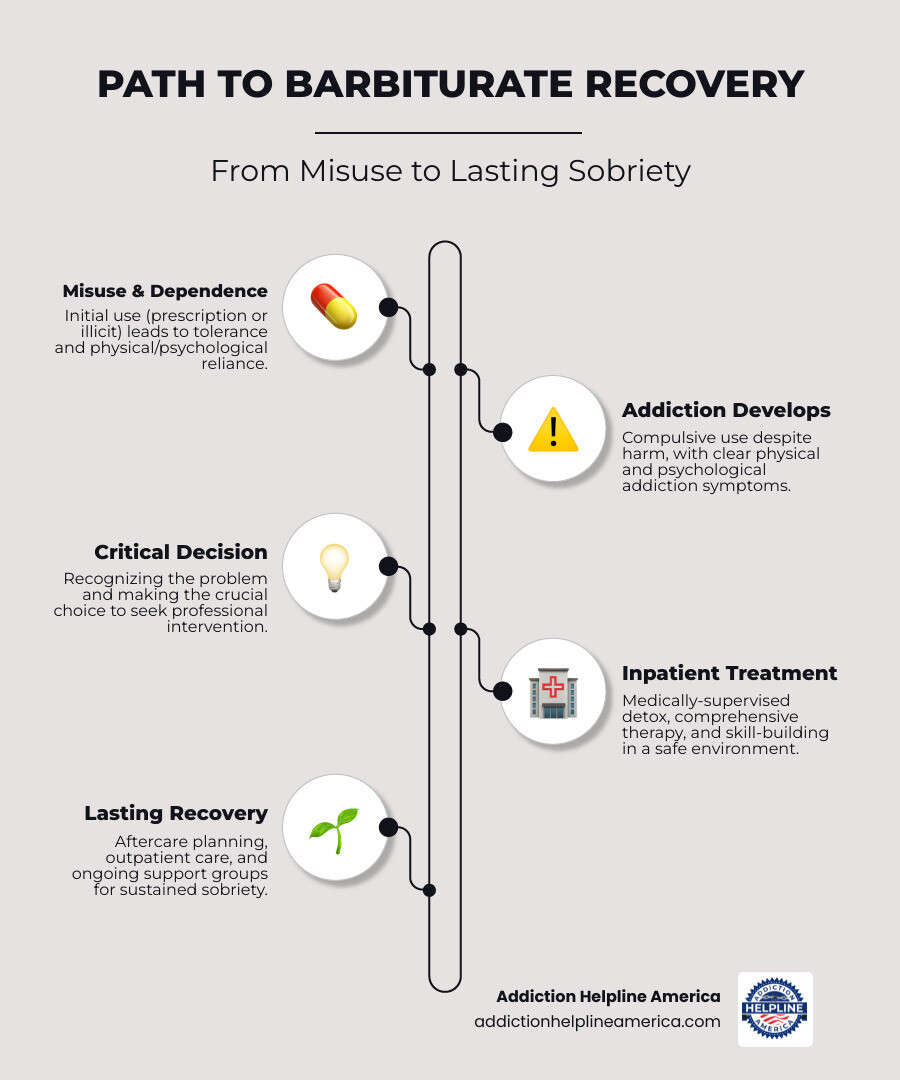
Basic barbiturates inpatient rehab program vocab:
Understanding Barbiturate Addiction: Signs and Dangers
Barbiturates are central nervous system depressants that slow brain activity by enhancing the neurotransmitter GABA, creating a sense of calm and sedation. Decades ago, they were widely prescribed for anesthesia, seizure treatment, anxiety, and insomnia.

However, barbiturates are extremely dangerous. The difference between a therapeutic dose and a fatal one is small, and their addiction potential is high. This is why safer alternatives like benzodiazepines have largely replaced them. Still, SAMHSA data shows that about 50,000 Americans aged 12 or older reported past-year barbiturate misuse in 2020.
Barbiturate addiction is a brain disease where use becomes compulsive despite negative consequences. To learn more about the science of addiction, see our guide on What Is Drug Addiction.
Common Types of Barbiturates
Barbiturates vary by how long they act. Phenobarbital is long-acting and sometimes used for seizures. Pentobarbital and amobarbital are intermediate-acting. Secobarbital is short-acting and intense. Butalbital is often found in combination pain relievers. Classified as Schedule II, III, or IV controlled substances, they have street names like “Barbs,” “Goof Balls,” and “Reds.”
Recognizing the Symptoms of Barbiturate Abuse
Recognizing barbiturate abuse involves looking for a combination of physical, cognitive, and behavioral changes.
- Physical and Cognitive Signs: Look for excessive drowsiness, slurred speech, poor coordination, and slowed reflexes. Thinking becomes foggy, concentration is difficult, and memory problems are common. Poor judgment leads to risky decisions.
- Mood and Behavioral Changes: Users may experience severe mood swings, from anxiety and irritability to depression and panic attacks. Addiction often leads to social withdrawal, neglecting responsibilities at work or home, and “doctor shopping” for prescriptions. A key sign is continued use despite mounting problems, driven by powerful cravings and increasing tolerance.
Living with someone showing these signs is exhausting and chaotic. We understand these challenges, as detailed in Life With An Addict. A barbiturates inpatient rehab program provides the intensive, medically-supervised care needed to break this cycle.
Why Inpatient Rehab is the Gold Standard for Barbiturate Recovery
For barbiturate addiction, a barbiturates inpatient rehab program is the safest and most effective path to recovery. These drugs alter brain function, and stopping them can trigger a life-threatening withdrawal crisis. Attempting to quit alone is extremely dangerous.

Barbiturate withdrawal can cause seizures, delirium, high fever, and even coma. These are medical facts that highlight the need for professional intervention. In a residential facility, you receive 24/7 supervision from healthcare professionals who monitor vital signs and manage complications in a safe environment. The peer support from others on the same journey is also a powerful tool for healing. Find a facility with our Detox Near Me resource.
The Critical Importance of Medically-Supervised Detox
Withdrawing from barbiturates without medical help is unpredictable and potentially deadly. The withdrawal timeline depends on the type of barbiturate used, lasting about a week for short-acting types and up to two weeks for long-acting ones.
Medical professionals use tapering schedules, gradually reducing the dose or substituting a longer-acting medication to prevent shock to the system. This plan is customized to your usage history and health. Symptom management is comprehensive, addressing anxiety, insomnia, and other issues as they arise. This constant medical monitoring is not just for comfort—it’s to prevent life-threatening complications like seizures. This level of care is impossible outside of an inpatient setting. Our Detox and Inpatient Rehab Services connect you with facilities providing this expert care.
Inpatient vs. Outpatient: Why Inpatient is Preferred for Barbiturate Addiction
While outpatient care has its place, inpatient treatment is superior for barbiturate addiction, especially for severe cases, polysubstance use, or co-occurring mental health disorders. It provides a dedicated space for healing, free from daily triggers and stressors.
| Feature | Inpatient Rehab (Residential) | Outpatient Rehab |
|---|---|---|
| Environment | 24/7 supervised, structured, drug-free living at facility | Live at home, attend scheduled sessions |
| Intensity | High—daily therapy sessions, constant medical and clinical support | Varies (IOP, PHP, traditional), less intensive than inpatient |
| Medical Detox | Integrated into your stay, medically supervised around the clock | May require separate detox facility, less direct medical oversight during sessions |
| Trigger Removal | Complete removal from daily triggers, stressors, and access to substances | Continue facing daily triggers, requires already-strong coping skills |
| Support Level | Constant access to staff and peers, structured therapeutic community | Scheduled support only, relies heavily on your external support system |
| Suitability | Severe addiction, polysubstance abuse, co-occurring disorders, previous treatment failures | Mild addiction, step-down care after inpatient, strong home support system |
| Duration | Typically 30, 60, or 90 days (sometimes longer for complex cases) | Varies widely, from several weeks to many months |
The structure and intensity of care in an inpatient program make recovery your full-time focus. Success rates are higher because of the complete trigger removal and constant level of support from staff and peers. Inpatient care is strongly recommended if you have a severe addiction, co-occurring disorders, an unsupportive home environment, or have tried outpatient treatment unsuccessfully. Our Inpatient Rehab Guide provides more detail on what to expect.
What to Expect in a Barbiturates Inpatient Rehab Program
Entering a barbiturates inpatient rehab program is a brave step. Your journey starts with a comprehensive intake and assessment, where medical staff and counselors learn about your physical and mental health, addiction history, and recovery goals. This forms the basis of your individualized treatment plan.

Inpatient rehab replaces the chaos of addiction with a structured daily schedule that promotes healing. Days are filled with a blend of individual and group therapy, educational workshops, and holistic activities like yoga or meditation. You’ll eat nutritious meals and have time for recreation, all within a supportive therapeutic community. Programs typically last 30 to 90 days, depending on your needs. Our 30 Day Inpatient Rehab Near Me Guide offers more insight.
Core Therapeutic Approaches
A quality barbiturates inpatient rehab program uses evidence-based therapies to address the root causes of addiction.
- Cognitive Behavioral Therapy (CBT): This is a cornerstone of treatment, helping you identify and change negative thought patterns and behaviors that fuel substance use. You’ll learn practical coping skills for managing stress and triggers.
- Dialectical Behavior Therapy (DBT): DBT is effective for those with intense emotions, teaching skills in mindfulness, distress tolerance, and emotion regulation.
- Individual and Group Therapy: Individual counseling offers a private space to explore personal issues like trauma, while group therapy reduces isolation by connecting you with peers who share similar struggles.
- Family Therapy: Addiction affects the whole family. These sessions help heal relationships, improve communication, and teach loved ones how to support your recovery.
- Holistic Therapies: Approaches like mindfulness, exercise, and art therapy treat the whole person—mind, body, and spirit—complementing clinical work. Our Behavioral Health Guide explores these integrated methods.
Addressing Co-Occurring Mental Health Disorders
Many people with barbiturate addiction also struggle with mental health conditions like depression, anxiety, or PTSD. This is known as a dual diagnosis. The substance use may be an attempt to self-medicate the mental health symptoms, or it may have caused them.
Effective barbiturates inpatient rehab programs provide integrated treatment, addressing both the addiction and the mental health disorder simultaneously. A unified team creates one comprehensive plan. This includes work with specialized staff and, if necessary, appropriate medication management by a psychiatrist. Treating both conditions at once is crucial for lasting recovery. For more on complex conditions, see our Bipolar Depression Treatment Guide 2025.
Addiction Helpline America connects you with centers offering this comprehensive, integrated care.
Life After Rehab: Building a Foundation for Lasting Sobriety
Completing a barbiturates inpatient rehab program is the start of a lifelong recovery journey. The skills you learned are the foundation for your new life, and the focus now shifts to relapse prevention.
Relapse prevention involves using practical tools to handle life’s challenges without returning to substance use. This means developing healthy coping skills to manage stress and difficult emotions. Trigger management is also key; you’ll learn to identify and create strategies to avoid or cope with the people, places, and feelings that led to use. Establishing healthy routines—including regular sleep, nutritious meals, and positive activities—provides crucial stability.
Building a strong support network of sober peers and supportive family is perhaps the most important element. These are the people who will hold you accountable and celebrate your progress. As our guide on Drug Rehab What Is Rehab Aftercare explains, ongoing support is not optional—it’s essential.
The Role of Aftercare in a Successful Barbiturates Inpatient Rehab Program
Aftercare bridges the gap between inpatient treatment and independent living, significantly increasing your chances of long-term sobriety. We work with facilities that prioritize aftercare planning, which is customized for you before you leave the barbiturates inpatient rehab program.
- Step-down care: This allows a gradual transition to independence through programs like a Partial Hospitalization Program (PHP) or an Intensive Outpatient Program (IOP).
- Sober living homes: These structured, drug-free residences provide accountability and peer support as you rebuild your life.
- Alumni programs: Many centers offer alumni networks for ongoing connection through meetings and events, allowing you to stay connected and give back.
- Support groups: Groups like Narcotics Anonymous (NA) or SMART Recovery offer free, invaluable peer support. As noted in Support Groups for Addiction, these communities are often a cornerstone of lasting recovery.
Your aftercare plan is flexible and designed to create a safety net as you grow in recovery. Addiction Helpline America remains a resource for you long after treatment ends.
How to Find and Choose the Right Rehab Center
Choosing the right barbiturates inpatient rehab program is a critical decision. With options in all 50 states and the District of Columbia, it’s important to know what to look for.
Start by verifying accreditation and licensing from bodies like The Joint Commission, which ensures high standards of care. The staff credentials should show experience in treating barbiturate dependence. The program must use evidence-based practices like CBT and DBT. Also, consider location (whether close to home or far away is better for you) and program length (typically 30, 60, or 90 days). Some facilities offer additional comforts, as discussed in our Drug Rehab Luxury guide.
Key Factors to Consider in a Barbiturates Inpatient Rehab Program
When dealing with barbiturate addiction, certain factors are especially important:
- Customized treatment plans: A quality program tailors its approach to your unique history and goals.
- Dual diagnosis capability: The facility must be able to treat co-occurring mental health disorders like depression or anxiety simultaneously with addiction.
- Family involvement: Look for programs that offer family therapy to heal relationships and build a supportive home environment.
- Aftercare planning: A robust aftercare plan shows the facility is invested in your long-term success.
- Staff-to-patient ratio: A lower ratio generally means more individualized attention and support.
Navigating Insurance and Costs
Cost should not prevent you from getting help. Start by verifying your insurance benefits for substance use disorder treatment. Most private plans, Medicaid, and Medicare offer coverage, and the Mental Health Parity and Addiction Equity Act ensures it’s comparable to physical health coverage.
Many facilities are in-network with insurance providers, which significantly reduces out-of-pocket costs. For out-of-network or uninsured situations, many centers offer private pay options with flexible payment plans. State-funded resources and sliding scale fees are also available for those with limited financial means.
Our guide on Insurance Covers Rehab can help you understand your options. At Addiction Helpline America, we help you steer these financial details to find a program that fits your clinical needs and budget.
Conclusion: Take the First Step Towards Recovery Today
Barbiturate addiction is not a battle to fight alone. The withdrawal process carries life-threatening risks, including seizures and delirium, that require medical supervision. A barbiturates inpatient rehab program is often essential for survival and successful recovery.
Inpatient care provides the gold standard for treatment: 24/7 medical detox, a structured and trigger-free environment, intensive therapy for underlying issues, and crucial peer support. It concludes with comprehensive aftercare planning to build a foundation for a sober future.
Recovery is possible. We have seen thousands of individuals break free from addiction and build fulfilling lives. You deserve the same opportunity.
Addiction Helpline America offers free, confidential guidance to help you find a barbiturates inpatient rehab program that fits your needs. Our team understands the network of treatment centers across all 50 states and the District of Columbia and can help you find the right match, whether you have questions about insurance or need specialized dual diagnosis care.
If you are watching a loved one struggle, we can also help. Our guide on How to Help Someone with Addiction offers compassionate expertise.
Making the call is the hardest part, but you won’t be alone afterward. Reach out to Addiction Helpline America today, and let’s take the first step toward recovery together.