
Why Finding the Right Alcohol Rehab Near You Matters
Searching for alcohol rehab near me is a critical first step toward recovery. If you’re here, you’ve already acknowledged a problem and are seeking help—the hardest part of the journey.
Quick Answer: How to Find Alcohol Rehab Near You
- Call a 24/7 helpline like 1-844-561-0606 for immediate guidance.
- Use online directories such as Addictionhelplineamerica.com.
- Contact your insurance provider to find in-network facilities.
- Reach out to local resources like county drug and alcohol offices.
- Verify credentials to ensure facilities are licensed and accredited.
Main types of programs available:
- Medical Detox (3-7 days)
- Inpatient/Residential Treatment (30-90 days)
- Outpatient Programs (flexible scheduling)
You are not alone. Thousands seek help every year, and treatment centers report high success rates for those who complete their programs and engage in aftercare. Finding quality treatment close to home offers significant advantages, allowing you to maintain connections with supportive family and friends and transition more smoothly back to daily life without the added stress of travel.
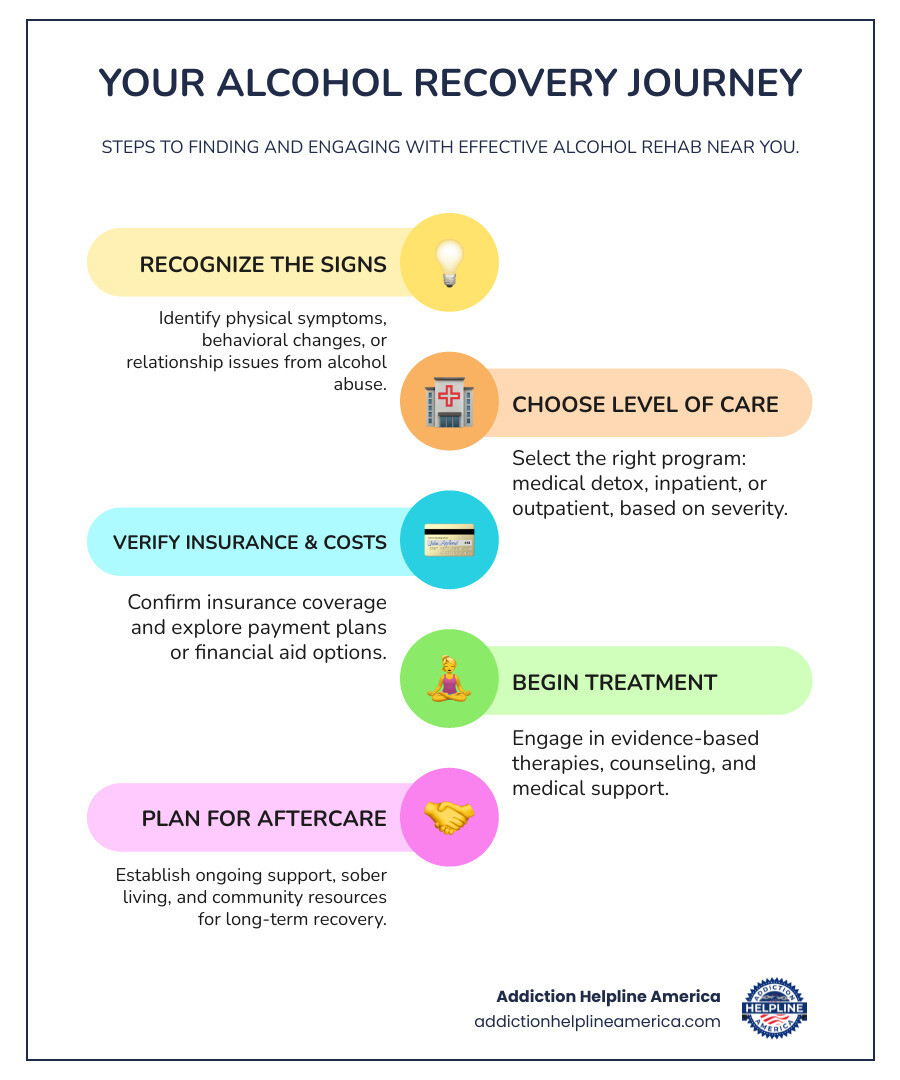
The path to recovery typically involves these steps:
- Recognize the problem: Notice physical symptoms, behavioral changes, and relationship issues.
- Choose the right level of care: Select detox, inpatient, or outpatient based on need.
- Verify insurance and costs: Confirm coverage and explore payment plans.
- Begin treatment: Engage in evidence-based therapies, counseling, and medical support.
- Plan for aftercare: Arrange ongoing support for long-term recovery.
This guide will walk you through everything you need to know about finding local alcohol rehab, from identifying the need for help to understanding your treatment options and navigating costs.
At Addiction Helpline America, we connect people with compassionate, effective treatment through our 24/7 helpline and network of accredited facilities. We understand this step is overwhelming, and we’re here to guide you.
Alcohol rehab near me terms at a glance:
- Colorado Springs detox center
- rehab in Colorado Springs
- free rehab centers near me
Recognizing the Signs: When to Seek Help for Alcohol Abuse
Recognizing alcohol abuse isn’t always easy in a culture where drinking is common. However, clear warning signs can indicate when it’s time to search for an alcohol rehab near me. These signs manifest physically, behaviorally, and psychologically.
Physical signs are often the most obvious. You might notice frequent, worsening hangovers, unexplained bruising, or injuries from falls. Other signs include hand tremors, slurred speech, or constant fatigue. A key indicator is increased tolerance—needing more alcohol to achieve the same effect. When trying to stop, withdrawal symptoms like nausea, sweating, anxiety, or shakiness can occur. In severe cases, seizures are possible, highlighting the body’s dependence. It’s also critical to recognize the Signs of Alcohol Poisoning, which require immediate medical attention.
Behavioral changes often start subtly, such as drinking alone, hiding alcohol, or drinking in the morning. These can escalate to neglecting responsibilities at work or home. Risky behaviors like driving under the influence or getting into fights become more common. Defensiveness about drinking is another red flag, signaling an awareness of the problem without the readiness to face it.
Psychological symptoms include mood swings, irritability, and deepening anxiety or depression. This creates a vicious cycle where alcohol is used to self-medicate, which only worsens the symptoms. Guilt and shame about drinking are common, coupled with a feeling of powerlessness. Hobbies and interests that once brought joy are often abandoned.
Social and occupational problems arise when alcohol abuse affects relationships, work, and finances. Trust erodes with family and friends, work performance suffers, and financial troubles can mount due to spending on alcohol or lost income. Legal issues like DUIs are also a clear signal that professional help is needed.

Understanding Alcohol Use Disorder (AUD)
Professionals call this condition Alcohol Use Disorder (AUD). It’s a recognized medical condition characterized by an impaired ability to control alcohol use despite negative consequences. The diagnosis is based on criteria from the DSM-5, which assesses patterns like drinking more than intended, being unable to cut down, and experiencing strong cravings.
AUD exists on a spectrum: mild (2-3 symptoms), moderate (4-5 symptoms), and severe (6 or more symptoms). This classification helps determine the appropriate level of care. Someone with mild AUD might succeed with outpatient counseling, while severe AUD often requires inpatient treatment at an alcohol rehab near me. Honest self-assessment is a crucial step. If a loved one is resistant to help, our Intervention Staging Guide can provide a structured approach.
The Impact of Co-Occurring Disorders
Alcohol abuse rarely exists in a vacuum. Many individuals also struggle with mental health conditions, a situation known as a dual diagnosis or co-occurring disorders. According to the National Institute of Mental Health, approximately 50% of people with substance use disorders also have a dual diagnosis.
Common co-occurring conditions include anxiety, depression, bipolar disorder, and PTSD. These issues feed off each other; a person might drink to ease anxiety, but alcohol, a depressant, ultimately makes it worse. This creates a harmful cycle. Effective recovery requires treating both the addiction and the underlying mental health condition simultaneously. An alcohol rehab near me that specializes in dual diagnosis care offers an integrated treatment plan, leading to better, more sustainable outcomes. For more on this, see our Rehabs for Depression Guide 2025.
Understanding Your Alcohol Rehab Program Options
When searching for alcohol rehab near me, you’ll find a range of program options, known as a “continuum of care.” This means there’s a level of care designed to meet you where you are in your recovery journey. The key is to match the program to your specific needs and the severity of your alcohol use disorder. Our Addiction Treatment Programs Complete Guide offers more detail on all options.
Medical Detox
For those with physical dependence on alcohol, stopping abruptly can be dangerous. Alcohol withdrawal can cause seizures and other life-threatening complications. Medical detox provides a safe, supervised environment where healthcare professionals monitor you 24/7 as your body adjusts.
This phase typically lasts 3 to 7 days. Medical staff may administer medications to ease withdrawal symptoms, ensuring your safety and comfort. Detox focuses on stabilizing you physically so you can begin the psychological work of recovery. For immediate help, see our Detox Hospital Near Me Tips.
Inpatient/Residential Rehab
After detox, many people transition to inpatient or residential rehab. These programs provide a complete break from daily triggers and stressors by having you live at the facility for 30 to 90 days or more. You’ll be immersed in a supportive, structured environment with 24/7 care.
Treatment includes individual therapy, group counseling, educational classes, and often holistic activities. This immersive approach is especially effective for those with severe AUD, co-occurring mental health conditions, or a history of relapse. It allows you to focus entirely on healing. Our guide on Inpatient Rehabs Near Me can help you find a quality facility.
Outpatient Rehab Programs (PHP, IOP)
Residential treatment isn’t necessary or feasible for everyone. Outpatient programs offer a flexible alternative, allowing you to live at home and maintain work or family responsibilities while receiving professional care.
Partial Hospitalization Programs (PHP): The most intensive outpatient option, PHP involves several hours of treatment daily, five days a week. It offers a level of care similar to residential programs but without the overnight stay.
Intensive Outpatient Programs (IOP): A step down from PHP, IOP typically involves 9 to 20 hours of treatment per week. This provides substantial support with greater flexibility.
Outpatient care focuses on teaching coping skills and addressing the root causes of addiction. Because you apply these skills in your daily life immediately, it can create a smoother transition to long-term sobriety. Understanding these levels of care will help you find the right alcohol rehab near me for your unique situation.
How to Choose the Right Alcohol Rehab Near Me
Choosing the right alcohol rehab near me is about more than just proximity; it’s about finding a program where you can truly heal. To steer the options, start by creating a checklist of your priorities, such as the need for dual diagnosis care, a specific therapeutic approach, or a flexible schedule. Our Choosing the Right Rehab Facility guide can help you through this process.

1. Check for Accreditation and Licensing
First, verify that any facility is properly licensed and accredited. This ensures the center meets established standards for safety, quality, and ethical practices.
State licensure confirms the facility meets your state’s legal requirements to operate. For example, Pennsylvania facilities are licensed by the DDAP, and you can find providers through their Care Provider Search or Drug and Alcohol Facility Locator. Check your state’s health department website for similar tools.
National accreditation from organizations like The Joint Commission or CARF indicates a higher standard of care. These bodies conduct rigorous evaluations that go beyond basic state requirements. A reputable center will readily provide this information. If they don’t, consider it a red flag. Learn more in our guide to Find an accredited provider.
2. Evaluate Treatment Philosophies and Therapies
Treatment approaches vary, so look for facilities that use evidence-based practices—therapies backed by scientific research.
- Cognitive Behavioral Therapy (CBT) helps you identify and change negative thought patterns that lead to drinking.
- Dialectical Behavior Therapy (DBT) is useful for managing intense emotions and trauma, teaching skills to cope without alcohol.
- Motivational Interviewing helps you explore and resolve ambivalence about quitting, strengthening your own motivation for change.
- Family therapy involves loved ones to repair relationships and build a supportive home environment.
Many programs also offer holistic therapies like yoga, meditation, or art therapy to support overall well-being. A combination of individual and group counseling is also vital. Individual therapy provides a private space for personal issues, while group sessions build peer support and reduce feelings of isolation.
3. Inquire About Success Rates and Program Effectiveness
Be critical of advertised success rates. Ask facilities how they define and measure “success.” Is it based on program completion, or on long-term sobriety one or two years later? The most meaningful metrics track long-term recovery outcomes, such as sustained sobriety, employment, and improved quality of life.
Recovery outcomes are influenced by many factors, including personal motivation, co-occurring conditions, and aftercare engagement. A good program will be transparent about this. When researching an alcohol rehab near me, ask how they track outcomes and what kind of aftercare planning they provide. Facilities that focus on long-term recovery and continuing care tend to produce better real-world results.
Navigating Cost, Insurance, and Program Duration
Financial concerns prevent many people from seeking help. However, when searching for an alcohol rehab near me, you’ll find that treatment is more accessible than you might think. Recovery is a worthwhile investment in your future, and there are many ways to manage the cost. Our guide on Paying for Addiction Treatment explores your options.
What is the cost of an alcohol rehab near me?
The cost of alcohol rehab varies widely. Key factors include:
- Program Type: Inpatient/residential programs cost more than outpatient programs due to 24/7 care and accommodation.
- Duration: A 90-day program will cost more than a 30-day program, but longer stays often lead to better outcomes.
- Location and Amenities: Facilities in major cities or with luxury amenities like private rooms and gourmet meals are more expensive.
- Staff-to-Client Ratio: More personalized attention from a larger staff typically comes at a higher price.
Costs can range from a few thousand dollars for outpatient care to tens of thousands for a luxury residential stay. Many facilities offer payment plans, financing, or sliding scale fees based on income. Additionally, state-funded programs and county offices can provide free or low-cost treatment for eligible individuals.
Can I find an alcohol rehab that accepts my insurance?
Yes. Thanks to laws like the Affordable Care Act, most health insurance plans must cover substance use treatment. Here’s how to check your coverage:
- Verify Your Benefits: Call the number on your insurance card and ask about coverage for detox, inpatient, and outpatient alcohol rehab.
- Understand Costs: Inquire about your deductible, co-pays, and out-of-pocket maximum.
- Check Network Status: In-network facilities have agreements with your insurer and will cost you less out-of-pocket.
- Ask About Pre-authorization: Some plans require approval before treatment begins. Rehab facilities are experienced in handling this process.
At Addiction Helpline America, we can help you verify your insurance and find a facility that accepts your plan. Our article on How to Find Rehab Programs That Accept Insurance provides more detail.
How long does alcohol rehab last?
The ideal length of treatment is different for everyone and depends on addiction severity and personal circumstances.
- 30-Day Programs: A common starting point, effective for those with less severe addiction or who need to balance treatment with other responsibilities. See our 30 Day Inpatient Rehab Arlington Tips.
- 60-Day Programs: Allow more time to address underlying issues and build a stronger foundation for recovery. Learn more at Best 60 Day Rehabs Near Me.
- 90-Day Programs (or longer): Research consistently shows that treatment lasting 90 days or more offers the best long-term outcomes. This duration provides ample time to change ingrained habits and prepare for sober living.
The right length is whatever gives you the time to feel equipped with the tools and confidence needed to maintain sobriety. Your treatment team will help you determine the best duration for your situation.
Your Path to Recovery: Finding Help and Life After Rehab
Completing a treatment program is the beginning of the recovery journey, not the end. Rehab builds the foundation, but aftercare and ongoing support are what help you build a lasting, sober life.

How can I find an alcohol rehab center near me?
Finding an alcohol rehab near me is manageable with the right resources.
- Call Our Helpline: The quickest way to get personalized, confidential help is to call Addiction Helpline America. Our advisors are available 24/7 to connect you with a treatment center that fits your needs, free of charge.
- Use Online Directories: The federal government’s FindTreatment.gov directory, run by SAMHSA, is a comprehensive tool for searching by location.
- Check State Resources: Many states offer their own locators. For example, New Hampshire has its 2-1-1 service, Pennsylvania provides a Care Provider Search, Alaska offers SUD Treatment Steps & FAQs, and Delaware has its Division of Substance Abuse and Mental Health.
- Use Our State Guides: We’ve created specific resource pages for states like California, Florida, Texas, Ohio, and many others to simplify your search.
Reaching out for help quickly is crucial. With the right support, recovery is not just possible—it’s probable.
What happens after completing rehab?
Finishing rehab is a major achievement. The next step is aftercare, which bridges the gap between the structured treatment environment and your daily life.
- Sober Living Homes: These alcohol-free residences provide structure and peer support as you transition back to work or school.
- Support Groups: Groups like Alcoholics Anonymous or SMART Recovery offer a powerful sense of community and shared understanding.
- Continued Therapy: Ongoing sessions with a counselor help you steer life’s challenges and sharpen your recovery skills.
- Relapse Prevention Plan: This is your personal roadmap for handling triggers. It should identify your triggers, list healthy coping strategies, and include emergency contacts.
- Sober Network: Building a new social life around healthy hobbies and supportive people helps create a life you don’t want to escape from.
Recovery is a lifelong process that gets easier with time and support. Our Staying Sober Tips offer practical strategies for maintaining your progress. You’ve already shown the strength to start this journey; now it’s about taking it one day at a time.
Conclusion: Take the First Step Towards a New Beginning
This guide has walked you through the process of finding an alcohol rehab near me, from recognizing the signs of addiction to understanding your treatment options. We’ve covered how to choose a quality facility, steer costs and insurance, and the importance of aftercare.
Perhaps most importantly, we’ve emphasized that recovery doesn’t end when a program does. Building a strong support system through sober living, groups like Alcoholics Anonymous, and continued therapy is the key to a fulfilling life. Our Staying Sober Tips can help create a foundation for long-term success.
The most important message is this: recovery is possible. Thousands of people have found their way back to health and happiness. You are not defined by your struggles; you deserve compassion and a chance at a new beginning.
Help is available right now, closer than you think. Finding local treatment allows you to maintain connections with loved ones and transition smoothly back into your life. Whether you’re in Colorado, Georgia, or anywhere else, quality care is in your community.
At Addiction Helpline America, we understand how overwhelming this moment feels. We provide free, confidential guidance to connect you with accredited treatment centers that match your unique situation and insurance. We’ve helped countless individuals take this brave first step, and we’re ready to help you.
You’ve already shown incredible courage by seeking information. Now is the time to act on it. Find a treatment center in your area today, or call our 24/7 helpline. Someone is always here to listen and help you find your path forward. Your new beginning is waiting.