
Understanding Alcohol Intervention in Arizona: Why Taking Action Matters
Alcohol intervention Arizona services offer a structured, compassionate way to help a loved one struggling with alcohol use disorder. With 17.5% of Arizona adults reporting binge drinking—higher than the national average—these services are a critical lifeline. An intervention is not a confrontation; it is a carefully planned process that expresses love, presents facts about the addiction’s impact, and offers immediate access to treatment.
Quick Guide to Alcohol Intervention Services in Arizona:
- Professional Interventionists – Trained specialists who guide families through the intervention process using evidence-based methods
- Treatment Centers – Facilities offering detox, residential, and outpatient programs (including AHCCCS-accepting options)
- DUI-Related Services – Court-mandated screening and treatment programs through MVD-approved facilities
- Support Resources – Family therapy, aftercare planning, and ongoing recovery support networks
- 24/7 Helplines – Immediate assistance for crisis situations and treatment placement
If you’re watching someone you love spiral deeper into alcohol addiction, facing denial, anger, or empty promises, you are not alone. The fear and helplessness you feel are shared by families across Arizona, a state with alcohol-related deaths exceeding the national average. An intervention can be the turning point that saves a life, but navigating the system is daunting.
This guide simplifies the process of alcohol intervention in Arizona. We’ll cover recognizing the need for action, planning the meeting, finding professionals, understanding treatment, and navigating costs. We’ll explain different approaches and connect you with resources that can provide immediate help.
At Addiction Helpline America, we’ve helped thousands of families across Arizona steer the complex journey of alcohol intervention and treatment placement. Our team connects you with appropriate resources, whether you need an interventionist in Scottsdale, a detox facility in Phoenix, or outpatient support in Tucson.
Alcohol intervention Arizona definitions:
Recognizing the Need for an Intervention in Arizona
Knowing when concern should turn into action is difficult, especially when denial runs deep. An alcohol intervention in Arizona becomes necessary when the signs of alcohol use disorder create a pattern of harm that your loved one cannot or will not see.

The signs often begin with behavioral and physical changes. Your loved one may become secretive or defensive about their drinking, miss work, and neglect responsibilities. Socially, they may withdraw from friends and activities they once enjoyed, preferring to drink alone. Physical symptoms like trembling hands, frequent hangovers, memory blackouts, and a decline in personal appearance become harder to ignore.
These issues lead to serious consequences. In Arizona, this often manifests as DUI arrests, job loss, and financial trouble. The state’s high rate of alcohol-related deaths and binge drinking (17.5% of adults vs. 16.4% nationally) reflects the real-world impact on families. When someone is trapped in denial and unable to see the damage, an intervention becomes essential.
When to Consider an Intervention
An intervention is a critical step when waiting any longer is too risky. Consider it when:
- Their safety is in jeopardy from drunk driving, risky behaviors, or severe withdrawal symptoms.
- They’ve tried to quit and failed repeatedly, signaling a dependence that requires professional help.
- Their health is clearly declining, and they are ignoring medical warnings about liver damage, high blood pressure, or mental health issues.
- The family is at a breaking point, suffering from the constant stress, emotional turmoil, and financial strain.
- They are neglecting major responsibilities like their job, school, or basic household duties.
- A doctor, therapist, or counselor has recommended it.
- Legal troubles are mounting, such as repeated DUIs in a state with strict laws like Arizona.
As the Mayo Clinic notes, addiction often blinds people to their own reality. A structured, collaborative intervention can break through the denial that a single conversation cannot.



The Role of Family and Friends
Family and friends are not just bystanders; you are essential to creating change. Your role in an alcohol intervention in Arizona is to provide support while establishing firm boundaries.
- Offer emotional support: An intervention is an act of love. Sharing your fear and hope from the heart shows you care too much to give up.
- Set firm boundaries: Support does not mean enabling. Stop covering for them, paying their bills, or making excuses. These boundaries protect everyone, including the person with the addiction.
- Present a unified front: When everyone delivers the same message—that treatment is needed now—it’s much harder for the person to ignore or manipulate the situation.
- Avoid enabling: Honestly examine how you may have unintentionally supported the addiction. An intervention is a turning point for the entire family to commit to new behaviors that support recovery.
- Prepare for the conversation: A professional interventionist can help you process your emotions and write an impact letter that is honest, loving, and effective. They teach you how to communicate calmly and respond to difficult reactions.
You don’t have to do this alone. Addiction Helpline America can connect you with experienced professionals to guide your family. Learn more about alcohol intervention support in Arizona and find the resources you need to take this critical step.
The Process of an Alcohol Intervention in Arizona
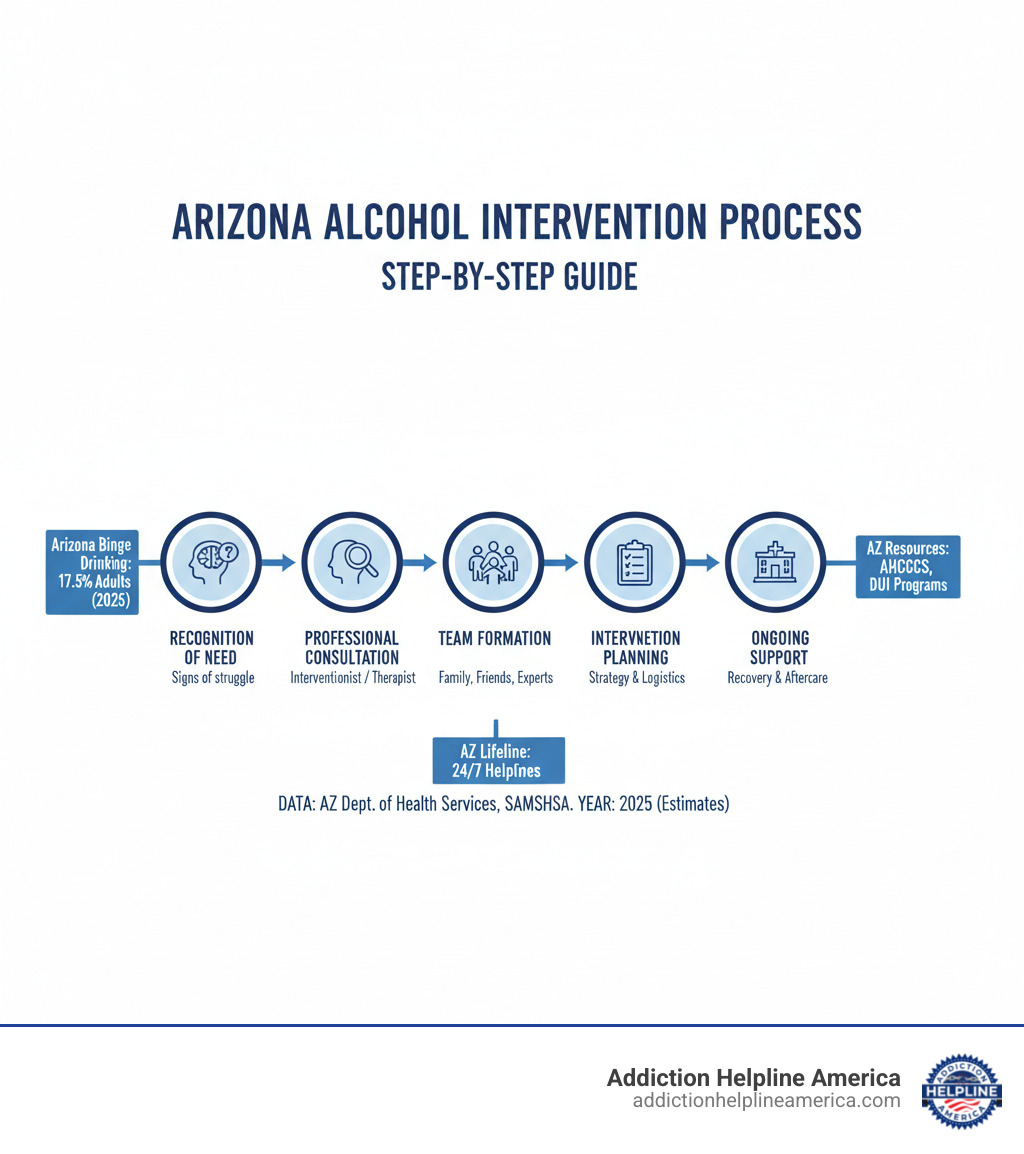
Deciding an alcohol intervention in Arizona is necessary is the first step. Understanding the process can reduce anxiety and increase the chances of success. A well-executed intervention is a carefully orchestrated process that often becomes the turning point for recovery.
The process unfolds in stages, guided by a professional interventionist who helps you create a strategy custom to your family’s situation. This guidance is crucial if your loved one has a co-occurring mental illness, a history of violence, or polysubstance use. The planning phase involves gathering your team, preparing what to say, and deciding on clear consequences if treatment is refused. Emotional preparation and rehearsal are just as important as logistics to ensure the message is delivered with compassion and conviction.
Planning an Effective Alcohol Intervention in Arizona
Thorough planning is the key to an effective intervention. This creates a stable framework for an emotionally charged conversation.
- Form the Team: Assemble a small group (4-6 people) of family, friends, or colleagues whom your loved one respects. Avoid including anyone they dislike or who may be emotionally unstable.
- Hire a Professional Interventionist: A qualified interventionist brings expertise in addiction, family dynamics, and crisis management. They are trained in techniques like motivational interviewing that improve the odds of success. We can help you find Arizona intervention services that meet these standards.
- Choose the Time and Place: Select a neutral, private location and a time when your loved one is likely to be sober and calm.
- Gather Information and Write Impact Letters: Each team member should document specific, factual incidents of how the addiction has caused harm. Write letters using “I” statements to express concern without blame (e.g., “I felt scared when…”). End with a clear request to accept help.
- Decide on Consequences: The team must agree on and commit to specific consequences if your loved one refuses treatment. These are not threats, but boundaries to stop enabling, such as cutting off financial support or asking them to move out.
- Rehearse the Meeting: Practice the intervention with your interventionist to prepare for the emotional intensity and potential objections. This helps everyone stay focused on the goal.
What to Expect During the Meeting
The intervention meeting is the culmination of your planning. An interventionist will guide the meeting, setting a tone of concern, not confrontation.
Each team member will read their prepared statement, sharing specific examples of how the addiction has caused harm. This collective voice makes it difficult to maintain denial. Your loved one may react with anger, tears, or promises to quit on their own. The interventionist will help steer the conversation back to the core message: we love you, and we need you to accept treatment today.
The most critical part is presenting a pre-arranged treatment plan. This isn’t a vague suggestion; it’s a specific program with admission secured and logistics handled. Having everything ready removes excuses and makes it easy to say “yes.” We can help you explore treatment options in Arizona and have a plan in place.
At the end, your loved one faces a clear choice: accept the help offered or face the consequences the team has agreed upon. This directness is born from love and the urgent need to break the cycle of addiction.
Potential Outcomes and Next Steps
An alcohol intervention in Arizona is significant even if your loved one initially refuses help. It brings the addiction into the open and begins to shift unhealthy family dynamics.
- If they accept treatment: The plan goes into motion immediately. The interventionist often helps with transportation to the facility to prevent second thoughts. This is the first step on a long but life-changing journey.
- If they refuse treatment: The team must follow through on the predetermined consequences. This is painful but essential to stop enabling the addiction. Experiencing these consequences is often the catalyst that eventually leads to seeking help.
Regardless of the outcome, the family needs support. The emotional aftermath can be complex, and counseling or support groups like Al-Anon can help everyone process the experience and heal. For the person who enters treatment, recovery is a long-term process requiring ongoing support through aftercare, therapy, and 12-step meetings. Your continued, healthy involvement is a key part of their success.
Finding Professional Help and Treatment in Arizona
When planning an alcohol intervention in Arizona, having a clear, ready-to-go treatment plan is one of your most powerful tools. It shows your loved one that help is real, available now, and that you’ve already steerd the options for them.

Sorting through Arizona’s many treatment centers can be overwhelming. At Addiction Helpline America, we have deep relationships with providers across the state and can help you find the right program for your loved one’s specific needs. You don’t have to do this alone.
Finding a Qualified Interventionist for an Alcohol Intervention in Arizona
A qualified interventionist is your guide, bringing clinical knowledge and compassionate leadership to a difficult process. When choosing one, look for:
- Credentials: Certification from a recognized addiction intervention board and licensure as a substance abuse counselor are strong indicators of qualification.
- Experience: An interventionist with years of experience has the wisdom to handle unexpected and complex situations.
- Approach: Find someone whose style (e.g., direct vs. motivational) fits your family’s values and your loved one’s personality.
- Cost: Services in Arizona typically range from $2,500 to $10,000+. Ensure you understand what the fee includes, such as planning, the intervention itself, and transport to treatment. A professional is essential for safety in cases involving mental health issues or a history of violence.
We can help you find intervention specialists in Arizona with the right expertise.
Navigating Treatment Centers and Programs
Arizona offers a full continuum of care. Having a spot secured before the intervention is crucial for a seamless transition into recovery.
- Detoxification: Medical detox is the first step for those with physical dependence, providing 24/7 supervision to manage withdrawal safely.
- Residential Treatment: This immersive program (30-90+ days) removes a person from their environment to focus entirely on recovery through therapy and skill-building.
- Partial Hospitalization (PHP) & Intensive Outpatient (IOP): These programs offer structured treatment during the day while allowing the person to live at home or in sober living, providing a step-down in intensity from residential care.
- Outpatient Treatment: Consisting of regular counseling sessions, this is suitable for less severe issues or as ongoing support after a higher level of care.
- Aftercare and Sober Living: Long-term recovery depends on ongoing support like therapy, 12-step groups, and sober living homes, which provide a safe, alcohol-free environment.
Many Arizona centers offer specialized programs for dual diagnosis (co-occurring mental health conditions), as well as gender-specific tracks. Holistic therapies like yoga, art, and outdoor adventure therapy are often integrated alongside evidence-based practices like Cognitive Behavioral Therapy (CBT) and EMDR to treat the whole person.
Choosing between inpatient and outpatient care depends on the severity of the addiction, the home environment, and co-occurring disorders. Inpatient offers a highly structured, 24/7 environment, while outpatient provides more flexibility for work and family life. The best program is one that fits the individual’s needs and that they will engage with. Let us help you find Arizona treatment programs that match your loved one’s needs and your family’s situation.
Costs, Legalities, and State Resources
Navigating the financial and legal aspects of an alcohol intervention in Arizona can feel like another heavy burden. However, help is available, and there are more options than you might realize. Cost should not be a barrier to life-saving treatment.
Understanding the Costs in Arizona
Treatment costs vary, but several avenues can make it affordable:
- Private Insurance: Most major insurance plans cover addiction treatment. Facilities like Nirvana Recovery and Crossroads will verify your benefits for free to clarify what’s covered, which can sometimes be up to 100%.
- Self-Pay Options: Many centers offer payment plans or discounts for those paying out of pocket.
- Sliding Scale Fees: Some facilities adjust their costs based on income, making treatment more accessible.
- AHCCCS: The Arizona Health Care Cost Containment System (AHCCCS), the state’s Medicaid program, covers behavioral health services, including addiction treatment. Many facilities accept AHCCCS, and you can learn more at the Arizona Health Care Cost Containment System (AHCCCS) website.
- Financing: Third-party financing companies can help spread the cost of treatment over time.
We can help you explore these options and find a program that fits your budget.
Arizona’s Legal Framework for Treatment
Arizona’s legal system can be a powerful motivator for someone to accept help, especially if they are already facing legal issues.
- DUI Screening and Treatment: Following a DUI arrest in Arizona, a behavioral screening and a minimum number of hours of education and counseling are legally required. This mandate removes the question of if treatment is needed and shifts it to where they will get it. An intervention can frame a quality treatment program as the best way to fulfill these legal obligations.
- Voluntary Treatment Laws: Arizona law provides clear pathways for individuals to seek help. Arizona Revised Statutes § 36-2025 allows a person to voluntarily seek emergency treatment, while ARS § 36-2024 allows individuals or their guardians to apply directly to a treatment facility.
- State-Funded Programs: For those who cannot afford private care and do not qualify for AHCCCS, public treatment facilities serve as a crucial safety net.
Understanding these legal levers can be instrumental during an alcohol intervention in Arizona, providing a compelling reason for your loved one to choose the path to recovery.
Frequently Asked Questions about Alcohol Interventions
As you consider an alcohol intervention in Arizona, you likely have many questions. Here are answers to some of the most common concerns we hear from families.
What if my loved one refuses to get help?
This is a common fear, but a refusal does not mean the intervention failed. The intervention succeeds when it starts the family’s healing by ending enabling behaviors. You must follow through on the consequences you established during planning. This is not punishment; it’s about protecting your well-being and allowing your loved one to face the natural consequences of their addiction. Often, this is what finally motivates them to seek help. Keep the door to recovery open by letting them know you’ll support them when they are ready, but the family dynamic must change now.
How much does a professional interventionist cost in Arizona?
Professional interventionist fees in Arizona typically range from $2,500 to $10,000 or more. The cost is influenced by the interventionist’s experience, travel requirements, and the complexity of the case (e.g., co-occurring mental health disorders). This fee usually covers comprehensive services, including pre-intervention planning, facilitation of the meeting, and assistance with immediate transport to a treatment facility. A reputable professional will be transparent about their pricing and what it includes.
What is the difference between an intervention and therapy?
It’s a crucial distinction. An alcohol intervention in Arizona is a single, structured event designed to break through denial and motivate a person to accept treatment right now. It’s a focused conversation that builds a bridge to help.
Therapy is the ongoing process that happens after they accept help. It involves working with a counselor over weeks, months, or years to address the underlying causes of addiction, learn coping skills, and build a life in recovery. In short, the intervention is the door, and therapy is the journey through it. Both are vital parts of the recovery process.
If you have more questions, we’re here to help. At Addiction Helpline America, we provide guidance for families planning an alcohol intervention in Arizona. You don’t have to do this alone.
Conclusion
Taking the time to read this guide is a courageous first step toward helping someone you love. We’ve covered how to recognize the need for an alcohol intervention in Arizona, plan the process, find professional help, and steer the resources available in our state.
We know it’s a lot to take in, but the most important thing to remember is this: an intervention is an act of love. It is a powerful message that someone’s life matters and that you are willing to stand with them as they begin to heal. In a state where alcohol’s impact is deeply felt, you are not alone in this struggle.
Recovery is a journey, not a destination. An intervention can be the start of that journey, changing family dynamics for the better by setting healthy boundaries and opening the door to healing for everyone involved. We have seen this process transform lives, and we know that hope is real.
At Addiction Helpline America, we’re here to walk this path with you. We offer free, confidential guidance to connect you with the right resources from our vast network across Arizona and the nation. Whether you need to find a qualified interventionist, a treatment center, or simply need to talk through your options, we can help.
You don’t have to carry this burden by yourself. Reach out to us today, and let’s find the right treatment program for your loved one together. Your call could be the turning point that saves a life.