
Your First Step Towards a Healthier Future
If you’re searching for alcohol detox near me, you’re taking a brave and crucial step toward recovery. The most important thing to know is that help is available right now. You don’t have to do this alone.
How We Help You Find Alcohol Detox Today:
-
Call Our Helpline: Our primary goal is to connect you with the help you need. Call our free, confidential helpline 24/7 to speak with a specialist who can guide you.
-
What to Expect: We’ll connect you with a medical detox facility where professionals help you safely withdraw from alcohol. This typically involves:
- An initial medical evaluation to create a personal plan.
- 24/7 monitoring and compassionate support.
- Medication to make withdrawal symptoms safe and manageable.
- A typical stay of 7-10 days.
- Planning for your next steps in recovery.
-
Cost & Insurance: Many facilities accept insurance. We can verify your benefits for free to find an affordable, in-network option for you.
Alcohol detox is the process of safely clearing alcohol from your body under medical supervision. When you’ve been drinking heavily, your brain chemistry changes. Stopping suddenly can trigger withdrawal symptoms ranging from uncomfortable to life-threatening. That’s why professional help isn’t just recommended—it’s essential for your safety.
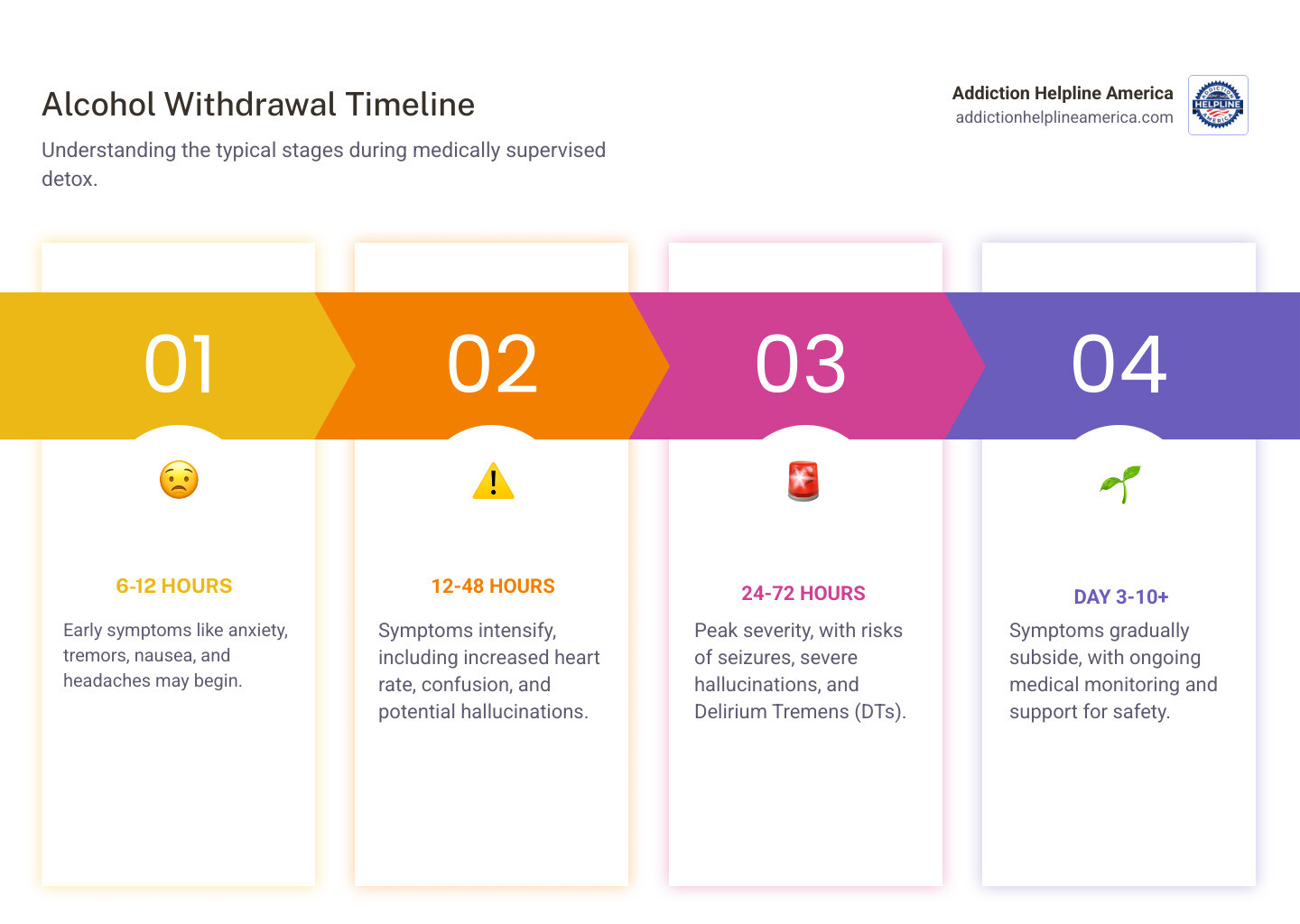
The physical withdrawal symptoms typically peak between 48 and 72 hours after your last drink. During this time, you might experience anxiety, tremors, nausea, or in severe cases, seizures and hallucinations. Medical supervision ensures these symptoms are managed safely, giving you the best chance at lasting recovery.
At Addiction Helpline America, we’ve helped thousands of individuals find the right support. Our free, confidential service connects you with trusted alcohol detox near me and comprehensive treatment programs. We are here to ensure you find the right level of care for your unique situation, whether that’s inpatient detox, outpatient support, or residential treatment.
Simple guide to alcohol detox near me:
Understanding Alcohol Withdrawal: Why Medical Detox is Necessary
Alcohol detox is the crucial first step in treating alcohol use disorder. It focuses on safely removing alcohol from your body under the care of medical professionals. If you’ve developed a physical dependence, your body has adapted to alcohol’s constant presence. When you suddenly stop drinking, your central nervous system can become overactive, leading to a range of withdrawal symptoms. This rebound effect is why a medically supervised detox is not just recommended, but necessary for your safety.
Attempting to quit “cold turkey” without medical supervision can be extremely dangerous. The sudden stop can trigger severe physical and psychological reactions, including seizures, hallucinations, and a condition known as delirium tremens (DTs). Our goal at Addiction Helpline America is to connect you with a facility that provides the safest, most effective care to begin your journey to wellness. For more in-depth information about the entire process, you can explore our alcohol detox treatment centers ultimate guide.
Common Symptoms of Alcohol Withdrawal
The symptoms you might experience can vary in intensity, depending on factors like how long and how much you’ve been drinking, your overall health, and any co-occurring mental health conditions.
Mild Symptoms typically appear within 6-12 hours after the last drink and may include:
- Headaches
- Anxiety and restlessness
- Insomnia or other sleep disturbances
- Nausea and vomiting
- Sweating and shakiness (tremors)
- Increased sensitivity to stimuli
Severe Symptoms can manifest within 12-72 hours and require immediate medical attention:
- Hallucinations: Seeing, hearing, or feeling things that are not there, often within 12-24 hours.
- Seizures: Typically grand mal seizures, which can occur between 24-48 hours after the last drink.
- Delirium Tremens (DTs): The most severe form of alcohol withdrawal, appearing 48-72 hours after the last drink. Symptoms include extreme confusion, disorientation, agitation, high fever, rapid heart rate, and profound hallucinations. The mortality rate for DTs is 1% to 4%, highlighting the critical need for medical intervention.
Symptoms of alcohol withdrawal can also be influenced by co-occurring mental health conditions or other substance use disorders, making a comprehensive medical assessment vital.
The Dangers of Detoxing Alone
The statistics are clear: detoxing from alcohol without professional help is a risk you should not take. The symptoms can be unpredictable and escalate rapidly from discomfort to a life-threatening emergency.

This is why we connect you with medically supervised detox centers. Their teams are there to protect you from:
- Medical emergencies: Severe withdrawal can lead to cardiac arrest or respiratory failure.
- Seizure risk: A medical team can prevent and manage dangerous seizures.
- Dehydration: IV fluids can be administered to combat dehydration from vomiting and sweating.
- Cardiac stress: Vital signs are monitored 24/7 to manage rapid heart rate and high blood pressure.
- Psychological distress: You’ll receive emotional support and medication to ease the intense anxiety and panic that often accompany withdrawal.
- Increased relapse risk: The sheer discomfort of unmanaged withdrawal often forces people back to drinking. A supported detox breaks this cycle.
It is dangerous and potentially fatal to stop drinking on your own. A medically supervised detox ensures your safety and provides the best foundation for long-term recovery. Call us to find a safe place to start.
The Medically Supervised Detox Process: A Supportive Journey
Medically supervised alcohol detox is a structured process designed to guide you through withdrawal safely and as comfortably as possible. It’s not just a clinical procedure; it’s the first step on your supportive path to recovery.
-
Evaluation: Understanding Your Needs: Upon admission, a compassionate medical team will conduct a comprehensive assessment. They’ll review your medical history and substance use patterns to create a personalized treatment plan tailored to you.
-
Stabilization: Keeping You Safe and Comfortable: This is the core of the detox process. You’ll receive 24/7 monitoring and care to manage withdrawal symptoms. The medical team administers medications as needed to alleviate discomfort and prevent severe complications like seizures, ensuring your physical and psychological state is stable.
-
Transition Planning: Preparing for Lasting Recovery: Detox is just the beginning. Once you are medically stable, the team will work with you to create a plan for ongoing treatment. This transition is crucial for addressing the root causes of addiction and building a foundation for long-term sobriety. To learn more, explore our recommended detox programs.
How Long Does Alcohol Detox Last?
The timeline for alcohol detox varies for each person, depending on factors like the severity of alcohol dependence and overall health. Many of our clients share that the process was quicker and more manageable than they feared.

Generally, physical withdrawal symptoms begin within 6-24 hours after the last drink. The most intense symptoms typically peak between 48 and 72 hours and last about 7 to 10 days. While acute symptoms subside, milder ones like anxiety or insomnia can persist. The medical teams at our partner facilities will monitor your progress closely, adjusting your treatment plan to ensure your safety and comfort throughout.
Factors influencing the detox timeline include:
- Level of dependency: Heavier, longer-term drinkers often experience more prolonged withdrawal.
- Overall health: Pre-existing health conditions can complicate detox.
- Co-occurring disorders: Mental health conditions can affect the severity of withdrawal.
- Previous detox experiences: A history of withdrawal can sometimes make subsequent ones more severe.
The Role of Medication in a Safe Detox
Medication is a key tool that medical professionals use to make alcohol detox safe and manageable. Under strict supervision, these medications alleviate symptoms and prevent life-threatening complications, allowing you to focus on healing.
Here are some common medications and their benefits:
- Benzodiazepines (e.g., Diazepam, Lorazepam): These are the gold standard for alcohol detox. They calm the overactive nervous system to prevent seizures, reduce anxiety, and help you rest comfortably.
- Anti-seizure medications: In some cases, specific anticonvulsants are used to provide extra protection against seizures.
- Naltrexone: Often prescribed after detox, Naltrexone can help reduce alcohol cravings and block its euphoric effects, supporting your long-term recovery.
- Acamprosate: This medication helps restore the brain’s natural balance after chronic alcohol use, easing post-acute symptoms like insomnia and anxiety.
Every medication plan is prescribed by licensed medical professionals and tailored to your individual needs. This expert care is fundamental to a safe and successful detox.
Finding the Right Alcohol Detox Near Me
Choosing the right alcohol detox near me is a critical decision. Being close to home can allow for family support and a smoother transition back to daily life. We specialize in helping you find a program that meets your clinical needs and personal circumstances.
Inpatient vs. Outpatient Detox: A Comparison
The best setting for you depends on the severity of your alcohol dependence, your home environment, and your overall health.
| Feature | Inpatient Detox | Outpatient Detox |
|---|---|---|
| Level of Care | 24/7 medical supervision and support | Regular medical check-ups and therapy sessions |
| Environment | Structured, sober, trigger-free residential facility | Live at home, attend appointments at a clinic |
| Ideal Candidate | Severe dependence, history of complicated withdrawal, co-occurring mental/physical health issues, unstable home environment | Mild to moderate dependence, strong support system at home, good overall health |
| Cost | Generally higher due to 24/7 care and amenities | Generally lower as you live at home |
| Benefits | Maximum safety, immersive recovery, separation from triggers | Flexibility, maintain work/family commitments, practice coping skills in real-world |
For severe alcohol dependence, inpatient detox is the safest option. Outpatient can be suitable for milder cases with a strong support system. Our specialists can help you decide which is right for you.
How to Find a Reputable Alcohol Detox Center Near Me
Searching for a quality alcohol detox near me can be overwhelming. Here’s how to ensure you find a trustworthy facility:
- Call Our Helpline for Free, Expert Guidance: The easiest and most reliable way to find a reputable center is to call us. Addiction Helpline America is a free, confidential service. Our specialists can instantly verify your insurance, explain your options, and connect you with accredited facilities that match your needs. We do the hard work for you.
- Verify Credentials and Accreditation: All centers in our network are accredited by organizations like The Joint Commission (JCAHO) or the Commission on Accreditation of Rehabilitation Facilities (CARF). This ensures they meet the highest standards of care and safety.
- Ask About Evidence-Based Practices: Reputable centers use treatment methods that are supported by scientific research. We only partner with facilities that use proven, effective therapies.
What We Look for in an Alcohol Detox Program
When we recommend an alcohol detox near me program, we ensure it meets strict quality criteria:
- 24/7 Medical Supervision: Your safety is the top priority. We ensure inpatient programs have round-the-clock medical staff.
- Individualized Treatment Plans: We connect you with programs that create a personalized plan based on your specific needs, history, and goals.
- A Full Continuum of Care: Detox is just the start. We look for programs that offer a seamless transition to the next level of care, such as residential rehab or outpatient programs.
- Comprehensive Aftercare Planning: A strong aftercare plan is vital for long-term sobriety. The best programs help you prepare for life after treatment.
- Family Involvement: We value programs that offer family therapy to help heal relationships and build a strong support system.
- Dual Diagnosis Capabilities: If you’re struggling with a mental health condition like anxiety or depression, we’ll find you a program equipped to treat both issues simultaneously for the best outcome.
Life After Detox: Building a Foundation for Recovery
Detox is the first, vital step that addresses your physical health. But lasting recovery happens when you address the underlying reasons for alcohol use. Transitioning to ongoing treatment—often called rehab—is essential for building the skills and support system you need to prevent relapse and create a fulfilling, sober life.
Effective aftercare planning begins during detox. It prepares you for the stressors of daily life by equipping you with new coping strategies. This proactive approach is the key to long-term success.
What Support is Available After Detox?
Recovery is a journey, not a destination. A full continuum of care is available to support you at every stage:
- Residential Treatment: An immersive, structured program where you live at the facility for 30-90 days, receiving intensive therapy in a trigger-free environment.
- Partial Hospitalization Programs (PHP): A step-down option with several hours of treatment per day while you live at home or in sober living.
- Intensive Outpatient Programs (IOP): A flexible option with fewer hours of therapy per week, allowing you to maintain work or school commitments.
- Individual Therapy: Work one-on-one with a therapist using methods like Cognitive Behavioral Therapy (CBT) to change negative thought patterns.
- Group Therapy: Share experiences and learn from peers in a supportive group setting.
- 12-Step Programs (e.g., Alcoholics Anonymous – AA): Peer-led support groups offering a framework for recovery.
- Non-12-Step Groups (e.g., SMART Recovery): Alternative mutual-help groups focused on self-empowerment.
- Family Therapy: Heal relationships and build a stronger support system by involving loved ones in your recovery.
Paying for Detox: Let Us Help You with Costs and Insurance
Worried about the cost of alcohol detox? You have options, and we are here to help you navigate them. The price of treatment varies based on the level of care, program length, and amenities, but insurance can cover a significant portion.
Addiction Helpline America offers a free, confidential insurance benefits check.
Instead of trying to figure it out alone, call us. Our team can:
- Contact your insurance provider on your behalf.
- Determine your in-network benefits for alcohol detox and rehab.
- Explain your deductible, co-pay, or co-insurance in simple terms.
- Confirm if you need pre-authorization and help you get it.
- Find out if there are limits on the length of stay your plan covers.
Our service is 100% free and confidential. We are here to help you understand your options and connect you with an affordable, high-quality treatment center that works with your insurance.
Frequently Asked Questions about Alcohol Detox
How do I know if I or a loved one needs alcohol detox?
Recognizing the need for help is the first step. You may need professional alcohol detox if you:
- Experience withdrawal symptoms (shakiness, anxiety, nausea) when you try to stop drinking.
- Have tried to quit on your own but couldn’t.
- Need to drink more to get the same effect (tolerance).
- Use alcohol to cope with stress, anxiety, or other feelings.
- Find that drinking is causing problems with your job, relationships, or health.
If these signs sound familiar, please call our confidential helpline. You don’t have to make this decision alone. We can help you understand the next steps.
What are the benefits of a residential detox program?
For anyone with moderate to severe alcohol dependence, a residential detox program offers the greatest level of safety and support. The key benefits are:
- 24/7 Medical and Emotional Support: This is our top priority for you. Constant monitoring by medical professionals ensures your safety and comfort.
- Safe, Trigger-Free Environment: Removing yourself from daily stressors and temptations allows you to focus completely on your health.
- Total Focus on Recovery: Without distractions, you can dedicate all your energy to healing and preparing for the next phase of treatment.
- Peer Support: Being with others who understand what you’re going through creates a powerful sense of community and reduces feelings of isolation.
- Seamless Transition to Rehab: Most detox centers are connected to inpatient rehab programs, ensuring a smooth and supportive transition to continued care.
What are the signs of severe alcohol withdrawal that require immediate medical attention?
Severe alcohol withdrawal is a medical emergency. If you or someone you know experiences any of the following, call 911 immediately:
- Hallucinations: Seeing, hearing, or feeling things that aren’t there.
- Grand mal seizures: Convulsions and loss of consciousness.
- Extreme confusion or disorientation (Delirium Tremens – DTs): Severe mental confusion, agitation, and disorientation.
- High fever and rapid heart rate: These can signal a critical medical state.
These symptoms are life-threatening and require immediate intervention. For non-emergency questions about withdrawal, our 24/7 helpline is always available to provide guidance and support.
Take the Next Step with Confidence
Taking the first step toward recovery is a courageous act. You now know the critical importance of medically supervised alcohol detox, the dangers of quitting alone, and the supportive treatment options that are available to you. Recovery is not just a possibility—it’s a reality for millions who found the right help.
At Addiction Helpline America, we are your first call for a new life. We are a free, confidential helpline dedicated to providing personalized guidance and connecting you with the best treatment available. Our network of accredited centers ensures we can find a quality alcohol detox near me that fits your unique needs, budget, and circumstances.
Don’t let fear or uncertainty hold you back any longer. Your journey to recovery starts with one simple, confidential phone call.