
Why Finding the Right Help Matters
Alcohol abuse rehab centers are specialized facilities that provide medical detoxification, therapy, counseling, and support to help individuals overcome alcohol use disorder and build lasting recovery. Whether you need inpatient residential care with 24/7 medical supervision or outpatient programs that allow you to live at home, these centers offer evidence-based treatment custom to your unique needs.
Here’s what you need to know when searching for alcohol abuse rehab centers:
- Inpatient/Residential Programs: Live at the facility for weeks to months, with round-the-clock medical care and intensive therapy
- Outpatient Programs: Attend scheduled treatment sessions while living at home; includes Intensive Outpatient (IOP) and Partial Hospitalization (PHP)
- Medical Detox: Safely manage alcohol withdrawal symptoms under medical supervision before beginning rehab
- Key Components: Look for evidence-based therapies (CBT, DBT), medication-assisted treatment (MAT), and dual diagnosis care for co-occurring mental health conditions
- Cost and Insurance: Most major insurance plans cover treatment; free and low-cost options are available through state-funded programs
Alcohol use disorder affects more than 20 million Americans, and nearly 1 in 10 children lives in a home with a parent struggling with alcohol. If you or someone you love is facing this challenge, you’re not alone—and recovery is possible.
Choosing the right treatment center can feel overwhelming when you’re already struggling. You might be asking yourself: Where do I even start? What type of program do I need? How will I pay for it? These are all valid questions, and this guide will help you find clear answers.
At Addiction Helpline America, we’ve spent years connecting individuals and families with the right alcohol abuse rehab centers nationwide. Our experienced team understands the unique challenges of finding quality, compassionate care when you need it most—which is why our services are completely free and confidential.
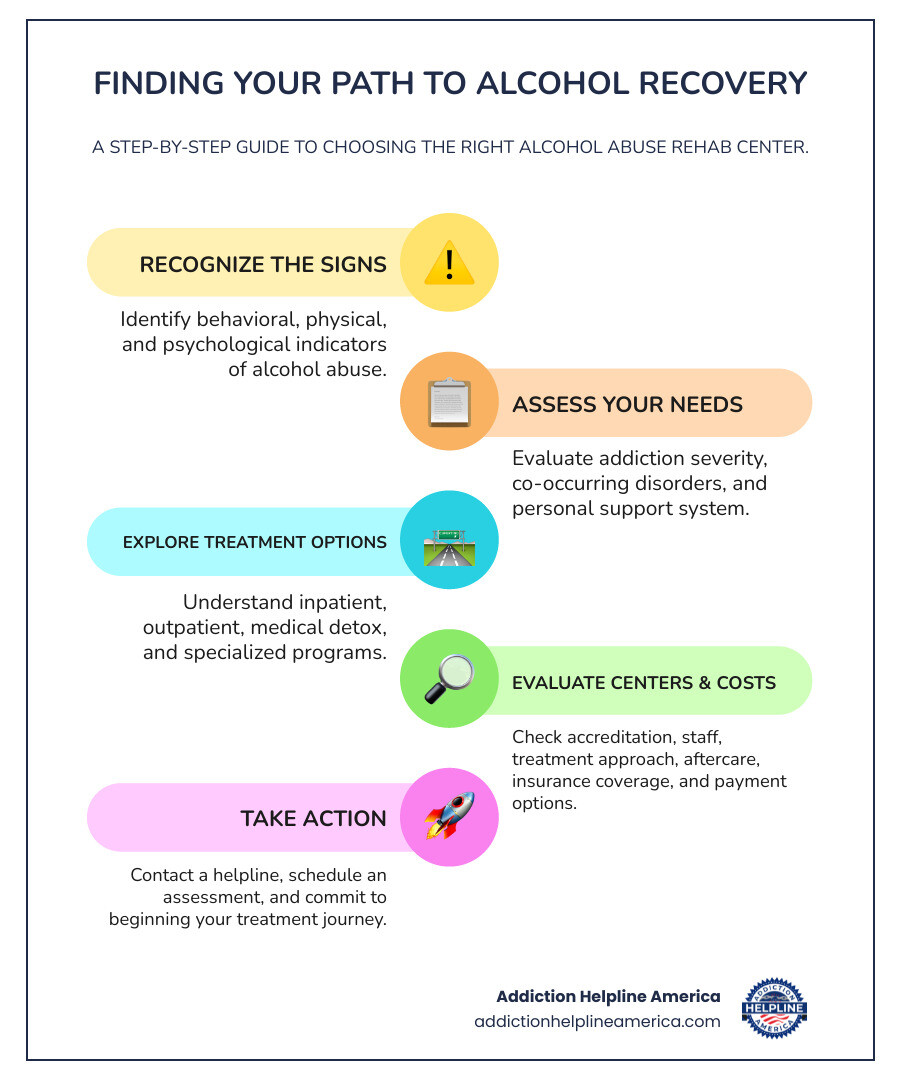
In this guide, we’ll walk you through recognizing when it’s time to seek help, understanding your treatment options, choosing a quality facility, navigating insurance and costs, and planning for life after rehab. You’ll find actionable steps, expert insights, and resources to help you make the best decision for your recovery journey.
If you need immediate support, call our free helpline at 844-561-0606 to speak with a compassionate specialist who can answer your questions and help you take the first step.
Learn more about alcohol abuse rehab centers:
Recognizing the Need for Help: Signs of Alcohol Abuse

Acknowledging a problem with alcohol is often the hardest, yet most crucial, step toward recovery. Alcohol Use Disorder (AUD) is not a choice or a character flaw; it’s a complex medical condition. Just like diabetes or heart disease, it requires professional care and support. We approach this struggle with empathy, knowing that beneath the surface, there’s often pain and a desire for change.
So, how do we know when it’s time to seek help from alcohol abuse rehab centers? The signs can manifest in various ways, impacting a person’s behavior, physical health, and psychological well-being. Healthcare providers diagnose AUD when a person has two or more specific symptoms within a year.
Here are some key indicators:
-
Behavioral Signs:
- Drinking more or longer than intended.
- Wanting to cut down or stop drinking, but being unable to.
- Spending a lot of time drinking, or recovering from its effects.
- Experiencing strong cravings for alcohol.
- Continuing to drink despite it causing trouble with family or friends.
- Giving up important activities (social, occupational, recreational) because of drinking.
- Engaging in risky behaviors while drinking, such as driving under the influence.
-
Physical Symptoms:
- Needing to drink much more alcohol than before to get the desired effect (increased tolerance).
- Experiencing withdrawal symptoms when alcohol wears off, such as shakiness, restlessness, nausea, sweating, or even seizures.
- Visible signs of neglect, such as poor hygiene or changes in appearance.
- Alcohol interfering with taking care of home or family responsibilities, or causing job troubles.
-
Psychological Indicators:
- Continuing to drink even though it makes you feel depressed or anxious.
- Experiencing memory blackouts or confusion.
- Increased irritability, mood swings, or feelings of hopelessness.
- Co-occurring mental health conditions are very common. About 8 million Americans living with substance use disorder also have one or more co-existing psychiatric diseases, such as depression or anxiety. Addressing these together is vital for successful recovery.
If you recognize these signs in yourself or a loved one, it’s a clear signal that professional help may be needed. Ignoring these symptoms can lead to more severe health complications, including organ failure and cancer. You don’t have to face this alone.
More info about Mental Wellness Support
Call our free, confidential helpline at 844-561-0606 for guidance.
Understanding Your Options: Types of Alcohol Abuse Rehab Centers
When considering alcohol abuse rehab centers, it’s helpful to know that a wide spectrum of care exists. There’s no one-size-fits-all solution; treatment is most effective when it’s individualized and aligns with a person’s specific needs, severity of AUD, and personal circumstances. We often refer to this as a “continuum of care,” where individuals can transition between different levels of support as their recovery progresses.
The American Society of Addiction Medicine defines four basic levels of care for alcohol treatment: outpatient, intensive outpatient/partial hospitalization, residential, and intensive inpatient. Each level offers varying degrees of structure and intensity.

Inpatient vs. Outpatient Programs
The fundamental difference between inpatient and outpatient programs lies in the living arrangement during treatment. Both offer valuable services, but they cater to different needs and circumstances.
| Feature | Inpatient Rehab | Outpatient Rehab |
|---|---|---|
| Structure | Highly structured, 24/7 supervision | Flexible schedule, allows living at home |
| Intensity | Intensive therapy, round-the-clock medical care | Scheduled sessions, varying intensity |
| Best For | Severe AUD, acute withdrawal risks, co-occurring disorders, unstable home environment | Mild to moderate AUD, strong support system, work/school commitments |
| Pros | Immersive environment, constant support, medical supervision, separation from triggers | Flexibility, lower cost, maintain daily responsibilities, family involvement |
| Cons | Disruption to daily life, higher cost, less real-world application initially | Exposure to triggers, less intensive supervision, requires strong self-discipline |
- Inpatient (Residential) Treatment: This involves residing at a facility for the duration of treatment, typically weeks to months. It offers a structured, substance-free environment with 24/7 medical and clinical supervision. Inpatient programs are ideal for individuals with severe AUD, those who have an unstable home environment, or those with co-occurring mental health disorders that require integrated care. These centers often include licensed alcohol and drug counselors, social workers, nurses, and doctors, providing a comprehensive approach to healing.
- Outpatient Programs: These allow individuals to live at home and attend scheduled treatment sessions at a facility. They offer flexibility, making them suitable for those with mild to moderate AUD, strong social support systems, or commitments like work or school.
- Partial Hospitalization Programs (PHP): Often called “day treatment,” PHPs are more intensive than standard outpatient care, with sessions lasting several hours a day, multiple days a week. They provide intensive short-term treatment to help individuals avoid hospitalization or as a step-down from inpatient care.
- Intensive Outpatient Programs (IOP): IOPs offer a step down from PHP, with fewer hours of treatment per week. They focus on group therapy, individual counseling, and relapse prevention strategies while allowing individuals to continue living at home and maintain daily responsibilities.
Explore inpatient options
Learn more about outpatient care
The First Step: Medically Supervised Detox
For many individuals struggling with severe AUD, the very first and most critical step is medically supervised detoxification, or “detox.” Alcohol withdrawal can be dangerous, even life-threatening, with symptoms ranging from tremors and hallucinations to seizures and delirium tremens (DTs). Trying to detox at home without medical supervision is highly risky and not recommended.
Medically supervised detox occurs in a specialized facility, often within an inpatient alcohol abuse rehab center or hospital setting. Here, medical professionals monitor vital signs, manage withdrawal symptoms with appropriate medications (like benzodiazepines), and ensure the individual’s safety and comfort. This process typically takes 2 to 7 days, allowing the body to safely rid itself of alcohol.
Detox is not treatment for AUD itself, but rather a necessary first phase that stabilizes the individual, making them physically ready to engage in the deeper therapeutic work of rehabilitation. It’s about getting the alcohol out of the system safely, so the real healing can begin.
The role of detox in recovery
Find a medical detox program
Key Components of a Successful Rehabilitation Program
Regardless of the type of program, successful alcohol abuse rehab centers share several core components. These elements work together to address the multifaceted nature of addiction, promoting healing and long-term sobriety. We believe in an approach that is both evidence-based and holistic, custom to the individual.
At the heart of effective rehabilitation is the commitment to evidence-based treatment—methods that have been scientifically proven to be effective. This ensures that the care provided is rooted in research and best practices. Beyond that, a holistic approach recognizes that addiction affects the whole person—mind, body, and spirit. This can include therapies like equine and animal therapy, creative arts therapy, mindfulness, and meditation, which complement traditional treatments. Crucially, every successful program develops a personalized care plan, recognizing that “one size doesn’t fit all” when it comes to recovery.
The Role of Therapy and Counseling
Therapy and counseling are the cornerstones of any effective alcohol rehabilitation program. They help individuals understand the root causes of their addiction, develop coping mechanisms, and build healthier behavioral patterns.
- Individual Therapy: One-on-one sessions with a therapist provide a safe space to explore personal issues, trauma, triggers, and develop specific strategies for managing cravings and high-risk situations.
- Group Therapy: These sessions offer peer support, allowing individuals to share experiences, gain insights from others, and practice new social skills in a supportive environment. It fosters a sense of community and reduces feelings of isolation.
- Family Counseling: Addiction is often viewed as a family illness, affecting everyone involved. Family therapy helps improve communication, rebuild trust, and educate loved ones on how to support the recovery process without enabling.
- Cognitive Behavioral Therapy (CBT): A highly effective therapy that helps individuals identify and change negative thought patterns and behaviors that contribute to alcohol use.
- Dialectical Behavior Therapy (DBT): Often used for individuals with co-occurring mental health disorders, DBT focuses on emotional regulation, distress tolerance, interpersonal effectiveness, and mindfulness.
- Motivational Improvement Therapy (MET): This approach helps individuals build motivation to change their drinking behavior by exploring and resolving ambivalence about sobriety.
- Other Behavioral Treatments: Programs may also incorporate Contingency Management (using incentives for positive behaviors), 12-step facilitation (encouraging engagement with groups like AA), and Acceptance and Mindfulness-based therapies.
Specialized Programs for Unique Needs
Effective alcohol abuse rehab centers recognize that certain demographics or individuals with specific conditions benefit from custom approaches. These specialized programs address unique challenges and provide a more targeted, supportive environment.
- Dual Diagnosis Treatment: Many individuals struggling with AUD also have co-occurring mental health conditions such as depression, anxiety, or bipolar disorder. This is known as “dual diagnosis” or “comorbidity.” Integrated treatment addresses both conditions simultaneously, as treating one without the other often leads to relapse. NewYork-Presbyterian, for instance, offers specialized treatment for adults with co-occurring mental health conditions.
- Programs for Women: Women often face unique challenges in addiction and recovery, including different biological responses to alcohol, societal pressures, and higher rates of co-occurring trauma. Women-specific programs provide a safe and understanding space to address these issues.
- Veterans Programs: Our veterans, who have selflessly served our country, often carry the invisible wounds of trauma, which can contribute to substance use. Many alcohol abuse rehab centers offer specialized programs for veterans, understanding their unique experiences and providing veteran-centered care. For example, Seafield Center, a veteran-owned and operated facility, has a history of providing substance abuse treatment to those who have served.
- LGBTQ+ Affirming Care: Members of the LGBTQ+ community can face unique stressors and discrimination that contribute to higher rates of substance use. Affirming programs provide culturally competent care in a supportive and inclusive environment.
- Other Specialized Programs: Some centers offer programs for professionals, first responders, military personnel, or young adults, catering to their specific needs, career demands, and life stages.
Find a dual diagnosis center
Explore women’s rehab centers
Medication-Assisted Treatment (MAT)
Medication-Assisted Treatment (MAT) combines FDA-approved medications with counseling and behavioral therapies to treat substance use disorders. For alcohol addiction, MAT can be a highly effective tool, particularly in managing cravings and preventing relapse. Taking medications for AUD is not “trading one addiction for another”; the approved medications are nonaddictive and help manage a chronic disorder, much like medication for asthma or diabetes.
Three FDA-approved medications are commonly used in alcohol abuse rehab centers:
- Naltrexone (Vivitrol): This medication blocks the euphoric and sedative effects of alcohol, reducing cravings and the pleasurable sensations associated with drinking. It can be taken as a daily pill or a once-a-month injectable (Vivitrol), which can offer better consistency for some patients.
- Acamprosate (Campral): Acamprosate helps combat cravings after abstinence has begun. It works by restoring the balance of certain brain chemicals that are disrupted by chronic alcohol use. Unlike disulfiram, it does not cause sickness if alcohol is consumed.
- Disulfiram (Antabuse): This medication acts as a deterrent. If an individual consumes alcohol while taking disulfiram, they will experience unpleasant physical reactions such as nausea, vomiting, flushing, and heart palpitations. This helps prevent drinking by creating an immediate, negative consequence.
MAT is most effective when integrated into a comprehensive treatment plan that includes therapy and support. It helps individuals manage the physical aspects of addiction, allowing them to focus more fully on the psychological and behavioral changes necessary for long-term recovery.
Learn about prescription drug detox
Navigating the Logistics: How to Choose and Pay for Rehab
Finding the right alcohol abuse rehab centers can feel like a daunting task, but with the right information, you can make an informed decision that sets the stage for successful recovery. We understand that logistics like choosing a facility and understanding payment options can be major barriers, and we’re here to help you steer them.
Call 844-561-0606 to discuss your options.
How to Choose the Right Alcohol Abuse Rehab Center
Choosing the right rehab center is a deeply personal decision, and it’s important to ask thorough questions to ensure the facility meets your needs or those of your loved one.
Here are key factors to consider:
- Accreditation: Look for facilities accredited by reputable organizations like the Joint Commission or CARF (Commission on Accreditation of Rehabilitation Facilities). These accreditations signify a commitment to high standards of quality and safety in patient care. Many state-licensed facilities, such as those licensed by the New York State Office of Addiction Services & Supports (OASAS), also meet rigorous standards.
- Staff Credentials: Ensure the treatment team includes licensed and board-certified professionals, such as addiction doctors (addiction medicine physicians and addiction psychiatrists), licensed counselors, social workers, and nurses. Their expertise is crucial for effective treatment.
- Treatment Philosophy: Does the center use evidence-based treatments? Do they offer a holistic approach? Do they prioritize personalized care plans? An assessment will guide you toward the best approach.
- Location and Environment: Consider whether a local program or one that requires travel out of state is more suitable. Sometimes, a change of environment can be beneficial for focusing on recovery. The setting itself can also impact comfort and healing, with some centers offering serene or specialized environments.
- Success Rates and Outcomes: While specific success rates can be hard to quantify due to various factors, ask centers about their approach to measuring outcomes and how they define long-term success. Research often supports longer treatment durations—90 days or more—for more favorable outcomes.
- Aftercare Planning: A good rehab center doesn’t just focus on the time spent in the facility; they also provide comprehensive aftercare planning to support long-term sobriety. This is a critical component for sustained recovery.
A complete guide to choosing a rehab center
Understanding the Cost of Alcohol Abuse Rehab Centers
The cost of alcohol abuse rehab centers can vary significantly, depending on the type of program, duration, location, and amenities. We know this is a major concern for many families, but it’s important not to let cost deter you from seeking help.
- Average Costs: The average cost for a person in New York who seeks substance abuse treatment is $56,653. For a 30-day inpatient stay in New York, the average cost can be around $629.48 per day without insurance coverage. For outpatient treatment in New York, the average cost can be about $56.87 per day without insurance coverage. These figures illustrate the wide range, but also highlight how insurance can significantly reduce out-of-pocket expenses.
- Insurance Coverage: Most major health insurance providers, including Aetna, BlueCross BlueShield, Cigna, and United Healthcare, offer coverage for addiction treatment. The extent of coverage depends on your specific plan. We highly recommend verifying your insurance benefits directly with the rehab center or through our confidential helpline.
- Private Pay Options: For those without insurance or who prefer not to use it, many centers offer private pay options, which might include payment plans or financing.
- State-Funded Programs: Programs for those without insurance or with limited financial resources are often available at the local state or county level. While these programs may have waitlists, they provide vital access to care. For example, individuals in states like Alabama can find free rehab options, demonstrating that financial barriers can be overcome.
Addiction Helpline America provides free and confidential guidance to help you understand your options and connect with centers that fit your financial situation. Don’t hesitate to reach out.
Check your insurance coverage now
Find free rehab options
Life After Rehab: The Importance of Ongoing Support
Completing a program at one of the alcohol abuse rehab centers is a monumental achievement, but it’s just the beginning of a lifelong journey. Recovery is an ongoing process, not a destination. Building a sober life requires sustained effort, new coping skills, and a strong support network. We emphasize the importance of aftercare and ongoing support because it significantly increases the chances of long-term success.
Aftercare and Relapse Prevention
Aftercare planning begins during rehabilitation and is crucial for navigating the challenges of returning to daily life. It’s about creating a roadmap for continued sobriety and preventing relapse.
- Sober Living Homes: These facilities provide a structured, supportive, and substance-free environment for individuals transitioning from inpatient treatment back into independent living. They serve as a bridge, offering accountability and peer support.
- Support Groups: Mutual-support groups are invaluable for long-term recovery. Organizations like Alcoholics Anonymous (AA), Narcotics Anonymous (NA), SMART Recovery®, Women for Sobriety, and LifeRing provide peer support, shared experiences, and a sense of community. For families, groups like Al-Anon and Nar-Anon offer crucial support.
Find a support group - Ongoing Therapy: Continuing individual or group therapy after rehab helps reinforce learned skills, address new challenges, and provide consistent professional guidance.
- Creating a Relapse Prevention Plan: This involves identifying personal triggers, developing coping strategies for high-risk situations, and establishing a clear plan for what to do if a craving arises or a slip occurs. It’s about building resilience and preparing for potential obstacles.
Learn about aftercare planning
Embracing the Journey
It’s important to recognize that recovery is rarely a linear path. Setbacks can be a part of the process, and they don’t erase the progress made. We encourage self-compassion and viewing any challenges as learning opportunities, not failures. Building a strong support network, celebrating every milestone—big or small—and consistently engaging with aftercare resources are key to navigating this journey successfully.
Read about relapse in recovery
Take the First Step Towards a New Beginning
We’ve covered a lot of ground, from recognizing the signs of alcohol abuse and understanding different types of alcohol abuse rehab centers, to navigating the complexities of choosing a program and planning for life after rehab. The most important takeaway is this: recovery from Alcohol Use Disorder is not just possible—it’s happening every day for millions of people.
If you or a loved one is struggling, change is possible, and a healthier, happier life is within reach. Don’t let fear or uncertainty prevent you from taking the first step. Our team at Addiction Helpline America is here to provide free, confidential, and personalized guidance to connect you with the right recovery program. We’re dedicated to helping you find the support you deserve.
Call 844-561-0606 to speak with a specialist.
Find the right alcohol addiction rehab center for you