
Why Aftercare Planning Services Are Your Bridge to Lasting Recovery
Aftercare planning services are structured support programs designed to help individuals maintain sobriety and build a healthy life after completing formal addiction treatment. Here’s what you need to know:
What Aftercare Planning Services Include:
- Continued therapy and counseling (individual, group, or specialized like CBT)
- Support group connections (AA, NA, peer meetings)
- Sober living arrangements (transitional housing, halfway houses)
- Family involvement programs (therapy, education, rebuilding relationships)
- Medical and psychiatric follow-up (medication management, co-occurring disorder treatment)
- Alumni programs (ongoing community connection and accountability)
Why They Matter:
Research shows that 40 to 60 percent of individuals recovering from addiction may experience a relapse. The risk is highest in the first few months after leaving rehab. Aftercare planning services bridge the gap between the structured environment of treatment and the challenges of independent living, providing the tools, support, and accountability needed to sustain recovery.
Finishing rehab is a major accomplishment. But it’s not the end of the journey—it’s the beginning of a new chapter. The transition back to everyday life brings real challenges: reconnecting with family, managing stress without substances, navigating social situations, and building a life worth staying sober for. Without a solid plan and ongoing support, these challenges can feel overwhelming.
That’s where aftercare planning services come in. They’re not just a safety net—they’re a roadmap for building the life you want in recovery. An effective aftercare plan anticipates obstacles, reinforces the coping skills you learned in treatment, and connects you with a community of people who understand what you’re going through.
At Addiction Helpline America, we connect individuals and families with treatment providers who specialize in comprehensive aftercare planning services, ensuring you have the support needed for lasting recovery. Our team has helped countless individuals find personalized aftercare resources that fit their unique needs and circumstances.
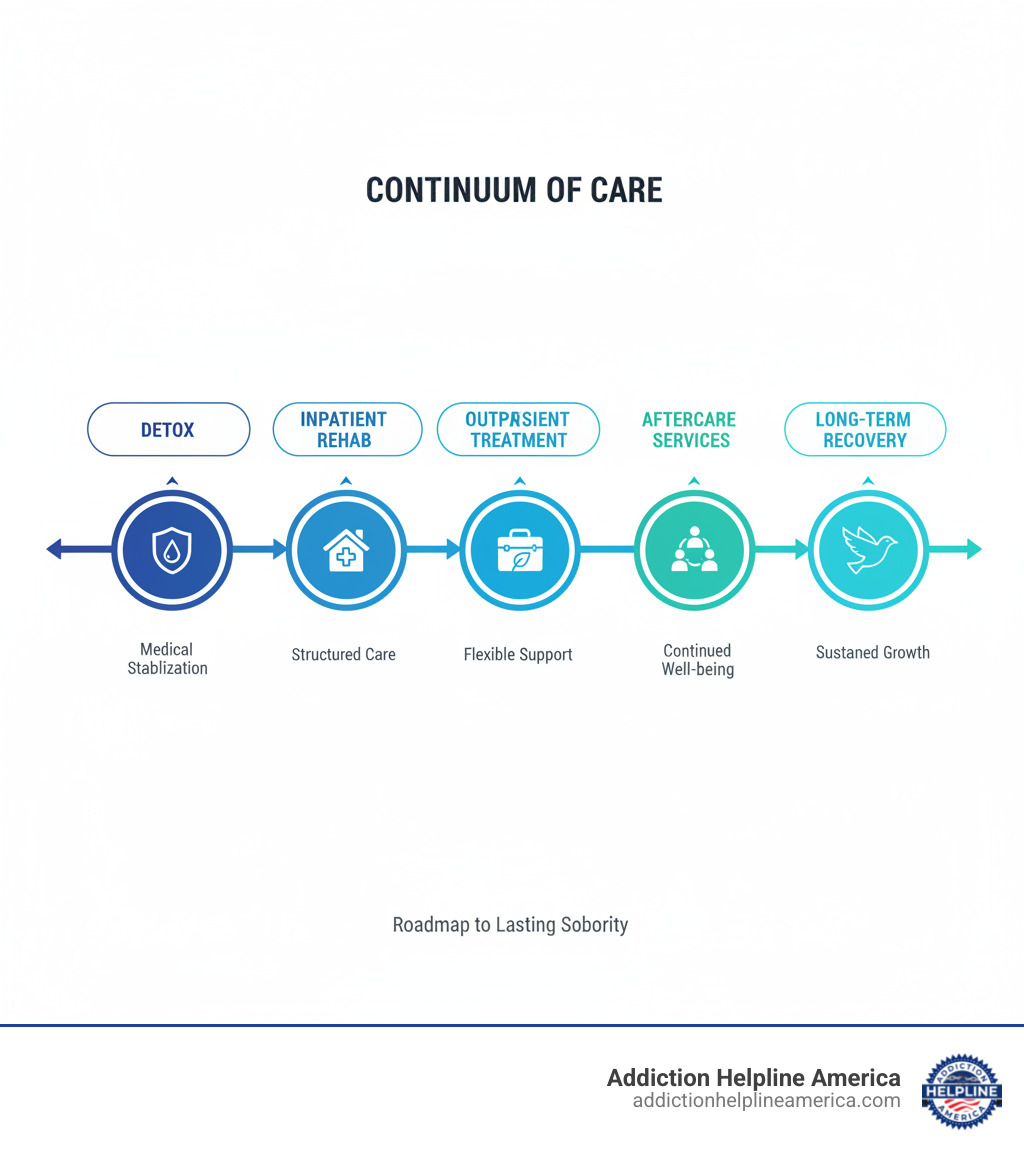
What is Aftercare and Why is it Crucial for Lasting Sobriety?
Think of aftercare planning services as your personal GPS for life after rehab. You’ve completed treatment—that’s a huge accomplishment—but now you’re heading back into the real world, and you need directions. Aftercare, sometimes called continuing care, is exactly that: ongoing support and services that help you stay on track once formal treatment ends.
Here’s the thing: aftercare isn’t just “rehab lite” or an optional add-on. It’s a critical, structured approach to protecting everything you worked so hard to achieve in treatment. It’s about preventing relapse, managing triggers, and building the kind of life that makes staying sober feel worth it.
Why does this matter so much? Because recovery doesn’t end when you walk out of the treatment center. In fact, that’s when the real work begins. The transition from a structured, supportive environment back to everyday life—with all its stressors, temptations, and responsibilities—can be incredibly challenging. The risk of relapse is highest in those first few months after leaving rehab, which is exactly when you need support most.
The science backs this up. Research consistently shows that people who participate in structured aftercare are significantly more likely to maintain long-term recovery. In fact, for each consecutive month someone stays engaged in an aftercare plan, their likelihood of staying sober increases by 20 percent. That’s not a small number—that’s life-changing. You can read more about scientific research on aftercare effectiveness if you’re interested in the data behind these outcomes.
So what exactly do aftercare planning services help with? They focus on four key areas that make all the difference:
Sustaining treatment gains means taking everything you learned in treatment—the coping strategies, the new thought patterns, the healthy habits—and making them stick. It’s one thing to practice these skills in rehab; it’s another to use them when you’re stressed at work or dealing with family drama. Aftercare helps you bridge that gap.
Relapse prevention is at the heart of any good aftercare plan. It’s about identifying your personal triggers before they catch you off guard and having a game plan ready. Whether it’s certain people, places, emotions, or situations that put you at risk, aftercare helps you spot the warning signs early and respond effectively.
Trigger management takes prevention a step further. Life will throw curveballs—that’s guaranteed. You’ll face stress, disappointment, temptation, and difficult emotions. Aftercare gives you the tools and ongoing support to handle these challenges without returning to old patterns.
Building a healthy, balanced life is about more than just not using substances. It’s about creating a life you actually want to live. This includes taking care of your physical health, rebuilding relationships, finding meaningful work or education, developing new hobbies, and connecting with people who support your recovery.
While programs like a 90-day rehab program provide an excellent foundation, aftercare is what helps you build something lasting on that foundation. It’s the difference between completing treatment and truly changing your life.
The bottom line? Recovery is a journey, not a destination. And like any journey, you’re more likely to reach where you want to go when you have a map, a support system, and someone to call when you hit a rough patch. That’s what aftercare planning services provide—and that’s why they’re crucial for lasting sobriety.
The Essential Components of an Effective Aftercare Plan
Here’s something important to understand right from the start: aftercare planning services aren’t cookie-cutter solutions. What works beautifully for one person might not be the right fit for another. That’s why truly effective aftercare is always individualized—built around your specific needs, your personal challenges, and your own recovery goals.
Think of your aftercare plan as a custom-built toolkit. Some of us need more intensive therapy support. Others thrive with peer connections and group settings. Many benefit from structured living environments. The best plans combine multiple approaches, creating a safety net that’s both strong and flexible enough to support you through whatever comes next.
The goal? To help you build a robust support network and develop the life skills that make sustained recovery not just possible, but genuinely sustainable.

Continued Therapy and Counseling
Let’s be honest: finishing formal treatment doesn’t mean you suddenly have all the answers. Life keeps throwing curveballs, and having ongoing professional support can make all the difference between catching those curveballs and getting knocked off balance.
Continued therapy and counseling are absolute cornerstones of effective aftercare. They help you maintain that recovery momentum you built in treatment and address new challenges before they snowball into bigger problems. Research shows that ongoing counseling significantly improves long-term recovery outcomes.
Individual therapy gives you a confidential, judgment-free space to process emotions, work through triggers, and dig into underlying issues that might still be surfacing. It’s your time to go deep, refine your coping strategies, and get personalized support custom exactly to what you’re experiencing right now.
Group therapy offers something different but equally powerful: connection. There’s something profound about sitting in a room with people who truly get it—who understand the daily struggles and small victories that others in your life might not grasp. You learn from each other’s experiences, practice new communication skills in a safe environment, and build accountability through shared commitment.
Many aftercare plans also incorporate specialized therapeutic approaches. Cognitive Behavioral Therapy (CBT) helps you identify and challenge those negative thought patterns that can lead you back toward old behaviors. Dialectical Behavior Therapy (DBT) focuses on emotional regulation and building healthier interpersonal relationships—skills that are absolutely crucial for navigating the stresses of everyday life without substances.
The beauty of continued therapy is that it allows you to keep growing. You’re not just maintaining what you learned in treatment; you’re building on it, going deeper, developing resilience that will serve you for years to come. For a comprehensive look at therapy options and mental health support, check out our complete guide to mental health treatment centers.
Support Groups and Peer Connection
If there’s one truth that holds across almost every recovery journey, it’s this: connection heals. Isolation, on the other hand, is one of the fastest paths back to relapse.
Support groups are powerful precisely because they combat that isolation. They create a sense of belonging and provide a safe space where you can share honestly without fear of judgment. According to research published in Substance Abuse and Rehabilitation, participating in support groups doesn’t just make you feel better—it actually reduces substance abuse, eases cravings, and significantly improves self-confidence and self-efficacy in recovery.
12-Step programs like Alcoholics Anonymous (AA) and Narcotics Anonymous (NA) have helped millions of people build lasting sobriety. These peer-led programs offer a structured approach through the 12 Steps, emphasizing shared experiences, mutual support, and often a spiritual framework. The meetings are free, widely available, and built on the principle that people who’ve walked the path of addiction can uniquely support each other.
One of the most valuable aspects of these programs is finding a sponsor—an experienced member who’s been through the steps and can guide you personally through your own journey. Think of a sponsor as a mentor who’s available when you’re struggling, who celebrates your wins, and who holds you accountable with compassion.
Beyond formal programs, support groups help you build genuine sober relationships. You’re creating a new social circle—people who understand that “just one drink” isn’t an option, who know what it’s like to steer a world that often revolves around alcohol, and who can be there for you at 2 a.m. when cravings hit hard.
If you or a loved one is specifically dealing with alcohol addiction, our guide to support for alcoholics offers additional resources and information.
Sober Living and Transitional Housing
For many people, the jump from residential treatment straight back to independent living feels like being pushed into the deep end before you’re ready to swim. That’s where sober living homes come in—they’re the shallow end where you can practice your strokes with support nearby.
Also called transitional housing or halfway houses, these environments offer something invaluable: a structured, drug- and alcohol-free living space that bridges the gap between treatment and full independence. Research published in the Journal of Psychoactive Drugs found that sober living situations after treatment significantly promote long-term sobriety, increase employment rates, and reduce symptoms of mental illness.
What makes these environments work? Structure and accountability. Most sober living homes have house rules—curfews, mandatory chores, required attendance at support group meetings, regular drug testing. This might sound restrictive, but many residents find it reassuring. The structure removes the burden of making every decision yourself while you’re still finding your footing.
You’re also living with peers who are on the same journey. There’s built-in mutual support, shared understanding, and collective responsibility for maintaining a recovery-focused home. When everyone around you is committed to sobriety, it’s easier to stay committed yourself.
The environment is completely substance-free, which removes immediate temptations and helps reinforce your new patterns. You’re not white-knuckling it alone in an apartment where you used to drink or use. You’re in a space specifically designed to support your recovery.
Addiction Helpline America can help you find local rehab centers that offer or connect you with housing options as part of comprehensive aftercare planning.
Family Involvement and Education
Addiction doesn’t happen in a vacuum. It affects everyone who loves you—parents, partners, children, siblings, close friends. That’s why truly effective aftercare planning services include the people who matter most in your life.
Family involvement in recovery isn’t just nice to have; it’s often a major predictor of long-term success. Research confirms that when families are engaged in the recovery process, outcomes improve significantly.
Rebuilding relationships takes intentional work. Aftercare often includes family therapy sessions designed to improve communication, resolve longstanding conflicts, and address the ways addiction has impacted family dynamics. These sessions provide a safe space—with professional guidance—to start healing wounds and rebuilding trust that may have been broken over months or years.
Support groups for families, like Al-Anon, give your loved ones their own network of understanding peers. They learn that they’re not alone in what they’ve experienced. They find how to set healthy boundaries, understand the disease of addiction, and support your recovery without enabling behaviors that could actually harm your progress.
Education is crucial too. When your family understands what you’re going through—the triggers you’re managing, the daily challenges of early recovery, the importance of certain boundaries—they’re better equipped to create a supportive home environment. They learn what true support looks like versus what might seem helpful but actually undermines your recovery.
If someone you love is struggling and you’re not sure how to help, our guide on how to help someone with an addiction provides practical, compassionate guidance.
Medical and Psychiatric Follow-Up
Recovery isn’t just about addressing substance use—it’s about treating the whole person. For many of us, that means managing physical health issues, mental health conditions, or both alongside our recovery journey.
Medical and psychiatric follow-up ensures continuity of care. Regular check-ups with doctors address any physical health concerns that may have been neglected during active addiction or that arose from substance use. These appointments keep you healthy and catch potential problems early.
For those managing co-occurring disorders—conditions like depression, anxiety, PTSD, or bipolar disorder alongside addiction—psychiatric follow-up is absolutely essential. This is often called dual diagnosis treatment, and it recognizes that you can’t successfully treat addiction without also treating underlying mental health conditions. They’re intertwined, and both need attention.
Medication management is another critical piece. If you’re using medication-assisted treatment (MAT) like Suboxone or Methadone, or if you’re taking psychiatric medications, consistent follow-up ensures your dosages remain appropriate, side effects are monitored, and the medications continue working effectively. Stopping or changing medications without proper medical supervision can be dangerous and increase relapse risk.
We understand that accessing these services can sometimes be challenging. That’s why we can help connect you with resources, including options to find an online Suboxone doctor for continued medication support when in-person visits aren’t convenient or available.
Alumni Programs
There’s something special about staying connected to the community that supported your initial healing. Many treatment centers recognize this and offer alumni programs as an ongoing resource for graduates.
Alumni programs provide a vital bridge between formal treatment and sustained independent recovery. They organize regular events, meetings, and social activities where you can reconnect with peers and staff from your treatment experience. These gatherings remind you that you’re part of something bigger—a community of people who understand and who are rooting for your success.
Peer support events through alumni networks offer ongoing encouragement, shared wisdom, and solidarity. Maybe it’s a monthly coffee meetup, a sober holiday celebration, or an outdoor activity. These events show you that recovery can be fun, that sober socializing is possible, and that you’re definitely not alone in this journey.
Many alumni programs also offer mentorship opportunities. If you’ve been in recovery for a while and feel solid in your sobriety, becoming a mentor to someone newer in their journey can be incredibly rewarding. You’re giving back, reinforcing your own recovery, and providing hope to someone who might be exactly where you once were.
There’s also an element of continued accountability. Knowing you’ll see familiar faces at the next alumni event, knowing people will notice if you disappear, knowing there’s a community that cares—all of this reinforces your commitment to staying sober.

Personalizing Your Aftercare Planning Services
Recovery is deeply personal. What works beautifully for one person might not be the right fit for another. That’s why aftercare planning services need to be as unique as you are—custom to your specific needs, goals, and the challenges you face. The best aftercare plans aren’t static documents gathering dust in a drawer; they’re dynamic, living strategies that evolve as you grow and change in recovery.
Your active participation in creating and adjusting your aftercare plan is essential. You know yourself better than anyone else. You understand your triggers, your strengths, your support system, and what motivates you to stay sober. When you take an active role in planning your aftercare, you’re not just following someone else’s roadmap—you’re building your own.
How Plans Differ After Inpatient vs. Outpatient Treatment
The type of treatment you complete plays a significant role in shaping your aftercare needs. Someone stepping out of a long-term residential program faces different challenges than someone who’s been attending outpatient sessions while living at home. Understanding these differences helps ensure your aftercare plan addresses what you’ll actually encounter in your daily life.
| Aspect | After Inpatient Treatment | After Outpatient Treatment |
|---|---|---|
| Primary Focus | Reintegration into daily life after an extended period away; rebuilding routines and relationships | Maintaining momentum and strengthening skills already being practiced in everyday settings |
| Housing Needs | May benefit significantly from sober living or transitional housing to ease the return to independent living | Typically already living independently; focus on maintaining a supportive home environment |
| Structure | Requires more intensive structure initially to replace the 24/7 support of residential care | Needs consistent but less intensive structure; continuing established patterns |
| Social Connections | Rebuilding social networks outside of treatment; may feel disconnected from pre-treatment life | Already maintaining some social connections; focus on strengthening sober relationships |
| Skill Application | Learning to apply recovery skills in real-world situations for the first time | Refining and deepening skills already being practiced during treatment |
If you’re considering long-term residential care, our guide to long-term inpatient programs can help you understand what to expect. For those exploring outpatient options, check out our resource on outpatient alcohol rehab.
Taking an Active Role in Your Aftercare Planning Services
The most successful aftercare plans are the ones you help create. This isn’t about passively receiving instructions—it’s about becoming your own best advocate. Self-advocacy in recovery means speaking up about what you need, setting goals that matter to you, and communicating honestly with your treatment team about what’s working and what isn’t.
Start by setting personal goals that reflect your values and vision for your life in recovery. Maybe you want to repair relationships with family members, return to school, find meaningful employment, or simply wake up each day feeling present and grateful. These goals become the foundation of your aftercare plan.
Communicate your needs clearly to your therapists, counselors, and case managers. If you know that certain situations trigger cravings, say so. If you’re struggling with anxiety or depression, speak up. If you need help finding housing or employment resources, ask. The people supporting your recovery can’t read your mind, but they genuinely want to help when they understand what you’re facing.
Build your personal support system intentionally. This might include family members who understand your recovery, friends who support your sobriety, a sponsor from a 12-step program, or peers from treatment. Surround yourself with people who encourage your growth and hold you accountable with love.
Create healthy routines that support your recovery. This might mean establishing a morning meditation practice, joining a gym, volunteering, attending regular support group meetings, or dedicating time to a hobby you love. These routines provide structure, purpose, and positive ways to spend time that once might have been consumed by substance use.
For more insights on building a recovery-friendly lifestyle, explore resources on lifestyle adjustments for recovery.
Adapting Your Plan for Evolving Needs
Here’s something important to remember: recovery isn’t a straight line. You’ll have good days and challenging days. You’ll face unexpected stressors and celebrate surprising victories. Your aftercare plan needs to be flexible enough to adapt as your life changes.
Review and adjust your plan regularly. What felt essential in your first month of recovery might look different six months later. Maybe you’ve mastered certain coping skills and are ready to focus on new challenges. Perhaps new stressors have emerged that require additional support. Schedule regular check-ins with your therapist or case manager to assess what’s working and what needs to change.
Handle new stressors proactively. Life will throw curveballs—job changes, relationship challenges, health issues, financial pressures. When these arise, don’t wait until you’re overwhelmed to seek support. Reach out to your support network, add extra therapy sessions if needed, or increase your meeting attendance. Adjusting your aftercare plan isn’t a sign of failure; it’s a sign of wisdom.
Celebrate your milestones. Recovery is hard work, and every victory deserves recognition. Whether it’s 30 days sober, six months, a year, or longer—acknowledge your progress. Celebrations don’t have to be elaborate; they just need to honor how far you’ve come. These moments of recognition fuel continued growth and remind you why you’re doing this challenging, beautiful work.
Focus on long-term growth. As you move further into recovery, your aftercare plan might shift from crisis prevention to life enrichment. You might explore new interests, deepen relationships, pursue education or career goals, or give back by helping others in early recovery. This evolution is natural and healthy—it’s a sign that recovery is becoming not just about staying sober, but about truly living.
At Addiction Helpline America, we understand that aftercare planning is an ongoing journey, not a one-time event. We’re here to connect you with treatment providers who offer comprehensive, flexible aftercare planning services that grow with you. Your recovery is unique, and your aftercare plan should be too.