Why Finding the Right Addiction Treatment in Florida Can Change Your Life
Addiction treatment in Florida offers a path to recovery through one of the nation’s most comprehensive networks of care. With over 475 treatment facilities, Florida has the third-highest number in the U.S., providing a wide range of options to fit your unique needs.
This abundance of choice is critical, especially as the state grapples with a significant rise in fentanyl-related overdoses. Seeking professional treatment is no longer just an option; it’s a vital step toward safety and a new beginning. Florida’s warm climate, strong sober communities, and diverse treatment approaches create an ideal environment for healing. Whether you need medically-supervised detox, trauma-informed therapy, or specialized care for co-occurring mental health disorders, Florida’s treatment centers offer evidence-based care custom to your needs.
At Addiction Helpline America, we’ve helped thousands of individuals and families steer the path to recovery, connecting them with quality addiction treatment in Florida that matches their specific circumstances. Our team understands Florida’s treatment landscape and can guide you toward accredited, effective programs that accept your insurance and address your unique challenges.
This guide will help you understand what makes a treatment center truly excellent, compare different types of care, and take the first confident step toward lasting recovery.
Addiction treatment Florida terms made easy:
Understanding the Types of Addiction Treatment in Florida
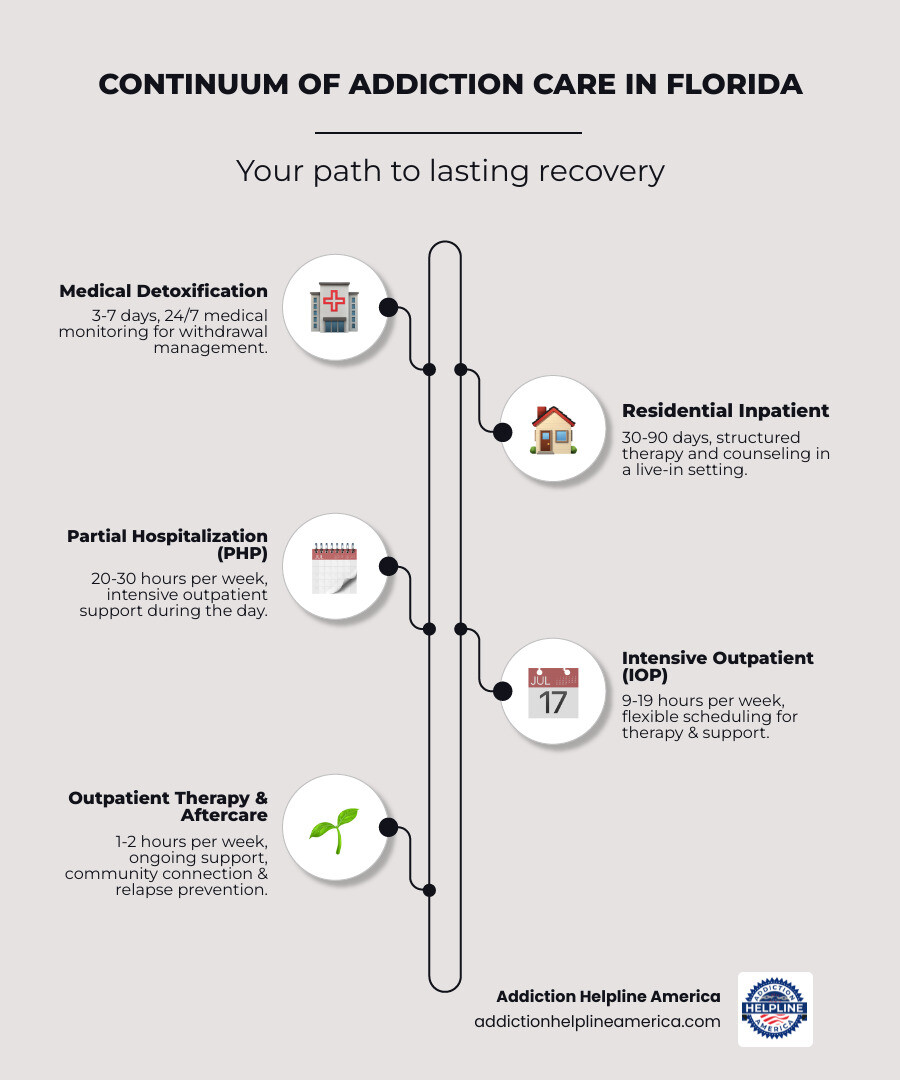
Finding the right addiction treatment in Florida starts with understanding the different levels of care available. The best approach depends on factors like the severity of the addiction, your physical health, and your home environment. Treatment is a spectrum, not a one-size-fits-all solution.
- Medical Detoxification: This is often the first step, providing a safe and medically supervised environment to manage withdrawal symptoms. This process, typically lasting 3-7 days, is crucial for substances like alcohol, opioids, and benzodiazepines, where withdrawal can be dangerous.
- Inpatient Residential Rehab: This offers an immersive, 24/7 therapeutic environment, usually for 30, 60, or 90 days. It removes you from daily triggers, allowing you to focus entirely on recovery through individual and group therapy, educational workshops, and wellness activities.
- Outpatient Programs: These programs provide a bridge back to daily life with continued support. They include Partial Hospitalization Programs (PHP), which are more intensive, and Intensive Outpatient Programs (IOP), which offer more flexibility for work or school commitments.
Many leading Florida centers also offer holistic therapies like yoga, art therapy, and mindfulness to treat the whole person—mind, body, and spirit. For more information on state-funded programs and community resources, you can visit the Florida Department of Children and Families.
The Legal Landscape: Florida’s Marchman Act
For families watching a loved one struggle with addiction and refuse help, Florida’s Marchman Act provides a unique legal tool. This law allows family members to petition a court for an individual to be involuntarily assessed and stabilized if their substance use poses a danger to themselves or others. While it’s a significant step, it can be a life-saving intervention for those who are unable to make safe decisions for themselves.
Why Choose Florida for Recovery?
People from across the country choose Florida for addiction treatment for several key reasons:
- Therapeutic Climate: The year-round sunshine and warm weather provide a naturally uplifting environment, allowing for outdoor activities that support mental and physical well-being.
- Large Sober Community: Florida, especially the southern region, has a vast and active recovery community. This provides a strong support network of meetings, sober living homes, and peers who understand the journey.
- Strong Recovery Network: With hundreds of centers, Florida offers a high degree of specialization. You can find programs custom to veterans, executives, LGBTQ+ individuals, and those with specific mental health needs.
- Benefits of Traveling for Treatment: Removing yourself from your home environment can be a powerful way to break old patterns and focus entirely on your recovery without the distractions and triggers of daily life.
7 Hallmarks of the Best Addiction Treatment Centers in Florida
With over 475 facilities across the state, choosing the right addiction treatment in Florida can be overwhelming. We’ve worked with thousands of families and identified seven essential characteristics that separate exceptional treatment centers from the rest. These hallmarks are the foundation of effective, compassionate care that leads to lasting recovery.
| Feature | What to Look For | Why It Matters |
|---|---|---|
| Accreditation | Joint Commission, CARF, Florida DCF license | Independent verification of quality and safety standards. |
| Dual Diagnosis Care | Psychiatrists and therapists on staff, integrated treatment for mental health and addiction | Addresses root causes, preventing relapse from untreated conditions. |
| Full Continuum of Care | Detox, residential, PHP, IOP, and aftercare all available | Ensures seamless transitions without gaps in care. |
| Family Programs | Family therapy, education sessions, and ongoing support | Heals relationships and improves long-term success rates. |
At Addiction Helpline America, we’ve built relationships with Florida’s most reputable treatment centers—facilities that embody these seven hallmarks. We can help you identify which programs align with your specific needs, verify your insurance coverage, and arrange for admission when you’re ready to take that first step toward recovery.
1. State Licensure and National Accreditation
When you’re searching for addiction treatment in Florida, the first thing to verify is proper licensing and accreditation. These credentials are your assurance that a treatment center meets rigorous standards for care, safety, and ethical practices.
Every legitimate treatment facility in Florida must be licensed by the Florida Department of Children and Families (DCF). This ensures the center meets baseline requirements for staffing, safety, and patient rights. If a center isn’t licensed by the DCF, it’s a major red flag.
However, the best centers go a step further by seeking national accreditation from respected organizations. Look for accreditation from The Joint Commission or CARF (Commission on Accreditation of Rehabilitation Facilities). These independent bodies conduct thorough evaluations of treatment quality and safety protocols. Accreditation signifies that a facility has voluntarily committed to upholding the highest standards in the field.
These credentials aren’t just for show; they represent a commitment to ongoing quality assurance. Accredited facilities are regularly reviewed and held accountable for patient outcomes and ethical practices. When comparing facilities, always ask about their licensing and accreditation. A reputable center will be transparent about its credentials. At Addiction Helpline America, we only work with fully licensed and accredited facilities, removing the guesswork from this crucial first step.
2. Evidence-Based, Individualized Care
Effective addiction treatment is not a one-size-fits-all approach. The best centers in Florida recognize this and build their programs around evidence-based, individualized care. This means your treatment plan is based on therapeutic methods that have been scientifically proven to be effective, and it is custom specifically to you.
Look for facilities that use well-researched therapies such as:
- Cognitive Behavioral Therapy (CBT): Helps you identify and change negative thought patterns and behaviors associated with substance use.
- Dialectical Behavior Therapy (DBT): Teaches skills for managing intense emotions, improving relationships, and handling stress.
- Eye Movement Desensitization and Reprocessing (EMDR): A powerful therapy for processing trauma, which is often a root cause of addiction.
An individualized plan considers your unique history with substance use, any co-occurring mental health conditions, your personal goals, and your life circumstances. This personalized approach ensures that you receive the most relevant and effective care for your specific needs, significantly increasing your chances of long-term recovery.
3. Integrated Dual Diagnosis and Mental Health Services
Addiction rarely exists in a vacuum. More than half of people with a substance use disorder also have a co-occurring mental health condition like depression, anxiety, or PTSD. This is known as a dual diagnosis. The most effective addiction treatment in Florida addresses both issues simultaneously through an integrated approach.
Treating only the addiction while ignoring the underlying mental health issue is a recipe for relapse. A quality treatment center will have a team that includes psychiatrists, licensed therapists, and addiction specialists who work together to create a unified treatment plan. This ensures that you’re not just stopping the substance use, but also healing the root causes that may have contributed to it.
When evaluating a facility, ask if they have a psychiatrist on staff and how they approach dual diagnosis. A strong program will offer a combination of medication management, individual therapy, and group sessions designed to tackle both the addiction and the mental health condition concurrently. This comprehensive care is essential for building a stable and lasting recovery.
4. A Full Continuum of Care
Recovery is a journey, not a single event. The best treatment centers understand this and offer a full continuum of care, providing a seamless transition from one level of treatment to the next. This prevents dangerous gaps in support that can lead to relapse.
A complete continuum of care typically includes:
- Medical Detoxification: The first step to safely manage withdrawal.
- Residential/Inpatient Treatment: An immersive, structured environment for intensive therapy.
- Partial Hospitalization Program (PHP): A step-down level of care with full days of treatment while living at home or in sober living.
- Intensive Outpatient Program (IOP): A more flexible option that allows for work or school commitments.
- Aftercare Planning: A crucial final step that includes creating a long-term recovery plan, connecting with support groups, and arranging for ongoing therapy.
When a single organization provides this full range of services, you benefit from a consistent care team that understands your history and progress. This continuity is vital for building trust and ensuring you have the right level of support at every stage of your recovery.
5. Specialized Programs for Diverse Needs
Everyone’s path to recovery is unique, and a one-size-fits-all approach to treatment is rarely effective. The leading addiction treatment centers in Florida recognize this by offering specialized programs custom to the needs of different populations. When you can connect with peers who share similar life experiences, the healing process becomes more powerful and relevant.
Look for facilities that offer specialized tracks such as:
- Veterans Programs: These programs address the unique challenges veterans face, including PTSD, combat-related trauma, and the transition to civilian life.
- LGBTQ+ Affirming Care: Provides a safe, inclusive, and understanding environment where individuals can address addiction and mental health issues without fear of judgment.
- Executive Programs: Designed for professionals who need a discreet and flexible treatment model that allows them to maintain some work responsibilities.
- Gender-Specific Groups: Men and women often face different social pressures and triggers. Gender-specific therapy allows for more open and focused discussions.
- Age-Specific Treatment: Programs for young adults or older adults address the distinct life-stage challenges that can impact recovery.
When a treatment program acknowledges and addresses your specific background and needs, you are more likely to feel understood, engage fully in the process, and achieve lasting success.
PILLAR PAGES TO USE FOR THE ARTICLE CTA
https://addictionhelplineamerica.com/find-a-rehab/
KEY SOURCES AND SEO INSIGHTS
Source Type: Information Page/Website Section
SEO Insights:
Key Headings:
H1: Freedom from addiction begins here.
H2: 15+ Years of Trusted Care, Compare Our Nationwide Addiction Facilities, Are You Covered For Treatment?, Learn About Addiction, Editorial Policy & Content Guidelines, Support Built for Veterans
Title:
Freedom from addiction begins here.
Article Type:
Information Hub/Service Description
Unique Angle:
The content focuses on a structured, guided approach to accessing addiction treatment, emphasizing ease of use and personalization, alongside a strong commitment to editorial integrity and unbiased information.
Questions Answers:
Q: What to expect?
A: Expert addiction treatment with over 15 years of trusted care, treating drug and alcohol addiction along with mental and behavioral health issues at multiple locations nationwide.
Q: Not sure where to start?
A: Follow our guided intake process. Our guided online intake process makes it easy to take the first step, whether it’s for you or someone you care about. You’ll answer a few simple questions to help us understand your unique situation and connect you with the right treatment options. It’s quick, simple, and personalized to make getting help as easy as possible.
Q: Are You Covered For Treatment?
A: Check to see if your insurance is in-network at an American Addiction Centers location. Check Coverage Now.
Bias:
The content is promotional in nature, as it is from a treatment provider aiming to attract clients. It highlights the provider’s strengths and services without presenting alternative options or a balanced view of different treatment approaches.
Industry Facts:
- American Addiction Centers (AAC) specializes in evidence-based treatment and mental healthcare services.
- AAC treats drug and alcohol addiction along with mental and behavioral health issues.
- The provider has over 15 years of experience in addiction treatment.
Unique Insights:
- The website emphasizes a guided intake process to personalize treatment options.
- They highlight a specialized program for veterans, acknowledging their unique needs.
- The content policy states a commitment to original, truthful, accurate, unbiased, and up-to-date information, free from sponsorship influence.
Actionable Steps:
- Call the provided phone number (928) 900-2021 for assistance.
- Check insurance coverage for treatment.
- Start the guided online intake process.
- Explore payment options.
- Access veteran treatment resources.
- Learn about the admission process, rehab cost, and length of stay.
Best Practices:
- Providing free, confidential, personalized guidance to find the right recovery program.
- Offering evidence-based treatment and mental healthcare services.
- Ensuring information is clear, accurate, unbiased, and up-to-date.
- Fact-checking information using reputable, credible, and current sources.
- Maintaining an editorial policy that prioritizes truthfulness and accuracy over sponsorship.
Hook:
Freedom from addiction begins here.
Unique Opinions:
- The provider positions itself as the ‘leading provider for addiction treatment nationwide’.
- They suggest their guided intake process makes getting help ‘as easy as possible’.
Topic Gaps:
- Specific details about addiction treatment programs available in Florida.
- Information on local Florida-based support groups or resources.
- Geographic specifics for Florida locations or partner facilities.
- Florida-specific statistics on addiction rates or treatment needs.
Topics Covered:
Editorial policy:
- Content guidelines
- Accuracy and bias
- Source credibility
- No advertisements or sponsorships
Insurance and payment: - Insurance coverage verification
- Payment options
- In-network facilities
Getting help: - Guided intake process
- Personalized support
- Admission process
- Length of stay
Resources: - Rehab guide
- Veteran treatment resources
- State-funded rehab
- Rehab cost
Addiction treatment: - Evidence-based treatment
- Mental healthcare services
- Drug and alcohol addiction
- Behavioral health issues
- Nationwide treatment centers
- Outpatient rehab
Real World Use Cases:
- An individual seeking help for drug or alcohol addiction can use the guided intake process to find suitable treatment options.
- Veterans can access specialized programs designed to address their specific recovery needs.
- Individuals can verify their insurance coverage to understand their financial responsibility for treatment.
All Questions:
- Are you covered for treatment?
- Not sure where to start?
- What to expect?
- Why call us?
Cta:
Call (928) 900-2021
What Why:
The main purpose is to inform potential clients about the addiction treatment services offered by American Addiction Centers, explain the process of seeking help, and encourage them to initiate contact.
Tone:
Informative and reassuring
Source Type: Directory Listing / Information Page
SEO Insights:
Key Headings:
H2: The Haven Detox – Florida, The Recovery Team – Florida, Immersion Recovery Center, United Recovery Project, St. John’s Recovery Place – Crescent City, Banyan Gulf Breeze, Beachway Therapy Center, Guardian Recovery – Tampa Addiction Center, Prevail Recovery Center, Reign Residential Treatment Center, Still Detox & Luxury Rehab, ANR Clinic – Advanced Opioid Dependency Treatment Center, Banyan Treatment Centers – Boca, Banyan Treatment Centers – Pompano, Banyan Treatment Centers – Sebring, Banyan Treatment Centers – Stuart, Behavioral Health of the Palm Beaches, Genesis House, New Season Treatment Center – Bay Area, New Season Treatment Center – Lee County, BetterChoice Treatment Center, California Behavioral Health, Arrow Passage Recovery, Asheville Recovery Center, Featured Treatment Center, Cities in Florida, Treatment Options in Florida
H3: The Haven Detox – Florida
Title:
Addiction Treatment Centers in Florida
Article Type:
Directory / Resource Listing
Unique Angle:
The page acts as a curated directory, providing a snapshot of various treatment providers within Florida, categorized by city and treatment type, with a focus on facilitating initial contact and information gathering.
Questions Answers:
Q: How much does rehab cost?
A: Information on rehab costs is available via a link to a related FAQ page.
Q: How do I pay for rehab?
A: Information on paying for treatment is available via a link to a related FAQ page.
Q: Will I lose my job if I go to rehab?
A: Information regarding job security during rehab is available via a link to a related FAQ page.
Q: What is a typical day in rehab like?
A: Information on a typical day in rehab is available via a link to a related FAQ page.
Q: How do I prepare for rehab?
A: Information on preparing for rehab is available via a link to a related FAQ page.
Q: How to stage an intervention?
A: A step-by-step guide on staging an intervention is available via a link.
Bias:
The source is biased towards listing treatment centers from AddictionCenter.com’s network, potentially omitting other providers. The descriptions are promotional in nature, highlighting positive aspects of each center.
Industry Facts:
- Addiction is described as a chronic disease.
- Treatment can be successful when custom to unique individuals.
- Various levels of care exist, including inpatient, outpatient, and sober living homes.
- Medication-assisted treatment is an available option.
Unique Insights:
- Some centers emphasize a ‘fun’ aspect in treatment engagement.
- ANR Clinic offers a unique approach called Accelerated Neuro-Regulation for opioid dependency.
- Some facilities offer luxury treatment settings.
- Telehealth and online counseling are presented as treatment options.
Actionable Steps:
- Contact specific treatment centers listed for more information.
- Explore different levels of care such as inpatient, outpatient, or sober living homes.
- Consider traveling for rehab if local options are not suitable.
- Research payment options and insurance acceptance for treatment.
Best Practices:
- Tailoring treatment to individual needs is highlighted as effective.
- Providing a comfortable and natural environment can improve treatment success.
- Evidence-based treatments are mentioned as a core component.
- Offering various levels of care caters to different recovery stages.
Hook:
The page begins with navigation elements like ‘Showing 1 to 20 of 548 results’ and advertisements for specific treatment centers.
Stats And Data:
- The page shows ‘Showing 1 to 20 of 548 results’ for Florida treatment centers.
Topic Gaps:
- Detailed information on specific treatment methodologies beyond brief mentions.
- Success rates or outcome data for listed centers.
- Information on the accreditation or licensing of the listed facilities.
- Discussion of co-occurring mental health disorders and their treatment.
- Details on aftercare and long-term recovery support.
- Geographic distribution beyond major cities listed.
- Specific types of substances treated at each facility.
Topics Covered:
Addiction recovery:
- Refinding life’s beauty
- Overcoming opioid addiction
- Breaking addictive behaviors
Treatment modalities: - Medical Detox
- Residential Rehabilitation
- Multi-staged programs
- Holistic therapies
- Evidence-based treatment
- Accelerated Neuro-Regulation (ANR)
- Medication-Assisted Treatment
Rehab faqs: - Cost of rehab
- Paying for rehab
- Job security during rehab
- Daily life in rehab
- Preparing for rehab
- Intervention staging
Florida specifics: - Cities with treatment centers
- Treatment options within Florida
Addiction treatment centers: - Listings by City
- Featured Centers
- Contact Information
- Levels of Care (Inpatient, Outpatient, Sober Living, Luxury, Telehealth, PHP)
- Insurance Acceptance
All Questions:
- How much does rehab cost?
- How do I pay for rehab?
- Will I lose my job if I go to rehab?
- What is a typical day in rehab like?
- How do I prepare for rehab?
- How to stage an intervention?
Cta:
Interested in featuring your center in our directory? [Advertise With Us]
What Why:
The purpose of this page is to provide a comprehensive directory of addiction treatment centers in Florida, helping individuals find and connect with suitable recovery programs. It aims to inform potential patients about available options within the state.
Tone:
Informative and slightly promotional
Source Type: Information Page
SEO Insights:
Key Headings:
H1: Where Mental Health and Addiction Treatment Go Hand-In-Hand
H2: Find the right behavioral health support for you., Our Treatment Services, Detoxification, Inpatient, Outpatient, In-Network With Most Health Insurance Companies, Explore Levels of Care at Our Treatment Centers, You’re not alone. We see you. And we’re here for you withnext-generation careto treat anxiety, depression and trauma, along with addiction. Your treatment path is personalized, synchronized, proven—and life-changing., Breakthrough Care Brings Breakthrough Results, Stories of Hope, Ermanno, Marisa, Jon, Frequently Asked Questions
H3: Why choose the Hazelden Betty Ford Foundation for addiction treatment?, What is treatment like at Hazelden Betty Ford?, Do you offer online treatment services?
Title:
Where Mental Health and Addiction Treatment Go Hand-In-Hand
Article Type:
Information Page
Unique Angle:
The page emphasizes the ‘hand-in-hand’ approach to treating both mental health and addiction concurrently, positioning it as ‘next-generation care’ and a ‘breakthrough’ model.
Questions Answers:
Q: Why choose the Hazelden Betty Ford Foundation for addiction treatment?
A: The experts at Hazelden Betty Ford have developed the recovery field’s most trusted and comprehensive care, built on empathy, evidence-based practices, and patient-centered care to help achieve long-term recovery and well-being. They offer innovative recovery support services and resources beyond traditional treatment, and their holistic approach has been emulated worldwide, setting a standard for quality and integrity. The foundation was formed by the merger of the Hazelden Foundation (established 1949) and the Betty Ford Center (established 1982), creating a leading nonprofit addiction and mental health treatment provider.
Q: What is treatment like at Hazelden Betty Ford?
A: Treatment at Hazelden Betty Ford, whether inpatient or outpatient, includes core activities such as group therapy, individual therapy, educational presentations and workshops, special-focus groups, mental health services, and mindfulness and relaxation practices. Treatment plans are structured and individualized based on clinical needs, with daily schedules provided for residential programs.
Q: Do you offer online treatment services?
A: Yes, Hazelden Betty Ford provides virtual addiction treatment programs and mental health services accessible via smartphone, tablet, laptop, or desktop computer with an internet connection and camera. These virtual systems comply with federal and state health care privacy regulations, meeting HIPAA-compliant telemedicine standards.
Bias:
The content is promotional in nature, highlighting the strengths and unique offerings of the Hazelden Betty Ford Foundation without presenting alternative perspectives or a balanced comparison of different treatment modalities or providers.
Industry Facts:
- The Hazelden Foundation was established in 1949.
- The Betty Ford Center was established in 1982.
- The Hazelden Foundation and the Betty Ford Center merged in 2014.
- The Hazelden Betty Ford Foundation is a nonprofit addiction and mental health treatment provider.
- Virtual systems for telehealth services comply with federal and state health care privacy regulations (e.g., HIPAA-compliant telemedicine standards).
Unique Insights:
- The integration of mental health and addiction care is presented as a core component of their ‘next-generation care’.
- The foundation emphasizes a personalized and synchronized treatment path, combining various therapies and follow-up coaching.
- The historical merger of the Hazelden Foundation and the Betty Ford Center in 2014 is highlighted as a significant event in establishing a leading treatment provider.
- Virtual and phone-based coaching, web tools, and mobile apps are offered as innovative recovery support services beyond traditional in-person treatment.
Actionable Steps:
- Take a self-test for addiction or mental health.
- Call a helpline for immediate assistance.
- Explore specific treatment options based on individual needs (addiction, mental health, teen help, family support).
- Check accepted insurance plans.
- Find a treatment center location.
- Access virtual treatment services.
Best Practices:
- Medically supervised detox for withdrawal and cravings.
- 24/7 care for addiction/mental health, starting with medical stabilization.
- Outpatient treatment that fits individual lives, offered online or in person.
- Tailoring care to address specific diagnoses, needs, and goals.
- Evidence-based model combining individual and group therapies, follow-up coaching, and family support.
- Holistic approach to addiction treatment and recovery.
- Utilizing mindfulness and relaxation practices in treatment.
- Adhering to HIPAA-compliant telemedicine standards for virtual services.
Hook:
We’ve got you —with compassionate, evidence-based addiction and mental health care. Take the first step to your healthier, happier life.
Examples Anecdotes:
- Ermanno’s story of capturing the joy of being alive and protecting his hope in recovery.
- Marisa’s experience of treatment being different from her expectations.
- Jon’s family finding a path to recovery and healing, acknowledging addiction as a family disease.
Unique Opinions:
- The Hazelden Betty Ford Foundation’s model is presented as setting a new standard for quality care and quality of life.
- They position themselves as a ‘standard-bearer of quality and integrity’ in addiction treatment.
Topic Gaps:
- Specific details on the ‘next-generation care’ model beyond general descriptions.
- Information on the success rates or outcomes of their treatment programs.
- Details about the ‘vast network’ mentioned in the client info (though this is a general client description, not from the source).
- More granular information about the Florida-specific services or facilities beyond just listing Naples.
Topics Covered:
Treatment services:
- Virtual/Online Treatment
- Phone-based coaching
- Web tools
- Mobile apps
Insurance: - Accepted Insurance Plans
Treatment approach: - Evidence-based practices
- Personalized care
- Holistic approach
- Individual therapy
- Group therapy
- Family support
- Mindfulness
- Relaxation practices
History: - Hazelden Foundation history
- Betty Ford Center history
- Merger of Hazelden and Betty Ford Center
Locations: - Center City, MN
- Rancho Mirage, CA
- Plymouth, MN
- Newberg, OR
- Naples, FL
- Chaska, MN
- St. Paul, MN
- Maple Grove, MN
- Chicago, IL
- San Diego, CA
- Beaverton, OR
- Bellevue, WA
- New York, NY
Mental health treatment: - Co-occurring Care
- Anxiety
- Depression
- Trauma
Addiction treatment: - Detoxification
- Inpatient Treatment
- Outpatient Treatment
- Levels of Care
- Recovery Support Services
Real World Use Cases:
- An individual finding joy in life after overcoming addiction, protecting their hope.
- An individual experiencing treatment differently than their initial expectations.
- A family finding a path to recovery and healing together, recognizing addiction as a family disease.
All Questions:
- Why choose the Hazelden Betty Ford Foundation for addiction treatment?
- What is treatment like at Hazelden Betty Ford?
- Do you offer online treatment services?
Cta:
Call Us Now
What Why:
The page aims to inform individuals and families about the comprehensive addiction and mental health treatment services offered by the Hazelden Betty Ford Foundation, highlighting their integrated approach, evidence-based practices, and commitment to personalized care, with the ultimate goal of guiding people toward a healthier, happier life.
Tone:
Compassionate, informative, and reassuring
Source Type: Information Page
SEO Insights:
Key Headings:
H1: UF Health Florida Recovery Center
H2: When you’re ready to take the first step towards recovery, we’re here for you., About the Florida Recovery Center, For patients, For family, Patient stories, Comprehensive evaluations, Alumni, FRC news, Nationally recognized, Related conditions and treatments, Medical records, Costs, billing, and insurance, Meeting your health care needs, For your convenience and peace of mind, Specialties
H3: Hotel and Lodging, Patient Advocates, Accessibility, Baby-Changing Station, Free Wifi, Gardens and Outdoor Spaces, Gender-Neutral Restroom, Interpreters / Hearing Impaired, Smoke-Free, Social Services, Medical Records
Title:
UF Health Florida Recovery Center
Article Type:
Information Page
Unique Angle:
The page positions the UF Health Florida Recovery Center as a comprehensive, academically-affiliated, and nationally recognized facility offering a full spectrum of care for addiction and related conditions within Florida.
Questions Answers:
Q: How can I start my addiction treatment journey?
A: You can start by calling the UF Health Florida Recovery Center today.
Q: How do I get a copy of my medical records?
A: You can obtain medical records by logging into MyUFHealth or calling (352) 594-0909.
Q: How can I pay my bill?
A: You can pay your bill online by logging into MyUFHealth, by phone at (352) 265-7906 or (888) 766-8154, or by mail to UF Health PO Box 16051 Lewiston, ME 04243-9534.
Q: What insurance plans does UF Health accept?
A: Shands hospitals and UF Physician practices accept numerous providers including Aetna, Blue Cross Blue Shield of Florida, CIGNA, Humana, Capital Health, Medicaid, and state and government services. It is recommended to confirm with the practice directly as acceptance varies.
Q: What amenities are available for patients and guests?
A: Amenities include hotel and lodging assistance, patient advocates, accessibility aids, baby-changing stations, free Wifi, gardens and outdoor spaces, gender-neutral restrooms, interpreters/hearing impaired services, and social services. The property is also smoke-free.
Bias:
The content is promotional in nature, highlighting the strengths and achievements of the UF Health Florida Recovery Center. While it provides factual information, it is presented from the perspective of the facility itself.
Industry Facts:
- The UF Health Florida Recovery Center has been operating for over 25 years.
- The Joint Commission awards a seal of National Quality Approval.
- Newsweek ranks addiction treatment centers nationally.
Unique Insights:
- The FRC is part of an academic medical center, allowing for comprehensive care of co-occurring medical conditions alongside addiction treatment.
- The facility offers a beautiful new campus with modern residential apartments and various amenities designed for recovery.
- The center emphasizes a holistic approach to recovery, addressing physical, emotional, and spiritual aspects, in addition to the 12-step method.
- National recognition includes a seal of National Quality Approval from The Joint Commission and rankings by Newsweek.
Actionable Steps:
- Call today to start your addiction treatment journey.
- Log into MyUFHealth to obtain medical records or pay bills.
- Contact the practice to confirm insurance acceptance.
- Explore the provided links for more information on specific conditions, treatments, and facility amenities.
Best Practices:
- Evidence-based and results-oriented treatment approach.
- Holistic treatment addressing physical, emotional, and spiritual aspects of recovery.
- Integration of 12-step methodology.
- Comprehensive care for co-occurring mental health and medical conditions.
- Providing resources and support for patients, families, and alumni.
- Ensuring accessibility and convenience for patients through various amenities and services.
Hook:
Florida’s premier addiction treatment facility.
Stats And Data:
- The campus is situated on a 5.6-acre parcel.
- Offers three- and four-bedroom apartments.
- Ranked No. 1 addiction treatment center in Florida.
- Ranked No. 5 in the United States by Newsweek.
Examples Anecdotes:
- Stories and letters from FRC patients and family members are available.
Topic Gaps:
- Specific details on the duration of treatment programs.
- Information on the cost of treatment and payment plans beyond general billing information.
- Details about the qualifications and experience of the clinical staff.
- Specific therapeutic modalities used beyond the 12-step method.
- Outcomes data or success rates of the treatment programs.
Topics Covered:
Recognition:
- National Quality Approval from The Joint Commission
- Newsweek rankings
Facility information: - Campus description
- Residential apartments
- Amenities (pool, recreational space, pickleball court, business center, gym, therapy rooms)
- Location in Gainesville, Florida
Medical and administrative: - Medical records access
- Costs, billing, and insurance
- Accepted insurance providers
- Specialties (Psychiatry, Addiction Medicine)
Patient resources: - Information for patients
- Information for family
- Patient stories
- Alumni support
- Hotel and lodging assistance
- Patient advocates
- Accessibility services
- Free Wifi
- Gardens and outdoor spaces
- Gender-neutral restrooms
- Interpreters / Hearing Impaired services
- Social services
Addiction treatment: - Substance use disorders (alcohol, marijuana, benzodiazepines, opiates, stimulants)
- Co-occurring mental health disorders
- Evidence-based treatment
- 12-step method
- Holistic recovery (physical, emotional, spiritual)
- Comprehensive evaluations
- Medication Assisted Treatment
- Alcohol rehabilitation
- Drug rehabilitation
Real World Use Cases:
- Individuals struggling with alcohol, marijuana, benzodiazepines, opiates, and stimulants use disorders.
- Patients with co-occurring mental health disorders.
- Individuals seeking comprehensive evaluations for addiction.
- Alumni seeking continued fellowship and community in recovery.
All Questions:
- When you’ve been thinking about starting your addiction treatment journey?
- When you’re ready to take the first step towards recovery?
- How to obtain medical records?
- How to pay your bill?
- What are the accepted insurance plans?
- Where to find lodging assistance?
- What services are available for people with disabilities?
- What communication aids are available?
- Are there baby-changing stations?
- Is free Wifi available?
- What outdoor spaces are available?
- Are gender-neutral restrooms available?
- What language services are provided?
- Is the property smoke-free?
- What social services are available?
Cta:
If you’ve been thinking about starting your addiction treatment journey, start now and call us today.
What Why:
The page aims to inform potential patients, their families, and the general public about the UF Health Florida Recovery Center, its comprehensive addiction treatment services, facilities, and the benefits of choosing their program.
Tone:
Informative and professional, with a supportive undertone.
Source Type: Information Page
SEO Insights:
Key Headings:
H1: Changing Lives Through Addiction Treatment
H2: Patients Served Since 2000, Years of Results, of Patients, Programs, Insurance, Ginny, Steve, Louis and Stephanie, See what others are saying, Community, Upcoming events, Can’t attend an event? Here’s how to donate.
H3: Inpatient treatment, Outpatient Treatment, Family programs, Resources & Support, Pennsylvania, Florida, Recovery Services, Alumni Community, Parent and Family Support Groups, Breakthrough at Caron, Experience the 2025 Caron Greater Philadelphia Gala, 2025 Caron Florida Alumni, Family & Friends Reunion, The Neil Lasher New York Breakfast with the Founders Board, Greater Philadelphia Gratitude Breakfast
Title:
Changing Lives Through Addiction Treatment
Article Type:
Information Page
Unique Angle:
The page emphasizes a holistic approach to recovery, integrating neurorestorative care with traditional modalities and focusing on changing lives through a comprehensive network of programs and support.
Bias:
The content is promotional in nature, focusing on the positive outcomes and benefits of Caron’s services. It lacks information on alternative treatment options or potential challenges in the recovery process.
Industry Facts:
- Caron has been setting standards and delivering evidence-based treatment since 1957.
- 90% of patients rated their quality of life as good to very good a year after treatment at Caron.
Unique Insights:
- Caron combines neurorestorative care with proven treatment modalities.
- Specialized programs are available for specific demographics like LGBTAIQ+, Healthcare Professionals, executives, affluent adults, and professionals.
- Neurocognitive Assessments are offered at the Florida campus.
- Caron has negotiated in-network contracts with several insurance providers.
Actionable Steps:
- Start your journey today by contacting Caron.
- Learn more about Inpatient treatment.
- Learn more about Outpatient Treatment.
- Learn more about Family programs.
- Learn More about Resources & Support.
- Explore insurance options.
- See details about the Pennsylvania campus.
- See details about the Florida campus.
- Read reviews.
- Learn more about Recovery Services.
- Learn more about the Alumni Community.
- Learn more about Parent and Family Support Groups.
- Learn more about Breakthrough at Caron.
- View all upcoming events.
- Make a donation.
Best Practices:
- Offering comprehensive care for substance use and co-occurring mental health.
- Providing personalized treatment and lasting recovery solutions.
- Ensuring structured environments and 24/7 support for inpatient treatment.
- Allowing patients to receive treatment while living at home for outpatient treatment.
- Providing dedicated resources for families before, during, and after treatment.
- Offering individualized services for successful transition back to everyday life.
- Negotiating in-network insurance contracts.
- Offering virtual and in-person recovery services to complement treatment.
- Maintaining an alumni community for ongoing support.
- Providing support groups for loved ones of individuals with substance use disorder.
- Hosting transformative workshops for individuals and couples.
- Organizing engaging events supporting recovery, education, and community connection.
Hook:
Caron’s expert staff has helped thousands of people and their families transform their lives, combining neurorestorative care with proven treatment modalities.
Stats And Data:
- 115k Patients Served Since 2000
- 70 Years of Results
- 90% of Patients rated their quality of life as good to very good a year after treatment at Caron
Examples Anecdotes:
- Ginny’s testimonial about her life being full of promise, hope, purpose, honesty, and love.
- Steve’s experience of not knowing ‘how’ to get well and being transformed into a well, healthy person.
- Louis and Stephanie’s realization that they are allowed to have feelings and matter.
Unique Opinions:
- “Without Caron, my life would look very different. It would not be full of promise, and hope, and purpose, and honesty. And love.”
- “I didn’t know ‘how’ to get well. And that’s what Caron did for me. They work the whole body. Caron transformed me into a well, healthy here [mind] and here [body] person.”
- “That was like the biggest moment for me at Caron. Because I’m allowed to have feelings and I’m allowed to get upset and I’m allowed to feel like I matter in all of this. And not get in trouble for it.”
Topic Gaps:
- Specific details on the types of substances treated.
- Information on the duration of inpatient and outpatient programs.
- Details about the cost of treatment and payment plans beyond insurance.
- Information on the accreditation and licensing of the Florida facility.
- More in-depth explanation of ‘neurorestorative care’.
- Specifics on the ‘Neurocognitive Assessments’ offered in Florida.
- Details on the ‘specialized programs for affluent adults’ in Florida.
Topics Covered:
Admissions:
- Insurance options
Events: - Upcoming events
- Gala
- Reunion
- Breakfast
Locations: - Pennsylvania campus
- Florida campus
Recovery support: - Resources & Support
- Recovery Services
- Alumni Community
- Breakthrough Program
Addiction treatment: - Inpatient treatment
- Outpatient Treatment
- Neurorestorative care
- Evidence-based treatment
- Personalized treatment
- Lasting recovery solutions
Family support: - Family programs
- Parent and Family Support Groups
Donations: - Support life-changing treatment and recovery programs
Mental health: - Co-occurring mental health treatment
Real World Use Cases:
- Individuals seeking inpatient treatment live at a facility with structured support.
- Individuals seeking outpatient treatment receive care while residing at home.
- Families use dedicated resources before, during, and after a loved one’s treatment.
- Individuals transition back to daily life with individualized support services.
- Alumni engage with a network for shared experiences and support.
- Parents and family members find education and hope in support groups.
- Individuals, couples, and others participate in transformative workshops.
All Questions:
- How can individuals and families transform their lives through addiction treatment?
- What types of treatment programs are available?
- What support is offered for families?
- What resources and support are available for transitioning back to everyday life?
- What are the insurance options?
- What services are offered at the Pennsylvania campus?
- What services are offered at the Florida campus?
- What do others say about Caron?
- What virtual and in-person recovery services are offered?
- What is the Alumni Community?
- What support groups are available for parents and families?
- What is the Breakthrough Program?
- What upcoming events are scheduled?
- How can one donate to support treatment and recovery programs?
Cta:
Start your journey today
What Why:
The page aims to inform potential patients and their families about Caron’s comprehensive addiction and behavioral health treatment services, emphasizing their long history, successful outcomes, and diverse program offerings, particularly highlighting their Florida campus.
Tone:
Informative and hopeful
Source Type: Information Page
SEO Insights:
Key Headings:
H1: Drug and Alcohol Rehab in Florida
H2: Insurance Can Cover up to 100% of Treatment, Addiction and Mental Health Treatment Modalities & Services at Hanley Center, Hanley’s Alcohol and Drug Rehab in Florida, Types of Addictions We Treat at our Florida Treatment Center, Types of Mental Health Disorders We Treat in Palm Beach
H3: We offer free, no obligation health insurance benefit checks. If you are currently insured, your treatment could be covered partially or in full., Hanley Center has over 40 Years
of Recovery in Palm Beach
Treating Men, Women, and Older Adults, Our skilled multidisciplinary team includes:, Our Gender & Age-Specific Rehab in Palm Beach, Florida, Benefits of Age & Gender-Specific Treatment at a Drug and Alcohol Rehab Center
Title:
Drug and Alcohol Rehab in Florida
Article Type:
Information Page
Unique Angle:
The page emphasizes a holistic, integrated approach to addiction and mental health treatment, highlighting specialized programs for distinct demographics (veterans, pregnant women, older adults, executives) and a strong focus on age- and gender-specific care.
Questions Answers:
Q: Can insurance cover addiction treatment?
A: Yes, insurance can cover up to 100% of treatment, and Hanley Center offers free, no-obligation health insurance benefit checks.
Q: What is Hanley Center?
A: Hanley Center is a drug and alcohol rehabilitation facility in Palm Beach County, Florida, spearheaded by the nonprofit Hanley Foundation, offering a tranquil environment for recovery from substance use disorders.
Q: What age groups and genders does Hanley Center treat?
A: Hanley Center provides age- and gender-specific residential addiction treatment and outpatient rehab in Palm Beach for men (ages 18+), women (ages 18+), and older adults.
Q: What types of addictions does Hanley Center treat?
A: Hanley Center treats a full range of addiction types, including alcoholism, opioid addiction, heroin addiction, benzodiazepine addiction, meth addiction, cocaine addiction, painkiller addiction, prescription drug addiction, marijuana addiction, and other drug addictions.
Q: What types of mental health disorders does Hanley Center treat?
A: Hanley Center treats a full range of mental health disorders, including co-occurring disorders/dual-diagnoses, mood disorders, anxiety disorders, depression, codependency treatment, bipolar disorder, ADHD in adults, trauma and Post-Traumatic Stress Disorder (PTSD), Complex PTSD (CPTSD), Obsessive-Compulsive disorder (OCD), personality disorders, and process addictions.
Industry Facts:
- Drug or alcohol addiction is a chronic, neurobiological disease that is often complicated by other mental health conditions and medical concerns.
- Hanley programs are accredited by CARF and licensed by the Florida Department of Children and Families.
- Hanley Center is among the first organizations in the country to be given the American Society of Addiction Medicine’s (ASAM) esteemed certification as a provider of Medically Monitored Intensive Inpatient Services.
Unique Insights:
- Hanley Center offers specialized programs like the Patriots Initiative for veterans and first responders, and Casa Flores for pregnant women and new mothers.
- Headwaters, located on the Hanley Center campus, provides discreet treatment for executives, professionals, and public figures.
- The Center for Brain Recovery offers neurological interventions as part of addiction treatment.
- Hanley Center was among the first organizations to receive ASAM’s certification for Medically Monitored Intensive Inpatient Services.
Actionable Steps:
- Call Now to Check Your Insurance 561-841-1033
- Contact Hanley Center to learn more about their treatment programs.
Best Practices:
- Use evidence-based therapies for addiction treatment.
- Offer personalized, compassionate care that addresses the complexities of addiction and its impact on family systems.
- Provide age- and gender-specific rehabilitation treatments.
- Integrate mental health treatment with addiction care.
- Offer trauma-informed treatment modalities.
- Provide comprehensive continuing care and discharge planning.
- Focus on treating the various dimensions of health across the body, mind, and spirit.
Hook:
IMAGINE A WORLD FREE OF ADDICTION Recovery can begin today
Stats And Data:
- Hanley Center has over 40 Years of Recovery in Palm Beach.
- Insurance can cover up to 100% of treatment.
Examples Anecdotes:
- The description of the Patriots Initiative helping heroes steer unique stresses of service.
- The description of Casa Flores strengthening the mother-child bond.
- The description of Headwaters providing compassionate, confidential care grounded in clinical excellence and dignity for specific clientele.
Unique Opinions:
- Evidence and observation indicate that men and women have different and distinct challenges on the path to wellness.
- Men and women face different social pressures that can exacerbate addiction, and the effects of trauma can manifest differently as well.
- Patients of different ages struggle with drug and alcohol addiction and mental health concerns in various ways, but often share experiences according to their stage of life.
Topic Gaps:
- Specific details on the cost of treatment beyond insurance coverage.
- Information on the success rates or patient outcomes.
- Details about the alumni network and ongoing support beyond continuing care.
- More explicit discussion on the referral process for individuals not using insurance.
Topics Covered:
Treatment modalities:
- Medical and Detox Services
- Neurological Interventions
- Intensive Family Programming
- Trauma-informed treatment modalities such as EMDR
Facility information: - Palm Beach County, Florida Location
- Accreditation (CARF, Florida DCF)
- ASAM Certification
Addiction types treated: - Alcoholism
- Substance Use Disorders
- Opioid Addiction
- Heroin Addiction
- Benzodiazepine Addiction
- Meth Addiction
- Cocaine Addiction
- Painkiller Addiction
- Prescription Drug Addiction
- Marijuana Addiction
- Other Drug Addictions
Mental health treatment: - Mental Health Program
- Trauma
- Anxiety
- Depression
- Co-occurring Disorders/Dual Diagnoses
- Mood Disorders
- Codependency Treatment
- Bipolar Disorder
- ADHD in Adults
- Post-Traumatic Stress Disorder (PTSD)
- Complex PTSD (CPTSD)
- Obsessive-Compulsive Disorder (OCD)
- Personality Disorders
- Process Addictions
Specialized programs: - Patriots Initiative (Veterans and First Responders)
- Casa Flores (Pregnant Women and Babies)
- Headwaters (Executives, Professionals, Public Figures)
- Center for Older Adult Recovery
Professional team: - Psychiatrists
- Medical Doctors
- Psychologists
- Licensed Therapists
- Master’s Level Clinicians
- Nursing Staff
- Marriage and Family Therapists
- Trained Trauma Specialists
- Continuing Care and Alumni Specialists
- Experiential Therapists
- 12-Step Facilitators
- Wellness-focused culinary staff
Addiction treatment: - Drug and Alcohol Rehab in Florida
- Residential Addiction Treatment
- Outpatient Rehab
- Detox and Stabilization
- Continuing Care Planning
- Recovery Support
- Age- and Gender-Specific Programming
- Trauma-Informed Treatment
- Evidence-Based Therapies
- 12-Steps Immersion
- Partial Hospitalization Program (PHP)
Real World Use Cases:
- A veteran struggling with PTSD and substance use disorder receives trauma-informed care through the Patriots Initiative.
- A pregnant woman with a substance use disorder receives comprehensive treatment and postpartum care through Casa Flores.
- An executive seeking confidential recovery from substance use and co-occurring mental health disorders uses the discreet services of Headwaters.
- An older adult struggling with alcohol use disorder receives age-specific treatment custom to their life stage.
All Questions:
- Can insurance cover addiction treatment?
- What is Hanley Center?
- What kind of environment does Hanley Center offer?
- What age groups and genders does Hanley Center treat?
- What specialized programs does Hanley Center offer?
- What is the Patriots Initiative?
- What is Casa Flores?
- What is Headwaters?
- Does Hanley Center offer mental health programs?
- What kind of therapies does Hanley Center use?
- What are the addiction treatment services offered?
- What are the mental health disorders treated?
- What are the benefits of age and gender-specific treatment?
- What types of addictions does Hanley Center treat?
- What types of mental health disorders does Hanley Center treat?
Cta:
Call Now to Check Your Insurance 561-841-1033
What Why:
The page aims to inform potential patients and their families about the comprehensive addiction and mental health treatment services offered by Hanley Center in Florida, highlighting its specialized programs, evidence-based approach, and experienced multidisciplinary team.
Tone:
Informative and professional
Source Type: Information Page
SEO Insights:
Key Headings:
H1: Disrupting the Revolving Door of Addiction
H2: Recent News & Headlines
Title:
Hope for addiction recovery
Article Type:
Information Page
Unique Angle:
Focuses on a coordinated network approach to addiction recovery, emphasizing continuous care and destigmatization.
Industry Facts:
- Substance use disorder is treated as a disease.
Unique Insights:
- The Coordinated Opioid Recovery (CORE) Network aims to eliminate stigma by treating substance use disorder as a disease.
- The CORE Network focuses on providing continuous care for addiction recovery.
Actionable Steps:
- Search the network of addiction care in Florida.
- Get help through the provided link.
- Learn about the CORE Network.
- Access resources.
Best Practices:
- Treating substance use disorder as a disease with continuous care.
Hook:
Hope for addiction recovery
Topic Gaps:
- Specific types of addiction treated
- Details on treatment modalities offered
- Information on insurance or payment options
- Geographic breakdown of treatment centers within Florida
- Success rates or patient testimonials
Topics Covered:
Florida resources:
- Addiction care network in Florida
News & updates: - Improvements to CORE Network
- Legislation to protect law enforcement from Fentanyl
- Expansion of CORE Network
Addiction treatment: - Coordinated Opioid Recovery (CORE) Network
- Substance Use Disorder
- Continuous Care
All Questions:
- Looking for help nearby?
- What is the CORE Network?
- What are the recent news and headlines regarding addiction recovery in Florida?
Cta:
Get Help
What Why:
To inform visitors about the FL CORE Network’s approach to addiction recovery in Florida and provide pathways to access help.
Tone:
Informative and hopeful
Source Type: information page
SEO Insights:
Key Headings:
H1: Substance Abuse & Mental Health Treatment Services
H2: , Treatment for Substance Abuse, Adult Mental Health, Children’s Mental Health Program, , Florida State Hospital (FSH), Northeast Florida State Hospital (NEFSH), North Florida Evaluation and Treatment Center (NFETC), Operated byWellpath Recovery Solutions, Employment, Mental Health Services Charge Master
Title:
Substance Abuse & Mental Health Treatment Services
Article Type:
information page
Unique Angle:
Focuses on the state’s infrastructure and direct provision of substance abuse and mental health services, rather than a referral service.
Industry Facts:
- The Department provides treatment for substance abuse through a community-based provider system.
- The Department is responsible for planning, managing, and evaluating a statewide program of mental health services and supports.
- Florida has multiple state-operated evaluation and treatment centers and state hospitals.
Unique Insights:
- The Department of Children and Families (DCF) provides substance abuse treatment through a community-based provider system.
- Florida has state-operated facilities like Florida State Hospital, Northeast Florida State Hospital, and North Florida Evaluation and Treatment Center, along with facilities operated by Wellpath Recovery Solutions.
- The page provides links to charge masters detailing the cost of care at state hospitals.
Actionable Steps:
- Individuals seeking treatment can learn more by visiting the provided links for specific services (e.g., ‘Learn more’ links for substance abuse treatment, adult mental health, children’s mental health).
- Those interested in employment at mental health treatment facilities can contact Cindy Young or visit the employment page.
- Individuals can access PDF and Excel documents for the Mental Health Services Charge Master for specific state hospitals.
Best Practices:
- The Children’s Mental Health Program is described as a coordinated network of community-based services that is youth-guided and family-driven.
- State hospitals emphasize a trauma-informed approach to recovery and resiliency.
Hook:
The Department provides treatment for substance abuse through a community-based provider system that offers detoxification, treatment and recovery support for adolescents and adults affected by substance misuse, abuse or dependence.
Topic Gaps:
- Specific details on the types of addiction treated (e.g., opioids, alcohol, etc.).
- Information on the intake process for treatment.
- Details on insurance or payment options beyond the charge master.
- Success rates or outcomes for treatment programs.
- Geographic breakdown of services within Florida.
- Information on outpatient vs. inpatient services.
Topics Covered:
Substance abuse treatment:
- Community-based provider system
- Detoxification
- Treatment
- Recovery support
- Adolescents and adults
Mental health services: - Adult mental health
- Children’s mental health
- Community programs
- Crisis services
- State residential treatment facilities
Employment: - Mental health treatment facility employment
- Contact information for inquiries
Costs: - Mental Health Services Charge Master
- Cost of care at state hospitals
State facilities: - Florida State Hospital (FSH)
- Northeast Florida State Hospital (NEFSH)
- North Florida Evaluation and Treatment Center (NFETC)
- South Florida Evaluation and Treatment Center
- South Florida State Hospital
- Treasure Coast Treatment Facility
All Questions:
- What services does the Department provide for substance abuse?
- What are the adult mental health services offered?
- What is the Children’s Mental Health Program?
- What are the state hospitals and evaluation centers in Florida?
- How can I find employment at a mental health treatment facility?
- What is the cost of care at Florida’s state hospitals?
Cta:
Learn more
What Why:
To inform the public about the substance abuse and mental health treatment services and facilities provided by the Florida Department of Children and Families.
Tone:
formal
Source Type: Information Page
SEO Insights:
Key Headings:
H1: Substance Abuse & Mental Health
H2: , , Treatment, Prevention, Services for Providers, Hope for Healing steers the many ways Floridians can access help for mental health and substance abuse.
H3: Additional Resources
Title:
Substance Abuse & Mental Health
Article Type:
Information Page
Unique Angle:
Focuses on the state’s systemic approach to addiction and mental health services, rather than individual treatment center marketing.
Questions Answers:
Q: What is the Substance Abuse and Mental Health (SAMH) Program responsible for?
A: The SAMH Program is responsible for the oversight of a statewide system of care for the prevention, treatment, and recovery of children and adults with serious mental illnesses or substance abuse disorders.
Q: Where can I find help for mental health and substance abuse in Florida?
A: You can find help through resources like the ‘Get Help – Find Local Services’ link, the 988 Florida Lifeline, Community Action Treatment Teams, Mobile Response Teams, and the Hope for Healing Florida website.
Industry Facts:
- Addiction can affect people of any age and background.
- Substance Abuse Prevention is a proactive, comprehensive system designed to preclude, forestall, or impede the development of substance abuse problems, primarily for youth.
Unique Insights:
- The SAMH Program oversees a statewide system for prevention, treatment, and recovery of serious mental illnesses and substance abuse disorders.
- The page highlights specific programs like the 988 Florida Lifeline, Community Action Treatment Teams, Mobile Response Teams.
Actionable Steps:
- Find local services for substance abuse and mental health through the ‘Get Help – Find Local Services’ link.
- Explore treatment options for substance abuse, adult mental health, and children’s mental health.
- Learn about prevention methods for substance abuse and suicide.
- Access resources for providers, including listings and training information.
Best Practices:
- A comprehensive system for prevention, treatment, and recovery is essential for addressing substance abuse and mental health disorders.
- Proactive and comprehensive prevention systems are designed to impede the development of substance abuse problems, primarily for youth.
Hook:
Get help by finding verified social services providers for things like food, housing, transit, healthcare, legal aid, and more.
Topic Gaps:
- Specific details on the types of treatment modalities offered (e.g., inpatient, outpatient, medication-assisted treatment).
- Information on the cost or insurance coverage for services.
- Success rates or outcome data for treatment programs.
- Detailed information on the ‘vast network’ of treatment centers mentioned in the client’s USP.
Topics Covered:
Prevention services:
- Substance Abuse Prevention
- Suicide Prevention
Provider services: - Provider Listing
- Managing Entities
- FASAMS
- Training
Treatment services: - Substance Abuse Treatment
- Adult Mental Health (AMH)
- Children’s Mental Health Program
- State Mental Health Treatment Facilities
Support resources: - 988 Florida Lifeline
- Community Action Treatment Teams
- Mobile Response Teams
- Florida Opioid Settlement
- Hope for Healing Florida
- Domestic Violence Hotline
- Opioids Overdose Prevention
- Commission on Mental Health and Substance Abuse
- Statewide Quarterly Behavioral Health Meetings
- Recovery Oriented System of Care (ROSC)
Substance abuse and mental health (samh) program: - Oversight of statewide system
- Prevention
- Treatment
- Recovery
- Children and adults with serious mental illnesses
- Substance abuse disorders
All Questions:
- Where can I find verified social services providers for food, housing, transit, healthcare, legal aid, and more?
- What are the treatment options for addiction?
- What are the prevention methods for substance abuse?
- Where can providers find information and resources?
Cta:
Get Help
What Why:
The page aims to inform Floridians about the state’s comprehensive system for addressing substance abuse and mental health issues, providing access to prevention, treatment, and recovery resources.
Tone:
Informative and formal
Source Type: Information Page
SEO Insights:
Key Headings:
H1: Substance Abuse
H2: Treatment and Referral Services, Department of Health Resources
H3: Contact: Florida Health
Title:
Substance Abuse
Article Type:
Information Page
Unique Angle:
Focuses on the state’s governmental approach to substance abuse prevention and intervention, highlighting inter-agency collaboration and specific state-led initiatives.
Questions Answers:
Q: How does the Florida Department of Health work to protect, promote, and improve the health of people in Florida?
A: The Florida Department of Health works through integrated state, county, and community efforts.
Q: What is being done about the increase in fentanyl overdoses in Florida?
A: Agencies including the Florida Department of Health, Florida Department of Children and Families, and Florida Department of Law Enforcement are working together to investigate and address this public safety and health issue.
Q: Who is the state authority on substance abuse and mental health in Florida?
A: The Substance Abuse and Mental Health (SAMH) Program, within the Florida Department of Children and Families, is the state authority on substance abuse and mental health.
Q: What is Florida’s CORE Network?
A: Florida’s CORE Network is a long-term sustainable recovery program designed to establish a coordinated system of care for those seeking treatment for substance use disorder.
Q: What is the goal of the Overdose Data to Action (OD2A) program?
A: Florida OD2A’s goal is to prevent opioid-related harms and overdose by working with providers, and health systems to reduce unsafe exposure to opioids and treat addiction.
Q: What are the risks of drug use during pregnancy?
A: When you are pregnant, the drugs you take also go to your fetus. If you or someone in your home is using any illegal drug while you are pregnant, get help immediately.
Q: What is the focus of preconception health?
A: Preconception health focuses on taking steps now to protect the health of a baby they might have sometime in the future.
Industry Facts:
- The state of Florida has seen an exponential increase in overdoses associated with fentanyl.
- The Substance Abuse and Mental Health (SAMH) Program within the Florida Department of Children and Families is the state authority on substance abuse and mental health.
Unique Insights:
- The Florida Department of Health partners with the Department of Children and Families (DCF) in substance abuse prevention efforts.
- Florida’s CORE Network is a program designed to establish a coordinated system of care for substance use disorder treatment.
- The Overdose Data to Action (OD2A) program aims to prevent opioid-related harms and overdose by working with providers and health systems.
Actionable Steps:
- Seek help immediately if you or someone in your home is using any illegal drug while pregnant.
- Explore resources from the Florida Department of Health and the Department of Children and Families for substance abuse and mental health services.
Best Practices:
- Coordinated systems of care for substance use disorder treatment.
- Working with providers and health systems to reduce unsafe exposure to opioids and treat addiction.
- Focusing on preconception health to protect the future health of a baby.
Hook:
The state of Florida has seen an exponential increase in overdoses associated with fentanyl.
Topic Gaps:
- Specific types of addiction treatments available in Florida.
- Details on how to access Florida’s CORE Network.
- Information on mental health services in conjunction with substance abuse treatment.
- Geographic breakdown of services within Florida.
- Patient testimonials or case studies (anonymized).
Topics Covered:
Substance abuse:
- Fentanyl overdoses
- Inter-agency collaboration
- Treatment and Referral Services
- Florida’s CORE Network
- Overdose Data to Action (OD2A)
- Drug Use During Pregnancy
- Preconception Health
Public health: - Health protection and promotion
- Community efforts
All Questions:
- How does the Florida Department of Health work to protect, promote, and improve the health of people in Florida?
- What is being done about the increase in fentanyl overdoses in Florida?
- Which agencies are working together to address the public safety and health issue of fentanyl overdoses?
- Who is the state authority on substance abuse and mental health in Florida?
- What is Florida’s CORE Network?
- What is the goal of the Overdose Data to Action (OD2A) program?
- What are the risks of drug use during pregnancy?
- What is the focus of preconception health?
Cta:
Contact Florida Health at 850-245-4444 or health@flhealth.gov.
What Why:
The page’s main point is to inform the public about the Florida Department of Health’s initiatives and resources related to substance abuse prevention and intervention. It aims to highlight the state’s efforts in combating substance abuse and its negative health effects.
Tone:
Formal and Informative
Source Type: Directory Listing / Information Page
SEO Insights:
Key Headings:
H2: The Haven Detox – Florida, The Recovery Team – Florida, Immersion Recovery Center, United Recovery Project, St. John’s Recovery Place – Crescent City, Banyan Gulf Breeze, Beachway Therapy Center, Guardian Recovery – Tampa Addiction Center, Prevail Recovery Center, Reign Residential Treatment Center, Still Detox & Luxury Rehab, ANR Clinic – Advanced Opioid Dependency Treatment Center, Banyan Treatment Centers – Boca, Banyan Treatment Centers – Pompano, Banyan Treatment Centers – Sebring, Banyan Treatment Centers – Stuart, Behavioral Health of the Palm Beaches, Genesis House, New Season Treatment Center – Bay Area, New Season Treatment Center – Lee County, BetterChoice Treatment Center, California Behavioral Health, Arrow Passage Recovery, Asheville Recovery Center, Featured Treatment Center, Cities in Florida, Treatment Options in Florida
H3: The Haven Detox – Florida
Title:
Addiction Treatment Centers in Florida
Article Type:
Directory / Resource Listing
Unique Angle:
The page acts as a curated directory, providing a snapshot of various treatment providers within Florida, categorized by city and treatment type, with a focus on facilitating initial contact and information gathering.
Questions Answers:
Q: How much does rehab cost?
A: Information on rehab costs is available via a link to a related FAQ page.
Q: How do I pay for rehab?
A: Information on paying for treatment is available via a link to a related FAQ page.
Q: Will I lose my job if I go to rehab?
A: Information regarding job security during rehab is available via a link to a related FAQ page.
Q: What is a typical day in rehab like?
A: Information on a typical day in rehab is available via a link to a related FAQ page.
Q: How do I prepare for rehab?
A: Information on preparing for rehab is available via a link to a related FAQ page.
Q: How to stage an intervention?
A: A step-by-step guide on staging an intervention is available via a link.
Bias:
The source is biased towards listing treatment centers from AddictionCenter.com’s network, potentially omitting other providers. The descriptions are promotional in nature, highlighting positive aspects of each center.
Industry Facts:
- Addiction is described as a chronic disease.
- Treatment can be successful when custom to unique individuals.
- Various levels of care exist, including inpatient, outpatient, and sober living homes.
- Medication-assisted treatment is an available option.
Unique Insights:
- Some centers emphasize a ‘fun’ aspect in treatment engagement.
- ANR Clinic offers a unique approach called Accelerated Neuro-Regulation for opioid dependency.
- Some facilities offer luxury treatment settings.
- Telehealth and online counseling are presented as treatment options.
Actionable Steps:
- Contact specific treatment centers listed for more information.
- Explore different levels of care such as inpatient, outpatient, or sober living homes.
- Consider traveling for rehab if local options are not suitable.
- Research payment options and insurance acceptance for treatment.
Best Practices:
- Tailoring treatment to individual needs is highlighted as effective.
- Providing a comfortable and natural environment can improve treatment success.
- Evidence-based treatments are mentioned as a core component.
- Offering various levels of care caters to different recovery stages.
Hook:
The page begins with navigation elements like ‘Showing 1 to 20 of 548 results’ and advertisements for specific treatment centers.
Stats And Data:
- The page shows ‘Showing 1 to 20 of 548 results’ for Florida treatment centers.
Topic Gaps:
- Detailed information on specific treatment methodologies beyond brief mentions.
- Success rates or outcome data for listed centers.
- Information on the accreditation or licensing of the listed facilities.
- Discussion of co-occurring mental health disorders and their treatment.
- Details on aftercare and long-term recovery support.
- Geographic distribution beyond major cities listed.
- Specific types of substances treated at each facility.
Topics Covered:
Addiction recovery:
- Refinding life’s beauty
- Overcoming opioid addiction
- Breaking addictive behaviors
Treatment modalities: - Medical Detox
- Residential Rehabilitation
- Multi-staged programs
- Holistic therapies
- Evidence-based treatment
- Accelerated Neuro-Regulation (ANR)
- Medication-Assisted Treatment
Rehab faqs: - Cost of rehab
- Paying for rehab
- Job security during rehab
- Daily life in rehab
- Preparing for rehab
- Intervention staging
Florida specifics: - Cities with treatment centers
- Treatment options within Florida
Addiction treatment centers: - Listings by City
- Featured Centers
- Contact Information
- Levels of Care (Inpatient, Outpatient, Sober Living, Luxury, Telehealth, PHP)
- Insurance Acceptance
All Questions:
- How much does rehab cost?
- How do I pay for rehab?
- Will I lose my job if I go to rehab?
- What is a typical day in rehab like?
- How do I prepare for rehab?
- How to stage an intervention?
Cta:
Interested in featuring your center in our directory? [Advertise With Us]
What Why:
The purpose of this page is to provide a comprehensive directory of addiction treatment centers in Florida, helping individuals find and connect with suitable recovery programs. It aims to inform potential patients about available options within the state.
Tone:
Informative and slightly promotional
Source Type: Information Page
SEO Insights:
Key Headings:
H1: Treatment for Substance Abuse
H2: Overview, Marchman Act, Methadone, Fiscal Year 2023/2024 Methadone Needs Assessment (2024), Methadone Needs Assessment Award Notices, Medication Assisted Treatment, Recovery Residence Administrators and Recovery Residences, Licensure, Regulation, and Accreditation
H3: Fiscal Year 2023/2024, , Fiscal Year 2022/2023, , Fiscal Year 2022/2023, Fiscal Year 2021/2022 (June 30, 2022), Fiscal Year 2020/2021 (June 30, 2021), Fiscal Year 2019/2020, Fiscal Year 2018/2019, The opioid brief guide, The alcohol brief guide
Title:
Treatment for Substance Abuse
Article Type:
Information Page
Unique Angle:
The page focuses on the state’s regulatory and service provision framework for addiction treatment, including specific legal mechanisms like the Marchman Act and detailed processes for licensing methadone clinics.
Questions Answers:
Q: What are the main components of substance abuse treatment provided by the Department?
A: The Department provides detoxification services, treatment services (including assessment, counseling, case management, and support), and recovery support (such as transitional housing, life skills training, and peer counseling).
Q: What is the Marchman Act?
A: The Marchman Act allows for involuntary assessment and stabilization for individuals who pose a significant risk to themselves or others due to substance abuse impairment.
Q: Where can I find a list of licensed methadone providers in Florida?
A: A list of licensed methadone providers across the state by region can be found using a provided link.
Q: What is Medication Assisted Treatment (MAT)?
A: MAT is the use of medications, in combination with counseling and behavioral therapies, to provide a whole-patient approach to the treatment of substance use disorders.
Industry Facts:
- The Department provides treatment for substance abuse through a community-based provider system.
- Detoxification services use medical and clinical procedures to assist individuals in withdrawing from substance abuse.
- Treatment services include assessment, counseling, case management, and support in residential and non-residential settings.
- Recovery Support services include transitional housing, life skills training, parenting skills, and peer-based counseling.
- Florida has a State Opioid Response Project.
- Medication Assisted Treatment (MAT) is the use of medications in combination with counseling and behavioral therapies.
Unique Insights:
- The Marchman Act allows for involuntary assessment and stabilization for individuals posing a risk due to substance abuse impairment.
- Florida has a structured process for identifying and awarding licenses for new methadone clinics based on needs assessments.
- Medication Assisted Treatment (MAT) is presented as a clinically driven, individualized approach combining medication with counseling and behavioral therapies.
Actionable Steps:
- Individuals seeking methadone medication-assisted treatment can use a provided link to find a list of licensed providers across the state by region.
- Interested parties must submit a letter of intent to apply for licensure to provide medication-assisted treatment for opioid use disorder by specific deadlines and to designated regional licensing offices.
- To review licensure requirements, checklists, forms, and information on accrediting agencies for recovery residences, visit the Licensure and Regulation webpage.
Best Practices:
- Research indicates that successful completion of substance abuse treatment leads to better post-treatment outcomes, including future abstinence, reduced use, less involvement with the criminal justice and child-protective systems, improved employment, increased earnings, and better health.
- Medication Assisted Treatment (MAT) is most successful when combining medication with counseling and behavioral therapies, offering a whole-patient approach.
- Recovery Support services are offered during and following treatment to help individuals develop the knowledge and skills necessary to maintain their recovery.
Hook:
The Department provides treatment for substance abuse through a community-based provider system that offers detoxification, treatment and recovery support for adolescents and adults affected by substance misuse, abuse or dependence.
Stats And Data:
- The assessment for FY 2023/2024 identified the need for five additional methadone clinics: Palm Beach (1), St. Johns (1), and Miami-Dade (3).
- Specific deadlines are provided for submitting letters of intent for methadone clinic licensure (July 22, 2024, for letters of intent, and July 29, 2024, for notification on how to proceed).
Topic Gaps:
- Specific details on the types of counseling and behavioral therapies used in conjunction with MAT.
- Information on the success rates or effectiveness of different treatment modalities beyond general research findings.
- A directory or search function for treatment services beyond methadone clinics.
- Details on prevention services and their integration with treatment.
- Information on mental health services as they relate to co-occurring disorders.
Topics Covered:
Substance abuse treatment:
- Detoxification Services
- Treatment Services
- Recovery Support
Medication-assisted treatment (mat): - Methadone Treatment
- Methadone Clinic Needs Assessment
- Opioid Use Disorder Treatment
- Alcohol Use Disorder Treatment
Licensure and regulation: - Recovery Residence Administrators
- Recovery Residences
- Substance Abuse Licensing and Regulation
Legal frameworks: - Marchman Act
All Questions:
- Where can individuals find methadone medication-assisted treatment providers in Florida?
- How can one apply for licensure to provide medication-assisted treatment for opioid use disorder?
- What are the requirements for recovery residence administrators and recovery residences?
- What is Medication Assisted Treatment (MAT)?
- What are the key components of substance abuse treatment provided by the Department?
Cta:
The page includes CTAs to specific documents, contact information for regional licensing supervisors, and links to related webpages for more information on licensure, resources, and specific treatment types.
What Why:
The page aims to inform Florida residents and stakeholders about the state’s services, regulations, and resources for substance abuse treatment, including specific legal provisions and treatment modalities.
Tone:
Formal and Informative
Source Type: Information Page
SEO Insights:
Key Headings:
Title:
Addiction Treatment Centers in Florida
Article Type:
Directory/Listing Page
Unique Angle:
The page functions as a directory with advanced filtering options for users seeking addiction treatment in Florida.
Industry Facts:
- The page lists treatment centers with varying years of experience, from 1 year to 15 years.
Actionable Steps:
- Filter treatment centers by location, certifications, insurance, amenities, languages, addictions treated, and treatment approaches.
- Contact treatment centers directly using provided phone numbers.
- View specific center details via provided links.
Stats And Data:
- Harmony Hills Behavioral Health: 4.2 rating (308 reviews), 5 Years Experience
- Lake Howell Health Center: 4.7 rating (24 reviews), 15 Years Experience
- Mark Behavioral Health: 5 rating (9 reviews), 0 Years Experience
- Prevail Recovery Center: 4.9 rating (165 reviews), 5 Years Experience
- Sanctuary Mental Health & Wellness: 4.8 rating (39 reviews), 1 Year Experience
- Reign Residential Treatment Center: 4.9 rating (41 reviews), 3 Years Experience
Topic Gaps:
- Detailed descriptions of treatment approaches and therapies offered by each center.
- Information on specific addictions and conditions treated beyond general categories.
- Details about amenities and special programs.
- Cost of treatment or insurance coverage specifics.
- Patient testimonials or success stories.
- Information on the licensing and accreditation bodies for these centers.
Topics Covered:
Addiction treatment centers:
- Florida locations
- Ratings and reviews
- Contact information
- Years of experience
- Insurance acceptance
Treatment center filters: - Location
- Certifications and Accreditations
- Insurance
- Amenities
- Languages Offered
- Addictions & Conditions Treated
- Treatment Approaches and Therapies
- Special Programs and Groups
- Rating
Cta:
View Center
What Why:
To provide a directory of addiction treatment centers in Florida, enabling users to find and contact suitable facilities based on various criteria.
Tone:
Informational
Source Type: Directory/Listing Page
SEO Insights:
Key Headings:
H2: Top Florida Cities
H3: Reign Residential Treatment Center, Boca Recovery Center – Alcohol & Drug Rehab Boca Raton, Boca Recovery Center – Pompano, Beachway Therapy Center, All In Solutions Wellness Center, The Luminous Care, Recovery Boot Camp, The Haven Detox – Florida Alcohol & Drug Rehab, 1st Step Behavioral Health: Drug Rehab in Pompano Beach, Summer House Detox Center, Amethyst Recovery Center, Foundations Wellness Center, United Recovery Project – Luxury Rehab in Florida, Lakeview Health, Simple Path Recovery, Lifeskills South Florida, Recovery Unplugged Florida Drug & Alcohol Rehab Fort Lauderdale, Evolutions Treatment Center, Futures Recovery Healthcare, AWA: Adolescent Wellness Academy, Tikvah Lake Recovery, Comprehensive Wellness Centers | Mental Health & Substance Abuse Rehab Center, We Level Up Lake Worth FL, Immersion Recovery Center, Allure Detox, WhiteSands Alcohol & Drug Rehab Fort Myers, 7 Summit Pathways, Serenity Springs – Men’s Residential, Augustine Recovery
Title:
Top Florida Rehab Centers | Addiction Treatment Florida
Article Type:
Directory/Listing
Unique Angle:
The page acts as a curated directory, highlighting ‘Top 10 Rehabs in Florida’ and categorizing facilities by location and services, offering a broad overview of available options within the state.
Bias:
The source is biased towards paid advertisers, as indicated by the disclaimer for ‘Reign Residential Treatment Center’. The listing order may be influenced by advertising status rather than objective ranking.
Industry Facts:
- Many treatment centers offer specialized programs for different demographics (adults, young adults, LGBTQ, military, seniors).
- Dual diagnosis treatment for co-occurring mental health and substance abuse disorders is a common offering.
- Accreditation from bodies like The Joint Commission and CARF indicates adherence to quality standards.
- Payment options vary widely, including private insurance, self-pay, and various forms of financial assistance.
Actionable Steps:
- Contact treatment centers directly via phone or website.
- Inquire about specific treatments for alcoholism, drug addiction, dual diagnosis, and mental health.
- Ask about available programs such as adult programs, young adult programs, LGBTQ programs, and military programs.
- Discuss payment options including self-pay, private insurance, military insurance, sliding scale, financial aid, Medicare, and Medicaid.
Best Practices:
- Seek comprehensive assessments to determine the right level of care.
- Consider facilities accredited by organizations like The Joint Commission or CARF.
- Look for centers that treat co-occurring disorders (dual diagnosis).
- Explore options for medical detoxification and various levels of care (inpatient, outpatient, residential).
Hook:
The page begins by listing various treatment centers with brief descriptions and locations, immediately presenting options to the user.
Topic Gaps:
- Detailed information on specific therapeutic modalities used (e.g., CBT, DBT, EMDR).
- Information on the success rates or outcomes of the listed treatment centers.
- Details about the clinical staff qualifications and experience.
- Information on aftercare planning and support beyond the initial treatment period.
- Specifics on medication-assisted treatment (MAT) protocols beyond just mentioning its availability.
- Cost breakdowns for different programs and levels of care.
Topics Covered:
Treatment levels:
- Detoxification
- Residential Treatment
- Inpatient Treatment
- Outpatient Programs (IOP, PHP)
- Aftercare
Payment options: - Self-Pay
- Private Insurance
- Military Insurance
- Sliding Scale Payment Assistance
- Financial Aid
- Medicare
- Medicaid
Specialized programs: - Adult Program
- Young Adult Program
- LGBTQ Program
- Military Program
- Program for Men
- Program for Women
- Seniors Program
Geographic focus: - Florida
- South Florida
- West Palm Beach
- Boca Raton
- Pompano Beach
- Miami
- Delray Beach
- Fort Lauderdale
- Jacksonville
- Tampa
- Port St. Lucie
- Fort Myers
- Edgewater
- Saint Augustine
- Davie
- Sebring
- Lantana
- Lake Worth
- Tequesta
- Deerfield Beach
Addiction treatment: - Alcoholism
- Drug Addiction
- Opioid Addiction
- Substance Abuse
- Dual Diagnosis
- Mental Health
Real World Use Cases:
- An individual seeking residential treatment for opioid addiction in South Florida.
- A young adult looking for an LGBTQ-friendly program for dual diagnosis in West Palm Beach.
- Someone needing medical detoxification services in the Miami area.
- A veteran seeking treatment options that accept military insurance in Tampa.
All Questions:
- What addiction treatment centers are available in Florida?
- What types of addiction and mental health conditions are treated?
- What levels of care are offered (detox, residential, outpatient)?
- Are there specialized programs for specific groups (e.g., LGBTQ, military)?
- What are the payment options available?
- Where are these treatment centers located within Florida?
Cta:
Each listing includes a ‘View Website’ button and a phone number, encouraging users to contact the facilities directly.
What Why:
The purpose of this page is to provide a comprehensive list of addiction treatment facilities in Florida, enabling users to find and compare various options based on location, services, and payment methods.
Tone:
Informational and descriptive
Source Type: Information Page
SEO Insights:
Key Headings:
H1: Florida Drug and Alcohol Rehab Treatment Centers
H2: How to Pay for Addiction Rehab in Florida, Health Insurance, Financing, Private Pay, Frequently Asked Questions
Title:
Florida Drug and Alcohol Rehab Treatment Centers
Article Type:
Information Page
Unique Angle:
The page highlights Florida’s appeal as a treatment destination due to its climate and the availability of numerous facilities, while also addressing specific state laws and statistics related to addiction.
Questions Answers:
Q: What Can I Expect in Florida Rehab Centers?
A: Your experience may be unique to your condition, rehab, and motivation. Treatment facilities vary in offerings. Most inpatient centers provide 24/7 care and detoxification. Both inpatient and outpatient centers offer evidence-based therapies like CBT, group therapy, and trauma-based therapy. Specialized modules like yoga, massage, music, animal-assisted, and art therapy are also provided. Some facilities may offer faith-based options.
Q: Does Florida Have Special Addiction Laws & Programs?
A: Yes, Florida passed HB 807 to curb corruption in sober living facilities and rehab centers, increasing penalties for unlicensed operations and requiring more information for licensure. The Marchman Act allows family members to petition courts for mandatory assessment and treatment. The Good Samaritan Act grants immunities to healthcare providers offering emergency care.
Q: Do Rehab Centers in Florida Treat Alcohol and Drug Addiction?
A: Yes, Florida alcohol and drug addiction treatment centers treat all forms of addiction. Most centers are certified to treat a wide range of substance use problems, and many offer luxury amenities. In 2018, the top substances treated were opioids, alcohol, marijuana, methamphetamine, and cocaine.
Q: Can I Detox in Florida?
A: Yes, detox services are available in all three types of drug rehab facilities (outpatient, residential, and hospital inpatient). Attempting to detox alone can be uncomfortable and dangerous, especially from substances like opioids or benzodiazepines. Medical professionals at rehab facilities ensure safety and comfort during detox.
Q: How Do I Choose the Best Rehab in Florida?
A: Choose a licensed, accredited facility that offers evidence-based therapies and has a proven success rate. Consider the services needed, cost and insurance coverage, specialty treatments (like medically assisted and co-occurring disorder treatment), and distance.
Q: How Can I Seek Treatment in Florida During COVID-19?
A: You can reach out to American Addiction Centers, as they are open during COVID-19 and follow all safety protocols, precautions, and CDC recommendations.
Q: Where & Why Should I Find Treatment Out of State?
A: Florida is an ideal place for treatment due to its weather, sober communities, and employment opportunities. However, sometimes finding treatment farther away can be beneficial to remove oneself from environmental triggers.
Q: Does Insurance Cover Rehab in Florida?
A: Rehabs in Florida accept various private and state-funded insurance policies. For those without insurance, many centers offer sliding-scale fees and alternative payment arrangements. American Addiction Centers accepts many private insurance plans and offers other payment options.
Bias:
The content is from American Addiction Centers, a treatment provider, and therefore has a vested interest in promoting its own facilities and services. While it provides information on other resources, the primary focus and promotion are for AAC’s own treatment centers.
Industry Facts:
- Florida has more than 700 drug rehab facilities.
- In 2018, there were 598 outpatient facilities in Florida.
- Florida had 212 residential (non-hospital) treatment facilities and 59 hospital inpatient facilities in 2018.
- There are 366 adult substance abuse beds in Florida.
- Substance abuse treatment centers in Florida accept various payment methods including private health insurance, state-financed insurance, cash, Medicare, Medicaid, and sliding-scale fees.
Unique Insights:
- Florida has passed legislation (HB 807) to curb corruption in sober living facilities and rehab centers.
- The Marchman Act allows family members to petition courts for mandatory assessment and treatment for substance abuse.
- The Good Samaritan Act in Florida grants immunities to healthcare providers offering emergency care in dire situations.
- Florida offers specialized therapy modules like yoga, massage, music, animal-assisted, and art therapy in its rehab centers.
- The state has specific statistics on overdose deaths, alcoholic liver disease deaths, and the number of adult substance abuse beds.
Actionable Steps:
- Check insurance coverage for addiction treatment.
- Explore financing options and payment plans for rehab.
- Contact American Addiction Centers for personalized guidance.
- Research specific treatment facilities in Florida.
- Bring appropriate clothing when planning a stay in a Florida rehab facility.
- Reach out to AAC for intervention assistance if needed.
- Contact intake coordinators 24/7 for assistance.
Best Practices:
- Choose a licensed and accredited treatment facility.
- Ensure the facility provides evidence-based therapies.
- Look for facilities that demonstrate a proven success rate.
- Consider the services needed (inpatient, outpatient, residential).
- Evaluate cost and insurance coverage.
- Look for specialty treatments like medically assisted and co-occurring disorder treatment.
- Consider the distance to the facility.
- Follow safety protocols and CDC recommendations during COVID-19.
Hook:
Instantly find your coverage information. We’ll be able to tell you if your insurance provider is in network with an American Addiction Centers treatment facility.
Stats And Data:
- 5,147 Florida residents overdosed in 2019, with 502 from Broward county.
- 1,703 Florida residents died from alcoholic liver disease in 2019 (1,153 males vs. 550 females).
- In 2018, 10,245 people were admitted for opioids, 8,145 for alcohol, 4,551 for marijuana, 976 for methamphetamine, and 937 for cocaine.
- Among outpatient facilities, 78 offered detox capabilities and 177 provided methadone/buprenorphine maintenance or naltrexone treatment.
- 79 residential (non-hospital) treatment centers offered detox capabilities.
- Hospital inpatient facilities offered detox services at 56 centers.
- In 2018, 8% of Florida rehabs accepted private health insurance, 5% accepted state-financed health insurance, 3% accepted cash/self-payment, 5% accepted Medicare, 4% accepted Medicaid, and 6% accepted sliding-scale fees.
Examples Anecdotes:
- A person suffering from addiction finding the best treatment center in Florida to meet their personalized needs and financial situation.
- A family member using the Marchman Act to seek treatment for a loved one.
- Individuals recovering in Florida’s tropical climate.
Unique Opinions:
- Florida provides an ideal environment for drug and alcohol detox and rehabilitation in a more tropical climate.
- Though it is tempting to stay close to home, sometimes the best rehab is farther away to remove yourself or your loved one from environmental triggers.
Topic Gaps:
- Detailed information on specific types of therapy beyond listing them.
- More in-depth discussion on the effectiveness of different treatment modalities.
- Information on aftercare and long-term recovery support.
- A broader overview of mental health services available in conjunction with addiction treatment.
- More specific details on the ’90-day promise’ mentioned for AAC clients.
Topics Covered:
Treatment modalities:
- Evidence-based therapies
- Specialized therapy modules (yoga, art, music, etc.)
- Inpatient vs. Outpatient care
- Co-occurring disorders treatment
Legal aspects: - Florida HB 807 (Sober Living Facilities)
- Marchman Act
- Good Samaritan Act
Statistics and data: - Overdose deaths
- Alcoholic liver disease deaths
- Admissions by substance
- Number of treatment beds and facilities
Detoxification: - Availability of detox services
- Risks of self-detox
- Medical supervision during detox
Choosing a rehab center: - Licensing and accreditation
- Evidence-based therapies
- Success rates
- Services offered
- Cost and insurance
- Specialty treatments
- Distance
Payment and insurance: - Health insurance coverage
- Financing options
- Private pay
- Payment methods accepted by Florida rehabs
- Checking insurance coverage
Addiction treatment in florida: - Overview of rehab in Florida
- Types of treatment centers
- Locations of rehabs
- Specific treatment centers (Recovery First, River Oaks)
Other resources: - AAC’s Florida Addiction Helpline
- Florida Substance Abuse & Mental Health Program
- Alcoholics Anonymous
- Narcotics Anonymous
- Narcotics Overdose Prevention & Education (NOPE)
Real World Use Cases:
- Individuals seeking treatment for opioid addiction, with 10,245 admissions in Florida in 2018.
- Individuals seeking treatment for alcohol abuse, with 8,145 admissions in Florida in 2018.
- Individuals seeking help for marijuana use, with 4,551 admissions in Florida in 2018.
- Individuals seeking treatment for methamphetamine, with 976 admissions in Florida in 2018.
- Individuals seeking treatment for cocaine abuse, with 937 admissions in Florida in 2018.
All Questions:
- What to Expect in Florida Rehab Centers?
- Does Florida Have Special Addiction Laws & Programs?
- Common Florida Rehab & Addiction Statistics
- Why Choose American Addiction Centers for Rehab?
- Do Rehab Centers in Florida Treat Alcohol and Drug Addiction?
- Can I Detox in Florida?
- How Do I Choose the Best Rehab in Florida?
- How Can I Seek Treatment in Florida During COVID-19?
- Where & Why Should I Find Treatment Out of State?
- Does Insurance Cover Rehab in Florida?
Cta:
Check My Coverage
What Why:
The main purpose of this page is to inform individuals about the availability and specifics of addiction treatment options in Florida, guiding them on how to find and pay for suitable programs.
Tone:
Informative and professional, with a helpful and reassuring undertone.
Source Type: Unknown
Source Type: Unknown
Source Type: Unknown
Source Type: Unknown
Source Type: Unknown
Source Type: Unknown
Source Type: Unknown
Source Type: Unknown
PROMPT: You are an informational content writer who is an expert in explaining complex topics in simple language. We are writing an for the company Addiction Helpline America article titled ‘The 7 Best Addiction Treatment Florida Centers Compared’ about ‘Addiction treatment Florida’, which you’re an expert in. Now we are writing the body of this article.
Return standard Github markdown without any non-standard characters (eg. use -, *, or 1. for lists, do not use the bullet symbol •). Never use 4+ space indentation.
Use the research above where relevant, as well as your own expert knowledge about the topic to write this article. Don’t make up things that are not backed up by the research or your expert knowledge.
Do not mention any competitors of the company Addiction Helpline America.
Especially use facts, statistics, insights, opinions and news from the research above.
Write the article below. The intro is already written, include it as is and ensure the rest of the article is consistent with the intro.
Include all section headers from the outline with the corresponding header level (H2 or H3).
Use the topics in the outline to loosely guide the article.
Use the company info below (only where relevant):
Addiction Helpline America connects individuals nationwide to addiction and mental health treatment centers. Operating in the healthcare/referral industry, its USP is providing free, confidential, personalized guidance to find the right recovery program from a vast network.
Write in first person plural (we, us, our, ours)
This company has locations in: Alabama, Alaska, Arizona, Arkansas, California, Colorado, Connecticut, Delaware, Florida, Georgia, Hawaii, Idaho, Illinois, Indiana, Iowa, Kansas, Kentucky, Louisiana, Maine, Maryland, Massachusetts, Michigan, Minnesota, Mississippi, Missouri, Montana, Nebraska, Nevada, New Hampshire, New Jersey, New Mexico, New York, North Carolina, North Dakota, Ohio, Oklahoma, Oregon, Pennsylvania, Rhode Island, South Carolina, South Dakota, Tennessee, Texas, Utah, Vermont, Virginia, Washington, West Virginia, Wisconsin, Wyoming, District of Columbia.
Geography constraint: Only include information applicable to the listed company locations above. Ignore sources and content about other locations, regions, or states not in that list. If any research contains non-matching locations, treat it as irrelevant.
Use graphics where relevant, aim for at least 4 graphics in total. You can only insert graphics from the following sources:
- Images: use the exact following syntax, replacing the query but keeping the source verbatim:

- Stats, infographics: use the exact following syntax, replacing the description but keeping the source verbatim (use 1-3 in the article):
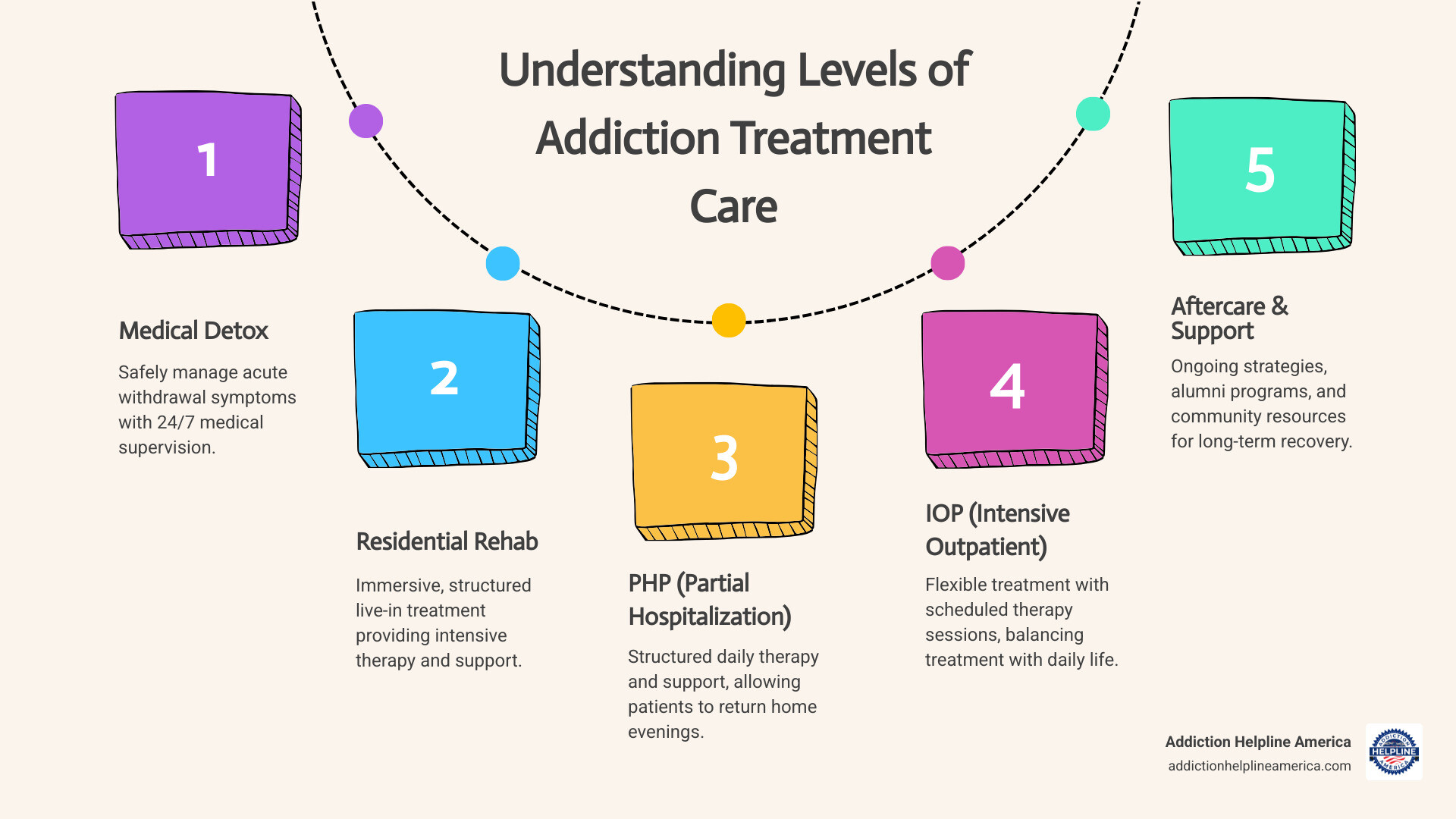
The article should be about 2500 words, no longer (else it will take too much time to read)! We want to outrank other articles including any of the research sources.
TONE OF VOICE AND WRITING STYLE:
Write in a simple, clear and warm style. Use humor where appropriate.
Make sure all topics are completely covered and all questions are answered in detail, exhaustively use all relevant info from the research and your own knowledge.
Do not leave any placeholders, text should be ready to publish and all images sources should be “/image.png” or “/infographic.png” !
Use the intro provided below to ensure a smooth transition and article consistency.
Mention the keywords (“Addiction treatment Florida” (ideally bolded), ) where relevant, but don’t overdo it or force it.
FULL OUTLINE:
Introduction
Florida is home to one of the nations most comprehensive recovery landscapes, with the 3rd highest number of treatment facilities in the U.S. This depth of care matters more than ever as the state addresses a rise in fentanyl-related overdoses. Our goal in this guide is simple: help you quickly identify top-tier addiction treatment Florida programs and take a confident first step toward recovery.
What follows is a clear, practical overview of the levels of care, the hallmarks of excellent programs, how to pay for treatment, and what to expect from intake through aftercare.
Understanding the Types of Addiction Treatment in Florida
When you’re exploring addiction treatment Florida options, understanding the different levels of care can feel overwhelming at first. But here’s the good news: Florida’s extensive network of over 475 treatment facilities offers a comprehensive spectrum of services designed to meet you exactly where you are in your recovery journey.
The beauty of Florida’s treatment landscape is that it’s built around a continuum of care—meaning you can start at the level that matches your current needs and step down as you grow stronger in your recovery. Let’s walk through what each level looks like.
Medical detoxification is often the critical first step, especially if you’ve been using substances like opioids, alcohol, or benzodiazepines. Withdrawal from these substances isn’t just uncomfortable—it can actually be dangerous without proper medical supervision. During detox, you’ll have 24/7 medical monitoring to keep you safe and as comfortable as possible while your body clears the substances. Think of it as hitting the reset button, but with a team of healthcare professionals making sure everything goes smoothly.
From there, many people transition to inpatient residential rehab. This is where you live at the treatment facility for a period—typically 30, 60, or 90 days—and immerse yourself completely in recovery. You’re removed from the triggers and stresses of daily life, surrounded by others on the same journey, and supported by a structured schedule of therapy, education, and wellness activities. It’s intensive, yes, but it’s also incredibly effective for building a strong foundation.
As you progress, outpatient programs offer more flexibility while still providing robust support. Partial Hospitalization Programs (PHP) are the most intensive outpatient option, often involving treatment five to seven days a week for several hours each day. Intensive Outpatient Programs (IOP) step down further, allowing you to maintain work or school commitments while attending therapy sessions several times a week. Both include group therapy, individual counseling, and skill-building work that helps you apply what you’re learning to real life.
Here’s something we see make a tremendous difference: dual diagnosis treatment for co-occurring mental health disorders. The reality is that many people struggling with addiction are also dealing with depression, anxiety, PTSD, or other mental health conditions. In Florida’s leading treatment centers, both conditions are treated simultaneously by a multidisciplinary team. This integrated approach recognizes that addiction and mental health are deeply intertwined—treating one without the other is like trying to row a boat with one oar.
Florida’s treatment landscape also accepts holistic therapies that heal the whole person—mind, body, and spirit. You might find yourself practicing yoga at sunrise, working through trauma in art therapy, or finding peace through meditation and mindfulness. Some facilities even offer animal-assisted therapy, nutritional counseling, and fitness programs. These aren’t just nice extras—they’re powerful tools that help you reconnect with yourself and find healthy ways to manage stress and emotions.
At the heart of effective addiction treatment Florida are evidence-based models—therapeutic techniques that have been rigorously tested and proven to work. Cognitive Behavioral Therapy (CBT) helps you identify and change destructive thought patterns. Dialectical Behavior Therapy (DBT) teaches you skills for managing intense emotions. Motivational Interviewing meets you where you are and helps you find your own reasons for change. Trauma-informed therapies like EMDR address the underlying wounds that often fuel addiction.
Florida’s unique recovery environment adds an extra dimension to treatment that you won’t find everywhere. The natural beauty, warm climate, and abundant sunshine create an inherently healing backdrop. Many facilities leverage this, incorporating outdoor therapies and beach activities that help you reconnect with the world in healthy ways. For more information on state resources and finding the right level of care, visit the Florida state resources for substance abuse and mental health.
The Legal Landscape: Florida’s Marchman Act
Sometimes, the hardest part of addiction isn’t the substance itself—it’s watching someone you love spiral deeper while refusing help. Florida offers a unique legal tool for these heartbreaking situations: the Marchman Act.
The Marchman Act is a civil commitment law that allows you to petition the court for involuntary assessment and stabilization of a loved one who is severely impaired by substance abuse. It’s not about punishment—it’s about intervention when someone is a danger to themselves or others but can’t see they need help.
Here’s how it typically works: You or three concerned adults can file a petition with the circuit court, presenting evidence of the person’s substance abuse and the danger it poses. If the court agrees, it can order the individual to undergo a substance abuse assessment. Based on that assessment, the court may then order stabilization or treatment for a specified period.
We know this is never an easy decision. It can feel like you’re betraying your loved one or taking away their freedom. But we’ve seen the Marchman Act save lives when all other options have been exhausted. It provides a legal pathway to intervene during a crisis, offering a chance at recovery when voluntary treatment has failed.
Why Choose Florida for Recovery?
There’s a reason Florida has become one of the nation’s premier destinations for addiction treatment, and it goes beyond just having a lot of facilities.
The therapeutic climate is genuinely healing. There’s something about warm sunshine and ocean breezes that lifts the spirit in ways that are hard to quantify but impossible to deny. Many people find that the natural environment helps them reconnect with themselves and envision a life beyond addiction. The ability to practice outdoor therapies, take walks on the beach, or simply sit in the sunshine during difficult moments can make a real difference in your recovery journey.
Florida is home to a large, vibrant sober community, particularly in areas like South Florida. This means you’ll find abundant support group meetings—Alcoholics Anonymous, Narcotics Anonymous, and specialized groups for every demographic. You’ll also find thriving sober living communities, recovery-friendly employers, and a network of people who understand what you’re going through because they’ve been there too.
The strong recovery network extends beyond just meetings. With over 475 treatment centers across the state, you have access to specialized programs for virtually any need—whether you’re a veteran dealing with PTSD, a professional needing executive treatment, someone from the LGBTQ+ community seeking affirming care, or anyone else with specific circumstances.
There’s also real value in the benefits of traveling for treatment. Sometimes, the best thing you can do is remove yourself from your current environment. Getting away from the people, places, and situations that trigger your addiction gives you space to focus entirely on healing. It’s like hitting pause on your regular life to rebuild yourself from the ground up. When you return home, you’re equipped with new skills, a new perspective, and a support network that extends beyond your hometown.
At Addiction Helpline America, we’ve helped thousands of people find their path to recovery in Florida. We understand this landscape intimately, and we’re here to help you find the right fit for your unique situation—whether that’s intensive inpatient care, a specialized dual diagnosis program, or a holistic facility that aligns with your values. Your recovery journey is personal, and we’re committed to helping you find the program that will give you the best chance at lasting sobriety.
7 Hallmarks of the Best Addiction Treatment Centers in Florida
When you’re searching for addiction treatment Florida options, the sheer number of choices8475 facilities across the statecan feel overwhelming. How do you separate the truly exceptional centers from those that simply look good on paper?
We’ve worked with thousands of families navigating this exact challenge, and we’ve identified seven essential characteristics that distinguish outstanding treatment centers from the rest. These aren’t just nice-to-have featuresthey’re the fundamental building blocks of effective, compassionate care that leads to lasting recovery.
Think of these hallmarks as your checklist. A top-tier facility should check every single box, not just a few. Anything less means you might not be getting the comprehensive support you or your loved one deserves.
| Key Feature | What to Look For | Why It Matters |
|---|---|---|
| State Licensure & National Accreditation | Florida DCF licensing, Joint Commission or CARF accreditation | Ensures the facility meets rigorous safety and quality standards |
| Evidence-Based, Individualized Care | Personalized treatment plans using proven therapies like CBT, DBT, and EMDR | Custom care outperforms one-size-fits-all programs |
| Integrated Dual Diagnosis Services | Simultaneous treatment for addiction and mental health conditions | Many people have co-occurring disorders that must be addressed together |
| Full Continuum of Care | Seamless progression from detox through residential, outpatient, and aftercare | Recovery is a journeyyou need support at every stage |
| Specialized Programs | Options for veterans, LGBTQ+ individuals, executives, gender-specific and age-specific tracks | Your unique background and needs deserve focused attention |
| Dedicated Family Support | Family therapy, education, and counseling | Healing the family system improves long-term outcomes |
| Qualified Multidisciplinary Team | MDs, psychiatrists, licensed therapists, certified addiction professionals, 24/7 nursing | Complex conditions require coordinated expertise |
Not every facility in Florida meets these standards. Some may have attractive amenities but lack proper accreditation or depth of clinical staff. The best centers excel across all seven hallmarks. In the sections that follow, we break down each hallmark so you know what questions to ask, which red flags to avoid, and what quality truly looks like in practice.
1. State Licensure and National Accreditation
When you’re searching for addiction treatment in Florida, the first thing to verify is proper licensing and accreditation. These credentials are your assurance that a treatment center meets rigorous standards for care, safety, and ethical practices.
Every legitimate treatment facility in Florida must be licensed by the Florida Department of Children and Families (DCF). This ensures the center meets baseline requirements for staffing, safety, and patient rights. If a center isn’t licensed by the DCF, it’s a major red flag.
However, the best centers go a step further by seeking national accreditation from respected organizations. Look for accreditation from The Joint Commission or CARF (Commission on Accreditation of Rehabilitation Facilities). These independent bodies conduct thorough evaluations of treatment quality and safety protocols. Accreditation signifies that a facility has voluntarily committed to upholding the highest standards in the field.
These credentials aren’t just for show; they represent a commitment to ongoing quality assurance. Accredited facilities are regularly reviewed and held accountable for patient outcomes and ethical practices. When comparing facilities, always ask about their licensing and accreditation. A reputable center will be transparent about its credentials. At Addiction Helpline America, we only work with fully licensed and accredited facilities, removing the guesswork from this crucial first step.
2. Evidence-Based, Individualized Care
Effective addiction treatment is not a one-size-fits-all approach. The best centers in Florida recognize this and build their programs around evidence-based, individualized care. This means your treatment plan is based on therapeutic methods that have been scientifically proven to be effective, and it is custom specifically to you.
Look for facilities that use well-researched therapies such as:
- Cognitive Behavioral Therapy (CBT): Helps you identify and change negative thought patterns and behaviors associated with substance use.
- Dialectical Behavior Therapy (DBT): Teaches skills for managing intense emotions, improving relationships, and handling stress.
- Eye Movement Desensitization and Reprocessing (EMDR): A powerful therapy for processing trauma, which is often a root cause of addiction.
An individualized plan considers your unique history with substance use, any co-occurring mental health conditions, your personal goals, and your life circumstances. This personalized approach ensures that you receive the most relevant and effective care for your specific needs, significantly increasing your chances of long-term recovery.
3. Integrated Dual Diagnosis and Mental Health Services
When we talk to people seeking addiction treatment Florida, one of the most common questions we hear is: “Why do I feel anxious and depressed even when I’m trying to stop using?” The answer often lies in what clinicians call co-occurring disorderswhen addiction and mental health conditions exist side by side.
Here’s the reality: mental health and addiction are deeply intertwined. Many individuals struggling with substance use disorders also experience conditions like depression, anxiety, PTSD, bipolar disorder, or ADHD. Treating only the addiction while ignoring underlying mental health issues is like trying to heal a broken leg while ignoring the infectionit simply won’t work.
The best addiction treatment centers in Florida provide integrated dual diagnosis care. This means they don’t treat your addiction in isolation. Instead, psychiatrists, licensed therapists, and addiction specialists work together as a unified team to address both conditions simultaneously. This approach is crucial because untreated mental health disorders often trigger relapse, even after successful detox and initial recovery.
Think of it this way: if someone uses alcohol to self-medicate their anxiety, simply removing the alcohol without addressing the anxiety leaves them vulnerable. Integrated treatment tackles both the substance use and the root causes driving it.
Top-tier programs staff board-certified psychiatrists who can prescribe and manage medications when needed and employ master’s-level clinicians trained in trauma-informed care. Evidence-based therapies like EMDR (Eye Movement Desensitization and Reprocessing) are often used to process traumatic memories that fuel addictive behaviors.
When you’re evaluating addiction treatment Florida options, ask directly: “Do you have psychiatrists and mental health professionals on staff?” and “How do you treat co-occurring disorders?” Leading centers will explain how their multidisciplinary team collaborates daily to adjust your plan based on your evolving needsnot just your substance use, but your emotional and psychological well-being too.
At Addiction Helpline America, we’ve seen how integrated dual diagnosis treatment transforms lives. We connect individuals with facilities that understand the complexity of treating the whole personmind, body, and spiritbecause lasting recovery requires healing all dimensions of health, not just abstinence from substances.
4. A Full Continuum of Care
Recovery is a journey, not a single event. The best treatment centers understand this and offer a full continuum of care, providing a seamless transition from one level of treatment to the next. This prevents dangerous gaps in support that can lead to relapse.
A complete continuum of care typically includes:
- Medical Detoxification: The first step to safely manage withdrawal.
- Residential/Inpatient Treatment: An immersive, structured environment for intensive therapy.
- Partial Hospitalization Program (PHP): A step-down level of care with full days of treatment while living at home or in sober living.
- Intensive Outpatient Program (IOP): A more flexible option that allows for work or school commitments.
- Aftercare Planning: A crucial final step that includes creating a long-term recovery plan, connecting with support groups, and arranging for ongoing therapy.
When a single organization provides this full range of services, you benefit from a consistent care team that understands your history and progress. This continuity is vital for building trust and ensuring you have the right level of support at every stage of your recovery.
5. Specialized Programs for Diverse Needs
Everyone’s path to recovery is unique, and a one-size-fits-all approach to treatment is rarely effective. The leading addiction treatment centers in Florida recognize this by offering specialized programs custom to the needs of different populations. When you can connect with peers who share similar life experiences, the healing process becomes more powerful and relevant.
Look for facilities that offer specialized tracks such as:
- Veterans Programs: These programs address the unique challenges veterans face, including PTSD, combat-related trauma, and the transition to civilian life.
- LGBTQ+ Affirming Care: Provides a safe, inclusive, and understanding environment where individuals can address addiction and mental health issues without fear of judgment.
- Executive Programs: Designed for professionals who need a discreet and flexible treatment model that allows them to maintain some work responsibilities.
- Gender-Specific Groups: Men and women often face different social pressures and triggers. Gender-specific therapy allows for more open and focused discussions.
- Age-Specific Treatment: Programs for young adults or older adults address the distinct life-stage challenges that can impact recovery.
When a treatment program acknowledges and addresses your specific background and needs, you are more likely to feel understood, engage fully in the process, and achieve lasting success.
6. Dedicated Family Support and Therapy
Addiction is often called a family disease because its effects ripple outward, impacting spouses, children, parents, and friends. The best addiction treatment Florida centers understand that healing the family system is a critical component of long-term recovery. Involving loved ones in the process can significantly improve outcomes.
Exceptional treatment programs offer dedicated family support, which may include:
- Family Therapy Sessions: These sessions, guided by a therapist, help repair communication, rebuild trust, and establish healthy boundaries.
- Educational Workshops: Families learn about the science of addiction, enabling behaviors, and how to best support their loved one’s recovery journey.
- Support Groups: Connecting with other families who are going through similar experiences can provide invaluable comfort and perspective.
When a family heals together, the foundation for a successful recovery becomes much stronger. When researching facilities, ask about their family program. A center that prioritizes family involvement demonstrates a deep understanding of what it takes to achieve lasting change. For additional resources, you can also explore state-sponsored initiatives like Hope for Healing FL.
7. Qualified, Multidisciplinary Clinical Teams for Addiction Treatment Florida
The quality of care you receive is directly tied to the expertise of the team providing it. The best addiction treatment Florida centers invest in highly qualified, multidisciplinary clinical teams to ensure every aspect of your health is addressed.
A comprehensive team should include:
- Medical Doctors: To oversee detox, manage withdrawal, and address any physical health issues.
- Psychiatrists: To diagnose and treat co-occurring mental health disorders like depression or anxiety.
- Licensed Therapists: Professionals with credentials like LCSW, LMHC, or LMFT who provide individual, group, and family therapy using evidence-based methods.
- Certified Addiction Professionals (CAP/CADC): Counselors with specialized training and often personal experience in addiction recovery.
- 24/7 Nursing Staff: To provide around-the-clock medical monitoring and support, especially during detox and residential care.
This collaborative approach ensures that your treatment plan is holistic and well-rounded. The team should meet regularly to discuss your progress and adjust your plan as needed. When you’re exploring options, don’t hesitate to ask about the credentials and experience of the clinical staff. A reputable center will be proud to share this information. At Addiction Helpline America, we ensure our network partners are staffed with experienced professionals dedicated to your well-being.
Paying for Addiction Treatment Florida: Insurance, Costs, and Options
One of the biggest concerns for those seeking help is the cost. Fortunately, there are many ways to pay for addiction treatment in Florida, and it’s often more affordable than people think.
Most private insurance plans are required by law to cover substance abuse treatment. This can include detox, inpatient care, and outpatient programs. However, the specifics of your coverage—such as deductibles, copayments, and which facilities are in-network—depend on your individual plan. Top-tier centers in Florida often have in-network agreements with major providers like Aetna, Cigna, and Blue Cross Blue Shield, which can significantly reduce your out-of-pocket costs.
At Addiction Helpline America, we can help you steer this process with a free, confidential insurance benefits check. We’ll work directly with your provider to clarify your coverage so you know exactly what to expect.
For those without insurance or with limited coverage, other options are available:
- Private Pay and Financing: Many centers offer payment plans or help you secure financing to make treatment more manageable.
- Sliding Scale Fees: Some facilities adjust their costs based on your income.
- State-Funded Assistance: Florida offers programs to help residents access care. Florida’s CORE Network is a key resource, designed to create a coordinated system of care for those with substance use disorders, regardless of their ability to pay.
Don’t let financial worries stop you from getting the help you need. The long-term cost of addiction—in terms of health, relationships, and lost opportunities—is far greater than the cost of treatment. Recovery is an investment in your future.
Your Path to Recovery: What to Expect from Intake to Aftercare
Taking the first step toward recovery can be intimidating, but knowing what to expect can make the process feel more manageable. The journey is typically broken down into three key phases: intake, treatment, and aftercare.
The First Step: Intake and Assessment
Your journey begins with a confidential phone call. This is where you’ll speak with an admissions coordinator who will listen to your story, answer your questions, and gather some basic information. This is followed by a more detailed clinical assessment, which helps the treatment team understand your substance use history, mental health, and specific needs. During this phase, we also handle the insurance verification process to determine your coverage and any out-of-pocket costs. Based on all this information, a personalized treatment plan is created just for you.
A Day in the Life at an Addiction Treatment Florida Facility
Once you’re admitted, you’ll settle into a structured daily routine designed to promote healing and stability. While each center is different, a typical day in residential treatment often includes:
- Group Therapy: Sessions with peers to share experiences and learn from one another in a supportive environment.
- Individual Counseling: One-on-one time with a therapist to work through personal issues and develop coping strategies.
- Educational Workshops: Classes on topics like the science of addiction, relapse prevention, and life skills.
- Wellness Activities: Opportunities for physical and mental well-being, such as yoga, meditation, fitness, or art therapy.
- Nutritional Support: Healthy, balanced meals to help your body heal from the physical toll of addiction.
This structured environment helps you build new, healthy habits and focus entirely on your recovery.
Long-Term Success: Aftercare and Community Support
Treatment doesn’t end when you leave the facility. A crucial part of any quality program is aftercare planning. Before you’re discharged, your treatment team will work with you to create a comprehensive plan for continuing your recovery. This may include:
- Alumni Programs: Staying connected with the treatment center and fellow graduates for ongoing support.
- Sober Living Arrangements: Transitioning to a structured, substance-free home to ease back into independent living.
- Support Group Meetings: Regularly attending 12-step meetings like AA or NA, or other support groups.
- Continued Therapy: Scheduling ongoing sessions with a therapist or counselor.
This long-term support system is vital for navigating the challenges of early sobriety and building a fulfilling, substance-free life.
Frequently Asked Questions about Florida Addiction Treatment
When you’re considering addiction treatment in Florida, you likely have questions about coverage, legal protections, and what to expect. We’ve answered the most common concerns we hear from individuals and families every day.
Does insurance cover addiction treatment in Florida?
Yes, most private insurance plans cover addiction treatment thanks to federal parity laws that require insurers to treat mental health and substance use disorders the same as physical health conditions. However, coverage varies significantly depending on your specific plan and provider.
Your insurance may cover medical detoxification, inpatient residential treatment, outpatient programs, and aftercare services—but the extent of that coverage depends on factors like your deductible, copays, and whether the facility is in-network or out-of-network. Some plans cover 100% of treatment costs, while others may require substantial out-of-pocket expenses.
That’s why verifying your benefits before starting treatment is crucial. At Addiction Helpline America, we offer free, confidential insurance verification to help you understand exactly what your plan covers. We can explain your benefits in plain language and connect you with facilities that accept your insurance, maximizing your coverage and minimizing financial stress during an already challenging time.
What is Florida’s Marchman Act?
The Marchman Act is a Florida law that provides a legal pathway to help someone who is severely impaired by substance abuse but refuses to seek treatment voluntarily. If a loved one poses a significant danger to themselves or others due to their addiction, this law allows family members or concerned individuals to petition the court for involuntary assessment and stabilization.
The legal process typically involves filing a petition with the circuit court. A family member or three concerned adults can initiate this process by providing evidence of the person’s substance abuse impairment and the danger it poses. If the court finds sufficient evidence, it can order the individual to undergo a substance abuse assessment by qualified professionals.
Based on that assessment, the court may then order the person into stabilization services or a treatment program for a specified period. While using the Marchman Act can feel like a difficult decision, it can be a lifesaving intervention when all other attempts to help have failed. The law recognizes that severe addiction can impair someone’s ability to make rational decisions about their own health and safety.
Can I lose my job for seeking addiction treatment?
No, you cannot lose your job simply for seeking treatment for a substance use disorder. Federal laws protect your employment rights when you need addiction treatment. The Family and Medical Leave Act (FMLA) allows eligible employees to take up to 12 weeks of unpaid, job-protected leave for treatment of a serious health condition, which includes substance use disorders.
Additionally, the Americans with Disabilities Act (ADA) protects individuals in recovery from discrimination. Substance use disorder is recognized as a medical condition, and employers cannot discriminate against you for seeking treatment or for past addiction, as long as you’re not currently using illegal drugs.
Many employers also offer Employee Assistance Programs (EAPs) that can help facilitate treatment while protecting your privacy and job security. When you contact us at Addiction Helpline America, we can help you steer these workplace considerations and connect you with resources to protect your employment while you focus on recovery. Your health and future are worth prioritizing, and the law recognizes that by offering these important protections.
Conclusion
Finding the right addiction treatment in Florida can feel like a monumental task, but it is the most important step you can take toward a new life. Florida’s extensive network of over 475 treatment centers means that a program perfectly suited to your needs is within reach, offering the expertise, compassion, and evidence-based care necessary for lasting recovery.
Remember the hallmarks of a quality program: proper licensing and accreditation, individualized care plans, integrated dual diagnosis treatment, a full continuum of care, specialized programs, family support, and a qualified clinical team. These are the pillars of effective treatment that give you the best chance at success.
Florida provides a unique and powerful setting for this journey. The therapeutic climate, a strong and welcoming sober community, and the sheer variety of high-quality programs make it a premier destination for healing. The rise in fentanyl-related incidents underscores the urgency of seeking professional help, and Florida’s treatment infrastructure is equipped to meet this challenge.
Recovery is possible, and you don’t have to steer this path alone.
At Addiction Helpline America, we’ve helped thousands of individuals and families find their way to recovery. We provide free, confidential, and personalized guidance to connect you with accredited facilities that accept your insurance and address your specific needs. Whether you require immediate medical detox, trauma-informed residential care, or flexible outpatient support, we are here to help you find it.
Don’t wait another day. Recovery begins with hope, and hope begins with reaching out.
Find the right recovery program for you today. Your healthier, happier life is waiting—and we’re here to help you take that first confident step toward lasting freedom from addiction.
Why Finding the Right Addiction Treatment in Florida Can Change Your Life
Addiction treatment Florida offers a path to recovery through one of the nation’s most comprehensive networks of care. If you or someone you love is struggling with substance use disorder, understanding your options can feel overwhelming. We’re here to help you make sense of it all.
Florida stands as a guide of hope for individuals seeking recovery, ranking as the 3rd highest state for treatment centers in the U.S. with over 475 facilities. This isn’t by accidentthe Sunshine State has built a robust infrastructure designed to address the growing need for comprehensive addiction care. From the beaches of Miami to the communities of Jacksonville, Tampa, and Orlando, quality treatment options are within reach.
The need for professional help has never been more urgent. Florida has experienced an exponential increase in fentanyl-related overdoses, a crisis that continues to impact families across the state. The synthetic opioid, often mixed with other drugs without users’ knowledge, has made substance use more dangerous than ever before. Professional, medically supervised treatment isn’t just helpfulit can be life-saving.
Here’s what you need to know about addiction treatment Florida options right now. The state offers medical detox services for safe withdrawal management, inpatient residential programs providing 24/7 care and structure, and outpatient programs including Partial Hospitalization (PHP) and Intensive Outpatient (IOP) that allow you to maintain work or family commitments. Beyond these core services, Florida treatment centers provide specialized programs for veterans, LGBTQ+ individuals, executives, those with dual diagnosis needs, and gender-specific treatment tracks.
Payment shouldn’t stand between you and recovery. Florida facilities accept private insurance, Medicare, Medicaid, state-funded programs, and sliding scale fees based on income. The state also offers unique legal support through the Marchman Act, which allows families to petition for court-ordered assessment and treatment when a loved one is unable to seek help voluntarily due to severe impairment.
Among Florida’s many options, several facilities have earned national recognition by independent rankings and accreditations. What matters most, however, is that the program you choose is licensed by the Florida Department of Children and Families, accredited by a national body such as The Joint Commission or CARF, and staffed by a qualified, multidisciplinary team.
Florida’s recovery landscape is both a blessing and a challenge. The sheer number of optionsfrom beach-adjacent facilities to community-based programsmeans there’s likely a strong fit for your needs and circumstances. But it also means navigating hundreds of choices without guidance can feel overwhelming. That’s where we come in.
At Addiction Helpline America, we’ve helped thousands of individuals and families find their path to recovery in Florida. We understand that no two journeys are the same. Your struggles with alcohol might look different from someone else’s battle with opioids. Your financial situation, family obligations, and co-occurring mental health needs create a unique picture that deserves personalized attention.
Our team knows Florida’s treatment landscape inside and out. We can guide you toward accredited, effective programs that accept your insurance, address your specific challenges, and align with your recovery goals. Whether you need trauma-informed therapy for PTSD alongside addiction treatment, a program that understands the unique pressures faced by healthcare professionals, or a facility that welcomes your family into the healing process, we’ll help you find it.
The good news? Florida’s warm climate, vibrant recovery communities, and diverse treatment options create an ideal environment for healing. The state’s natural beauty provides a therapeutic backdropmany facilities incorporate outdoor activities, beach walks, and nature-based therapies into their programs. The large sober community means abundant support group meetings, recovery events, and a network of people who understand the journey. And for some, the opportunity to step away from triggering environments back home and focus entirely on recovery in a new setting makes all the difference.
This guide will walk you through everything you need to know. We’ll explain the different types of treatment available, help you understand what separates excellent facilities from mediocre ones, clarify how to pay for treatment, and show you what to expect from your first phone call through long-term aftercare. Most importantly, we’ll help you take that crucial first step toward lasting recovery with confidence.
Recovery is possible. Let’s find the right path for you.
Addiction treatment Florida terms made easy:
Understanding the Types of Addiction Treatment in Florida
When you’re searching for addiction treatment Florida, understanding the different levels of care available can feel overwhelming. But here’s the good news: Florida’s network of hundreds of facilities offers something for everyone, no matter where you are in your recovery journey.
Think of addiction treatment as a spectrum of care. On one end, you have intensive medical detoxification for those first critical days. On the other, you have ongoing aftercare and alumni support that can last years. Most people don’t just need one type of treatmentthey need several, moving through different levels as they heal and grow stronger.
- Medical detoxification is where many recovery journeys begin, especially if you’re struggling with substances like opioids, alcohol, or benzodiazepines. Trying to detox alone isn’t just uncomfortableit can be dangerous. Medical detox provides 24/7 supervision by healthcare professionals who manage withdrawal safely and keep you as comfortable as possible. In 2018, Florida offered detox across outpatient, residential, and hospital inpatient settings.
- Inpatient residential rehab offers an immersive healing environment. You’ll live at the facilitytypically for 30, 60, or 90 dayssurrounded by a therapeutic community and away from triggers and stressors. This is where intensive therapy, education, wellness activities, and relapse-prevention skills create a strong foundation for lasting recovery.
- Outpatient programs provide structure while allowing you to live at home or in sober living. Partial Hospitalization Programs (PHP) are the most intensive outpatient option, often 5 days per week for several hours a day. Intensive Outpatient Programs (IOP) involve fewer hours per week, making it possible to maintain work or school commitments while receiving robust support.
Heres something we see all the time: addiction rarely travels alone. Many people struggling with substance use also face mental health challenges like depression, anxiety, PTSD, or bipolar disorder. That’s where dual diagnosis treatment becomes crucial. Leading programs treat both conditions simultaneously using evidence-based therapies (CBT, DBT, EMDR) with psychiatric support, because your mental health and your addiction are deeply connected.
Florida treatment centers also accept holistic therapies that heal more than just the addiction itself. You might find yoga, art therapy, mindfulness, fitness, and nutrition services integrated into care. These approaches address your physical, emotional, and spiritual well-being and complement traditional modalities and support groups.
At the heart of quality addiction treatment Florida programs are evidence-based practicestherapies that have been rigorously tested and proven effective through research. Expect Cognitive Behavioral Therapy (CBT), Dialectical Behavior Therapy (DBT), Motivational Interviewing, and trauma therapies like EMDR. Some programs add brain health and neurocognitive support to further personalize care.
The Florida Department of Children and Families (DCF) oversees many state-funded and community-based programs, helping ensure access to quality care. For a comprehensive overview, explore the states resources: Florida substance abuse and mental health services.
The Legal Landscape: Florida’s Marchman Act
Sometimes, the person who needs help most is the one who refuses to seek it. If you’re watching a loved one spiral deeper into addiction, Florida’s Marchman Act might be the tool you need.
This civil commitment law allows family members or concerned adults to petition the court for involuntary assessment and treatment when someone is severely impaired by substance use and poses a danger to themselves or others. It’s not an easy decisionbut when addiction has taken away someone’s ability to make safe choices, the Marchman Act can save lives.
The process starts with filing a petition with the circuit court. If the court finds sufficient evidence, it orders a substance use assessment by qualified professionals and, if appropriate, stabilization or treatment for a set period. The goal is safety and access to care, not punishment.
Why Choose Florida for Recovery?
Theres a reason Florida has become a national destination for addiction treatment, and it’s not just the palm trees.
- Therapeutic climate: Sunshine and warm weather support mood and motivation. Many programs incorporate outdoor activity and nature-based therapies.
- Large, vibrant sober community: Especially in South Florida, youll find abundant recovery meetings, sober living options, and recovery-friendly workplaces.
- Depth and breadth: With hundreds of programs, you can find specialized tracks for veterans, LGBTQ+ individuals, professionals, young adults, and older adults.
- Benefits of traveling for treatment: Distance from triggers can help you focus fully on healing, reset routines, and build a new support network.
7 Hallmarks of the Best Addiction Treatment Centers in Florida
To keep this simple and actionable, heres a concise comparison you can use when evaluating programs for addiction treatment Florida:
| Hallmark | What It Looks Like | Why It Matters |
|---|---|---|
| Licensure & Accreditation | Florida DCF license; Joint Commission or CARF accreditation | Independent oversight of safety, ethics, and quality |
| Individualized, Evidence-Based Care | CBT, DBT, EMDR, Motivational Interviewing; customized plans | Personalized care improves outcomes and engagement |
| Dual Diagnosis Expertise | On-staff psychiatrists; integrated mental health care | Treats root causes and reduces relapse risk |
| Full Continuum of Care | Detox, residential, PHP, IOP, outpatient, aftercare | Seamless transitions prevent gaps in support |
| Specialized Tracks | Veterans, LGBTQ+, executive, gender- and age-specific | Addresses unique life experiences and needs |
| Family Involvement | Family therapy, education, support groups | Heals relationships and strengthens recovery |
| Multidisciplinary Team | MDs, RNs, psychiatrists, licensed therapists, CAPs | Complex conditions require coordinated expertise |
Quick tip: when you speak with admissions, ask for specifics on each hallmark (for example, the name of their accrediting body, their dual diagnosis protocol, and what aftercare looks like). Clear answers are a strong indicator of a high-quality program.