
Why Your Family Needs Support When Addiction Strikes
Addiction help for families is essential because substance use disorder affects everyone in the household, not just the person struggling. If you’re searching for support right now, here are your most important first steps:
Immediate Actions for Families:
- Call a free helpline – Our Addiction and Rehab Hotlines are available 24/7 at 844-561-0606 for confidential support.
- Join a support group – Al-Anon (for families of alcoholics) or Nar-Anon (for families affected by drug addiction)
- Practice self-care – Your own health matters too
- Learn the difference – Understand helping vs. enabling behaviors
- Set boundaries – Protect yourself while supporting recovery
- Seek family therapy – Professional guidance helps everyone heal
Addiction is often called a family disease, and for good reason. When one person struggles with substance use, the ripples touch everyone—parents, spouses, siblings, and especially children. You might feel angry, scared, guilty, or completely overwhelmed. These feelings are normal.
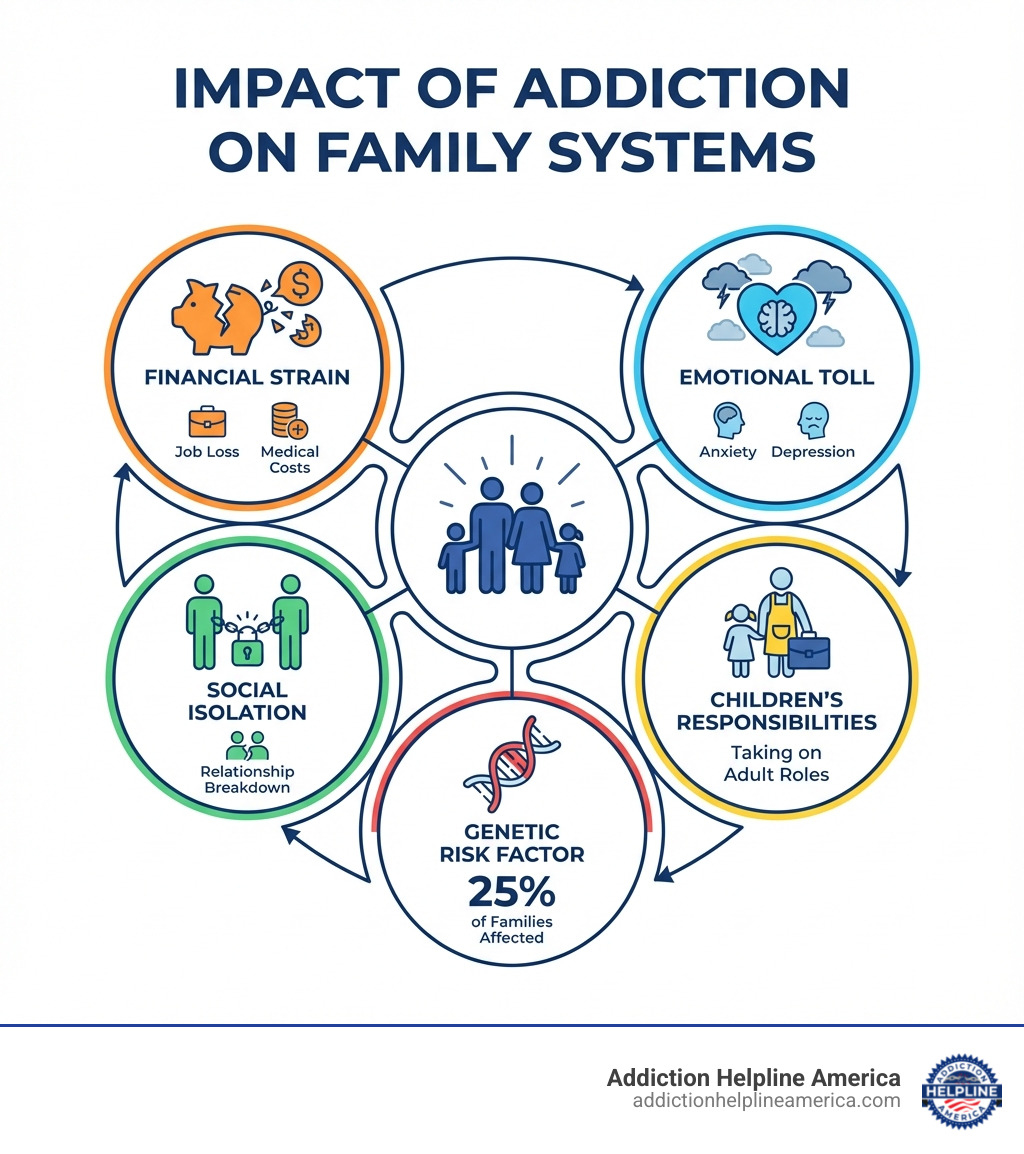
The truth is stark: at least 25% of the population belongs to a family affected by addiction in a first-degree relative. Up to 90% of individuals with active addiction live at home with family or a significant other. Your family is not alone in this struggle.
Understanding addiction as a chronic disease—not a moral failing—is the first step toward healing. The brain chemistry changes that drive addiction are powerful and long-lasting, making it genuinely difficult for your loved one to control their behavior. This knowledge doesn’t erase the pain, but it can shift blame toward compassion.
The journey to recovery starts with understanding. It continues with the right support, clear boundaries, and hope that healing is possible for your entire family.
At Addiction Helpline America, we’ve dedicated our work to supporting individuals and families through every stage of addiction and recovery. Our team of addiction specialists and counselors has helped countless families steer the challenges of addiction help for families, providing free, confidential guidance 24/7 to connect you with vital resources and substance abuse treatment options.
Common Addiction help for families vocab:
Recognizing the Ripple Effect: How Addiction Impacts the Family
Addiction’s far-reaching consequences extend far beyond the individual, creating a complex web of challenges for the entire family system. We understand the deep emotional toll this takes, often leading to feelings of abandonment, anxiety, fear, anger, concern, embarrassment, and even guilt. Financial strain is a common issue, as addiction can lead to joblessness and significant debt. Relationships can fracture under the pressure, resulting in marital problems, domestic violence, or social isolation.
It’s crucial to remember that your experiences are valid, and you are not alone. As we noted, at least 25% of the population belongs to a family affected by an addiction disorder in a first-degree relative, highlighting how widespread this issue truly is.

Signs of a Substance Use Disorder in a Loved One
Recognizing the signs of a substance use disorder (SUD) is often the first, difficult step in seeking addiction help for families. These signs can manifest in various ways, impacting a person’s behavior, physical health, and emotional state. Here are some common indicators we often see:
- Behavioral Changes:
- Taking substances for longer periods or in larger amounts than intended.
- Unsuccessful attempts to cut down or stop using.
- Spending excessive time obtaining, using, or recovering from the substance.
- Neglecting responsibilities at home, work, or school.
- Continuing substance use despite negative consequences (e.g., job loss, legal troubles).
- Engaging in risky behaviors while under the influence.
- Secrecy, lying, or becoming defensive when confronted about substance use.
- Giving up important social, occupational, or recreational activities to use.
- Physical Signs:
- Changes in appearance or hygiene.
- Unexplained weight loss or gain.
- Dilated or constricted pupils.
- Frequent illness or fatigue.
- Signs of withdrawal when not using the substance. You can learn More on withdrawal symptoms.
- Developing a tolerance to substances, meaning they need more of the substance to achieve the desired effect.
- Emotional and Psychological Signs:
- Intense cravings for the substance.
- Increased irritability, anxiety, or depression.
- Sudden mood swings.
- Loss of interest in previously enjoyed activities.
- Paranoia or hallucinations in severe cases.
If you observe several of these signs in a loved one, it may be time to consider seeking professional guidance.
Understanding Addiction as a Disease, Not a Moral Failing
One of the most critical shifts in perspective for families is understanding addiction as a complex disease, not a moral failing or a lack of willpower. Modern science clearly shows that addiction is a chronic disease that involves complex interactions between the brain, genetics, the environment, and an individual’s life experiences. There’s a strong genetic predisposition to the disease, meaning it often runs in families.
Long-term substance abuse can actually change brain chemistry, altering the brain’s reward system and making substance use compulsive. These changes are powerful and can lead to relapse even after periods of sobriety. Embracing this understanding helps reduce the immense stigma and shame often associated with addiction, both for the individual struggling and for their family. Shifting our mindset towards compassion and medical understanding allows us to approach the situation with greater empathy and seek effective, evidence-based addiction help for families.
The Unique Impact of Addiction on Children
Children in families affected by addiction are particularly vulnerable, often facing what are known as adverse childhood experiences (ACEs). They often experience an unstable family environment where parents may struggle to provide basic necessities or consistent care. This can lead to children feeling insecure, unloved, or even responsible for their parent’s substance use. They might take on adult responsibilities at an early age, such as caring for younger siblings or managing household tasks, which are inappropriate for their development.
These children may be more likely to skip school, exhibit anti-social behaviors, or develop unhealthy coping mechanisms like eating disorders. While the challenges are immense, most children are resilient and can overcome these difficulties to become strong, healthy adults, especially with proper support. Providing addiction help for families means recognizing and addressing the specific needs of these children. If you have a teen struggling, Learn about teen-specific rehab options.
Comprehensive Addiction Help for Families: From Recognition to Recovery
Once you recognize the signs and understand addiction as a disease, the next step is taking action with compassion. A unified family approach, where everyone is on the same page, can be incredibly powerful. Recovery is a journey, not a destination, and your family’s support can make a measurable impact.

Helping vs. Enabling: A Crucial Distinction
One of the most challenging aspects of providing addiction help for families is distinguishing between helping and enabling. While often well-intentioned, enabling behaviors can inadvertently prolong substance misuse by shielding the individual from the natural consequences of their actions. Helping, on the other hand, supports recovery and promotes healthy boundaries.
| Helping Behaviors | Enabling Behaviors |
|---|---|
| Setting clear, consistent boundaries | Ignoring unacceptable behavior |
| Encouraging professional treatment | Making excuses for their behavior |
| Allowing natural consequences to occur | Repeatedly bailing them out of trouble (financial, legal) |
| Expressing concern with “I” statements | Blaming others for their actions |
| Taking care of your own well-being | Consistently putting their needs before your own |
| Offering to help find resources | Lying to cover for their mistakes |
| Communicating openly and honestly | Providing money that could be used for substances |
| Attending support groups for yourself | Taking on their responsibilities |
Enabling can stem from a desire to protect your loved one from pain, but ultimately, it prevents them from hitting a “bottom” that might motivate them to seek help. We encourage families to shift from enabling to helping, which involves supporting recovery and establishing healthy boundaries.
Effective Communication Strategies for Difficult Conversations
Talking to a loved one about their addiction can be incredibly difficult, often fraught with tension and defensiveness. However, effective communication is a cornerstone of addiction help for families. We recommend these strategies:
- Choose the Right Time and Place: Select a private, comfortable, and distraction-free setting where you can speak calmly without interruption. Avoid discussions when either party is stressed, angry, or under the influence.
- Use “I” Statements: Instead of accusatory “You” statements (“You always ruin family gatherings”), express your feelings and observations using “I” statements (“I feel worried when I see you drinking excessively at family gatherings because I care about your health”). This approach focuses on your experience and is less likely to trigger defensiveness.
- Active Listening Without Judgment: When your loved one speaks, listen attentively without interrupting, arguing, or correcting them. Try to understand their perspective, even if you don’t agree. Learning how to communicate with an addict is one of the most underused yet most important skills.
- Express Concern, Not Blame: Frame your conversation around your love and concern for their well-being, rather than blame or shame. Remind them that addiction is a disease.
- Offer to Help Find Professional Support: Instead of demanding they get help, offer to assist them in finding it. This could involve researching treatment options or making initial calls. The SAMHSA How-To Guide, “Supporting a Loved One” provides excellent advice on starting these conversations.
Setting and Maintaining Healthy Boundaries
Boundaries are essential rules that define what is and is not acceptable in any relationship. For families dealing with addiction, healthy boundaries act as a form of self-protection and are vital for promoting recovery. They create clear expectations for behavior and protect family members from substance-induced harms.
Examples of firm boundaries include:
- “No alcohol or drugs are allowed in our home.”
- “You cannot stay here if you are using substances.”
- “I will not give you money if I suspect it will be used for drugs or alcohol.”
- “I will not lie or make excuses for your behavior.”
When setting boundaries, communicate them clearly, calmly, and directly. Explain the consequences if the boundary is crossed, and most importantly, be consistent in enforcing them. Consistency shows you are serious and helps your loved one understand the new rules of engagement. While difficult, maintaining boundaries is a powerful form of addiction help for families.
Navigating Life After Treatment
Completing a treatment program is a significant milestone, but it’s just the beginning of the recovery journey. The transition back into daily life can be challenging, both for the individual in recovery and for the family. This period requires continued vigilance and support.
Families play a crucial role in relapse prevention planning. This involves identifying potential Understanding addiction triggers—environmental, re-exposure, and stress-related—and developing strategies to manage them. For the family, it means understanding that recovery is often non-linear, and setbacks can be part of the process.
Rebuilding trust is a long-term endeavor that requires patience, consistency, and open communication from all parties. Ongoing support, such as continued therapy, support group attendance, and family check-ins, is vital for maintaining sobriety and strengthening family bonds.
Putting on Your Own Oxygen Mask First: Self-Care for Family Members
The emotional and physical toll of supporting a loved one with addiction can be immense. We often see family members experience burnout, chronic stress, and anxiety. It’s like being on a turbulent flight; you must put on your own oxygen mask before you can help others.
Why Prioritizing Self-Care is Essential for Providing Addiction Help for Families
Ignoring your own needs can lead to resentment, exhaustion, and even your own health issues. When your personal resources are depleted, it becomes incredibly difficult to provide effective, compassionate support to your loved one. Prioritizing self-care isn’t selfish; it’s a necessity. It helps you maintain your physical and mental health, making you a more resilient and effective support person. Moreover, by practicing self-care, you model healthy coping mechanisms for your loved one, which is an invaluable part of their recovery. You cannot pour from an empty cup.
Practical Self-Care Strategies
Self-care encompasses a wide range of activities that nourish your mind, body, and spirit. We encourage families to explore different types of self-care:
- Sensory Self-Care: Engage your senses in soothing ways, such as listening to calming music, smelling essential oils, or spending time in nature.
- Emotional Self-Care: Allow yourself to feel emotions without judgment. This can include journaling, talking to a trusted friend or therapist, or engaging in creative expression. Learn about treatment for depression and anxiety if you’re struggling with these emotions.
- Physical Self-Care: Prioritize healthy eating, regular exercise, and adequate sleep. Move your body in ways that feel good to you.
- Spiritual Self-Care: This doesn’t necessarily mean organized religion; it can involve meditation, spending time in quiet reflection, or connecting with your values and purpose.
- Social Self-Care: Maintain connections with supportive friends and family members who understand or can offer a healthy distraction. Avoid isolating yourself due to shame or embarrassment.
Finding Your Own Support System
You don’t have to steer this journey alone. Finding your own support system is a crucial component of addiction help for families. The value of shared experience with others who understand what you’re going through cannot be overstated.
- Attending Support Groups: Groups like Al-Anon, Nar-Anon, or SMART Recovery Family & Friends provide a safe space to share experiences, gain insights, and learn coping strategies from peers. These groups offer mutual support and reduce feelings of isolation.
- Seeking Individual Counseling: A therapist specializing in addiction or family dynamics can provide personalized strategies, help you process your emotions, and guide you in setting healthy boundaries. Finding a therapist can be a critical step in your own healing.
Connecting with others who have faced similar challenges can provide profound comfort and practical advice, reinforcing that you are part of a larger community dedicated to healing.
Finding Strength and Support: Resources for Families
You are not alone in this journey. The importance of professional guidance and peer support cannot be overstated. Research consistently shows that family support has a measurable impact on recovery, with those who have supportive families less likely to relapse. This underscores the power of a unified approach to addiction help for families.
Where to Find Addiction Help for Families
There are numerous resources available to families seeking support:
- Peer Support Groups: These groups offer invaluable understanding and a sense of community.
- Al-Anon: For families and friends of individuals with alcohol problems.
- Nar-Anon: Similar to Al-Anon, but for those affected by a loved one’s drug problem.
- SMART Recovery Family & Friends: A science-based alternative that uses tools from SMART Recovery and CRAFT (Community Reinforcement Approach & Family Training).
- Other local groups: Many communities offer local support groups through hospitals, community centers, or religious organizations. For example, in Alabama, you might find resources through the Jefferson County Department of Health or the Recovery Organization of Support Specialists (R.O.S.S.).
- Online Forums and Communities: Many online platforms provide spaces for families to connect, share experiences, and find support anonymously.
These resources provide a place where you can share your story, learn coping mechanisms, and realize that your feelings are valid and shared by many others.
The Role of Family Therapy in Recovery
Family therapy is a powerful tool for addiction help for families, addressing the dynamic interplay within the family system. It helps to:
- Improve Communication: Therapists can guide families in developing healthier communication patterns, moving away from blame and toward understanding.
- Restructure Family Dynamics: Addiction often creates dysfunctional roles and patterns. Family therapy helps identify and shift these, fostering healthier interactions.
- Address Underlying Issues: It can uncover and address long-standing family conflicts, trauma, or mental health issues that may contribute to the addiction cycle.
- Heal Together as a Unit: Family therapy provides a safe space for all members to process their emotions, rebuild trust, and work towards collective healing. Research shows the benefits of family-oriented treatment, including increased treatment retention and improved outcomes for both the individual and the family.
How to Find Professional Treatment for Your Loved One
When your loved one is ready for professional help, navigating the treatment landscape can feel overwhelming. Here’s how we can help you find the right path:
- Researching Treatment Centers: We connect individuals nationwide to addiction and mental health treatment centers. Our vast network includes facilities that offer various levels of care, from detox to long-term residential programs.
- Understanding Different Levels of Care: Treatment options include:
- Detox: Medically supervised withdrawal to safely manage symptoms.
- Inpatient/Residential Treatment: Structured programs where individuals live at the facility for a period, receiving intensive therapy.
- Outpatient Treatment: Flexible programs allowing individuals to live at home while attending therapy sessions and groups.
- Partial Hospitalization Programs (PHP) and Intensive Outpatient Programs (IOP): Offer more intensive care than traditional outpatient but less than residential.
- Verifying Insurance Coverage: Many families worry about the cost of treatment. Most insurance plans offer at least partial coverage for substance use treatment. Our team can help you understand Does insurance cover rehab? and explore payment options.
- Personalized Guidance: Addiction Helpline America provides free, confidential, personalized guidance to find the right recovery program that fits your family’s unique needs. Consult our How to Find a Drug Rehab Guide for comprehensive information.
Frequently Asked Questions about Addiction Support for Families
How do I talk to my loved one about their addiction without starting a fight?
Focus on expressing your concern and love using “I” statements, as we discuss in our guide on how to talk to an addict. Choose a calm, private moment and be prepared to listen without judgment, offering support to find help rather than issuing ultimatums. It’s about opening a dialogue, not winning an argument.
What is the difference between helping and enabling?
Helping involves actions that support recovery, while enabling unintentionally prolongs the addiction by shielding the person from consequences. You can learn more about helping vs. enabling to understand this crucial distinction. The key is whether your actions facilitate their continued use or their path to recovery.
Can our family force our loved one into rehab?
In some states, civil commitment laws allow for involuntary commitment under specific circumstances, usually when the person is a danger to themselves or others. However, while NIDA reports individuals coerced into treatment may stay longer, the overall evidence for long-term outcomes of involuntary commitment is mixed. Approaches like CRAFT (Community Reinforcement and Family Training) are often more effective at motivating a resistant individual to seek help voluntarily by empowering family members to positively reinforce sober behaviors. Finding immediate addiction help is possible, and we can help explore all available options.
Conclusion
The journey through addiction is undoubtedly challenging, but it is one that transforms the entire family. With understanding, setting healthy boundaries, effective communication, and the right support, hope and healing are not just possibilities—they are within reach. We acknowledge the immense courage it takes to seek addiction help for families, and we want you to know that you don’t have to face this alone.
Addiction Helpline America is here to guide your family, offering a guide of hope and a pathway to recovery. For free, confidential support and to find a treatment program that fits your family’s needs, call our Addiction and Rehab Hotlines at 844-561-0606 anytime.