
Why Seeking Help for Addiction in Seattle is a Courageous First Step
Addiction counseling Seattle offers a path to recovery for individuals and families struggling with substance use disorders in the Puget Sound region. If you’re looking for help, here’s what you need to know:
- Individual, group, and family counseling are available throughout Seattle
- Evidence-based therapies include CBT, DBT, ACT, and motivational interviewing
- Outpatient and inpatient programs serve different levels of need
- Most insurance plans cover treatment, and many providers offer sliding scale fees
- Free, confidential help is available 24/7 at 844-561-0606
Addiction is a treatable disease, not a moral failure. More than three-quarters of people who face addiction recover. Whether you’re struggling with alcohol, opioids, or other substances—or you’re a family member seeking guidance—recognizing the need for help is the hardest and most important step.
Seattle’s addiction counseling landscape includes state-certified facilities, licensed professionals with specialized credentials (like SUDPs and LMFTs), and compassionate care providers who understand the bio-psycho-social nature of addiction. In 2024 alone, Evergreen Treatment Services supported over 13,000 people in the Puget Sound region—a 7.6% increase from the previous year—demonstrating both the scope of need and the availability of support.
Recovery is not about willpower alone. It’s about understanding the underlying causes of addiction, learning coping strategies, recognizing triggers, and building a supportive network. Seattle’s counseling services offer flexible outpatient programs for working professionals, integrated mental health and chemical dependency care, and trauma-informed approaches that honor each person’s unique journey.
Addiction Helpline America has spent years connecting individuals and families with compassionate, evidence-based addiction counseling Seattle resources. We understand the overwhelming nature of seeking help and provide free, confidential guidance to match you with the right treatment options for your specific needs.
Understanding Addiction: Signs, Risks, and the First Step
Addiction is a complex condition that impacts millions of individuals and their loved ones across the United States. It’s not a sign of weakness, but a chronic disease that affects the brain and behavior. Understanding addiction often begins with recognizing its multifaceted nature, which experts describe through the bio-psycho-social model. This model acknowledges that biological (genetics, brain chemistry), psychological (mental health, trauma), and social (environment, peer pressure) factors all contribute to a person’s risk for addiction.
When we talk about addiction, we’re talking about a condition where the brain’s reward system is altered. Repeated use of a substance can flood the brain with pleasure hormones, bypassing natural self-control mechanisms. This can make it incredibly difficult to stop, even when facing negative consequences. The good news is that recovery is possible, and healing involves allowing the brain to recover its capacity to respond to natural rewards and restore control over impulses.
For many, the first step towards recovery is a quiet, internal moment of self-assessment, often filled with a mix of fear, hope, and uncertainty. We want to assure you that this is a normal and courageous part of the journey. There’s no judgment here, only an invitation to explore whether addiction counseling Seattle could be a beneficial next step for you or someone you care about.

Common Signs of Addiction
Recognizing the signs of addiction is crucial. These indicators can manifest in various ways, affecting a person physically, behaviorally, and psychologically. If you or a loved one are experiencing several of these signs, it might be time to consider seeking professional help.
Here are some common indicators we often see:
-
Physical Signs:
- Needing to use a substance regularly (daily or more).
- Building a tolerance, requiring more of the substance for the same effect.
- Experiencing withdrawal symptoms (nausea, sweating, tremors) when use is stopped.
- Neglecting personal hygiene or appearance.
- Changes in sleep patterns or appetite.
-
Behavioral Signs:
- Intense urges or cravings for the substance.
- Spending excessive time and energy getting, using, or recovering from the substance.
- Failing to meet obligations at work, school, or home.
- Engaging in risky behaviors, like stealing, to obtain or use the substance.
- Unsuccessful attempts to cut down or quit.
- Withdrawing from friends and family or changing social circles.
- Increased secrecy or dishonesty about substance use.
-
Psychological Signs:
- Persistent preoccupation with the substance.
- Mood swings, irritability, or increased anxiety and depression.
- Loss of interest in hobbies or activities once enjoyed.
- Feeling “stuck” or unable to change despite a desire to do so.
If these descriptions resonate with your experience or that of a loved one, please know that you are not alone. These are common challenges that addiction counseling Seattle is designed to address.
Key Risk Factors
Addiction doesn’t discriminate; it can affect anyone. However, certain factors can increase a person’s vulnerability. Understanding these risk factors can help us approach addiction with greater empathy and develop more effective prevention and treatment strategies.
Key risk factors include:
- Genetics and Family History: A family history of addiction significantly increases an individual’s risk due to genetic predispositions.
- Environmental Factors: Living in an environment with poverty, lack of parental supervision, or easy access to substances can contribute to addiction.
- Peer Pressure: Peer pressure, especially during adolescence, can be a strong influence leading to initial substance use.
- Co-occurring Mental Health Conditions: A strong link exists between addiction and mental health issues like anxiety, depression, and trauma, as substances are often used to self-medicate. Seattle’s Harborview Medical Center, for instance, offers integrated services for these co-occurring disorders.
- Trauma and Stress: Emotional trauma or chronic stress can make individuals more susceptible to addiction as they seek to numb their pain. Many Seattle therapists specialize in trauma-informed care to address these root issues.
Recognizing these factors helps us understand that addiction is rarely a simple choice. It’s often a complex interplay of biology, personal history, and environmental influences.
Navigating Addiction Counseling in Seattle
The journey of healing from addiction is deeply personal, yet it thrives within a supportive and structured environment. When you start on addiction counseling Seattle, you’re not just signing up for sessions; you’re stepping into a process designed to help you understand the root causes of your addiction, develop healthy coping mechanisms, and build a fulfilling life in recovery. This process often involves building a strong therapeutic relationship with a counselor who acts as a guide, helping you find your own personalized path to recovery.
We understand that seeking help can feel daunting. That’s why we offer our 24/7 helpline at 844-561-0606 for confidential guidance, helping you steer the options available in Seattle.
What to Expect from the Counseling Process
When you begin addiction counseling Seattle, you can expect a structured yet flexible process custom to your unique needs:
- Initial Assessment and Evaluation: Your journey starts with a comprehensive assessment of your substance use history, mental health, and recovery goals. This is crucial for creating a personalized treatment plan.
- Collaborative Treatment Planning: You and your counselor will develop a flexible treatment plan that outlines your goals and evolves with your progress. Seattle providers like Integrative Counseling Services (ICS) emphasize this research-based, individualized approach.
- Individualized Care: All therapy focuses on your unique situation, providing concrete tools to manage cravings, address underlying issues, and build confidence for positive life changes.
- Duration of Counseling: The length of treatment varies based on individual needs. It can range from a few months to longer-term support, as recovery is an ongoing process with no set timeline.
- Relapse Prevention Strategies: A key part of counseling is developing strategies to prevent relapse, like identifying triggers and building a support network. Relapse is viewed as a part of the process that signals a need to adjust treatment, not as a failure.
- Building Coping Skills: You’ll learn and practice skills to manage stress, emotions, and cravings without substances, empowering you to face challenges with resilience.
Inpatient vs. Outpatient Treatment Options
When considering addiction counseling Seattle, you’ll typically encounter two main categories of treatment: inpatient and outpatient. The choice depends on the severity of the addiction, the level of support needed, and personal circumstances.
| Feature | Inpatient Treatment | Outpatient Treatment |
|---|---|---|
| Definition | Patients reside at the treatment facility 24/7. | Patients live at home and attend scheduled therapy sessions. |
| Intensity | High; structured environment, constant supervision. | Variable; regular outpatient, intensive outpatient (IOP). |
| Environment | Removes individuals from triggers and daily stressors. | Allows individuals to maintain daily life (work, family). |
| Medical Support | Often includes medical detox and 24/7 medical care. | Less medical oversight, may include medication management. |
| Flexibility | Limited; requires full commitment away from home. | High; allows for work, school, and family responsibilities. |
| Cost | Generally higher due to accommodation and round-the-clock care. | Generally lower, as it doesn’t include residential costs. |
| Typical Duration | 30, 60, or 90 days, sometimes longer. | Several months to years, depending on individual progress. |
Inpatient Treatment: This option provides a highly structured, 24/7 environment where individuals live at the treatment center. It’s often recommended for those with severe addictions, co-occurring disorders, or unstable home environments. Facilities like Northpoint Washington offer inpatient care, providing a safe space away from daily triggers to focus on recovery.
Outpatient Treatment: Outpatient programs allow individuals to receive treatment while living at home and managing daily responsibilities. This can range from regular therapy to intensive outpatient programs (IOPs). Many Seattle providers, including Integrative Counseling Services (ICS) and Harborview Medical Center, offer flexible outpatient programs suitable for working professionals or those with family commitments. Northpoint Seattle, for example, specializes in outpatient services.
Choosing the right level of care is a critical decision. We can help you understand these options and Find the right level of care in Seattle by connecting you with a vast network of reputable facilities.
Types of Addiction Counseling in Seattle
Addiction counseling Seattle isn’t a one-size-fits-all solution; it encompasses a variety of formats designed to meet diverse needs:
- Individual Therapy: One-on-one sessions provide a private space to explore personal triggers, trauma, and co-occurring disorders. It’s a cornerstone of treatment for developing personalized coping strategies. Therapists like Abby Kulkin offer this focused care.
- Group Counseling: Sharing experiences with peers in a group setting fosters community and reduces isolation. Seattle practices like Greenlake Therapy Group and Evidence Based Treatment Centers of Seattle (EBT Seattle) offer various group options, including DBT skills groups.
- Family Counseling: This helps heal family relationships, improve communication, and educate loved ones on providing support. Some Seattle therapists use approaches like Community Reinforcement and Family Training (CRAFT) to empower families.
- Couples Therapy: This helps partners address relationship distress caused by addiction, rebuild trust, and improve communication. Seattle clinics like Northwest Relationships and Envision Counseling specialize in this area.
- Support for Loved Ones: Family and friends can seek support for themselves, even if their loved one isn’t ready for treatment. Learning about addiction, setting boundaries, and finding resources are vital. Our helpline offers guidance for families.
Therapeutic Approaches Used in Addiction Counseling Seattle
The effectiveness of addiction counseling Seattle largely stems from its reliance on evidence-based practices. These are therapeutic methods that have been rigorously studied and proven to be effective in treating addiction and related mental health conditions. Counselors in Seattle are dedicated to tailoring these therapies to each individual, focusing on long-term change and fostering a life aligned with personal values. The Washington State Department of Health sets professional standards for licensing, and programs like Seattle Central College’s Chemical Dependency Specialist certificate are NAADAC approved, ensuring a high level of expertise in the field.

Evidence-Based Therapies for Lasting Recovery
Here are some of the most common and effective therapeutic approaches you’ll encounter in addiction counseling Seattle:
- Cognitive Behavioral Therapy (CBT): CBT helps individuals identify and change unhelpful thinking patterns and behaviors related to substance use. It teaches practical coping skills to manage cravings and triggers and is used by many Seattle therapists for addiction and co-occurring issues.
- Dialectical Behavior Therapy (DBT): Often used for intense emotional challenges, DBT teaches skills in mindfulness, distress tolerance, emotion regulation, and interpersonal effectiveness. It is offered in Seattle by providers like the DBT Center of Tacoma and Greenlake Therapy Group.
- Motivational Interviewing: This client-centered approach helps individuals resolve their ambivalence about change. Therapists guide clients to find their own motivation for recovery, a technique used by Seattle counselors like John Maulding.
- Person-Centered Therapy: This approach empowers clients to find their own solutions within a supportive, non-judgmental environment. It emphasizes the client’s capacity for self-direction and is also used by therapists like John Maulding.
- Trauma-Informed Care: Recognizing that trauma often underlies addiction, this approach integrates an understanding of trauma’s impact into treatment to promote healing. Seattle therapists specializing in EMDR (Eye Movement Desensitization and Reprocessing) often use this approach.
Exploring Acceptance and Commitment Therapy (ACT)
One particularly effective and increasingly popular approach in addiction counseling Seattle is Acceptance and Commitment Therapy (ACT). ACT is a type of cognitive behavioral therapy that helps individuals develop psychological flexibility, enabling them to live a rich and meaningful life while effectively handling the pain and stress that life inevitably brings.
ACT focuses on several key principles:
- Focus on Values: ACT helps clients identify their core values—what truly matters to them. This provides a compass for making choices that align with their deepest desires, rather than being driven by cravings or negative emotions.
- Mindfulness and Acceptance: Clients learn mindfulness skills to observe their thoughts and feelings without judgment. Acceptance in ACT means acknowledging difficult emotions and urges without fighting them, which can paradoxically increase their power. Abby Kulkin, for example, uses ACT to help clients connect to their values.
- Taking Committed Action: Once values are clear, ACT encourages clients to take committed actions that move them toward a more fulfilling life, even when faced with discomfort or urges.
ACT provides a powerful framework for navigating recovery by fostering acceptance, clarifying life’s purpose, and empowering individuals to make value-driven choices. You can Learn more about Acceptance and Commitment Therapy and its principles.
Finding and Affording the Right Support in Seattle
Taking the courageous step to seek help is monumental. The next step is finding the right support, which can sometimes feel overwhelming given the many options available. We understand that navigating the landscape of addiction counseling Seattle can be complex, but we are here to simplify that process for you. Our goal is to help you overcome potential barriers to treatment and ensure you find the right fit for your unique journey. Your confidential path to help starts here.
How to Find Qualified Addiction Counseling in Seattle
Finding a qualified addiction counselor or treatment center in Seattle involves knowing what credentials and resources to look for:
- Credentials to Look For: Look for Washington State licenses like Substance Use Disorder Professional (SUDP), Licensed Mental Health Counselor (LMHC), and Licensed Marriage and Family Therapist (LMFT). Many counselors, like Abby Kulkin, hold dual licenses. Also, look for specialized certifications in areas like trauma.
- State-Certified Facilities: Ensure any treatment center is certified by Washington State, like Integrative Counseling Services (ICS), which indicates adherence to high standards of care.
- Using Trusted Resources: Online directories like Psychology Today can be a great starting point, allowing you to filter through hundreds of Seattle therapists by specialty, insurance, and more.
- How a Helpline Simplifies the Search: Researching providers is exhausting. Our free, confidential helpline simplifies this. We have a vast network of vetted Seattle providers and offer personalized guidance to match you with the right options. Call 844-561-0606 for a free, confidential assessment.
Understanding Costs and Insurance Coverage
Concern about the cost of treatment can be a significant barrier for many seeking addiction counseling Seattle. However, it’s important to know that help is often more accessible than you might think.
- Most Insurance Plans Cover Treatment: Thanks to mental health parity laws, most health insurance policies cover addiction counseling. Seattle providers like Thriveworks and Harborview Medical Center accept many insurance plans.
- How to Verify Your Insurance: Our confidential service can quickly verify your insurance coverage for addiction counseling Seattle, clarifying your benefits and helping you avoid financial surprises. You can also Verify your insurance for a Seattle rehab program directly through our website.
- Self-Pay and Sliding Scale Options: If you don’t have insurance or prefer not to use it, many counselors offer self-pay options. Some providers, like Abby Kulkin, offer a limited number of reduced fee or sliding scale slots based on financial need. It’s always worth inquiring about these options.
- Investing in Your Health: While treatment costs are a valid concern, viewing addiction counseling Seattle as an investment in your long-term health and well-being can be empowering. The benefits of recovery—improved health, relationships, and overall quality of life—are invaluable.
We believe that financial concerns should not prevent anyone from accessing the help they need. Our helpline is a free and confidential resource designed to connect you with affordable and accessible treatment options in Seattle.
The Role of Support Systems in Recovery
Recovery from addiction is rarely a solitary journey. The power of connection, shared experience, and sustained encouragement from others plays a pivotal role in healing and maintaining long-term wellness. Building a strong support system helps prevent isolation, provides accountability, and offers comfort during challenging times. In Seattle, a vibrant community is ready to support you in building a sober network and fostering lasting change.
How Loved Ones Can Provide Meaningful Support
Family and friends are often deeply affected by addiction, and their involvement can be crucial for a loved one’s recovery. Here’s how they can provide meaningful support:
- Educate Yourself About Addiction: Understanding addiction as a disease, not a moral failing, helps loved ones approach the situation with empathy. Learning about the bio-psycho-social model can foster more constructive interactions.
- Practice Empathy and Patience: Recovery is a process with ups and downs. Loved ones can offer immense support by being patient, listening without judgment, and validating their loved one’s feelings.
- Participate in Family Therapy: Many addiction counseling Seattle programs offer family therapy to heal relationships and improve communication. Approaches like CRAFT (Community Reinforcement and Family Training) equip families with skills to support their loved one’s recovery.
- Set Healthy Boundaries: While support is vital, enabling behaviors can hinder recovery. Loved ones must learn to set healthy boundaries that protect their own well-being and encourage accountability.
- Celebrate Milestones: Acknowledging and celebrating progress, no matter how small, is incredibly motivating for someone in recovery.
Family members also need support. We can connect you to resources for parents and other loved ones seeking guidance.
Community and Peer Support
Beyond professional counseling, community and peer support groups offer invaluable resources for individuals in recovery:
- The Value of Shared Experience: Hearing from others who have faced similar struggles can reduce feelings of shame and isolation, providing a sense of belonging and mutual understanding.
- 12-Step Programs: Groups like Alcoholics Anonymous (AA) and Narcotics Anonymous (NA) are widely available in Seattle. They offer a structured, peer-supported path to recovery that many professionals, like John Maulding, integrate into treatment plans.
- Finding Sober Social Activities in Seattle: Building a new life in recovery involves finding new social outlets that don’t revolve around substance use. Seattle offers numerous opportunities for sober activities, from hiking to community events, which help in building a fulfilling, substance-free life.
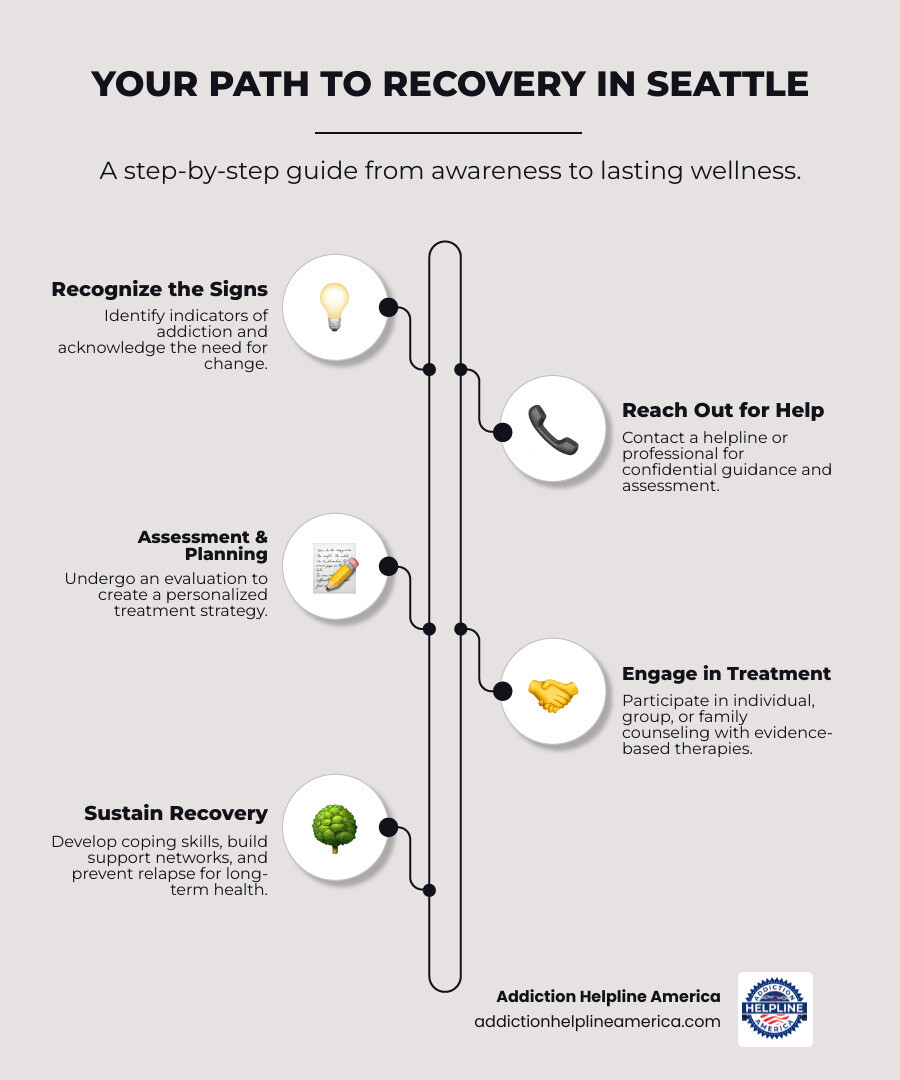
Your Path to Recovery in Seattle Starts Today
We want to reiterate a fundamental truth: recovery is a journey, not a destination. It’s a continuous process of growth, learning, and self-findy. And critically, hope and healing are always possible. No matter where you are in your struggle, taking that first step—reaching out for help—is the most important and courageous action you can take.
In Seattle, a vibrant community of compassionate professionals and supportive resources stands ready to walk alongside you. From individualized therapy custom to your unique story to group settings that foster connection, and from cutting-edge evidence-based treatments like ACT and DBT to comprehensive inpatient and outpatient programs, the support you need is available.
At Addiction Helpline America, we are dedicated to guiding you through this process. We understand that finding the right addiction counseling Seattle can be overwhelming, but you don’t have to steer it alone. Our service is free, confidential, and designed to connect you with the right treatment options that fit your specific needs and circumstances.
Don’t let uncertainty or fear hold you back from the life you deserve. Your path to recovery in Seattle starts today. Call our free, confidential helpline at 844-561-0606 to connect with treatment options and begin your journey toward healing and lasting well-being. We are here for you, every step of the way.