
Why Finding Benzo Detox Near Me Could Save Your Life
Benzo detox near me is one of the most important searches you can make if you or someone you love is struggling to stop using benzodiazepines like Xanax, Valium, or Ativan.
Here’s what you need to know right now:
- Benzo withdrawal can be life-threatening — unlike many other substances, stopping benzos suddenly can cause seizures and serious medical emergencies
- Medical supervision is essential — safe detox requires a gradual, monitored taper, not quitting cold turkey
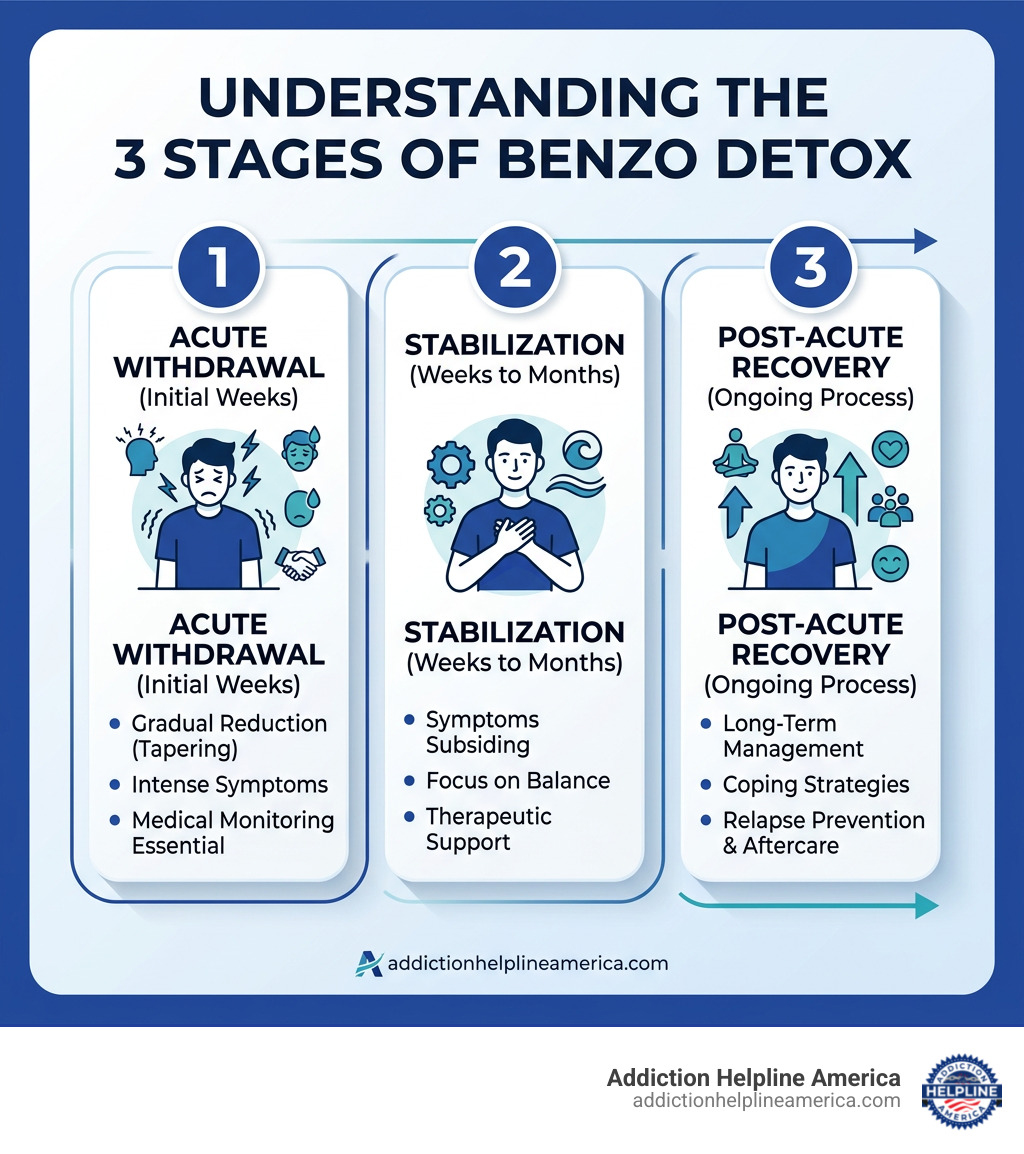
- Most detox programs last 7–10 days — followed by rehab and aftercare for lasting recovery
- Help is available near you — inpatient and outpatient benzo detox programs exist across the US, many covered by insurance
- Free, confidential guidance is one call away — Addiction Helpline America connects you to local options at no cost
Benzodiazepines are prescribed for anxiety, insomnia, and seizures — but even when taken exactly as directed, they can lead to physical dependence quickly. Research shows that 50–80% of people who have used benzos continuously for six months or longer will experience withdrawal symptoms when they try to reduce their dose. That number alone explains why so many people feel trapped.
The good news? Recovery is absolutely possible — with the right support.
At Addiction Helpline America, we’ve helped thousands of individuals and families find safe, effective benzo detox programs across the country. Our free, confidential helpline connects you with local treatment options tailored to your situation, so you never have to navigate this alone. If you’re searching for benzo detox near me, you’ve already taken the bottom-line most important first step.
Must-know benzo detox near me terms:
Understanding Benzodiazepine Dependence and Withdrawal Risks
To understand why searching for benzo detox near me is so critical, we have to look at how these drugs affect the brain. Benzodiazepines work by enhancing the effects of a neurotransmitter called GABA (gamma-aminobutyric acid). GABA is the brain’s “brake pedal”—it slows down nerve activity to produce a sense of calm and relaxation.
When someone takes benzos regularly, the brain stops producing or responding to GABA naturally. This leads to physical dependence, where the body requires the drug just to feel “normal.” It is vital to remember that physical dependence and addiction are not synonymous. Many people become physically dependent on benzos simply by following a doctor’s prescription for more than a few weeks. However, whether it is a prescribed dependence or a behavioral addiction, the withdrawal risks are the same.

Common benzodiazepines that frequently require professional detox include:
- Alprazolam (Xanax): Highly potent with a short half-life, often leading to intense withdrawal.
- Lorazepam (Ativan): Frequently used for anxiety; can cause significant rebound symptoms.
- Diazepam (Valium): Often used during the detox process itself because of its long-lasting effects.
- Clonazepam (Klonopin): A long-acting benzo that can lead to delayed withdrawal onset.
Common Symptoms of Benzo Withdrawal
Withdrawal symptoms can range from uncomfortable to life-threatening. This is why we always recommend looking for a professional Detox Clinic Near Me Guide rather than trying to quit on your own. Common symptoms include:
- Physical: Muscle tremors, sweating, nausea, headaches, and racing heartbeat.
- Psychological: Severe anxiety, panic attacks, irritability, and insomnia.
- Severe Risks: Hallucinations, psychosis, and grand mal seizures.
The risk of seizures is the primary reason medical supervision is non-negotiable. These can occur without warning, especially between days four and seven of the detox process.
The Dangers of Protracted Withdrawal (PAWS)
For some, the journey doesn’t end when the drug is out of their system. Approximately 20-30% of people experience significant difficulty coming off benzos, and a portion of those develop Post-Acute Withdrawal Syndrome (PAWS).
PAWS involves lingering symptoms like “rebound anxiety,” cognitive impairment (often called “benzo brain”), and depression that can last for months or even years. Managing these long-term effects requires a comprehensive recovery plan similar to what you might find in an Opiate Detox Near Me Complete Guide, focusing on neurological healing and mental health support.
Finding Safe Benzo Detox Near Me: Inpatient vs. Outpatient
When you begin looking for benzo detox near me, you will generally find two main levels of care: inpatient and outpatient. Choosing the right one depends on your usage history, medical health, and support system.
| Feature | Inpatient Benzo Detox | Outpatient Benzo Detox |
|---|---|---|
| Supervision | 24/7 Medical Monitoring | Daily or Weekly Check-ins |
| Environment | Controlled, Substance-Free | Your Own Home |
| Safety Level | Highest (Immediate seizure response) | Moderate (Requires stable health) |
| Duration | Usually 7–10 Days | Several Weeks to Months |
| Best For | High-dose users, history of seizures | Mild dependence, strong home support |
Inpatient care provides clinical stabilization and ensures that medical professionals can intervene the moment a symptom becomes dangerous. For many, this level of safety is the only way to successfully navigate the first week of withdrawal. You can explore more about these settings in our Ultimate Detox Facility Near Me Guide.
Is it safe to attempt benzo detox near me at home?
We are often asked if “cold turkey” detox at home is an option. The answer is a firm no. Quitting benzodiazepines abruptly can be fatal due to the risk of seizures. Furthermore, the psychological distress of rapid withdrawal often leads to immediate relapse because the symptoms are too intense to bear alone.
Safe “at-home” detox is only possible through a medically supervised outpatient taper, where a doctor provides a strict schedule for gradually reducing your dose. However, for most people searching for benzo detox near me, a residential program offers the highest success rate and the lowest risk of medical emergencies.
What is the cost of benzo detox near me?
The cost of treatment is a common concern. The addiction treatment industry is vast, with revenues reaching roughly $35 billion annually. Costs can range from affordable community-based programs to luxury private facilities that cost five or six figures for a month-long stay.
The good news is that most major insurance providers (such as Anthem, UnitedHealthcare, and Aetna) cover medical detox. Additionally, many people utilize the Family and Medical Leave Act (FMLA) to protect their jobs while they seek life-saving treatment. Addiction Helpline America is a free and confidential service that can help you verify your insurance and find the Best detox facilities near me that fit your budget.
The Medical Detox Process and Aftercare Strategies
What actually happens when you enter a facility for benzo detox near me? The process is designed to be as comfortable and safe as possible.
- Intake and Assessment: Doctors review your medical history, the specific benzos you’ve been taking, and any co-occurring mental health issues like anxiety or PTSD.
- Stabilization: Medical staff may switch you from a short-acting benzo (like Xanax) to a long-acting one (like Valium) to create a smoother transition for your brain.
- Monitored Taper: Your dose is gradually lowered. Vital signs are checked around the clock to prevent seizures and manage discomfort.
- Supportive Care: You may receive non-addictive medications to help with sleep, nausea, or anxiety during the process.
Tapering Methods and the Ashton Manual
One of the most respected methods for benzo recovery is the Ashton Manual, developed by Dr. Heather Ashton. Her research showed a 90% success rate for gradual tapering when the process is patient-controlled and stepwise.
This method emphasizes that the brain needs time to “upregulate” its GABA receptors. Rushing the process leads to failure; a slow, steady reduction—sometimes using “tapering strips” or liquid titration—allows the nervous system to heal without being overwhelmed.
Transitioning to Rehab and Long-Term Support
Detox is only the beginning. While it clears the drugs from your body, it doesn’t address the reasons you started taking them or the habits that formed during use. Most successful recovery journeys transition from detox into a comprehensive rehab program.
These programs often include:
- Cognitive Behavioral Therapy (CBT): To learn new ways to manage anxiety without pills.
- Dual Diagnosis Care: To treat the original condition (like insomnia or panic disorder) alongside the addiction.
- 12-Step Models or Peer Support: To build a community of people who understand the unique challenges of benzo recovery.
Frequently Asked Questions
How long does benzo withdrawal typically last?
The acute phase of withdrawal usually lasts 7 to 14 days. This is the period when physical symptoms are most intense and the risk of seizures is highest. However, the timeline varies based on the type of benzo used and the duration of use. Some psychological symptoms, like anxiety or insomnia, may linger for several weeks as the brain recalibrates.
Which benzodiazepines require professional detox?
Any benzodiazepine used long-term (more than 2-4 weeks) or in high doses should be discontinued under medical supervision. This includes common medications like Klonopin, Librium, and Halcion. Even if you have been taking a “low dose” for years, your brain has likely adapted to the drug, making professional guidance essential for safety.
What should I expect during the first few days of detox?
During the first 24 to 48 hours, you may feel an increase in anxiety and restlessness as the last dose leaves your system. In a professional benzo detox near me, you will receive an intake assessment and immediate medical stabilization. The goal of the first few days is to manage the onset of symptoms and ensure you are physically safe before the “peak” withdrawal period begins.
Conclusion: Your Path to Freedom Starts Here
Searching for benzo detox near me is a brave admission that you want your life back. Benzodiazepine dependence can feel like an invisible prison, but you don’t have to stay there. Whether you are struggling with a prescription that got out of hand or recreational use, there is a safe way out.
At Addiction Helpline America, we specialize in connecting individuals with the exact level of care they need. Our service is free, confidential, and available 24/7. We can help you navigate insurance questions, find local facilities with open beds, and provide the personalized guidance necessary to start your recovery journey today.
Don’t wait for a medical emergency to take action. Let us help you find the Best detox facilities near me and take your first step toward a clearer, healthier future.