
What Is an Outpatient Rehab Program? Here’s What You Need to Know
Need Help Now? Call our 24/7 Confidential Helpline: 1-800-662-HELP (4357)
What is an outpatient rehab program is one of the most important questions you can ask when looking for help with addiction — and the answer could change everything about how you or your loved one gets treatment.
Quick Answer:
| Feature | Outpatient Rehab |
|---|---|
| Where you live | At home (not at the facility) |
| Treatment hours | 1 hour/week (standard) up to 20+ hours/week (PHP) |
| Program length | 3 months to over a year |
| Best for | Mild to moderate addiction, stable home environment |
| Cost vs. inpatient | Significantly lower |
An outpatient rehab program lets you receive structured addiction treatment — therapy, counseling, medical support — while continuing to live at home. You attend scheduled sessions at a clinic or treatment center, then return to your daily life. You keep your job. You stay close to your family. You practice recovery skills in the real world, not just inside a facility.
This flexibility makes outpatient rehab one of the most widely used paths to recovery. It’s not a lesser version of treatment — for many people, it’s the right fit.
But it’s also not for everyone. The level of care, structure, and support varies widely depending on the type of program. Knowing the difference matters.
At Addiction Helpline America, our team of board-certified addiction specialists and recovery advocates has helped countless individuals and families navigate the full range of treatment options, including understanding what is an outpatient rehab program and whether it’s the right choice for their situation. We’re a free, confidential service available 24/7 — and we’re here to help you take the next step with clarity and confidence.
Quick what is an outpatient rehab program terms:
- Best IOP Programs Near Me
- How Do Residential and Outpatient Rehab Programs Compare
- Online Drug Counseling
What Is an Outpatient Rehab Program?
At its core, an outpatient rehab program is a form of substance use treatment that does not require an overnight stay at a hospital or residential facility. Unlike residential care, where you live on-site for 30 to 90 days, outpatient care allows you to maintain your “normal” life while receiving professional clinical monitoring.

When we talk about behavioral health, we are looking at how your habits and environment affect your physical and mental well-being. Outpatient programs focus heavily on this by providing treatment sessions that fit into your existing schedule. According to scientific research on outpatient rehab effectiveness, these programs can be just as effective as inpatient care for individuals with mild to moderate addictions and strong home support.
The primary difference between Inpatient vs Outpatient Rehab is the environment. In outpatient care, you are responsible for your own sobriety during the hours you aren’t in the clinic. This makes it an excellent tool for recovery maintenance, as it forces you to apply the coping skills you learn in therapy to real-world triggers immediately.
Levels of Care: Types of Outpatient Programs
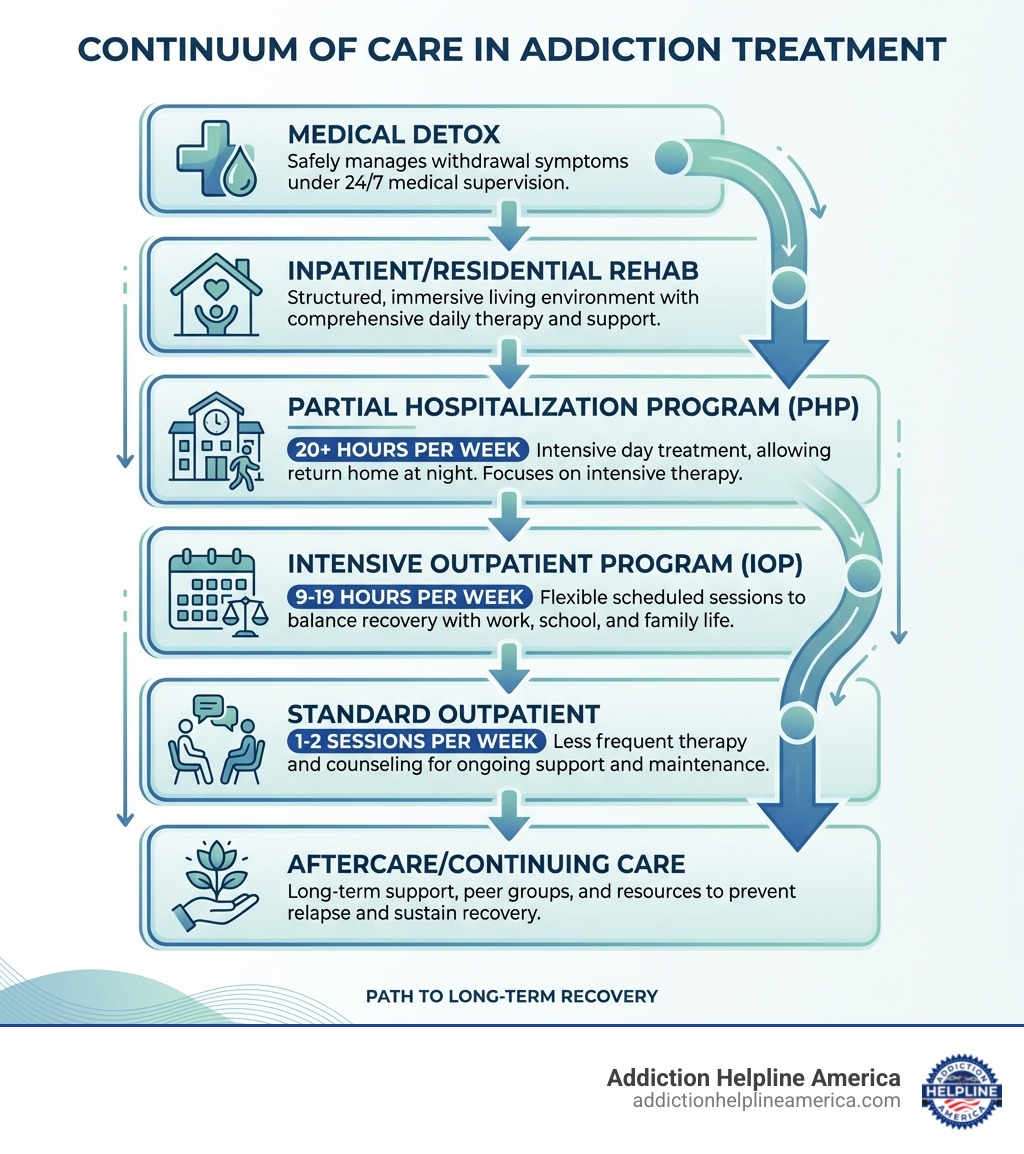
Not all outpatient programs are created equal. They exist on a spectrum of intensity, often referred to as the “continuum of care.” Choosing the right one depends on where you are in your journey and how much support you need to stay safe.
| Program Type | Weekly Time Commitment | Focus |
|---|---|---|
| Partial Hospitalization (PHP) | 20+ Hours (5-7 days/week) | High-level clinical support; “Day Rehab” |
| Intensive Outpatient (IOP) | 9-19 Hours (3-5 days/week) | Targeted therapy while working/studying |
| Standard Outpatient (OP) | 1-5 Hours (1-2 days/week) | Long-term maintenance and check-ins |
Partial Hospitalization Programs (PHP)
Often called “day programs,” PHPs are the most intensive form of outpatient care. You might attend treatment for 5 to 6 hours a day, 5 to 6 days a week. This level is frequently used as a step-down from 30-Day Rehab Programs or for those who need significant medical and psychological monitoring but have a safe place to sleep at home. You can find more details in our Rehab Centers Complete Guide.
Telehealth and Continuing Care
In recent years, the rise of virtual care has made treatment more accessible than ever. Many providers now offer Online Drug Counseling, allowing you to attend group or individual sessions from your living room. Once the formal program ends, “continuing care” or aftercare (like AA/NA meetings) becomes the bridge to lifelong sobriety. You can explore More info about treatment types to see how these fit together.
The Structure of an Intensive Outpatient Rehab Program
An Intensive Outpatient Program (IOP) is often the “sweet spot” for people balancing life and recovery. These typically require 9 to 19 hours of treatment per week, spread over 3 to 5 days.
The goal of an IOP is relapse prevention. Sessions usually consist of group counseling, where you work with peers to identify triggers and practice refusal skills. As you meet specific progress milestones, the number of hours you spend in the clinic may “taper” down, giving you more independence. For those struggling specifically with drink, our Alcohol Treatment Centers Guide 2025 provides a roadmap for finding these specialized programs.
Standard Services in an Outpatient Rehab Program
Even in a less intensive setting, you can expect a robust array of services. A standard program usually involves 1 to 2 sessions per week and may include:
- Individual Therapy: One-on-one time with a counselor to dig into the roots of addiction.
- Medication Management: Oversight for those using Medication-Assisted Treatment (MAT).
- Peer Support: Connecting with others who understand the struggle.
- Holistic Care: Some programs incorporate yoga, art therapy, or mindfulness.
Knowing How to Find a Good Rehab Center means looking for these core services to ensure you are getting evidence-based care.
Benefits and Suitability: Is Outpatient Right for You?
The biggest draw of an outpatient rehab program is the ability to keep your life moving. For many, the idea of “disappearing” to a residential facility for a month is financially or logistically impossible.
Employment and Caregiving
If you are the primary breadwinner or a sole caregiver, outpatient rehab allows you to fulfill your duties while getting well. You don’t have to take an extended, unpaid leave of absence, which helps maintain financial stability.
Cost-Effectiveness
It is no secret that residential care is expensive because you are paying for room and board. Outpatient programs are significantly more affordable. For a detailed breakdown, see our Alcohol Rehab Cost Complete Guide. Prices can range from $2,000 to $5,000 for a multi-month program, compared to tens of thousands for inpatient stays.
Real-World Application
In a residential facility, you are in a “bubble.” In an outpatient program, you face the grocery store where you used to buy alcohol or the friends who still use drugs. While this is challenging, it allows you to bring those real-world struggles back to your therapy group the very next day to work through them.
Who is a Candidate for an Outpatient Rehab Program?
We often tell families that outpatient care is a great fit for someone with:
- Mild to Moderate Addiction: Those with severe, long-term addictions or high overdose risk may need a Long-Term Inpatient Rehab Guide first.
- Stable Housing: You need a drug-free, supportive environment to return to every night.
- High Motivation: Since you aren’t under 24/7 supervision, you must be committed to showing up.
- Low Withdrawal Risk: If your detox is likely to be medically dangerous (common with heavy alcohol or benzodiazepine use), you should start with clinical stabilization.
According to the National Institute on Drug Abuse (NIDA), treatment must be readily available and tailored to the individual’s specific needs to be effective. In regions like Ontario, it is also vital to ensure your care is provided by Ontario regulated health professionals to guarantee safety and quality.
What to Expect: Therapies, Schedules, and Detox
When you walk into your first session, you’ll likely start with a comprehensive medical and psychological assessment. This isn’t just paperwork; it’s how clinicians build your personalized roadmap.
Common Therapies
Most outpatient programs utilize evidence-based behavioral therapies:
- Cognitive Behavioral Therapy (CBT): Learning to change the thought patterns that lead to use.
- Dialectical Behavior Therapy (DBT): Focusing on emotional regulation and mindfulness.
- Family Involvement: Many programs include family therapy to help heal the “system” around the individual.
Is Outpatient Detox Safe?
Outpatient detox is an option for those with mild to moderate withdrawal symptoms. It involves visiting the clinic daily for medical supervision, vital sign monitoring, and medication to ease cravings. However, it is not recommended for everyone. If you have a history of seizures or delirium tremens (DTs), inpatient detox is much safer. For those in specific regions, resources like Toronto Central rehab resources can help identify local clinics that offer supervised outpatient withdrawal management.
Frequently Asked Questions about Outpatient Rehab
How much does outpatient rehab cost?
Cost varies based on the “level” of care. A standard outpatient program might cost between $2,000 and $5,500 for three months. PHPs and IOPs are more expensive due to the increased hours of clinical time. Most private insurance plans cover outpatient treatment, and there are often grants or state-funded options available for those without coverage. At Addiction Helpline America, we can help you verify your insurance and find a program that fits your budget. Call us 24/7 at 1-800-662-HELP (4357).
Can I maintain my job during treatment?
Yes! Many IOP and standard programs offer evening or weekend sessions specifically designed for working professionals. Additionally, the Family and Medical Leave Act (FMLA) may protect your job if you need to take time off for treatment sessions, though this leave is typically unpaid.
Is outpatient detox safe?
It is safe if you are properly screened. Medical staff will monitor your vitals and may prescribe medications like buprenorphine or naltrexone to manage cravings. If your addiction is severe or you lack a sober support system at home, we usually recommend a higher level of care for the detox phase.
Conclusion: Taking the First Step
Understanding what is an outpatient rehab program is the first step toward reclaiming your life. Whether you need the high-intensity support of a PHP or the long-term guidance of standard therapy, there is a path that fits your life. You don’t have to choose between your responsibilities and your recovery.
At Addiction Helpline America, we believe that everyone deserves a recovery plan as unique as they are. We provide free, confidential, and personalized guidance to help you find the right center from our vast nationwide network. Our team of certified recovery advocates is available 24/7 at 1-800-662-HELP (4357) to answer your questions and help you navigate the complexities of insurance and program types.
“The flexibility of outpatient care saved my career and my family,” says Mark, a recent program graduate. “I could get the help I needed without losing everything I worked for.”
If you’re ready to learn More info about treatment types or want to find a program near you, don’t wait. Your journey to a healthier, happier you can start with a single, confidential phone call today. We are here to help you find the way home.