
Why Evidence-Based Mental Health Interventions Matter for Your Recovery
A list of evidence-based interventions for mental health includes treatments like Cognitive Behavioral Therapy (CBT), Dialectical Behavior Therapy (DBT), Eye Movement Desensitization and Reprocessing (EMDR), Interpersonal Psychotherapy (IPT), and family-based approaches such as Multisystemic Therapy (MST) and Trauma-Focused CBT (TF-CBT). According to the World Health Organization (WHO), these interventions are essential for providing high-quality care that improves health outcomes (https://www.who.int/news-room/fact-sheets/detail/mental-health-strengthening-our-response).
“Evidence-based practices provide a roadmap for recovery that is grounded in science rather than guesswork,” says Dr. Elena Rivera, a clinical psychologist specializing in trauma recovery.
Need help now? Call Addiction Helpline America: (844) 561-0606 24/7 Free & Confidential.
Quick Overview: Top Evidence-Based Interventions
| Intervention | Best For | Age Group |
|---|---|---|
| Cognitive Behavioral Therapy (CBT) | Depression, anxiety, PTSD, OCD | All ages |
| Dialectical Behavior Therapy (DBT) | Borderline personality, self-harm, emotion regulation | Adolescents & adults |
| EMDR | Trauma, PTSD | Adults & children |
| Interpersonal Psychotherapy (IPT) | Depression, relationship issues | Adolescents & adults |
| Trauma-Focused CBT (TF-CBT) | Childhood trauma | Children & adolescents |
| Applied Behavior Analysis (ABA) | Autism spectrum disorder | Children |
| Multisystemic Therapy (MST) | Conduct disorder, juvenile offenders | Adolescents & families |
When you or a loved one is struggling with mental health challenges or addiction, knowing which treatments actually work can feel overwhelming. The good news: multiple therapies have been tested in controlled studies and are recommended in clinical guidelines.
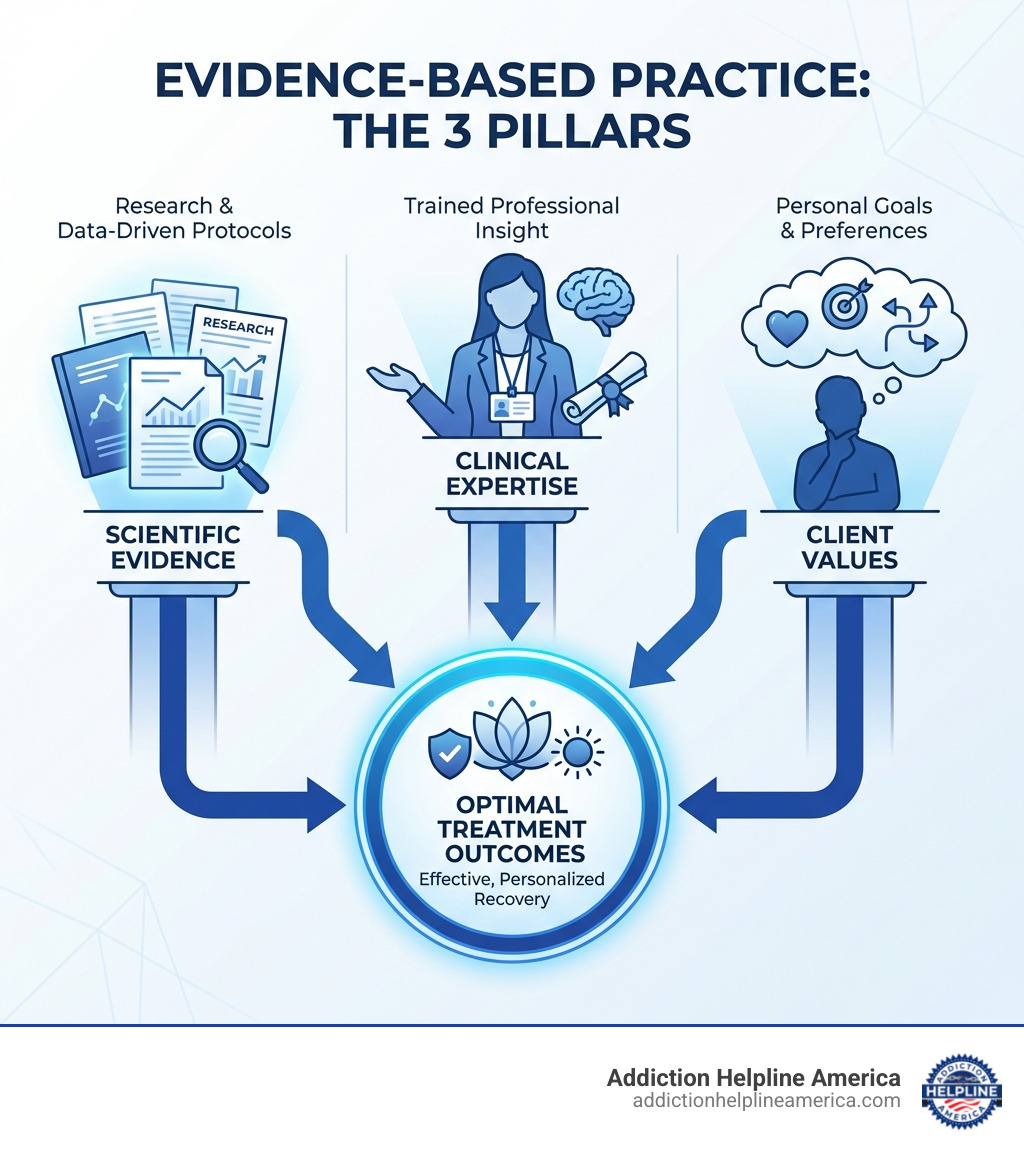
Evidence-based practices (EBPs) combine three critical elements: the best available scientific evidence, the clinical expertise of trained professionals, and your personal values, goals, and preferences. This means treatments are proven effective and can be personalized.
Unlike unstructured talk therapy that may lack measurable outcomes, many evidence-based interventions follow structured protocols and track progress toward clear goals.
Real recovery story (shared with permission): “I called at 2 a.m. because I was spiraling and drinking again. The helpline found a program that treated my anxiety and alcohol use together. Once I started CBT skills and relapse-prevention planning, I finally had tools I could use outside therapy.” M., 34
At Addiction Helpline America, we connect individuals and families with evidence-based interventions for mental health and addiction recoveryfree and confidential. If youre searching with commercial intent for care (for example, inpatient mental health treatment, dual diagnosis rehab, or drug rehab near me), we can help you compare options and verify coverage.
List of evidence-based interventions for mental health further reading:
- Therapeutic Approaches
- Mental Health Intervention: Complete Guide
- Treatment and Recovery Options
- Inpatient Facility for Mental Health
- Inpatient Rehab Programs: Complete Guide
- Intervention Services
- crisis intervention services
- interventions for conduct disorder
Medical note: This page is for educational purposes and is not a substitute for professional diagnosis or treatment. If youre in immediate danger, call 911.
Understanding the List of Evidence-Based Interventions for Mental Health
When we talk about evidence-based practices (EBPs) in mental health, we’re referring to therapy methods that research has consistently proven to be effective. These aren’t just good ideas; they are clinical interventions with a strong scientific foundation that produce consistent, positive results when implemented correctly. The importance of EBPs cannot be overstated. They help ensure that individuals receive treatments that are most likely to lead to recovery, reduce suffering, and improve overall well-being. By relying on EBPs, we can make informed decisions about care, moving away from less effective or unproven approaches. This commitment to what works means better outcomes for everyone.

For a deeper dive into how different therapeutic approaches contribute to mental health and addiction recovery, you can explore our page on Therapeutic Approaches. Understanding the scientific backing for psychological treatments is also crucial, and you can find more information on Scientific research on psychological treatments. If you’re looking for a broad overview of support options, our Mental Health Intervention: Complete Guide is an excellent resource.
Core Components of an Evidence-Based Practice
At its heart, an evidence-based practice is built upon three interconnected pillars, a model originally defined by Dr. David Sackett and colleagues (https://www.bmj.com/content/312/7023/71):
- The Highest Level of Scientific Evidence: This means that the intervention has been rigorously tested through research studies, such as randomized controlled trials, and has consistently demonstrated its effectiveness. We look for interventions with a robust scientific foundation that produce consistent results when implemented to fidelity.
- The Clinical Expertise of the Practitioner: The therapist’s knowledge, skills, and experience are vital. They must be trained in the EBP, understand its nuances, and be able to adapt it effectively to individual client needs while maintaining its core principles. This expertise allows them to apply the evidence-based treatment with precision and care.
- The Choices, Values, and Goals of the Consumer: Your unique preferences, cultural background, life experiences, and treatment goals are paramount. EBPs are not “one-size-fits-all.” A crucial aspect of effective treatment is ensuring that the chosen intervention aligns with what matters most to you, fostering a collaborative and empowering therapeutic relationship. This also includes the importance of cultural adaptation, ensuring the intervention is relevant and acceptable within your cultural context.
These components ensure that the treatment you receive is not only effective but also personalized and respectful of your individuality. The operational definition of a psychological treatment, as refined by experts, highlights that it involves specific actions between a person and a mental health professional, engaging cognitive, emotional, behavioral, or interpersonal processes, all founded in psychological science. You can read more about this rigorous definition in Psychological treatment definition.
How EBPs Differ from Traditional Therapy
While all therapy aims to help, EBPs stand apart from more traditional or less structured therapeutic approaches in several key ways:
- Manualized Protocols: Many EBPs follow a structured, manualized approach, meaning there are clear guidelines and steps for the therapist to follow. This ensures consistency and fidelity to the treatment model that was proven effective in research.
- Measurable Goals and Outcomes: EBPs typically involve setting specific, measurable treatment goals and regularly tracking progress. This allows both you and your therapist to see what’s working and make adjustments as needed.
- Time-Limited Nature: Many EBPs are designed to be time-limited, focusing on developing specific skills and strategies to address particular problems within a defined timeframe (e.g., Interpersonal Psychotherapy often lasts 12-16 weeks). This contrasts with open-ended therapy that may not have a clear end point.
- Research-Backed Efficacy: The most significant difference is the empirical evidence. EBPs have been subjected to rigorous scientific scrutiny and have demonstrated efficacy for specific mental health conditions. While traditional talk therapies can be beneficial, they may not always have the same level of empirical support for particular diagnoses.
For individuals exploring different treatment modalities, understanding the distinctions can be empowering. If you’re concerned about specific symptoms or withdrawal, our resource on Signs, Symptoms, and Withdrawal Consolidated can provide more context.
Top Evidence-Based Interventions for Adults
For adults struggling with mental health challenges, a variety of effective evidence-based interventions are available. These treatments are used in outpatient care and in higher levels of care such as residential and hospital programs.
“CBT remains the gold standard for many anxiety and depressive disorders because of its focus on actionable skills,” notes Dr. Marcus Thorne, a behavioral health researcher.
If youre trying to decide between levels of care, start here: Treatment and Recovery Options and Inpatient Facility for Mental Health.
Talk to a real person 24/7: (844) 561-0606 Free & Confidential.
| Intervention | Key Focus | Common Conditions Treated | Duration (Typical) |
|---|---|---|---|
| Cognitive Behavioral Therapy (CBT) | Identifying & changing negative thought patterns & behaviors | Depression, Anxiety, PTSD, OCD, Eating Disorders, Hoarding Disorder | Short-term (12-20 sessions) |
| Dialectical Behavior Therapy (DBT) | Emotional regulation, distress tolerance, interpersonal effectiveness | Borderline Personality Disorder, Chronic Suicidality, Self-harm, Substance Use | Longer-term, multi-modal |
| Acceptance and Commitment Therapy (ACT) | Psychological flexibility, accepting difficult emotions, value-based action | Anxiety, Depression, Chronic Pain, Substance Use | Flexible, often short-to-medium term |
Cognitive Behavioral Therapy (CBT) in the List of Evidence-Based Interventions for Mental Health
Cognitive Behavioral Therapy (CBT) is one of the most studied and widely used evidence-based mental health interventions. It helps people identify and change unhelpful thoughts and behaviors that worsen symptoms. CBT is recommended across many clinical practice guidelines for conditions like depression and anxiety.
CBT is highly effective for a broad spectrum of mental health issues, including:
- Depression
- Anxiety disorders (including generalized anxiety, social anxiety, and panic disorder)
- Post-traumatic stress disorder (PTSD)
- Obsessive-compulsive disorder (OCD) (often via Exposure and Response Prevention)
- Eating disorders
For background on evidence-supported psychological treatments, see the APA Division 12 list: https://div12.org/psychological-treatments/.
Specialized Adult Modalities: EMDR and IPT
Beyond CBT, other specialized interventions offer powerful support for adults:
- Dialectical Behavior Therapy (DBT): DBT was developed by Dr. Marsha Linehan and is supported by research for suicidal and self-harm behaviors and emotion dysregulation. For more detailed information, explore Dialectical Behavioral Therapy resources.
- Eye Movement Desensitization and Reprocessing (EMDR): EMDR is a structured therapy used for PTSD and trauma-related symptoms and is included in multiple trauma treatment guidelines. Learn more: Eye Movement Desensitization and Reprocessing.
- Interpersonal Psychotherapy (IPT): IPT is a time-limited approach (often 1220 sessions) that targets current relationship stressors that can maintain depression. If you are struggling with panic attacks, finding a Therapist for Panic Attacks who uses evidence-based methods like CBT, exposure-based treatment, or IPT can help.
External clinical guidance (credible sources):
- PTSD treatment guideline overview (U.S. Department of Veterans Affairs): https://www.ptsd.va.gov/professional/treat/txessentials/overview_therapy.asp
- NIMH information on mental health treatments: https://www.nimh.nih.gov/health/treatments
Real recovery story (shared with permission): “After a car accident, I couldnt drive without panic. EMDR plus gradual exposure got me back on the road. It wasnt instant, but the structure helped me stick with it.” J., 41
Effective Interventions for Children, Adolescents, and Families
Mental health challenges in children and adolescents require interventions that are sensitive to their developmental stage and often involve the family system. Early intervention with evidence-based practices can have a profound impact, promoting healthy development and preventing long-term difficulties.
“Involving the family system isn’t just helpful; for many adolescents, it’s the primary driver of long-term success,” states Dr. Sarah Jenkins, a specialist in family-based therapy.
When addressing mental health alongside addiction, family involvement is often key. Our Addiction Family Therapy resource provides valuable insights into these integrated approaches. Additionally, therapies like Child-Parent Psychotherapy specifically focus on strengthening early relationships to heal from trauma and stress.
Behavioral and Developmental Support: ABA and PCIT
For younger populations, specific EBPs target developmental needs and behavioral patterns:
- Applied Behavior Analysis (ABA): ABA is a highly structured behavioral intervention aimed at improving cognitive, language, communication, and socialization skills, primarily for individuals with Autism Spectrum Disorder. It uses systematic teaching methods to encourage positive behaviors and reduce challenging ones, often breaking down skills into smaller, teachable steps. ABA is considered a “What Works” intervention for Autism Spectrum Disorder. You can find more information on Applied Behavior Analysis.
- Parent-Child Interaction Therapy (PCIT): Developed by Sheila Eyberg, PCIT is an evidence-based intervention for young children (typically 2-7 years old) with behavioral problems, including ADHD and oppositional defiant disorder. PCIT draws on principles from Diana Baumrind’s work on parenting styles, attachment theory, and learning theory. It involves a therapist coaching parents in real-time through an earpiece, teaching them specific skills to improve the parent-child relationship and manage challenging behaviors. This leads to improved social skills and reduced disruptive behavior in children. Learn more about Parent-Child Interaction Therapy (PCIT).
Systemic and Trauma-Focused Care in the List of Evidence-Based Interventions for Mental Health
Addressing trauma and complex behavioral issues often requires a broader, systemic approach:
- Trauma-Focused Cognitive Behavioral Therapy (TF-CBT): TF-CBT is a “What Works” intervention specifically designed for children and adolescents who have experienced trauma. It directly addresses traumatic symptoms, integrating components typical of CBT interventions such as coping skill training, symptom management, cognitive restructuring, and gradual exposure to trauma-related memories and situations. TF-CBT helps children and families process the trauma, reduce distress, and develop effective coping strategies. For comprehensive information, visit Trauma-Focused CBT.
- Multisystemic Therapy (MST): MST is an intensive, family and community-based treatment for children and young people with serious psychosocial and behavioral problems, often involved in the juvenile justice system or exhibiting conduct disorder. It’s a short-term, multifaceted intervention that addresses the multiple factors influencing a young person’s behavior, including family dynamics, peer relationships, school performance, and community involvement. MST is a “What Works” intervention for juvenile offenders and disruptive behavior disorders. More details can be found at Multisystemic Therapy (MST).
For individuals on antidepressants or needing inpatient support, our Antidepressants Inpatient Rehab Program can provide specialized care.
Tailoring Interventions to Specific Mental Health Diagnoses
One of the strengths of evidence-based practices is that they can be matched to diagnoses, symptom patterns, and level of care needs (outpatient vs. inpatient vs. residential). If you’re also dealing with addiction, choosing a program that treats both conditions together can improve continuity of care.
“Treating substance use without addressing the underlying mental health condition is like trying to fix a leak without turning off the water,” says Dr. Robert Hedges, an addiction medicine specialist.
If you’re looking for placement help (including dual diagnosis treatment or inpatient mental health treatment near you), call (844) 561-0606 any time—free and confidential.
For more information about preventing harm and promoting wellness, see our Harm Prevention page.
Interventions for Mood and Anxiety Disorders
Mood disorders like depression and anxiety disorders are common, and several EBPs are effective:
- Anxiety Disorders:
- Cognitive Behavioral Therapy (CBT)
- Exposure Therapy (including for phobias, panic disorder, and PTSD). APA patient guidance: https://www.apa.org/ptsd-guideline/patients-and-families/exposure-therapy
- Mindfulness-Based Stress Reduction (MBSR) (may help stress, anxiety, and depressive symptoms for some people). Program overview: https://www.ummhealth.org/center-mindfulness
- Depression:
- Cognitive Behavioral Therapy (CBT)
- Interpersonal Psychotherapy (IPT)
- Attachment-Based Family Therapy (ABFT) (often used for adolescent depression/suicidality)
Finding the right support matters. If you’re looking for help, we can connect you with a Depression and Anxiety Therapist Near Me.
Addressing Substance Use and Co-occurring Disorders
Substance use disorders often co-occur with other mental health conditions. Integrated treatment is a common best-practice approach.
- Integrated Dual Disorder Treatment (IDDT): Evidence-based model for co-occurring severe mental illness and substance use disorders. Learn more (university-based resource): https://case.edu/socialwork/centerforebp/practices/substance-abuse-mental-illness/integrated-dual-disorder-treatment
- Motivational Interviewing (MI): Client-centered approach used in substance use treatment. Learn more: https://www.samhsa.gov/ (SAMHSA)
- CBT for Substance Use Disorders
- Family-based interventions (e.g., MDFT, FFT, BSFT) in adolescent substance use
Internal resources that may help you compare options:
We publish location-specific help pages for cities across the country, such as Los Angeles, Chicago, Houston, New York, and many more. If you need immediate options in your area, call and we’ll match you with available programs based on insurance, level of care, and clinical needs.
Real testimonial (shared with permission): “I thought I needed detox only, but they explained co-occurring treatment. Once my anxiety was treated alongside alcohol recovery, I stopped relapsing every time I panicked.” — S., 29
Frequently Asked Questions about Evidence-Based Interventions
We often hear questions about how these interventions work in the real world and what it means for individuals and families seeking help.
Addiction Helpline America: (844) 561-0606 24/7 Free & Confidential
What are the benefits of using EBPs for families?
The benefits of utilizing evidence-based practices extend beyond the individual and can strengthen families and support systems. When families engage with EBPs, they often experience:
- More structured, skills-based support with clear goals
- Better shared understanding of symptoms and recovery plans through psychoeducation
- Improved communication and problem-solving in family-focused models
Support networks like SAMHSAs peer support resources can also help: https://www.samhsa.gov/brss-tacs/recovery-support-tools/peers
How do I find a therapist who uses evidence-based practices?
- Ask direct questions about modalities and training (CBT, DBT, EMDR, IPT, exposure-based therapies).
- Check credible directories (examples):
- APA Division 12 treatments: https://div12.org/psychological-treatments/
- EMDR provider info: https://www.emdr.com/
- Use our internal resources to understand care levels and options:
- Call Addiction Helpline America at (844) 561-0606 and well help you find programs/clinicians using evidence-based care, including dual-diagnosis options.
Are evidence-based interventions covered by insurance?
Coverage varies, but many plans cover medically necessary behavioral health treatment.
- Verify benefits: ask about deductibles, copays, prior authorization, and in-network options.
- Parity protections may apply to many plans (overview): https://www.dol.gov/agencies/ebsa/laws-and-regulations/laws/mental-health-and-substance-use-disorder-parity
If you want, our helpline can help you understand what questions to ask treatment providers before admission.
What trust signals should I look for in a rehab or mental health program?
When evaluating treatment providers, consider:
- Licensed clinicians (e.g., LCSW, LMFT, LPC, Psychologist, Psychiatrist) and clear staff credentials
- Accreditation (commonly The Joint Commission or CARF). The Joint Commission provides rigorous standards to ensure safety and quality in behavioral health care (https://www.jointcommission.org/standards/standard-faqs/behavioral-health-care-and-human-services/).
- Evidence-based programming (CBT/DBT/MI/trauma-informed care) with measurement-based care
- 24/7 intake availability and transparent pricing/insurance verification
(844) 561-0606 Were available 24/7 to help you verify options.
Conclusion
Starting a wellness journey can feel daunting, but the right evidence-based tools can make recovery more achievable. This list of evidence-based interventions for mental health highlights proven approaches for depression, anxiety, trauma, and addiction.
Call Addiction Helpline America: (844) 561-0606 — 24/7 — Free & Confidential.
At Addiction Helpline America, we’re a helpline—not a single facility—and we help you compare levels of care (outpatient, IOP, PHP, inpatient/residential) and find programs that match your needs, location, and insurance.
Next steps:
- Explore Treatment and Recovery Options
- Learn about Inpatient Rehab Programs: Complete Guide
- If you need immediate help, we can assist you in finding a Drug Addiction Program or mental health treatment today.
Whether you’re searching for drug rehab near me or mental health treatment in your area, our team can help you find real-time availability and appropriate levels of care. We serve individuals and families in cities nationwide, including Los Angeles, Chicago, Houston, Phoenix, Philadelphia, and beyond.