
Omaha Detox Facilities: What You Need to Know Right Now
Need Help Now? Call our 24/7 Confidential Helpline: 1-800-662-HELP
Omaha detox facilities provide critical, potentially life-saving care for people struggling with addiction to alcohol, opioids, benzodiazepines, and other substances. Here is a quick overview of your main options:
| Facility | Type | Cost | Contact |
|---|---|---|---|
| Douglas County Detox | 24/7 Medical Detox | Medicaid, Medicare, sliding scale | 402-444-1975 |
| Valley Hope of Omaha | Outpatient (IOP, PHP) | Private insurance, self-pay | 402-336-0008 |
| Nebraska Medicine | Outpatient, IOP | Private insurance | 800-922-0000 |
| One World West Omaha | Inpatient & Outpatient | Medicaid, Medicare, sliding scale | 402-505-3907 |
| Open Door Mission / Siena Francis House | Free/donation-based | Free or low-cost | Call directly |
Key facts to know:
- There are 3 dedicated detox centers in Omaha, plus 11 inpatient and 20 outpatient rehab programs, according to the SAMHSA Behavioral Health Treatment Services Locator
- Free and low-cost options do exist for uninsured or low-income individuals
- Medicaid and Medicare are accepted at several facilities
- 24/7 emergency detox is available at Douglas County Detox (1490 N. 16th St., Omaha)
Deciding to seek help is hard. Whether you are searching for yourself or a loved one, knowing where to start can feel overwhelming — especially when withdrawal symptoms make waiting dangerous. Alcohol, benzodiazepine, and opioid withdrawal can all become medically serious without proper supervision. The good news is that Omaha has real, accessible options across a range of budgets and needs.
At Addiction Helpline America, we connect individuals and families with the right detox and treatment resources — including omaha detox facilities — through a free, confidential helpline available 24/7. Our team of addiction specialists has helped thousands of people find the care they need, and we’re here to help you take that first step too.
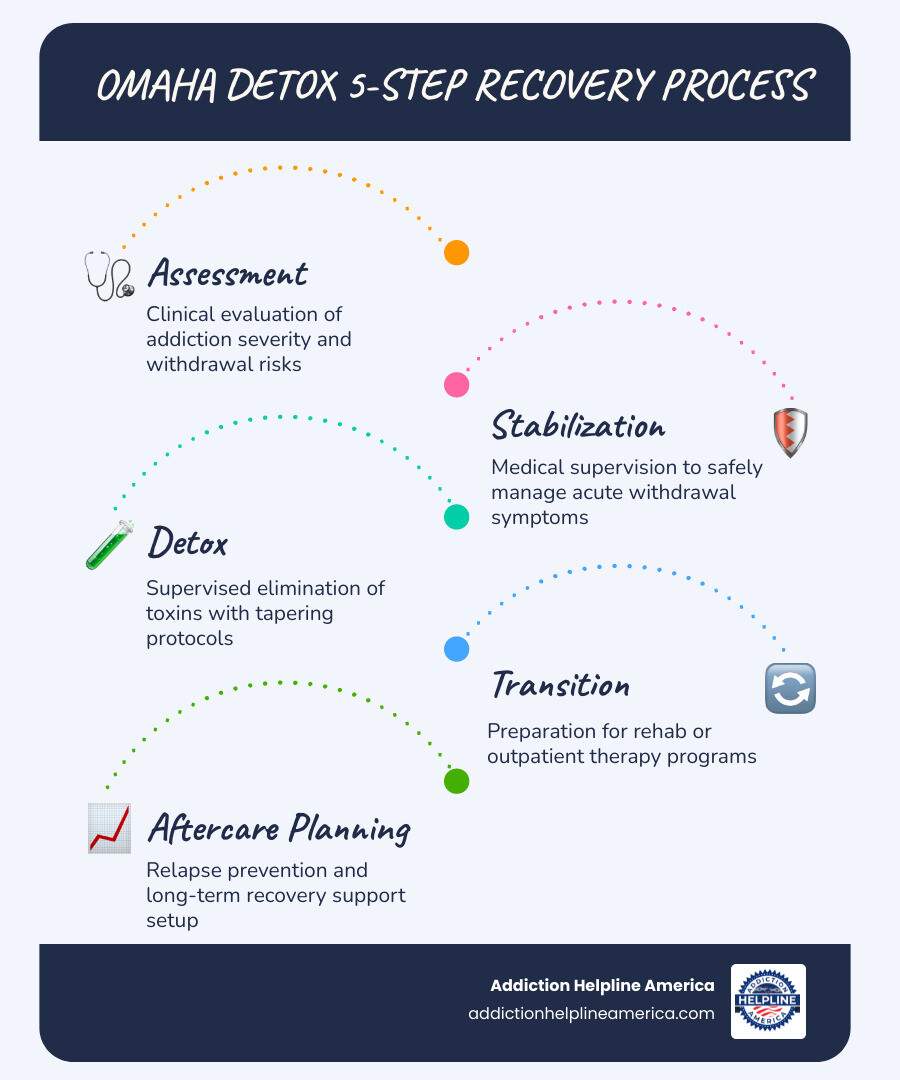
Essential omaha detox facilities terms:
Types of Services Offered at Omaha Detox Facilities

When you begin looking into omaha detox facilities, you’ll find that “detox” isn’t a one-size-fits-all term. In fact, the industry is moving toward the term “withdrawal management” to better describe the clinical care provided during this stage, a shift advocated by the American Society of Addiction Medicine (ASAM). In Omaha, there are approximately 20 outpatient centers and 11 inpatient centers, each offering different levels of intensity.
Medical Detox and Withdrawal Management
Medical detox is the most intensive level of care. It involves 24/7 supervision by medical staff who can administer medications to ease withdrawal symptoms and prevent dangerous complications like seizures or delirium tremens (DTs). Facilities like Douglas County Detoxification Services provide this as an emergency intervention for those in acute intoxication.
Inpatient vs. Outpatient Programs
Choosing between inpatient and outpatient care depends on the severity of the addiction and the risk of withdrawal.
| Feature | Inpatient/Residential Detox | Outpatient Detox (IOP/PHP) |
|---|---|---|
| Environment | 24/7 supervised clinical setting | Treatment at a center; sleep at home |
| Safety | Highest; immediate medical response | Moderate; requires stable home life |
| Flexibility | None; full immersion in recovery | High; allows for work/family time |
| Duration | Typically 5–10 days | Varies; often 3–6 weeks |
Many local providers, such as Valley Hope of Omaha, offer Intensive Outpatient Programs (IOP) and Partial Hospitalization Programs (PHP). These are excellent for individuals who have already completed a medical detox or whose withdrawal risks are clinically managed. To ensure the highest quality of care, look for facilities that adhere to The Joint Commission standards for safety, which focus on patient safety and quality of care.
Specialized Care at Omaha Detox Facilities
Different substances require different medical protocols. Omaha detox facilities specialize in several key areas:
- Opioids: Treatment for heroin or prescription painkillers (oxycodone, fentanyl) often involves medication-assisted treatment (MAT) to reduce cravings and prevent relapse. You can find More info about Omaha services regarding specialized opioid programs.
- Alcohol Dependency: Because alcohol withdrawal can be life-threatening, medical monitoring is standard.
- Benzodiazepines: Withdrawal from Xanax or Valium requires a careful, medically supervised tapering process to avoid seizures.
- Stimulants: While not usually life-threatening, detoxing from meth or cocaine requires significant psychiatric support for the “crash” and intense cravings.
Dual Diagnosis and Mental Health Integration
It is estimated that nearly half of individuals struggling with substance use also have a co-occurring mental health disorder, such as anxiety, depression, or bipolar disorder, according to the National Institute of Mental Health (NIMH). Facilities like Nebraska Medicine and New Horizon emphasize a holistic approach, treating the mind and body simultaneously.
By integrating psychiatric care with detox, patients are less likely to relapse. Research into The Application of the Omaha System in Community Rehabilitation highlights the importance of coordinated care in achieving long-term health outcomes within the community.
Top-Rated Detox and Rehab Centers in Omaha
Omaha is home to several highly-regarded institutions that provide a range of recovery services. As Dr. Lawrence Weinstein, Chief Medical Officer at American Addiction Centers, explains: “Medical detoxification is a critical safety measure that manages the physical symptoms of withdrawal, allowing the patient to stabilize before beginning the psychological work of rehab.” When evaluating these centers, check for accreditations from the Joint Commission or CARF (Commission on Accreditation for Rehabilitation Facilities), as these indicate the facility meets rigorous national standards.
- Douglas County Detox: Located at 1490 N. 16th St., this is a primary 24/7 emergency service for acute withdrawal. They serve adults 19 and older and offer funding assistance for those without insurance.
- Nebraska Medicine: This major medical center provides evidence-based care through a multidisciplinary team. They focus on treating the “whole person,” addressing both addiction and mental health.
- Valley Hope of Omaha: Known for its compassionate approach, Valley Hope has a 95% recommendation rate from its patients. They offer PHP, IOP, and continuing care.
- One World West Omaha: A leading option for both detox and inpatient rehab, offering services in English and Spanish and accepting a wide variety of insurance types.
To explore more specialized providers, you can Find Omaha rehab options through our comprehensive directory.
Admission Processes for Omaha Detox Facilities
The first step is often the hardest, but Omaha facilities try to make it as seamless as possible. Most centers offer 24/7 admissions or crisis hotlines. The process generally involves:
- Clinical Assessment: A phone or in-person screening to determine your medical needs.
- Medical Screening: Checking vitals and substance levels to ensure the facility can safely manage your withdrawal.
- Intake: Completing paperwork and reviewing facility rules.
If you are ready to take the first step, you can Start your recovery in Omaha by contacting a local specialist who can walk you through these procedures.
Local vs. Out-of-State Detox Options
While Omaha has excellent facilities, some people choose to travel for detox. Facilities like Gallus Medical Detox in Denver or various Valley Hope locations outside the city offer certain advantages:
- Privacy: Getting away from your local social circle can provide a fresh start.
- Distance from Triggers: Removing yourself from the environment where you used substances can reduce early cravings.
- Luxury Amenities: Some out-of-state “boutique” facilities offer private rooms, gourmet meals, and concierge services that may not be available in local community-based centers.
Cost of Treatment and Insurance Coverage in Nebraska
Cost should never be the barrier between you and sobriety. In Omaha, there are several ways to fund your treatment.
- Private Insurance: Most facilities accept major providers. Coverage can range from 50% to 100% of costs.
- Medicaid and Medicare: Centers like One World West and Douglas County Detox accept state-funded insurance.
- TRICARE: Military families can find coverage at specific accredited centers.
- Sliding Fee Scales: Many non-profits and county facilities adjust their prices based on your income.
For those involved in the legal system, the Evaluation of Nebraska’s Problem-Solving Courts shows how the state supports recovery through structured programs that often include subsidized treatment.
Free and Low-Cost Detox Resources
If you are uninsured and have no income, Omaha still has a safety net:
- Siena Francis House: Offers emergency shelter and residential addiction recovery.
- Open Door Mission: Provides long-term residential care and gospel-based recovery programs at no cost.
- ARCH Men’s Halfway House: A highly-rated facility (4.6 stars on Google) that charges a maximum of $140 per week based on your ability to pay.
You can Access free Omaha resources and learn more about eligibility for state-funded grants like the SAMHSA Block Grant.
The Importance of Medical Detox vs. At-Home Withdrawal
It might be tempting to try “quitting cold turkey” at home, but for many substances, this is incredibly dangerous. Omaha detox facilities provide 24/7 medical monitoring for a reason. According to the National Institute on Drug Abuse (NIDA), detoxification is a necessary first step in treatment, but it must be followed by behavioral therapy to ensure long-term success.
- Safety: Alcohol and benzodiazepine withdrawal can cause life-threatening seizures. Medical staff can intervene instantly.
- Comfort: Medications like Suboxone or Vivitrol can ease the “bone-deep” pain of opioid withdrawal, making it much more likely that you will finish the program.
- Relapse Prevention: The highest risk for relapse (and overdose) is during the first few days of withdrawal. Being in a secure, substance-free environment provides a necessary buffer.
Before you decide to detox at home, Learn about medical detox safety to understand the risks involved.
Aftercare and Long-Term Support Post-Detox
Detox is only the “cleanse” phase; the real work of recovery happens afterward. Successful omaha detox facilities will help you create a discharge plan before you even leave the building.
- Alumni Programs: Staying connected with people who graduated from the same program provides a built-in support network.
- 12-Step Meetings: Omaha has a vibrant community of Alcoholics Anonymous (AA) and Narcotics Anonymous (NA) groups. Research from the National Institute on Alcohol Abuse and Alcoholism (NIAAA) indicates that long-term participation in support groups and structured aftercare significantly improves long-term abstinence rates.
- Transitional Living: Halfway houses like ARCH or Oxford Houses offer a sober environment as you transition back to work and family life.
- Continuing Care: Regular therapy sessions (CBT/DBT) help you identify and manage the triggers that led to substance use in the first place.
Finding the right path forward is easier when you have a map. You can Find long-term support in Omaha to ensure your detox is the start of a permanent change.
Frequently Asked Questions about Omaha Detox
Are there 24/7 detox facilities in Omaha?
Yes. Douglas County Detoxification Services operates 24 hours a day, 7 days a week as an emergency intervention service for those experiencing acute intoxication or withdrawal.
Does Nebraska Medicaid cover drug and alcohol detox?
Yes, Nebraska Medicaid covers substance use disorder treatment, including detox, at participating facilities. Centers like One World West Omaha and Douglas County Detox are known to accept Medicaid.
How long does the typical medical detox program last?
A typical detox program lasts between 5 and 10 days, depending on the substance and the severity of the addiction. For example, alcohol detox often requires a 7-day phase, followed by intensive therapy.
Conclusion
Taking the step to enter one of the many omaha detox facilities is a brave decision that can change the trajectory of your life. Whether you need the 24/7 medical safety of an inpatient center or the flexibility of an outpatient program, Omaha has the resources to support your healing.
At Addiction Helpline America, we believe that everyone deserves a chance at a healthy, substance-free life. Call our 24/7 confidential helpline at 1-800-662-HELP for immediate assistance. We provide free, confidential, and personalized guidance to help you navigate the complex world of recovery. You don’t have to do this alone. If you’re ready to start your journey, Contact an Omaha treatment specialist today and let us help you find the right path home.