
When a Crisis Hits, Here’s Where to Turn
Addiction Helpline America: Available 24/7 for Immediate Support
Call Our Emergency Helpline Now for Confidential Assistance
Emergency intervention services are structured support systems that respond to behavioral health, psychiatric, or family crises before they escalate into tragedy. According to Dr. Elizabeth Howell, a leading clinical advisor, “Emergency intervention services are the bridge between a moment of despair and a lifetime of recovery. They provide the immediate clinical stabilization necessary to prevent long-term trauma.”
If you need help right now, here are your fastest options:
| Situation | Who to Contact |
|---|---|
| Immediate danger to self or others | Call 911 |
| Suicidal thoughts or mental health crisis | Call or text 988 (Suicide & Crisis Lifeline) |
| Child or youth in behavioral crisis | Dial 2-1-1 for mobile crisis response |
| Mental health crisis (Ottawa/Champlain area) | Call 613-722-6914 or toll-free 1-866-996-0991 |
| Substance use or addiction crisis | Call Addiction Helpline America — 24/7 Free & Confidential |
Since launching in July 2022, the 988 Suicide & Crisis Lifeline has received more than 12 million calls, texts, and chats according to the Substance Abuse and Mental Health Services Administration (SAMHSA.gov) — proof that millions of families face these moments every year. At Addiction Helpline America, we specialize in connecting individuals with the right emergency intervention services — including treatment referrals, crisis support, and recovery resources.
Emergency intervention services terms to know:
Understanding Emergency Intervention Services for Behavioral Health
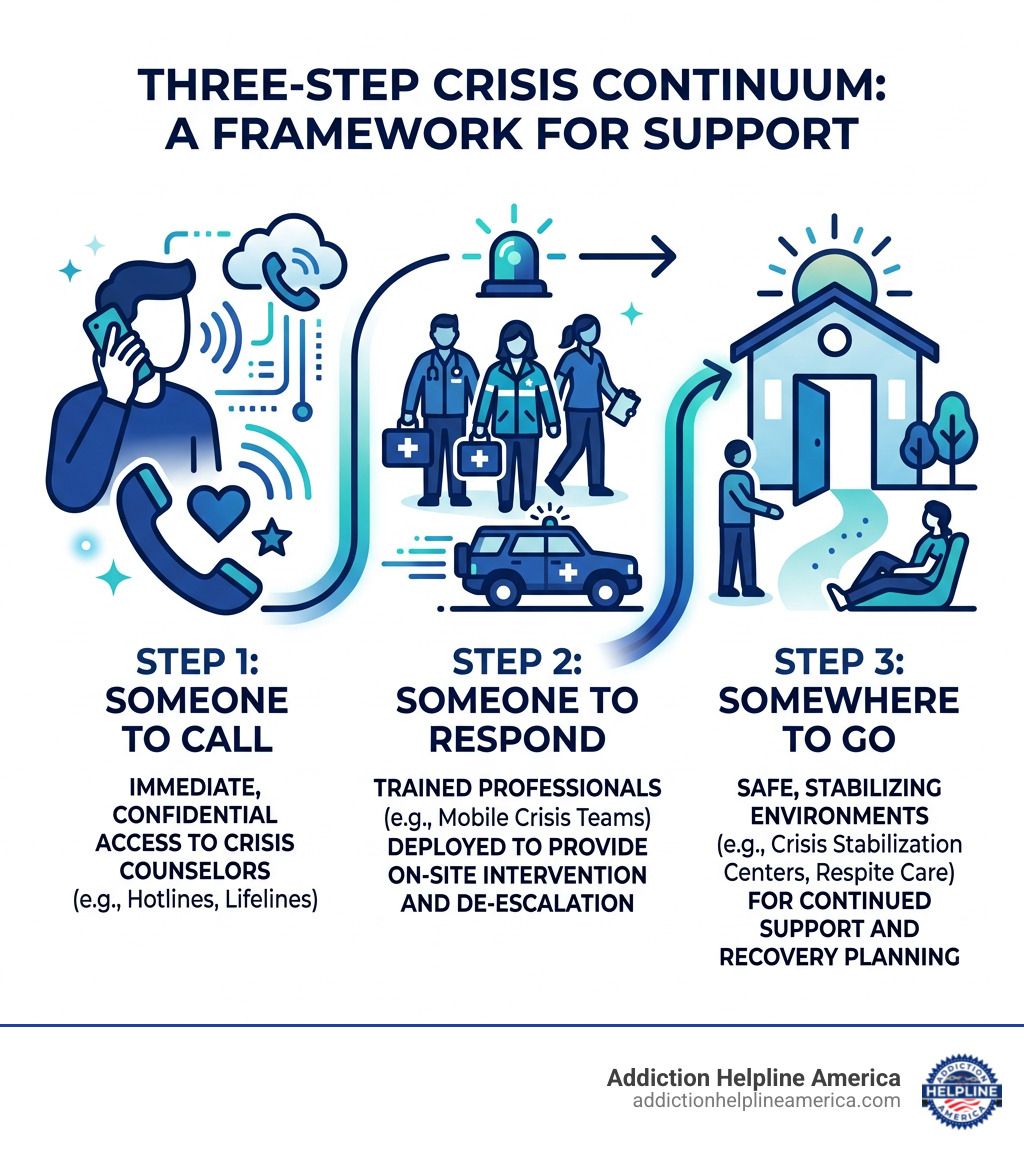
When we talk about emergency intervention services, we are describing a “system of systems.” According to the Substance Abuse and Mental Health Services Administration (SAMHSA.gov), the goal is to ensure that anyone, anywhere, at any time has someone to call, someone to respond, and a safe place to go. These services are specifically designed for behavioral health crises—situations where a person’s thoughts, emotions, or behaviors put them or others at risk.

Our clinical experts emphasize that a psychiatric crisis can manifest as severe depression or intense anxiety. In these moments, traditional emergency rooms aren’t always the best fit. Instead, emergency intervention services focus on:
- Rapid Assessment: Quickly determining the level of risk.
- Stabilization: Using de-escalation techniques to calm the situation.
- Community Outreach: Meeting the person where they are to reduce trauma.
These services prioritize a person-centered, trauma-informed approach. For those dealing with long-term struggles, learning How to Stage an Intervention Guide can be a vital first step in preventing an emergency. The modern landscape of crisis care changed significantly with the launch of the 9-8-8 Suicide Crisis Helpline, providing a culturally appropriate safety net for millions.
Someone to Call: The Role of Crisis Hotlines and Helplines
The first pillar of any effective crisis system is “someone to call.” In the past, 911 was the only option, often resulting in a law enforcement response that wasn’t always equipped for mental health needs. Today, we have specialized lines designed specifically for behavioral health.
The 988 Lifeline is the gold standard for immediate support. When you call or text, you are connected to trained responders who can provide emotional support and triage the situation. In many regions, other numbers play a key role:
- 2-1-1 (EMPS): In areas like Connecticut, dialing 2-1-1 connects families to Emergency Mobile Psychiatric Services specifically for children and youth.
- 811 (Info-Social): In parts of Canada, this service provides 24/7 psychosocial consultation.
- National Helpline: The SAMHSA National Helpline offers a free, confidential, 24/7, 365-day-a-year treatment referral and information service for individuals and family members facing mental and/or substance use disorders.
If you are worried about the cost of professional help following a hotline call, it’s important to ask, “Will My Insurance Cover Drug Rehab?” Early intervention often includes navigating these financial hurdles so you can focus on healing.
Accessing Immediate Help via Emergency Intervention Services
Modern crisis lines do more than just listen. They use sophisticated technology to ensure help arrives fast.
- Phone and Text Support: Many people, especially youth, feel more comfortable texting than talking. Most major crisis lines now offer both.
- Georouting: This technology helps route your call to the local crisis center closest to you, ensuring the responders know the specific resources available in your community.
- 15-Minute Response: For high-intensity systems like EMPS, the goal is for a trained screener to facilitate contact within 15 minutes of the initial call.
- Triage: Responders assess immediate risk. If the person is at imminent risk of harm, they can coordinate with 911; otherwise, they may dispatch a mobile team.
Someone to Respond: Mobile Crisis Teams (MCT) and PMRT
The second pillar is “someone to respond.” This is where emergency intervention services move from the phone to the community. Mobile Crisis Teams (MCT) consist of multidisciplinary professionals—often a mix of clinicians, nurses, and peer specialists. As noted by clinical specialist Robert D’Amico, “Mobile crisis teams are essential because they meet the individual in their natural environment, which significantly reduces the anxiety often associated with clinical settings.”
Real Recovery Story: “When our son hit rock bottom, we didn’t want to call the police. The Mobile Crisis Team arrived in an unmarked car, spoke to him with respect, and de-escalated the situation in our living room. It was the first time we felt heard,” says Sarah, a mother who utilized these services in 2023.
According to the Psychiatric Mobile Response Teams (PMRT) Fact Sheet, these teams are designated to perform evaluations for involuntary detention if necessary, but their primary goal is de-escalation.
Key benefits include:
- De-escalation: Lowering the “temperature” of a situation.
- Peer Support: Connecting via individuals with “lived experience.”
- Community-Based Stabilization: Avoiding costly and stressful trips to the ER.
Before these teams arrive, it is often helpful to Confirm Your Insurance Benefits for Rehab so you know exactly what long-term options are available once the immediate crisis is stabilized.
Somewhere to Go: Stabilization and Crisis Respite Programs
The third pillar is “somewhere to go.” Sometimes, a person cannot safely stay at home, but they don’t require the high-security environment of a locked psychiatric ward. This is where Crisis Stabilization Units (CSUs) and Crisis Respite Programs come in. According to the National Council for Mental Wellbeing, these facilities provide a critical alternative to emergency departments, offering specialized care in a less restrictive environment.
Programs like the Crisis Solutions Center (CSC) serve as a vital diversion point. Instead of being taken to jail or a hospital, individuals can be brought to a facility for up to 72 hours (Crisis Diversion Facility) or even up to 14 days (Interim Services).
Crisis Respite is unique because it offers a voluntary, home-like environment. These facilities often feature:
- Private or semi-private rooms.
- Staff-cooked meals.
- Medication reminders and safety planning.
- A focus on “stepping down” from a higher level of care.
Crisis Respite vs. Inpatient Hospitalization
| Feature | Crisis Respite | Inpatient Hospitalization |
|---|---|---|
| Environment | Home-like, community-based | Clinical, institutional |
| Admission | Voluntary, referral-based | Voluntary or Involuntary |
| Focus | Stabilization & wellness goals | Acute medical/psychiatric safety |
| Staffing | Clinicians & Peer Specialists | Doctors, Nurses, Security |
Many families wonder, “Does Insurance Cover Rehab?” or respite care. While many crisis services are funded by state or local grants (making them free to the user), long-term stabilization may involve insurance. Addiction Helpline America can help you navigate these details.
Qualifying for Emergency Intervention Services and Respite Care
Accessing these “somewhere to go” options usually requires a specific process:
- Referral: Most respite beds are “referral only.” This means a hospital, mobile crisis team, or community provider must vouch for the person’s need.
- Clinical Eligibility: The individual must be experiencing a behavioral health crisis but be medically stable (not requiring immediate surgery or intensive medical monitoring).
- Age Requirements: Some programs are specialized for children (under 18) or adults (16+ or 18+).
- Medical Necessity: Providers assess whether the person is a danger to themselves or others and if a lower level of care has already been tried.
Specialized Support for Children, Veterans, and Indigenous Peoples
Emergency intervention services must be tailored to the person’s culture, age, and background. We provide localized resources for major hubs, ensuring that if you are seeking drug rehab in Los Angeles, Houston, Chicago, or New York, you have access to specialized crisis care.
- Children and Youth: Services like EMPS focus on reducing trauma for kids.
- Indigenous Communities: The Hope for Wellness Help Line offers culturally competent support for First Nations, Inuit, and Métis peoples.
- Veterans: The Veterans Crisis Line provides specialized responders who understand military life and PTSD.
- Regional Support: For those in specific areas, the Mental Health Crisis Line provides bilingual 24/7 support across the Champlain District.
Whether you need a drug rehab in Phoenix or crisis support in Philadelphia, our helpline connects you to local experts who understand your community’s specific resources.
Frequently Asked Questions about Crisis Care
Who is eligible for mobile crisis intervention?
Most mobile crisis services are available to anyone experiencing a behavioral health emergency, regardless of insurance status or ability to pay. Some teams focus specifically on children and youth, while others serve adults. Generally, if the situation involves a mental health or substance use crisis that doesn’t require immediate “lights and sirens” medical intervention, an MCT is eligible to respond.
How do I get a referral for a crisis respite bed?
You typically cannot “self-refer” to a crisis respite bed. Referrals usually come from professional sources such as:
- Hospital emergency departments.
- Mobile crisis teams.
- Community mental health centers.
- Licensed clinicians.
If you believe you or a loved one needs respite, calling a local crisis line is the best way to start the referral process.
What is the difference between 911 and 988 for mental health?
- 911 is for immediate life-threatening emergencies requiring police, fire, or paramedics. Use 911 if there is a weapon involved, a drug overdose in progress, or immediate physical danger.
- 988 is for mental health distress. Use 988 for suicidal thoughts, emotional breakdowns, or substance use crises where the person is physically safe but mentally overwhelmed. 988 aims to provide a clinical response rather than a legal one.
Conclusion
Facing a behavioral health crisis is one of the most frightening experiences a family can go through. However, the growth of emergency intervention services means you no longer have to navigate these moments alone. From the moment you call our 24/7 helpline to the arrival of a mobile team, there is a path forward.
At Addiction Helpline America, we are a Joint Commission-aligned resource committed to being your partner. We offer free, confidential, and personalized guidance to help you find the right recovery program from our vast nationwide network. Whether you need an immediate intervention or are looking for long-term treatment, we can help you Find the right recovery program for your needs.
Our success stories are built on 24/7 availability and expert clinical oversight. Don’t wait until the crisis becomes unmanageable. Reach out today—help is just a phone call away.