Why No-Cost Rehab Is Your Key to Breaking Free from Addiction
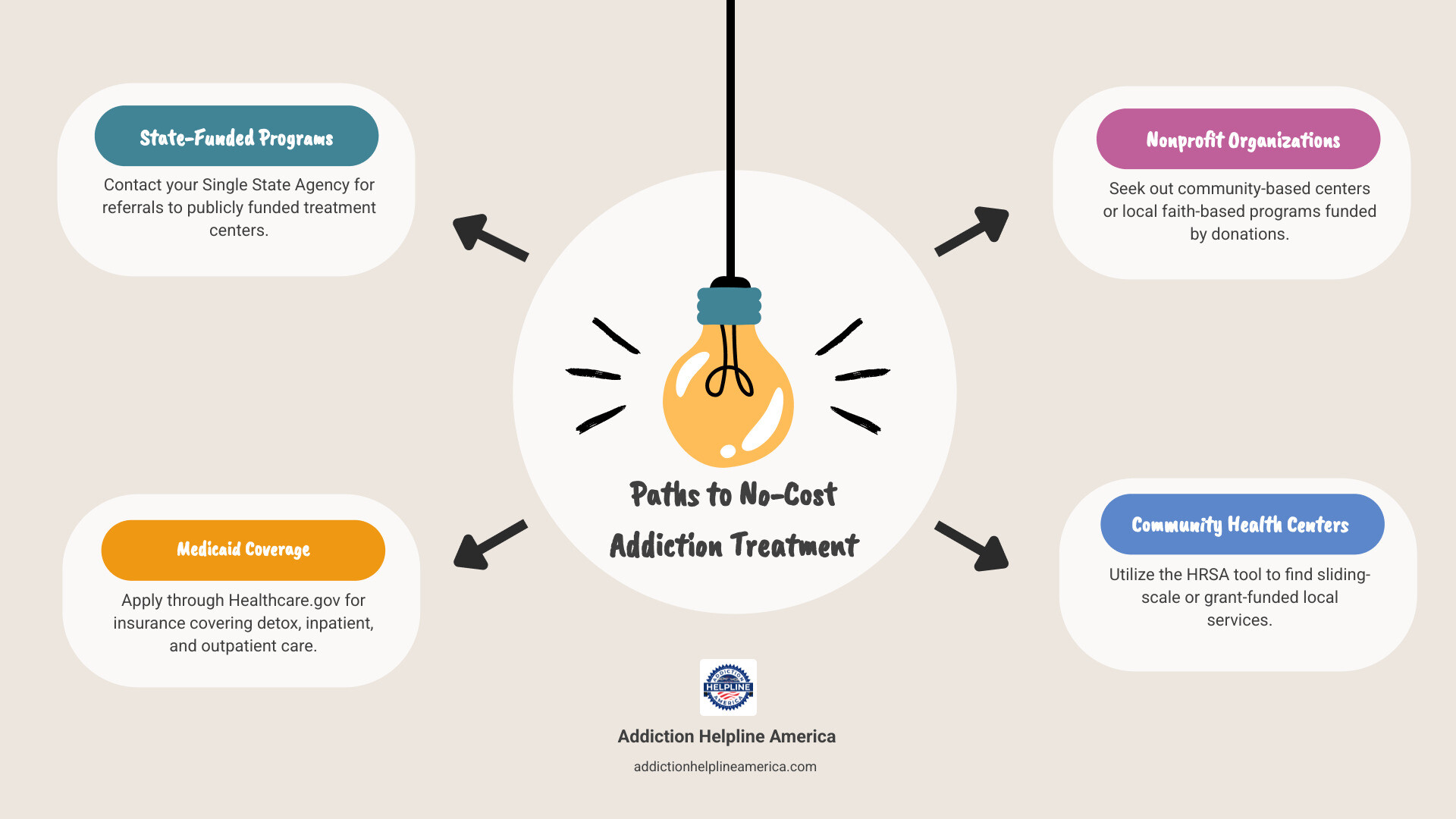
No cost rehab programs provide life-saving addiction treatment without requiring payment, funded through government grants, Medicaid, nonprofit organizations, and community donations. Here’s how to access free treatment:
- State-Funded Programs: Contact your state’s Single State Agency for referrals to publicly funded treatment centers
- Medicaid Coverage: Apply through Healthcare.gov for insurance that covers detox, inpatient, and outpatient care
- Nonprofit Organizations: Reach out to community-based centers like The Salvation Army or local faith-based programs
- Community Health Centers: Use the HRSA Find a Health Center tool to locate sliding-scale or grant-funded services
The cost of treatment should never stand between you and recovery. Yet only 10% of people with a substance use disorder receive treatment each year, according to SAMHSA. In 2021 alone, over 106,000 Americans died from drug overdoses, according to the CDC—a crisis fueled in part by the belief that help is financially out of reach.
The truth is different. Free rehab programs exist across the country, offering the same evidence-based care as paid facilities: medical detox, therapy, counseling, and aftercare planning. These programs reduce relapse rates, improve mental health, and help rebuild families, as confirmed by National Institute on Drug Abuse research.
This guide will show you exactly how to find and access no-cost addiction treatment, understand what services are available, steer eligibility requirements, and take your first steps toward lasting recovery—regardless of your income or insurance status.
At Addiction Helpline America, we’ve connected thousands of individuals with free and low-cost treatment programs across the nation, understanding that no cost rehab options are often the lifeline that makes recovery possible. Our team provides free, confidential support 24/7 to help you steer these resources and find the right program for your unique situation.
Understanding No-Cost Rehab: A Lifeline to Recovery
When we talk about no cost rehab, we’re referring to addiction treatment programs that individuals can access without having to pay out-of-pocket fees. This doesn’t mean the services aren’t valuable; rather, it means the financial burden is covered by other sources, ensuring that a lack of funds doesn’t prevent someone from getting the help they desperately need. These programs work by securing funding from a variety of avenues, primarily government grants, state and federal programs like Medicaid, and the charitable contributions and fundraising efforts of nonprofit organizations and faith-based groups.
The benefits of no-cost addiction treatment are profound and far-reaching. The most immediate and obvious advantage is the removal of financial barriers, which, as we know, is a significant reason why many people never receive treatment. This allows individuals to focus solely on their recovery journey without the added stress of how they will pay for care. Access to these programs means access to vital medical care, therapeutic interventions, and supportive environments that foster healing and sobriety.
The long-term benefits are equally compelling. Completing a free rehab program can significantly reduce the likelihood of relapse, improve overall mental health, and help individuals rebuild their lives and relationships. The National Institute on Drug Abuse (NIDA) emphasizes that effective treatment, regardless of its cost, leads to better outcomes, including reduced drug use, improved employment prospects, and decreased criminal activity. Recovery programs are indeed shown to reduce relapse, improve mental health, and rebuild families.
What services are typically included in these invaluable programs? While the specifics can vary, most free rehab programs offer a comprehensive array of services designed to address the multifaceted nature of addiction. According to the Substance Abuse and Mental Health Services Administration (SAMHSA), a full continuum of care often includes an initial intake and assessment, medical detox to safely manage withdrawal symptoms, various forms of therapy (such as individual, group, and family counseling), relapse prevention planning, and aftercare support to sustain recovery.

How to Find Free Rehab Programs Near You
Finding no cost rehab programs might seem like searching for a needle in a haystack, but we assure you, resources are available. The key is knowing where to look and what questions to ask. Our goal at Addiction Helpline America is to simplify this process for you, connecting you to the right support in your city or state.
One of the most comprehensive tools at your disposal is the SAMHSA (Substance Abuse and Mental Health Services Administration) National Helpline and Online Treatment Locator. This federal resource allows you to search for treatment facilities by location, type of service, and payment options, including free and low-cost programs. We highly recommend starting your search here.
Beyond federal resources, your state and local government agencies are crucial points of contact. Every state has a mental health or addiction services department responsible for overseeing public treatment options. These agencies can provide referrals to state-funded programs in your area. SAMHSA also provides a Directory of Single State Agencies (SSAs) for Substance Abuse Services that can direct you to the nearest and most affordable treatment centers. These state-funded programs help thousands access treatment annually without cost.
Community health centers are another excellent resource. Many of these centers receive federal grants to provide care to underserved populations, often operating on a sliding-fee scale or offering services at no cost. You can locate these centers using the HRSA Find a Health Center tool. These facilities are often integrated into local communities and can provide a range of services beyond addiction treatment, such as primary medical care and mental health services.
When you contact a facility or agency, be prepared with a few key questions to ensure you find the best fit. Here’s a list of what we recommend asking:
- Is the program licensed and accredited? This ensures they meet professional standards.
- Do they provide medical detox services? This is crucial for safe withdrawal from certain substances.
- What types of mental health care are offered? Many individuals with substance use disorders also have co-occurring mental health conditions, a situation known as a dual diagnosis, which affects millions of Americans.
- What therapies and support groups are available? (e.g., individual counseling, group therapy, 12-step programs).
- Is sober living or aftercare support part of the program? Long-term recovery often requires ongoing support.
- What are the specific eligibility requirements for their no-cost options?
Qualifying for a No-Cost Rehab Program
Eligibility for no cost rehab programs is primarily designed to ensure that those who need help the most, and who face significant financial barriers, can access it. While criteria can vary by program and state, there are common requirements we typically see.
Most programs will require proof of income to determine financial need. This often means providing tax returns, pay stubs, or documentation of unemployment benefits. The goal is to verify that your income falls below a certain threshold, making you eligible for free or highly subsidized care. Similarly, proof of state residency is almost always required to ensure you are eligible for state-funded programs. This might involve showing a driver’s license, utility bills, or other official documents that confirm your residence in the state where you are seeking treatment.
Legal U.S. residency status is also a common requirement for many government-funded programs. For those without private health insurance, demonstrating a lack of insurance is key. If you are uninsured or underinsured, these programs are specifically designed to fill that gap.
You will also need documented proof of a substance use disorder. This often comes through an initial assessment conducted by the facility itself or a referral from a healthcare professional. It confirms that you have a genuine need for addiction treatment services.
Some programs prioritize certain populations due to higher risk or specific vulnerabilities. These ‘priority populations,’ as often designated by SAMHSA for state block grants, can include pregnant women, individuals who inject drugs (IV drug users), and those with co-occurring mental health disorders, ensuring they receive timely care. Other factors that might influence eligibility include a referral from a professional, your employment status, and your agreement to actively follow the program’s guidelines and participate in treatment.
Exploring Your Options: Types of Free Treatment Programs
Understanding the landscape of no cost rehab can help you make informed decisions about your recovery journey. While they all aim to provide free treatment, state-funded, community-based, and non-profit rehabs often operate with different structures and philosophies.
| Feature | State-Funded Rehabs | Community-Based Programs | Non-Profit Rehabs |
|---|---|---|---|
| Philosophy | Government-mandated public health service; focus on accessibility and evidence-based care. | Grassroots, local support; often peer-driven and focused on local needs. | Mission-driven, charitable; often blend evidence-based care with a specific philosophy (e.g., faith-based). |
| Services | Comprehensive: detox, inpatient, outpatient, MAT, counseling, therapy. | Varies: support groups, sober living, some outpatient counseling, skill-building. May partner for medical services. | Wide range: detox, residential, outpatient, aftercare. May have specialized programs (e.g., for veterans, women). |
| Eligibility | Low-income, uninsured/underinsured, state residency, documented SUD. Priority for high-risk groups. | Often open to all; some may have specific criteria (e.g., faith affiliation, local residence). | Low-income, uninsured/underinsured; some may have additional criteria based on their mission. |
| Funding | State and federal grants, Medicaid. | Local fundraising, grants, donations, volunteer efforts. | Donations, grants, private philanthropy, some government contracts. |
| Focus | Clinical treatment and public health outcomes. | Peer support, community integration, local resources. | Holistic care, often with a spiritual or specific population focus. |
State-Funded Programs and Medicaid Coverage
State-funded rehabs are a cornerstone of no cost rehab options, utilizing government money distributed by the state to provide essential addiction treatment services. These programs are designed to offer comprehensive care, including medically supervised detoxification, various forms of counseling and therapy, and both inpatient and outpatient treatment options. They are often vital for individuals who would otherwise have no access to care.
Medicaid plays a critical role in covering addiction treatment for eligible individuals. It’s a government-funded insurance program that can significantly reduce or eliminate the cost of treatment. Thanks to the Affordable Care Act (ACA), treatment for substance use and mental health disorders is considered an essential health benefit. This means all Marketplace health insurance plans and most individual and small group plans are required to cover it. Medicaid expansion programs under the ACA also include substance use treatment services, as required by federal law.
Applying for Medicaid is a straightforward process. We recommend visiting Healthcare.gov’s Medicaid page to find your state’s specific Medicaid program and application details. You can typically apply online, by phone, or at a local office. Once you’ve established eligibility, Medicaid can cover a wide array of addiction treatment services, including detox, inpatient rehab, outpatient therapy, and medication-assisted treatment (MAT). While the application process can take up to 45 days, it can be expedited in urgent cases, and some states even offer presumptive eligibility, granting temporary coverage while your application is processed.
For more detailed information on how insurance, including Medicaid, can cover rehab, we encourage you to explore our guide on insurance coverage for rehab.
Community-Based and Non-Profit Recovery Programs
Beyond state-funded initiatives, community-based and non-profit organizations are powerful forces in providing no cost rehab and recovery support. These programs often thrive on local engagement, peer support, and a mission-driven approach to healing.
Community-based programs frequently operate with a strong emphasis on social support and integration. They might offer peer-led meetings, sober living environments, and various support groups that help individuals build a sober network. Examples include local initiatives run by community centers, churches, or grassroots organizations that understand the unique needs of their local population. While these programs might not always provide intensive medical detox or inpatient care directly, they often partner with other facilities or guide individuals to where they can receive those services.
Faith-based recovery programs are a significant subset of non-profit care. Organizations like The Salvation Army are well-known providers of free or low-cost residential and outpatient recovery programs across the United States. Other faith-based groups, such as local churches and ministries, also offer support groups, 12-step programs, and counseling that integrate spiritual guidance with practical recovery tools. These programs can be incredibly effective for individuals who find strength and motivation in their faith, addressing both the physical and spiritual aspects of addiction. It’s worth noting that while many faith-based programs offer comprehensive support, they may not always provide medically supervised detox services, so it’s important to inquire about this upfront if medical detox is needed.
These non-profit and community-driven initiatives are fueled by donations, grants, and the dedication of volunteers and staff. They are committed to providing care regardless of a person’s ability to pay, often filling critical gaps in the treatment landscape.
What to Expect During and After Treatment
Starting on a no cost rehab journey means stepping into a structured environment focused on healing and growth. While each program has its unique flavor, there’s a general path you can expect during your time in a free rehab program.
Your journey typically begins with an intake assessment. This is where a team of professionals gathers information about your substance use history, physical health, mental health, and social situation. This comprehensive evaluation is crucial for developing a personalized treatment plan custom to your specific needs.
Following the assessment, the first clinical step for many is medical detox. This process safely manages withdrawal symptoms as substances leave your body and is critical for substances like alcohol and benzodiazepines where withdrawal can be dangerous. After detox, you’ll transition into a specific level of care. The National Institute on Drug Abuse (NIDA) outlines several types of treatment programs, which can include:
- Inpatient or Residential Treatment: A more intensive option where you live at the facility, often for 30 to 90 days, receiving 24/7 support and structured therapy.
- Outpatient Programs: These allow you to live at home while attending treatment sessions several times a week. Intensive Outpatient Programs (IOPs) are a common format.
- Sober Living: A supportive, structured environment for individuals transitioning out of more intensive treatment, helping them integrate back into daily life while maintaining sobriety.

A core component of any effective rehab program is therapeutic services. You can expect a blend of individual counseling, where you work one-on-one with a therapist to address personal issues and develop coping strategies, and group therapy, which provides peer support and shared experiences. Many programs also offer family therapy, helping to heal relationships and educate loved ones about addiction. Relapse prevention planning is woven throughout, teaching you how to identify triggers and manage cravings.
It’s also important to remember that addiction often co-occurs with mental health conditions. We know that approximately 50% of people with substance use disorders have dual diagnoses. Free rehab programs are increasingly equipped to treat these co-occurring disorders, addressing conditions like anxiety, depression, PTSD, and bipolar disorder alongside the addiction. This integrated approach is vital for comprehensive and lasting recovery.
Finally, aftercare planning is a critical phase that begins even before you complete your primary treatment. This involves working with staff to create a roadmap for long-term sobriety. It can include connecting you with local support groups (like AA or NA), outpatient therapy, vocational training, or housing assistance. The goal is to ensure you have a strong support system and practical tools to steer life in recovery.
Navigating Potential Challenges and Alternatives
While no cost rehab programs are invaluable, it’s important to approach them with realistic expectations. Like any healthcare service, they can come with certain challenges, but knowing about them upfront empowers you to steer them effectively.
One of the most common challenges is the presence of waitlists. Because these programs are in high demand, they often have limited capacity, creating a significant barrier to care. National surveys on substance abuse treatment services frequently highlight the gap between treatment need and availability, which can result in waiting periods ranging from days to months. Another potential limitation is that free rehabs may offer more basic amenities compared to private, luxury facilities. However, we believe that the quality of core treatment—medical care, therapy, and support—is what truly matters for recovery.
So, what should you do if you face a waitlist or if a free program isn’t immediately accessible? Dr. Alena Petrov, a clinical psychologist and addiction specialist, advises, “The waiting period is a vulnerable time, but it doesn’t have to be a passive one. Engaging with community support groups, using telehealth resources, and creating a daily sober-support plan can build a crucial bridge to formal treatment and maintain momentum.”
Here are some steps you can take:
- Manage the Wait: While waiting for admission, stay in regular contact with the facility to check on your status. Explore short-term support options like local peer support groups (AA or NA meetings), addiction hotlines, or community counseling services.
- Sliding-Scale Fees: Many treatment centers offer a “sliding-fee scale” payment option, where the cost is adjusted based on your income. SAMHSA’s treatment locator allows you to filter for facilities that offer this.
- Scholarships and Grants: Some non-profit organizations offer scholarships or grants for addiction treatment. It’s worth inquiring about these opportunities directly with facilities.
- Payment Plans: If upfront costs are a barrier, some centers offer flexible payment plans, allowing you to pay for treatment in installments.
- Online Therapy Options: For ongoing support, virtual recovery programs and online therapy can be a cost-effective alternative. These platforms connect you with licensed therapists who can provide counseling from home. If you’re considering this route, you can take a quiz to get matched with a therapist who understands addiction.
How Family and Friends Can Provide Support
The journey to recovery, especially when navigating no cost rehab options, is rarely a solitary one. Family and friends play an incredibly vital role in supporting a loved one seeking or undergoing addiction treatment. Your support can be the anchor that helps them through challenging times.
First and foremost, offer emotional support without judgment. As defined by the American Society of Addiction Medicine (ASAM), addiction is a complex, treatable medical disease, not a moral failing. Your compassion, active listening, and encouragement can make a world of difference. Let your loved one know you are there for them, no matter what.
You can also provide practical assistance by helping with research and logistics. Navigating the various options for free rehab, understanding eligibility requirements, filling out applications, and coordinating appointments can be overwhelming. Offering to help with these tasks can alleviate a significant burden from your loved one, allowing them to focus on their emotional and physical well-being.
Participating in family therapy, if offered by the treatment program, can be profoundly beneficial. Addiction impacts the entire family system, and family therapy provides a safe space to address communication issues, heal past wounds, and develop healthy interaction patterns.
It’s also important to set healthy boundaries. Supporting a loved one doesn’t mean enabling their addiction. Establishing clear boundaries protects your own well-being while still demonstrating care. This might involve not providing financial support that could be used for substances or refusing to engage in arguments when your loved one is under the influence.
Finally, educate yourself about addiction. Understanding the disease, its effects, and the recovery process can help you better support your loved one and manage your own expectations. Resources from organizations like the National Institute on Drug Abuse (NIDA) offer valuable insights into treatment approaches and the science behind addiction. You don’t have to go through this alone either; support groups for families of those with addiction, like Al-Anon or Nar-Anon, can provide invaluable peer support and guidance.
Frequently Asked Questions about Free Addiction Treatment
We understand you likely have many questions about no cost rehab. Here, we address some of the most common inquiries to provide clarity and peace of mind.
Is free rehab as effective as paid rehab?
The effectiveness of addiction treatment hinges on the quality of the program, its accreditation, the dedication of its staff, and the individual’s commitment to recovery, rather than the price tag. SAMHSA data consistently shows positive outcomes from treatment, confirming that getting help is what matters most. Many free rehab programs are licensed and accredited, offering evidence-based therapies, medical care, and robust support systems. While they might not boast luxury amenities, they prioritize core treatment components that are essential for lasting sobriety. We believe that any treatment is better than no treatment, and a well-run free program can be just as effective as an expensive private one.
What services are typically included in a no-cost rehab program?
No cost rehab programs generally provide a comprehensive range of services. While offerings vary, you can typically expect services that align with the principles of effective treatment outlined by NIDA. These often include an initial assessment, individual and group counseling, relapse prevention planning, and aftercare support. Depending on the facility, medically supervised detox, residential (inpatient) care, outpatient services, and medication-assisted treatment (MAT) may also be available. It’s always best to inquire directly with the program about their specific services.
How long do I have to wait to get into a free rehab?
Wait times for no cost rehab programs can vary significantly. Factors such as your geographic location, the specific type of program (e.g., inpatient vs. outpatient), and the current demand for services all play a role. Some individuals might find immediate placement, especially in crisis situations, while others could face a wait of several weeks or even months. It is crucial to be proactive: call facilities directly, get your name on waitlists, and maintain regular contact. During any waiting period, we strongly encourage you to seek interim support through local support groups, addiction hotlines, or community mental health services to ensure you remain engaged in your recovery journey.
Your Journey to a Sober Future Starts Today
We hope this guide has illuminated the path to no cost rehab and empowered you with the knowledge that recovery is truly possible for everyone, regardless of their financial situation. The belief that treatment is out of reach is a powerful barrier, but as we’ve explored, numerous avenues exist to access life-changing care without the burden of cost. Thousands of people successfully rebuild their lives through these programs, finding health, hope, and lasting sobriety.
Your journey to a sober future can start today. Don’t let financial concerns hold you back from the healing you deserve. At Addiction Helpline America, we are dedicated to connecting individuals nationwide to addiction and mental health treatment centers. Our team provides free, confidential, and personalized guidance to help you find the right recovery program from our vast network.
We understand the urgency of your situation and the courage it takes to seek help. Don’t hesitate—call our 24/7 helpline now to explore your options and take that vital first step toward a brighter, healthier future.