
Why Planning a Mental Health Intervention Can Save Lives
How to do a family intervention for mental illness involves careful planning, professional guidance, and a compassionate approach. Here’s what you need to know:
Quick Answer: Essential Steps for a Mental Health Intervention
- Consult a professional interventionist – They guide the process and keep it productive
- Assemble a small team – Choose 4-6 people your loved one trusts and respects
- Plan the details – Pick a private location and time when your loved one is calm
- Prepare what to say – Write letters using “I” statements without blame
- Arrange treatment ahead – Have a facility ready to accept your loved one immediately
- Set clear boundaries – Decide what happens if they refuse help
- Follow up with support – Participate in family therapy and recovery programs
Mental illness affects millions of Americans. In 2021, an estimated 57.8 million adults in the U.S. had a mental illness, yet 30% to 80% of people with mental health conditions don’t receive treatment. The reasons are complex: stigma, denial, and sometimes the illness itself prevents someone from recognizing they need help.
When someone you love is struggling with a mental health condition and refuses treatment, watching them suffer feels unbearable. You’ve likely tried talking to them directly, but those conversations went nowhere. They may withdraw from family and friends, stop caring for themselves, or engage in dangerous behaviors.
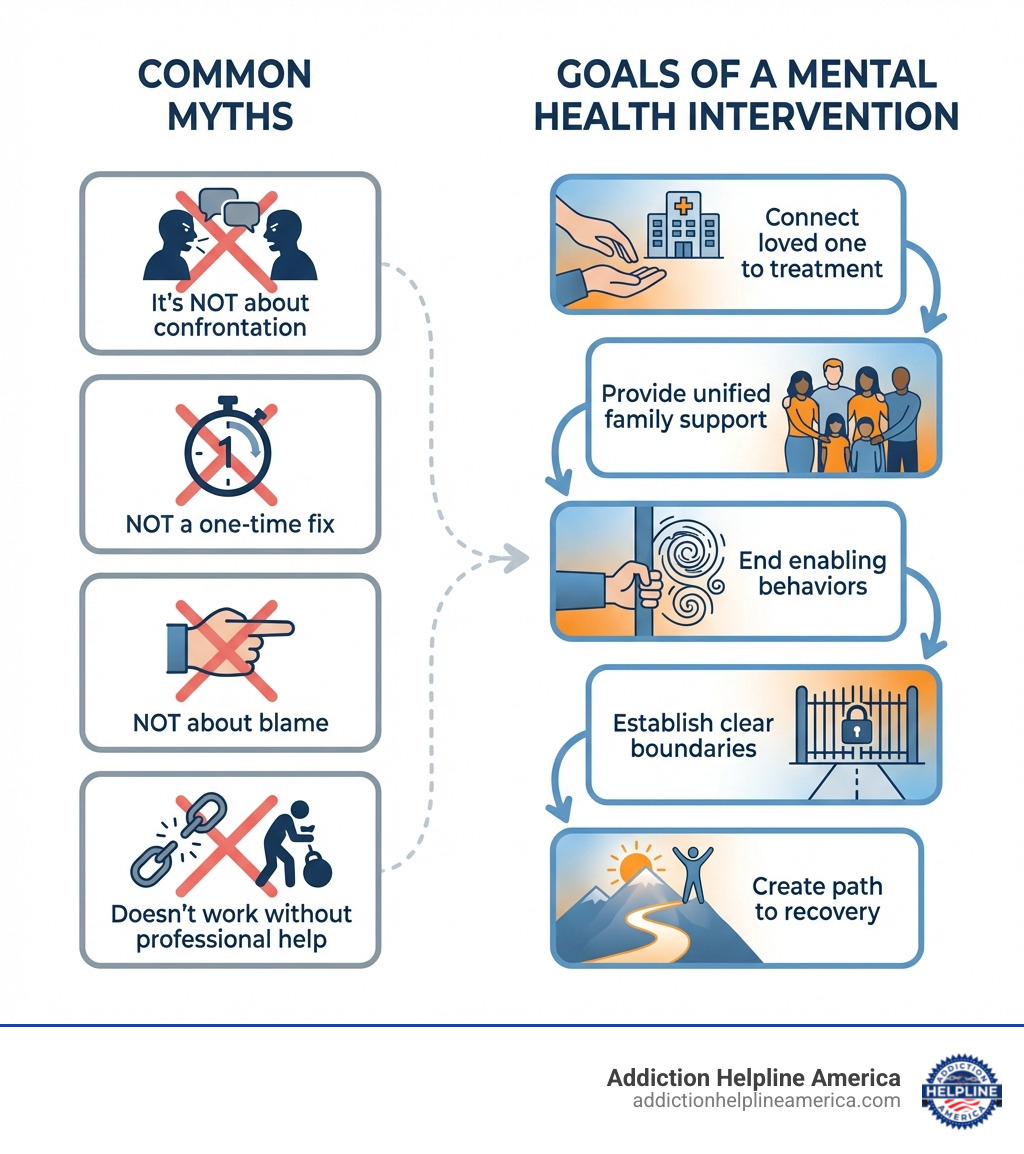
A family intervention offers hope. It’s a structured, compassionate meeting where loved ones come together to help someone see they need professional care. Unlike the confrontational interventions sometimes shown on TV, a mental health intervention is about support, not blame.
The process works. Research shows that family interventions can reduce relapse rates by 25% and significantly decrease caregiver stress. When done correctly with professional guidance, interventions help thousands of people enter treatment every year.
This guide will walk you through every step of planning and conducting a successful intervention—from assembling your team to choosing the right treatment program. At Addiction Helpline America, we’ve helped countless families steer the mental health intervention process with free, confidential guidance and connections to certified interventionists. Our experience has shown that when families step up with preparation, compassion, and professional support, they can make a life-changing difference for their loved one struggling with mental illness.
Know your how to do a family intervention for mental illness terms:
Understanding and Preparing for a Mental Health Intervention
A mental health intervention is a carefully planned and structured conversation with a loved one who is struggling with mental illness and refusing to seek help. The primary goal is to encourage them to accept professional treatment. It’s a gathering of family members and close friends who express their concerns, present a clear treatment plan, and outline the consequences of refusing help.
Key Differences from Addiction Interventions
While mental health interventions share similarities with addiction interventions, there are crucial distinctions. In addiction, confronting the negative impacts of substance use can often be an effective strategy. However, with mental illness, the individual may not even recognize they have a problem. This phenomenon is called anosognosia, a lack of insight into one’s own condition, which can be a symptom of certain mental illnesses like schizophrenia or bipolar disorder.
Because of this, a mental health intervention often requires a more sensitive approach. Someone living with severe depression might find it impossible to schedule a therapist appointment due to their symptoms, or a person with social anxiety may struggle to make a phone call. A direct, confrontational approach can be counterproductive, potentially leading to unpredictable or defensive reactions, and making the person feel attacked. Instead, the focus shifts to conveying unwavering support and love, even when discussing difficult truths. This often means fewer participants in the room and a greater reliance on a professional’s sensitive guidance.
Crisis Interventions vs. Interventions for Worsening Conditions
Mental health interventions can generally be categorized into two types:
- Crisis Interventions: These are for acute episodes where a loved one is experiencing severe symptoms that pose an immediate risk to themselves or others. This could involve psychotic episodes, delusions, catatonic behavior, or active suicidal ideation. These situations often require immediate action, potentially involving emergency services and specialized mental health professionals available 24/7.
- Interventions for Worsening Conditions: These are for situations where a loved one’s mental health is gradually declining, impacting their functioning, relationships, and overall well-being, but without immediate life-threatening danger. Examples include increasing social withdrawal, neglecting responsibilities, or self-destructive behaviors that are not immediately fatal. These interventions allow for more planning and a less urgent, though still serious, approach.
Signs It’s Time to Intervene
Deciding when to stage a mental health intervention is a deeply personal and often agonizing decision. However, according to mental health professionals, certain signs may indicate that it’s time to act:
- Social Withdrawal: They pull away from family, friends, and previously enjoyed activities.
- Neglecting Responsibilities: Difficulty holding a job, performing at school, or managing daily tasks like hygiene and household chores.
- Dangerous or Risky Behavior: Engaging in self-harm, reckless actions, or substance use to cope.
- Declining Physical Health: Significant changes in sleep patterns, appetite, or overall physical well-being.
- Expressing Hopelessness or Self-Harm: Talking about not wanting to live, feeling like a burden, or making suicidal statements.
- Increased Lying or Secrecy: Hiding their behaviors or feelings from loved ones.
- Shutting Down Conversations about Treatment: Refusing to acknowledge a problem or discuss seeking help, despite your concerns.
- Worsening Condition Despite Past Refusals: Their mental health continues to deteriorate even after previous attempts to encourage treatment.
We know these signs can be heartbreaking to witness. But remember, family interventions for mental disorders have a proven track record of efficacy. Family interventions for schizophrenia have shown a 25% advantage in preventing relapses, with 62% of patients successfully maintained in treatment for one year compared to 37% without family-based stress management. This evidence underscores the powerful impact family involvement can have.
Who Should Be Part of the Intervention Team?
Assembling the right group is crucial for a successful intervention. We typically recommend an intervention team of 4 to 6 people who are important in your loved one’s life. These should be individuals they like, respect, or depend on, such as a best friend, adult relatives, or a trusted spiritual leader. The goal is to create an environment of love and support, not an “us versus them” dynamic.
A caring relationship is key for participants, as the subject of the intervention needs to feel that everyone involved has their best intentions at heart.
Who to include:
- Close family members who have a positive, supportive relationship.
- Friends who genuinely care and can remain calm.
- Anyone whose opinion the loved one values and respects.
Who to exclude:
- Individuals who might get too emotional or angry, as this can derail the conversation.
- Anyone with a history of conflict with the loved one.
- Those who cannot limit what they say to the agreed-upon plan or might interfere with the process.
- Enablers, or individuals who, consciously or unconsciously, allow the problematic behavior to continue.
Deciding on the involvement of children or elderly relatives requires particular sensitivity. While their love and concern can be powerful, they may not be equipped to handle the emotional intensity or potential negative reactions. If they are involved, ensure they are thoroughly prepared by the intervention specialist and provided with adequate support and supervision.
Why You Shouldn’t Do It Alone
The thought of staging an intervention can be daunting, and it might be tempting to try to handle it yourself. However, the risks of a DIY intervention are significant:
- Potential for Emotional Escalation: Without a neutral facilitator, emotions can quickly run high, leading to shouting matches, blame, and further alienation.
- Damaging Relationships: A poorly executed intervention can deepen resentment and trust issues, making future attempts to help even harder.
- Unclear Next Steps: You might not know how to respond to objections, what treatment options are genuinely suitable, or how to manage the situation if the loved one refuses help.
- Increased Chance of Relapse: If the intervention is disorganized or ineffective, it could inadvertently push your loved one further into their illness or increase the likelihood of relapse if they briefly seek help.
This is why professional guidance is paramount. An intervention specialist is trained to keep the process productive, deal with negative reactions effectively, get the family on board, and help develop an appropriate plan that everyone agrees upon. Experts warn that without a neutral facilitator, emotions can quickly run high, leading to shouting matches, blame, and further alienation. They can also help families identify and stop enabling behaviors, which often contribute to the problem. We cannot stress enough how valuable an experienced professional is in navigating this complex and emotionally charged situation.
A Step-by-Step Guide: How to Do a Family Intervention for Mental Illness

The goal of a family intervention for mental illness is a structured, loving process. It’s about focusing on concern, not confrontation, and presenting a unified front of support and a clear path to healing. When the family is all on board, it creates an environment where your loved one has no defense against love.
Step 1: Seek Professional Guidance
The first and arguably most crucial step is to involve a professional interventionist or a mental health professional experienced in interventions. This neutral third party is essential for guiding the process, keeping the meeting on track, and managing potential emotional outbursts.
Skills of a mental health intervention professional:
- Facilitation: They lead the discussion, ensuring everyone gets a chance to speak and that the conversation remains focused on the objective.
- De-escalation: They are trained to handle intense moments and unexpected behaviors, helping to keep everyone calm and safe.
- Strategy: They help you anticipate reactions, rehearse responses, and develop a comprehensive plan.
- Resource Connection: They can help identify reputable treatment centers and ensure a smooth transition into care.
At Addiction Helpline America, we connect families nationwide with certified interventionists who specialize in mental health. Our free and confidential service can help you find a qualified professional who understands your specific situation and can guide you through every step. Discussing costs and services with a professional is part of the initial consultation, and we can help you explore options that fit your needs.
Step 2: Form the Team and Develop the Plan
With your professional interventionist’s input, finalize your intervention team. Choose individuals who can remain calm, are supportive, and have a positive relationship with your loved one.
Next, it’s time to develop a comprehensive plan:
- Choose a Neutral, Private Location: Select a familiar, safe environment with minimal distractions. This could be a family member’s home, a meeting room, or even a therapist’s office.
- Set a Date and Time: Choose a time when your loved one is most likely to be receptive and least likely to be under the influence of substances (if co-occurring issues are present). Ensure all team members can commit to this time.
- Research and Secure Treatment: This is a critical step. Before the intervention, your interventionist will help you research and ideally secure a spot in a suitable mental health treatment facility or program. Having a concrete plan, rather than just an idea, significantly increases the chances of success.
- Plan for Transportation: If your loved one agrees to treatment, immediate transportation to the facility should be arranged. The goal is to remove any barriers to getting help right away.
Step 3: How to Prepare for a Family Intervention for Mental Illness
Preparation is key to a successful intervention. Each team member will have a specific role and message to deliver.
- Writing Impact Letters: Each participant will write a letter to your loved one. These letters should:
- Use “I” statements to express concern and love, e.g., “I’ve noticed that you seem more stressed than usual, and I’m worried about you.”
- Focus on specific, non-judgmental examples of how their mental illness has impacted them and others. Avoid accusations or blame.
- Reiterate your love and desire for them to get help and heal.
- Rehearsing the Intervention: Practice makes perfect, or at least smoother. Your interventionist will guide the team through a rehearsal, ensuring everyone knows what to say, when to speak, and how to respond to potential reactions. This helps maintain a consistent message and a structured flow.
- Preparing for Potential Reactions: It’s impossible to predict exactly how your loved one will react. They might express anger, denial, defensiveness, or even relief. Your interventionist will help you anticipate these possibilities and prepare calm, rational responses.
- Establishing Firm Boundaries and Consequences: Before the intervention, the team must collectively decide on specific actions each person will take if your loved one refuses treatment. These are not threats, but rather loving boundaries designed to prevent enabling and encourage seeking help. Setting healthy boundaries is a crucial aspect of ending codependent patterns and promoting accountability. For example, “If you choose not to accept treatment, I will no longer be able to financially support you.”
Step 4: Holding the Intervention
The day of the intervention is often filled with anxiety, but trust in your preparation and your professional guide.
- Let the Professional Facilitate: The interventionist will lead the meeting, set the tone, and manage the flow of conversation. Their presence ensures neutrality and keeps emotions from overwhelming the process.
- Each Person Reads Their Letter: In a pre-determined order, each team member will read their impact letter. It’s crucial for the loved one to listen without interruption, and for the readers to stick to their prepared statements.
- Presenting the Treatment Plan: Once everyone has spoken, the interventionist will present the pre-arranged treatment plan as a clear, immediate solution. This includes details about the facility, the type of treatment, and the next steps.
- Maintaining a Calm, Supportive, and Unified Stance: Throughout the meeting, the team must remain calm, supportive, and united in their message. The goal is to convey love and concern, not judgment or anger. Your loved one will be asked to make a decision immediately.
Exploring Intervention Approaches and Legal Options

Understanding that not all interventions are the same is important. Different approaches may be more suitable depending on the individual’s mental health condition, personality, and the family dynamics. Choosing an approach that fits the family and the individual’s situation is best done with professional guidance.
Common Intervention Approaches
While there are many variations, several models guide intervention strategies:
- The Johnson Model (Direct Approach): This is often what people envision when they think of an intervention. It’s a surprise, direct confrontation where family and friends present the individual with evidence of their problem and the consequences of not seeking help. It’s highly structured and often used when the individual is in deep denial.
- The ARISE Model (Invitational Approach): This model is more collaborative and less confrontational. It involves the affected person in the planning process from the beginning, focusing on a series of conversations rather than a single, surprise meeting. It aims for total transparency and shared decision-making.
- The Love First Model (Compassion-Based): Similar to ARISE, this approach emphasizes compassion, empathy, and open communication. It focuses on expressing love and concern while presenting a clear path to treatment, aiming to reduce defensiveness and foster a willingness to accept help.
Addiction Helpline America works with interventionists who are skilled in various approaches, helping families choose the method that best suits their unique circumstances. Our goal is to connect you with professionals who can tailor the intervention to maximize its effectiveness and ensure a compassionate process.
Understanding Legal Considerations
In some severe cases, a loved one’s mental illness may render them a danger to themselves or others, leading to consideration of involuntary commitment. This is a serious legal step and should only be pursued when absolutely necessary and with legal and professional guidance.
- Involuntary Commitment Criteria: Laws vary by state, but according to the Treatment Advocacy Center, involuntary commitment is generally considered when an individual is:
- A danger to themselves (e.g., suicidal, severe self-neglect).
- A danger to others (e.g., violent, threatening behavior).
- Gravely disabled (unable to care for themselves due to mental illness).
- The Baker Act: As a state-specific example, the Baker Act is a Florida law that allows for emergency, involuntary mental health services and temporary detention for individuals who meet specific criteria related to mental illness and pose a danger. It can only be invoked by designated professionals.
It is crucial to consult with a professional interventionist or mental health attorney about the specific laws in your area. They can provide guidance on legal options and ensure any actions taken comply with local regulations.
After the Intervention: The Path to Recovery and Healing
An intervention is not a one-time fix; it’s the beginning of a long-term process for the whole family. Defining success goes beyond the initial “yes” to treatment. Success can also mean creating an opportunity for open discussion, addressing stigma, and sometimes, planting the seed for future treatment if immediate acceptance doesn’t occur.
How to Respond if Your Loved One Refuses Help
If, despite all your efforts, your loved one refuses help, it’s natural to feel devastated. This is where the pre-determined consequences come into play.
- Sticking to the Pre-Determined Consequences: It’s incredibly difficult, but essential to follow through with the boundaries you established. This demonstrates that your love is firm and that you will no longer enable destructive behaviors.
- The Importance of Ending Enabling Behaviors: Enabling can take many forms, from financial support to making excuses for their behavior. Ending these patterns is a loving act that can motivate your loved one to face their illness.
- Providing Love While Maintaining Boundaries: This is a delicate balance. You can express your continued love and concern while firmly upholding the boundaries.
- Family Self-Care and Support Groups: This period can be immensely challenging for family members. Seeking support through groups like the National Alliance on Mental Illness (NAMI) or family therapy can provide invaluable guidance and emotional sustenance.
- Leaving the Door Open: Continue to express your love and willingness to support them when they are ready to seek help. Sometimes, an intervention plants a seed that blossoms later.
Providing Ongoing Support and Accountability
For those who accept treatment, the family’s role remains vital throughout the recovery journey. Research shows that family support can play a major role in helping a loved one with mental and substance use disorders.
- Participating in Family Therapy Programs: Many treatment centers offer family therapy, which can help improve communication, heal wounds, and equip the family with tools to support recovery.
- Creating a Stable and Supportive Home Environment: Reducing environmental stresses, practicing effective communication, and fostering a calm atmosphere can significantly contribute to your loved one’s healing process.
- Understanding Relapse Prevention: Mental illness often involves a long-term management plan. Learning about triggers and early warning signs can help the family support relapse prevention strategies. Evidence-based practices like Family Psychoeducation emphasize the family’s role in monitoring symptoms and collaborating on a relapse prevention plan. Continued monitoring and “booster treatment” may be necessary.
- Celebrating Progress and Milestones: Acknowledge and celebrate every step forward, no matter how small. Positive reinforcement is a powerful tool for recovery.
- Reduced Caregiver Stress: Providing support can be taxing, but effective family interventions have been shown to lead to a mean reduction in the stress of caregiving by 34% compared to only a 9% reduction with standard drug treatment and case management. By working together, families can create a healthier environment for everyone involved.
Conclusion: Take the First Step with Hope and Support
Deciding how to do a family intervention for mental illness is one of the most challenging, yet loving, actions you can take for a struggling loved one. It requires careful planning, the courage to confront difficult truths, and the unwavering support of family and friends. But above all, it requires professional guidance to steer its complexities safely and effectively.
An intervention, when executed with compassion and structure, is a profound act of care. It communicates to your loved one that they are seen, loved, and deserving of a life free from the grip of mental illness. As Dr. Jerry L. Law, a Board Registered Interventionist, affirms: “The intervention process does work. Thousands of once ‘hopeless cases’ enter into tre…“.
If you are concerned about a loved one’s mental health and believe an intervention may be necessary, please don’t hesitate. Taking that first step can be the beginning of their journey toward recovery and healing. Addiction Helpline America is here to help. We connect individuals nationwide to addiction and mental health treatment centers, providing free, confidential, and personalized guidance to help you find the right recovery program and certified interventionists.
Contact us today to explore your options and begin the process of helping your loved one find the care they need. We are available 24/7 to provide support and connect you with resources. Your call is confidential, and our guidance is always free.
Learn more about our intervention services and how we can help.