
Why Finding the Right Alcohol Rehab Centers Can Save Your Life
Alcohol rehab centers provide specialized treatment for people struggling with alcohol use disorder (AUD). Here’s what you need to know:
Quick Guide to Alcohol Rehab Centers:
- Inpatient/Residential Programs – 24/7 medical care in a structured facility (best for severe AUD)
- Outpatient Programs – Flexible treatment while living at home (PHP, IOP options)
- Detox Services – Medically supervised withdrawal management (typically 2-7 days)
- Duration – Programs range from 30 to 90+ days depending on individual needs
- Cost – Most insurance plans cover treatment; free and low-cost options available
- Find Help Now – SAMHSA National Helpline (1-800-662-4357) or FindTreatment.gov
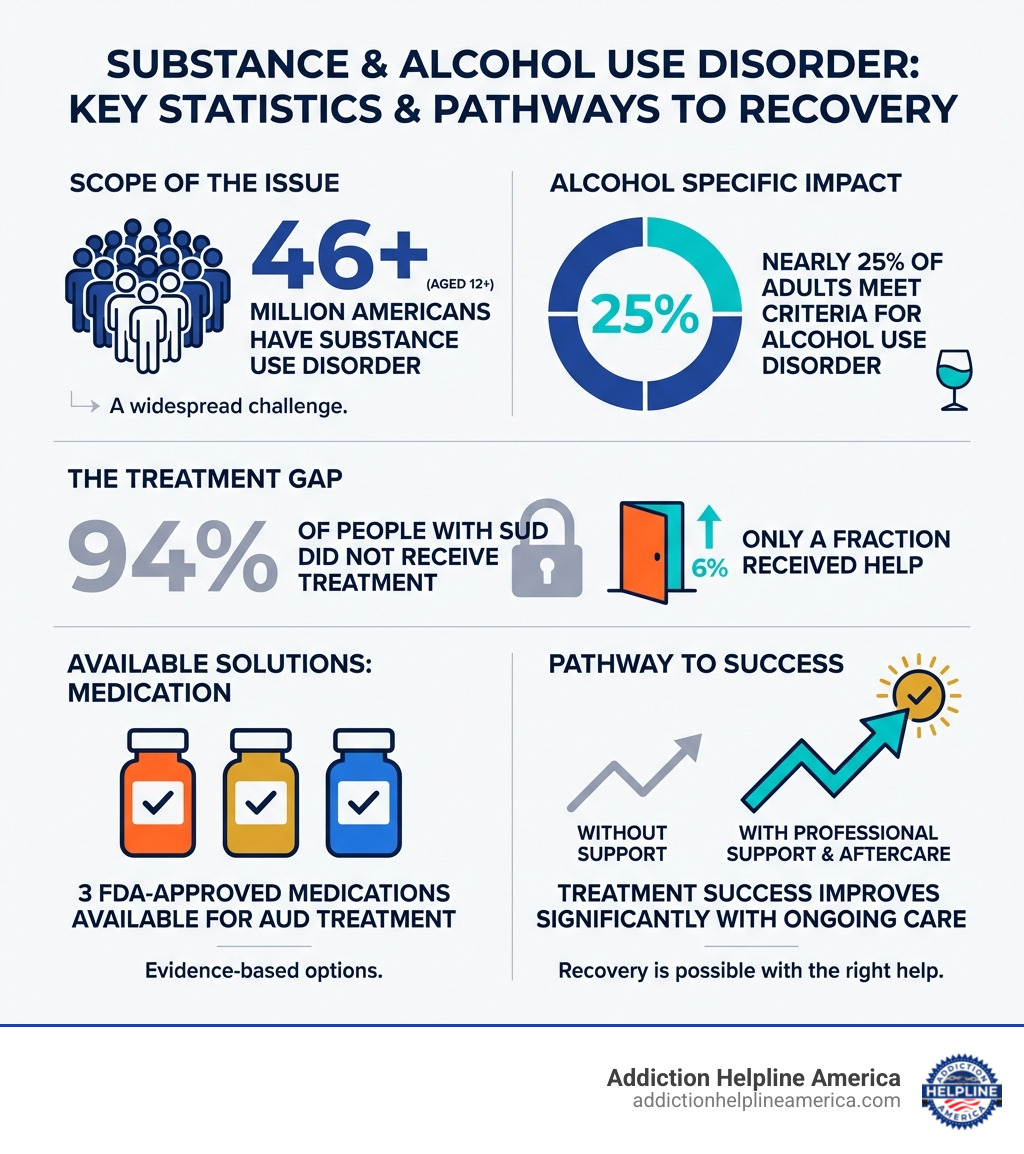
Millions of Americans struggle with alcohol use disorder. Almost a quarter of adults in the United States meet the criteria for AUD. But here’s the good news: most people with AUD can benefit from treatment, no matter how severe the problem seems.
The research is clear. Treatment works. Many people successfully reduce their drinking or stop completely after getting professional help. The key is finding the right alcohol rehab centers that match your specific needs.
Recovery isn’t a straight line. It’s a journey that starts with a single step—acknowledging you need help and reaching out for support.
At Addiction Helpline America, we’ve helped thousands of individuals and families steer the challenging path to recovery from alcohol addiction. Our free, confidential service connects you with quality alcohol rehab centers that offer evidence-based treatment, compassionate care, and lasting support for your journey to sobriety.
Important alcohol rehab centers terms:
Understanding Alcohol Use Disorder and When to Seek Help
Alcohol use disorder (AUD) is a medical condition that affects millions of adults in the United States. It’s characterized by an impaired ability to stop or control alcohol use despite adverse social, occupational, or health consequences. It’s not a moral failing or a lack of willpower; it’s a complex brain disease that requires professional treatment and support.
Recognizing the signs and symptoms of AUD is the crucial first step toward seeking help. Many people struggle with controlling their drinking at some point in their lives, and knowing when to reach out can make all the difference.
Signs and Symptoms of AUD
Healthcare providers diagnose AUD when a person experiences two or more specific symptoms within a 12-month period. These symptoms can range in severity, classifying AUD as mild, moderate, or severe. According to the National Institute on Alcohol Abuse and Alcoholism (NIAAA), AUD can be mild if you have two to three symptoms, moderate with four to five symptoms, or severe with six or more.
Here are the 11 criteria for Alcohol Use Disorder, as outlined in the Diagnostic and Statistical Manual of Mental Disorders (DSM-5):
- Drinking more alcohol or for a longer period than you intended.
- Wanting to cut down or stop drinking but being unable to.
- Spending a lot of time drinking or recovering from the effects of alcohol.
- Experiencing strong cravings or urges to drink alcohol.
- Alcohol use interfering with your responsibilities at work, school, or home.
- Continuing to drink even when it causes problems with family or friends.
- Giving up or reducing important social, occupational, or recreational activities because of alcohol use.
- Repeatedly getting into situations while or after drinking that increase your chances of being hurt (e.g., driving, swimming, operating machinery).
- Continuing to drink even when it causes or worsens a physical or psychological health problem.
- Having to drink more alcohol than before to get the effect you want (increased tolerance).
- Experiencing withdrawal symptoms when the effects of alcohol wear off (e.g., shakiness, restlessness, nausea, sweating, racing heart, seizures).
If you recognize any of these signs in yourself or a loved one, it’s time to consider seeking professional help. Early intervention can significantly improve treatment outcomes. We understand this can be a difficult realization, but remember, treatment works, and recovery is possible.
For more information on when it might be time to seek help, you can visit When Is It Time for Treatment?.
The First Step: Medical Detoxification
For many individuals, especially those with moderate to severe AUD, the very first step in treatment is medical detoxification, or “detox.” This process involves safely managing the physical withdrawal symptoms that occur when a person stops or significantly reduces their alcohol intake.
Alcohol withdrawal can be uncomfortable and, in some cases, dangerous or even life-threatening. Symptoms can include tremors, hallucinations, seizures, and delirium tremens (DTs). This is why medically supervised detox is crucial. It ensures your safety and comfort during this challenging phase.
During detox, medical professionals monitor your vital signs and administer medications to ease withdrawal symptoms and prevent complications. Benzodiazepines like Librium, Valium, or Ativan are commonly used to manage withdrawal due to their chemical similarity to alcohol, helping to calm the nervous system.
Detox typically takes 2 to 7 days, depending on the individual’s drinking history and the severity of their withdrawal symptoms. Detox is not a standalone treatment for AUD; it’s the critical first step to stabilize you physically so you can then engage in comprehensive treatment.
To learn more about this vital stage of recovery, explore our guide on the role of detoxification in alcohol addiction treatment.
Exploring the Different Types of Alcohol Addiction Treatment
Once detox is complete, the real work of recovery begins. Alcohol addiction treatment is not a one-size-fits-all solution. There’s a wide spectrum of care, known as a continuum of care, designed to meet diverse individual needs. At Addiction Helpline America, we believe in connecting you with individualized treatment plans that are custom to your unique circumstances, challenges, and goals.

Understanding the different levels of care available can help you make an informed decision. We can help you steer these options to find the right drug and alcohol treatment program for you.
Inpatient and Residential Programs
Inpatient and residential alcohol rehab centers offer the highest level of care, providing 24/7 medical supervision and a highly structured, substance-free environment. These programs are often ideal for individuals with severe AUD, those with co-occurring mental health disorders, or those who have struggled with previous attempts at sobriety in less restrictive settings.
In a residential setting, you live at the facility for the duration of your treatment, typically ranging from 30 to 90 days or even longer. This immersive environment allows you to focus entirely on your recovery, away from the triggers and stressors of daily life. Treatment often includes a blend of individual therapy, group counseling, educational workshops, and holistic activities. Many programs, like those at Mayo Clinic, integrate addiction and mental health concerns into a single personalized plan, often led by a multidisciplinary team including addiction psychiatrists, psychologists, and licensed counselors.
For those who need comprehensive support and a safe space to heal, inpatient treatment can be life-changing. You can learn more about inpatient treatments through our detailed guide.
Here’s a comparison of inpatient and outpatient rehab programs:
| Feature | Inpatient/Residential Rehab | Outpatient Rehab |
|---|---|---|
| Key Features | 24/7 care, live at facility, structured environment, medical supervision | Live at home, attend scheduled sessions, maintain daily responsibilities |
| Best For | Severe AUD, co-occurring disorders, unstable home environment, history of relapse | Mild to moderate AUD, strong support system at home, work/school obligations |
| Duration | Typically 30, 60, 90+ days | Varies; can be weeks to months, depending on program intensity |
| Cost | Generally higher (includes housing, meals, 24/7 care) | Generally lower (no housing costs) |
Outpatient Treatment Programs
Outpatient alcohol rehab centers offer more flexibility, allowing you to live at home or in a sober living environment while attending scheduled treatment sessions. This option is suitable for individuals with mild to moderate AUD, those who have completed an inpatient program and need step-down care, or those with strong support systems and stable home environments.
Outpatient programs vary in intensity:
- Partial Hospitalization Programs (PHPs): Often called “day treatment,” PHPs provide intensive therapy for several hours a day, multiple days a week, similar to inpatient care but without overnight stays.
- Intensive Outpatient Programs (IOPs): IOPs offer a step down from PHPs, with fewer hours per week, allowing more time for work, school, or family commitments.
- Standard Outpatient Programs: These involve weekly therapy sessions and support groups, providing ongoing support for long-term recovery.
The benefit of outpatient programs is the ability to integrate recovery tools into your daily life immediately. However, they carry a greater risk of relapse due to continued exposure to triggers, making a strong commitment and support system essential.
Many of these programs, including individual and group counseling, can be accessed through telehealth and online options. We can connect you with providers offering these flexible solutions, allowing you to receive care from the comfort and privacy of your home. To learn more, you can explore outpatient counseling services.
How to Choose the Right Alcohol Rehab Centers for Your Needs
Choosing the right alcohol rehab centers is one of the most critical decisions you’ll make on your path to recovery. It’s a deeply personal choice that should align with your specific needs, circumstances, and preferences. At Addiction Helpline America, we provide free, confidential, and personalized guidance to help you make this choice with confidence.

To help you get started, the National Institute on Alcohol Abuse and Alcoholism (NIAAA) offers excellent resources to FIND YOUR WAY TO QUALITY ALCOHOL TREATMENT.
What to Look for in Quality Alcohol Rehab Centers
When evaluating potential alcohol rehab centers, consider the following indicators of quality care:
- Accreditation and Licensing: Ensure the facility is accredited by reputable organizations like CARF (Commission on Accreditation of Rehabilitation Facilities) or The Joint Commission. These accreditations signify that the center meets rigorous standards for patient care and safety. For example, The Farley Center is accredited by CARF for various ASAM levels.
- Staff Credentials: A quality center employs a multidisciplinary team of licensed and certified professionals, including addiction psychiatrists, psychologists, social workers, and licensed counselors. For instance, Mayo Clinic emphasizes a treatment team led by an addiction psychiatrist with board certification in addictions.
- Low Patient-to-Staff Ratio: A lower ratio means more individualized attention. Mayo Clinic highlights a ratio of one counselor or therapist for every 4 to 5 patients, ensuring personalized care.
- Evidence-Based Therapies: Look for programs that use scientifically proven treatment modalities, such as Cognitive Behavioral Therapy (CBT), Dialectical Behavior Therapy (DBT), and Motivational Interviewing.
- Individualized Care: Treatment should be custom to your unique situation, addressing not just alcohol use but also any co-occurring mental health issues, medical conditions, and social needs.
- Success Stories and Testimonials: While every journey is unique, hearing about others’ recovery experiences can provide hope and insight. We can share testimonials from individuals we’ve helped connect to treatment, showcasing the impact of quality care.
Considering Cost, Insurance, and Duration
The financial aspect of treatment can be a significant concern for many. However, it’s important not to let it be a barrier to seeking help.
- Verifying Insurance: Most private health insurance plans, and often state-funded programs like Medicaid, cover some form of addiction treatment. Our specialists at Addiction Helpline America can help you verify your insurance coverage and understand your benefits.
- Payment Options: For those without insurance or with limited coverage, many alcohol rehab centers offer sliding scale fees based on income or payment plans. State and county-level programs often provide free or low-cost treatment options, though these may have waitlists. Addiction Helpline America is a free and confidential service dedicated to helping you find these resources.
- Typical Program Lengths: The duration of treatment varies based on individual needs and the severity of AUD. Common program lengths include:
- 30-day programs: Often suitable for initial stabilization and introduction to recovery principles.
- 60-day programs: Allow for deeper engagement in therapy and skill-building.
- 90-day programs: Considered a robust option for sustained recovery, providing ample time to establish new habits and coping mechanisms.
- Longer-term programs may also be recommended, especially for severe cases or those with co-occurring disorders.
We can help you understand the financial options and connect you with programs that fit your budget. To explore various treatment options further, visit our guide on find addiction treatment options.
Specialized Programs and Co-Occurring Disorders
Effective treatment often means finding a program that addresses your whole self, including any unique challenges or co-occurring conditions.
- Dual Diagnosis Treatment: Alcohol use disorder frequently co-occurs with other mental health disorders like depression, anxiety, or PTSD. Mayo Clinic notes that many people with addictive disorders also have these conditions. A quality alcohol rehab center will offer integrated treatment for both AUD and any co-occurring mental health issues, as treating them concurrently leads to better outcomes.
- Programs for Veterans: Active duty service members, veterans, and first responders often face unique traumas and stressors that contribute to AUD. Specialized programs, like those offered by The Farley Center, provide trauma-informed, confidential care designed to address the specific demands of service and support long-term recovery and reintegration. Many facilities accept VA benefits. We are committed to helping our veterans find the support they deserve; explore more on Veterans Addiction Treatment.
- Gender-Specific Programs: Some individuals thrive in environments custom to their gender. Women for Sobriety, for example, is a support group specifically for women. Gender-specific programs can address unique issues, social dynamics, and recovery needs that may differ between men and women. We can help you find women’s rehab programs and other gender-specific options.
When you call us, we’ll discuss these factors to ensure we connect you with the most appropriate and effective alcohol rehab centers for your journey.
The Core Components of Treatment and Recovery
Regardless of the setting—inpatient or outpatient—effective treatment for alcohol use disorder integrates several core components: therapeutic approaches, medical support, and peer support. These elements work together to address the physical, psychological, and social aspects of addiction, paving the way for lasting recovery.
Understanding these components will give you a clearer picture of what to expect from addiction treatment.
Therapies and Medications Used in Treatment
Behavioral therapies and FDA-approved medications form the backbone of modern addiction treatment.
Therapeutic Approaches:
- Cognitive Behavioral Therapy (CBT): This widely used therapy helps individuals identify and change negative thought patterns and behaviors that contribute to alcohol use. It equips you with coping strategies to manage triggers and high-risk situations.
- Dialectical Behavior Therapy (DBT): Often used for individuals with co-occurring mental health disorders, DBT focuses on developing skills in mindfulness, emotional regulation, distress tolerance, and interpersonal effectiveness.
- Motivational Interviewing (MI): This client-centered approach helps individuals explore and resolve ambivalence about changing their drinking behavior, strengthening their motivation for recovery.
- Family and Couples Counseling: Addiction affects the entire family system. Therapy involving loved ones can improve communication, address relational issues, and build a supportive home environment for recovery. Studies show that strong family support through family therapy increases the chances of maintaining abstinence.
Medications for Alcohol Use Disorder:
The good news is that there are FDA-approved medications that can significantly aid in recovery, especially when combined with behavioral therapies. These medications are non-addictive and help manage a chronic disorder, they are not trading one addiction for another.
- Naltrexone (ReVia, Vivitrol): Available as a daily oral pill or a monthly injectable (Vivitrol), Naltrexone works by blocking the pleasurable effects of alcohol and reducing cravings.
- Acamprosate (Campral): This medication helps to reduce post-acute withdrawal symptoms, such as anxiety and dysphoria, making it easier to abstain from alcohol after detoxification.
- Disulfiram (Antabuse): An older but effective medication, Disulfiram causes an unpleasant physical reaction (nausea, vomiting, headache, rapid heart rate) if alcohol is consumed, acting as a deterrent.
These medications are typically prescribed and monitored by medical professionals as part of a comprehensive treatment plan. For more detailed information on these and other aspects of treatment, the Mayo Clinic provides excellent resources on alcohol use disorder treatment.
The Role of Support Groups and Aftercare
Recovery from AUD is an ongoing process, and aftercare planning is crucial for maintaining sobriety long-term. This phase often involves a combination of professional support and peer-based mutual-aid groups.
- Importance of Aftercare and Relapse Prevention: After completing a formal rehab program, having a solid aftercare plan in place is vital. This plan typically includes ongoing counseling, regular check-ins with therapists, and participation in support groups. Relapse prevention strategies, which help you identify and manage your personal addiction triggers, are a cornerstone of aftercare.
- Peer Support Groups: These groups provide a sense of community, shared experience, and accountability. While 12-step programs like Alcoholics Anonymous (AA) are widely known and considered the gold standard by many, other non-12-step options are also available:
- Alcoholics Anonymous (AA): A global fellowship offering mutual support through a 12-step program focused on spiritual principles.
- SMART Recovery®: A science-based program that teaches self-empowerment and self-reliance, using cognitive behavioral tools.
- LifeRing Secular Recovery: An abstinence-based network of self-help groups.
- Women for Sobriety: A program specifically for women, focusing on self-esteem and emotional growth.
- Family Support Groups: Addiction impacts the entire family. Groups like Al-Anon and Nar-Anon offer support and coping strategies for friends and family members of those struggling with addiction. SMART Recovery also offers a Family & Friends program. These groups help loved ones understand addiction, set healthy boundaries, and take care of their own well-being.
- Sober Living Homes: These residential environments provide a structured, substance-free living arrangement for individuals transitioning from inpatient treatment back into independent living. They offer a supportive community and reinforce the learned behaviors of recovery.
The evidence suggests that the free and flexible assistance provided by mutual-support groups can help people make and sustain beneficial changes and promote long-term recovery.
Frequently Asked Questions about Alcohol Rehab
We understand you likely have many questions as you consider alcohol rehab centers. Here are answers to some common concerns:
How long does alcohol rehab last?
The duration of alcohol rehab varies significantly based on individual needs, the severity of the alcohol use disorder, and the type of program. While some programs are as short as 28-30 days, others extend to 60, 90 days, or even longer for sustained residential care.
- 30-day programs: Often serve as an initial stabilization period, particularly after medical detox, introducing foundational recovery principles.
- 60-day programs: Allow for deeper therapeutic work, skill development, and addressing underlying issues.
- 90-day programs: Are widely recommended for more severe cases, as they provide an extended period to solidify new habits and coping mechanisms, significantly improving long-term success rates.
Many individuals transition through a continuum of care, starting with inpatient or residential treatment and then stepping down to intensive outpatient (IOP) or standard outpatient programs. The goal is always to provide the necessary time and support for a strong foundation in recovery.
Can I lose my job for going to rehab?
Concerns about employment are very common, but several legal protections are in place to safeguard your job while you seek treatment for alcohol use disorder.
- Family and Medical Leave Act (FMLA): If you work for a covered employer and meet eligibility requirements, FMLA allows you to take up to 12 weeks of unpaid, job-protected leave for medical reasons, including substance abuse treatment. Your employer must maintain your health benefits during this time, and you have the right to return to your job or an equivalent position.
- Americans with Disabilities Act (ADA): The ADA protects individuals with a history of addiction who are no longer using substances illegally and are participating in a recovery program. Employers cannot discriminate against you based on your past or current participation in treatment.
- Confidentiality Laws: Federal laws, such as 42 CFR Part 2, protect the confidentiality of patient records in addiction treatment programs. This means information identifying you as receiving care for alcohol addiction cannot be disclosed without your consent or a court order.
It’s often advisable to communicate with your employer, ideally through HR, to understand your company’s policies and ensure your rights are protected. Many employers are supportive of employees seeking help, understanding that treatment can lead to a healthier, more productive workforce.
How can I support a loved one in treatment?
Supporting a loved one through alcohol addiction treatment and recovery is a journey that requires patience, understanding, and self-care.
- Family Therapy: Many alcohol rehab centers offer family therapy sessions. These sessions can help address underlying family dynamics, improve communication, and educate family members about addiction as a disease.
- Attending Support Groups: Join support groups like Al-Anon or SMART Recovery Family & Friends. These groups provide a safe space for you to share your experiences, learn coping strategies, and understand that you are not alone.
- Education about Addiction: Learn as much as you can about AUD, its effects on the brain, and the recovery process. This knowledge can help you understand your loved one’s struggles and avoid common pitfalls like enabling behaviors.
- Setting Healthy Boundaries: While support is crucial, it’s equally important to establish and maintain healthy boundaries. This means taking care of your own well-being and not enabling destructive behaviors.
- Encouraging Aftercare: Encourage your loved one to actively participate in their aftercare plan, whether it’s attending support groups, continuing therapy, or living in a sober living environment. Your consistent encouragement can be a powerful motivator.
You cannot recover for your loved one, but your informed support can be a significant factor in their success. It’s also vital to seek support for yourself, as supporting someone with AUD can be emotionally taxing.
Your Path to Recovery Starts Now
Taking the first step toward recovery from alcohol use disorder is a brave and life-affirming decision. Whether you’re just recognizing the signs of AUD, ready for medical detox, or exploring the best alcohol rehab centers for long-term recovery, help is available.
At Addiction Helpline America, we understand the complexities of this journey. Our mission is to simplify the process of finding quality care by connecting you with a vast network of addiction and mental health treatment centers nationwide. Our service is free, confidential, and designed to provide you with personalized guidance every step of the way.
You don’t have to face this alone. Your path to a healthier, sober life can begin today.
Find substance abuse treatment now.
Ready to talk? Reach out to us anytime. Our compassionate team is available 24/7 to provide immediate support and connect you with the resources you need.