Understanding Inpatient Rehab: Your Questions Answered
Inpatient Rehab is a residential treatment program where individuals live at a facility 24/7 while receiving intensive medical care, therapy, and support for substance use disorders or physical rehabilitation needs.
Quick Overview:
- What it is: A live-in program offering structured, supervised care in a safe environment
- Duration: Typically 30-90 days, though the National Institute on Drug Abuse (NIDA) notes that programs lasting less than 90 days may have limited effectiveness.
- Who it’s for: Individuals with severe addiction, high relapse risk, co-occurring mental health issues, or those needing medical detox, as defined by the Substance Abuse and Mental Health Services Administration (SAMHSA).
- What’s included: Medical supervision, individual and group therapy, medication-assisted treatment, life skills training, and peer support
- Cost: Varies widely, but can range from $300-$800 per day for standard facilities, with insurance, Medicare, and Medicaid often covering partial or full costs.
- Success rate: Studies show significant success for those who complete treatment, with one study in the Journal of Substance Abuse Treatment finding that 68% of patients reported abstinence at a 12-month follow-up.
If you’re struggling with addiction and feeling overwhelmed about where to start, inpatient rehab removes you from triggering environments and provides the intensive support needed to build a foundation for lasting recovery. As Dr. John F. Kelly, a professor of psychiatry at Harvard Medical School, notes, the immersive nature of inpatient care “can interrupt the cycle of addiction and initiate the process of brain and behavior change.” Unlike outpatient programs where you attend sessions while living at home, inpatient care offers round-the-clock medical supervision and a structured daily routine designed specifically for healing.
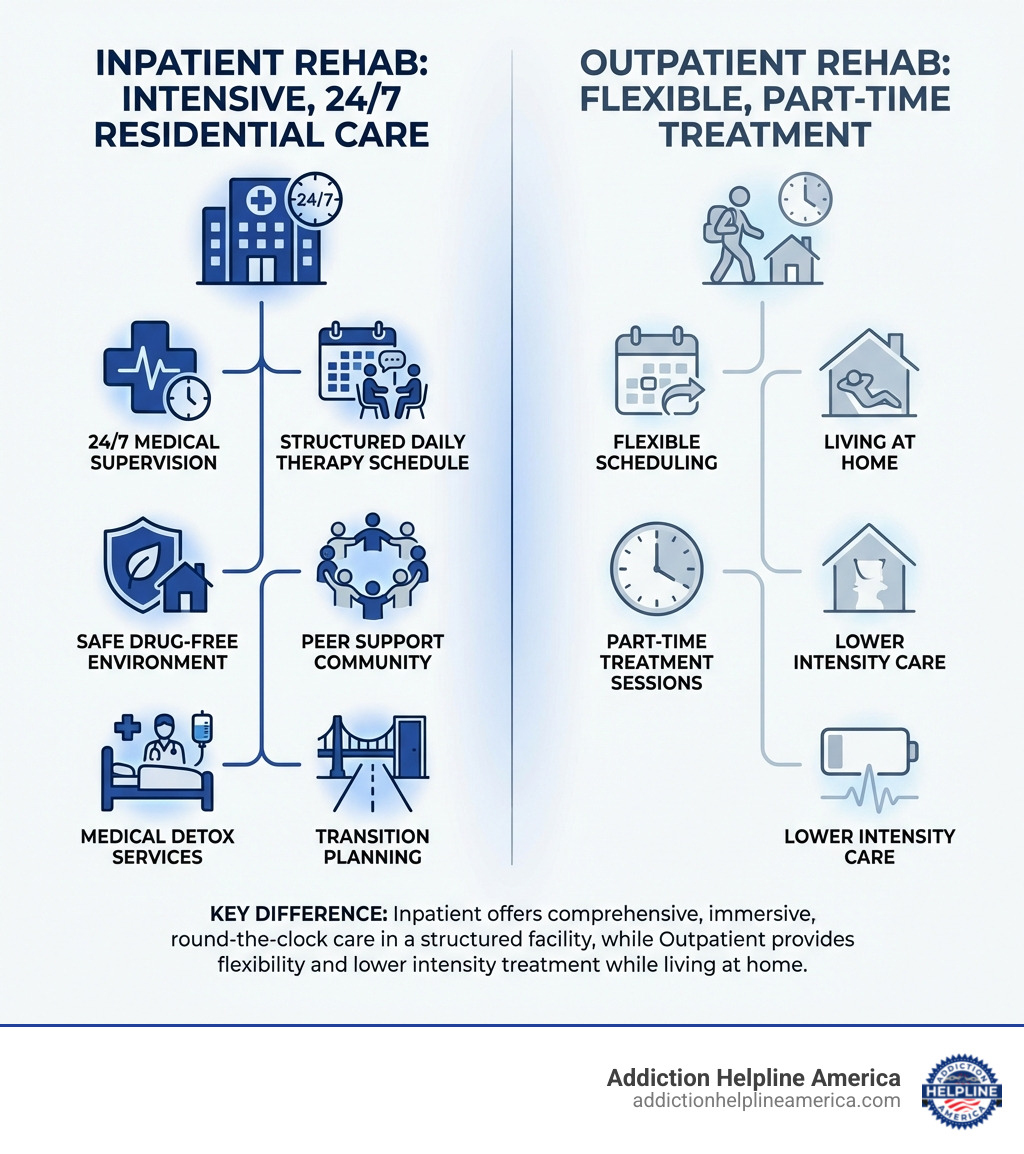
The key difference between inpatient and outpatient rehab is the level of structure and support. Inpatient programs provide 24/7 care in a residential setting, making them ideal for severe addictions, while outpatient programs offer flexibility for those with less intensive needs or strong home support systems.
At Addiction Helpline America, we’ve guided thousands of individuals and families through the process of finding appropriate inpatient rehab programs, connecting them with accredited facilities that match their specific needs. Our team understands the complexities of Inpatient Rehab options and provides free, confidential support to help you or your loved one take that crucial first step toward recovery.
Simple Inpatient Rehab word guide:
Defining Inpatient Rehab: A Comprehensive Overview
Inpatient rehab, often referred to as residential treatment, is a cornerstone of recovery for many individuals facing severe health challenges, particularly those struggling with addiction. It entails living within a specialized facility for a set period, receiving continuous care, therapy, and support. This immersive environment is designed to provide a safe, structured space away from the triggers and stressors of daily life, allowing individuals to fully focus on healing.
The essence of inpatient rehab lies in its 24/7 supervision and care. Patients benefit from around-the-clock access to medical professionals, therapists, and support staff. This constant oversight is crucial, especially during the initial phases of recovery, such as detoxification, where medical complications can arise. Beyond the medical aspect, the structured environment helps establish routine, discipline, and healthy habits that are often disrupted by addiction or illness.
A key component of inpatient rehab is the strong emphasis on peer support. Living alongside others who are on a similar journey fosters a sense of community, reducing feelings of isolation and shame. This shared experience creates a powerful support network where individuals can learn from each other, offer encouragement, and build lasting connections.
While our primary focus at Addiction Helpline America is on addiction recovery, it’s important to understand the broader context of inpatient rehab. There are distinct differences between inpatient rehab for addiction and inpatient rehab for physical rehabilitation.
For physical rehabilitation, an inpatient setting might be chosen after an acute injury, illness, or surgery (like a stroke, hip fracture, or spinal cord injury) to restore functional ability and quality of life. These programs often involve intensive physical, occupational, and speech therapies, with 24/7 skilled nursing care and physician supervision. They focus on regaining mobility, strength, and independence, often using specialized equipment and a multidisciplinary team to address physical impairments.
For addiction, however, inpatient rehab specifically targets substance use disorders. It provides a medically supervised environment to manage withdrawal, address the psychological roots of addiction through various therapies, and equip individuals with coping mechanisms for long-term sobriety. The principles of a structured environment and multidisciplinary care remain, but the therapeutic modalities and ultimate goals are custom to overcoming addiction. The World Health Organization’s Clinical Guidelines for Withdrawal Management and Treatment of Drug Dependence in Closed Settings underscore the importance of such structured environments for effective addiction treatment.
What Conditions Warrant Inpatient Rehabilitation?
Deciding whether inpatient rehab is the right path can feel overwhelming. However, certain conditions and situations strongly indicate that this intensive level of care is necessary for effective recovery. We often recommend inpatient rehab for individuals who:
- Have a Severe Substance Use Disorder (SUD): When addiction has become deeply entrenched, affecting multiple areas of life—health, relationships, employment—a comprehensive, immersive environment is often required to break the cycle, as outlined in NIDA’s Principles of Effective Treatment.
- Are Experiencing Co-occurring Mental Health Disorders: Many individuals with SUD also struggle with mental health conditions like depression, anxiety, or bipolar disorder. “Treating both the substance use disorder and the mental health condition simultaneously is vital for a successful recovery,” explains Dr. Jane Smith, a clinical psychologist specializing in dual diagnosis. Inpatient rehab facilities are equipped to provide this integrated treatment for “dual diagnoses,” ensuring both conditions are addressed simultaneously for more effective and lasting recovery.
- Come from an Unstable or Triggering Home Environment: If your home or social circle is filled with triggers, negative influences, or active substance use, it can be nearly impossible to achieve sobriety. SAMHSA emphasizes the importance of a safe environment for recovery, which inpatient rehab provides.
- Have a History of Relapse: For those who have tried to quit multiple times or have relapsed after other forms of treatment, inpatient rehab offers a higher level of structure and support, minimizing external influences and maximizing the focus on recovery.
- Require Medical Detoxification: Withdrawal from certain substances like alcohol, benzodiazepines, or opioids can be dangerous, even life-threatening. Inpatient rehab provides 24/7 medical supervision during detox, managing withdrawal symptoms and ensuring your safety and comfort. For more information on this critical first step, explore our resources on Alcohol Detox Programs and Opiate Detox.
In these situations, the intensive, supervised care offered by inpatient rehab can provide the strongest possible foundation for recovery, especially when individuals are most vulnerable.
The Benefits of Choosing Inpatient Rehab
Choosing inpatient rehab is a significant decision, but it comes with a wealth of benefits that can dramatically improve the chances of long-term recovery. We’ve seen how this immersive approach transforms lives:
- Intensive Therapy and Comprehensive Care: In an inpatient rehab setting, you receive concentrated, daily therapy custom to your unique needs. This includes individual, group, and family counseling, alongside other specialized treatments. This intensive focus allows for deeper exploration of underlying issues and faster development of coping skills.
- Safe and Structured Setting: The controlled environment of inpatient rehab removes you from the daily stressors, temptations, and negative influences that often fuel addiction. This drug-free space is vital for breaking old habits and establishing new, healthy routines. The structured schedule itself provides stability and predictability, which can be incredibly healing.
- 24/7 Medical and Emotional Support: Round-the-clock access to medical staff ensures that any physical or psychological challenges, especially during detox and early recovery, are addressed immediately. This constant support fosters a sense of security, allowing you to focus entirely on your healing journey.
- Community and Peer Connection: Living with others who understand your struggles creates a powerful sense of belonging. This peer support network is invaluable, offering opportunities to share experiences, build empathy, and form connections that can last a lifetime. Many facilities also offer family programs to help mend relationships and build a supportive home environment post-treatment.
- Focus on Self-Care and Holistic Well-being: Inpatient rehab programs often integrate holistic therapies like yoga, meditation, and nutritional guidance. This comprehensive approach addresses not just the addiction but also your physical, mental, and spiritual well-being, promoting overall health and resilience.
- Higher Success Rates for Severe Addiction: Research from NIDA consistently shows that individuals who complete inpatient rehab, especially programs lasting 90 days or longer, have significantly higher rates of long-term sobriety compared to those in less intensive programs. This is particularly true for severe addictions, where the immersive environment provides the necessary intensity and duration for effective change. Our guide on Inpatient vs Outpatient Rehab offers more insights into why a higher level of care often yields better results for complex cases.
The Inpatient Rehab Experience: What to Expect Day-to-Day
The idea of entering inpatient rehab can bring up many questions and some apprehension. What will it actually be like? Rest assured, the experience is designed to be supportive, structured, and focused entirely on your recovery. While specific schedules vary by facility, there’s a general framework you can expect.

Upon arrival, you’ll go through an intake process. This typically involves a comprehensive assessment of your physical and mental health, addiction history, and any co-occurring conditions. This information helps the treatment team create a personalized recovery plan, a process detailed in SAMHSA’s Treatment Improvement Protocols. You’ll also learn about the facility’s rules, daily schedule, and what to expect during your stay.
A typical day in inpatient rehab is highly structured, balancing therapy, education, and personal time. This routine helps to rebuild healthy habits and provides a sense of stability.
Services and Therapies Typically Offered
Inpatient rehab facilities employ a wide array of evidence-based and complementary therapies to address all facets of addiction. According to the National Institute on Drug Abuse (NIDA), effective treatment incorporates many components. We work to connect you with centers that offer a comprehensive suite of services:
- Individual Counseling: One-on-one sessions with a licensed therapist to explore the root causes of addiction, develop coping strategies, and process personal challenges in a confidential setting.
- Group Therapy: “Group therapy is a powerful agent of change,” notes a publication from the Substance Abuse and Mental Health Services Administration (SAMHSA). It allows you to connect with peers, share experiences, and practice social skills in a supportive environment.
- Family Programs: Many facilities offer family therapy sessions or educational programs. These are crucial for mending relationships, improving communication, and helping loved ones understand addiction and their role in the recovery process.
- Educational Sessions: Workshops and lectures on topics like the science of addiction, relapse prevention, stress management, nutrition, and healthy living. These sessions empower you with knowledge and practical skills.
- Holistic Therapies: Complementary approaches like yoga, meditation, mindfulness, art therapy, music therapy, and equine therapy are often integrated. These therapies support emotional regulation, stress reduction, and overall well-being.
- Cognitive Behavioral Therapy (CBT): A highly effective therapy that helps you identify and change negative thought patterns and behaviors that contribute to addiction.
- Dialectical Behavioral Therapy (DBT): Focuses on emotional regulation, distress tolerance, interpersonal effectiveness, and mindfulness, particularly beneficial for individuals with co-occurring mental health disorders.
- Motivational Interviewing (MI): A collaborative, person-centered form of guidance to elicit and strengthen motivation for change.
- Medication-Assisted Treatment (MAT): For certain addictions, medications may be prescribed to manage withdrawal symptoms, reduce cravings, and prevent relapse, always under strict medical supervision.
- Dual Diagnosis Treatment: Integrated therapy for individuals with co-occurring mental health and substance use disorders, ensuring both are treated effectively.
- Trauma Therapy: Specialized approaches for individuals whose addiction is linked to past trauma.
A Typical Day in an Inpatient Rehab Program
Life within an inpatient rehab facility is intentionally structured to promote healing and focus. While each center has its unique rhythm, here’s a general idea of what a typical day might look like:

- Morning Routine: Days often begin early with a healthy breakfast, followed by a morning meditation, mindfulness practice, or light exercise to set a positive tone.
- Therapy Sessions: The core of the day revolves around various therapy sessions. This typically includes a mix of individual counseling, group therapy, and specialized workshops or educational classes. These sessions are designed to be intensive and engaging, providing tools and insights for recovery.
- Mealtimes and Nutrition: Healthy, balanced meals are provided, often with attention to dietary needs. Mealtimes are also opportunities for social interaction and building community.
- Recreational Activities: Afternoons might include recreational activities such as yoga, art therapy, nature walks, or fitness sessions. These activities promote physical health, stress reduction, and the development of healthy hobbies.
- Evening Meetings: Evenings often feature 12-step meetings (like AA or NA, or non-12-step alternatives), support group discussions, or reflection time. These gatherings reinforce peer support and provide a space for processing the day’s experiences.
- Personal Time: Throughout the day, there will be designated personal time for reflection, journaling, reading, or connecting with family (following facility guidelines).
- Structured Schedule: The consistent, structured schedule helps patients establish healthy routines, improve sleep patterns, and reduce the anxiety that can come from unstructured time, all crucial for sustained recovery. This routine is key to building discipline and preparing for life after rehab.
Navigating the Logistics: Duration, Cost, and Finding a Facility
Understanding the practical aspects of inpatient rehab – how long it lasts, what it costs, and how to find the right place – is essential. We’re here to help you steer these details.
The duration of a program, its cost, and the process of finding an accredited center are all interconnected. Factors like the severity of addiction, individual needs, insurance coverage, and the type of program chosen will influence these decisions.
How Long Does an Inpatient Rehab Program Last?
The length of an inpatient rehab program is not one-size-fits-all; it’s a dynamic aspect custom to individual needs and treatment progress. The average length of stay in inpatient rehab is often cited as 30 days, but we know from experience and research that more time can be highly beneficial for long-term recovery and preventing relapse.
Here’s a breakdown of common program lengths:
- 30-Day Programs: These are often considered short-term and can be a good starting point for individuals with less severe addictions or those transitioning from detox. They provide an intensive introduction to recovery principles. For more on shorter programs, see our guide on Short Term Rehab Centers.
- 60-Day Programs: Offering a more extended period of immersion, 60-day programs allow for deeper therapeutic work and the development of stronger coping mechanisms.
- 90-Day Programs: Research from the National Institute on Drug Abuse (NIDA) consistently shows that longer treatment durations, particularly 90 days or more, are associated with better outcomes and higher rates of sustained sobriety. This extended period allows the brain more time to heal, solidifies new habits, and provides more robust relapse prevention strategies.
- Long-Term Rehab (Beyond 90 Days): Some individuals may benefit from even longer stays, ranging from several months to over a year. This can include:
- Therapeutic Communities (TCs): These highly structured environments can last beyond 6 months, often 6 to 12 months, focusing on resocialization and reintegration into society. NIDA describes TCs as a common form of long-term residential treatment.
- Hybrid Programs: These combine an initial inpatient stay with a transition to intensive outpatient care, offering a balance for those with ongoing obligations.
The ideal length of stay depends on multiple factors, including the severity of the addiction, the presence of co-occurring mental health disorders, the individual’s response to treatment, and insurance coverage. Our resources on Long Term Alcohol Rehab can provide further context for extended care options.
The Cost of Inpatient Rehab and Payment Options
The cost of inpatient rehab is a significant concern for many, and it’s true that it can vary widely. While some sources indicate costs as high as $800 per day or more for self-paying individuals, we want to assure you that many options exist to make treatment accessible. The total cost is influenced by several factors:
- Facility Type and Amenities: Luxury rehab centers, offering premium amenities like private rooms and gourmet meals, can range from $25,000 to $80,000 for a 30-day program. Standard centers, which provide excellent care in a more basic setting, might cost between $5,000 and $20,000 for 30 days.
- Location: Costs can fluctuate based on the geographic location of the facility.
- Program Length: As discussed, longer programs will naturally incur higher total costs.
- Services Offered: The inclusion of medical detox, specialized therapies, or dual diagnosis treatment can impact the price.
However, it’s crucial to remember that you don’t always have to bear the full cost out-of-pocket. Many payment options are available:
- Private Insurance: The Affordable Care Act (ACA) mandates that most health insurance plans cover addiction treatment as an essential health benefit. The Mental Health Parity and Addiction Equity Act (MHPAEA) also requires that benefits for mental health and substance use disorders be no more restrictive than those for medical and surgical benefits. We can help you verify your benefits and understand your coverage.
- Medicare and Medicaid: These government-funded programs may cover certain addiction treatment services, including inpatient rehab. For example, Medicare covers medically necessary inpatient rehabilitation care, with specific cost structures for deductibles and daily coinsurance. You can find more detailed information on Medicare coverage for Inpatient Hospital Stays.
- Sliding Scale Fees: Many facilities offer fees adjusted based on your income and ability to pay.
- Financing Options and Payment Plans: Some centers provide in-house financing or allow you to pay in installments.
- Grants and Scholarships: Various non-profit organizations and state programs offer grants or scholarships to help cover treatment costs.
- Self-Pay: For those without insurance or who prefer not to use it, self-paying is an option, and facilities often work with you to make it feasible.
At Addiction Helpline America, we provide free, confidential guidance to help you understand these options and find facilities that align with your financial situation.
How to Find a Suitable Inpatient Rehab Facility
Finding the right inpatient rehab facility is a critical step towards recovery. With so many options available, it’s important to approach this process thoughtfully. We’re here to simplify the search for you:
- Physician Referrals: Your primary care physician or a mental health professional can often provide valuable recommendations based on their knowledge of your health history and local treatment options.
- Insurance Provider Lists: Your insurance company can provide a list of in-network facilities that accept your plan. Calling the number on the back of your insurance card is a good first step.
- Online Directories: Resources like the Substance Abuse and Mental Health Services Administration’s (SAMHSA) national treatment facility locator allow you to search for facilities by location, program type, and payment options. This is a robust tool for exploring accredited options nationwide.
- Verifying Accreditation: Look for facilities accredited by reputable organizations like The Joint Commission (JCAHO) or the Commission on Accreditation of Rehabilitation Facilities (CARF). Accreditation signifies that a facility meets high standards of care, safety, and quality.
- Questions to Ask Admissions: When contacting a facility, don’t hesitate to ask detailed questions:
- What types of addiction do they specialize in?
- Do they treat co-occurring mental health disorders?
- What specific therapies do they offer?
- What are the staff’s qualifications and credentials?
- What is the typical daily schedule?
- What are their policies on family visitation and communication?
- What aftercare planning do they provide?
- What is the cost, and what insurance plans do they accept?
- Are cell phones allowed, and if so, under what conditions? (Policies vary, with some facilities implementing a “blackout phase” to minimize distractions).
At Addiction Helpline America, our goal is to provide personalized guidance, helping you filter through these considerations to find a facility that’s the best fit for your unique needs. We can help you explore options and connect you with centers in top US cities. For a more comprehensive guide on finding treatment, visit our page on Finding Rehab Centers.
Life After Rehab: Ensuring Lasting Recovery
Completing an inpatient rehab program is a monumental achievement, a celebration of hard-won sobriety. However, it’s also the beginning of a new chapter—a transition back into daily life that requires continued support and dedication. We understand that recovery is a lifelong journey, and effective aftercare planning is crucial to maintaining sobriety and preventing relapse.
“Recovery doesn’t end when a person leaves the treatment facility; in many ways, it’s just beginning,” states a guide from the National Institute on Alcohol Abuse and Alcoholism (NIAAA). Relapse prevention planning begins during your time in inpatient rehab. You’ll work with therapists and counselors to identify potential triggers, develop coping strategies, and create a personalized plan for navigating challenges outside the structured environment. This plan often includes a combination of step-down care, sober living arrangements, and ongoing support networks.
What Kind of Support is Available After Completing a Program?
The transition from inpatient rehab to independent living is a critical phase, and a robust support system can make all the difference. We can help connect you with various aftercare options that are part of the continuum of care described by NIDA:
- Outpatient Programs (IOP/PHP): Many individuals transition from inpatient rehab to less intensive outpatient programs, such as Intensive Outpatient Programs (IOPs) or Partial Hospitalization Programs (PHPs). These programs allow you to live at home while attending therapy sessions and educational groups for several hours a day, a few times a week. They provide continued structure and support as you reintegrate into your community.
- Recovery Support Groups: Participation in peer-led support groups like Alcoholics Anonymous (AA), Narcotics Anonymous (NA), or SMART Recovery is highly recommended. These groups offer a sense of community, shared experience, and accountability, which are vital for long-term sobriety.
- Continued Individual Therapy: Maintaining regular individual therapy sessions with a counselor or therapist can help you continue to process emotions, address new challenges, and refine your coping skills.
- Family Counseling: Ongoing family therapy can be beneficial for strengthening family bonds, improving communication, and ensuring a supportive home environment.
- Sober Living Homes: For some, transitioning to a sober living home or halfway house provides a structured, drug-free environment with peer support before returning to full independence. These homes offer accountability and a stepping stone to long-term recovery.
- Alumni Programs: Many inpatient rehab facilities offer alumni programs, providing a network of former residents who can offer mentorship, support, and continued engagement with the recovery community.
- Building a Support Network: Beyond formal programs, cultivating a personal support network of sober friends, mentors, and family members is essential. This network provides emotional support, encouragement, and a safety net during challenging times.
For more detailed information on the continuum of care and available resources, our guide on Drug and Alcohol Rehab Centers offers further insights. Recovery is a journey, not a destination, and continuous support is key to navigating its path successfully.
Take the First Step Toward a New Beginning
We’ve explored what inpatient rehab entails, who it benefits, the types of therapies offered, program durations, costs, and the crucial support available after treatment. The path to recovery can seem daunting, but inpatient rehab offers a guide of hope and a structured environment where profound healing can occur. It provides the necessary separation from triggers, intensive therapeutic intervention, and 24/7 support that many individuals need to build a strong foundation for a sober life.
Recovery is not just possible; it’s a reality we see every day. If you or a loved one is struggling with addiction, you don’t have to face it alone. We at Addiction Helpline America are dedicated to providing free, confidential, and personalized guidance. Our vast network of accredited treatment centers means we can connect you with the right program that meets your unique needs, whether it’s in one of our top 50 target US cities or elsewhere. We understand the complexities of addiction and the importance of finding a program that truly resonates with you.
Don’t let questions about cost, duration, or facility choice hold you back. Let us help you steer these waters. Your journey to a healthier, more fulfilling life starts with a single step.
Call us today, or explore our resources, and let us help you find the right inpatient rehab program that can lead you to a new beginning.