Why Aftercare Planning is the Foundation of Lasting Recovery
Aftercare Planning is a structured, personalized strategy designed to support individuals after they complete formal addiction treatment, helping them maintain sobriety, prevent relapse, and rebuild their lives. Whether you are transitioning from a drug rehab in Chicago or a local detox center, a robust plan includes ongoing therapy, support groups, and crisis prevention tools custom to your unique needs.
According to Dr. Nora Volkow, Director of the National Institute on Drug Abuse (NIDA), “Addiction is a chronic, relapsing brain disease that requires long-term management, not just a short-term fix.” This perspective underscores why a transition plan is vital for long-term success.
Key elements of an effective aftercare plan:
- Ongoing therapy – Individual or group counseling to address triggers and build coping skills
- Support groups – Regular attendance at AA, NA, or SMART Recovery meetings
- Sober living homes – Safe, structured housing to ease the transition back to everyday life
- Medication-assisted treatment (MAT) – Medications like naltrexone or buprenorphine to reduce cravings
- Crisis management plan – Emergency contacts, self-soothing techniques, and specific steps for high-risk moments
- Daily routine – Structured schedule including sleep, meals, exercise, and recovery activities
Research from the National Institute on Drug Abuse (NIDA) shows that between 40% and 60% of people in recovery experience relapse, similar to rates for chronic conditions like diabetes. That’s why aftercare planning isn’t optional – it’s essential for long-term stability.
Addiction Helpline America is a free, confidential resource available 24/7 at 1-800-662-4357 (1-800-HELP). Our certified recovery specialists help individuals build comprehensive aftercare strategies that fit their needs and recovery goals.
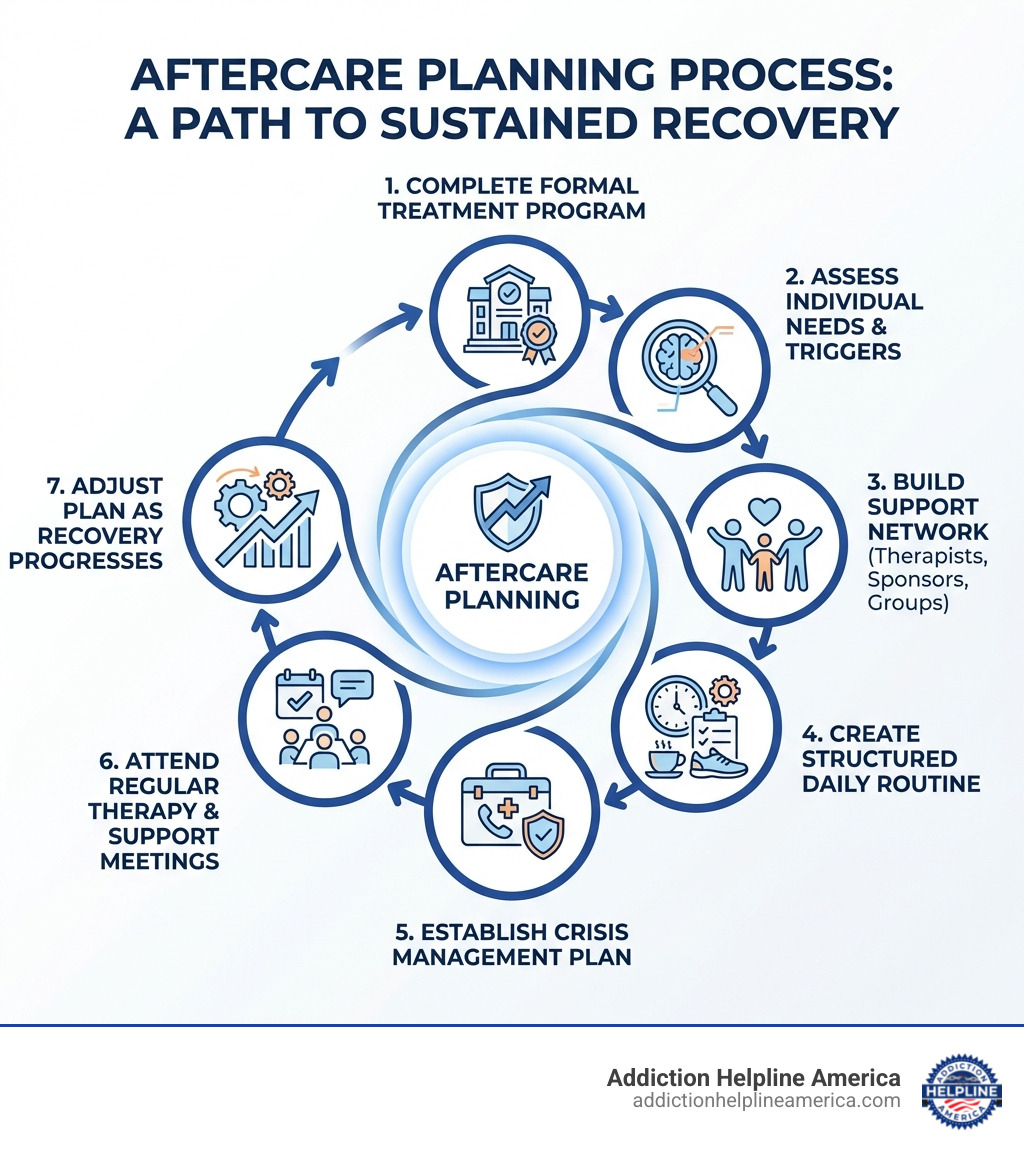
Quick look at Aftercare Planning:
What is Aftercare Planning in Addiction Recovery?
At its heart, Aftercare Planning is the “map” we use to navigate the world after the safety of a residential or intensive program ends. Often referred to as continuing care, it is the bridge between the highly structured environment of rehab and the unpredictable nature of everyday life.
Think of addiction not as a one-time broken bone that heals and is forgotten, but as a chronic condition. Much like managing diabetes or asthma, recovery requires ongoing monitoring and lifestyle adjustments. According to NIDA research on relapse rates, addiction has a relapse rate of 40% to 60%. This doesn’t mean treatment “failed”; it means the management plan needs adjustment.
When we look at the Inpatient vs Outpatient Rehab Guide, we see that inpatient care provides a “safe zone.” However, the real work begins when you drive home. A 2024 study highlighted that how people cope after leaving treatment is the single biggest predictor of their long-term stability. Effective aftercare provides the “scaffolding” to hold up your progress while you build a new life.
This model of Universal Aftercare guidance emphasizes that everyone, regardless of their background, needs rapid follow-up support to address the drivers of their substance use. We believe that the most important work in recovery happens after the “graduation” ceremony.
Key Components of an Effective Aftercare Plan
A successful plan isn’t just a vague list of “good ideas.” It is a concrete document with dates, names, and phone numbers. We focus on several core elements to ensure the transition is seamless:
Outpatient Treatment and Therapy
For many, the first step after residential care is a “step-down” program. Our Intensive Outpatient Rehab Program Guide explains how these programs offer several hours of therapy per week while allowing you to live at home.
Ongoing therapy is non-negotiable. Techniques like Cognitive Behavioral Therapy (CBT) and Dialectical Behavior Therapy (DBT) are evidence-based approaches that help you rewire your brain’s response to stress. As Dr. George Koob, Director of the NIAAA, notes, “Recovery is a process of change through which individuals improve their health and wellness, live self-directed lives, and strive to reach their full potential.”
Sober Living and Environment
Your environment is often the biggest trigger. If you return to a home where others are using, staying sober is incredibly difficult. Sober living homes and recovery housing best practices suggest that these environments significantly improve long-term outcomes. These drug-free residences provide peer accountability and a safe space to practice new sober habits.
Medication-Assisted Treatment (MAT)
For those recovering from opioid or alcohol use disorders, MAT can be a lifesaver. According to the CDC’s evidence for MAT outcomes, medications like methadone, buprenorphine, or naltrexone can reduce cravings and significantly lower the risk of overdose. MAT is often used alongside counseling to treat the whole person.
The Role of Support Groups in Aftercare Planning
We cannot overstate the power of community. Isolation is the enemy of recovery. Support groups provide a network of people who truly understand the struggle.
- 12-Step Fellowships: Organizations like Alcoholics Anonymous (AA) and Narcotics Anonymous (NA) offer a time-tested framework for sobriety.
- The “90 in 90” Rule: Many professionals recommend attending 90 meetings in 90 days. This creates an immediate, strong peer support network when you are most vulnerable.
- SMART Recovery: For those looking for a secular, science-based approach, SMART Recovery focuses on self-empowerment and cognitive tools.
- Sponsorship: A sponsor is a mentor who has walked the path before you. They are the person you call at 2:00 AM when the urge to use feels overwhelming.
As noted in Shatterproof recovery resources, having a crisis management plan that includes these groups is a vital safety net.
How to Create a Personalized Aftercare Planning Strategy
There is no one-size-fits-all recovery path. Your plan must be as unique as you are. When you use our Find Right Rehab Facility Guide, we help you identify programs that start this planning on day one.
A personalized strategy should address:
- Trigger Identification: What people, places, or emotions make you want to use?
- Coping Mechanisms: What will you do instead? (e.g., breathing exercises, calling a sponsor, journaling).
- Daily Routine: A structured day leaves less room for boredom and impulsivity.

Levels of Aftercare Support
| Level of Care | Frequency | Best For |
|---|---|---|
| PHP (Partial Hospitalization) | 6-8 hours daily | High medical/clinical need |
| IOP (Intensive Outpatient) | 9+ hours weekly | Transitioning from inpatient |
| Standard Outpatient | 1-3 hours weekly | Maintaining long-term stability |
| Sober Living | 24/7 Residency | Those needing a safe environment |
If you aren’t sure where to start, you can Take the Quiz to Begin Therapy to find a licensed professional who can help you draft your first plan.
Adjusting Your Aftercare Planning Over Time
Recovery is dynamic. Your needs at 30 days sober will be different from your needs at one year. The Continuing Care Model suggests that treatment should be a long-term conversation, not a short-term event.
- 30-90 Days: Focus on physical health, attending meetings, and establishing a routine.
- 6 Months: Begin repairing finances and damaged relationships.
- 1 Year: Set new long-term goals, perhaps exploring career reintegration or public speaking to share your story.
If you find yourself struggling, don’t wait for a crisis. Use our Rehab Near Me Guide 2025 to find local resources that can help you adjust your level of care.
Overcoming Challenges and Preventing Relapse
The road to recovery is rarely a straight line. Challenges like work stress, family conflict, or even sheer boredom can threaten your progress. This is where coping mechanisms for emotional regulation become vital.
Building Your Crisis Management Plan
A crisis plan is your “break glass in case of emergency” kit. It should include:
- Emergency Contacts: Your sponsor, therapist, and a supportive family member.
- Safe Places: A local coffee shop, a library, or a 24/7 recovery clubhouse.
- Warning Signs: Recognizing when your mood is dipping or you’re starting to isolate.
Environmental management is also key. This might mean deleting certain phone numbers or taking a different route home to avoid passing an old “hangout.” Our Outpatient Drug Rehab Complete Guide and our relapse prevention guide provide deeper insights into managing these daily logistics.
Family involvement is another cornerstone. When loved ones understand the signs of relapse and how to offer healthy support, recovery outcomes improve significantly. Resources like NSW Health help for depression remind us that mental health and addiction are often intertwined, and both need attention.
Frequently Asked Questions about Aftercare Planning
What is the difference between treatment and aftercare?
Treatment is the intensive phase (often residential) where you stabilize and begin the healing process. Aftercare Planning is the ongoing support system you use once you leave that intensive environment to ensure you don’t lose the progress you’ve made.
How long should an aftercare plan last?
Most professionals, including those at the Substance Abuse and Mental Health Services Administration (SAMHSA), recommend staying actively engaged in an aftercare plan for at least one year. However, many people choose to participate in support groups or therapy for several years—or even a lifetime—as part of a healthy lifestyle.
How do I know if my aftercare plan is working?
Signs of success include better sleep, a steadier mood, and the ability to handle stress without reaching for a substance. If you feel your urges are becoming unmanageable, it’s a sign the plan needs to be adjusted, not that you have failed.
Conclusion
Sustained sobriety is a lifelong journey, but you don’t have to walk it alone. Aftercare Planning is the foundation upon which a new, healthy life is built. It turns the “what now?” of post-treatment into a clear, actionable path forward.
At Addiction Helpline America, we are dedicated to helping you find that path. Whether you are searching for a drug rehab in Houston or need help finding a sober living home in your local area, our service is free, confidential, and available 24/7 at 1-800-662-4357 (1-800-HELP). We connect you to a nationwide network of treatment providers who specialize in making recovery last.
If you’re ready to take the next step, you can start the Personalized Matching Process for Therapy or explore our Addiction Recovery Complete Guide for more information.
Recovery is possible, and a solid plan is the first step toward the stable, fulfilling life you deserve. Call our 24/7 helpline today – we are here to help you every step of the way.