Why Understanding Dual Diagnosis Matters for Your Recovery
Dual Diagnosis Treatment Facilities specialize in helping individuals who struggle with both a mental health disorder and a substance use disorder at the same time. This is also known as a co-occurring disorder, and understanding what dual diagnosis is is the first step toward recovery.
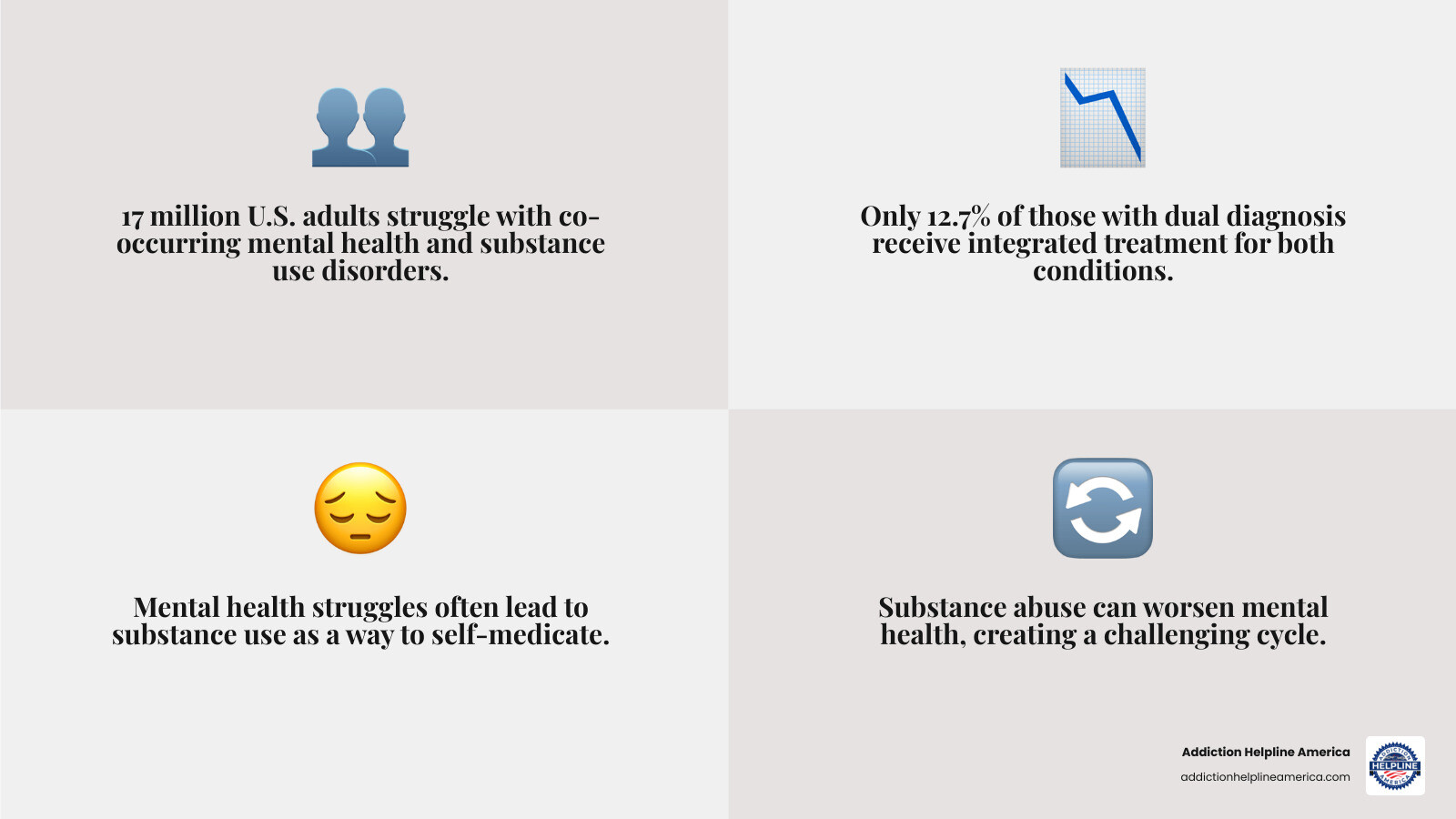
When you’re facing both addiction and mental health challenges, it can feel like you’re trapped in an endless cycle. Mental health symptoms may drive substance use as a form of self-medication, while continued substance use worsens mental health conditions. This bidirectional relationship makes recovery especially difficult without the right help.
Key features of a quality dual diagnosis program include:
- Integrated care that treats both conditions simultaneously
- Evidence-based therapies like CBT and DBT
- Multiple levels of care including detox, inpatient, and outpatient programs
- Trauma-informed approaches that address underlying causes
- Medication management for both mental health and substance use needs
- Ongoing support through aftercare and alumni programs
The numbers tell a sobering story. According to the 2020 National Survey on Drug Use and Health, 17 million U.S. adults suffered from a co-occurring mental illness and substance use disorder [https://www.samhsa.gov/data/report/2020-nsduh-annual-national-report]. Yet, only 6.5% received treatment for both conditions, which can lead to higher relapse rates and worsening symptoms. The most common co-occurring conditions include anxiety disorders, depression, post-traumatic stress disorder (PTSD), and bipolar disorder, as noted by the National Institute of Mental Health (NIMH) [https://www.nimh.nih.gov/health/topics/substance-use-and-mental-health]. Furthermore, studies published in journals like Psychiatric Services have found that over 80% of clients in residential treatment settings have a lifetime history of a co-occurring mental disorder, highlighting the need for specialized care [https://ps.psychiatryonline.org/doi/10.1176/appi.ps.201300254].
At Addiction Helpline America, we’ve helped thousands of individuals and families steer the complex journey of finding effective Dual Diagnosis Treatment Facilities. Our team of experienced specialists provides free, confidential guidance 24/7 to connect you with the comprehensive care you need.
What is Dual Diagnosis and Why is Integrated Treatment Crucial?
Dual diagnosis, also known as a co-occurring disorder, is when someone experiences both a mental health disorder and a substance use disorder (SUD) simultaneously. These conditions are deeply intertwined – mental health symptoms often drive substance use as self-medication, while substance abuse worsens mental health, creating a destructive cycle.
Common co-occurring conditions include:
- Depression
- Anxiety disorders
- PTSD
- Bipolar disorder
- Personality disorders
Nearly half of individuals with substance use disorders will experience a mental health condition during their lifetime. Yet only 12.7% receive treatment for both conditions, leaving millions trapped in this cycle. Understanding Co-Occurring Disorders is the first step toward effective healing.
Signs You May Need Dual Diagnosis Treatment
- Mood swings and extreme emotional shifts
- Social withdrawal from loved ones and activities
- Neglecting responsibilities at work or home
- Increased substance use to cope with emotions
- Sleep or appetite changes
- Risky behaviors that endanger yourself or others
- Difficulty concentrating or making decisions
If you recognize these signs, especially alongside problematic alcohol use, seek help immediately. Learn more about Signs of Alcohol Addiction.
Benefits of Integrated Treatment
- Improved Success: Treating both conditions simultaneously leads to lasting recovery, as confirmed by NAMI research [https://www.nami.org/advocate/understanding-dual-diagnosis/]
- Reduced Relapse Risk: Managing mental health triggers prevents self-medication. See our Relapse Prevention Program Guide
- Proper Medication Management: Ensures safe, effective treatment for both conditions
- Specialized Coping Skills: Learn to manage symptoms and cravings without substances
- Continuity of Care: One coordinated team addresses all aspects of recovery
Finding Dual Diagnosis Treatment Facilities in Los Angeles

Los Angeles offers numerous Dual Diagnosis Treatment Facilities, and finding the right one is crucial for recovery. Addiction Helpline America provides free, confidential guidance 24/7 to connect you with quality California treatment options. Our California Addiction Treatment Guide offers localized insights.
How to Find Treatment Near You
- Use SAMHSA’s Treatment Locator [https://findtreatment.samhsa.gov/] to find accredited facilities specializing in co-occurring disorders
- Request a Professional Assessment to determine the appropriate level of care
- Call Addiction Helpline America at (844) 561-0606 for personalized guidance and insurance verification
- Explore our resources to Find Rehab Facilities that meet your needs
Payment Options for Treatment
| Payment Option | Description |
|---|---|
| Private Insurance | Most plans cover dual diagnosis treatment. We’ll verify your benefits confidentially. |
| Medicaid | Covers treatment for eligible individuals based on income. |
| Sliding Scale | Many facilities adjust fees based on your ability to pay. |
| Private Pay | Out-of-pocket payment offers maximum flexibility in choosing care. |
The Mental Health Parity Act requires insurance to cover mental health and addiction treatment. Learn more in our State-Based Funding and Insurance Guide.
What is Dual Diagnosis and Why is Integrated Treatment Crucial?
Dual diagnosis, also known as a co-occurring disorder, is when a person experiences a mental health disorder and a substance use disorder (SUD) simultaneously. These conditions are often intertwined; one can worsen the other, creating a challenging cycle. For example, someone might use substances to cope with anxiety, but this can ultimately increase their anxiety levels and lead to dependence.
Nearly half of individuals with a substance use disorder also experience a mental health condition during their lifetime. This makes treating both issues at the same time essential for a successful and lasting recovery. According to recent statistics, only a small percentage of people with co-occurring disorders receive treatment for both, highlighting a critical gap in care. For more information, see our guide on Understanding Co-Occurring Disorders.
Common mental health conditions that co-occur with SUDs include:
- Depression
- Anxiety disorders
- Post-Traumatic Stress Disorder (PTSD)
- Bipolar disorder
- Personality disorders
Signs and Symptoms of a Co-Occurring Disorder
Identifying a co-occurring disorder can be difficult because symptoms often overlap. Recognizing these signs is the first step toward getting help:
- Mood Swings: Experiencing extreme or rapid shifts in mood.
- Social Withdrawal: Isolating from friends, family, and hobbies.
- Neglecting Responsibilities: Trouble at work, school, or home.
- Increased Substance Use: Using more often or being unable to control it.
- Changes in Sleep or Appetite: Significant shifts in sleeping or eating patterns.
- Risky Behaviors: Engaging in dangerous or impulsive activities.
- Inability to Cope: Feeling overwhelmed and using substances to manage stress.
- Paranoia or Delusions: Experiencing irrational suspicion or false beliefs.
- Worsening Health or Relationships: A noticeable decline in physical health or personal connections.
- Difficulty Concentrating: Struggling to focus, remember things, or make decisions.
If you recognize these signs in yourself or a loved one, especially alongside problematic alcohol use, it’s time to seek help. You can learn more by reading our guide on Signs of Alcohol Addiction.
The Benefits of Integrated Dual Diagnosis Treatment
Integrated dual diagnosis treatment offers significant advantages over traditional approaches that treat mental health and substance use disorders separately. When both conditions are addressed concurrently, the path to healing becomes clearer and more sustainable. Here’s how integrated care makes a difference:
- Improved Treatment Success: By tackling both issues at once, integrated treatment addresses their complex interplay, leading to more comprehensive and lasting recovery. Research from organizations like the National Alliance on Mental Illness (NAMI) confirms that integrated care is the most effective approach [https://www.nami.org/advocate/understanding-dual-diagnosis/].
- Reduced Relapse Risk: Managing underlying mental health triggers reduces the urge to self-medicate with substances, significantly lowering the chance of relapse. Our Relapse Prevention Program Ultimate Guide provides further strategies.
- Proper Medication Management: Integrated programs ensure medications for mental health are managed safely and effectively alongside addiction treatment.
- Specialized Coping Skills: Clients learn skills to manage both mental health symptoms and cravings, empowering them to handle life’s challenges without substances.
- Accurate Diagnosis: An integrated approach allows for a more thorough assessment, ensuring the right conditions are being treated.
- Continuity of Care: A single, coordinated team manages all aspects of a person’s well-being, leading to a smoother and more consistent recovery journey.
Finding Dual Diagnosis Treatment Facilities in Los Angeles
When you’re ready to seek help, finding the right Dual Diagnosis Treatment Facilities in Los Angeles, California, is a crucial step. Los Angeles offers a wide array of options, and understanding how to steer them can make all the difference. We understand that finding local, quality care is paramount, and Addiction Helpline America is here to guide you through the process, helping you verify insurance and connect with the best California treatment options for your unique needs. Our comprehensive California Addiction Treatment Guide can provide more localized insights.
How to Find a Treatment Center Near You
The search for a dual diagnosis treatment center can feel overwhelming, but we’ve streamlined the process to help you find the right fit. Here are some actionable steps to take:
- Use the SAMHSA Treatment Locator: The Substance Abuse and Mental Health Services Administration (SAMHSA) offers a behavioral health treatment service locator https://findtreatment.samhsa.gov/ that allows you to search by location and filter for facilities that specialize in co-occurring disorders. This is an excellent starting point for finding reputable centers.
- Ask for a Professional Assessment: Before committing to a program, inquire about a comprehensive professional assessment. A thorough evaluation will help determine the severity of both your mental health disorder and SUD, guiding you toward the most appropriate level of care.
- Consult Online Directories: While we strive to be your primary resource, other reputable online directories can also list Dual Diagnosis Treatment Facilities. Always cross-reference information and look for facilities with strong reputations and proper accreditation.
- Speak with a Treatment Specialist: This is where Addiction Helpline America shines. Our team of experienced treatment specialists is available 24/7 to provide free, confidential, and personalized guidance. We can help you understand your options, answer your questions, and connect you directly with facilities that meet your specific needs in Los Angeles. Don’t hesitate to reach out to us; we’re here to help you Find Rehab Facilities that are right for you.
How to Pay for Dual Diagnosis Treatment Facilities
The cost of treatment can be a concern, but there are several ways to cover it. The Mental Health Parity and Addiction Equity Act (MHPAEA) of 2008 is a federal law that generally requires health insurance plans to provide the same level of benefits for mental health and substance use treatment as they do for medical/surgical care [https://www.cms.gov/CCIIO/Programs-and-Initiatives/Other-Insurance-Protections/mhpaea_factsheet]. Here are some common payment options:
- Private Insurance: Most private health insurance plans offer coverage for dual diagnosis treatment. The extent of coverage varies, so it’s important to verify your benefits. We can help you with this process quickly and confidentially.
- Medicaid: State-funded Medicaid programs often cover addiction and mental health treatment for eligible individuals and families with limited income.
- Sliding Scale Fees: Many treatment centers offer payment plans or sliding scale fees based on your income, making treatment more affordable.
- Private Pay: Paying out-of-pocket is also an option, offering the most flexibility in choosing a provider.
Understanding your financial options is a key step. For more detailed information, our State-Based Funding and Insurance Guide can be a valuable resource.
What is Dual Diagnosis and Why is Integrated Treatment Crucial?
Dual diagnosis, also frequently referred to as a co-occurring disorder, is the simultaneous presence of both a mental health disorder and a substance use disorder (SUD). This isn’t just two separate problems happening at the same time; it’s a complex clinical condition where each disorder can profoundly influence or even mask the symptoms of the other. Imagine trying to solve a puzzle with half the pieces missing or hidden beneath another layer – that’s the challenge of dual diagnosis without integrated care.
The relationship between mental health and substance use is often bidirectional. This means that mental health conditions can lead to substance use as individuals try to self-medicate their pain, anxiety, or depression. Conversely, chronic substance abuse can alter brain chemistry and function, which can lead to the development or exacerbation of mental health issues, a fact supported by research from the National Institute on Drug Abuse (NIDA) [https://nida.nih.gov/publications/research-reports/common-comorbidities-substance-use-disorders/part-1-connection-between-substance-use-disorders-mental-illness]. It’s a vicious cycle where one problem feeds into the other, making both conditions worse.
Common mental health conditions that co-occur with SUDs include:
- Depression
- Anxiety disorders
- Post-Traumatic Stress Disorder (PTSD)
- Bipolar disorder
- Personality disorders
According to NIDA, about half of the individuals who experience a mental illness during their lives will also experience a substance use disorder and vice versa. This highlights the critical importance of treating both conditions simultaneously. Without integrated treatment, addressing only one aspect leaves the other untreated, significantly increasing the risk of relapse. Data from SAMHSA’s 2020 national survey reveals a significant treatment gap: of the 17 million adults with co-occurring disorders, only 6.5% received treatment for both conditions [https://www.samhsa.gov/data/report/2020-nsduh-annual-national-report]. Understanding the nuances of Understanding Co-Occurring Disorders is the first step toward effective healing.
Signs and Symptoms of a Co-Occurring Disorder
Identifying a co-occurring disorder can be challenging because the symptoms often overlap or mimic each other. However, recognizing these signs is crucial for seeking timely help. We’ve compiled a list of common indicators that might suggest the need for specialized dual diagnosis treatment:
- Mood Swings: Experiencing extreme or rapid shifts in mood, from intense highs to profound lows.
- Social Withdrawal: Isolating oneself from friends, family, and activities once enjoyed.
- Neglecting Responsibilities: Failing to meet obligations at work, school, or home due to either mental health struggles or substance use.
- Increased Substance Use: Escalating the amount or frequency of substance use, or an inability to control it.
- Changes in Sleep or Appetite: Significant alterations in sleeping patterns (insomnia, excessive sleep) or eating habits (overeating, loss of appetite).
- Risky Behaviors: Engaging in dangerous or impulsive activities that could harm oneself or others.
- Inability to Cope: Feeling overwhelmed by daily life, unable to manage stress or emotional challenges without substances.
- Paranoia or Delusions: Experiencing irrational suspicion, mistrust, or false beliefs not based in reality.
- Worsening Health or Relationships: Noticeable decline in physical health or strained relationships with loved ones.
- Difficulty Concentrating: Struggling to focus, remember things, or make decisions.
If you recognize these signs in yourself or a loved one, especially when combined with problematic alcohol use, seek help. For more information on recognizing addiction signs, you can refer to our guide on Signs of Alcohol Addiction.
The Benefits of Integrated Dual Diagnosis Treatment
Integrated dual diagnosis treatment offers significant advantages over traditional approaches that treat mental health and substance use disorders separately. When both conditions are addressed concurrently, the path to healing becomes clearer and more sustainable. As NIDA Director Dr. Nora D. Volkow stated, “The high rate of comorbidity between drug use disorders and other mental illnesses calls for a comprehensive approach that integrates treatments for both” [https://archives.nida.nih.gov/news-events/news-releases/2010/09/nida-launches-new-web-resource-on-comorbidity].
Here’s how integrated care makes a difference:
- Improved Treatment Success: By tackling both issues at once, integrated treatment addresses their complex interplay, leading to more comprehensive and lasting recovery. Research from organizations like the National Alliance on Mental Illness (NAMI) confirms that integrated care is the most effective approach [https://www.nami.org/advocate/understanding-dual-diagnosis/].
- Reduced Relapse Risk: When underlying mental health triggers are managed effectively, individuals are less likely to turn to substances as a coping mechanism. This significantly lowers the chances of relapse. Our Relapse Prevention Program Ultimate Guide provides further strategies.
- Proper Medication Management: For many, medication is a vital part of managing mental health conditions. Integrated programs ensure that medications are balanced and monitored carefully, avoiding conflicting therapeutic approaches and potential negative interactions with addiction recovery.
- Specialized Coping Skills: Clients learn coping mechanisms specifically designed to manage both mental health symptoms and cravings, empowering them to steer challenges without resorting to substance use.
- Accurate Diagnosis: The diagnostic process can be complicated by overlapping symptoms. Integrated treatment allows for a more thorough and accurate assessment, ideally after a period of abstinence, to ensure the right conditions are being treated.
- Continuity of Care: Instead of juggling appointments with multiple specialists who may not communicate, integrated care often involves a single, coordinated treatment team. This ensures that all aspects of a person’s well-being are considered, leading to a smoother and more consistent recovery journey.
Finding Dual Diagnosis Treatment Facilities in Los Angeles
When you’re ready to seek help, finding the right Dual Diagnosis Treatment Facilities in Los Angeles, California, is a crucial step. Los Angeles offers a wide array of options, and understanding how to steer them can make all the difference. We understand that finding local, quality care is paramount, and Addiction Helpline America is here to guide you through the process, helping you verify insurance and connect with the best California treatment options for your unique needs. Our comprehensive California Addiction Treatment Guide can provide more localized insights.
How to Find a Treatment Center Near You
The search for a dual diagnosis treatment center can feel overwhelming, but we’ve streamlined the process to help you find the right fit. Here are some actionable steps to take:
- Use the SAMHSA Treatment Locator: The Substance Abuse and Mental Health Services Administration (SAMHSA) offers a behavioral health treatment service locator https://findtreatment.samhsa.gov/ that allows you to search by location and filter for facilities that specialize in co-occurring disorders. This is an excellent starting point for finding reputable centers.
- Ask for a Professional Assessment: Before committing to a program, inquire about a comprehensive professional assessment. A thorough evaluation will help determine the severity of both your mental health disorder and SUD, guiding you toward the most appropriate level of care.
- Consult Online Directories: While we strive to be your primary resource, other reputable online directories can also list Dual Diagnosis Treatment Facilities. Always cross-reference information and look for facilities with strong reputations and proper accreditation.
- Speak with a Treatment Specialist: This is where Addiction Helpline America shines. Our team of experienced treatment specialists is available 24/7 to provide free, confidential, and personalized guidance. We can help you understand your options, answer your questions, and connect you directly with facilities that meet your specific needs in Los Angeles. Don’t hesitate to reach out to us; we’re here to help you Find Rehab Facilities that are right for you.
How to Pay for Dual Diagnosis Treatment Facilities
The cost of dual diagnosis treatment can be a concern for many, but it shouldn’t be a barrier to seeking help. We believe that everyone deserves access to quality care, and we can help you understand your payment options.
| Payment Option | Description |
|---|---|
| Private Insurance | Many individuals have private insurance through work or private plans. Most private plans typically offer some coverage for dual diagnosis treatment facilities. The scope of coverage will depend on your specific plan’s benefits. We can help you verify your insurance coverage quickly and confidentially. |
| Medicaid | For those who qualify based on income and other criteria, Medicaid can provide coverage for mental health and substance use treatment services, including some dual diagnosis programs in California. |
| Sliding Scale Fees | Some facilities adjust their fees according to your ability to pay, which can make treatment more accessible if you have limited financial resources. |
| Private Pay | Paying out-of-pocket is an option that may give you more flexibility in choosing the type of program and amenities that best meet your needs. |
Understanding your financial options is a key step. For more detailed information, our State-Based Funding and Insurance Guide can be a valuable resource.
Why Understanding Dual Diagnosis Matters for Your Recovery
Dual Diagnosis Treatment Facilities specialize in helping individuals who struggle with both mental health disorders and substance use disorders at the same time. Here’s what you need to know:
Key Features of Dual Diagnosis Treatment Facilities:
- Integrated care that treats both conditions simultaneously
- Evidence-based therapies like CBT and DBT custom for co-occurring disorders
- Multiple levels of care including detox, inpatient, and outpatient programs
- Trauma-informed approaches that address underlying causes
- Medication management to balance both mental health and substance use needs
- Ongoing support through aftercare and alumni programs
When you’re facing both addiction and mental health challenges, it can feel like you’re trapped in an endless cycle. Mental health symptoms may drive substance use as a form of self-medication, while continued substance use worsens mental health conditions. This bidirectional relationship makes recovery especially difficult without the right help.
The numbers tell a sobering story. In 2020, 17 million U.S. adults suffered from co-occurring mental illness and substance use disorder. Yet in 2019, only 12.7% of people with both conditions received treatment for both. This treatment gap leaves millions struggling alone, facing higher relapse rates and worsening symptoms.
The most common co-occurring conditions include depression, anxiety, PTSD, bipolar disorder, and personality disorders alongside alcohol or drug addiction. In many residential treatment centers, 85% of clients struggle with alcoholism, while 60-65% have major depression. These overlapping conditions require specialized, integrated care to break the cycle.
At Addiction Helpline America, we’ve helped thousands of individuals and families steer the complex journey of finding effective Dual Diagnosis Treatment Facilities that address both mental health and addiction simultaneously. Our team of experienced addiction specialists and counselors provides free, confidential guidance 24/7 to connect you with the comprehensive care you need. Call us anytime at (844) 561-0606 to take the first step toward recovery.
What is Dual Diagnosis and Why is Integrated Treatment Crucial?
Dual diagnosis, also frequently referred to as a co-occurring disorder, is the simultaneous presence of both a mental health disorder and a substance use disorder (SUD). This isn’t just two separate problems happening at the same time; it’s a complex clinical condition where each disorder can profoundly influence or even mask the symptoms of the other. Imagine trying to solve a puzzle with half the pieces missing or hidden beneath another layer – that’s the challenge of dual diagnosis without integrated care.
The relationship between mental health and substance use is often bidirectional. This means that mental health conditions can lead to substance use as individuals try to self-medicate their pain, anxiety, or depression. Conversely, chronic substance abuse can alter brain chemistry, leading to the development or exacerbation of mental health issues. For instance, severe and continual substance misuse can cause hormonal changes that contribute to mood disorders. It’s a vicious cycle where one problem feeds into the other, making both conditions worse.
Common mental health conditions that co-occur with SUDs include:
- Depression
- Anxiety disorders
- Post-Traumatic Stress Disorder (PTSD)
- Bipolar disorder
- Personality disorders
We know that nearly half of individuals with substance use disorders will experience a mental health condition during their lifetime. This highlights the critical importance of treating both conditions simultaneously. Without integrated treatment, addressing only one aspect leaves the other untreated, significantly increasing the risk of relapse and hindering long-term recovery. As statistics show, in 2019, a staggering 12.7% of people with co-occurring mental illness and SUDs received treatment for both conditions, indicating a significant gap in care that we aim to bridge. Understanding the nuances of Understanding Co-Occurring Disorders is the first step toward effective healing.
Signs and Symptoms of a Co-Occurring Disorder
Identifying a co-occurring disorder can be challenging because the symptoms often overlap or mimic each other. However, recognizing these signs is crucial for seeking timely help. We’ve compiled a list of common indicators that might suggest the need for specialized dual diagnosis treatment:
- Mood Swings: Experiencing extreme or rapid shifts in mood, from intense highs to profound lows.
- Social Withdrawal: Isolating oneself from friends, family, and activities once enjoyed.
- Neglecting Responsibilities: Failing to meet obligations at work, school, or home due to either mental health struggles or substance use.
- Increased Substance Use: Escalating the amount or frequency of substance use, or an inability to control it.
- Changes in Sleep or Appetite: Significant alterations in sleeping patterns (insomnia, excessive sleep) or eating habits (overeating, loss of appetite).
- Risky Behaviors: Engaging in dangerous or impulsive activities that could harm oneself or others.
- Inability to Cope: Feeling overwhelmed by daily life, unable to manage stress or emotional challenges without substances.
- Paranoia or Delusions: Experiencing irrational suspicion, mistrust, or false beliefs not based in reality.
- Worsening Health or Relationships: Noticeable decline in physical health or strained relationships with loved ones.
- Difficulty Concentrating: Struggling to focus, remember things, or make decisions.
If you recognize these signs in yourself or a loved one, especially when combined with problematic alcohol use, seek help. For more information on recognizing addiction signs, you can refer to our guide on Signs of Alcohol Addiction.
The Benefits of Integrated Dual Diagnosis Treatment
Integrated dual diagnosis treatment offers significant advantages over traditional approaches that treat mental health and substance use disorders separately. When both conditions are addressed concurrently, the path to healing becomes clearer and more sustainable. Here’s how integrated care makes a difference:
- Improved Treatment Success: By tackling both issues at once, integrated treatment addresses the complex interplay between them, leading to more comprehensive and lasting recovery. Research consistently supports that integrated treatment is far more effective than unintegrated treatment. For instance, the National Alliance on Mental Illness (NAMI) emphasizes the importance of understanding dual diagnosis and the benefits of integrated care in their advocacy work [https://www.nami.org/advocate/understanding-dual-diagnosis/].
- Reduced Relapse Risk: When underlying mental health triggers are managed effectively, individuals are less likely to turn to substances as a coping mechanism. This significantly lowers the chances of relapse. Our Relapse Prevention Program Ultimate Guide provides further strategies.
- Proper Medication Management: For many, medication is a vital part of managing mental health conditions. Integrated programs ensure that medications are balanced and monitored carefully, avoiding conflicting therapeutic approaches and potential negative interactions with addiction recovery.
- Specialized Coping Skills: Clients learn coping mechanisms specifically designed to manage both mental health symptoms and cravings, empowering them to steer challenges without resorting to substance use.
- Accurate Diagnosis: The diagnostic process can be complicated by overlapping symptoms. Integrated treatment allows for a more thorough and accurate assessment, ideally after a period of abstinence, to ensure the right conditions are being treated.
- Continuity of Care: Instead of juggling appointments with multiple specialists who may not communicate, integrated care often involves a single, coordinated treatment team. This ensures that all aspects of a person’s well-being are considered, leading to a smoother and more consistent recovery journey.
Finding Dual Diagnosis Treatment Facilities in Los Angeles
When you’re ready to seek help, finding the right Dual Diagnosis Treatment Facilities in Los Angeles, California, is a crucial step. Los Angeles offers a wide array of options, and understanding how to steer them can make all the difference. We understand that finding local, quality care is paramount, and Addiction Helpline America is here to guide you through the process, helping you verify insurance and connect with the best California treatment options for your unique needs. Our comprehensive California Addiction Treatment Guide can provide more localized insights.
How to Find a Treatment Center Near You
The search for a dual diagnosis treatment center can feel overwhelming, but we’ve streamlined the process to help you find the right fit. Here are some actionable steps to take:
- Use the SAMHSA Treatment Locator: The Substance Abuse and Mental Health Services Administration (SAMHSA) offers a behavioral health treatment service locator https://findtreatment.samhsa.gov/ that allows you to search by location and filter for facilities that specialize in co-occurring disorders. This is an excellent starting point for finding reputable centers.
- Ask for a Professional Assessment: Before committing to a program, inquire about a comprehensive professional assessment. A thorough evaluation will help determine the severity of both your mental health disorder and SUD, guiding you toward the most appropriate level of care.
- Consult Online Directories: While we strive to be your primary resource, other reputable online directories can also list Dual Diagnosis Treatment Facilities. Always cross-reference information and look for facilities with strong reputations and proper accreditation.
- Speak with a Treatment Specialist: This is where Addiction Helpline America shines. Our team of experienced treatment specialists is available 24/7 to provide free, confidential, and personalized guidance. We can help you understand your options, answer your questions, and connect you directly with facilities that meet your specific needs in Los Angeles. Don’t hesitate to reach out to us; we’re here to help you Find Rehab Facilities that are right for you.
How to Pay for Dual Diagnosis Treatment Facilities
The cost of dual diagnosis treatment can be a concern for many, but it shouldn’t be a barrier to seeking help. We believe that everyone deserves access to quality care, and we can help you understand your payment options.
| Payment Option | Description |
|---|---|
| Private Insurance | Most private health insurance plans offer coverage for dual diagnosis treatment. The extent of coverage varies, so it’s important to verify your benefits. Our team can help you review your policy and check your coverage quickly and confidentially. |
| Medicaid | Medicaid may cover dual diagnosis treatment for eligible individuals. Coverage can include inpatient, outpatient, and medication services, depending on your state plan and level of need. |
| Sliding Scale Fees | Some treatment centers adjust their fees based on your income, which can make care more accessible if you have limited financial resources or no insurance. |
| Private Pay | Paying out-of-pocket allows maximum flexibility in choosing a provider and level of care. Some facilities may offer discounts or financing options for self-pay clients. |
Understanding your financial options is a key step. For more detailed information, our State-Based Funding and Insurance Guide can be a valuable resource.
Research on Organizational Culture
What is organizational culture?
Organizational culture is the set of shared values, beliefs, understandings, and norms that influence the ways that individuals think, feel, and behave in organizations. It’s essentially “what makes an organization who they are, how do they function, what kinds of people work there, what kinds of things are they trying to do, and what kinds of things have shaped them?” The study of organizational culture, then, is simply a search for answers to questions such as these.
Primary Characteristics that Define Culture:
- Innovation and Risk-Taking: The degree to which employees are encouraged to be innovative and take risks.
- Attention to Detail: The degree to which employees are expected to exhibit precision, analysis, and attention to detail.
- Outcome Orientation: The degree to which management focuses on results or outcomes rather than on the techniques and processes used to achieve these outcomes.
- People Orientation: The degree to which management decisions take into consideration the effect of outcomes on people within the organization.
- Team Orientation: The degree to which work activities are organized around teams rather than individuals.
- Aggressiveness: The degree to which people are aggressive and competitive rather than easygoing.
- Stability: The degree to which organizational activities emphasize maintaining the status quo in contrast to growth.
Observable Artifacts of Culture:
These are the visible and tangible aspects of culture that can be seen, heard, and felt:
- Stories: Narratives about the organization’s founders, rule-breaking, successes, failures, etc., that anchor the present in the past and legitimize current practices.
- Rituals: Repetitive sequences of activities that express and reinforce the key values of the organization.
- Material Symbols: Things like office layouts, dress codes, executive perks, and the type of automobiles provided to top executives.
- Language: Unique terms, jargon, and phrases that members of the organization use, which can act as a common denominator that bonds members.
Espoused Values:
These are the stated values and norms that are preferred by an organization. They are often articulated in mission statements, company credos, or official policies. While they represent what the organization wants to believe in, they may not always align perfectly with actual behavior.
Basic Underlying Assumptions:
These are the core beliefs of the organization’s culture. They are often taken for granted, operate unconsciously, and are difficult to change. They represent the deeply ingrained, fundamental assumptions about how the world works and how the organization should operate.
Functions of Culture:
- Boundary-defining role: It creates distinctions between one organization and others.
- Conveys a sense of identity for organization members: Employees feel a part of something larger.
- Facilitates the generation of commitment to something larger than one’s individual self-interest: Encourages collective effort and loyalty.
- Improves the stability of the social system: Provides a shared understanding of appropriate behavior, reducing ambiguity.
- Sense-making and control mechanism: Guides and shapes the attitudes and behavior of employees.
Types of Organizational Culture:
Based on the Competing Values Framework, cultures can be categorized into:
- Clan Culture: Internal focus and flexibility; friendly workplace, like a family.
- Adhocracy Culture: External focus and flexibility; dynamic, entrepreneurial, creative.
- Market Culture: External focus and stability/control; results-oriented, competitive.
- Hierarchy Culture: Internal focus and stability/control; structured, formalized, efficient.
Strong Culture:
A strong culture is one in which the core values are held and widely shared among employees. This leads to high agreement among members about what the organization stands for.
Advantages of a Strong Culture:
- Creates a strong sense of identity for employees.
- Provides a stable and consistent environment.
- Can lead to higher employee commitment and loyalty.
- Can improve organizational performance by aligning behaviors with goals.
Disadvantages of a Strong Culture:
- Can be resistant to change, making adaptation difficult.
- Can lead to groupthink, stifling diversity of thought.
- Can hinder diversity and inclusion if values are too narrow or exclusive.
- Can be difficult to merge with other cultures during acquisitions or mergers.
How Culture is Created:
- Founders’ values and preferences: The initial vision and values of the founders often set the tone for the organization’s culture.
- Early experiences of the organization: Successes and failures in early stages shape how the organization learns to adapt and operate.
- Socialization of new members: New employees are taught the ropes, including the unwritten rules and norms.
How Culture is Maintained:
- Selection: Hiring individuals who fit into the existing culture.
- Top Management: Leaders act as role models, communicating and reinforcing cultural values through their actions.
- Socialization: The ongoing process of teaching new and existing employees about the organization’s culture.
Socialization:
The process by which employees learn the values, norms, and required behaviors that permit them to participate as members of the organization.
Stages of Socialization:
- Prearrival: Learning that occurs before a new employee joins the organization.
- Encounter: The stage where the new employee sees what the organization is really like and confronts the possibility that expectations may differ from reality.
- Metamorphosis: The stage in which the new employee adjusts to the organization’s culture and norms.
Components of an Organizational Culture Change Strategy:
- Leadership commitment: Strong support and active involvement from top management.
- Communication and training: Clearly articulating the desired new culture and providing the skills needed to adapt.
- Employee involvement: Engaging employees in the change process to foster ownership.
- Reward systems: Aligning incentives and recognition with the new cultural values.
- Role modeling: Leaders and influential employees demonstrating the desired behaviors.
Challenges in Changing Organizational Culture:
- Resistance to change: People are comfortable with the status quo.
- Deeply embedded values and beliefs: Basic underlying assumptions are hard to shift.
- Lack of leadership commitment: If leaders aren’t fully onboard, change efforts will falter.
- Inconsistent communication: Mixed messages confuse employees.
- Difficulty in measuring cultural change: It’s often intangible and hard to quantify.
Subculture and Counterculture:
- Subculture: A set of shared values, beliefs, and behaviors that exists within a larger organizational culture, often developing in departments or geographical locations.
- Counterculture: A subculture whose values and norms of behavior differ substantially from those of the majority of society or the dominant organizational culture, often challenging the status quo.
Difference between Espoused and Enacted Values:
- Espoused values: The values that an organization states and promotes (e.g., “We value integrity”).
- Enacted values: The values that are actually practiced and demonstrated by the organization’s members (e.g., employees consistently act with integrity). There can be a gap between the two.
How Culture Affects Organizational Performance:
- Influencing employee motivation and engagement: A positive culture can boost morale and dedication.
- Shaping decision-making processes: Culture can dictate how problems are approached and solved.
- Impacting innovation and adaptability: Cultures that encourage risk-taking tend to be more innovative.
- Affecting customer satisfaction and loyalty: Employee behavior, driven by culture, directly impacts customer experience.
Role of Leadership in Shaping Organizational Culture:
Leadership plays a crucial role by:
- Articulating a clear vision and values: Setting the direction and core principles.
- Role modeling desired behaviors: “Walking the talk” to demonstrate expected norms.
- Establishing reward systems that reinforce cultural norms: Incentivizing behaviors aligned with the culture.
- Communicating effectively and consistently: Ensuring that cultural messages are clear and widely understood.
Ethical Implications of Organizational Culture:
- Can promote or hinder ethical behavior: A culture of integrity encourages ethical choices, while a culture that tolerates shortcuts can lead to unethical conduct.
- Can influence the reporting of unethical conduct: A culture of fear may prevent whistleblowing.
- Can create a climate of trust or distrust: Trusting cultures foster openness and collaboration.
- Can impact social responsibility and sustainability: Cultural values can drive commitment to broader societal and environmental goals.
How Organizations Can Assess Their Culture:
- Surveys and questionnaires: Standardized tools to gather perceptions of cultural attributes.
- Interviews and focus groups: In-depth qualitative data on employee experiences and beliefs.
- Observation of employee behavior: Observing daily interactions, decision-making, and work processes.
- Analysis of organizational artifacts and stories: Interpreting symbols, rituals, and narratives to understand underlying values.
Examples of Strong Organizational Cultures:
- Google: Known for innovation, employee perks, and a flat hierarchy.
- Southwest Airlines: Emphasizes customer service, fun, and employee empowerment.
- Zappos: Focuses on customer service through a strong, unique culture that values happiness and delivering “WOW” experiences.
- Nordstrom: Renowned for exceptional customer service and empowering employees to make decisions.
How Diversity and Inclusion Impact Organizational Culture:
- Bringing new perspectives and ideas: Diverse teams often generate more innovative solutions.
- Fostering a more innovative and adaptable environment: Different backgrounds challenge the status quo, promoting growth.
- Improving employee morale and engagement: Inclusive cultures make employees feel valued and respected.
- Enhancing the organization’s reputation and brand image: Companies known for diversity and inclusion attract top talent and customers.
Relationship between Organizational Culture and Organizational Climate:
- Organizational culture refers to the deeply held, often unconscious values, beliefs, and assumptions that shape the organization’s identity and guide behavior over time. It’s stable and enduring.
- Organizational climate refers to the shared perceptions employees have about the policies, practices, and procedures of the organization, and how they experience their work environment. It’s more transient and can change more frequently based on current events or management actions. Culture is the “personality” of the organization, while climate is its “mood.”
Challenges of Managing Culture in a Global Organization:
- Cultural differences across countries and regions: Varying national cultures can clash with a single organizational culture.
- Language barriers: Can impede effective communication and understanding of cultural nuances.
- Communication challenges: Ensuring consistent cultural messaging across diverse geographical locations.
- Difficulty in establishing a consistent global culture while respecting local nuances: Balancing a unified identity with local adaptation.
How Organizations Can Create a Learning Culture:
- Encouraging experimentation and risk-taking: Creating a safe space for trying new things and learning from failures.
- Fostering open communication and knowledge sharing: Promoting the free exchange of ideas and information.
- Providing opportunities for continuous learning and development: Investing in training, workshops, and educational resources.
- Rewarding learning and innovation: Recognizing and celebrating efforts to acquire new knowledge and apply it creatively.
Role of Communication in Organizational Culture:
Communication is fundamental to culture:
- Transmitting cultural values and norms: How stories are told, how leaders speak, and how information flows all convey what’s important.
- Reinforcing desired behaviors: Consistent messages about what is valued and expected.
- Facilitating shared understanding and meaning-making: Helping employees interpret events and decisions through a common cultural lens.
- Building a sense of community and belonging: Communication rituals (e.g., town halls, team meetings) can strengthen bonds.
This research provides a comprehensive overview of organizational culture, covering its definition, characteristics, components, functions, types, creation, maintenance, and impact. It also touches on related concepts like subcultures, ethical implications, and global challenges.