
The First Step Towards a New Life
Cocaine addiction treatment is available through various levels of care designed to help you or a loved one break free from the cycle of dependence and rebuild a healthier life. Here’s what you need to know:
Quick Guide to Cocaine Addiction Treatment Options:
- Inpatient/Residential Treatment – 24/7 medical supervision in a structured, safe environment for severe addiction
- Partial Hospitalization Programs (PHP) – Intensive day treatment (typically 20+ hours/week) while living at home
- Intensive Outpatient Programs (IOP) – Flexible treatment (9-19 hours/week) that allows you to maintain work or school
- Evidence-Based Therapies – Cognitive-Behavioral Therapy (CBT), Contingency Management, and the Matrix Model
- Support Groups – Narcotics Anonymous, Cocaine Anonymous, and SMART Recovery for ongoing peer support
- Aftercare Planning – Relapse prevention strategies, sober living homes, and continuing care
All services through Addiction Helpline America are free and confidential.
If you or someone you care about is struggling with cocaine use, you’re not alone. In 2021, approximately 1.7% of people aged 12 or older (or 4.8 million people) reported using cocaine within the past year. The good news? Treatment works. Research shows that the majority of people who complete cocaine addiction treatment remain drug-free.
Cocaine is a powerful stimulant that hijacks your brain’s reward system, flooding it with dopamine and creating intense cravings that make quitting feel impossible. Over time, your brain becomes less sensitive to natural rewards and more sensitive to stress, driving you to seek the drug again and again. This isn’t a sign of weakness—it’s a chronic medical condition that changes how your brain functions.
But here’s what matters most: recovery is possible. Effective treatment addresses not just the physical dependence, but also the psychological, social, and behavioral aspects of addiction. Whether you’re considering treatment for yourself or trying to help a loved one, understanding your options is the critical first step toward lasting change.
At Addiction Helpline America, we’ve helped thousands of individuals and families steer the path to recovery by connecting them with evidence-based cocaine addiction treatment programs custom to their unique needs. Our experienced team is available 24/7 to provide free, confidential guidance and help you take that crucial first step toward a healthier future.
Understanding Cocaine Addiction: Signs and Long-Term Effects
Understanding the nature of cocaine addiction is the first step toward seeking help. It’s a complex condition that manifests in various ways, impacting both your physical and mental well-being. Recognizing these signs and understanding the potential long-term damage can be a powerful motivator for change.
What are the Signs and Symptoms of Cocaine Addiction?
Cocaine addiction can present with a range of physical, behavioral, and psychological indicators. Sometimes, these signs might be subtle at first, but over time, they become more pronounced.
Physical signs of cocaine use and addiction can include:
- Dilated pupils: Cocaine causes pupils to enlarge, even in normal lighting conditions.
- Nosebleeds or runny nose: Repeated snorting can damage nasal tissues, leading to frequent nosebleeds, chronic irritation, and a constantly runny nose.
- Weight loss: Cocaine suppresses appetite, often leading to significant and unhealthy weight loss.
- Increased heart rate and blood pressure: As a stimulant, cocaine elevates cardiovascular activity.
- Dental problems: If cocaine is rubbed on the gums, it can lead to severe oral health issues.
- Track marks: For those who inject cocaine, visible needle marks may appear on the arms or other parts of the body.
Behavioral symptoms often revolve around the pursuit and use of the drug, and its aftermath:
- Sudden bursts of energy followed by extreme fatigue: Users may experience periods of hyperactivity and talkativeness, followed by crashes of exhaustion.
- Dramatic mood swings: Irritability, anxiety, and agitation can alternate with periods of euphoria.
- Paranoia and hallucinations: High doses or prolonged use can trigger intense paranoia, making individuals distrustful or fearful, and in some cases, lead to auditory or visual hallucinations.
- Neglecting responsibilities: Work, school, and family obligations often take a backseat to drug use.
- Financial trouble: Maintaining a cocaine habit is expensive, often leading to debt, borrowing money, or even theft.
- Social withdrawal: Individuals may pull away from friends and family, isolating themselves to use drugs.
- Failed attempts to quit: A key sign of addiction is the inability to cut down or stop using cocaine, despite repeated attempts and a desire to do so, even if use isn’t daily.
The psychological toll can be profound, including intense cravings, anxiety, depression, and a loss of interest in activities once enjoyed. If you recognize these signs in yourself or a loved one, it’s crucial to understand that help is available.
How Cocaine Use Disorder Affects the Brain and Body
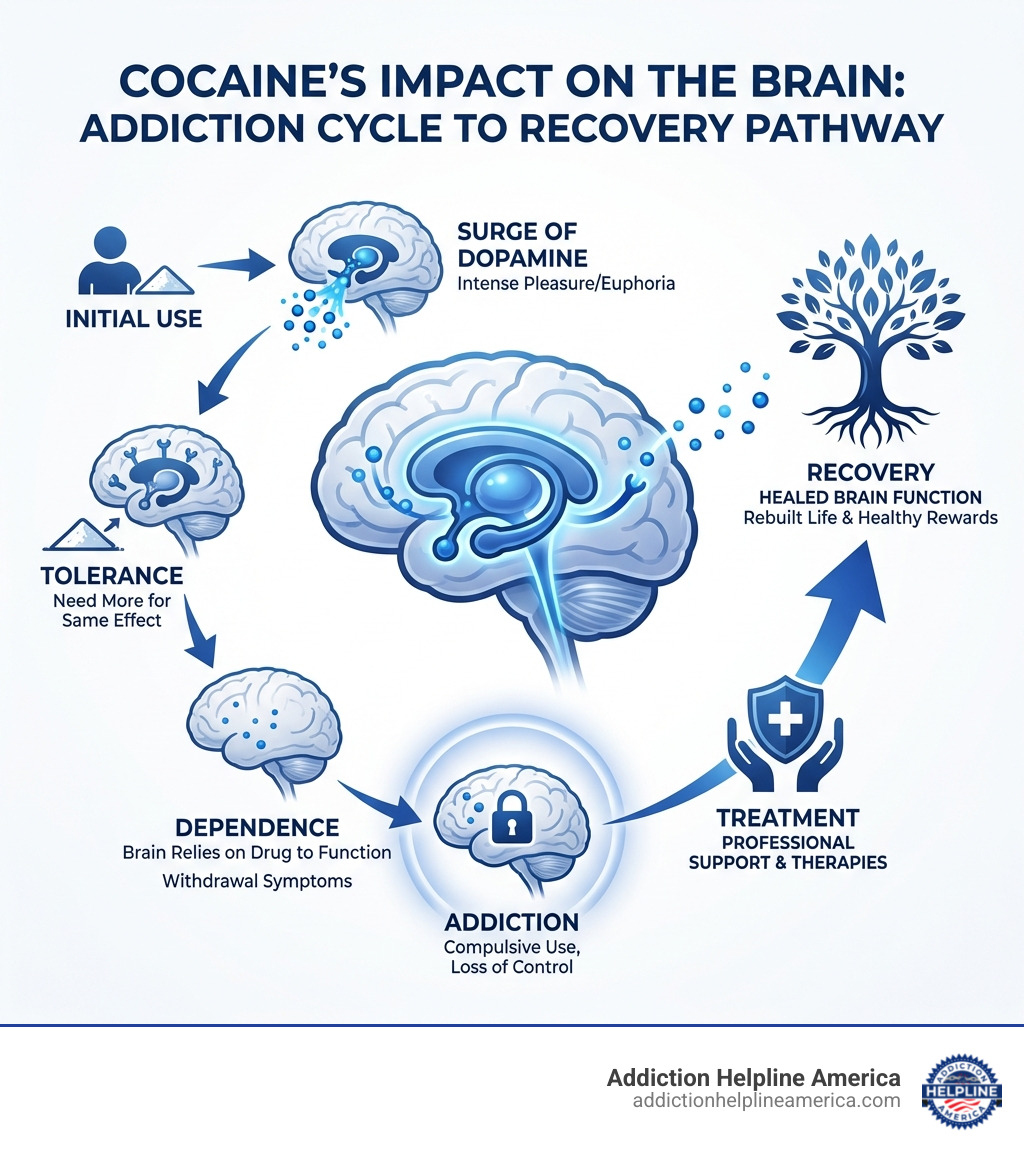
Cocaine’s impact on the brain is central to its addictive nature. When cocaine enters the system, it floods the brain with dopamine, a neurotransmitter associated with pleasure and reward. This surge creates an intense euphoria that is highly reinforcing. However, this comes at a cost.
With repeated exposure, the brain’s reward pathways become less sensitive to natural reinforcers like food, sex, or social interaction. This means everyday activities no longer provide the same pleasure, making the drug the sole source of gratification. Simultaneously, the brain’s stress circuits become more sensitive, driving intense cravings and negative moods when the drug is absent. This combination creates a powerful cycle of drug-seeking behavior.
The body also develops tolerance and dependence. Tolerance means needing higher doses or more frequent use to achieve the desired effect, while dependence means the body requires the drug to function “normally” and experiences withdrawal symptoms without it.
Long-term cocaine use can lead to a cascade of serious health complications:
- Cardiovascular damage: Cocaine significantly strains the heart, increasing the risk of heart attack, stroke, irregular heart rhythms, inflammation of the heart muscle, and aortic ruptures. These can be life-threatening and are a major concern.
- Neurological effects: Beyond the immediate brain changes, chronic use can lead to intracerebral hemorrhage (bleeding in the brain), bulges in cerebral blood vessels, and even movement disorders similar to Parkinson’s disease. Cognitive functions such as attention, impulse control, memory, and decision-making can become significantly impaired.
- Respiratory issues: Smoking crack cocaine can severely damage the lungs, leading to conditions like “crack lung” and chronic respiratory problems.
- Perforated septum: Regular snorting of cocaine can lead to the destruction of the tissue separating the nostrils, resulting in a perforated septum.
- Gastrointestinal problems: Cocaine can cause reduced blood flow to the gut, leading to ulcers and other gastrointestinal issues.
- Infectious diseases: Injecting cocaine carries a high risk of contracting infectious diseases like HIV and hepatitis C through shared needles.
The dangers are stark: cocaine abuse leads to about 450,000 visits to emergency rooms every year, and results in more than 4,000 annual deaths. In 2021, of the 24,486 overdose deaths involving cocaine, more than 15,000 also involved synthetic opioids (primarily fentanyl), highlighting the deadly risks of adulterated drugs.
For a deeper dive into the science behind these effects, you can review this scientific review of cocaine’s effects.

A Comprehensive Guide to Cocaine Addiction Treatment
We understand that facing cocaine addiction can feel overwhelming, but we’re here to tell you that effective cocaine addiction treatment is available and it works. Our approach emphasizes personalized treatment plans because we know that no single path to recovery fits everyone. Each individual’s journey is unique, influenced by their specific history, co-occurring conditions, and life circumstances.
A successful cocaine addiction treatment program provides a continuum of care, meaning it offers different levels of support that can adapt as your needs change throughout recovery. This often begins with medical detoxification, especially if there are co-occurring substance use issues or significant health concerns. Many individuals also struggle with co-occurring mental health conditions, such as depression, anxiety, or ADHD, which is why integrated treatment for dual diagnosis is so important. Addressing these issues simultaneously leads to better, more sustainable outcomes.

Levels of Care: Finding the Right Fit
Determining the right level of care is a crucial step in beginning cocaine addiction treatment. This decision often depends on the severity of the addiction, your home environment, available social support, and any co-occurring medical or mental health conditions.
| Level of Care | Description | Ideal For – Inpatient/Residential Treatment | Provides 24/7 medical and emotional support in a structured, substance-free environment. This is the most intensive level of care. | Individuals with severe addiction, a history of relapse, unstable living situations, or co-occurring medical or mental health conditions. |
| Partial Hospitalization Program (PHP) | A step-down from inpatient care, offering structured therapy for several hours a day, 5-7 days a week, while allowing the individual to live at home. | Those who have completed inpatient treatment or have a stable home environment but still require a high level of support. |
| Intensive Outpatient Program (IOP) | A more flexible option, typically involving 9-20 hours of therapy per week, often in the evenings, to accommodate work or school schedules. | Individuals with a strong support system and a lower risk of relapse who need to maintain daily responsibilities. |
| Outpatient Treatment | The least intensive option, involving one or two therapy sessions per week. It’s often used as a step-down from more intensive programs or for those with mild substance use issues. | People who have completed higher levels of care and are transitioning back to their daily lives, or those with a very strong support system. |
Therapeutic Approaches for Cocaine Addiction
Effective treatment for cocaine addiction often involves a combination of behavioral therapies, as there are currently no FDA-approved medications specifically for treating cocaine use disorder. According to the National Institute on Drug Abuse (NIDA), behavioral therapies are a cornerstone of recovery.
- Cognitive-Behavioral Therapy (CBT): This approach helps individuals identify and change the negative thought patterns and behaviors associated with their drug use. A study published in the Journal of Consulting and Clinical Psychology found that CBT was effective in reducing cocaine use and improving psychosocial functioning.
- Contingency Management (CM): This method uses motivational incentives, such as vouchers or small rewards, to encourage abstinence. Research has consistently shown that CM is one of the most effective treatments for cocaine addiction, as highlighted by a review in the Cochrane Database of Systematic Reviews.
- The Matrix Model: This comprehensive, multi-faceted approach combines elements of CBT, family therapy, individual counseling, and 12-step programs. It’s designed to provide a structured framework for recovery and has been shown to be particularly effective for stimulant use disorders.
- Community Reinforcement Approach (CRA) Plus Vouchers: This intensive 24-week outpatient therapy combines counseling with a voucher-based incentive system to help individuals maintain abstinence.
The Role of Support Systems
Recovery is not a journey to be taken alone. Support systems are crucial for long-term success. This includes:
- Family Therapy: Addiction affects the entire family. Family therapy helps repair relationships, improve communication, and create a supportive home environment for recovery.
- Support Groups: Peer support groups like Cocaine Anonymous (CA) and Narcotics Anonymous (NA) provide a community of individuals who understand the challenges of addiction. These groups offer a safe space to share experiences and receive encouragement.
- Aftercare and Relapse Prevention: Recovery is an ongoing process. A good treatment program will include a comprehensive aftercare plan that may involve ongoing therapy, support group meetings, and strategies to manage triggers and prevent relapse.
Take Control of Your Future Today
The journey to recovery from cocaine addiction is a testament to resilience, strength, and the power of dedicated support. We’ve explored the profound impact of cocaine on the brain and body, the diverse pathways to cocaine addiction treatment, and the vital role of ongoing support. Addiction is a treatable disease, and a healthier, more fulfilling life is not just a dream—it’s an achievable reality.
At Addiction Helpline America, we are more than just a helpline; we are your partners in this journey. Our mission is to provide free, confidential, and personalized guidance, connecting you with the right recovery program from our vast network of treatment centers. We understand the nuances of this challenge and are committed to helping you find a path that honors your unique needs and circumstances.
Don’t let another day pass in the shadow of addiction. Reach out to us. Your future, free from the grip of cocaine, begins with a single, courageous step.
Call our 24/7 helpline today to get started.