
What You Need to Know About Outpatient Rehab
Outpatient rehab is a flexible treatment option for addiction that allows you to receive professional care while continuing to live at home and maintain your daily responsibilities. Unlike inpatient programs that require you to stay at a facility 24/7, outpatient treatment lets you attend therapy sessions and counseling appointments while keeping your job, caring for your family, and staying connected to your support system.
Quick Overview of Outpatient Rehab:
- What it is: Treatment for drug or alcohol addiction that doesn’t require overnight stays
- Where you live: At home or in a sober living facility
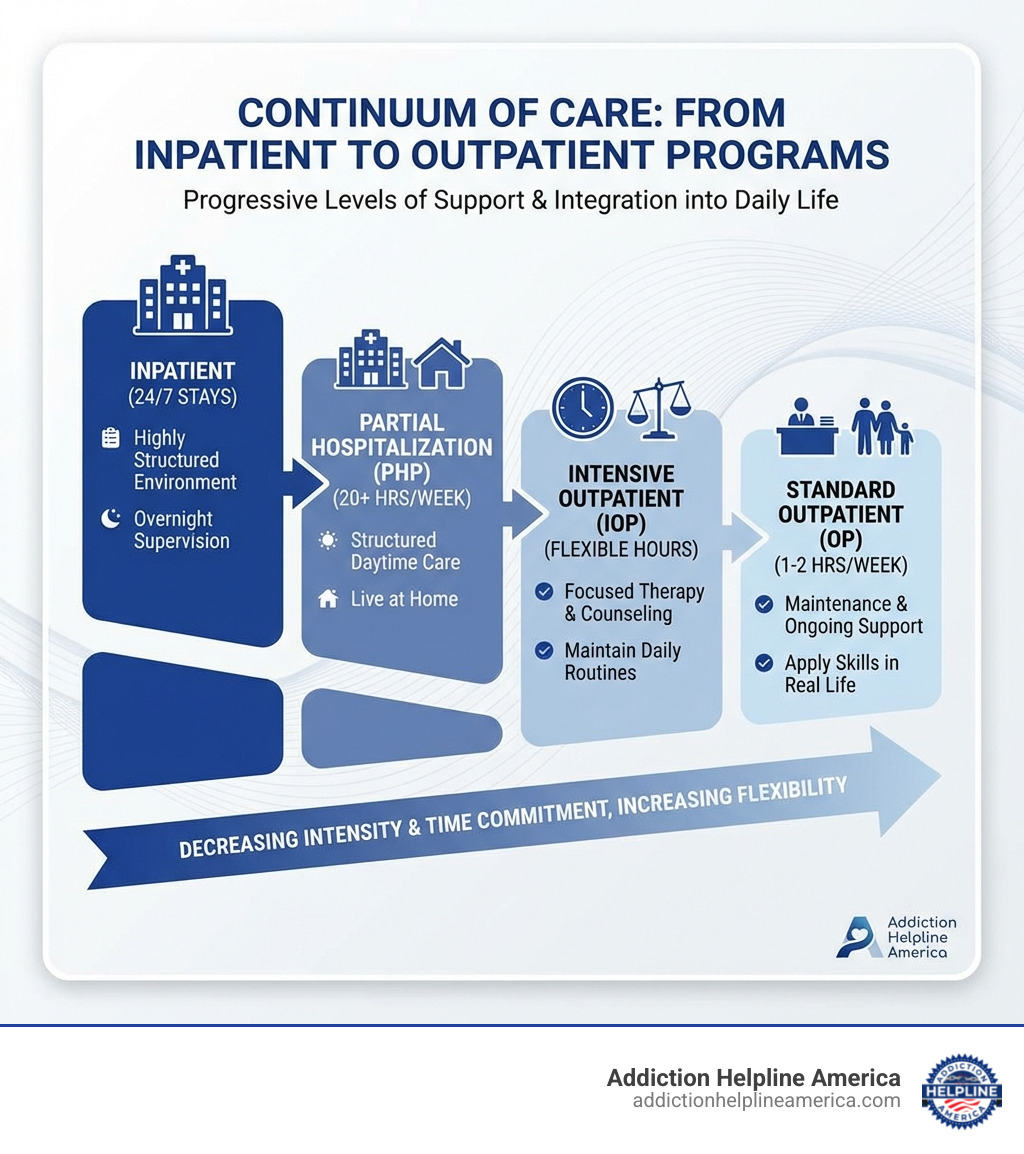
- Time commitment: Ranges from 1-2 hours per week (standard outpatient) to 20+ hours per week (partial hospitalization)
- Main types: Partial Hospitalization Program (PHP), Intensive Outpatient Program (IOP), and Standard Outpatient Program (OP)
- Best for: People with mild to moderate addiction, strong support systems, and stable living situations
- Average cost: $2,000 to $10,000 for a 1-3 month program (often covered by insurance), though costs vary widely by program and location (American Addiction Centers).
- Key benefit: You can apply recovery skills in real-world situations immediately
Throughout the outpatient rehab program, family involvement and support are emphasized, as loved ones can help encourage you to stay on the path to sobriety. You can expect a combination of individual therapy, group counseling, family sessions, and education classes—all scheduled around your existing commitments.
“The reality is simple: Recovery doesn’t always require stepping away from your entire life,” explains Dr. Alana Carter, a licensed clinical psychologist. “For many people, outpatient treatment offers the structure and professional support needed to overcome addiction while staying connected to work, school, and family.”
At Addiction Helpline America, we’ve helped thousands of individuals and families find the right outpatient rehab programs custom to their unique situations. Our team of addiction specialists provides free, confidential guidance 24/7 to connect you with effective treatment options that fit your needs and schedule.
This guide will walk you through everything you need to know about outpatient treatment—from understanding the different program levels to navigating costs and insurance, finding the right fit, and taking that crucial first step toward recovery.
Common outpatient rehab vocab:
Understanding the Levels of Outpatient Care
Outpatient programs come in various formats, differing in intensity levels and services. This allows for a flexible and adaptable approach to recovery, ensuring that the treatment meets your evolving needs. The general focus remains on counseling, education, and support, but the time commitment and structure vary significantly across program types, as defined by organizations like the Substance Abuse and Mental Health Services Administration (SAMHSA).

Partial Hospitalization Programs (PHP)
Often considered the most intensive form of outpatient care, Partial Hospitalization Programs (PHPs) provide a high level of support without requiring an overnight stay. While you live at home or in a sober living arrangement, you attend treatment nearly every day, typically for 20 or more hours per week.
PHPs are ideal for individuals who need significant structure and clinical supervision, perhaps as a step-down from inpatient care or if they require more intensive support than a typical outpatient program but do not meet the criteria for inpatient hospitalization, according to the American Society of Addiction Medicine (ASAM) criteria. Some PHPs can even offer medical detox services at the start of the program, making them suitable for those with mild to moderate withdrawal symptoms that can be safely managed in an outpatient setting with medical staff available.
Intensive Outpatient Programs (IOP)
Intensive Outpatient Programs (IOPs) offer a step down in intensity from PHPs, providing a balance between structured therapy and personal flexibility. In an IOP, you typically attend day treatment for a minimum of nine hours per week, often spread across three to five days. Some IOPs can involve up to 20 hours of treatment per week, with the intensity tapering over time as you progress.
IOPs are designed to help you maintain your normal schedule outside of treatment, with sessions often conducted in the evening or early morning. This makes it possible to balance your recovery journey with work, school, or family responsibilities. IOPs are particularly beneficial for those transitioning from higher levels of care (like inpatient or PHP) or for individuals with mild to moderate substance use disorders who have a strong support system at home. Learn more about intensive outpatient services at Addiction Helpline America.
Standard Outpatient Programs (OP)
Standard Outpatient Programs (OPs) represent the lowest intensity level of structured outpatient care. This type of program usually requires less than nine hours of treatment per week, often involving just one or two sessions with a counselor for individual, group, or family therapy.
Standard OPs are suitable for individuals who need ongoing support to maintain sobriety, have completed more intensive treatment, or are managing a very mild substance use disorder. They focus on maintaining long-term sobriety, strengthening coping skills, and providing continued guidance as you steer life in recovery. This level of care is often a crucial component of aftercare, helping to prevent relapse and solidify the progress made in earlier stages of treatment.
The Advantages and Challenges of Outpatient Rehab
Choosing the right treatment path is a deeply personal decision, and understanding the full picture of outpatient rehab is essential. While it offers unique benefits, it also presents certain challenges that need to be considered. We believe in providing comprehensive information to help you make an informed decision about your recovery journey.

Key Benefits of Choosing Outpatient Treatment
Outpatient rehab offers several compelling advantages, especially for individuals who need to integrate their recovery into their existing lives:
- Flexibility and Maintaining Daily Life: One of the most significant benefits is the ability to continue living at home and manage your daily responsibilities. This is crucial for those who feel they cannot leave their job, school, or family for an extended period. Outpatient programs often offer day, evening, and weekend programming, allowing you to schedule treatment around your commitments.
- Cost-Effectiveness: Because you can live at home during outpatient treatment, you don’t have to pay the costs of lodging at an inpatient facility, making it significantly more affordable. A 3-month outpatient program can cost around $5,000 on average, compared to $14,000-$27,000 or more for inpatient treatment, according to some estimates (American Addiction Centers).
- Family Involvement and Support: Outpatient programs emphasize family involvement, allowing loved ones to participate in therapy sessions and support your journey to sobriety. Remaining connected to your family and social support system can be a powerful motivator and a critical resource for long-term recovery.
- Real-World Skill Application: “This is where the magic happens,” says addiction counselor Mark Williams, LPC. “Applying coping skills in the real world, the moment a trigger appears, is what builds lasting recovery. Outpatient care facilitates that immediate practice.”
- Continuity of Care: Outpatient treatment can be an excellent option for patients who have completed a higher level of care (e.g., inpatient treatment) and can attend regular appointments and counseling sessions as a step-down approach.
Potential Disadvantages and Who is a Good Candidate for Outpatient Rehab?
While the benefits are numerous, it’s also important to acknowledge the potential challenges of outpatient rehab:
- Less Structure and Supervision: Unlike inpatient settings, there isn’t 24/7 medical supervision or a fully controlled environment. This means you need a strong sense of self-motivation and discipline to adhere to the program and avoid relapse.
- Exposure to Triggers: Living at home means you might be exposed to environmental triggers that could challenge your sobriety. Without strong coping skills and a supportive home environment, the risk of returning to substance misuse can be higher.
- Higher Dropout Risk: Adherence to treatment is critical for success, and some studies suggest that people are more likely to drop out of outpatient rehab. The National Institute on Drug Abuse (NIDA) emphasizes that remaining in treatment for an adequate period is crucial for positive outcomes.
- Not Suitable for Severe Cases: Individuals with severe addiction, complex co-occurring mental health issues, or an unstable home environment may require the higher level of care and constant supervision offered by inpatient rehab.
Who is a Good Candidate for Outpatient Rehab?
According to the American Society of Addiction Medicine (ASAM), outpatient rehab is generally suitable for individuals who:
- Have a mild to moderate substance use disorder.
- Are medically stable and have a low risk of severe withdrawal symptoms (or can manage mild withdrawal with medical supervision in a PHP setting).
- Possess a strong motivation for recovery.
- Have a stable, supportive, and trigger-free home environment.
- Have reliable transportation to attend sessions.
- Need to maintain work, school, or family responsibilities.
- Are transitioning from a higher level of care (like inpatient treatment).
Who Might Need a Higher Level of Care (Inpatient Rehab)?
Conversely, a higher level of care, such as inpatient rehab, might be more appropriate for individuals who:
- Have a severe substance use disorder.
- Are at high risk of severe withdrawal symptoms requiring 24/7 medical monitoring.
- Have co-occurring mental health disorders that require intensive, integrated treatment.
- Lack a stable or supportive home environment.
- Have a history of relapse in outpatient settings.
- Require a complete removal from triggering environments.
TABLE comparing Inpatient vs. Outpatient Rehab
To further clarify the distinctions, here’s a comparison between inpatient and outpatient rehab:
| Criteria | Inpatient Rehab | Outpatient Rehab |
|---|---|---|
| Living Situation | Reside at the treatment facility 24/7 | Live at home or in a sober living facility |
| Level of Care | High intensity, 24/7 medical and therapeutic support | Varied intensity (PHP, IOP, Standard OP), scheduled sessions |
| Cost | Generally higher due to lodging and round-the-clock care | Generally lower as no lodging costs |
| Flexibility | Very limited, structured daily schedule | High, allows continuation of work, school, family responsibilities |
| Typical Candidate | Severe addiction, complex needs, unstable home environment | Mild to moderate addiction, strong support system, stable home environment |
| Duration | Typically 30-90 days, sometimes longer | Varies; 1-3 months, but can extend for a year or more for aftercare |
What to Expect: A Look Inside Daily Life in Outpatient Treatment
Once you’ve determined that outpatient rehab is the right fit for you, understanding what daily life looks like in these programs can help ease any anxieties. While the specific schedule will vary based on the program’s intensity (PHP, IOP, or standard OP), the core experience revolves around structured programming, therapeutic interventions, and building a supportive community.
On a day-to-day basis, you’ll typically attend scheduled sessions at a treatment facility, which could be a health clinic, a professional counselor’s office, or a hospital clinic. These sessions are designed to equip you with the tools and strategies needed for lasting recovery.
Therapies and Services Offered
Outpatient rehab programs offer a comprehensive range of services and therapies, similar to what you might find in an inpatient setting, but delivered in a flexible format. According to SAMHSA’s Treatment Improvement Protocol (TIP) Series, outpatient programs can essentially provide the full gamut of evidence-based treatment services.
Common therapies and services include:
- Individual Counseling: One-on-one sessions with a therapist to address personal challenges, trauma, and develop coping strategies.
- Group Therapy: A cornerstone of outpatient treatment, group sessions provide a safe space to share experiences, gain perspective from peers, and build a supportive community. These sessions often focus on topics like relationships, communication skills, and relapse prevention.
- Family Therapy: Involving family members in the recovery process is crucial. Family therapy helps address family dynamics, improve communication, and build a stronger support system at home.
- Cognitive-Behavioral Therapy (CBT): This therapy helps you identify and change negative thought patterns and behaviors that contribute to substance use. You’ll learn new coping skills and strategies for managing triggers, a method endorsed by the National Institute on Drug Abuse (NIDA).
- Dialectical Behavior Therapy (DBT): Often used for individuals with co-occurring mental health issues, DBT focuses on emotional regulation, distress tolerance, and interpersonal effectiveness.
- Motivational Interviewing (MI): This approach helps you explore and resolve ambivalence about change, strengthening your motivation to commit to recovery.
- Medication-Assisted Treatment (MAT): For certain addictions, MAT combines behavioral therapy with medications (like naltrexone, buprenorphine, or acamprosate) to manage withdrawal symptoms, reduce cravings, and prevent relapse. This can be safely administered and monitored in an outpatient setting under medical supervision, as outlined by SAMHSA.
- Drug Education: Learning about the science of addiction, its effects on the brain and body, and the recovery process is a vital part of treatment.
- Vocational Support and Life Skills Training: Some programs offer assistance with job searching, skill development, and other life skills to help you reintegrate into society and build a stable, sober life.
- Relapse Prevention Planning: You’ll develop a personalized plan to identify potential triggers and implement strategies to prevent relapse, including aftercare planning and connection to mutual support groups like Alcoholics Anonymous (AA), Narcotics Anonymous (NA), or SMART Recovery.
What to Expect During Your Outpatient Rehab Program
When you begin an outpatient rehab program, you can expect a structured and supportive journey:
- Intake and Assessment: The process starts with a comprehensive evaluation by licensed therapists and medical professionals. This assessment, often guided by principles like the ASAM Criteria, helps determine the severity of your substance use disorder, identify any co-occurring mental health conditions, and understand your individual needs, strengths, and goals.
- Personalized Treatment Plan: Based on your assessment, a custom treatment plan will be developed in conjunction with your care team. This plan will outline the specific therapies, services, and frequency of sessions recommended for your recovery.
- Regular Sessions: You’ll attend therapy sessions and group meetings as scheduled, which could range from a couple of hours per week for standard outpatient to several hours daily for PHPs. These sessions are where you’ll engage in therapeutic exercises, learn new coping mechanisms, and connect with peers.
- Progress Monitoring: Your progress will be consistently monitored by your treatment team. The treatment plan is dynamic and will be modified as you achieve milestones and move through the stages of recovery.
- Aftercare Planning: As you approach the end of your intensive program, significant emphasis will be placed on aftercare planning. This involves developing strategies for maintaining long-term sobriety, such as continuing with individual counseling, attending support groups, or engaging in sober living arrangements. Explore the full range of treatment services at Addiction Helpline America.
Throughout this process, you’ll have the unique opportunity to apply what you learn in therapy directly to your daily life, receiving immediate feedback and support from your counselors and peers. This real-world practice is a powerful component of outpatient recovery.
Navigating Cost, Insurance, and Finding a Program
Concerns about cost and how to find the right program are common, and we’re here to help you steer these important aspects of starting your recovery journey. At Addiction Helpline America, we understand that financial barriers should not prevent anyone from accessing the help they need.
How Much Does Treatment Cost?
The cost of outpatient rehab can vary significantly based on the type of program, its intensity, duration, location, and the specific services offered by the facility. Generally, outpatient programs are more affordable than inpatient options because they don’t include the costs of residential stay.
- Standard Outpatient Treatment: A 3-month standard outpatient program can range from $1,400 to $10,000, with an average of $5,000, according to some industry data.
- Intensive Outpatient Programs (IOPs): For private pay without insurance, IOPs might range from $250-$350 per day, totaling around $7,000-$10,000 for a 30-day program.
- Partial Hospitalization Programs (PHPs): For private pay without insurance, PHPs might range from $350-$450 per day, totaling around $10,000-$13,500 for a 30-day program.
These are general estimates, and actual costs can differ. Many facilities offer payment plans, sliding scale fees based on income, or can help you explore grants and scholarships if you don’t have insurance.
Using Insurance and Other Payment Options
Does insurance typically cover outpatient rehab? The answer is generally yes! Most insurance plans, including private insurance, Affordable Care Act (ACA) marketplace plans, Medicaid, and Medicare, do offer coverage for substance use disorder treatment. The Mental Health Parity and Addiction Equity Act (MHPAEA) requires most health plans to cover mental health and substance use disorder treatment to the same extent as medical and surgical care.
However, the extent of coverage can vary widely depending on your specific plan, deductible, co-pays, and whether the facility is in-network.
Here’s how to approach payment and insurance:
- Verify Your Benefits: Contact your insurance provider directly. Ask about your specific benefits for outpatient rehab, including what percentage of costs they cover, any limitations on the number of sessions, and whether a referral is needed.
- ACA Marketplace Plans: Plans offered through the Affordable Care Act are required to cover substance use and mental health services as essential health benefits.
- Medicaid and Medicare: These public programs also provide coverage for addiction treatment, which can include various outpatient services.
- State-Funded Programs: If you have limited or no insurance, many states offer publicly funded programs or grants to help individuals access treatment. These resources are often available through state and local health departments.
At Addiction Helpline America, we can help you understand your insurance options for rehab and connect you with facilities that accept your plan. Our service is free and confidential, designed to remove financial stress from the equation as much as possible.
LIST of Steps to Find an Outpatient Program Near You
Finding the right outpatient rehab program can feel overwhelming, but we’re here to simplify the process. Follow these steps to find a program that fits your needs:
- Consult a doctor or therapist: Your primary care physician or a mental health professional can provide an initial assessment, discuss your needs, and offer referrals to reputable outpatient rehab programs in your area.
- Use a national treatment locator: Resources like the Substance Abuse and Mental Health Services Administration (SAMHSA) can help you find facilities nationwide. You can call their National Helpline at 1-800-662-4357 or use their online treatment locator.
- Contact your insurance provider: Call the number on your insurance card to inquire about your coverage for outpatient rehab services. They can provide a list of in-network providers and explain your benefits.
- Call Addiction Helpline America for confidential guidance: Our team of compassionate addiction specialists is available 24/7 to provide free, personalized guidance. We have a vast network of treatment centers and can help you understand your options, verify your insurance, and connect you with the right outpatient rehab program custom to your unique situation.
Frequently Asked Questions about Outpatient Treatment
We often hear similar questions from individuals and families considering outpatient rehab. Here, we address some of the most common inquiries to provide clarity and peace of mind.
How long does outpatient rehab last?
The duration of an outpatient rehab program is highly individualized and depends on several factors, including the severity of the substance use disorder, your progress, and the presence of co-occurring conditions.
- Standard Outpatient: These programs can last anywhere from a few weeks to several months, often continuing for a year or more as part of an ongoing aftercare plan.
- IOPs & PHPs: Intensive programs often have a more defined initial period, typically lasting 30-90 days, before stepping down to a lower level of care.
According to the National Institute on Drug Abuse (NIDA), remaining in treatment for an adequate period of time is critical for success. NIDA suggests that for most patients, a threshold of at least 3 months is needed to significantly reduce or stop their drug use and that longer treatment durations often yield the best outcomes.
How effective is outpatient rehab?
Outpatient rehab can be remarkably effective, especially when matched with the right individual circumstances. Research has shown that for many individuals, outpatient treatment can be as effective as inpatient or residential rehab. For example, a study published in the American Journal of Psychiatry found similar outcomes for patients treated in day hospital (PHP) settings compared to those in inpatient settings.
“Effectiveness isn’t about one model being universally ‘better’ than another,” notes Dr. John F. Kelly, a Professor of Psychiatry at Harvard Medical School and founder of the Recovery Research Institute. “It’s about matching the patient’s clinical and social needs to the right level of care. For many, outpatient treatment provides the necessary skills to achieve sobriety while integrating recovery into their daily lives.”
Key factors influencing effectiveness include:
- Individual Suitability: It is most effective for those with mild to moderate addictions, a strong support system, high motivation, and a stable living environment.
- Treatment Adherence: Consistently attending sessions and actively participating in therapy is crucial.
- Aftercare and Long-Term Engagement: Maintaining some level of aftercare following a rehab program is essential for preventing relapse and providing ongoing support.
- Comprehensive Services: Programs that offer a combination of behavioral therapies, medication-assisted treatment (if appropriate), and support services tend to be more effective.
Can I keep my job while in outpatient rehab?
Yes, absolutely! One of the primary benefits of outpatient rehab is its flexibility, which is specifically designed to allow you to maintain your employment, school attendance, and family responsibilities while receiving treatment.
- Flexible Scheduling: Outpatient programs often offer day, evening, and weekend programming. This means you can schedule your therapy sessions and group meetings around your work hours, allowing you to continue earning a living and fulfilling your professional commitments.
- Legal Protections: In the United States, the Family and Medical Leave Act (FMLA) can protect your job if you need to take time off for medical treatment, including addiction recovery. While FMLA leave is generally unpaid, it ensures that your employer holds your position for you for up to 12 weeks. It’s always a good idea to understand your rights and discuss options with your employer if you need to adjust your schedule.
Your Path to Recovery Starts Here
We understand that taking the first step towards recovery can feel daunting, but you don’t have to do it alone. Outpatient rehab offers a powerful and flexible path to healing, allowing you to reclaim your life while staying connected to what matters most. It empowers you to address your substance use disorder with professional guidance, learn vital coping skills, and build a strong support system—all on your terms.
At Addiction Helpline America, our mission is to provide free, confidential, and personalized guidance to help you find the right recovery program. We connect individuals nationwide to a vast network of addiction and mental health treatment centers, ensuring you find a program that truly fits your unique needs and circumstances.
Recovery is possible, and a fulfilling, sober life awaits. Let us help you find the support you deserve.