
The Urgent Need for Recovery in Dallas
Drug rehab Dallas offers critical, life-saving treatment options for individuals and families facing the devastating impact of substance abuse. Whether you’re struggling with alcohol, opioids, methamphetamine, or other substances, Dallas County provides a comprehensive network of recovery resources designed to help you reclaim your life.
Quick Guide to Drug Rehab Dallas Options
- Medical Detox – 17 specialized facilities in Dallas County offer 24/7 supervised withdrawal management, according to the Substance Abuse and Mental Health Services Administration (SAMHSA).
- Inpatient/Residential Programs – Immersive, structured environments removing triggers and providing intensive therapy
- Outpatient Services – Flexible programs (PHP/IOP) allowing you to balance recovery with work and family
- Cost Options – Insurance-covered treatment, sliding scale fees at 49.6% of Texas facilities, and state-funded programs
- Support Resources – Active NA, AA, and family support networks throughout the Dallas-Fort Worth area
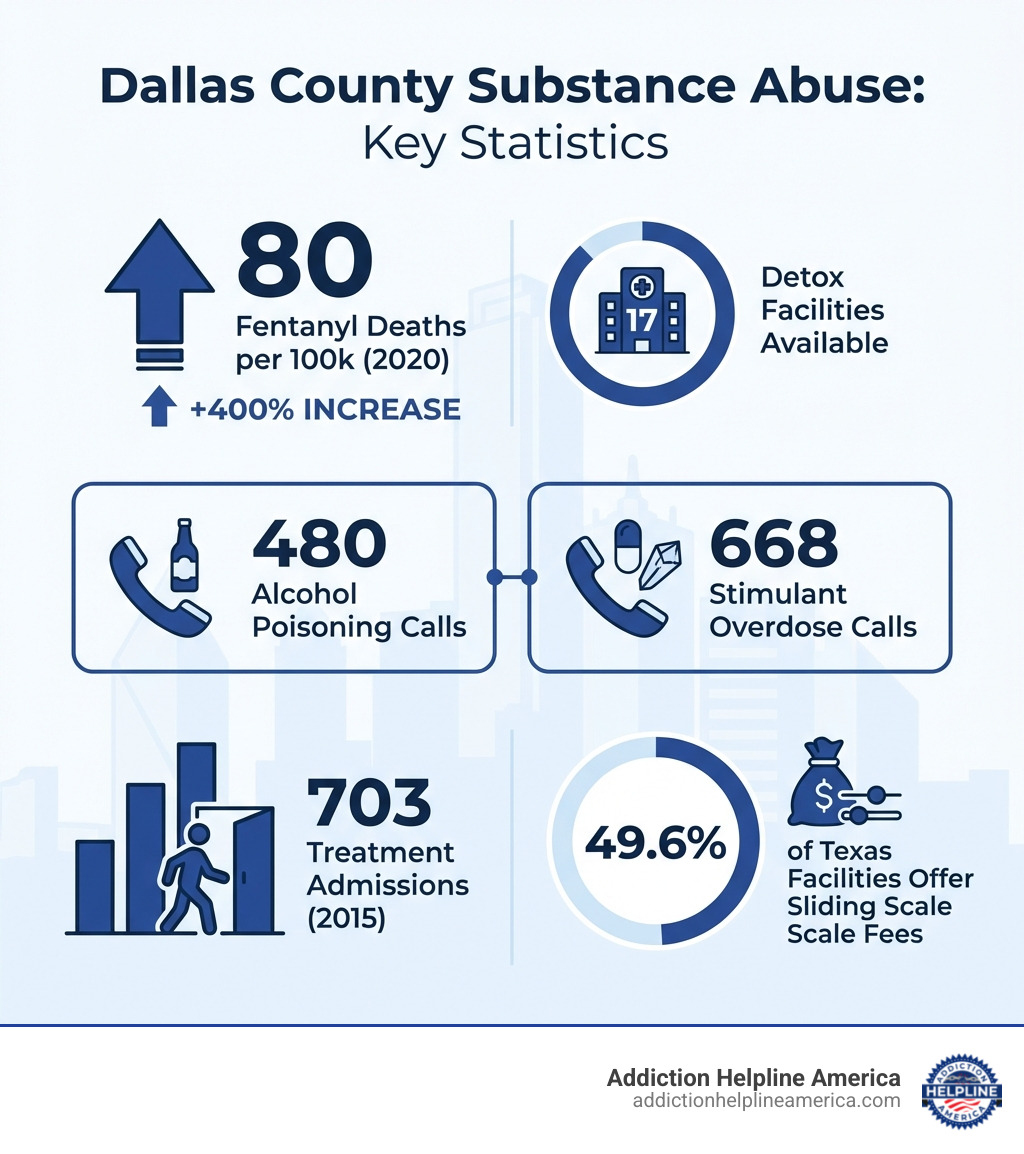
The need for effective addiction treatment in Dallas has never been more urgent. The Dallas-Fort Worth area saw an estimated 80 fentanyl-involved deaths per 100,000 people in 2020 – a staggering 400% increase from just one year earlier, according to data from the Texas Department of State Health Services (DSHS). This crisis affects thousands of families across Dallas County, where 703 people entered state-funded treatment centers in a single year, and hundreds of poison control calls for overdoses occur annually.
But here’s the hopeful truth: recovery is absolutely possible, and Dallas offers one of the most robust treatment ecosystems in Texas. With approximately 8.3% of the state’s 502 rehab centers located in Dallas County, as documented in the SAMHSA National Survey of Substance Abuse Treatment Services, you have access to diverse programs ranging from evidence-based medical treatment to holistic healing approaches. Many facilities accept major insurance providers like Aetna, Cigna, and United Healthcare, while others offer sliding scale fees or even free treatment through state funding.
The substances most commonly treated in Dallas facilities reflect national trends – from alcohol and marijuana to methamphetamine, cocaine, and the growing opioid crisis. In 2016 alone, Dallas County law enforcement seized 1,816 pounds of marijuana, 421 pounds of methamphetamine, 62 pounds of opiates, and 58 pounds of cocaine, as reported by the DEA’s High Intensity Drug Trafficking Areas Program. These numbers represent real people, real families, and real opportunities for healing.
At Addiction Helpline America, our trained specialists have helped thousands of individuals navigate the complex landscape of addiction treatment across the country. Our team connects people seeking drug rehab Dallas options with personalized treatment programs that match their unique needs, insurance coverage, and recovery goals through our free, confidential 24/7 helpline.
Understanding the Types of Addiction Treatment in Dallas
When starting on the journey to recovery, understanding the various types of addiction treatment available is crucial. Addiction is a complex disease, and no single approach works for everyone. That’s why Dallas offers a comprehensive continuum of care, ensuring that individuals can find a program custom to their specific needs. From initial detoxification to long-term aftercare, these services are designed to support a personalized path to healing and sustained sobriety. Our philosophy is that effective treatment begins with a deep understanding of the individual behind the struggle, honoring their unique story, needs, and goals.

The First Step: Medical Detoxification
The initial phase of recovery for many is medical detoxification. This critical step involves safely managing the physical withdrawal symptoms that occur when an individual stops using drugs or alcohol. In Dallas County, there are 17 drug and alcohol detox facilities dedicated to providing 24/7 medical supervision, according to the Substance Abuse and Mental Health Services Administration (SAMHSA). This ensures that withdrawal is not only as comfortable as possible but also safe, as some withdrawal symptoms can be severe or even life-threatening without professional oversight, a fact emphasized by the National Institute on Drug Abuse (NIDA).
During detox, medical professionals monitor vital signs, administer medications to alleviate discomfort, and address any immediate health concerns. It’s a foundational step, preparing the body and mind for the deeper therapeutic work that follows in a comprehensive drug rehab Dallas program.
Immersive Healing: Inpatient and Residential Programs
For those who need a complete change of environment and intensive support, inpatient and residential treatment programs in Dallas offer an immersive healing experience. These programs provide a structured, substance-free environment away from the triggers and stressors of daily life. Patients live at the facility, engaging in a rigorous schedule of therapy, counseling, and supportive activities.
The benefits of inpatient care are numerous:
- Structured Environment: A clear routine helps re-establish healthy habits and discipline.
- Intensive Therapy: Daily individual and group therapy sessions provide deep therapeutic work.
- Peer Support: Living alongside others in recovery fosters a strong sense of community and shared experience.
- Removing Triggers: Being away from familiar environments reduces the temptation and opportunity for relapse.
Many facilities in Dallas, like the Greenhouse Treatment Center, offer luxurious environments with amenities designed for comfort and healing, such as indoor pools and fitness centers. Others, like Findy Point Retreat, provide serene ranch settings that promote peace and reflection. These programs are ideal for individuals with severe addictions, co-occurring mental health disorders, or those who have struggled with outpatient treatment in the past.
Here’s a quick look at how inpatient and outpatient options compare:
| Feature | Inpatient/Residential Rehab | Outpatient Programs (PHP/IOP) |
|---|---|---|
| Living Situation | Resides at the facility 24/7 | Lives at home, attends sessions during the day/evening |
| Intensity | Highly structured, intensive daily therapy | Flexible, several hours of therapy per week |
| Supervision | Constant medical and therapeutic oversight | Regular therapeutic contact |
| Environment | Substance-free, removed from external triggers | Integrated into daily life, managing triggers |
| Ideal For | Severe addiction, dual diagnosis, unstable home environment | Moderate addiction, strong support system, work/school commitments |
Flexible Support: Outpatient Services for Drug Rehab Dallas
Outpatient services, including Partial Hospitalization Programs (PHP) and Intensive Outpatient Programs (IOP), offer a flexible yet structured approach to recovery. These programs allow individuals to receive significant therapeutic support while continuing to live at home, attend work or school, and care for their families. This balance makes them an excellent option for those with less severe addictions, a stable home environment, or as a step-down from inpatient care.
- Partial Hospitalization Programs (PHP): Often referred to as “day treatment,” PHP typically involves attending therapy and group sessions for several hours a day, five days a week. It offers a high level of care without the overnight stay.
- Intensive Outpatient Programs (IOP): IOP provides fewer hours of treatment per week than PHP, usually a few hours a day, three to five days a week. It focuses on individual and group counseling, relapse prevention, and developing coping skills.
Both PHP and IOP emphasize group counseling, individual therapy, and educational sessions. They are crucial for helping individuals integrate recovery strategies into their daily lives and build a strong support network within their community. If you’re exploring options further afield in Texas, you can find a rehab near Fort Worth that might suit your needs.
For more information on the wide range of treatment options across the state, you can explore more info about Texas Rehab Centers.
Navigating the Cost of Rehab and Insurance Coverage in Dallas
One of the most common concerns when seeking addiction treatment is the cost. It’s a natural worry, but it’s important to view rehab as a crucial investment in your health, your future, and your overall well-being. The good news is that numerous options exist to make drug rehab Dallas affordable and accessible. We understand that financial problems can seem daunting, which is why we are here to help you steer insurance verification and explore various payment options. Our confidential helpline is a free resource staffed by compassionate specialists, designed to connect you with programs that align with your financial situation.

Does Insurance Cover Drug Rehab in Dallas?
Thanks to federal laws like the Affordable Care Act (ACA) and the Mental Health Parity and Addiction Equity Act (MHPAEA), most health insurance plans are required to cover addiction treatment services as essential health benefits.
Major insurance providers commonly accepted at Dallas rehab centers include:
- Aetna
- Cigna
- United Healthcare
- TRICARE (for military personnel and their families)
- Veterans Affairs Community Care programs (for eligible veterans)
It’s important to verify your specific benefits, as coverage can vary depending on your plan and whether a facility is in-network or out-of-network. Our team can assist you with a free insurance verification check, helping you understand what your policy will cover at various drug rehab Dallas facilities.
Are There Free or Low-Cost Rehab Options?
Absolutely! If you don’t have private health insurance or cannot afford the out-of-pocket costs, there are still viable paths to treatment in Dallas. We firmly believe that financial limitations should never be a barrier to recovery.
Here are some options for free or low-cost addiction treatment:
- State-Funded Programs: Texas Health and Human Services commissions fund various substance abuse treatment centers that provide services at little to no cost for eligible residents. In one recent year, 703 people were admitted to Dallas County centers funded by the state.
- Sliding Scale Fees: Many facilities in Texas, including those in Dallas, offer a “sliding scale” fee structure. This means the cost of treatment is adjusted based on your income and ability to pay. In fact, 49.6% of Texas facilities offer a sliding scale fee for those who pay privately or do not have health insurance, based on data from SAMHSA’s National Survey of Substance Abuse Treatment Services.
- Non-Profit Organizations: Several non-profit organizations and community health centers in Dallas are dedicated to providing affordable addiction treatment.
- Faith-Based Centers: Some faith-based programs offer treatment at a very low cost or even free, relying on donations and community support.
Exploring these options can make quality addiction treatment within reach. If you’re looking for support in other parts of Texas, you can learn about support in Austin.
Finding the Right Fit: Diverse Treatment Approaches in Dallas
The path to recovery is as unique as the individual walking it. What works wonders for one person might not resonate with another, and that’s perfectly okay. Dallas’s diverse landscape of treatment centers means there’s no single path to recovery; instead, there are custom programs designed to meet individual needs. Whether you seek a highly structured, clinical environment or a more holistic, spiritually-focused approach, Dallas has options to help you find your footing.
Evidence-Based Therapies
The foundation of modern addiction treatment lies in evidence-based therapies (EBTs). These are therapeutic approaches that have been rigorously studied and proven effective through scientific research, as defined by organizations like the American Psychological Association (APA). Dallas rehabs widely incorporate EBTs to provide the most effective care:
- Cognitive Behavioral Therapy (CBT): This therapy helps individuals identify and change negative thought patterns and behaviors that contribute to substance use. It teaches coping skills for high-risk situations.
- Dialectical Behavior Therapy (DBT): Often used for individuals with co-occurring mental health conditions, DBT focuses on emotional regulation, distress tolerance, interpersonal effectiveness, and mindfulness.
- Motivational Interviewing (MI): A client-centered approach that helps individuals explore and resolve ambivalence about behavior change, encouraging them to find their own motivation for recovery.
These scientifically proven methods provide individuals with practical tools and strategies to manage cravings, prevent relapse, and build a healthier lifestyle.
Holistic and Alternative Methods
Beyond traditional clinical therapies, many drug rehab Dallas centers accept a holistic approach, recognizing that true healing involves the whole person – mind, body, and spirit. These methods complement evidence-based treatments by addressing overall well-being.
Examples of holistic and alternative methods include:
- Yoga and Meditation: Practices that promote mindfulness, stress reduction, and emotional balance.
- Art Therapy: Creative expression as a means to process emotions and trauma.
- Nutritional Counseling: Educating individuals on how healthy eating supports physical and mental recovery.
- Equine-Assisted Therapy: Engaging with horses to develop communication skills, build trust, and gain self-awareness, as offered by some centers like Findy Point Retreat.
Dallas Addiction Center, for instance, emphasizes “whole-person healing,” understanding that addiction impacts physical, emotional, mental, social, and spiritual aspects of life.
Faith-Based Recovery Programs
For many, spirituality and faith play a crucial role in their recovery journey. Dallas offers faith-based recovery programs that integrate spiritual guidance and principles into their treatment approach. These programs often combine clinical services with biblical discipleship, community, and worship.
An excellent example of the success seen in faith-based programs is Men of Nehemiah. This organization, which serves men in the Dallas community, has impressive outcomes, as reported by the organization itself:
- 87% of men who complete their 9-month program and continue in sober living aftercare have been drug and alcohol-free for a year.
- They boast a 100% job placement rate upon graduating their program.
- Over the past 12 years, Men of Nehemiah has served over 1,400 men.
These programs offer a powerful sense of community, discipline, and a framework for rebuilding lives based on spiritual principles, often including trauma-informed counseling and life skills training.
Dallas Recovery Resources: Support for Individuals and Families
Recovery is not a destination but a lifelong journey, and having a strong support system is vital for sustained sobriety. Dallas is rich with resources designed to provide ongoing community support, aftercare planning, and tools for long-term recovery, not just for individuals but for their families too. We understand that addiction impacts everyone in its orbit, and healing involves collective effort.
Local Support Groups and Meetings
Support groups offer a safe space for individuals to share experiences, gain insights, and build connections with others who understand their struggles. Dallas has a vibrant network of these groups:
- Dallas Area Narcotics Anonymous: A local chapter where individuals can meet with other drug users and work through the 12 steps of recovery.
- Dallas AA Meetings: The Dallas chapter of Alcoholics Anonymous, providing a similar 12-step program for those struggling with alcohol.
- Texas Al-Anon/Ala-teen for families: Crucial resources for the loved ones of those affected by alcohol abuse, with Ala-teen specifically for those under 20.
- North Texas Cocaine Anonymous: A support group specifically custom for individuals who abuse cocaine in the North Texas region.
- NAMI North Texas Support Groups: These groups offer family support, parent support, and recovery support, ensuring everyone touched by addiction can find help.
- Greater Dallas Council on Alcohol and Drug Abuse: Provides free HIV testing, case management, and behavioral interventions.
These groups are often free to attend and provide invaluable community, encouragement, and a sense of belonging, which are essential for navigating the challenges of long-term recovery.
How to Start the Admissions Process for a Drug Rehab Dallas
Taking the first step towards recovery can feel overwhelming, but we’re here to make the admissions process as smooth and supportive as possible. Our goal at Addiction Helpline America is to provide free, confidential, and personalized guidance every step of the way.
Here’s what starting the admissions process typically involves:
- Initial Phone Call: Reach out to our 24/7 helpline. This confidential conversation with a trained specialist allows us to understand your situation, needs, and preferences.
- Confidential Assessment: Our team will help facilitate a professional assessment, which may be conducted at a treatment facility. This clinical evaluation helps determine the most appropriate level of care and a personalized treatment plan, taking into account mental, emotional, social, and psychological states.
- Insurance and Payment Verification: We’ll assist you in verifying your insurance benefits or exploring low-cost and state-funded options. Treatment is not solely based on insurance coverage, and many facilities offer flexible payment plans or sliding scales.
- Travel Arrangements: If necessary, we can help coordinate logistics for getting to a drug rehab Dallas facility.
We know this is a big decision, and we’re committed to connecting you with the right program. To explore your options and get started, you can find the Best Drug Rehab Centers in Dallas Texas through our network.
Frequently Asked Questions about Dallas Drug and Alcohol Rehab
We understand you likely have many questions as you consider drug rehab Dallas options. Here, we address some of the most common inquiries to help clarify the path ahead.
What substances are most commonly treated in Dallas rehabs?
Dallas rehabs treat a wide spectrum of substance use disorders, reflecting both local trends and broader challenges. Based on various data points from credible sources:
- Alcohol: Remains a significant concern. In 2015, there were 480 poison control calls for alcohol poisoning in Dallas County, according to the Texas Poison Center Network. In 2016, 25.5% of 7th through 12th graders in 19 North Texas counties reported drinking alcohol.
- Fentanyl and other opioids: A rapidly growing crisis, with Dallas-Fort Worth seeing an estimated 80 fentanyl-involved deaths per 100,000 people in 2020, a 400% increase from 2019, as reported by the Texas Department of State Health Services.
- Methamphetamine: This stimulant is a persistent problem. 421 pounds of methamphetamine were seized in Dallas County in 2016, according to the DEA High Intensity Drug Trafficking Areas Program.
- Cocaine: Continues to be a substance of abuse, with 58 pounds of cocaine seized in Dallas County in 2016.
- Marijuana: Particularly prevalent among youth. Marijuana accounted for 65.4% of youth substance admissions in Dallas County in 2014, as noted in a Texas Health and Human Services report. 1,816 pounds of marijuana were seized in 2016.
- Prescription drugs: Abuse of prescription medications, including benzodiazepines and sedatives, is also commonly addressed.
- Stimulants and Street Drugs: In 2015, there were 668 poison control calls for stimulant and street drug overdoses in Dallas County.
Facilities in Dallas are equipped to address these and other substances, often with specialized programs for specific drug types or co-occurring mental health disorders.
How long does a typical rehab program in Dallas last?
The duration of a rehab program in Dallas is highly individualized and depends on several factors, including the severity of the addiction, the presence of co-occurring mental health conditions, and the specific needs of the person seeking treatment.
- Standard programs: Many programs typically last 30, 60, or 90 days. A 30-day program might be suitable for those with less severe addiction or as an initial step, while 60 or 90-day programs offer more intensive and sustained care, often leading to better long-term outcomes, according to the National Institute on Drug Abuse (NIDA).
- Long-term options: Some facilities, like Men of Nehemiah, offer longer programs, such as a 9-month program followed by sober living aftercare, which has shown significant success rates.
- Aftercare planning: Regardless of the initial program length, almost all effective drug rehab Dallas centers emphasize comprehensive aftercare planning. This can include continued outpatient therapy, participation in support groups like AA or NA, sober living arrangements, and ongoing individual counseling, all crucial for maintaining sobriety.
The best way to determine the ideal program length is through a thorough assessment by addiction professionals, which our helpline can help facilitate.
What are the benefits of choosing a rehab center in Dallas?
Choosing a rehab center in Dallas offers several distinct advantages for individuals seeking recovery:
- Large and Active Recovery Community: Dallas boasts a robust and diverse recovery community, providing extensive support networks through numerous AA, NA, and other support groups. This strong community can be vital for long-term sobriety.
- Wide Variety of Treatment Centers: As a major metropolitan area, Dallas offers a vast array of treatment options, from luxury facilities with extensive amenities to specialized programs for women, veterans, or those with co-occurring disorders. This ensures that almost anyone can find a program that fits their unique needs and preferences. With 17 detox facilities and a significant portion of Texas’s rehab centers, choice is abundant.
- Proximity to Major Airports: Dallas/Fort Worth International Airport (DFW) and Dallas Love Field (DAL) make the city easily accessible for individuals traveling from across Texas or other states, facilitating admission and family visits.
- Strong Local Economy for Post-Rehab Employment: Dallas has a thriving job market, which can be a significant benefit for individuals transitioning from rehab back into independent living. Programs like Men of Nehemiah even boast a 100% job placement rate for their graduates, highlighting the opportunities available.
- Comprehensive Care: Many Dallas centers offer a full continuum of care, from medical detox through inpatient, outpatient, and aftercare, ensuring seamless transitions and sustained support.
Your Path to Recovery in Dallas Starts Today
The journey to recovery from drug and alcohol addiction is profoundly personal, but you don’t have to walk it alone. Dallas, with its extensive network of treatment options, diverse therapeutic approaches, and robust support systems, offers a guide of hope for individuals and families seeking healing. From the urgent need to address the fentanyl crisis to the widespread availability of evidence-based and holistic treatments, the resources for drug rehab Dallas are here.
We’ve explored the various types of care, from medical detox and immersive inpatient programs to flexible outpatient services, and discussed how to steer the costs and insurance coverage. We’ve highlighted the vibrant recovery community and the success stories that prove recovery is not just a possibility, but a reality for thousands.
Taking the first step is often the hardest, but it’s the most courageous. Recovery is possible, and a life free from addiction is within your reach. At Addiction Helpline America, we are dedicated to providing free, confidential, personalized guidance to connect you with the right recovery program in Dallas or nationwide. Our experienced team of compassionate specialists understands the complexities of addiction and the treatment landscape, and we are available 24/7 to help you find a program that meets your unique needs and circumstances.
Don’t let another day pass in the shadow of addiction. Reach out today, and let us help you begin your journey to a healthier, happier life. Begin your journey at a Texas rehab center with our support.