
Understanding the True Cost of Addiction Treatment in Los Angeles
Are There Any Hidden Fees in Los Angeles Drug Rehab Facilities? Yes, hidden fees can exist in some Los Angeles drug rehab facilities. These may include:
- Intake or assessment fees not disclosed upfront
- Prescription medications billed separately from the program cost
- Laboratory tests or medical appointments with outside providers
- Supplemental therapies like art therapy, acupuncture, or fitness classes
- Special dietary requests or upgraded meal plans
- Administrative charges for insurance processing or billing
- Aftercare program costs that extend beyond your initial stay
The good news? You can avoid these surprises by asking detailed questions before admission, requesting itemized cost breakdowns in writing, and verifying exactly what your insurance covers.
When seeking help for a substance use disorder in Los Angeles, financial confusion is the last thing you need. The average cost of drug rehab is $13,475, but this varies widely. For example, a 13-week residential stay in California can average $56,654, while 30 days of outpatient care costs around $2,365. Unfortunately, cost is a major barrier to treatment. The NIH reports that financial concerns prevent many from getting help, with only 25% of those needing treatment receiving it. In Los Angeles, luxury rehabs can exceed $30,000 per month, but standard programs often range from $5,000 to $10,000 monthly. Affordable and free options also exist through state-funded and nonprofit organizations.
Understanding what you’re paying for is essential. While many facilities are transparent, some may not disclose extra charges until after admission. This guide will help you identify potential hidden fees, understand cost structures, and find financial resources for quality care in Los Angeles.
At Addiction Helpline America, we provide free and confidential guidance to individuals and families navigating addiction treatment, including helping you understand Are There Any Hidden Fees in Los Angeles Drug Rehab Facilities? and how to find transparent, affordable care. Our experienced team connects you with vetted treatment options and helps you verify costs before admission, so you can focus on recovery without financial surprises.
What Are the Typical Costs of Drug Rehab in Los Angeles?
The cost of drug rehab in Los Angeles is highly variable, influenced by the level of care, program duration, and facility amenities. Due to the city’s high cost of living, treatment here is often more expensive. A 30-day inpatient program can range from $6,000 to $20,000, with 60- or 90-day programs costing $12,000 to $60,000. Flexible outpatient programs might cost $5,000 to $10,000 for three months.
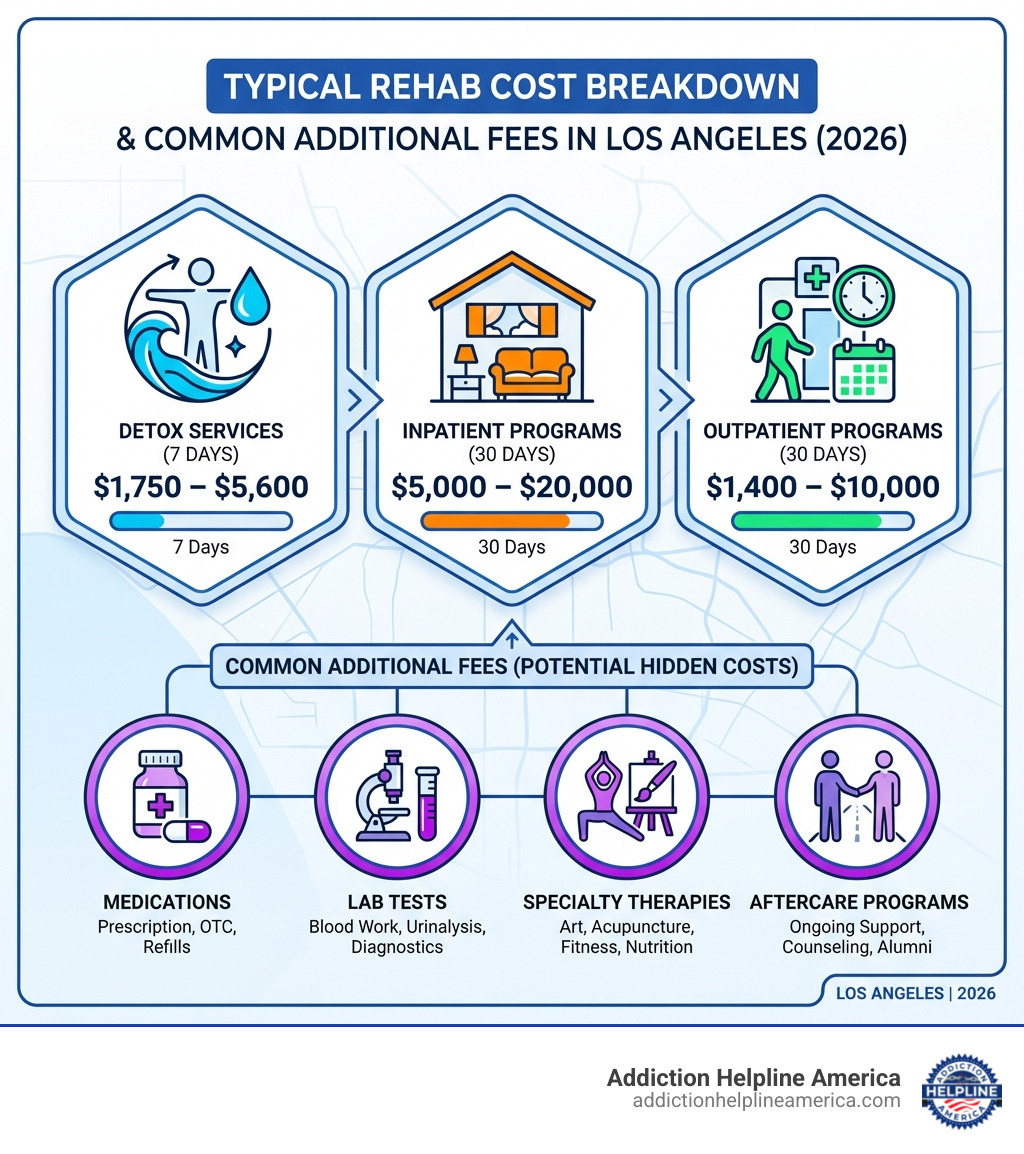
Medical detox, the first step, has its own costs. Outpatient detox ranges from $1,000 to $1,500, while supervised inpatient detox can be $250 to $800 per day, making a 7-day program $1,750 to $5,600.
These figures represent broad averages, and actual costs can fluctuate. Always inquire directly with facilities for specific pricing. For more information, explore our Detox Programs, Treatment: Residential, and Outpatient Rehab Guide.

Cost Breakdown by Level of Care
Understanding the different levels of care is crucial when evaluating costs, as each offers a distinct approach and price tag:
- Detoxification: The initial, medically supervised phase to clear substances from the body. Costs range from $1,000-$1,500 for outpatient care to $1,750-$5,600 for a 7-day inpatient program.
- Inpatient/Residential Care: Provides 24/7 supervision and intensive therapy in a live-in, structured environment. A 30-day program in Los Angeles can range from $5,000 to $20,000.
- Partial Hospitalization Program (PHP): Intensive treatment for 20+ hours per week. Clients live at home or in sober living. A 30-day program averages around $12,000.
- Intensive Outpatient Program (IOP): Structured care with fewer hours than PHP, allowing for work or school. A 30-day private program can average $17,250.
- Standard Outpatient: The least intensive option, with less than 9 hours of therapy per week. A 30-day program can cost between $1,400 and $10,000.
- Medication-Assisted Treatment (MAT): Combines medication with therapy. A year of methadone treatment for opioid use disorder can cost around $4,700, with inflation-adjusted figures ranging from $5,897 to $18,468.
An assessment is needed to determine the most appropriate and cost-effective level of care. Our Drug and Alcohol Assessment Services can help guide this decision.
What’s Usually Included in the Base Price?
When a facility quotes a “base price,” it typically covers the core components of treatment. While specifics vary, you can generally expect these services to be included:
- Room and board: Accommodation and essential living facilities.
- Group therapy sessions: Peer support and shared learning as a core part of treatment.
- Individual counseling: One-on-one sessions with a therapist for personalized care.
- Program materials: Workbooks, handouts, and other educational resources.
- Basic meals: Nutritious meals and snacks, with accommodation for most dietary needs.
- Facility amenities: Access to common areas, recreational spaces, and basic wellness activities.
- Aftercare planning: Help developing a plan for continued support after leaving the program.
- Family services: Some programs include family and couples therapy sessions or workshops at no extra cost.
“All-inclusive” can mean different things. Always clarify what is explicitly covered and what might cost extra.
Are There Any Hidden Fees in Los Angeles Drug Rehab Facilities?
The concern about hidden fees is valid when exploring addiction treatment. While reputable Los Angeles facilities aim for transparency, some billing practices can lead to unexpected costs. Being proactive and informed is key. We connect you with facilities committed to financial transparency.
Unexpected charges can arise from services that are necessary but not clearly communicated as separate from the base cost. These might appear during intake, during your stay, or after discharge. Understanding where these charges originate is your first line of defense. For guidance, our Choosing the Right Rehab Facility resource can help.

What Common ‘Hidden’ Fees Exist in Los Angeles Drug Rehab Facilities?
While the initial program cost might seem straightforward, several common “hidden” fees can emerge. These are often legitimate costs but might not be detailed in the initial quote:
- Intake/Assessment fees: A fee for the initial evaluation, which may not be included in the advertised program price.
- Special lab testing: Specialized lab tests beyond basic screenings might be billed separately.
- Prescription medications: The cost of specific prescription drugs (like those for MAT) may be an extra charge if not covered by insurance.
- Outside medical appointments: Seeing outside specialists (dentists, psychiatrists) and the related transportation may cost extra.
- Supplemental therapies: Holistic or alternative therapies like art therapy, equine therapy, massage, or specialized fitness classes might be add-ons.
- Special dietary requests: Gourmet meals or extensive custom meal plans beyond standard offerings might incur extra charges.
- Administrative charges: Fees for processing paperwork, insurance claims, or billing for transfers.
- Aftercare program costs: Extended aftercare programs, sober living, or ongoing therapy post-discharge might have separate fees.
- Private room upgrades: Opting for a private room instead of a shared one will increase the cost, as noted by NCBI research.
These fees are not always intentionally “hidden” but can be overlooked if not explicitly discussed.
How Can I Confirm There Are No Hidden Fees in a Los Angeles Drug Rehab Facility?
To avoid surprises, proactive communication and thorough documentation are your best tools. Here’s how to minimize the risk of hidden fees:
- Request a written, itemized cost breakdown: Get a detailed document listing all services and costs, separating included items from potential add-ons. Do not rely on verbal promises.
- Ask about services not included: Specifically inquire about common extras: “Are medications included? What about lab tests? Is transportation to outside appointments covered? Are there fees for specialized therapies?”
- Verify insurance coverage in detail: Understand your deductible, co-pays, and out-of-pocket maximum. Call your insurer and have the rehab’s admissions team confirm your benefits in writing.
- Read contracts carefully: Review all terms, especially clauses on extra charges, cancellation policies, and what happens if you leave early.
- Speak with an admissions coordinator: A reputable facility will answer your questions clearly. Vague answers or feeling pressured is a red flag.
- Ask about billing for external services: Clarify how services from external professionals or labs are billed—whether the facility handles it or you will receive separate bills.
- Inquire about “upgrade” options: If a facility mentions luxury amenities or private rooms, ask about the cost difference.
What Factors Influence the Price of LA Addiction Treatment?
Beyond the level of care, several other factors influence the cost of addiction treatment in Los Angeles. Understanding these can help you find a facility that aligns with your needs and budget.
- Luxury vs. standard facilities: This is a major cost factor. Luxury rehabs offer high-end amenities and can cost tens of thousands per month, with some quoting rates between $45,000 and $60,000. Standard facilities provide excellent care by focusing on essential treatment components at a lower price.
- Location within Los Angeles: The city’s high cost of living means higher prices. Rehabs in upscale areas like Malibu are among the most expensive in the U.S., and even within LA, prime locations cost more.
- Program duration: The longer the program, the higher the total cost. However, longer stays might come with a slightly lower daily rate. A 90-day program will cost more than a 30-day one.
- Staff-to-patient ratio: A lower ratio means more individual attention but also higher operational costs, resulting in a higher price for the client.
- Specialized treatment tracks: Facilities offering specialized programs for dual diagnosis, executives, or trauma-informed therapies may cost more due to the expertise required. Our Dual Diagnosis Rehabs Complete Guide provides more on this specialized care.
Amenities and Accommodations
The comfort and services beyond basic treatment play a large role in pricing. Los Angeles rehabs can offer a range of amenities:
- Private vs. shared rooms: Private rooms cost more but offer solitude. Shared rooms are more affordable and can boost recovery success through peer connection, as supported by peer support benefits research.
- Quality of meals: Gourmet chefs, organic menus, and extensive custom diets (beyond medical needs) increase the price.
- Fitness and wellness amenities: Access to state-of-the-art gyms, pools, yoga studios, and spa services significantly adds to the cost.
- Holistic services: Therapies like acupuncture, massage, and art therapy are often part of more expensive, comprehensive programs.
- Executive programs: Custom for professionals, these often include private suites and technology access for work, which adds to the cost.
Weigh these amenities against your budget and treatment needs. A comfortable environment can aid recovery, but it’s not always essential.
Program Length and Intensity
The duration and intensity of a rehab program are paramount cost drivers. A longer stay is a larger financial investment but often correlates with better long-term outcomes.
- 30-day vs. 60-day vs. 90-day programs: Longer programs are often recommended for sustained recovery. While the total cost is higher for 60- or 90-day stays, the daily rate may be lower.
- Financial implications of longer stays: Though more expensive, longer programs allow for deeper therapeutic work and skill development, building a stronger foundation for sobriety.
- Step-down levels of care: Transitioning from intensive inpatient care to a less restrictive outpatient setting can be more cost-effective than a prolonged inpatient stay while still providing necessary support.
The choice of program length should be based on clinical recommendations, not solely on cost. Investing adequate time in treatment is an investment in a healthier future. Learn more about sustained care on our Long Term Recovery page.
How Can I Afford Rehab and Find Financial Assistance in Los Angeles?
The good news is that cost should not be an impossible barrier to treatment in Los Angeles. Many resources are available to help individuals and families afford the care they need. We understand navigating these options can be overwhelming, which is why Addiction Helpline America offers free, confidential guidance.
From leveraging insurance to exploring state-funded programs, there are multiple avenues to make treatment accessible. You don’t have to face this financial challenge alone. For low-cost options, our Free Drug Treatment Centers Guide is a valuable resource.
Using Insurance and Public Programs
Health insurance is often the primary way to cover addiction treatment costs. The Affordable Care Act (ACA) and the Mental Health Parity and Addiction Equity Act (MHPAEA) require most health plans to cover substance use disorder treatment.
- Verifying your benefits: As a first step, contact your insurance provider to understand your specific coverage for addiction treatment, including deductibles, co-pays, and out-of-pocket maximums. Most reputable rehabs will also help you verify these benefits.
- Private insurance: If you have private health insurance, it can significantly reduce your out-of-pocket costs. Many LA facilities accept various private PPO plans.
- Medicaid (Medi-Cal): California’s Medicaid program, Medi-Cal, covers low-income individuals and families. It provides behavioral health benefits that can cover addiction treatment, making it a vital resource in Los Angeles.
- Medicare: This federal program primarily covers individuals 65 or older, or those with certain disabilities. If you qualify, Medicare can help cover parts of your addiction treatment costs.
If you need to enroll in health insurance, visit Healthcare.gov. To check your Medicare eligibility, you can apply on Medicare.gov.
Other Financial Resources
Even if your insurance doesn’t cover everything, other options exist:
- Rehab financing and loans: Healthcare financing companies offer loans for treatment. Personal loans or credit cards are also options, but use them cautiously due to interest rates.
- Employee Assistance Programs (EAPs): Many employers offer EAPs, which provide confidential assessments, counseling, and referrals, sometimes with financial assistance.
- Scholarships: Organizations like the Sobriety Foundation offer scholarship programs and many rehabs offer their own scholarships or grants to help cover costs.
- Sliding scale fees: Many non-profit or community-based centers offer fees adjusted based on your income.
- State-funded programs: Los Angeles has state and county-funded programs that offer free or reduced-cost treatment for those who qualify, though they may have waiting lists.
- Community support groups: While not formal treatment, groups like Alcoholics Anonymous (A.A.) and Narcotics Anonymous (N.A.) offer free support and resources. You can find free support groups like AA or find a meeting center for NA near you.
- SAMHSA’s National Helpline: SAMHSA offers a helpline and online locator to help you find government treatment options via SAMHSA or by calling 1-800-662-4357.
- Crowdfunding and family support: Platforms like GoFundMe can help raise funds, and family support is often crucial.
Is Treatment Worth It? Comparing Rehab Costs to the Long-Term Cost of Addiction
When considering the cost of rehab in Los Angeles, it’s crucial to view it as a vital long-term investment. The costs of untreated addiction—both financial and personal—far outweigh the price of getting help.
- Financial drain of substance use: Addiction is incredibly expensive. A daily 12-pack of beer can cost over $3,000 annually, while a heroin habit can cost tens of thousands. This doesn’t include lost wages or legal fees.
- Legal fees and DUIs: Addiction often leads to legal troubles like DUIs and arrests, costing thousands in fees and fines and impacting financial stability and freedom.
- Lost income and career opportunities: Substance use disorders frequently lead to job loss, underemployment, and diminished career prospects, representing a staggering financial loss over a lifetime.
- Healthcare costs from addiction-related illnesses: Addiction severely impacts health, leading to chronic illnesses, ER visits, and expensive medical bills for issues like heart, liver, and brain damage. The cost of heroin addiction, for example, includes significant healthcare expenses. Our Heroin Addiction Help Complete Guide further elaborates on the impact.
- The priceless value of health and relationships: Beyond money, addiction damages relationships, mental well-being, and quality of life. The emotional suffering is immeasurable. Rehab offers a path to reclaim health, stability, and meaningful connections.
Research indicates that for every dollar spent on addiction treatment, $12 is saved in areas like healthcare and drug-related crime. This highlights that treatment is a societal benefit, not just an individual one. While the initial cost of rehab might seem daunting, it’s an investment in a future free from the escalating costs of addiction.
Conclusion
Navigating addiction treatment in Los Angeles can feel complex, particularly regarding costs and hidden fees. We hope you now feel more informed. While Are There Any Hidden Fees in Los Angeles Drug Rehab Facilities? is a valid question, they are avoidable through diligent inquiry and clear communication.
Rehab costs vary by level of care, duration, and amenities. While core services are usually included in the base price, transparency is key. Protect yourself from surprises by requesting itemized cost breakdowns, verifying insurance, and reading contracts carefully.
Crucially, addiction treatment is an invaluable investment. The long-term costs of untreated addiction—financial, legal, health, and emotional—far outweigh the price of rehab. Numerous resources, from private and public insurance to scholarships and state-funded programs, can make treatment affordable.
At Addiction Helpline America, our mission is to provide free, confidential, and personalized guidance to find the right recovery program. We connect you with vetted treatment centers in Los Angeles and help you understand all costs, ensuring you can start your healing journey with clarity and confidence. Don’t let financial concerns stop you from seeking a healthier future.
Ready to take the next step? Let us help you find a transparent and affordable rehab that meets your needs. Find vetted Los Angeles rehab centers now.