
Understanding Your Options for Substance Abuse Recovery
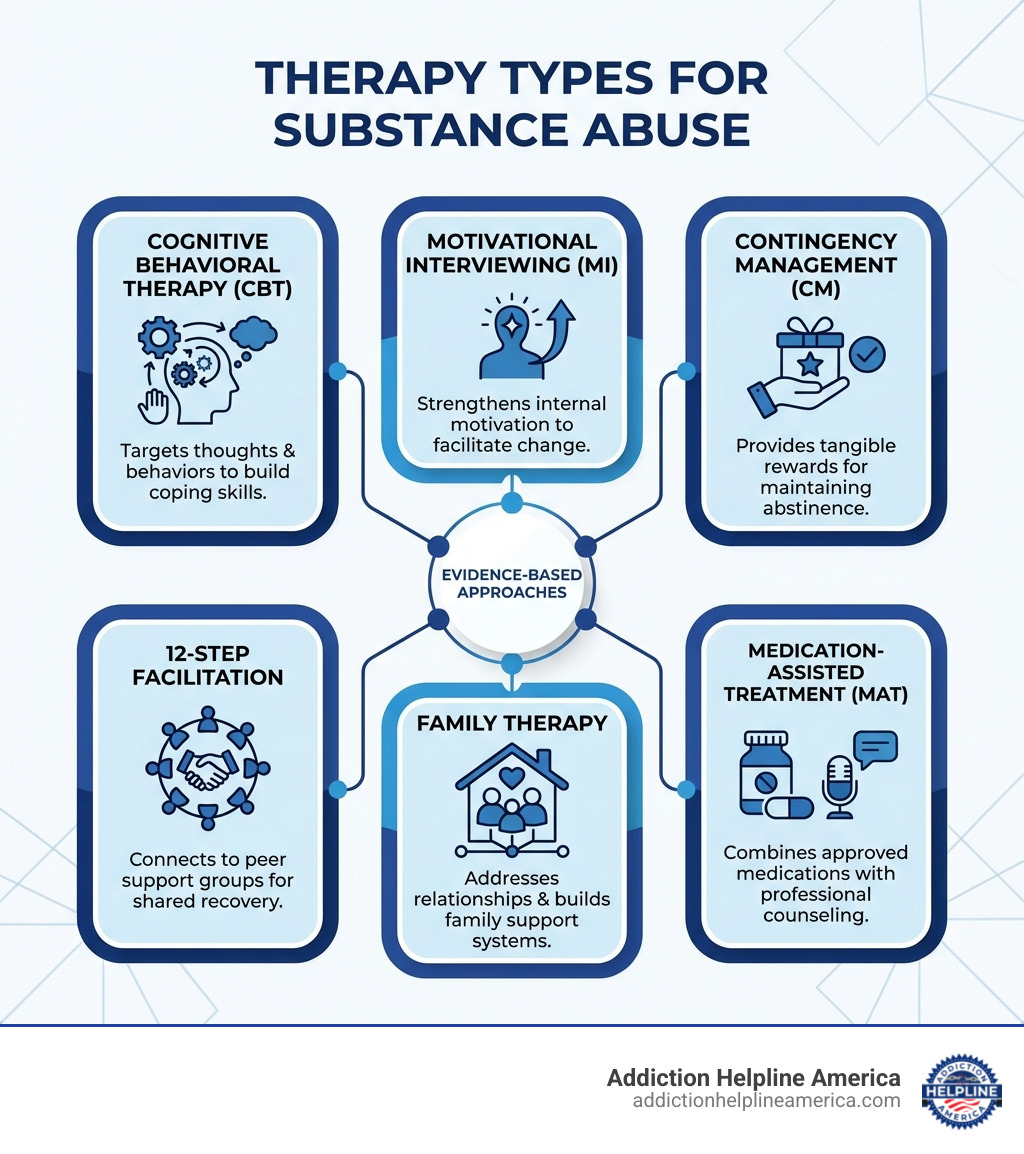
Therapy Types for Substance Abuse include several evidence-based approaches that have helped millions achieve lasting recovery:
| Therapy Type | What It Does |
|---|---|
| Cognitive Behavioral Therapy (CBT) | Changes negative thought patterns and builds coping skills |
| Motivational Interviewing (MI) | Resolves ambivalence and strengthens internal motivation to change |
| Contingency Management (CM) | Rewards abstinence with tangible incentives |
| 12-Step Facilitation | Guides participation in peer support groups like AA/NA |
| Family Therapy | Addresses relationship dynamics and builds family support |
| Medication-Assisted Treatment (MAT) | Combines FDA-approved medications with counseling |
If you or someone you love is struggling with substance use, you’re not alone. In 2022, more than one in six Americans aged 12 or older experienced a substance use disorder (SUD). The good news? SUD is a treatable medical condition, not a moral failing or character flaw.
Substance use disorder affects the brain’s reward system, leading to compulsive use despite harmful consequences. Common signs include strong cravings, failed attempts to cut down, neglecting responsibilities, continuing use despite problems, and developing tolerance or withdrawal symptoms. These symptoms vary by substance but all point to one truth: professional help makes a profound difference.
The path to recovery isn’t one-size-fits-all. Research consistently shows that combining different therapy approaches—custom to your unique situation—produces the strongest outcomes. Whether you’re dealing with alcohol, opioids, stimulants, or other substances, effective treatment options exist. Many are covered by insurance, and free, confidential resources like Addiction Helpline America are available 24/7 to guide you toward the right support.
At Addiction Helpline America, we’ve spent years connecting individuals and families with effective Therapy Types for Substance Abuse that match their specific needs and circumstances. Our team understands that seeking help is both brave and urgent, which is why we provide immediate, compassionate guidance to anyone ready to take that first step toward recovery.
Core Evidence-Based Therapy Types for Substance Abuse
When we talk about effective recovery from substance use disorder, we’re really talking about a collection of scientifically-backed strategies designed to help individuals regain control of their lives. These are known as evidence-based therapies, and they form the bedrock of successful addiction treatment. Behavioral therapy, in particular, stands out as one of the most common and effective forms of addiction treatment. It encompasses a wide array of techniques aimed at changing behaviors, thoughts, and emotions associated with substance use.
Psychosocial treatments are considered essential components of any comprehensive substance use disorder treatment program. These interventions, whether delivered individually or in a group setting, focus on helping individuals develop new coping mechanisms, improve relationships, and prevent relapse. The research is clear: any form of psychological treatment leads to better outcomes compared to no treatment at all. For a deeper dive into the scientific support for these interventions, you can explore the scientific research on psychosocial interventions.
Let’s explore some of the most impactful Therapy Types for Substance Abuse.

How Cognitive Behavioral Therapy (CBT) Reshapes Recovery
Imagine your thoughts, feelings, and behaviors as a tangled knot. Cognitive Behavioral Therapy (CBT) is like learning how to untangle that knot. It operates on a simple yet profound principle: our thoughts influence our emotions, which in turn influence our behaviors. For someone struggling with substance abuse, this means identifying and challenging the negative, incorrect, or unhelpful thoughts and beliefs that often lead to substance use.
CBT aims to equip individuals with practical strategies to steer the complexities of daily life without relying on substances. This involves:
- Identifying Triggers: Learning to recognize the people, places, things, or emotions that spark cravings or the urge to use.
- Developing Coping Skills: Building a toolkit of healthy responses to stress, cravings, and difficult situations. This might include relaxation techniques, problem-solving skills, or communication strategies.
- Relapse Prevention Strategies: Understanding that relapse is a common part of the recovery journey, and developing proactive plans to manage high-risk situations and prevent a lapse from becoming a full-blown relapse. Research on Relapse Prevention (RP) indicates it significantly improves overall psychosocial adjustment, even if its direct effect on reducing substance use is smaller.
CBT is a structured and goal-oriented approach, often rated as one of the most effective for individuals with drug and alcohol problems. Its benefits can extend far beyond the treatment period, providing lasting tools for sobriety. For more information on this powerful approach, you can dig into more info on CBT for addiction.
What is Contingency Management (CM) and How Does It Reinforce Sobriety?
Who doesn’t love a little reward for a job well done? Contingency Management (CM) takes this idea and applies it to addiction recovery, using positive reinforcement to encourage abstinence and healthy behaviors. It’s a behavioral therapy rooted in the principles of operant conditioning, where desired actions are rewarded to make them more likely to occur.
For individuals in recovery, this often translates to receiving tangible rewards—like vouchers for goods and services or small prizes—for achieving specific goals, most commonly providing negative drug tests. CM is designed to help overcome “delay discounting,” the tendency to prioritize immediate gratification (from substance use) over future, larger rewards (like long-term health and sobriety).
The impact of CM is significant: studies show it can increase abstinence as well as keep people in treatment. In fact, one meta-analysis found that CM demonstrated a 22% greater likelihood of abstinence compared to other psychosocial interventions. It’s considered one of the most effective psychosocial interventions for reducing substance use, particularly for opioids, tobacco, and polysubstance use. CM programs promote healthy behaviors by creating a clear, immediate link between positive actions and positive outcomes.
The Role of Motivational Interviewing (MI) and Motivational Improvement Therapy (MET)
Sometimes, the biggest hurdle to recovery isn’t knowing what to do, but wanting to do it. That’s where Motivational Interviewing (MI) and Motivational Improvement Therapy (MET) shine. These approaches are designed to meet individuals where they are, helping them explore and resolve their ambivalence about changing their substance use behaviors.
Motivational Interviewing (MI) is a collaborative, conversational style of therapy focused on drawing out a person’s own reasons for change. Instead of confronting or lecturing, an MI therapist acts as a guide, reflecting the individual’s statements and gently exploring discrepancies between their current behavior and their values or goals. This approach empowers individuals by strengthening their internal motivation, making them the architects of their own recovery. As research suggests, MI is much more effective than attempts to educate or shame patients into changing. It has shown particular effectiveness in reducing hazardous alcohol consumption, especially in the short-term and for younger individuals with low dependence.
Motivational Improvement Therapy (MET) is a more structured approach that uses MI principles over a series of sessions. It aims to evoke rapid, internally motivated change and help individuals remain engaged in treatment. Both MI and MET recognize that true change comes from within, fostering a sense of autonomy and self-efficacy that is crucial for lasting sobriety.
12-Step Facilitation and Peer Support Groups
Recovery is a journey best traveled with support, and few resources offer as much communal strength as 12-Step programs and other peer support groups. Rooted in the principles of Alcoholics Anonymous (AA), these groups provide a framework for recovery through shared experiences, mutual support, and a structured path to personal growth.
12-Step Facilitation (TSF) is a therapeutic approach that guides individuals towards active participation in 12-Step programs like AA and Narcotics Anonymous (NA). TSF helps individuals understand the core principles of the 12 Steps—such as acceptance of addiction as a disease, surrender to a higher power (as understood by the individual), and active involvement in the community—and encourages them to engage with these resources as a vital part of their recovery. Research consistently supports the efficacy of 12-Step facilitation therapy and 12-Step groups in helping people maintain recovery.
Peer support groups are invaluable because they offer:
- Shared Experience: Connecting with others who understand the struggles of addiction reduces feelings of isolation and shame.
- Mentorship: Sponsors, who are further along in their recovery, provide guidance and support.
- Accountability: The group setting fosters a sense of responsibility to oneself and others.
- Practical Strategies: Members share coping mechanisms and advice for navigating daily challenges.
These groups are often peer-led, available at no cost, and emphasize that addiction is a treatable disease. In fact, up to 60-75% of addiction clinics integrate 12-Step principles into their therapies.
Common peer support group types include:
- Alcoholics Anonymous (AA)
- Narcotics Anonymous (NA)
- Cocaine Anonymous (CA)
- SMART Recovery (Self-Management And Recovery Training)
- Women For Sobriety (WFS)
Building a Comprehensive and Individualized Treatment Plan
We’ve learned that there’s no single “best” therapy. Just like we all have unique fingerprints, each person’s journey with substance use is distinct. This means that the most effective treatment plans are those that are highly individualized, addressing a person’s unique needs, circumstances, and preferences. A cookie-cutter approach simply won’t cut it when it comes to something as complex as addiction.
Often, the most successful recovery stories involve a combination of therapies. Integrating different Therapy Types for Substance Abuse allows us to tackle the various facets of addiction—from underlying psychological issues to behavioral patterns and social triggers. This comprehensive approach is particularly crucial when dealing with co-occurring disorders, where individuals might be struggling with both a substance use disorder and a mental health condition like depression, anxiety, or PTSD. These patients, while often the most challenging to treat, benefit immensely from integrated care that addresses all their needs simultaneously.
An important factor in treatment success is the “therapeutic alliance”—the relationship between the client and their therapist. A strong, trusting, and open relationship with your treatment team is one of the strongest predictors for positive addiction recovery outcomes. It’s about feeling heard, understood, and genuinely supported on your path to healing.

What are the Different Levels of Care in Addiction Treatment?
Addiction treatment isn’t a single event; it’s a continuum of care, offering different levels of intensity and support to match an individual’s evolving needs. Think of it like a staircase, with each step providing a different level of supervision and therapeutic intervention.
-
Medical Detoxification (Detox): This is the crucial first step for many. Detox is the initial, supervised period of safely stopping substance use. Under medical supervision, withdrawal symptoms are managed to ensure comfort and safety. However, detox alone is not a treatment for addiction; it’s merely the first phase, preparing an individual for further therapy.
-
Inpatient/Residential Treatment: For those requiring a highly structured and supportive environment, inpatient or residential programs offer 24/7 care. Individuals live at a facility and participate in intensive therapy, group sessions, and educational programs. This level of care provides a safe space away from triggers and allows for deep immersion in the recovery process.
-
Partial Hospitalization Programs (PHP): Often called “day treatment,” PHP offers intensive therapy for several hours a day, multiple days a week, but individuals return home or to a sober living environment in the evenings. It provides a high level of support while allowing for some reintegration into daily life.
-
Intensive Outpatient Programs (IOP): IOPs offer a step down from PHP, with fewer hours of therapy per week. They are ideal for individuals who need significant support but can manage responsibilities like work or school.
-
Standard Outpatient Programs: This is the least intensive level of care, typically involving weekly therapy sessions. It’s suitable for individuals with a strong support system, who have completed more intensive treatment, or who are in the early stages of a mild SUD.
How Medication-Assisted Treatment (MAT) Supports Recovery
For many, particularly those with opioid or alcohol use disorders, medication can be a powerful ally in the recovery journey. Medication-Assisted Treatment (MAT) combines FDA-approved medications with counseling and behavioral therapies to provide a comprehensive approach to recovery. It’s not about swapping one addiction for another; it’s about using science to stabilize the brain, reduce cravings, and prevent relapse, allowing individuals to fully engage in their therapy.
MAT can significantly help reduce withdrawal symptoms, alleviate cravings, deter substance use, and ultimately help people avoid relapse.
-
For Opioid Use Disorder (OUD): Medications like buprenorphine, methadone, and naltrexone are game-changers. Opioid agonist therapy (OAT), using buprenorphine or methadone, helps normalize brain chemistry, block the euphoric effects of opioids, and reduce cravings without producing the same high. Naltrexone, on the other hand, blocks opioid receptors, preventing any opioid from having an effect. These medications are effective in helping people reduce illegal opioid use, stay in treatment longer, and lower the risk of opioid-involved overdose. If you’re looking for support with OUD, you can find a Buprenorphine provider near you.
-
For Alcohol Use Disorder (AUD): Medications such as naltrexone can help reduce alcohol cravings, while acamprosate can help reduce alcohol withdrawal symptoms and maintain abstinence. Disulfiram is another medication that produces unpleasant effects when alcohol is consumed, discouraging drinking.
When prescribed and monitored by medical professionals, MAT is a safe and effective component of a holistic treatment plan, supporting long-term recovery and well-being.
Exploring Holistic and Alternative Therapy Types for Substance Abuse
While evidence-based behavioral therapies and MAT form the core of addiction treatment, many individuals find immense benefit in complementary and alternative therapies. These approaches are typically designed to complement traditional treatment, not replace it. Their goal is to treat the “whole person”—mind, body, and spirit—addressing overall wellness and fostering a balanced lifestyle conducive to recovery.
These therapies can help reduce stress, improve physical health, improve emotional regulation, and provide new avenues for self-findy and expression. Some popular holistic and alternative approaches include:
- Yoga and Meditation: Practices that promote mindfulness, reduce stress, and improve physical and mental well-being, helping individuals cope with cravings and emotional challenges.
- Art and Music Therapy: Creative outlets that allow individuals to express feelings and thoughts that might be difficult to verbalize, process trauma, and foster self-awareness. Expressive groups allow clients to explore their inner world through various creative activities.
- Adventure Therapy: Engaging in outdoor activities and challenges to build self-esteem, improve problem-solving skills, and foster teamwork and trust.
- Nutritional Counseling: Addressing dietary imbalances that often accompany substance use, improving physical health, and boosting energy levels.
These therapies add richness to the recovery journey, helping individuals reconnect with themselves and develop healthy passions outside of substance use.
How to Find and Pay for Addiction Therapy
Navigating addiction treatment can feel overwhelming, but finding the right support is a critical step towards healing. We understand you might have many questions: “Where do I start?”, “What kind of therapy is right for me?”, “How will I pay for this?”. We are here to help you through this process.
When you’re looking for help, it’s wise to ask the right questions and verify credentials. Look for programs that employ licensed professionals and use evidence-based practices. A great starting point is to reach out to a trusted, free resource like Addiction Helpline America.
Finding the Right Therapy Types for Substance Abuse and Treatment Programs
Finding the appropriate Therapy Types for Substance Abuse and a suitable treatment program requires careful consideration. Because treatment should be individualized, what works for one person might not be the best fit for another.
We recommend using resources like the Addiction Helpline America Treatment Locator to begin your search. This tool can help you identify qualified treatment centers nationwide. You can also contact us directly at Addiction Helpline America, where our trained admissions navigators provide free, confidential, and personalized guidance. We connect individuals to a vast network of addiction and mental health treatment centers, helping you find the right recovery program that aligns with your clinical needs, personal preferences, and unique circumstances.
Don’t hesitate to ask for referrals from your healthcare provider or other trusted professionals. These individuals often have insights into local resources and can point you toward reputable programs. Our goal is to help you find the help you need, and we are available 24/7.
Are Addiction Therapy Services Covered by Insurance?
A common concern for many is the cost of addiction treatment. The good news is that most insurance carriers in the United States do cover addiction treatment, thanks to key legislation like the Affordable Care Act (ACA) and the Mental Health Parity and Addiction Equity Act (MHPAEA).
The MHPAEA generally requires that most individual and small employer health insurance plans, as well as those offered through the Health Insurance Marketplace, cover mental health and substance use disorder services at the same level as medical and surgical benefits. This means your insurance plan should not impose more restrictive limits on addiction treatment than it does for other medical care.
When considering treatment, we advise you to:
- Contact your insurance provider directly: Ask specific questions about your benefits for substance use disorder treatment, including inpatient, outpatient, and medication-assisted treatment. Inquire about deductibles, co-pays, and out-of-pocket maximums.
- Understand in-network vs. out-of-network: Treatment centers may be “in-network” (contracted with your insurance) or “out-of-network.” Coverage for each can vary significantly.
- Use resources for insurance help: For general information on mental health and addiction insurance coverage, you can refer to the Mental Health and Addiction Insurance Help (HHS).
At Addiction Helpline America, we understand that navigating insurance can be complex. That’s why we offer a free service to help you verify your insurance benefits. Our team can assist you in understanding your coverage, making the process smoother so you can focus on what truly matters: your recovery.
Frequently Asked Questions about Addiction Therapy
How long does substance abuse therapy last?
The duration of substance abuse therapy is highly individualized and varies greatly from person to person. There’s no quick fix for a chronic condition like substance use disorder. While some brief interventions might be effective for risky substance use, more intensive and longer-term treatment is often necessary for established disorders.
Generally, treatment can range from a few weeks in an intensive outpatient program to several months in residential care, followed by ongoing outpatient therapy and peer support for years. Research consistently shows that longer engagement in treatment leads to better long-term prognosis. We also know that relapse is a common part of the chronic nature of addiction, and returning to treatment after a lapse should be seen as a continuation of the healing process, not a failure. Effective therapy is an ongoing journey of learning, adapting, and growing.
What is the difference between individual and group therapy?
Both individual and group therapy are foundational Therapy Types for Substance Abuse, each offering unique benefits to the recovery process.
-
Individual Therapy: This involves one-on-one sessions with a therapist. It provides a confidential space to dig deeply into personal issues, past traumas, co-occurring mental health conditions, and specific triggers for substance use. The focus is entirely on the individual, allowing for personalized strategies and a strong therapeutic alliance with the counselor. Therapies like CBT, MI, and psychodynamic psychotherapy are often delivered individually.
-
Group Therapy: In a group setting, individuals meet with a therapist and a small group of peers who are also in recovery. This format offers a powerful sense of community, reduces isolation, and provides a platform for shared experiences. Group therapy can take many forms:
- Psychoeducational Groups: These help clients understand addiction, its effects, and the recovery process. They provide information that supports abstinence and healthier life choices.
- Skills Development Groups: These groups teach practical coping skills, such as how to refuse drugs, manage cravings, and improve communication, often drawing from CBT principles.
- Support Groups: Members share their current situations, problems, and successes, offering emotional support and practical advice to one another.
- Interpersonal Process Groups: These focus on the “here-and-now” interactions within the group to help members understand their relational patterns and promote healing.
Many comprehensive treatment programs integrate both individual and group therapy, recognizing that they complement each other, providing both deep personal work and vital peer support.
Can I be forced to go to therapy for addiction?
The question of being “forced” into therapy for addiction is complex, but the short answer is yes, under certain circumstances. While true, lasting recovery is most effective when it comes from an individual’s intrinsic motivation, external factors can initiate the process.
Common scenarios include:
- Court-Ordered Treatment: Legal systems often mandate addiction treatment as an alternative to incarceration or as part of probation. This can be a powerful catalyst for individuals who might not otherwise seek help.
- Involuntary Commitment Laws: In some states, laws allow family members or authorities to petition for involuntary commitment to addiction treatment if an individual poses a danger to themselves or others due to their substance use.
- Employer Mandates: Employment agreements, especially in safety-sensitive professions, may require treatment following a failed drug test or an incident related to substance use.
- Family Intervention: While not legally binding, a well-planned family intervention, often guided by a professional interventionist, can create a powerful dynamic that encourages a loved one to accept help.
While these situations may seem coercive, they often serve as a crucial entry point into a treatment system where individuals can eventually find their own motivation for change. The ultimate goal, regardless of how treatment begins, is to foster a genuine desire for recovery within the individual.
Conclusion: Take the First Step Towards a New Life
Starting on the journey of recovery from substance use disorder can feel daunting, but as we’ve explored, recovery is absolutely possible. A diverse and effective array of Therapy Types for Substance Abuse exists, each offering unique tools and approaches to support healing and lasting sobriety. From the thought-reshaping power of CBT to the motivational push of MI, the rewarding structure of CM, and the communal strength of 12-Step programs, there’s a path for everyone.
The key, as we’ve emphasized, lies in an individualized treatment plan—one that considers your specific needs, the substances involved, any co-occurring mental health conditions, and your personal goals. Combining therapies, integrating MAT when appropriate, and exploring holistic practices often creates the most robust foundation for success.
If you or a loved one are ready to take that courageous first step, know that hope for a healthier future is within reach. Addiction Helpline America is here to provide free, confidential guidance, connecting you to the right program and Therapy Types for Substance Abuse that fit your unique needs. Don’t let uncertainty hold you back; reach out to us today and begin your journey toward a new life.