
Finding the Right Path: Understanding Drug Rehab Options in California
Drug rehab California offers a wide range of treatment programs to help individuals overcome substance use disorders. Here’s what you need to know when comparing your options:
Quick Comparison of California Drug Rehab Options:
| Treatment Type | Best For | Time Commitment | Cost Range |
|---|---|---|---|
| Medical Detox | Physical dependence, withdrawal management | 3-10 days | $1,000-$1,500 |
| Inpatient/Residential | Severe addiction, unstable home environment | 30-90 days | $6,000-$60,000 |
| Intensive Outpatient (IOP) | Moderate addiction, need flexibility | 9-19 hours/week, 3-6 months | $5,000-$10,000 |
| Partial Hospitalization (PHP) | Stepping down from inpatient, need structure | 20+ hours/week | Varies |
| Outpatient Treatment | Mild addiction, stable support system | Up to 8 hours/week | $5,000-$10,000 for 3 months |
| Sober Living | Post-treatment transition support | Ongoing | Varies |
California is home to thousands of treatment centers offering everything from medical detox to holistic therapies like surf therapy and mindfulness practices. The state leads the nation in innovative, non-12-Step approaches and dual diagnosis treatment for co-occurring mental health conditions. Whether you’re looking for beachside residential programs in Orange County, faith-based recovery in Northern California, or specialized veteran services, the options can feel overwhelming.
The challenge isn’t finding treatment—it’s finding the right treatment. With costs ranging from free state-funded programs to luxury facilities costing tens of thousands per month, understanding what you need, what your insurance covers, and what makes a facility reputable is crucial. Federal and state laws now require most insurers to cover addiction treatment similarly to medical services, and California recently expanded mental health and substance use treatment benefits.
At Addiction Helpline America, we’ve helped thousands of individuals and families steer drug rehab California options through our free, confidential helpline, connecting them with appropriate treatment resources across the state. Our team of addiction specialists understands that choosing the right program can mean the difference between lasting recovery and another setback.
Decoding Your Needs: When and Why to Seek Help
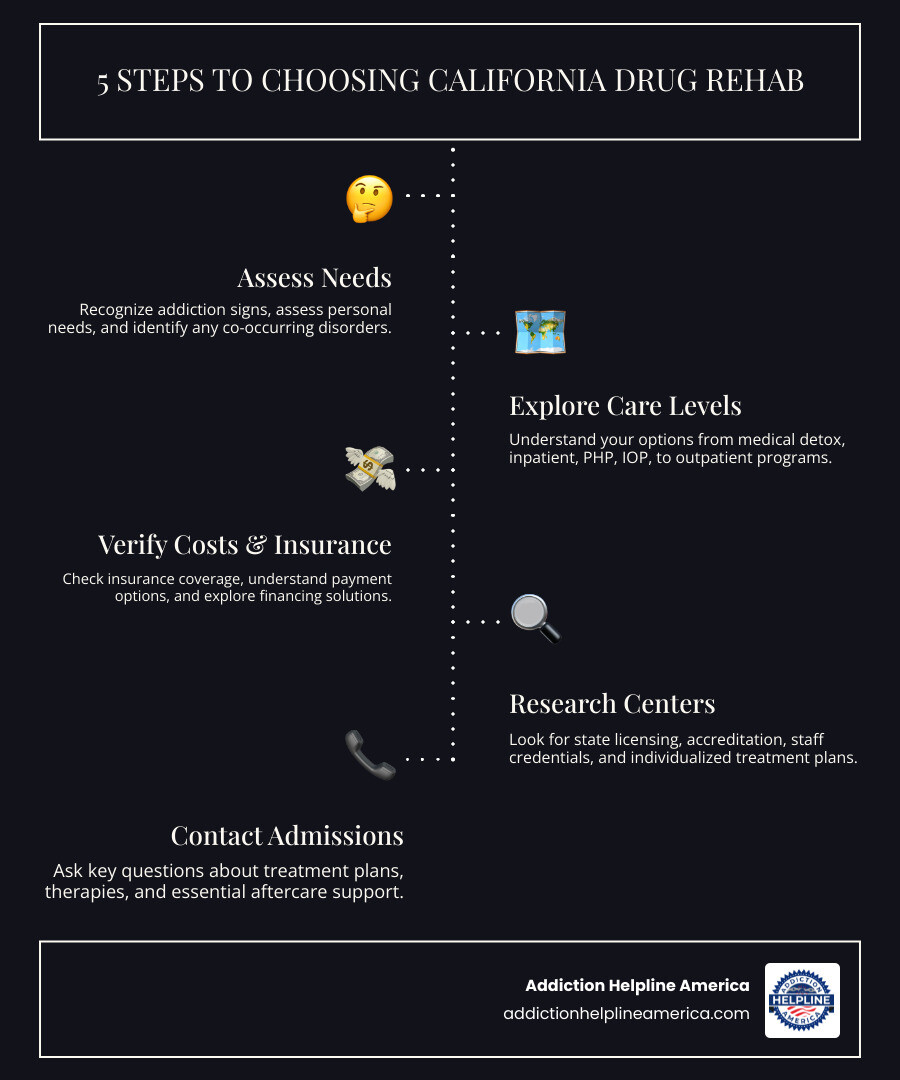
Recognizing that you or a loved one needs help is often the most difficult step on the path to recovery. Addiction is a complex condition that manifests in various ways, affecting a person’s behavior, physical health, and psychological well-being. Understanding these signs is crucial for knowing when it’s time to seek professional intervention from a drug rehab California center.
Behavioral changes can be subtle at first, but often escalate. You might notice someone constantly worrying about their next dose, finding more pleasure in using substances than in activities they once enjoyed, or actively hiding their drug or alcohol use. An inability to go a day without using, despite negative consequences, is a clear indicator. For alcohol addiction specifically, signs include intense cravings, experiencing blackouts, an inability to stop drinking once started, using alcohol to cope with problems, and facing legal or financial issues directly related to alcohol consumption.
Physical symptoms, particularly withdrawal symptoms when substance use is stopped or reduced, are a strong sign of physical dependence. These can range from mild discomfort to severe, life-threatening conditions, underscoring the importance of medically supervised detox. Psychologically, individuals might exhibit increased anxiety, depression, irritability, or paranoia.
If these signs resonate with your experience or that of a loved one, a professional assessment is vital. Our confidential helpline offers a starting point for this assessment, helping you understand the severity of the situation and guiding you toward appropriate resources. We believe that acknowledging the problem is the first, brave step towards healing.
Take a confidential self-assessment

Understanding Co-Occurring Disorders in California Rehab
Many individuals struggling with substance use disorders (SUD) also battle co-occurring mental health conditions, often called a dual diagnosis. This is common; approximately half of people with substance use disorders also have a co-occurring mental health condition like depression, anxiety, or PTSD.
Many California rehabs offer integrated treatment, addressing both addiction and mental health conditions simultaneously. This comprehensive care is vital because these conditions often fuel each other; for example, substance use may be a way to self-medicate anxiety, while it can also worsen underlying mental health issues.
Integrated treatment ensures that both conditions receive the specialized interventions they need, leading to more effective and lasting recovery. When considering a drug rehab California facility, we highly recommend looking for centers that explicitly offer dual diagnosis treatment, as this integrated approach is key to healing the whole person.
Types of Drug and Alcohol Rehab Programs in California
When exploring drug rehab California options, you’ll encounter a broad spectrum of programs designed to meet diverse needs. The concept of a “continuum of care” is central to addiction treatment, acknowledging that recovery is a journey, not a single event. It involves different levels of support, from initial detox to ongoing aftercare, allowing individuals to transition as their needs evolve.
Choosing the right level of care is paramount for effective recovery. As a leader in addiction treatment, California offers unique benefits. Many rehabs leverage their coastal locations for innovative experiential therapies like surf therapy, using the therapeutic power of the ocean to aid healing.
Beyond picturesque locations, California is a hub for holistic and non-12-Step therapies. Alongside traditional 12-Step programs, there’s a strong emphasis on alternatives like Reiki, sound therapy, and mindfulness, allowing for highly personalized treatment.

Choosing Your Level of Care: From Detox to Outpatient
The journey through drug rehab California typically involves several stages, each offering a distinct level of care. Understanding these options is crucial for selecting the path that best suits your needs:
-
Medical Detox: This is often the first step for individuals with physical dependence. Medical detox provides a safe environment where withdrawal symptoms are managed by medical professionals. Lasting 3 to 10 days, it reduces relapse chances and protects against withdrawal-related problems.
-
Inpatient/Residential Rehab: For those with severe addiction or an unstable home environment, inpatient rehab offers 24/7 support in a structured, substance-free setting. Programs often last 30 to 90 days, providing a safe space away from triggers with a daily routine of therapy and support.
-
Outpatient Programs (PHP/IOP): These programs offer structured treatment while allowing individuals to live at home and maintain some daily responsibilities.
- Partial Hospitalization Programs (PHP): Often called “day treatment,” PHPs provide a high level of care, typically 20 or more hours of therapy per week. They are a good step-down from inpatient care or for those needing intensive support without 24/7 supervision.
- Intensive Outpatient Programs (IOP): IOPs offer a slightly less intensive schedule, usually 9-19 hours of therapy per week, often lasting 3 to 6 months, allowing for greater flexibility.
- Traditional Outpatient Treatment: This is the least intensive level, with up to 8 hours of therapy per week. It’s suitable for mild addictions or as a step-down from higher levels of care.
-
Sober Living Homes: These provide a structured, supportive, and substance-free living environment for individuals transitioning out of more intensive treatment, helping them practice recovery skills in daily life.
Here’s a more detailed comparison to help you visualize the differences:
| Feature | Inpatient/Residential Treatment | Outpatient Treatment (IOP/PHP) |
|---|---|---|
| Environment | 24/7 supervision, live at facility, substance-free bubble | Live at home/sober living, attend sessions during the day/evening |
| Intensity | High, daily structured therapy, all meals provided | Moderate to high, several hours of therapy multiple times a week |
| Freedom | Limited outside contact, structured schedule | More flexibility, can manage work/school/family obligations |
| Support | Constant medical & clinical support, peer community | Regular clinical support, peer groups, home support |
| Cost | Generally higher due to accommodation and round-the-clock care | Generally lower as it doesn’t include living expenses |
| Best For | Severe addiction, co-occurring disorders, unsafe home environment | Moderate addiction, step-down care, strong home support |
Therapies Offered in California Drug Rehab Settings
California’s reputation as a leader in innovative treatment extends to the diverse range of therapies offered. While reputable facilities prioritize evidence-based practices, many also integrate holistic approaches to treat the whole person.
Common evidence-based therapies you’ll find include:
- Cognitive Behavioral Therapy (CBT): Helps change negative thought patterns and behaviors related to substance use.
- Dialectical Behavior Therapy (DBT): Focuses on emotional regulation, distress tolerance, and mindfulness, ideal for co-occurring conditions.
- Motivational Interviewing (MI): A client-centered approach to resolve ambivalence about changing behavior.
- Eye Movement Desensitization and Reprocessing (EMDR): Helps process traumatic memories to reduce their emotional impact.
- Internal Family Systems (IFS): Helps individuals understand and heal inner conflicts by viewing the mind as made of various “parts”.
- Medication-Assisted Treatment (MAT): Combines FDA-approved medications with counseling to reduce cravings and withdrawal symptoms, improving outcomes.
Beyond these, many drug rehab California centers accept a wide array of holistic therapies:
- Surf Therapy: Uses the coastal environment for physical activity, nature connection, and mindfulness.
- Yoga and Meditation: Promotes physical and mental health, stress reduction, and emotional balance.
- Art Therapy: Offers a non-verbal way to express emotions and process experiences.
- Physical Wellness Programs: Restores physical health through fitness, nutrition, and outdoor activities.
- Spirituality: Offers spiritual exploration through 12-Step or non-denominational paths.
- Reiki, Sound Therapy, and Acupuncture: Complementary therapies to support relaxation and reduce anxiety.
The goal is always to create a personalized treatment plan that combines the most effective modalities for your unique needs, ensuring a comprehensive path to recovery.
Navigating the Costs and Logistics of a Drug Rehab California
The cost of drug rehab California is a major concern and varies based on the level of care, length of stay, amenities, and location. While some programs can be free or low-cost, others can range from thousands of dollars a day for luxury facilities to tens of thousands for longer inpatient stays. For example, a 30-day inpatient program might cost $6,000-$20,000, while a 60-90 day program could range from $12,000-$60,000. Outpatient programs generally cost less, around $5,000-$10,000 for three months. The long-term cost of addiction often far exceeds the cost of treatment.
Verifying your insurance coverage is a critical step. Thankfully, federal and state laws, like the Mental Health Parity and Addiction Equity Act, mandate that most insurers cover addiction treatment similarly to medical services. California has expanded these protections, making it easier to get coverage. This is good news for those seeking help.
Finding reputable centers can also be a logistical challenge. This is where our free, confidential helpline comes in. We can help you steer these complexities, understand payment options, and connect you with trusted facilities that meet your needs.
How to Pay for Treatment and Verify Insurance
Paying for addiction treatment in California involves several avenues, and understanding your options can significantly ease the process.
- Insurance Coverage: Most California health insurance policies cover addiction treatment, as required by federal and state parity laws. Private insurance plans from major providers often cover a significant portion of treatment costs. Public insurance like Medicaid/Medi-Cal, Medicare, and military insurance (TRICARE) also provides coverage. Many California facilities accept private insurance, and a significant number accept Medicaid.
- Checking Your Benefits: The easiest way to verify your coverage is to contact your insurance provider directly or allow us to assist you in this process. Many rehab centers also offer instant online insurance verification forms. We can help you understand your specific policy’s deductibles, co-pays, and out-of-pocket maximums.
- Private Pay: For those without insurance or who prefer not to use it, paying out-of-pocket is an option. Over 80% of rehab facilities in California accept cash or self-payment.
- Financing Options: Many treatment centers offer financing plans or work with third-party lenders to make treatment more accessible through manageable monthly payments.
- Sliding Scale Payments: Over 60% of rehab facilities in California offer a sliding scale payment system, adjusting costs based on an individual’s income and ability to pay.
We understand that navigating insurance and payment can be daunting. Our team is here to provide free, confidential guidance and help you Find out if your insurance is accepted at various drug rehab California programs.
What to Look for in a Reputable California Rehab Center
Choosing the right drug rehab California center is a pivotal decision. Not all facilities are created equal, and knowing what to look for can help you find a reputable, high-quality program.
- State Licensing: Ensure the facility is licensed by the California Department of Public Health (CDPH) and certified by the California Department of Health Care Services (DHCS) for the services they provide. This verifies that they meet state-mandated safety and care standards for all levels of care they provide, from detox to outpatient services.
- Accreditation: Look for national accreditations from organizations like CARF (Commission on Accreditation of Rehabilitation Facilities) or The Joint Commission. These independent bodies set rigorous standards for quality and patient safety. Seeing a seal from one of these organizations signifies a facility’s commitment to excellence.
- Staff Credentials: A reputable center employs a multidisciplinary team of qualified professionals. This includes addiction medicine physicians, psychiatrists, psychologists, certified alcohol and drug counselors (CADCs), licensed clinical social workers (LCSWs), and other specialists. A high clinician-to-resident ratio often indicates more personalized attention.
- Individualized Treatment Plans: Effective treatment is never one-size-fits-all. A quality rehab will conduct thorough assessments to create a personalized treatment plan custom to your specific needs, substance use history, and any co-occurring mental health conditions.
- Evidence-Based and Holistic Therapies: Look for centers that offer a diverse range of evidence-based therapies (CBT, DBT, MI, EMDR, MAT) alongside holistic approaches (yoga, meditation, surf therapy, art therapy) that resonate with you.
- Dual Diagnosis Treatment: Given the high prevalence of co-occurring disorders, integrated treatment for mental health and substance use is a hallmark of comprehensive care.
- Aftercare Support: Recovery doesn’t end when the program does. A reputable center will provide robust aftercare planning, including referrals to sober living, outpatient programs, 12-Step or non-12-Step groups (like AA, NA, SMART Recovery), and alumni support networks.
Here is a list of key questions we encourage you to ask admissions counselors:
- What types of substances do you treat?
- What levels of care do you offer (detox, inpatient, outpatient)?
- How do you address co-occurring mental health disorders?
- What evidence-based and holistic therapies are used in your program?
- What are your staff’s qualifications, and what is your clinician-to-resident ratio?
- What is the typical program length, and how is it determined?
- How do you handle insurance and payment options?
- What aftercare and alumni support programs do you provide?
- Are you licensed by the state of California and accredited by national bodies?
Finding Free or Low-Cost Treatment Resources
The cost of treatment should never be a barrier to recovery. For individuals seeking free or low-cost addiction treatment in California, several valuable resources are available.
- State-Funded Programs: California offers state-funded programs through county health services, often requiring individuals to meet specific income or residency criteria. Initiatives like the CalAIM Behavioral Health Initiative are expanding these benefits. Over 30% of rehab facilities in California accept Medicaid (Medi-Cal), and over 60% offer a sliding scale payment system.
- Non-Profit Organizations: Non-profit organizations, such as the Salvation Army, provide free or low-cost treatment services, often focusing on holistic regeneration.
- Community Resources: County mental health and substance abuse departments offer information on local programs, including outpatient services and counseling.
- Helplines and Referral Services: Our own Addiction Helpline America provides free, confidential, and personalized guidance to connect you with appropriate low-cost or state-funded options within our vast network. We can help you steer the system and find the support you need.
- Peer Support Groups: While not formal treatment, peer support groups are invaluable for long-term recovery and are typically free. Organizations like Alcoholics Anonymous (AA), Narcotics Anonymous (NA), and SMART Recovery offer community-based support, meetings, and a sense of belonging.
- Recovery Housing: Also known as sober living homes, these facilities provide a safe, drug-free environment and often have more affordable rates than clinical rehabs, sometimes offering payment plans or accepting state funding for eligible individuals.
We believe everyone deserves a chance at recovery, regardless of their financial situation. We can help you explore these options and find a program that fits your budget and needs.
Frequently Asked Questions about Drug Rehab in California
We often hear similar questions from individuals and families exploring drug rehab California options. Here are some of the most common ones, answered to help you make informed decisions.
How long does rehab in California typically last?
Rehab duration is individualized but generally follows these timelines:
- Detox: Medical detox typically lasts between 3 to 10 days, depending on the substance and withdrawal severity.
- Inpatient/Residential Rehab: Inpatient programs are often 30, 60, or 90 days. Research suggests longer stays (90 days) are more effective for long-term recovery.
- Outpatient Programs: Outpatient programs (IOP/PHP) typically last 3 to 6 months, while traditional counseling can continue for longer as part of aftercare.
Recovery is a lifelong journey, and treatment programs are designed to provide the tools and foundation for sustained sobriety.
What are the benefits of choosing a rehab center in California specifically?
California offers a unique and highly beneficial environment for addiction recovery, making it a popular choice for individuals nationwide.
- Ideal Climate and Diverse Environments: California’s pleasant climate and diverse environments—from beaches to mountains—are conducive to healing and outdoor therapies.
- Leader in Holistic and Innovative Care: As a leader in innovative care, California offers a wide array of holistic and non-12-Step therapies like surf therapy, yoga, and mindfulness, providing comprehensive healing for mind, body, and spirit.
- Abundance of High-Quality Centers: The state has a high concentration of reputable, accredited facilities, many specializing in dual diagnosis treatment. This provides a higher standard of care and more choices for specialized programs.
- Experiential Therapies: Beyond surf therapy, many California centers leverage the state’s natural beauty for various outdoor and adventure therapies, which can be powerful tools for self-findy and healing.
Choosing a drug rehab California center means accessing an environment rich in resources, innovation, and natural beauty, all contributing to a supportive recovery journey.
How do I start the process of getting help?
Starting the process can feel overwhelming, but we’re here to simplify it.
- Acknowledge the Need: The first and most crucial step is recognizing that you or a loved one needs help. This guide aims to provide insights into the signs and symptoms.
- Contact a Helpline: Contacting a helpline is the quickest way to get confidential guidance. Our team at Addiction Helpline America provides free, 24/7 support to listen and explain your options without judgment.
- Professional Assessment: We can facilitate a professional assessment to determine the right level of care based on your unique history and needs, including any co-occurring conditions.
- Verify Insurance: We can assist you in verifying your insurance coverage, helping you understand costs and explore financing or low-cost options.
- Explore Treatment Options: We’ll then connect you with suitable drug rehab California programs from our network that match your needs.
You don’t have to steer this alone. We’re here to guide you every step of the way.
Conclusion: Your Path to Recovery Starts with the Right Call
California is a premier destination for addiction treatment, offering diverse, high-quality programs, innovative therapies, and supportive environments. From detox to specialized dual diagnosis treatment, the options for drug rehab California meet a wide spectrum of needs. The state’s focus on holistic healing and beautiful landscapes provides a unique backdrop for change.
We know choosing a program is daunting, with factors like program type, cost, and insurance to consider. But help is available, and recovery is possible.
Addiction Helpline America simplifies this process. Our free, confidential service connects you to the right treatment centers. We’re here to listen, answer questions, verify insurance, and guide you to the best options for your unique journey.
Your path to a healthier, substance-free life starts with taking that courageous first step. Let us be your trusted partner in finding the right drug rehab California program to begin your healing.