
Recovery Doesn’t End When Treatment Does
Aftercare planning is the roadmap that guides individuals from formal addiction treatment into sustained, independent recovery. Here’s what you need to know:
What Aftercare Planning Includes:
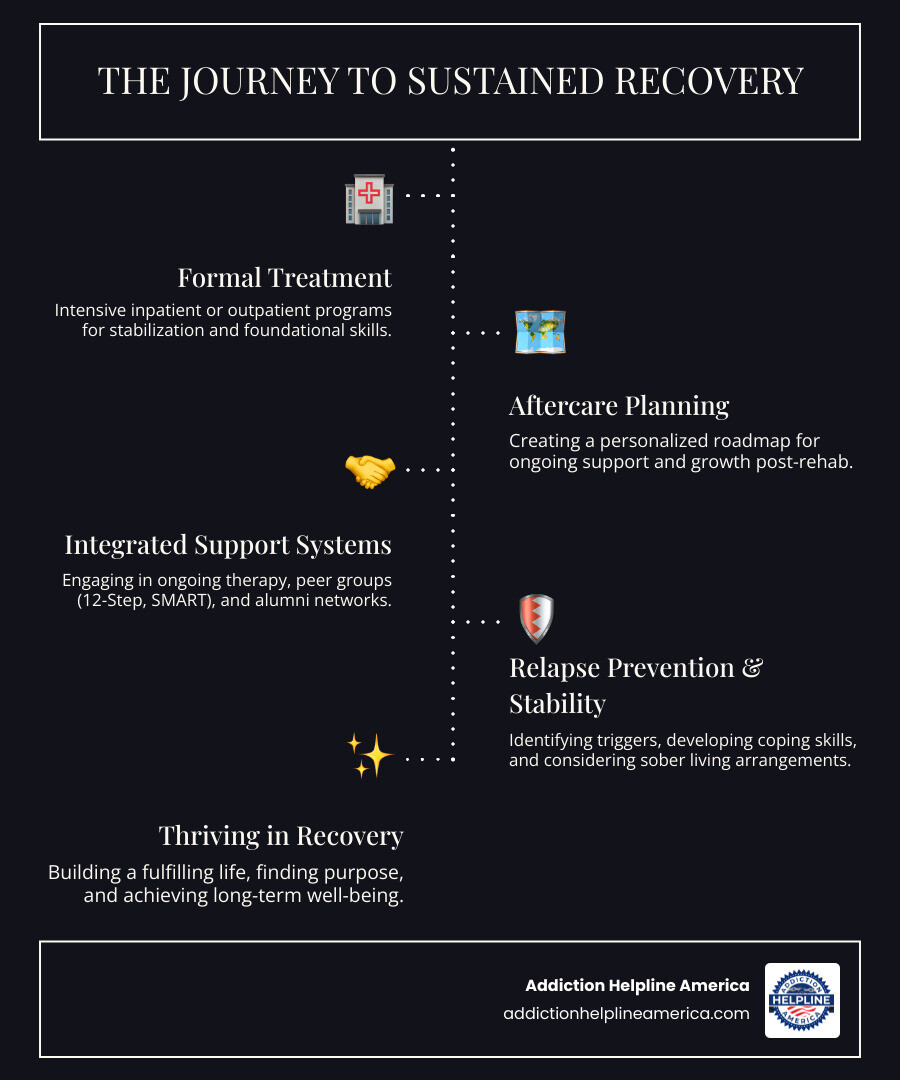
- Ongoing therapy and counseling (individual, group, or family sessions)
- Peer support groups (12-Step programs, SMART Recovery, alumni networks)
- Sober living arrangements (transitional housing with structure and accountability)
- Relapse prevention strategies (identifying triggers, developing coping skills, emergency plans)
- Lifestyle support (employment assistance, education, healthy routines)
- Medical management (medication-assisted treatment when appropriate)
Completing a treatment program is a major accomplishment. But here’s the reality: relapse rates for substance use disorders range between 40-60%, with the highest risk occurring in the first few months after leaving rehab. Taking the step to enter rehab for addiction recovery is truly life-changing—however, the end of treatment often brings new challenges, as many people feel uncertain about how to maintain their progress once they leave the structured and supportive environment of rehab.
Recovery is a journey, not a destination. The end of a formal treatment program marks the beginning of a new chapter, and aftercare planning is the bridge between the protective environment of rehab and the complexities of daily life. Without proper support, relapse rates can climb to 60% within the first year after treatment. With a solid aftercare plan, however, research shows that staying involved in follow-up care for at least one year after rehab can greatly improve recovery outcomes.
At Addiction Helpline America, we’ve helped thousands of individuals and families steer the critical transition from treatment to long-term recovery through comprehensive aftercare planning. Our team of addiction specialists and counselors understands that a personalized aftercare plan isn’t just helpful—it’s essential for sustained sobriety and building a fulfilling life in recovery.
What is Addiction Aftercare and Why is It Crucial?

Think about learning to swim. You wouldn’t expect someone to master the skill in a week and then never practice again, right? Recovery works the same way. Aftercare planning is the continued practice that helps you strengthen your recovery muscles long after you’ve left the structured environment of treatment.
Aftercare—sometimes called continuing care—is the ongoing support and treatment that follows residential or intensive outpatient programs. It’s not about ending treatment; it’s about shifting into a less intensive but equally important phase of your recovery journey. Think of it as the bridge between the safety of rehab and the realities of everyday life.
Here’s why this matters so much: the highest risk of relapse happens in those first few months after leaving treatment. The transition can feel overwhelming. You’re navigating old environments, relationships, and stressors without the 24/7 support you had in rehab. Without proper ongoing care, relapse rates can reach 60% within the first year. But here’s the good news—research shows that staying engaged in aftercare for at least one year can dramatically improve your chances of long-term success.
Aftercare planning serves several essential goals. First, it helps you sustain abstinence by providing the tools and accountability you need to stay sober. Second, it focuses on improving coping skills, teaching you how to manage stress, cravings, and triggers without turning to substances. Third, it works to build resilience, strengthening your ability to handle life’s inevitable challenges in healthy ways. Finally, it aims to improve your quality of life by supporting personal growth, helping you find purpose, and fostering overall well-being.
The gains you made during treatment are precious—aftercare ensures you don’t lose them. Instead, you build on them, creating a foundation for a life that’s not just sober, but genuinely fulfilling. For more information about different treatment approaches, check out our guide on inpatient vs. outpatient rehab.
The Core Components of a Comprehensive Aftercare Plan

Think of aftercare planning like building a custom home—what works perfectly for one person might not fit another’s needs at all. There’s truly no one-size-fits-all recovery path, which is why the most effective plans are deeply personalized.
A solid aftercare plan usually brings together several key elements that work in harmony: professional support from therapists and medical providers, peer networks that provide connection and accountability, environmental stability through safe housing and structure, and healthy lifestyle practices that promote overall well-being. Each piece matters, and together they create a foundation strong enough to support lasting recovery.
Professional Support: Therapy and Medication
The professional support piece is often the backbone of successful aftercare. This isn’t about checking boxes—it’s about having trained experts in your corner who understand addiction recovery inside and out.
Ongoing therapy takes different forms depending on what you need. Individual counseling gives you private time with a licensed therapist or addiction counselor to work through triggers, underlying issues, and personal challenges. These one-on-one sessions create a safe space where nothing is off-limits.
Group therapy brings a different kind of healing. There’s something powerful about sitting in a room with others who truly get what you’re going through. You’ll share experiences, pick up insights you never considered, and practice relating to others in healthy new ways.
Then there’s family counseling, which can be transformative. Addiction doesn’t just affect the person struggling—it impacts everyone who loves them. These sessions help family members understand what you’re experiencing, rebuild broken trust, and learn how to support your recovery without enabling. Research backs this up, showing that family therapy improves communication and helps reduce substance use.
Many therapists use proven approaches like Cognitive Behavioral Therapy (CBT), which helps you identify and change thought patterns that lead to substance use. Dialectical Behavior Therapy (DBT) is another evidence-based method that teaches practical skills for managing emotions and stress.
For some people, Medication-Assisted Treatment (MAT) becomes a crucial part of the picture. If you’re recovering from opioid or alcohol use disorder, medications like methadone, buprenorphine, or naltrexone can significantly reduce cravings and support your recovery journey. These medications aren’t “replacing one drug with another”—they’re FDA-approved treatments that help normalize brain chemistry and reduce overdose risk. Regular check-ins with your healthcare provider ensure the medication continues working effectively.
Want to explore your options? Our guide on outpatient counseling services breaks down what’s available.
Peer Support: Groups and Networks
Here’s something that might surprise you: sometimes the most powerful support doesn’t come from professionals at all. It comes from people who’ve walked the same difficult path you’re on.
Peer support groups tap into something deeply human—the need to belong and be understood. When you’re in a room full of people who’ve battled the same demons, you don’t have to explain yourself. They already know.
12-Step programs like Alcoholics Anonymous (AA) and Narcotics Anonymous (NA) have been helping people recover for decades. Many professionals recommend the “90 in 90” approach—attending 90 meetings in your first 90 days after treatment. It sounds like a lot, but it works. You’ll build a strong support network fast, establish healthy routines, and stay connected when you’re most vulnerable to relapse.
Beyond AA and NA, there are other options custom to specific needs. Cocaine Anonymous (CA) focuses specifically on cocaine addiction. SMART Recovery offers a research-based approach grounded in cognitive-behavioral therapy, which appeals to people who prefer a more scientific framework. There’s also Co-dependents Anonymous (CoDA) for those dealing with relationship patterns, and Heroin Anonymous (HA) for opioid-specific support.
Alumni programs from treatment centers keep you connected to the facility and the people you went through treatment with. These programs often include sober social events, regular check-ins, and online support communities. It’s comforting to stay in touch with people who know your story from the beginning.
The research is clear: people with strong sober social networks have better long-term outcomes. Studies consistently show that active involvement in 12-Step meetings and similar programs leads to sustained recovery and higher abstinence rates. You’re not meant to do this alone.
Environmental Support: Safe Living and Purpose
Where you live and how you spend your days matters more than you might think. Your environment can either support your recovery or undermine it.
Sober living homes provide a critical middle ground between the structure of rehab and the freedom of independent living. These transitional residences are specifically designed to support people in early recovery. You’ll live with others committed to sobriety, follow house rules that promote accountability, and gradually rebuild life skills in a safe setting. Recovery housing significantly reduces the risk of early relapse by removing immediate access to substances and surrounding you with positive influences.
Creating a structured daily schedule fills your time with healthy activities instead of leaving gaps where old habits might creep back in. This isn’t about being rigid—it’s about intentionally designing days that support your goals. Regular exercise, meaningful hobbies, and social activities with sober friends all help prevent the boredom and isolation that can trigger cravings.
Perhaps most importantly, finding purpose gives you something to move toward, not just something to avoid. Recovery isn’t just about not using substances—it’s about building a life worth living.
Volunteering or service work connects you to something bigger than yourself. Research shows that helping others reduces depressive symptoms and improves life satisfaction. Whether it’s serving meals at a shelter, mentoring someone newer to recovery, or working with animals, giving back creates meaning.
Pursuing education or skills training opens new doors and builds confidence. Going back to school or learning a trade shows you’re capable of growth and change. It also improves job prospects and financial stability, which are practical concerns that support long-term recovery.
Engaging in spiritual or religious practices or mindfulness provides another layer of support. Whether you connect through organized religion, meditation, yoga, or time in nature, these practices have been shown to reduce relapse risk and support emotional well-being.
Finding the right environment and resources sets you up for success. If you’re looking for treatment options that support a safe transition back to daily life, we can help you find drug and alcohol rehab centers that prioritize comprehensive aftercare.
Your Guide to Creating a Personalized Aftercare Plan
Think of your aftercare planning as a personalized roadmap—one that you don’t create alone. This isn’t about sitting in a room by yourself, trying to figure everything out. The best aftercare plans are developed in partnership with therapists, counselors, or case managers who understand your unique situation. They’ll consider everything from your living arrangements and work situation to your mental health needs and the people in your life.
Research confirms what treatment professionals have known for years: no one-size-fits-all recovery path works for everyone. Your plan needs to reflect your life, your challenges, and your strengths. Maybe you need to focus heavily on rebuilding family relationships. Perhaps finding stable housing is your top priority. Or maybe managing co-occurring anxiety is what will make the biggest difference in your recovery.
Setting goals is essential, but they need to be realistic. The SMART framework helps here: your goals should be Specific (clear and well-defined), Measurable (you can track your progress), Achievable (challenging but possible), Relevant (meaningful to your recovery), and Time-bound (with a clear timeframe). Instead of saying “I want to be happier,” a SMART goal might be “I will attend three support group meetings per week for the next three months.”
Here’s something important: your plan isn’t set in stone. Recovery is a dynamic process, and what you need in month one might look different from what you need in month six. Regular check-ins with your support network and professionals allow you to adjust your plan as you grow and your circumstances change. This flexibility isn’t a weakness—it’s a strength.
Step 1: Identify Triggers and Develop Coping Skills
Understanding what puts your recovery at risk is like knowing which roads are icy before you start driving. Your triggers—the people, places, things, or emotions that increase your risk of substance use—are unique to you. One person might struggle when they drive past their old hangout spot. Another might feel the pull strongest when they’re stressed at work or lonely on a Friday night.
The HALT method is a simple but powerful tool for identifying emotional triggers. Before you reach for anything unhealthy, pause and ask yourself: Am I Hungry? Angry? Lonely? Tired? These four basic needs, when unmet, can leave you vulnerable. Sometimes what feels like a craving is actually your body or mind crying out for something much simpler—a meal, rest, or human connection.
Once you’ve identified your triggers, the real work begins: developing healthy coping mechanisms to replace old patterns. Mindfulness and breathing exercises have been shown to reduce anxiety and improve emotional regulation, giving you a powerful tool you can use anywhere, anytime. Physical activity isn’t just good for your body—it’s a natural mood booster and stress reliever. Whether it’s a morning jog, an evening yoga class, or just a walk around the block, movement matters.
Journaling offers a private space to process emotions and gain self-awareness. Some people find that writing down their thoughts helps them understand patterns they couldn’t see before. Others find that engaging in sober hobbies—whether it’s painting, cooking, gardening, or learning guitar—gives them a positive outlet for energy that used to fuel destructive behaviors.
Step 2: The Role of Relapse Prevention in Aftercare Planning
Let’s be honest: relapse is a possibility for anyone in recovery. But here’s what matters—you don’t have to wait for a crisis to prepare for one. Relapse prevention is about being proactive rather than reactive. It’s about having a plan before you need it.
A solid crisis management plan is like a fire escape route—you hope you’ll never need it, but you’re grateful it’s there when you do. Start by creating an emergency contact list that includes your therapist, sponsor, and trusted friends or family members who can provide immediate support. Keep this list somewhere accessible—in your phone, your wallet, or posted where you can see it.
Next, write down specific action steps for when cravings hit or you find yourself in a high-risk situation. This might mean calling your sponsor immediately, attending a meeting that same day, or using a specific coping strategy you’ve practiced. Having these steps written down removes the guesswork when you’re in a vulnerable moment and your thinking might not be clear.
Understanding that relapse is often a process, not a sudden event, can be eye-opening. There are usually warning signs—subtle shifts in thoughts, feelings, and behaviors that happen before actual substance use. Maybe you start skipping meetings. Perhaps you become irritable or isolate yourself. Learning to recognize these patterns gives you the chance to intervene early. As WebMD explains, relapse isn’t a failure—it’s a signal that your plan needs adjustment.
Recognizing warning signs in yourself or others is crucial. If you’re not sure what to look for, our guide on the signs of addiction can help you identify these red flags early.
Step 3: Involve Family and Friends
Recovery doesn’t happen in a vacuum. The people who love you can be your greatest allies—but only if they understand how to help. Involving family and friends in your aftercare planning isn’t just nice to have; it can significantly strengthen your chances of long-term success.
Start by educating your loved ones about addiction and recovery. Many people have misconceptions about what addiction is and what recovery requires. Family therapy sessions provide a structured space where everyone can learn together, ask questions, and gain understanding. This shared education builds a foundation for real support.
Family therapy does more than educate—it helps rebuild trust that may have been broken, improves communication patterns, and addresses family dynamics that might impact your recovery. Perhaps there are old conflicts that need resolution. Maybe there are enabling behaviors that need to change. Family therapy creates a safe space to work through these issues with professional guidance.
Setting healthy boundaries protects your sobriety and helps your loved ones understand how to support you without inadvertently enabling unhealthy behaviors. This might mean asking family members not to drink around you, establishing clear expectations about financial support, or limiting contact with certain people during your early recovery. Boundaries aren’t walls—they’re guidelines that help everyone know how to interact in ways that support your healing.
Learning communication skills together helps you express your needs and feelings constructively while helping your family understand how to respond. And don’t forget to celebrate milestones together—whether it’s 30 days sober, six months, or a year. These celebrations reinforce positive behaviors and strengthen the bonds that matter most.
Your family may need guidance too. We’ve compiled helpful information in our resources for families of addicts to support everyone on this journey.
Frequently Asked Questions about Aftercare Planning
As you think about your path to long-term recovery, questions naturally arise. We’ve helped thousands of people work through these same concerns, and we want you to feel informed and confident about what lies ahead. Here are some of the most common questions we hear about aftercare planning.
How long does aftercare last?
There’s no universal timeline for aftercare—it truly depends on you and your unique situation. Some people find that six months of structured support gives them the foundation they need, while others benefit from a full year or more. Research shows that staying involved in follow-up care for at least one year after rehab can greatly improve recovery outcomes, giving you the best chance at maintaining your progress.
For many people, certain elements of aftercare become part of their lifestyle indefinitely. Attending support group meetings, checking in with a therapist occasionally, or staying connected with your recovery community might feel less like “treatment” and more like healthy habits that support your well-being. Think of it like going to the gym or eating nutritious foods—practices you maintain because they help you feel your best.
The beauty of aftercare planning is its flexibility. Your plan isn’t carved in stone. As you grow stronger in your recovery and your life circumstances change, your plan can evolve with you. Regular conversations with your counselor or therapist help ensure you’re getting exactly the support you need at each stage of your journey.
What if I relapse during aftercare?
Let’s address the concern that weighs on many people’s minds: what happens if you relapse? First, take a deep breath. A relapse doesn’t mean you’ve failed or that recovery is impossible for you. It’s actually a common part of the recovery process for many people, and it’s a signal that your aftercare planning needs some adjustments.
Think of relapse as information rather than failure. It reveals triggers you might not have identified yet, gaps in your support system that need filling, or new coping skills you need to develop. The most important thing you can do if a relapse occurs is reach out immediately—don’t wait, don’t hide it, don’t feel ashamed. Call your therapist, your sponsor, a trusted friend from your support group, or any member of your recovery network.
Your aftercare plan exists precisely for moments like these. It might include stepping up your therapy sessions, temporarily returning to a more intensive level of care, or increasing your attendance at support groups. Many people emerge from a relapse with a stronger, more personalized recovery plan than they had before. Recovery is rarely a straight line, and getting back on track after a setback is part of learning what works for you. For more context on understanding these challenges, you can read about what to know about relapse. If you’re noticing warning signs in yourself or someone you care about, our guide on the signs of addiction can help you recognize them early.
Does aftercare address co-occurring mental health disorders?
Yes, and this is absolutely essential. Many people dealing with addiction also experience mental health challenges like depression, anxiety, or other conditions. These issues aren’t separate from your addiction—they’re often deeply connected, and leaving them untreated is one of the biggest risk factors for relapse.
Effective aftercare planning takes a holistic approach, addressing both your substance use and your mental health together. This is called integrated treatment, and it’s the gold standard in recovery care. Your aftercare plan should connect you with mental health professionals who can provide both therapy and medication management when needed. Whether you’re dealing with ongoing depression, managing anxiety, or working through conditions like bipolar disorder, your plan should support every aspect of your well-being.
The good news is that treating co-occurring disorders simultaneously actually improves outcomes for both conditions. When you address the underlying mental health issues that may have contributed to your substance use, you’re building a much stronger foundation for lasting recovery. To learn more about how mental health and addiction intersect, the National Institute of Mental Health offers helpful information about co-occurring disorders and why comprehensive care matters.
Conclusion: Your Bridge to a Sustainable Recovery
Think of aftercare planning as your personal roadmap for the life you’re building in recovery. It’s not a static document you create once and forget—it’s a living, breathing part of your journey that grows and changes as you do. This bridge between treatment and the life waiting for you provides the structure, support, and tools you need to not just maintain sobriety, but to truly thrive.
Throughout this guide, we’ve explored how professional therapy and medication management work hand-in-hand with peer support networks to create a safety net. We’ve seen how a stable, healthy environment and meaningful daily activities give your recovery solid ground to stand on. Each piece of your aftercare plan—from identifying your triggers to building your crisis management toolkit—works together to support the amazing progress you’re making.
The truth is, recovery can feel overwhelming at times. You might wonder if you’re doing enough, if your plan is right, or what happens when life throws you a curveball. But here’s what we want you to remember: you don’t have to figure this out alone. Building a comprehensive aftercare plan empowers you to steer challenges with confidence, celebrate victories both big and small, and find a quality of life you may have thought was out of reach.
The journey ahead is uniquely yours. Your path will look different from anyone else’s, and that’s exactly how it should be. What matters is that you have the right support system walking alongside you, ready to adjust your plan as your needs evolve and cheering you on every step of the way.
At Addiction Helpline America, we understand that finding the right aftercare support can make all the difference. Our team provides free, confidential guidance to help you connect with the resources and treatment options that fit your specific situation. Whether you’re just completing a treatment program or looking to strengthen your existing support network, we’re here to help you build a future filled with hope, purpose, and lasting wellness.
Learn more about relapse prevention strategies and start building your plan today.