
Taking the First Step Towards Recovery
Searching for addiction help near me is a courageous first step. In 2023, 48.5 million Americans aged 12 or older struggled with substance use disorder. Help is available in your community.
Quick Resources:
- Contact Addiction Helpline America: Free, confidential guidance to local treatment
- Visit an FQHC: Low-cost community care regardless of ability to pay
- Crisis Support: Call or text 988 for immediate help
This guide simplifies finding quality addiction help, what to look for, and how to access care even without insurance. At Addiction Helpline America, we offer free support to connect you with treatment resources.
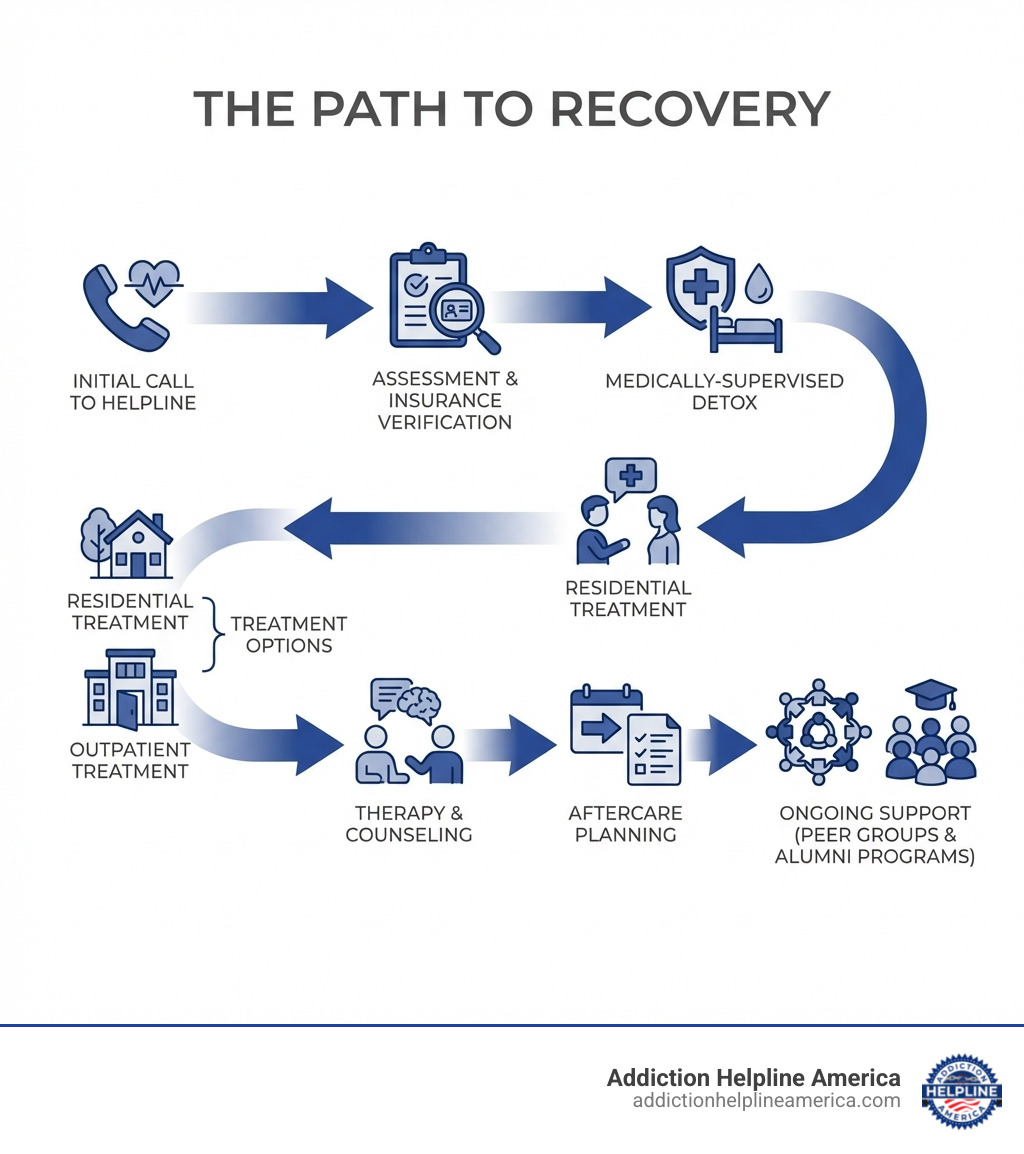
Simple Addiction help near me word guide:
Recognizing the Need for Professional Addiction Help
Recognizing the need for help is critical. Addiction affects the brain and behavior, impacting all areas of life. According to the Mayo Clinic, substance use disorders can severely disrupt mental and physical health, relationships, and safety.
How Do I Know if I or a Loved One Needs Help?
Key signs indicating a need for professional help:
- Neglecting Responsibilities: Poor performance at work, school, or home
- Failed Attempts to Quit: Multiple unsuccessful attempts to stop
- Increased Tolerance: Needing more for the same effect
- Withdrawal Symptoms: Physical/psychological distress when not using
- Relationship Problems: Conflict, dishonesty, or isolation
- Loss of Interest: Abandoning important activities
- Continued Use Despite Harm: Using despite negative consequences
If these resonate, professional help is needed. We offer guidance on holding an intervention. For details, see Mayo Clinic’s drug addiction information.
The Role of Mental Health in Addiction
Addiction and mental health often co-occur. Dual diagnosis conditions worsen each other, making integrated treatment essential. Many self-medicate anxiety, depression, or PTSD, creating a difficult cycle requiring professional help.
Learn about dual diagnosis. For anxiety concerns, see our Anxiety Disorder Treatment Centers Guide.
Your Guide to Finding Addiction Help Near Me
Finding treatment can feel overwhelming, but many resources are available.
How to Find Free or Low-Cost Addiction Help Near Me
Cost shouldn’t prevent treatment. Options include:
- State-Funded Programs: Available through public health departments
- Government Grants: Help centers offer reduced-cost services
- Non-Profits: Organizations like Salvation Army offer sliding-scale programs
- FQHCs: Find care at Federally Qualified Health Centers
- CCBHCs: Comprehensive services via CCBHC finder
- Sliding-Scale Fees: Many facilities adjust fees by income
Explore our Free Drug Helpline for immediate assistance.
Using Trusted Locators and Resources
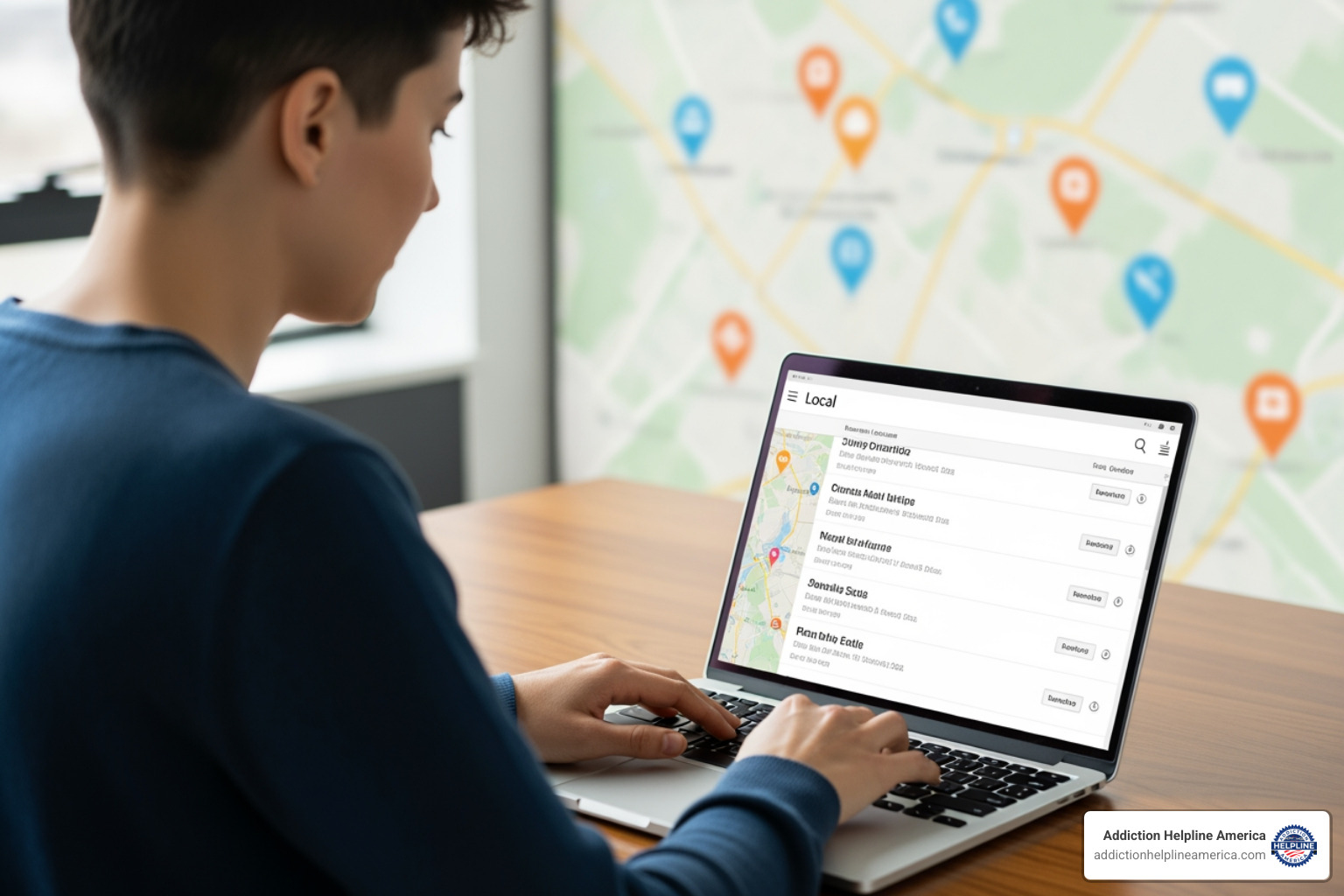
Addiction Helpline America connects you to vetted treatment centers nationwide. Find and compare programs by location, insurance, and services.
What to Look for in Quality Treatment
Ensure centers have:
- Licensing and Accreditation: State-licensed and accredited
- Evidence-Based Therapies: CBT, DBT, Contingency Management
- Qualified Staff: Licensed physicians, therapists, nurses
- Individualized Care Plans: Custom to your needs
- Aftercare Planning: Relapse prevention and support groups
- Family Involvement: Counseling and education for loved ones
Consult our guide to top addiction centers.
Understanding the Types of Addiction Treatment Programs
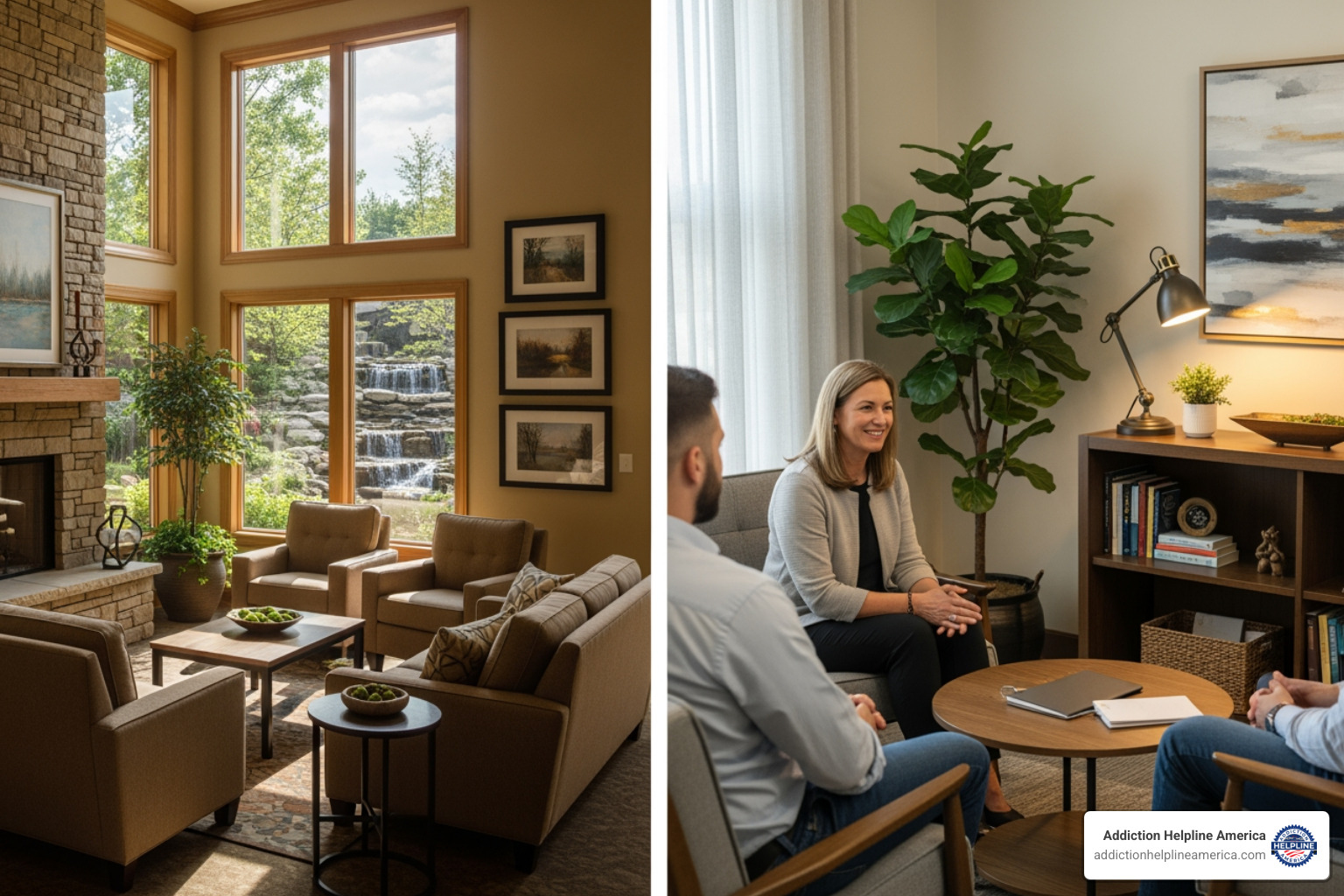
Treatment is a continuum of care custom to individual needs.
The First Step: Medically-Supervised Detox
Medical detox safely clears substances under 24/7 supervision. Attempting alone can be dangerous. Medical professionals manage withdrawal with medications, increasing recovery chances.
See our Drug Detox Near Me Guide.
Inpatient vs. Outpatient Treatment
| Feature | Inpatient (Residential) | Outpatient |
|---|---|---|
| Intensity | 24/7 care and support | Flexible hours (PHP, IOP, counseling) |
| Living | Live at facility | Live at home |
| Structure | Highly structured schedule | Flexible scheduling |
| Cost | Higher (includes housing) | More affordable |
| Ideal For | Severe addiction, unstable home | Strong support system, step-down care |
| Examples | 30 Day Programs, 90 Day Guide | Outpatient Guide |
Specialized Programs and Therapies
- Dual Diagnosis: Integrated treatment for co-occurring disorders
- Substance-Specific: Custom treatment including medications for opioid/alcohol disorders. Cocaine treatment available
- Demographic-Specific: Programs for veterans, LGBTQ+, adolescents
- Therapies: CBT, DBT, EMDR, Motivational Interviewing, Contingency Management
- Holistic: Art therapy, yoga, exercise
Introduction: Taking the First Step Towards Recovery
Taking the First Step Towards Recovery
Addiction help near me is often the first search people make when they’re ready to change their lives or help someone they love. If you’re reading this, you’ve already taken the most important step.
Quick Resources to Find Addiction Help Near You:
- Contact Addiction Helpline America: Call us for free, confidential guidance to connect you with local treatment options.
- Visit a Federally Qualified Health Center (FQHC): Find low-cost care in your community, regardless of your ability to pay.
- Reach Crisis Support: Call or text 988 for immediate mental health crisis support.
According to the 2022 National Survey on Drug Use and Health (NSDUH), 48.7 million Americans aged 12 or older had a substance use disorder in the past year. You are not alone, and help is available right in your community.
Navigating treatment options can be overwhelming. This guide simplifies the process, showing you how to find quality addiction help, what to look for in a program, and how to access care, even without insurance.
At Addiction Helpline America, we offer free, confidential support to connect you with treatment resources custom to your needs. Our experienced team has guided thousands toward effective local programs, and we’re here to help you do the same.
Simple Addiction help near me word guide:
Recognizing the Need for Professional Addiction Help
Recognizing the need for professional help is the first, most critical step toward recovery. Addiction is a complex disease affecting the brain and behavior, with signs that impact all areas of life. As Dr. Nora Volkow, Director of the National Institute on Drug Abuse (NIDA), explains, “Addiction is a disease that affects both the brain and behavior.” While shame and fear can make it hard to seek help, knowing the signs of addiction can empower you to act. We’re here to guide you in finding the right addiction help near me.
How Do I Know if I or a Loved One Needs Help?
Here are some key signs that might indicate a need for professional addiction help:
- Neglecting Responsibilities: Missing or performing poorly at work, school, or home due to substance use.
- Failed Attempts to Quit: Trying to stop or cut down on use multiple times without success.
- Increased Tolerance: Needing more of the substance to get the same effect.
- Withdrawal Symptoms: Experiencing physical and psychological distress (nausea, anxiety, tremors) when not using. This can be dangerous and indicates physical dependence.
- Relationship Problems: Causing conflict, dishonesty, or isolation from family and friends.
- Loss of Interest: Abandoning hobbies and activities that were once important.
- Continued Use Despite Harm: Using substances despite knowing the negative health, social, or financial consequences.
If these questions resonate with your experience or that of a loved one, it’s a strong signal that professional help is needed. We also offer guidance on holding an intervention if you’re looking to support a loved one who may be in denial. For more detailed information on drug addiction symptoms, you can refer to the information on drug addiction symptoms from the Mayo Clinic.
The Role of Mental Health in Addiction
Addiction and mental health are often linked. When a substance use disorder and a mental health condition occur together, it’s known as a co-occurring disorder or dual diagnosis. According to the National Institute on Drug Abuse (NIDA), these conditions can worsen each other, making integrated treatment essential for a successful recovery and relapse prevention.
Many people use substances to self-medicate underlying issues like anxiety, depression, or PTSD. This provides only temporary relief and often makes the underlying condition worse, creating a difficult cycle to break without professional help. Customized, trauma-informed treatment plans are crucial for addressing both the addiction and any co-occurring disorders.
For a deeper understanding of this complex relationship, you can learn about dual diagnosis. If anxiety is a particular concern, our Anxiety Disorder Treatment Centers Guide offers further resources. Integrated treatment that addresses both conditions simultaneously is often the most effective path to lasting recovery.
Your Guide to Finding Addiction Help Near Me
Finding the right addiction treatment can feel overwhelming, but many resources are available to help. Knowing where to look and what to ask is key to finding quality addiction help near me. We’re here to simplify that search and connect you with accessible, high-quality care.
How to Find Free or Low-Cost Addiction Help Near Me
Cost should not prevent you from getting help. Here are several options for free or low-cost care:
- State-Funded Rehab Programs: Most states fund affordable treatment through public health departments. These programs may have residency or income requirements. For example, Pennsylvania’s Department of Drug and Alcohol Programs (DDAP) provides resources and helplines like the PA Get Help Now helpline at 1-800-662-HELP (4357).
- Government Grants: Federal and state grants help treatment centers offer services at a reduced cost or for free.
- Non-Profit Organizations: Organizations like The Salvation Army Adult Rehabilitation Centers / Harbor Light Center operate programs across the U.S., often at no cost or on a sliding scale.
- Federally Qualified Health Centers (FQHCs): These centers offer care in underserved areas, regardless of your ability to pay. You can find one near you using the Federally Qualified Health Centers (FQHCs) locator.
- Certified Community Behavioral Health Clinics (CCBHCs): CCBHCs provide a comprehensive range of mental health and substance use services to everyone, regardless of their ability to pay. A CCBHC finder is available through the National Council for Mental Wellbeing.
- Sliding-Scale Fees: Many private facilities adjust their fees based on a client’s income.
Addiction Helpline America is a free, confidential service that can connect you with these resources. You can also explore our Free Drug Helpline for immediate assistance.
Using Trusted Locators and Resources to Find Local Care
Finding addiction help near me is simple when you use a reliable, confidential resource. At Addiction Helpline America, we specialize in connecting individuals and families with the right support.
- Addiction Helpline America: Our free, confidential service connects you to a nationwide network of vetted addiction and mental health treatment centers. We provide personalized guidance to help you find the perfect program. You can find and compare programs with Addiction Helpline America by filtering for location, insurance, and specific services to meet your unique needs.
What to Look for in a Quality Treatment Center
Choosing the right treatment center is a critical decision. Here’s what we recommend you look for to ensure you find quality addiction help near me:
- Licensing and Accreditation: Ensure the facility is licensed by the state and accredited by a recognized body, which signifies high standards of care. Our research indicates that inclusion on a list is not an endorsement, and individuals should verify credentials.
- Evidence-Based Therapies: Quality programs use scientifically proven treatments. According to NIDA, therapies like Cognitive Behavioral Therapy (CBT), Dialectical Behavior Therapy (DBT), and Contingency Management (CM) are effective. NIDA notes that CM is a “highly effective behavioral therapy” for treating substance use disorders.
- Qualified Staff: Look for centers with licensed physicians, therapists, and nurses. Programs led by Masters-level clinicians and physicians often provide a higher standard of care, such as those at Holland Pathways in Wichita, Kansas, or Midwest Recovery Centers in Kansas City, MO.
- Individualized Care Plans: Treatment is not one-size-fits-all. As NIDA’s Principles of Effective Treatment state, “To be effective, treatment must address the individual’s drug use and any associated medical, psychological, social, vocational, and legal problems.”
- Aftercare and Relapse Prevention: Recovery is a long-term process. The center should provide a solid aftercare plan, including relapse prevention strategies, support groups, and ongoing support.
- Family Involvement: Addiction impacts the whole family. Look for programs that offer family counseling, education, and support for loved ones.
To explore centers that meet these standards, consult our guide to top addiction centers.
Understanding the Types of Addiction Treatment Programs
Addiction treatment is not a single event but a continuum of care custom to each person’s needs. From detox to aftercare, every stage is vital for success. Our goal is to help you find the addiction help near me that’s the right fit for your recovery journey.
The First Step: Medically-Supervised Detox
For many, recovery begins with medical detox, the process of safely clearing substances from the body under medical supervision. Attempting to detox alone can be dangerous. According to the Substance Abuse and Mental Health Services Administration (SAMHSA), withdrawal from certain substances, like alcohol and sedatives, can be life-threatening.
A medically supervised detox provides a safe, comfortable environment with 24/7 care. Medical professionals can administer medication to ease withdrawal and manage complications, increasing the chances of a successful recovery. For instance, our research highlights that facilities like Holland Pathways in Wichita, Kansas, offer Medically-Monitored Detox with 24/7 medical supervision. Midwest Recovery Centers in Kansas City, MO, also emphasizes that a strong and lasting recovery must begin with a safe, supervised detoxification process.
To learn more about this crucial stage, refer to our Drug Detox Near Me Guide.
Inpatient vs. Outpatient Treatment: Which is Right for You?
The two primary types of addiction treatment programs are inpatient (residential) and outpatient, each offering distinct levels of care. The choice between them depends on the severity of the addiction, the individual’s living situation, support system, and other personal factors. As NIDA’s Principles of Effective Treatment state, “No single treatment is appropriate for everyone.”
Here’s a comparison to help you understand the differences:
| Feature | Inpatient (Residential) Treatment | Outpatient Treatment |
|---|---|---|
| Intensity | Highly intensive with 24/7 care and support. | Flexible intensity, from several hours a day (PHP, IOP) to a few hours a week (regular counseling). |
| Living Situation | Patients live at the facility, providing a structured, substance-free environment. | Patients live at home or in a sober living facility, allowing them to maintain work, school, or family life. |
| Structure | A highly structured schedule of therapy, group sessions, and activities. | Flexible scheduling with sessions held on select days, often in the evenings or on weekends. |
| Cost | Generally higher due to the inclusion of housing, meals, and 24/7 supervision. | More affordable as it does not include the cost of lodging. |
| Ideal Candidate | Best for those with severe addictions, co-occurring disorders, or an unstable home environment. | Suitable for individuals with a strong support system, less severe addiction, or as a step-down from inpatient care. |
| Examples | 30 Day Inpatient Rehab Programs, Ultimate 90 Day Inpatient Rehab Guide. | Outpatient Alcohol Treatment Ultimate Guide, online therapy (telehealth or teletherapy) via phone or video calls. |
Facilities like Holland Pathways in Wichita, Kansas, offer a full roadmap of care, including 30-day residential treatment, Partial Hospitalization Programs (PHP), Intensive Outpatient Treatment (IOP), and Outpatient Treatment. Midwest Recovery Centers in Kansas City, MO, also provides every level of care from detox to long-term extended support.
Specialized Treatment Programs and Therapies
Effective treatment is personalized. Many facilities offer specialized programs and therapies to meet unique needs.
- Dual Diagnosis Programs: These programs provide integrated treatment for co-occurring substance use and mental health disorders (like PTSD, depression, or anxiety), which is essential for lasting recovery. For more information, refer to the information on co-occurring disorders from NIMH.
- Substance-Specific Treatment: Treatment is custom to the specific substance used. For example, opioid and alcohol use disorders may be treated with approved medications. According to NIDA, medications like buprenorphine and methadone are effective for treating opioid use disorder, reduce cravings, and lower relapse risk. If you’re seeking help for cocaine addiction treatment, specific therapies custom to stimulant use will be employed.
- Demographic-Specific Care: Some programs are designed for specific groups, such as veterans, LGBTQ+ individuals, adolescents (often with gender-specific groups and pro-social activities), or pregnant women, to address their unique challenges.
- Therapeutic Models: A comprehensive plan often includes various evidence-based therapies as outlined by sources like NIDA’s Treatment Approaches for Drug Addiction DrugFacts:
- Cognitive Behavioral Therapy (CBT): Helps change negative thought patterns.
- Dialectical Behavior Therapy (DBT): Focuses on emotional regulation and mindfulness.
- EMDR Therapy: Processes trauma that may contribute to addiction.
- Motivational Interviewing (MI): Helps resolve ambivalence about change.
- Contingency Management (CM): Uses incentives to reinforce positive behaviors.
- Holistic Approaches: Many centers also offer holistic therapies like art therapy, music therapy, animal therapy, yoga, and exercise to support overall well-being.
Navigating Admissions, Cost, and Insurance
Taking the step to seek treatment is significant. Understanding the admissions process, costs, and insurance can make it easier to move forward with the right addiction help near me.
Our goal is to make quality care as accessible as possible, offering personalized guidance every step of the way.
What is the Admissions Process Like?
The admissions process is designed to help match you with appropriate care. It typically includes:
- Initial Confidential Call: Your first step is often a free, confidential call to a helpline like Addiction Helpline America to discuss your needs.
- Pre-Assessment: An admissions coordinator gathers more detailed information to help determine the appropriate level of care (for example, detox, inpatient, or outpatient).
- Insurance Verification: The admissions team verifies your insurance benefits to clarify coverage and any expected out-of-pocket costs.
- Intake Appointment: After confirming a treatment plan and financial arrangements, you complete paperwork and a medical evaluation.
- Preparation for Rehab: You receive guidance on what to bring and what to expect.
Our Rehab Center Complete Guide offers more details on preparing for treatment.
How Can I Pay for Addiction Treatment?
The cost of treatment varies, but there are many ways to help make it more affordable:
- Private Insurance: Many private insurance plans cover substance use disorder treatment. The Affordable Care Act (ACA) includes substance use disorder services among essential health benefits.
- Medicaid and Medicare: These government programs can cover rehabilitation at participating treatment centers.
- VA Benefits: Veterans and their families may use VA benefits for addiction treatment. The U.S. Department of Veterans Affairs provides information on coverage and care options, including through community care.
- State-Funded Programs: Many states offer low-cost or free treatment through public health agencies.
- Payment Plans and Financing: Some centers offer payment plans or can discuss financing options to help manage costs.
- Sliding Scale Fees: Certain facilities base their fees on your income.
Addiction Helpline America can help you explore financial options and locate a program that fits your situation.
The Journey to Lasting Recovery: Support After Treatment
Completing an addiction treatment program is a major milestone, but recovery is an ongoing process. Building a sober life requires continued support and healthy routines. Ongoing addiction help near me can make a meaningful difference.
How to Support a Loved One in Recovery
Support from family and friends can be an important part of recovery:
- Participate in Family Therapy: Family counseling can help heal relationships, improve communication, and build understanding about addiction.
- Set Healthy Boundaries: Clear boundaries protect your well-being and encourage accountability.
- Avoid Enabling: Try not to support the addiction through actions like giving money that may be used for substances or covering up harmful behaviors.
- Encourage Aftercare: Support participation in sober living, alumni programs, support groups, or coaching.
- Find Your Own Support: Groups such as Al-Anon or Nar-Anon offer support for friends and family of people living with addiction.
For more guidance, our Addiction Recovery Coaching Complete Guide offers additional insights.
Resources for Ongoing Support and Sobriety
Maintaining sobriety after formal treatment often involves a strong support network. Helpful resources include:
- Sober Living Homes: Transitional housing that provides a structured, substance-free environment.
- Alumni Programs: Many treatment centers offer alumni programs to help former clients stay connected and supported.
- Peer Support Groups: These groups offer mutual encouragement and community:
- Alcoholics Anonymous (AA): A 12-step program for individuals recovering from alcoholism.
- Narcotics Anonymous (NA): A 12-step program for those recovering from drug addiction.
- SMART Recovery: A self-help program offering free, peer-led support groups with a focus on self-empowerment.
- Dual Recovery Anonymous (DRA): A 12-step program for individuals with both a substance use disorder and a mental health condition.
- 12-Step Programs: Programs like AA and NA offer a structured framework for recovery. You can learn more about them in our Treatment Programs: 12 Step Program guide.
Conclusion: Your Path to a Healthier Future Starts Today
Taking the first step towards recovery, whether for yourself or a loved one, is an act of courage. Searching for addiction help near me can feel overwhelming, but effective, compassionate support is available.
This guide has outlined how to recognize the signs of addiction, the connection between mental health and substance use, ways to find free or low-cost treatment, and the main types of programs available—from medically supervised detox to inpatient and outpatient care. It has also highlighted the importance of aftercare and ongoing support.
You do not have to steer this alone. At Addiction Helpline America, we provide free, confidential, and personalized guidance to connect you with addiction and mental health treatment centers in your area.
Your healthier future can start today. Reach out and let us help you find the right addiction treatment program for you.