
Understanding the Critical Role of Drug Interventionists in Recovery
A drug interventionist is a trained professional who guides families through a structured process to help a loved one accept addiction treatment. With success rates up to 90%, these specialists facilitate a loving, supportive meeting where family and friends can present their concerns.
An interventionist’s role includes:
- Planning and coordinating the intervention
- Educating the family about addiction and recovery
- Managing the meeting to keep it safe and productive
- Arranging immediate admission to a pre-selected treatment facility
- Providing follow-up support for the family
Hiring a professional typically costs between $2,000 and $10,000, covering the entire process from planning to post-intervention support.
Unlike dramatic TV portrayals, a professional intervention is a compassionate, carefully planned event. The goal is not to shame or ambush, but to lovingly help the individual see the impact of their addiction and offer a clear path to recovery. Families often turn to an interventionist when their loved one repeatedly refuses help, conversations have failed, or the situation involves dangerous behavior or co-occurring mental health disorders.
Addiction impairs a person’s ability to see the harm they are causing. An interventionist bridges the gap between a family’s concern and an individual’s resistance. At Addiction Helpline America, we connect families with qualified drug interventionists and treatment resources, understanding that an intervention is a critical act of love.
Recognizing the Need for an Intervention
Watching a loved one struggle with addiction is painful. You’ve likely tried pleading and reasoning, but nothing breaks through. Addiction changes brain function, making it nearly impossible for someone to recognize the severity of their situation. They may genuinely believe they have it under control, even as their life solves. When heartfelt conversations are no longer enough, a drug interventionist can make the difference.

How do you know it’s time for a formal intervention? Look for a pattern of warning signs:
- Behavioral Changes: Increased secrecy, lying, sudden mood swings, irritability, and neglecting responsibilities like work or family care.
- Physical Signs: Deteriorating appearance and hygiene, unexplained weight changes, bloodshot or glazed eyes, tremors, or slurred speech.
- Social Withdrawal: Isolating from family and old friends, avoiding hobbies, and associating only with others who use substances.
- Financial Problems: Unexplained money loss, constant borrowing, unpaid bills, or theft of money or valuables.
- Failed Attempts to Quit: A heartbreaking cycle of promising to stop, perhaps succeeding for a short time, and then relapsing.
When these signs are present, especially alongside co-occurring mental health issues like depression or anxiety, it’s time to consider a structured intervention with professional guidance.
Common Myths vs. Facts About Interventions
Misconceptions often cause families to hesitate. Let’s separate fact from fiction.
Myth: You must wait for “rock bottom.”
Fact: Waiting for rock bottom can mean waiting until it’s too late. Rock bottom can be a fatal overdose, a serious accident, or permanent health damage. Professional interventionists know that early intervention saves lives. You don’t have to watch someone lose everything before stepping in.
Myth: Interventions are confrontational ambushes.
Fact: Modern interventions led by a trained drug interventionist are compassionate, carefully planned conversations. The goal is to create a supportive environment where your loved one feels safe enough to accept help, not attacked or shamed.
Myth: An intervention will permanently damage your relationship.
Fact: While there may be initial anger, an intervention is an act of profound love. Enabling an addiction by staying silent is far more damaging to a relationship. Guided by a professional, interventions often become the turning point that strengthens family bonds. Many people in recovery later express gratitude for the intervention.
Myth: Interventions are just TV drama and don’t really work.
Fact: When conducted by a skilled drug interventionist, interventions have success rates exceeding 90% in getting individuals into treatment. Success isn’t only immediate acceptance; it can be planting a seed that leads to help later or empowering the family to set healthy boundaries. The process marks the beginning of change for everyone.
At Addiction Helpline America, we’ve seen the intervention process transform families. Seeking professional help is an act of refusing to give up.
The Role of a Professional Drug Interventionist
When addiction impacts a family, the emotional turmoil can be overwhelming. A professional drug interventionist acts as your guide, advocate, and source of hope through this crisis. They are clinicians, educators, and mediators who bring structure and objectivity when emotions run high.

An interventionist’s key functions include:
- Professional Guidance and Mediation: They steer the conversation away from blame and toward the goal of accepting treatment, ensuring the meeting remains productive and safe.
- Crisis Management: They are trained to de-escalate tense situations, manage psychiatric emergencies, and keep everyone safe if the person becomes agitated or threatens self-harm.
- Family Education: They teach the family about addiction as a disease and help identify enabling behaviors—well-intentioned actions that inadvertently support the addiction, like paying their bills or making excuses for them. Learning to set healthy boundaries is a crucial part of this process.
- Addressing Co-occurring Disorders: Many people with addiction also have mental health conditions like depression, anxiety, or PTSD (a dual diagnosis). A skilled drug interventionist ensures the chosen treatment program can address both issues simultaneously, which is essential for lasting recovery.
Understanding Different Intervention Models
Not all interventions are the same. A professional will recommend the model best suited to your family’s situation.
- The Johnson Model: The classic approach where a team of loved ones, led by an interventionist, confronts the individual with specific examples of how the addiction has caused harm and presents a pre-arranged treatment option.
- Family Systemic Intervention: This model views addiction as a family issue and aims to get the entire family system into therapy or support, promoting healing on multiple levels.
- The Love First Approach: A gentler model where each person writes a heartfelt letter expressing love, concern, and support for recovery, presenting a united front based on care, not confrontation.
- The ARISE Model: A collaborative, non-confrontational approach that invites the individual to participate in the planning discussions from the start, gradually escalating if they refuse help.
A professional drug interventionist will help you choose the right method. For more details, you can review a guide to different intervention approaches.
At Addiction Helpline America, we connect families with qualified interventionists who can steer these choices and open the door to recovery.
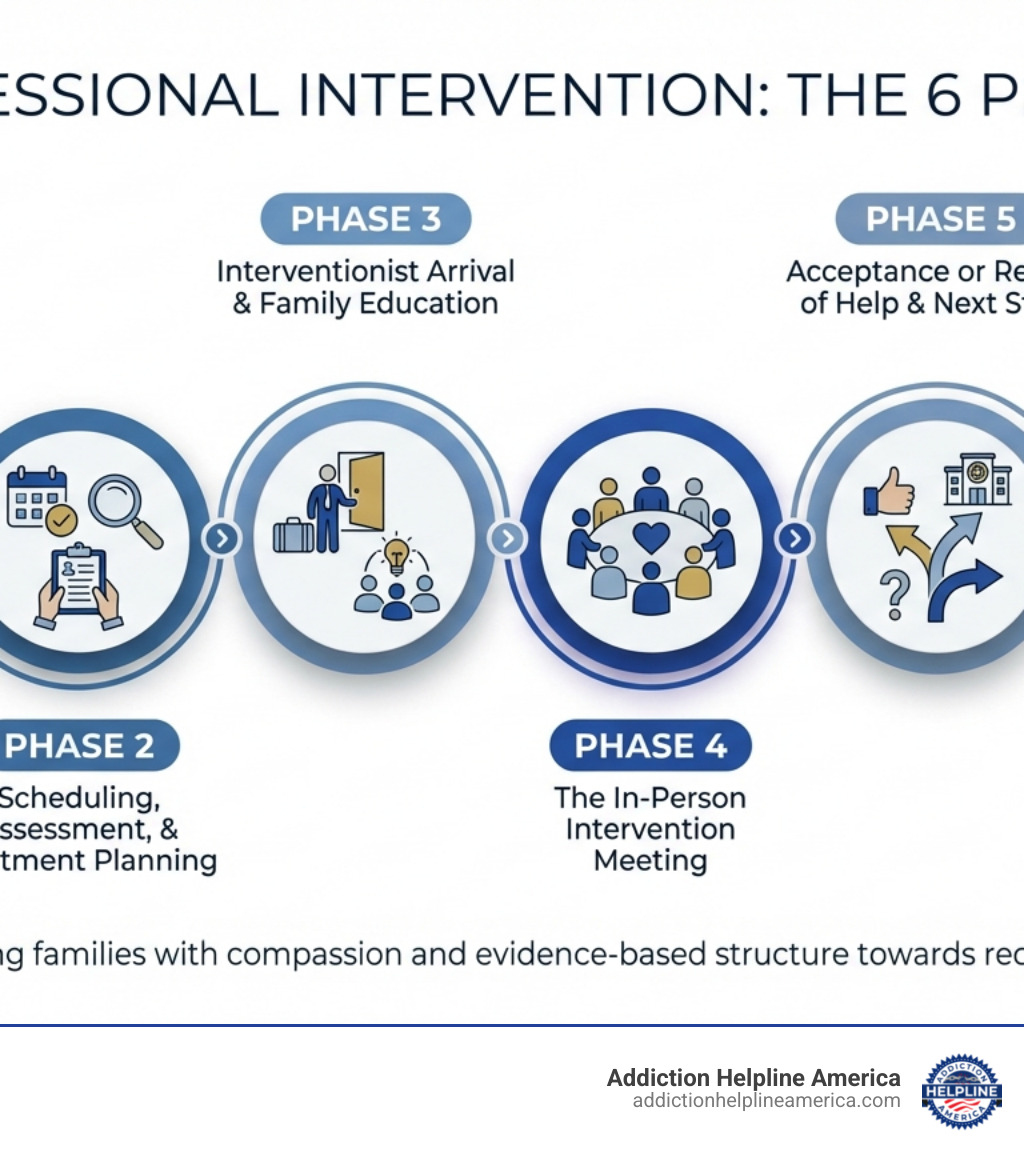
The Step-by-Step Intervention Process
A well-executed intervention is a carefully orchestrated event, not an impulsive confrontation. The planning phase is crucial and can take several weeks to ensure every detail is considered.
1. Form the Intervention Team:
Gather a small group (4-6 people) whom the individual likes and respects.
- Include: People who can remain calm, have a supportive relationship with the person, and are committed to following through on boundaries.
- Exclude: Anyone the person dislikes, who has their own unmanaged substance abuse issues, or who cannot stick to the plan.
2. Find a Treatment Program:
A drug interventionist helps identify suitable treatment options that address your loved one’s specific needs, including any co-occurring disorders. It’s vital to have a facility lined up for immediate admission. At Addiction Helpline America, we specialize in connecting families to our nationwide network of treatment centers.
3. Rehearse the Intervention:
The team must practice to ensure a consistent message, manage emotions, and anticipate objections. This helps everyone stay on topic during the actual meeting.
4. Prepare Emotionally:
An intervention is an emotional process. The interventionist will help the family prepare for potential anger or resistance, understanding it’s often a manifestation of the addiction itself.
How to Stage the Intervention
With planning complete, it’s time to execute the meeting with compassion and clear intent.
The interventionist will guide you to choose a neutral, private time and place when your loved one is likely to be sober. Each team member will read a pre-written impact letter expressing love, concern, and specific examples of how the substance use has affected them. The tone must remain supportive, stating facts about behavior rather than making accusations.
After the letters, you will offer the pre-arranged treatment plan as a concrete solution. Finally, the team must be ready to set clear boundaries and consequences—not as threats, but as statements of what you will do to protect yourselves if treatment is refused (e.g., no longer providing financial support).
What Happens During the Meeting
The interventionist begins with opening statements, setting a respectful tone. Team members then take turns reading their letters. This is often the first time the individual hears the collective impact of their addiction. The interventionist then helps present the treatment option and ask for a decision.
Handling resistance is a key role of the interventionist. Denial and anger are common reactions. The professional is an expert in de-escalation, keeping the meeting focused on the path to recovery and ensuring everyone’s safety.
Hiring a Professional: Qualifications and Costs
Deciding to hire a professional drug interventionist is a significant step. It’s important to understand their specific role and the costs involved.
An interventionist’s primary job is to get your loved one into treatment by working with the entire family system. A therapist’s work typically begins once someone is already in treatment, focusing on long-term individual counseling.
| Feature | Professional Drug Interventionist | Therapist |
|---|---|---|
| Primary Focus | Facilitating entry into addiction treatment, family system change | Ongoing psychological support, mental health counseling |
| Client | Primarily the family system (to motivate the individual) | Primarily the individual (for long-term mental health) |
| Role | Planning and executing interventions; crisis management | Providing therapeutic sessions, diagnosis, treatment plans |
| Duration | Short-term (weeks-months for intervention process) | Long-term (ongoing sessions for sustained support) |
The cost of an intervention typically ranges from $2,000 to $10,000. This fee is an investment in professional expertise and covers comprehensive pre-intervention planning, family coaching, the intervention meeting itself, and post-intervention support. Travel expenses may be additional. Interventions are generally not covered by insurance, so families should expect to pay out of pocket. At Addiction Helpline America, we help families steer these decisions and connect with qualified professionals.
What to Look for in a Drug Interventionist
Choosing the right professional is crucial. Here’s what to prioritize:
- Certifications: Look for credentials like Certified Intervention Professional (CIP), Board-Registered Interventionist (BRI), or Certified Alcohol and Drug Counselor (CADC). These demonstrate a commitment to ethical standards.
- Experience: Ask how many interventions they have conducted and what types of situations they specialize in, such as co-occurring disorders or adolescent substance use.
- References and Success Stories: A reputable interventionist can provide examples of past work while protecting client confidentiality.
- Professional Affiliations: Membership in organizations like The Association of Intervention Specialists indicates accountability and adherence to best practices.
- Liability Insurance: This is a non-negotiable sign of professionalism.
When interviewing candidates, ask about their process, fees, how they handle resistance, and the support they provide after the meeting. The right interventionist will make you feel heard, supported, and confident.
Life After the Intervention: Next Steps
The intervention meeting is the beginning of a longer journey. The next steps depend on your loved one’s response and your family’s preparedness.
When Your Loved One Accepts Help
This is the goal. The pre-arranged treatment plan kicks into action immediately, as motivation is highest right after the intervention. Your drug interventionist will coordinate immediate transport to treatment to ensure a smooth transition.
Once they are in treatment, the family’s role shifts to support. This is where the family’s role in recovery begins. Many treatment programs offer family therapy to help rebuild trust and improve communication. Support groups like Al-Anon and Nar-Anon also provide invaluable emotional support and practical strategies for family members.
When Your Loved One Refuses Help
Hearing “no” is painful, but it does not mean the intervention failed. This is when following through on consequences is critical. You must honor the boundaries you set regarding financial support, housing, or other forms of enabling. This isn’t punishment; it’s about refusing to support the addiction and protecting your own well-being. Holding firm on these boundaries often motivates an individual to reconsider treatment later.
Your interventionist will provide continued support to help your family steer the aftermath and maintain your new boundaries.
An intervention plants a seed. Many who initially refuse help later reach out because the message of love and concern stays with them. Furthermore, family healing is also a success. By participating, you have learned about addiction, stopped enabling, and started on your own path to recovery.
At Addiction Helpline America, we connect families with resources for every stage of this journey, whether it’s finding family therapy or support groups in your area.
Frequently Asked Questions about Drug Interventionists
What if my loved one refuses to go to treatment?
This is a common fear, but a refusal does not mean the intervention failed. The most important step is to follow through with the boundaries you established. This consistency shows you are serious about no longer enabling the addiction. At the same time, keep the door open, letting them know the offer for treatment still stands. Your drug interventionist will continue to provide professional guidance, and you should focus on family recovery through therapy or support groups. Many people who initially refuse eventually change their minds.
How successful are drug interventions?
When conducted by a professional drug interventionist, success rates can exceed 90% in getting an individual to accept treatment. However, success isn’t just treatment entry. An intervention can plant a seed for future change, even if the person says no at first. Another key measure of success is family healing. The process empowers the family to set healthy boundaries and begin their own recovery, which is a valuable outcome regardless of the loved one’s decision.
How do I find a qualified drug interventionist?
Finding the right professional takes research. Good sources include:
- Referrals from therapists, doctors, or treatment centers.
- Professional organizations like The Association of Intervention Specialists, which maintains directories of certified members.
- Addiction Helpline America: We can connect you with qualified professionals from our nationwide network.
When vetting candidates, look for top-tier credentials (like the CIP certification), extensive experience, and specializations that match your family’s needs (e.g., dual diagnosis). Be sure to ask about their process, fees, and post-intervention support.
Conclusion
Watching a loved one struggle with addiction can feel hopeless, but you are not helpless. A professional drug interventionist can turn desperation into action by guiding your family through a structured, compassionate process.
An intervention is an act of love—a way of saying, “We are here, we have a plan, and we will walk this path with you.” This powerful message, delivered with professional guidance, can break through denial and open the door to recovery.
Taking this step brings peace, regardless of the immediate outcome, because you are no longer standing by. You are taking action, setting boundaries, and beginning a healing journey for the entire family.
If you’re considering an intervention, you’re not alone. The team at Addiction Helpline America offers free, confidential guidance to connect you with qualified interventionists and treatment programs nationwide.
Ready to take the first step? Find guidance on how to help a loved one with addiction and find how professional support can make all the difference.