
Why Dual Diagnosis Rehab Matters for Lasting Recovery
Dual diagnosis rehab offers specialized, integrated treatment for individuals who have both a mental health disorder and a substance use disorder. This is also known as having co-occurring disorders.
Quick Facts About Dual Diagnosis:
- Definition: Co-occurring mental health and addiction disorders requiring simultaneous treatment.
- Prevalence: About 9.2 million adults in the U.S. struggle with dual diagnosis.
- Common Pairings: Depression and alcohol use, anxiety and opioid use, PTSD and substance abuse.
- Treatment Approach: Integrated care that addresses both conditions together.
- Success Factor: While only 12.7% of people with a dual diagnosis receive care for both conditions, this integrated approach is the most effective path to recovery.
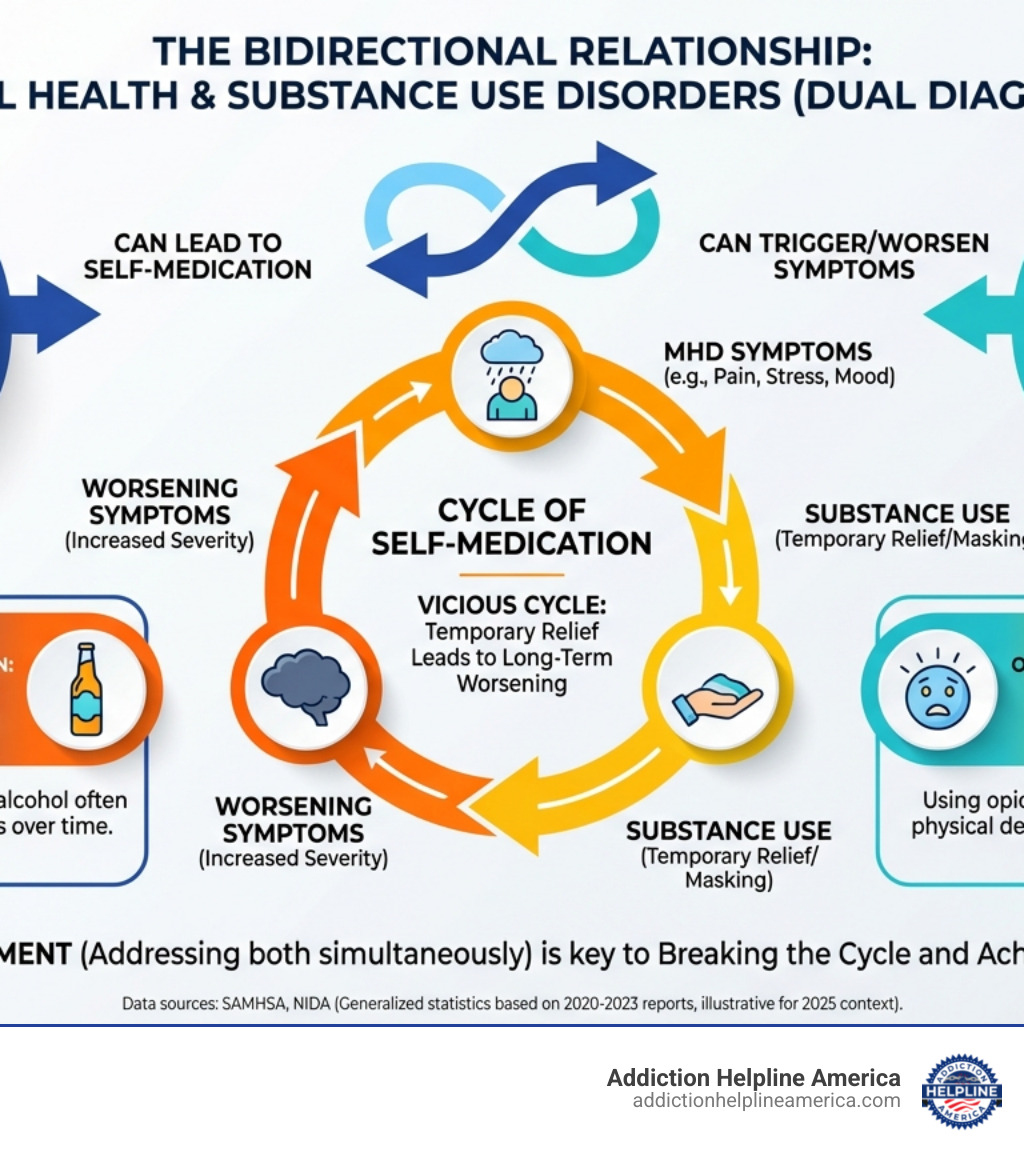
The link between mental health and addiction is strong. Many people use substances to self-medicate symptoms of depression, anxiety, or trauma. This creates a vicious cycle where substances provide temporary relief but worsen mental health over time. Conversely, prolonged substance use can change brain chemistry and trigger mental health issues.
If you’re facing this, you are not alone. Dual diagnosis is highly treatable when both conditions are addressed simultaneously. Integrated treatment programs reduce substance misuse, improve psychiatric symptoms, and significantly increase the chances of lasting recovery.
Addiction Helpline America specializes in connecting people with dual diagnosis rehab programs nationwide. We provide confidential guidance to help you find the right integrated treatment for your co-occurring challenges, because we know that healing requires treating the whole person.
Understanding Dual Diagnosis: The Connection Between Mental Health and Addiction
When someone has both a mental health disorder and a substance use disorder, it’s called a dual diagnosis or co-occurring disorders. These conditions are deeply intertwined, each making the other worse. For example, a person with anxiety might drink to calm their nerves, only to find their anxiety worsens over time, leading to alcohol dependence. Breaking this cycle requires specialized help.
What is a Dual Diagnosis?
A dual diagnosis means meeting the clinical criteria for both a mental health and substance use disorder. The relationship is “bidirectional”: mental health issues can lead to substance use (self-medication), and substance use can cause or worsen mental health issues by altering brain chemistry. Shared risk factors like genetics, trauma, and chronic stress increase the likelihood of developing both. Diagnosing can be tricky because symptoms often overlap, which is why professional assessment after a period of abstinence is ideal. According to the National Alliance on Mental Illness, about 9.2 million adults in the U.S. have co-occurring disorders. For more information, you can reference The official DSM-5 criteria and learn more from NAMI’s guide on Understanding Substance Use Disorders.
Common Co-Occurring Mental Health Disorders

Certain mental health conditions frequently appear alongside addiction. Dual diagnosis rehab is equipped to handle these common pairings:
- Anxiety Disorders: People with Generalized Anxiety, Panic Disorder, or Social Anxiety may use substances like alcohol to quiet their minds or face social situations.
- Depression and Bipolar Disorder: Substances may be used to temporarily lift the fog of depression or manage the extreme mood swings of bipolar disorder, but they ultimately disrupt mood stability.
- Post-Traumatic Stress Disorder (PTSD): Many trauma survivors use drugs or alcohol to numb painful memories and hypervigilance, with some studies showing up to 50% of those with PTSD and alcohol use disorder have other serious issues.
- Attention-Deficit/Hyperactivity Disorder (ADHD): The impulsivity and restlessness of ADHD can lead some to self-medicate with substances to try and improve focus or calm their thoughts.
- Personality Disorders: Conditions like Borderline Personality Disorder (BPD) involve emotional intensity and impulsivity that can both contribute to and be worsened by substance abuse.
For more research on these connections, see this report on Common comorbidities research.
Signs, Symptoms, and Risk Factors
Recognizing a dual diagnosis can be difficult because symptoms overlap. A professional assessment is key, but here are some signs to watch for:
Signs of a Mental Health Disorder:
- Persistent sadness, irritability, or extreme mood swings
- Social withdrawal and loss of interest in once-loved activities
- Significant changes in sleep, appetite, or weight
- Difficulty concentrating or making decisions
- Increased anxiety, panic attacks, or unexplained physical ailments
Signs of a Substance Use Disorder:
- Using more than intended or being unable to cut down
- Intense cravings and continued use despite negative consequences
- Developing tolerance (needing more for the same effect) and experiencing withdrawal
- Neglecting responsibilities and engaging in risky behaviors
- Secretiveness about use and financial or legal problems
Key risk factors for dual diagnosis include a family history of addiction or mental illness (genetic predisposition), a personal history of trauma, and environmental factors like chronic stress or growing up around substance use. Early exposure to drugs or alcohol during adolescence is also a significant risk factor. If these signs seem familiar, help is available. Learn more about risk factors.
Why Integrated Treatment is Essential for a Dual Diagnosis Rehab
Effective recovery from co-occurring disorders requires treating both conditions at the same time. At Addiction Helpline America, we champion integrated care because it addresses the whole person, not just isolated symptoms, leading to true and lasting healing.
The Power of an Integrated Approach
An integrated care model means your mental health and substance use disorders are treated simultaneously by the same team under one unified plan. Treating them separately often fails. For example, if you treat alcoholism but not the underlying anxiety that drives the drinking, relapse is highly likely. Statistics show that while only 12.7% of people with co-occurring disorders get treatment for both, this integrated approach is proven to decrease substance misuse, improve psychiatric symptoms, and transform a person’s quality of life. It helps people build a life worth staying sober for. To explore comprehensive options, see our guide on Inpatient rehabilitation options.
Effective Therapeutic Approaches
Quality dual diagnosis rehab uses evidence-based therapies to address the root causes of both addiction and mental health struggles. Key approaches include:
- Cognitive Behavioral Therapy (CBT): Helps you identify and change the negative thought patterns that fuel both conditions.
- Dialectical Behavior Therapy (DBT): Teaches skills for mindfulness, emotional regulation, distress tolerance, and healthy relationships.
- Medication Management: Uses carefully prescribed medications to stabilize brain chemistry, manage mental health symptoms, and reduce cravings.
- Motivational Interviewing: A collaborative approach that helps you find your own internal motivation to change.
- Holistic Therapies: Includes yoga, meditation, art, and music therapy to heal the mind-body-spirit connection.
- Family, Group, and Individual Therapy: These formats provide a multi-layered support system, repairing relationships, reducing shame through shared experience, and offering a private space for personal work.
For those who find strength in spirituality, many programs offer Faith-based recovery programs.
Levels of Care in Dual Diagnosis Treatment
Effective dual diagnosis rehab offers a continuum of care, allowing you to move through different levels of support as your needs change. This ensures a smooth and supported recovery journey.
- Medical Detoxification: A safe, supervised environment to manage withdrawal symptoms and stabilize before beginning deeper therapeutic work. Learn more about Information on alcohol detox.
- Inpatient Residential Treatment: 24/7 care in a facility, providing an immersive, trigger-free environment for intensive therapy and healing.
- Partial Hospitalization Programs (PHP): Intensive day treatment with the flexibility to return home or to a sober living environment at night.
- Intensive Outpatient Programs (IOP): Several hours of treatment per week, allowing you to integrate back into work, school, or family life while receiving support.
- Outpatient Services: Weekly therapy and medication management to maintain stability and prevent relapse.
- Aftercare Planning: A comprehensive plan for life after treatment, including connections to sober living, support groups, and ongoing therapy to ensure long-term success.
How to Find and Choose the Right Dual Diagnosis Rehab
Once you’ve decided to seek help, the next step is finding the right dual diagnosis rehab. This means finding a program that treats both your mental health and addiction with equal expertise. Addiction Helpline America helps people nationwide steer this process to find comprehensive support for lasting recovery.
Finding a Quality Treatment Center
Not all rehabs are equipped for dual diagnosis. When searching, ask these crucial questions: Does the facility create individualized treatment plans? What evidence-based therapies (like CBT, DBT, or trauma-informed care) do they use? Are patients evaluated by licensed psychiatric professionals for accurate diagnosis and medication management? How does the program handle relapse—as a failure or a learning opportunity? What are the credentials of the staff? Finally, what kind of aftercare support is provided to ensure recovery sticks? A quality program will have clear, positive answers to these questions. At Addiction Helpline America, we can help you ask the right questions and connect you with vetted facilities through our Addiction Helpline America Treatment Locator. You can also explore options in specific areas like Dual Diagnosis Treatment in Texas or use SAMHSA’s locator at findtreatment.samhsa.gov.
Understanding the Cost of Treatment and Insurance Coverage
Cost should not be a barrier to getting help. The price of dual diagnosis rehab varies, but treatment is more accessible than ever. The Affordable Care Act (ACA) and the Mental Health Parity and Addiction Equity Act (MHPAEA) mandate that most insurance plans cover mental health and substance use disorder services equally with medical care. This means your private insurance likely covers a significant portion of treatment.
If you don’t have private insurance, other options exist:
- Sliding-scale fees: Many facilities adjust costs based on your income.
- State-funded programs: Every state offers free or low-cost treatment for eligible residents.
- Federally Qualified Health Centers (FQHCs) and Certified Community Behavioral Health Clinics (CCBHCs) provide comprehensive, integrated care regardless of your ability to pay. You can locate FQHCs via the HRSA’s Find a Health Center for low-cost options.
Always ask prospective centers about payment options and financial aid. We can also help you verify your benefits and explore affordable care.
The Role of Support Groups in Recovery
Professional treatment provides the tools, but community provides the staying power. Peer support groups are vital for long-term recovery, offering a connection with others who have walked in your shoes.
- 12-Step Programs: Alcoholics Anonymous (AA) and Narcotics Anonymous (NA) are free, widely available, and offer a structured path to recovery.
- Dual Diagnosis Groups: Dual Diagnosis Anonymous (DDA) and Double Trouble in Recovery (DTR) are 12-step groups specifically for people with co-occurring disorders.
- SMART Recovery: A science-based, self-empowerment alternative that focuses on building skills for motivation and coping.
- Family Support Groups: Al-Anon and Nar-Anon provide support for loved ones, helping the entire family heal.
Building this sober network creates a crucial safety net. For help finding groups, visit our Dual Diagnosis Support Resources page.
Frequently Asked Questions about Dual Diagnosis Rehab
Navigating dual diagnosis rehab brings up many questions. Here are clear, honest answers to some of the most common ones we hear at Addiction Helpline America.
How long does dual diagnosis treatment typically last?
There is no one-size-fits-all timeline; the length of treatment depends on your unique needs. While 30-day programs can offer stabilization (see our 30-day rehab guide), most experts recommend 60 to 90 days for residential care to effectively address co-occurring disorders. This allows time for deeper therapeutic work and skill-building. For severe or chronic conditions, long-term care beyond 90 days often yields the best outcomes. The goal is to move through a continuum of care, stepping down from more intensive programs to outpatient support, ensuring you have the time needed to build a strong foundation for recovery.
Can a dual diagnosis be cured?
We prefer to talk about management and remission rather than a “cure.” Like other chronic health conditions such as diabetes or asthma, addiction and many mental health disorders require ongoing care. This is an empowering perspective: it means that with the right treatment, coping skills, and support, you can manage your symptoms and lead a full, healthy, and productive life. Recovery is a lifelong journey of building resilience. The goal of dual diagnosis rehab is to equip you with the tools to manage both conditions effectively so they no longer control your life.
What happens after completing a rehab program?
Completing rehab is the beginning of a new chapter, and a strong aftercare plan is essential for success. This plan is your roadmap for navigating life in recovery and typically includes:
- Sober Living Homes: Structured, substance-free housing that bridges the gap between inpatient care and independent living.
- Ongoing Therapy: Continuing with individual or group counseling to reinforce skills and manage challenges.
- Support Groups: Regular attendance at meetings like AA, NA, DDA, or SMART Recovery to maintain a strong peer support network.
- Alumni Programs: Staying connected to your treatment center’s community for ongoing encouragement.
- Medication Management: Regular appointments to ensure any prescribed medications remain effective.
- Life Skills Support: Help with finding employment, continuing education, and managing finances.
Aftercare ensures you have a robust support system to maintain long-term well-being. For veterans, specialized Veteran addiction treatment resources are also available.
Take the First Step Toward Healing Today
If you are struggling with the overwhelming cycle of a mental health disorder and substance use, know this: dual diagnosis is complex, but it is absolutely treatable. A healthier, more stable future is within your reach when both conditions are addressed together through integrated care.
Recovery begins with the decision to ask for help. You don’t have to figure this out alone.
Addiction Helpline America specializes in connecting individuals and families with specialized dual diagnosis rehab facilities nationwide. Our service is free, 100% confidential, and personalized to your unique situation. We will help you steer your options and find a program that fits your needs.
Don’t wait another day to start your journey toward healing. The right support is available, and we are here to help you find it. Find a Dual Diagnosis Treatment Facility today.