
Why Seeking Help for Addiction in New Mexico is a Courageous First Step
Rehab in New Mexico offers a path to recovery for thousands of individuals struggling with substance use disorders. If you’re searching for treatment options, here’s what you need to know:
Quick Answer: Finding Rehab in New Mexico
- Over 100 treatment centers operate across the state, offering various levels of care, according to the Substance Abuse and Mental Health Services Administration (SAMHSA).
- Treatment cost: Costs vary widely, from state-funded programs to private facilities. While some programs can exceed $60,000, many options are available through insurance and state aid.
- Key locations: Albuquerque, Santa Fe, Las Cruces, and rural areas including Native American reservations
- Insurance coverage: Most facilities accept major insurance, Medicaid (Centennial Care), Medicare, and offer sliding scale fees.
- Levels of care available: Medical detox, inpatient residential, outpatient (PHP/IOP), medication-assisted treatment (MAT), and aftercare
- Specialized programs: Veterans services, LGBTQ+ support, gender-specific care, and culturally competent treatment
“Making the decision to seek help is not a sign of weakness—it’s an act of profound courage,” says Dr. Alisha Cruz, a clinical psychologist specializing in addiction. “It’s the moment you choose to reclaim your life.” Whether you’re struggling with alcohol, opioids, methamphetamine, or another substance, you’re not alone. According to the 2021 National Survey on Drug Use and Health (NSDUH), approximately 94% of people with a substance use disorder don’t receive treatment, often because they don’t know where to start or feel overwhelmed by the process.
New Mexico’s unique landscape—from the serene Sangre de Cristo Mountains to the peaceful high desert—provides a healing backdrop for recovery. The state offers diverse treatment options, from holistic programs that incorporate hiking and meditation to evidence-based clinical care that addresses both addiction and co-occurring mental health conditions. With over 60 facilities equipped to handle dual diagnosis treatment, per SAMHSA data, New Mexico recognizes that recovery requires treating the whole person, not just the addiction.
The path forward doesn’t have to be confusing. This guide breaks down five concrete steps to help you find quality care, understand your options, steer costs, and build a foundation for lasting recovery.
At Addiction Helpline America, we’ve guided thousands of individuals and families through the process of finding appropriate Rehab in New Mexico, connecting them with quality, accredited facilities that match their specific needs. Our free, confidential service helps you verify insurance benefits and identify treatment options without judgment or pressure.
Relevant articles related to Rehab in New Mexico:
- rehab centers in albuquerque new mexico
- rehab centers in las cruces new mexico
Step 1: Honestly Assess Your Needs and Understand Treatment Options
Starting on the journey to recovery in New Mexico begins with a crucial first step: an honest self-assessment of your current situation and a clear understanding of the treatment options available. “A thorough, honest assessment is the bedrock of an effective treatment plan,” notes Dr. Alisha Cruz, a clinical psychologist. “We can’t map out the journey to recovery without first understanding the starting point.”
Addiction, or Substance Use Disorder (SUD), is a medical condition characterized by the uncontrolled use of a substance despite its harmful consequences, as defined by the National Institute on Drug Abuse (NIDA). You might be struggling with addiction if you experience cravings, an inability to control your use, continued use despite negative impacts on your health or relationships, or withdrawal symptoms when you try to stop. For a deeper dive into how addiction impacts your life, explore The Common Effects of Drug Addiction.
In New Mexico, certain substances are more commonly abused, a trend reflected in data from the New Mexico Department of Health. Our experts have observed trends including:
- Alcohol: Alcohol use disorder remains one of the most prevalent addictions. Signs include drinking more or for longer than intended, trying to cut down but failing, and experiencing withdrawal symptoms like shaking or anxiety when not drinking.
- Opioids: This category includes prescription painkillers, heroin, and increasingly, synthetic opioids like fentanyl. Opioid addiction is marked by strong cravings, withdrawal symptoms (flu-like symptoms, muscle aches), and a high risk of overdose.
- Methamphetamine: Methamphetamine use can lead to rapid addiction, characterized by extreme energy, paranoia, skin picking, and severe dental problems.
Understanding the type of substance involved is important because it often dictates the initial approach to treatment. According to NIDA’s Principles of Drug Addiction Treatment, no single treatment is right for everyone, and matching treatment settings to an individual’s particular problems is critical.
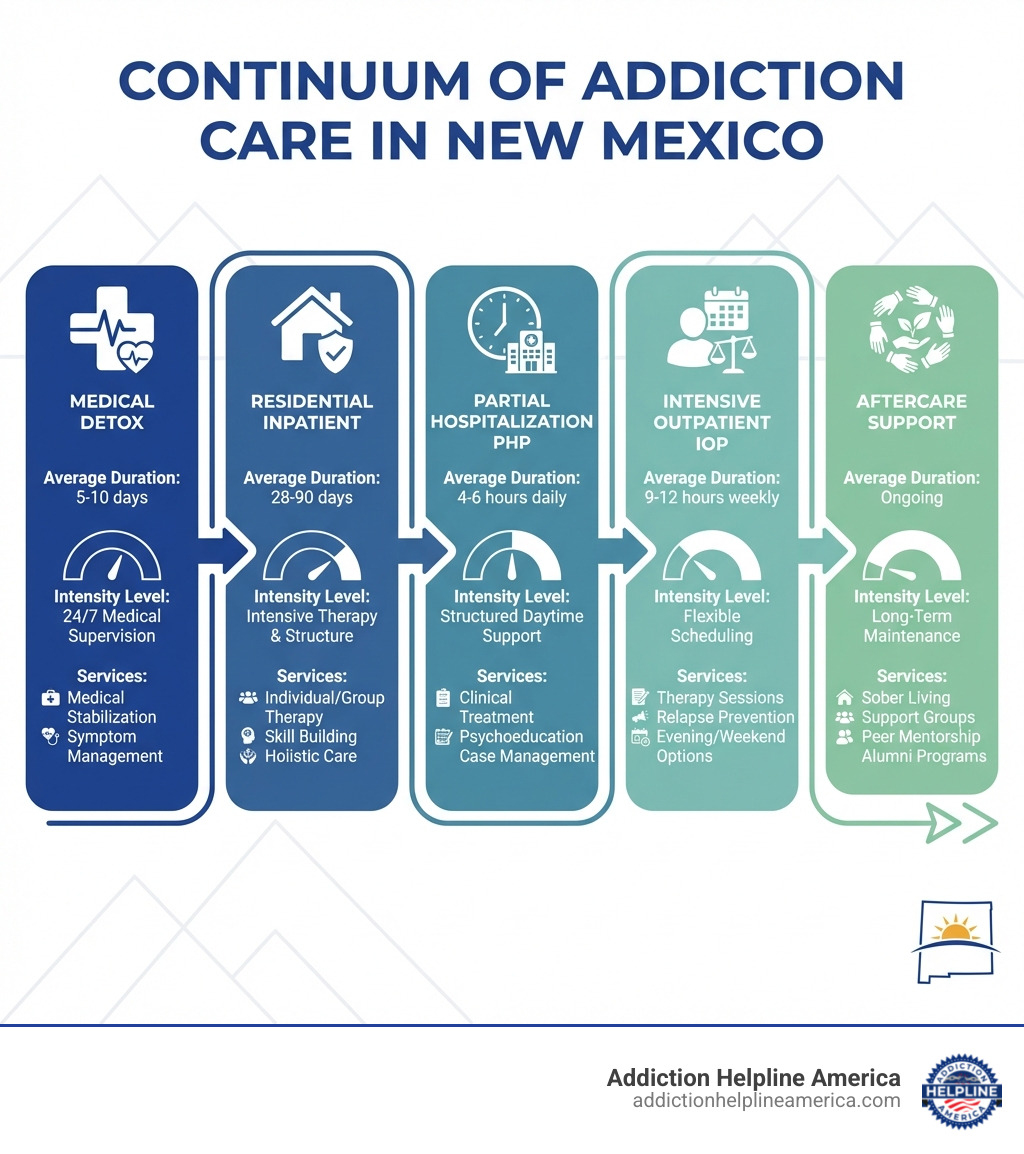
Once you’ve reflected on your needs, it’s time to understand the different levels of care available in Rehab in New Mexico:
- Medically-supervised detox: Often the first step, detox safely manages withdrawal symptoms under medical supervision. This is especially critical for substances like alcohol, opioids, and benzodiazepines, where withdrawal can be dangerous or even life-threatening. Facilities like Turquoise Lodge Hospital in Albuquerque offer medical detoxification services. You can learn more about this crucial first step at our Center for Detox.
- Inpatient residential: These programs provide 24/7 care in a structured environment, away from triggers and distractions. They are ideal for individuals with severe addictions or those who need intensive support. Stays typically range from 28 to 90 days, offering a comprehensive therapeutic experience. For tips on navigating these programs, check out our 30 Day Inpatient Program Tips 2025.
- Outpatient programs (PHP, IOP):
- Partial Hospitalization Programs (PHP) offer intensive treatment during the day, allowing you to return home in the evenings.
- Intensive Outpatient Programs (IOP) provide a flexible schedule of therapy sessions, ideal for those who need structured support while maintaining work, school, or family obligations. Many facilities in New Mexico, including the New Mexico Rehabilitation Center, offer IOPs. Our Outpatient Alcohol Treatment Ultimate Guide provides further details.
- Medication-Assisted Treatment (MAT): MAT combines behavioral therapies with medications (like buprenorphine, naltrexone, or methadone) to treat substance use disorders, particularly opioid and alcohol dependence. MAT has been shown to improve patient survival and retention in treatment. Many New Mexico rehab programs integrate MAT, and you can find more information about medication options at a Suboxone Clinic Near Me.
By understanding these options, you’re better equipped to make an informed decision about the type of Rehab in New Mexico that best suits your unique path to recovery.
Step 2: Find and Verify Quality Rehab in New Mexico

Once you have a clearer picture of your needs, the next step is to find and verify a quality rehab facility in New Mexico. The state offers over 100 substance use treatment centers, according to SAMHSA, with concentrations in major cities like Albuquerque, Santa Fe, and Las Cruces, as well as facilities in rural areas and on Native American reservations.
“Look for accreditations like CARF or The Joint Commission, and ask about staff credentials,” advises Sarah Jenkins, Director of Admissions at a leading New Mexico facility. “These are hallmarks of a program committed to quality and patient safety.” Focusing on these quality markers can narrow your search considerably.
- Accreditations: Look for facilities accredited by recognized organizations such as the Commission on Accreditation of Rehabilitation Facilities (CARF) or The Joint Commission. These accreditations signify that a facility meets rigorous national quality standards. For instance, the New Mexico Rehabilitation Center in Roswell is a Joint Commission accredited specialty hospital.
- State Licensure: Ensure the facility is licensed by the State of New Mexico. This is a fundamental requirement for operation and indicates compliance with state regulations set by bodies like the New Mexico Regulation & Licensing Department.
- Staff Qualifications: Inquire about the qualifications and credentials of the staff, including doctors, therapists, and counselors. A team of licensed substance abuse and mental health counselors, registered nurses, and physicians, like those at Yucca Lodge, indicates a high level of expertise.
Choosing the right facility is paramount to successful recovery. Our Find Right Rehab Facility Guide offers comprehensive advice on this process.
What to Look for in a Rehab in New Mexico
When evaluating potential facilities for Rehab in New Mexico, consider the following aspects:
- Evidence-Based Therapies: The most effective treatment programs use therapies backed by scientific research. The American Psychological Association (APA) recognizes several effective approaches, including:
- Cognitive Behavioral Therapy (CBT): Helps individuals identify and change negative thought patterns and behaviors contributing to addiction.
- Dialectical Behavior Therapy (DBT): Focuses on emotional regulation, distress tolerance, and interpersonal effectiveness.
- Individual vs. Group Counseling: A combination of both often provides the best outcomes, offering personalized attention and peer support. Our Types of Addiction Therapy article digs deeper into these methods.
- Staff-to-Client Ratio: A smaller ratio often translates to more personalized care and attention, which our experience shows can significantly impact treatment effectiveness. Vista Taos Renewal Center, for example, prides itself on a small staff-to-client ratio.
- Treatment Philosophy: Does the center align with your personal values? Some centers emphasize a 12-Step approach, while others might focus on holistic healing or spiritual growth. Yucca Lodge, for instance, believes addiction is a disease and supports a 12-Step approach.
- Holistic Approaches: Many facilities in New Mexico accept a holistic view, treating the mind, body, and spirit. This can include activities like yoga, meditation, art therapy, adventure therapy (such as hiking or horseback riding in New Mexico’s stunning landscape), and nutritional counseling. To understand the benefits of this approach, explore our Holistic Drug Rehab Complete Guide.
Specialized Programs for Rehab in New Mexico
New Mexico’s diverse population and unique environment have fostered a variety of specialized programs designed to meet specific needs:
- Demographic-Specific Care:
- Veterans Programs: Many facilities offer programs custom for veterans, addressing issues like PTSD and trauma often co-occurring with substance use. The New Mexico VA Health Care System is a key resource. The VA Substance Use Disorder Program Directory can help you find affiliated programs.
- LGBTQ+ Support: Some centers provide LGBTQ+-friendly environments, ensuring sensitive and inclusive care.
- Gender-Specific Rehab: Programs designed exclusively for men or women can create a safe space to address gender-specific issues without the distractions of mixed-gender groups. Learn more about options like Mens Inpatient Rehab.
- Adolescent Programs: Specialized care for younger individuals addresses developmental needs and family dynamics.
- Programs for Professionals: Custom treatment for professionals often includes privacy, flexible scheduling, and strategies for returning to work.
- Culturally Competent Care: Given New Mexico’s rich Native American and Hispanic heritage, many facilities offer culturally sensitive programs. For example, the Mescalero Apache Tribe provides substance abuse services specifically for federally recognized tribal members.
When searching for Rehab in New Mexico, don’t hesitate to ask about these specialized options. Finding a program that truly understands your unique background and challenges can make a significant difference in your recovery journey.
Step 3: Steer the Costs and Payment Options

Let’s be frank: the cost of addiction treatment is a major concern for many individuals and families. While costs vary dramatically based on the level of care and amenities, a study published in JAMA Network highlights the wide range of expenses in the U.S. treatment landscape. Costs for Rehab in New Mexico can range from free or low-cost at state-funded facilities to tens of thousands of dollars for a 30-day stay at a private residential center.
“Never let the sticker price deter you from making the first call,” says Sarah Jenkins, an admissions director with over a decade of experience. “Between insurance, state funding like Centennial Care, and sliding scale fees, our job is to help you find a viable financial path to treatment.”
Insurance Coverage
The good news is that under the Affordable Care Act (ACA) and the Mental Health Parity and Addiction Equity Act (MHPAEA), most health insurance plans must cover mental health and substance use disorder services as essential health benefits, as outlined by the U.S. Department of Health and Human Services. This means your private insurance plan, like those from providers such as Cigna, Aetna, or Blue Cross Blue Shield, will likely cover a portion of your treatment. To understand how your Cigna plan might cover rehab, check out our Cigna Insurance Drug Alcohol Rehab Guide.
In New Mexico, state-funded options also play a vital role:
- New Mexico Medicaid (Centennial Care): Medicaid is a critical resource for many New Mexico residents. In New Mexico, it’s known as Centennial Care, and it covers a wide range of substance use disorder services. Many facilities accept Centennial Care, making treatment accessible to those who qualify.
- Medicare: For eligible individuals, Medicare also covers certain substance use disorder treatment services.
- TRICARE and VA Options: If you’re a veteran or military family member, TRICARE and Veterans Affairs (VA) options are available. You can search for affiliated substance use disorder programs through the VA directory.
- IHS/Tribal/Urban (ITU) Funds: For federally recognized tribal members, Indian Health Service (IHS) funds are often accepted by facilities, including those on reservations. For example, the Mescalero Apache Tribe offers substance abuse services using these funds.
Other Payment Options
Even without comprehensive insurance, there are still avenues to explore:
- Sliding Scale Fees: Many rehab centers offer sliding scale fees, adjusting the cost based on your income and ability to pay. Yucca Lodge, a facility of the New Mexico Department of Health, is known for offering sliding scale fee options.
- Financing Options and Payment Plans: Some facilities work with third-party lenders or offer in-house payment plans to help you manage costs over time.
- Government Funding and Grants: Federal or state government funding and grants from organizations like SAMHSA are sometimes available, especially for those with limited financial resources.
- Free Resources: While comprehensive rehab often has a cost, many free resources exist, particularly for crisis support and ongoing recovery groups. Our service at Addiction Helpline America is always free and confidential, connecting you to treatment options without any cost to you.
Verifying Your Benefits: This step is crucial. Before committing to a facility, our team at Addiction Helpline America can help you verify your insurance benefits quickly and confidentially. This ensures you understand exactly what your policy covers, minimizing unexpected costs and allowing you to focus on your recovery journey. Don’t let financial concerns deter you; with the right guidance, treatment is often more accessible than you think.
Step 4: Prioritize Treatment for Co-Occurring Disorders
It’s a common misconception that addiction exists in isolation. Our expertise, backed by extensive research, reveals a powerful truth: substance use disorders (SUDs) frequently co-occur with mental health conditions. This phenomenon is known as a dual diagnosis. In fact, the 2021 National Survey on Drug Use and Health (NSDUH) found that 19.4 million adults had both a mental illness and an SUD. This staggering statistic underscores the critical importance of integrated treatment.
What is Dual Diagnosis?
Dual diagnosis, or co-occurring disorders, refers to the presence of both a substance use disorder and a mental health disorder at the same time. As the National Institute of Mental Health (NIMH) explains, these conditions don’t just happen concurrently; they often interact, exacerbating each other’s symptoms and making recovery more challenging if only one is addressed. For instance, someone might use alcohol to cope with anxiety, or a depressive episode could trigger a relapse into drug use.
“Treating addiction without addressing underlying mental health issues is like trying to fix a leaky roof on a house with a crumbling foundation,” explains Dr. Mark Valerio, a psychiatrist specializing in dual diagnosis. “Integrated treatment is essential for building a stable, lasting recovery.”
Our Mental Health Treatment Centers Complete Guide provides a broader understanding of mental health treatment, which is often intertwined with addiction recovery.
The Importance of Integrated Treatment
Treating co-occurring mental health and substance use disorders concurrently is significantly more effective than treating them separately. In New Mexico, we are fortunate that over 60 of the alcohol and drug rehabs are equipped to handle co-occurring mental conditions, according to SAMHSA’s treatment locator. This capacity is vital for holistic recovery. Facilities like the New Mexico Rehabilitation Center use models like Integrated Dual Diagnosis Treatment (IDDT) in their Intensive Outpatient Programs, specifically designed for individuals with primary substance abuse issues and a mental health component.
Common mental health conditions that frequently co-occur with SUDs include:
- Depression: Feelings of sadness, hopelessness, and loss of interest in activities can drive individuals to self-medicate with substances.
- Anxiety Disorders: Chronic worry, panic attacks, and social anxiety can lead to substance use as a coping mechanism.
- Post-Traumatic Stress Disorder (PTSD): Individuals who have experienced trauma often turn to substances to numb painful memories or emotions. Understanding specialized treatment for this is crucial, as highlighted in our Treatment Programs PTSD Treatment article.
Asking Facilities About Their Dual Diagnosis Approach
When you’re serious about Rehab in New Mexico, make sure to ask prospective facilities about their approach to dual diagnosis. Inquire about:
- Their experience and expertise in treating co-occurring disorders.
- The specific therapies and medications they use for mental health conditions alongside addiction treatment.
- How their clinical team coordinates care for both conditions.
- Whether they offer specialized staff trained in dual diagnosis.
Prioritizing integrated treatment ensures that all aspects of your well-being are addressed, laying a stronger foundation for lasting recovery. It’s about treating the whole you, not just a part of you.
Step 5: Create a Plan for Lasting, Long-Term Recovery
Completing a rehab program in New Mexico is a monumental achievement, but treatment is just the first step on a lifelong journey. Recovery isn’t a destination; it’s an ongoing process that requires commitment, support, and a robust aftercare plan. As the National Institute on Drug Abuse (NIDA) emphasizes, remaining in treatment for an adequate period and having a strong aftercare plan are critical for success.
“Recovery doesn’t end when you leave our facility; it begins,” says Maria Sanchez, LPC, a licensed professional counselor. “A strong aftercare plan, including peer support and continued therapy, is the scaffolding that supports a new life free from substance use.”
Aftercare Planning: Your Roadmap to Continued Success
Before leaving a rehab facility, you and your treatment team will develop a personalized aftercare plan. This plan is your roadmap for continued success and typically includes:
- Sober Living Homes: These provide a safe, structured, and substance-free environment, offering a bridge between intensive treatment and full independence. They help you practice coping skills and reintegrate into daily life with peer support.
- Continued Therapy: Regular individual or group therapy sessions are vital for processing emotions, developing healthy coping mechanisms, and addressing any emerging challenges.
- Recovery Coaching: An addiction recovery coach can provide personalized guidance, accountability, and encouragement as you steer early recovery and beyond. Explore our Addiction Recovery Coaching Complete Guide to learn more.
- Support Groups: Peer-led support groups are cornerstones of long-term recovery. They offer a sense of community, shared experience, and invaluable encouragement.
- Alcoholics Anonymous (AA): A widely recognized 12-step program for alcohol dependence. You can find local meetings through Alcoholics Anonymous in New Mexico.
- Narcotics Anonymous (NA): Similar to AA, but for drug dependence of any kind. The Narcotics Anonymous Rio Grande Region can help you locate meetings.
- SMART Recovery: An alternative program focusing on self-empowerment and self-reliance. Find meetings and resources at the official SMART Recovery website.
Leveraging New Mexico’s Environment for Recovery
One of the unique benefits of seeking Rehab in New Mexico is the opportunity to leverage its stunning natural environment for healing and personal growth. The Land of Enchantment offers a serene backdrop that can be incredibly therapeutic:
- Hiking and Outdoor Activities: New Mexico’s mountains, deserts, and forests provide ample opportunities for hiking, nature walks, and other outdoor activities. Connecting with nature can reduce stress, improve mood, and foster a sense of peace and mindfulness.
- Meditation and Mindfulness: The quiet, expansive landscapes of New Mexico are ideal for practicing meditation and mindfulness, tools that are highly effective in managing stress and preventing relapse.
- Cultural Immersion: New Mexico’s rich cultural heritage, including its Native American and Hispanic influences, can offer unique avenues for spiritual growth and community connection, enriching your recovery journey.
Building a new life in recovery is about more than just abstaining from substances; it’s about finding new passions, developing healthy relationships, and finding joy in everyday life. Your aftercare plan will help you integrate these elements, ensuring that the foundation you built in Rehab in New Mexico supports a lifetime of sobriety and well-being.
Frequently Asked Questions about New Mexico Rehab
How do I get immediate help for a crisis in New Mexico?
For any mental health or substance use crisis, you can call or text the 988 Suicide & Crisis Lifeline 24/7 for free, confidential support. This service connects you with trained crisis counselors who can provide immediate assistance and connect you to local resources. For a medical emergency, always dial 911.
How long does rehab typically last?
The duration of rehab varies significantly based on individual needs. According to the National Institute on Drug Abuse (NIDA), effective treatment length depends on the patient’s problems and needs. Generally, detoxification (detox) lasts 5-10 days. Inpatient residential programs commonly range from 28 to 90 days. Outpatient programs, such as Intensive Outpatient Programs (IOPs) or Partial Hospitalization Programs (PHPs), can extend for several weeks to months, providing ongoing support. Our article How Long is Rehab offers a more detailed explanation of program lengths.
Can I find rehab that respects my cultural background in New Mexico?
Absolutely. New Mexico boasts a rich cultural mix, and many facilities are committed to providing culturally competent care. SAMHSA emphasizes that culture plays a central role in recovery. This includes programs specifically designed for Native American communities, such as services provided by the Mescalero Apache Tribe, which offer support custom to tribal members. Additionally, many centers offer bilingual (Spanish/English) support and integrate culturally sensitive practices into their therapies. When seeking Rehab in New Mexico, we recommend inquiring about a facility’s experience and offerings regarding cultural competency.
Conclusion: Take the Next Step Today
Taking the step to seek Rehab in New Mexico is a profound act of self-care and courage. We’ve walked through five critical steps: honestly assessing your needs, finding and verifying quality treatment, navigating costs, prioritizing co-occurring disorders, and planning for long-term recovery. Each step is designed to empower you with the knowledge and confidence to make an informed choice.
Recovery is a journey, not a destination, and every journey begins with a single step. You don’t have to face this alone. At Addiction Helpline America, we understand the complexities of addiction and the challenges of finding the right help. Our mission is to provide free, confidential, and personalized guidance, connecting you to accredited treatment centers in New Mexico and across our extensive network. We’re here to help you verify your insurance benefits, understand your options, and find a program that truly fits your unique needs.
Your path to healing and a healthier life starts now.
Take the next step today: Find the right rehab in New Mexico for you by calling our free helpline or verifying your insurance today.