
Why Addiction Recovery Coaching Could Be Your Bridge to Lasting Sobriety
Addiction recovery coaching is a form of strengths-based, non-clinical support where a trained professional—often someone with lived experience of addiction—acts as your personal guide, mentor, and accountability partner throughout your recovery journey. Recovery coaches help you set goals, steer resources, overcome obstacles, and build the life skills needed for long-term sobriety.
Quick Answer: What You Need to Know About Recovery Coaching
- What it is: Non-clinical support from a trained mentor (often in recovery themselves)
- What they do: Help you set goals, find resources, build coping skills, and stay accountable
- Key difference from therapy: Focuses on present/future action, not past trauma
- Key difference from sponsors: Professional relationship with broader scope beyond 12-step programs
- Average cost: $25,000-$77,000 annual salary range (services often free through programs or sliding scale)
- Proven results: 82% abstinence rate for those in recovery monitoring programs
The numbers tell a sobering story. 48.5 million Americans—16.7% of the population—battled a substance use disorder in the past year. If you or someone you love is among them, you’re not alone in feeling overwhelmed about where to turn next.
Recovery coaches fill a critical gap. They’re not therapists diagnosing conditions or treating trauma. They’re not medical professionals prescribing medication. Instead, they’re action-oriented allies who help you build a sustainable recovery one day at a time. Many have walked the same path you’re on now.
Research shows that recovery coaching works. People who work with coaches experience reduced substance use, lower relapse rates, better treatment retention, and improved access to housing and social support. They’re less likely to need emergency services or end up involved with the criminal justice system.
At Addiction Helpline America, we’ve spent years connecting individuals and families to evidence-based addiction recovery coaching services that provide the guidance and accountability needed for lasting change. Our experience has shown us that the right recovery coach can make all the difference between simply surviving early sobriety and truly thriving in a new life.
What is a Recovery Coach and What is Their Role?
Think of the moment you decided you wanted to change your relationship with substances. Maybe you felt hopeful, scared, determined, and completely overwhelmed all at once. Now imagine having someone who’s dedicated to walking that path right alongside you—not judging, not diagnosing, just supporting you exactly where you are. That’s what an addiction recovery coach does.
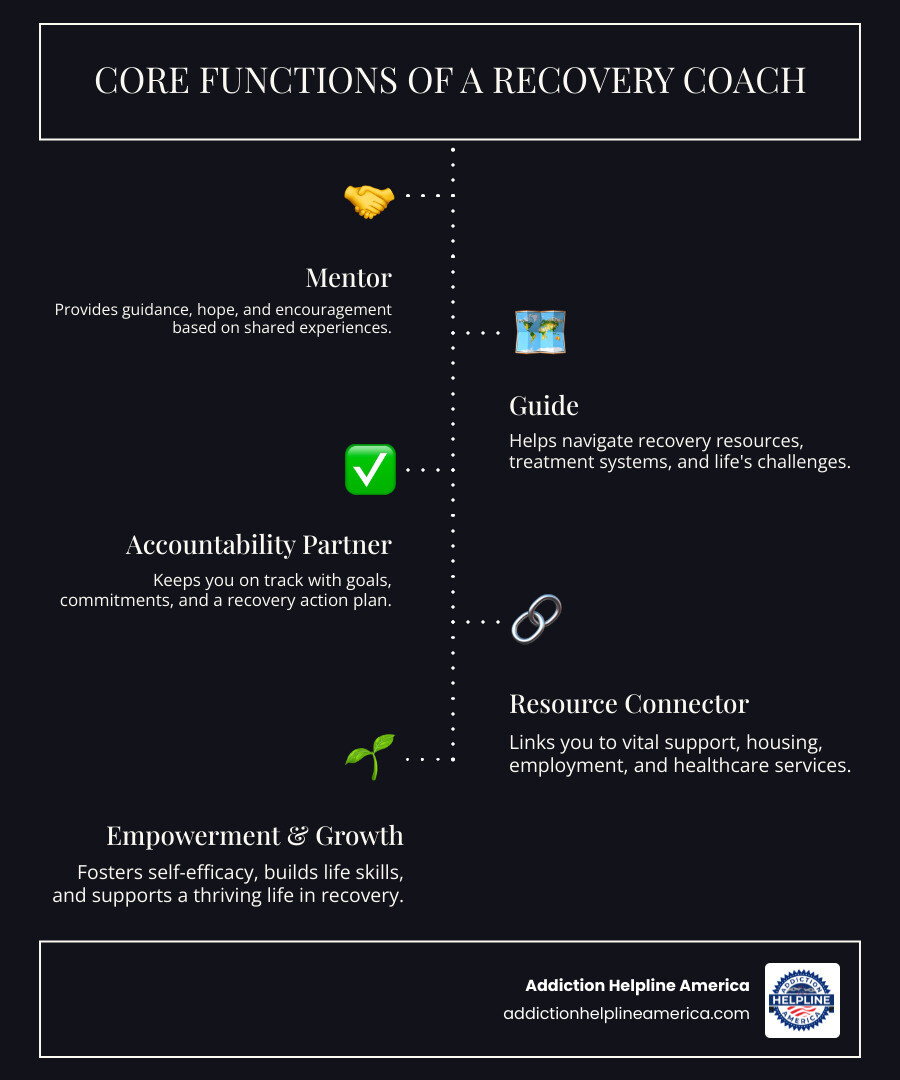
A recovery coach is a trained, non-clinical professional who serves as your personal guide, mentor, and accountability partner throughout your recovery journey. They’re not there to fix you or tell you what to do. Instead, they work with you to build the life you want—one where you no longer feel the need to escape.
The role centers on empowerment rather than treatment. Recovery coaches focus on the present and future, helping you identify your goals, steer obstacles, and develop practical skills for daily living. They help you build what experts call “recovery capital”—all the internal and external resources that support lasting sobriety. This might mean connecting you with stable housing, helping you practice job interview skills, teaching you stress management techniques, or simply being there when things get tough.

Recovery coaching operates on a strengths-based, action-oriented approach. Your coach believes you already have what it takes to recover—their job is helping you recognize and use those strengths. They meet you where you are without judgment, whether you’re just considering change or you’ve been working on recovery for years.
Addiction itself is complex, affecting both brain chemistry and behavior patterns. You can explore more about this on our Definition of Addiction page. Recovery coaches understand this complexity and work within several core principles to provide meaningful support.
The coaching relationship is always client-centered—you remain in the driver’s seat of your own recovery. Your coach brings expertise in supporting successful change, but you’re the expert on your own life. This partnership is holistic, addressing not just substance use but all aspects of rebuilding a fulfilling life: health, housing, purpose, relationships, and community connection.
Coaches focus on your inherent strengths and resources rather than deficits or problems. They help you identify what’s already working and build on it. The approach is empowering by design—the ultimate goal is equipping you with skills and confidence to manage your recovery independently over time.
Perhaps most importantly, coaches remain non-judgmental and principle-driven. They help you honor your own values and make decisions aligned with your long-term goals, whatever those may be. There’s no one-size-fits-all path to recovery, and your coach respects that your journey is uniquely yours.
How Recovery Coaching Differs from Therapy and Sponsorship
Many people wonder how an addiction recovery coach fits alongside other forms of support. The truth is, coaches serve a distinct purpose that complements—but doesn’t replace—therapy or sponsorship.
Therapists and counselors provide clinical treatment. They’re licensed mental health professionals who diagnose conditions, process trauma, and treat co-occurring disorders like depression or anxiety. Therapy typically explores your past to understand how it affects your present. It’s healing work that addresses the psychological roots of addiction. You can learn more about the connection between addiction and mental health in our Mental Health: The Complete Guide.
Recovery coaches, on the other hand, are non-clinical. They don’t diagnose, treat mental health conditions, or dig into past trauma. Instead, they focus on present challenges and future goals. Where a therapist might help you understand why you developed certain coping mechanisms, a coach helps you build new, healthier ones. Where therapy explores feelings, coaching drives action.
Sponsors in 12-step programs like AA or NA offer peer support based on their own recovery experience. They guide you through the steps, share their personal journey, and provide accountability within that specific framework. The relationship is voluntary, unpaid, and centered on working the program together.
Recovery coaching takes a broader approach. Coaches may work with clients following any recovery pathway—12-step, SMART Recovery, faith-based programs, medication-assisted treatment, or no formal program at all. They receive formal training and often certification. The relationship is typically professional (sometimes paid, sometimes funded through programs), with clear boundaries and defined goals. Coaches connect you to resources across multiple life domains: employment, education, legal issues, housing, healthcare, and more.
| Feature | Recovery Coach | Therapist | Sponsor |
|---|---|---|---|
| Focus | Present/Future action and goals | Past experiences and healing | Working the 12 steps |
| Role | Non-clinical mentor and guide | Licensed clinical professional | Peer with lived experience |
| Scope | Life skills, resources, accountability | Mental health treatment and diagnosis | Program-specific support |
| Training | Formal certification (30-60 hours) | Graduate degree and licensure | Personal recovery experience |
| Boundaries | Professional relationship | Clinical relationship | Informal friendship |
The best recovery support often includes multiple types of help working together. You might see a therapist to process trauma, work with a sponsor in your 12-step group, and partner with a coach to steer practical challenges like finding employment or rebuilding family relationships. Each plays a valuable role.
The Proven Benefits of Addiction Recovery Coaching
Recovery coaching isn’t just a feel-good addition to treatment—research shows it makes a real difference in outcomes. Studies have found that people working with coaches experience reduced substance use, lower relapse rates, and better retention in treatment programs. They’re also more likely to access essential services like housing support, healthcare, and employment assistance.
One significant study published in the Journal of Substance Abuse Treatment found that recovery coaching leads to positive outcomes across multiple measures. Participants reported increased self-efficacy—that crucial belief that you can successfully manage your recovery. They felt more confident navigating challenges and making healthy choices.
The numbers are compelling. Monitoring programs that include recovery coaching report abstinence rates as high as 82%. Participants also show reduced involvement with emergency services and the criminal justice system, which means fewer crises and more stability.
Families benefit too. When someone works with a recovery coach, the whole family system often improves. Coaches can help rebuild trust, establish healthy communication patterns, and guide families toward appropriate support resources. If your family is considering an intervention or seeking guidance, our Family Drug Intervention resource offers additional support.
Recovery coaches help bridge the gap between formal treatment and everyday life. They provide continuity of care during vulnerable transitions—leaving rehab, starting a new job, moving to sober living, or facing unexpected stressors. Having someone in your corner during these moments can mean the difference between a temporary setback and a full relapse.
At Addiction Helpline America, we’ve seen how recovery coaching transforms lives. The right coach doesn’t just help you stop using—they help you start living.