
Finding Hope and Affordable Recovery in Illinois
Illinois alcohol rehab programs offer a path to recovery for thousands of people struggling with alcohol use disorder. Whether you’re searching for yourself or a loved one, understanding your options is the first step toward healing.
Quick Guide to Illinois Alcohol Rehab:
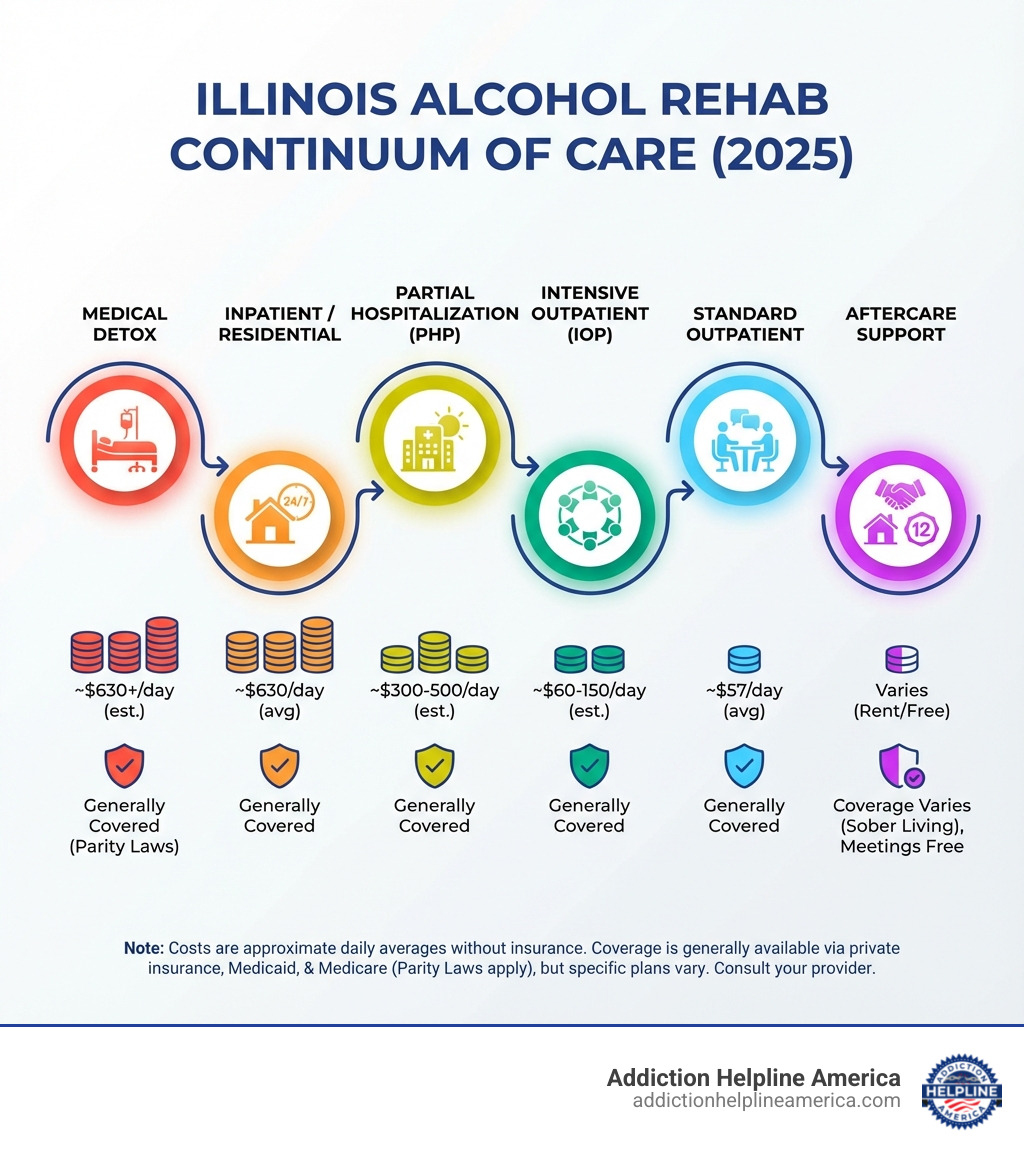
- Types of Programs: Medical detox, inpatient/residential, partial hospitalization (PHP), intensive outpatient (IOP), standard outpatient, and aftercare support
- Average Cost: Approximately $56,666 for residential treatment; $629.62/day for inpatient without insurance; $56.80/day for outpatient without insurance
- Insurance Coverage: Most private insurance, Medicaid, and Medicare plans cover addiction treatment thanks to federal parity laws (ACA and MHPAEA)
- Financial Assistance: State-funded programs, non-profit options, and sliding scale payments are available
- Treatment Centers: 919 rehab facilities across Illinois, from Chicago to Southern Illinois
- Call Addiction Helpline America: 844-561-0606 for free, confidential guidance 24/7
The statistics are sobering: 6.0% of Illinois residents aged 12 or older reported alcohol misuse in recent years, and 10.78% suffered from alcohol use disorder. That’s approximately 640,000 people whose lives are impacted by alcohol addiction. You’re not alone in this struggle.
The good news? Recovery is possible, and it doesn’t have to break the bank. Illinois offers a wide range of treatment options—from free state-funded programs to affordable outpatient services—designed to meet you wherever you are in your journey. Whether you need medical detox to safely manage withdrawal symptoms, intensive residential care, or flexible outpatient support that fits around your job and family, there’s a path forward.
This guide will walk you through everything you need to know about finding quality, affordable Illinois alcohol rehab. We’ll explain the different types of treatment programs, how insurance works, what financial assistance is available, and how to choose the right level of care. We’ll also share information about specialized programs for veterans, women, LGBTQ+ individuals, and young adults, plus details on aftercare support to help you build lasting sobriety.
At Addiction Helpline America, we’ve spent years connecting individuals and families with effective, compassionate Illinois alcohol rehab resources that fit their unique needs and budgets. Our team understands the challenges you’re facing, and we’re here to provide free, confidential guidance every step of the way.
Common Illinois alcohol rehab vocab:
Understanding the Need for Alcohol Rehab in Illinois
Alcohol Use Disorder (AUD) is a chronic, progressive disease that affects millions of people, including a significant portion of the Illinois population. It’s not a moral failing, but a complex condition characterized by an impaired ability to stop or control alcohol use despite adverse social, occupational, or health consequences. Understanding AUD means recognizing it as a brain disease that involves physical changes.
In the 2017-2019 reporting period, 6.0% (approximately 640,000) of Illinois residents aged 12 or older reported misusing alcohol. More recently, in 2020, 10.78% of people in Illinois aged 12 or older suffered from alcohol use disorder. These numbers highlight a widespread struggle that impacts individuals, families, and communities across the state.
The impact of AUD extends far beyond the individual, affecting relationships, employment, physical health, and mental well-being. Many individuals struggling with alcohol addiction also experience co-occurring mental health disorders, such as anxiety or depression. These “dual diagnoses” are common and require integrated treatment approaches for successful, long-term recovery. Addressing both conditions simultaneously is crucial, as one can exacerbate the other. For a deeper dive into behavioral health trends in Illinois, you can review the Behavioral Health Barometer: Illinois.
Recognizing the Signs You or a Loved One Needs Help
It can be challenging to admit there’s a problem, but recognizing the signs of alcohol addiction is the first step toward seeking help. We often see individuals or their loved ones struggling with these indicators:
- Neglecting responsibilities: Failing to meet obligations at work, school, or home due to drinking.
- Relationship problems: Conflicts with family and friends stemming from alcohol use.
- Legal issues like DUIs: Facing legal consequences, such as strict DUI laws in Illinois, due to impaired driving.
- Failed attempts to quit: Trying to cut back or stop drinking multiple times without success.
- Withdrawal symptoms: Experiencing physical discomfort like shakiness, sweating, nausea, anxiety, or even seizures when not drinking. This indicates physical dependence.
- Hiding drinking habits: Becoming secretive about alcohol consumption, drinking alone, or lying about how much is consumed.
- Increased tolerance: Needing to drink more alcohol to achieve the same effects, which is a sign of developing dependence.
These signs, whether behavioral changes, physical symptoms like bloodshot eyes and poor hygiene, or psychological shifts such as increased irritability and mood swings, are red flags indicating that professional intervention is needed.
The Role of Medical Detoxification

For many, the first and most critical step in an Illinois alcohol rehab journey is medical detoxification. This process safely and effectively helps individuals withdraw from alcohol under the supervision of medical professionals. Alcohol withdrawal can be dangerous, potentially leading to severe symptoms such as dehydration, seizures, and a serious condition known as Delirium Tremens (DTs), characterized by fever, hallucinations, and severe confusion.
The importance of medical supervision during detox cannot be overstated. Our medical teams can administer medications to manage uncomfortable and potentially life-threatening withdrawal symptoms, making the process as safe and comfortable as possible. This controlled environment ensures that the individual’s body can safely eliminate alcohol. A typical detoxification period might last around two weeks, depending on the severity and duration of alcohol use.
Detoxification is not a cure for alcohol addiction, but it’s a vital preparatory stage. It stabilizes the individual physically, clearing the way for them to fully engage in the therapeutic work of recovery. After completing detox, individuals are better prepared to move on to the next stages of treatment, such as inpatient or outpatient programs, to address the underlying causes of their addiction. If you are looking for a medical detox center in Illinois, we can help you find a medical detox center in Illinois.
Navigating the Cost of Illinois Alcohol Rehab
One of the biggest concerns people have when considering Illinois alcohol rehab is the cost. We understand that financial worries can be a significant barrier to seeking help, but it’s important to know that effective and affordable options exist.
The average cost of rehab for an Illinois resident is approximately $56,666 for residential treatment. However, this figure is just an average, and the actual cost can vary widely based on several factors:
- Type of program: Inpatient (residential) programs are generally more expensive than outpatient options due to the 24/7 care, accommodation, and meals provided.
- Length of stay: Longer programs naturally incur higher costs.
- Amenities: Luxury facilities with private rooms, gourmet meals, and extensive recreational activities will be more expensive than basic programs.
- Location: Rehab centers in major metropolitan areas like Chicago might have different pricing structures compared to those in more rural parts of Illinois.
According to 2022 data, the approximate daily cost for a 30-day inpatient rehab stay without insurance coverage is $629.62 per day. For a 30-day outpatient program, the cost without insurance coverage averages $56.80 per day. While these numbers can seem daunting, Illinois ranks as the 24th cheapest state for inpatient drug care, suggesting that treatment here can be more accessible than in some other regions. For more detailed statistics on rehab costs, you can consult the Average Cost of Drug Rehab [2022].
Here’s a comparison of average daily costs for inpatient and outpatient care:
| Program Type | Daily Cost (Without Insurance) | Daily Cost (With 60% Insurance Coverage) | Daily Cost (With 80% Insurance Coverage) |
|---|---|---|---|
| Inpatient | $629.62 | $251.85 | $125.92 |
| Outpatient | $56.80 | $22.72 | $11.36 |
Does Insurance Cover Alcohol Rehab in Illinois?
The good news is that health insurance is mandated to cover substance use treatment, including for alcohol addiction. Thanks to federal legislation, most health insurance plans must provide coverage for mental health and substance use disorders at parity with medical and surgical benefits.
- Affordable Care Act (ACA): The ACA designates addiction treatment as an essential health benefit, meaning all plans offered on the health insurance marketplace must provide coverage.
- Mental Health Parity and Addiction Equity Act (MHPAEA): This act prevents insurance companies from imposing more restrictive limits on mental health and substance use benefits than on medical/surgical benefits.
This means that major private insurance providers like Aetna, Blue Cross Blue Shield, Cigna, Humana, and UnitedHealthcare typically cover a significant portion of Illinois alcohol rehab costs. Medicaid also covers treatment for mental health and substance use disorders, thanks to MHPAEA, making it a crucial resource for many Illinois residents. For more information on Medicaid parity rules, you can visit Medicaid.gov. Medicare also provides coverage: Part A covers inpatient rehab services, and Part B covers outpatient services. You can learn more about Medicare coverage for substance abuse services on the Center for Medicare Advocacy website.
To understand your specific benefits, we always recommend verifying your insurance coverage directly with your provider or the rehab center you are considering. Our team at Addiction Helpline America can assist you with this process to help you verify your insurance for Illinois alcohol rehab.
How to Find Affordable Illinois Alcohol Rehab Options
If insurance coverage is insufficient or unavailable, don’t lose hope. There are numerous avenues to make Illinois alcohol rehab affordable:
- State-Funded Programs: Illinois has government-funded rehab centers designed for individuals with limited financial resources. These programs receive funding through Medicaid reimbursement, federal substance abuse block grants, and state general funds. You can contact the Illinois Health and Human Services Department for assistance in finding these options.
- Non-Profit Organizations: Many non-profit rehab centers and faith-based organizations offer treatment at reduced costs or through grants and donations.
- Sliding Scale Fees: Some facilities adjust treatment costs based on an individual’s income and ability to pay, often referred to as sliding scale payments.
- Payment Plans and Financing: Many rehab centers offer in-house payment plans, allowing you to pay for treatment in installments. Medical loans are also an option.
- Rehab Scholarships: Some organizations and individual treatment centers offer scholarships to cover treatment costs for eligible individuals.
We are committed to helping you explore all available financial avenues. You can find more information on how to find affordable addiction treatment in Illinois through our resources.
A Guide to Alcohol Treatment Programs and Levels of Care
Choosing the right level of care is paramount for effective Illinois alcohol rehab. Addiction treatment is not a one-size-fits-all solution; it requires a personalized approach based on an individual’s specific needs, the severity of their addiction, and any co-occurring conditions. Our process typically begins with a thorough assessment to determine the most appropriate treatment plan.

Effective treatment programs incorporate evidence-based therapies that address the psychological and behavioral aspects of addiction. These include:
- Cognitive Behavioral Therapy (CBT): Helps individuals identify and change unhealthy thought patterns and behaviors that contribute to alcohol use.
- Dialectical Behavior Therapy (DBT): Focuses on managing intense emotions, improving interpersonal relationships, and developing coping skills, especially beneficial for those with co-occurring disorders.
- Motivational Interviewing (MI): A client-centered approach that helps individuals explore and resolve ambivalence about change, fostering their internal motivation for recovery.
These therapies, often combined with individual and group counseling, form the backbone of a comprehensive treatment plan. To explore various treatment centers and their offerings, you can visit Find Illinois Rehab Centers.
Inpatient vs. Outpatient Programs
The continuum of care in Illinois alcohol rehab offers different levels of intensity:
- Inpatient/Residential Treatment: This is the most intensive level, providing 24/7 care in a structured, substance-free environment. Patients live at the facility, engaging in daily therapy, counseling, and activities. It’s ideal for severe addiction, those with unstable home environments, or individuals who have experienced previous relapses.
- Partial Hospitalization Programs (PHP): Often a step down from inpatient care, PHP involves intensive daily treatment for several hours, five to seven days a week. Patients return home or to a sober living facility at night, allowing them to maintain some connection to their daily lives while receiving robust support.
- Intensive Outpatient Programs (IOP): IOPs offer more flexibility than PHP, with treatment sessions typically taking place for a few hours, three to five days per week. This allows individuals to continue working, attending school, or caring for family while receiving structured therapy and support.
- Standard Outpatient: This level provides ongoing support with less time commitment, usually one or two sessions per week. It’s suitable for individuals with milder addictions, those transitioning from more intensive programs, or as a long-term maintenance strategy.
Virtual and telehealth treatment options are also becoming increasingly prevalent, offering flexibility and accessibility for many. These programs often use the same core evidence-based curriculum as in-person treatments, delivered from the comfort of your home or office. You can explore virtual and telehealth treatment options in Illinois.
Specialized Illinois Alcohol Rehab Programs
We recognize that every individual’s journey is unique, and sometimes, specialized programs can offer a more custom and effective path to recovery. Many Illinois alcohol rehab centers provide programs designed for specific populations:
- Programs for Veterans: Addressing the unique challenges faced by military personnel, often incorporating trauma therapy for PTSD and other service-related issues.
- Women-only programs: Providing a safe, supportive environment to address gender-specific issues, trauma, and co-occurring mental health conditions.
- LGBTQ+ affirming care: Offering culturally competent and inclusive treatment that understands the unique stressors and discrimination faced by the LGBTQ+ community.
- Teen and young adult programs: Custom to the developmental needs of younger individuals, often involving family therapy and educational support.
- Programs for professionals: Designed for individuals in demanding careers, focusing on discreet treatment and relapse prevention strategies that support career reintegration.
- Culturally-specific services: Some centers offer culturally sensitive care that respects and incorporates the specific backgrounds and values of diverse communities.
These specialized programs ensure that treatment addresses not just the addiction, but also the broader context of an individual’s life and experiences. You can find specialized alcohol rehab programs in Illinois through our resources.
Building a Foundation for Lasting Sobriety
Recovery from alcohol addiction is a lifelong journey, not a destination. Building a strong foundation for lasting sobriety involves a long-term recovery plan that extends beyond initial treatment. It’s about developing new coping mechanisms, fostering healthy relationships, and creating a fulfilling life free from alcohol.
When choosing an Illinois alcohol rehab, considering the regional benefits can also be helpful. For example, some individuals might prefer the metropolitan amenities and extensive resources of Chicago and the Chicagoland region, while others may find the natural beauty and tranquil environment of Southern Illinois, near the Shawnee National Forest, more conducive to their healing process. Northern Illinois also offers its own appeal with outdoor activities that can be integrated into a holistic recovery plan.
It’s also important to be aware of the legal aspects of alcohol use and DUI in Illinois. The state has strict DUI laws, and understanding these can reinforce the importance of sobriety. On a more supportive note, Illinois has a Good Samaritan Law (Emergency Medical Services Access Law of 2012) which protects individuals who seek help for an overdose (even if drug-related) from prosecution for minor drug possession. While primarily for drug overdoses, this law reflects a broader shift towards prioritizing health and safety in substance-related emergencies.
The Critical Role of Aftercare Support
After completing an initial treatment program, the work of recovery truly begins. Aftercare support is crucial for preventing relapse and maintaining long-term sobriety. This can include:
- Relapse prevention planning: Developing strategies to identify triggers and cope with cravings.
- Sober living homes: Providing a supportive, substance-free transitional living environment.
- 12-Step programs (AA): Alcoholics Anonymous (AA) meetings offer peer support, shared experiences, and a structured path to recovery.
- Alumni programs: Many rehab centers offer alumni programs that provide ongoing connection, activities, and support from individuals who have successfully completed treatment.
- Ongoing individual and group therapy: Continuing therapy helps reinforce learned skills, address new challenges, and maintain mental well-being.
Building a strong support network—whether through family, friends, peer support groups, or alumni connections—is a cornerstone of lasting recovery. There are many resources available for individuals seeking help for alcohol addiction in Illinois, including online recovery meetings and other supportive services. We can help you find recovery support services in Illinois.
Finding a Quality Alcohol Rehab Center in Illinois
Illinois is home to a wide array of reputable alcohol rehab centers, each offering unique approaches and services. When considering options, it’s important to look for centers with accreditations from bodies like The Joint Commission (JCAHO) or CARF, as these indicate a commitment to high standards of care. Reading about a center’s treatment philosophy and the therapies they offer can also provide valuable insights into whether their approach is right for you.
With 919 rehab facilities across the state, navigating the options can feel overwhelming. Our team at Addiction Helpline America is familiar with the treatment landscape in Illinois and can help you find the best fit for your specific needs, budget, and location. We can help you verify insurance and connect you with a quality program that aligns with your recovery goals.
Frequently Asked Questions about Illinois Alcohol Rehab
How do I find free or state-funded rehab in Illinois?
Finding free or state-funded Illinois alcohol rehab is a common and important question. We want you to know that these options are available and accessible. A primary resource is the Illinois Department of Human Services (IDHS), which oversees state-funded addiction treatment and can provide information on eligibility and services.
Eligibility for these programs often depends on factors like income, lack of insurance, and residency. Navigating these systems can be complex, but you don’t have to do it alone. Our team can help you understand your options and guide you toward affordable care. We can also help you find free and low-cost rehab options in Illinois.
What happens if I relapse?
Relapse is a common part of the recovery process for many individuals, not a sign of failure. If you or a loved one experiences a relapse, it means the treatment plan needs to be re-evaluated, not abandoned.
Think of it this way: recovery is a journey with twists and turns. A relapse can be a learning opportunity, indicating areas where more support or different strategies are needed. The most important thing is to re-engage with treatment and support systems immediately. This might involve:
- Re-entering a more intensive level of care.
- Adjusting medications or therapeutic approaches.
- Increasing frequency of therapy or support group meetings.
- Strengthening your relapse prevention plan.
The goal is always to get back on track and continue building a life of sobriety.
Can I be forced to go to rehab in Illinois?
In Illinois, it is possible for an individual to be compelled into treatment under certain circumstances, particularly if they are deemed a danger to themselves or others due to their substance use disorder. This is typically through court-ordered treatment or involuntary commitment laws.
While the specifics can be complex and usually involve legal proceedings initiated by family members or medical professionals, the general principle is that if an individual’s alcohol use leads to severe self-neglect, mental health crisis, or poses a direct threat to others, legal mechanisms exist to mandate assessment and potentially treatment. This is distinct from an intervention, which is a planned conversation by loved ones to encourage voluntary treatment. If you have concerns about a loved one’s safety, consulting with legal counsel or a healthcare professional is advisable to understand the specific options available under Illinois law.
Your Path to Recovery Starts Today
We hope this guide has illuminated the many paths available for Illinois alcohol rehab, demonstrating that effective and affordable help is within reach. Recovery is not just a dream; it’s a tangible future, free from the grip of addiction. It’s a journey that thousands of Illinois residents have successfully started upon, leading to brighter, healthier lives.
At Addiction Helpline America, we believe in the power of personalized care and accessible resources. We are here to provide free, confidential, and compassionate guidance, connecting you with the right Illinois alcohol rehab program that fits your unique needs and budget from our vast network of treatment centers.
You don’t have to do this alone. For free, confidential help finding the right Illinois alcohol rehab for your budget and needs, call our 24/7 helpline at 844-561-0606.