
Why Understanding Your Alcohol Treatment Options Matters
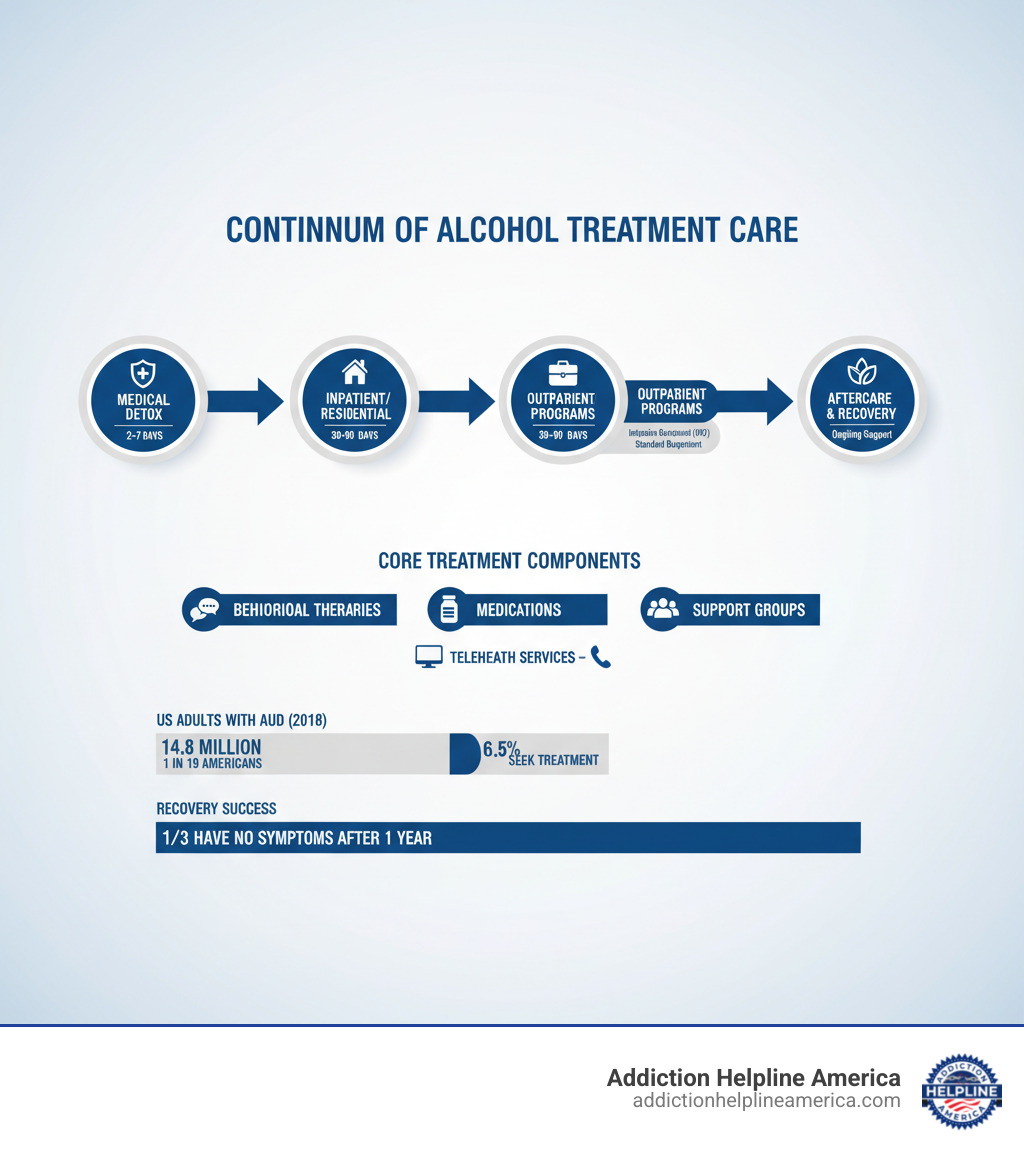
Alcohol treatment options offer a full continuum of care to help people overcome alcohol use disorder (AUD). Key options include:
- Medical Detox: Medically supervised withdrawal management.
- Inpatient/Residential: 24/7 structured care in a facility.
- Outpatient Programs (IOP/Standard): Therapy while living at home.
- Core Components: Behavioral therapies, medications, support groups, and telehealth services.
In the United States, millions of people struggle with AUD, but only a small fraction—around 6.5% of adults with the disorder—seek treatment. If you or a loved one is struggling, taking the first step can feel overwhelming, but you are not alone.
The good news is that recovery is absolutely possible. Research shows that treatment is effective, with many people achieving long-term sobriety. However, finding the right path can be confusing. This guide breaks down the different levels of care, therapies, and medications to help you find quality help.
Addiction Helpline America has helped thousands of individuals and families steer alcohol treatment options through our confidential, 24/7 support services. Our specialists connect you with appropriate programs and provide guidance throughout your recovery journey.
Basic alcohol treatment options vocab:
Understanding Alcohol Use Disorder (AUD) and the First Step
Alcohol use disorder (AUD) is not a character flaw; it’s a chronic medical condition that affects the brain and body. Like other health issues, it requires proper treatment. The first step is recognizing the signs. According to the DSM-5, AUD is diagnosed if you’ve experienced at least two of the following in the past year:
- Drinking more or longer than intended.
- Wanting to cut back but being unable to.
- Spending significant time drinking or recovering.
- Experiencing strong cravings.
- Neglecting responsibilities due to drinking.
- Continuing to drink despite relationship problems.
- Giving up important activities for alcohol.
- Drinking in dangerous situations.
- Continuing to drink despite it worsening health problems.
- Developing a tolerance (needing more to feel an effect).
- Experiencing withdrawal symptoms when you stop.
While self-assessment tools can be a helpful starting point, they are not a substitute for a professional diagnosis. AUD is complex, and managing it alone can be dangerous and ineffective. Addiction specialists can accurately diagnose the condition, identify co-occurring mental health issues, and create a personalized treatment plan.
Barriers like stigma, cost, and fear of judgment prevent many from seeking help. However, seeking help is a sign of courage. Treatment is effective, with about one-third of people who complete a program maintaining sobriety one year later.
The journey begins with acknowledging the problem and reaching out for a professional assessment. This provides clarity and direction, helping you find the right alcohol treatment options.
For more information, explore our guide on Alcohol Abuse Treatment. The NIAAA also provides scientific research on AUD screening for healthcare providers.
Recovery is possible. Taking the first step is the most important decision you’ll make, and you don’t have to do it alone.
24/7 Free Confidential Alcohol Support Helpline

Alcohol treatment options exist on a continuum of care, with different levels of support to match your specific needs. There is no one-size-fits-all approach; the key is finding the right fit for your health, home environment, and personal responsibilities.
Medical Detoxification
For those with physical dependence on alcohol, stopping suddenly can cause dangerous withdrawal symptoms. Medical detox provides 24/7 supervised care in a hospital or specialized facility to manage these symptoms safely. Healthcare professionals monitor vital signs and may use medication to ensure your safety and comfort. Detox typically lasts 2-7 days and is the first step, preparing you for further treatment by addressing the immediate physical challenges.
Inpatient and Residential Programs
After detox, many transition to inpatient or residential programs, which offer 24/7 structured care in a substance-free environment. Living at the facility removes you from daily triggers, allowing you to focus entirely on recovery. Days are filled with individual and group therapy, educational workshops, and holistic activities. Stays can range from 30 Day Rehab to 90 Day Rehabs or longer. For those seeking additional comfort, Luxury Drug Rehab options are available. This level of care is ideal for severe AUD, co-occurring mental health conditions, or an unsupportive home environment.
Outpatient Program Levels
Outpatient programs offer flexibility, allowing you to live at home and maintain work or family commitments while receiving treatment.
- Partial Hospitalization Programs (PHP): The most intensive option, with treatment for several hours a day, 5-7 days a week. It’s a step down from inpatient care.
- Intensive Outpatient Programs (IOP): Requires fewer hours than PHP, typically 3-5 days a week, allowing you to balance treatment with daily responsibilities.
- Standard Outpatient Treatment: The most flexible option, involving weekly or bi-weekly therapy sessions. It’s suitable for mild AUD or as continuing care.
The choice between inpatient and outpatient care depends on your unique situation.
| Feature | Inpatient/Residential Rehab | Outpatient Rehab |
|---|---|---|
| Living Arrangement | Live at the treatment facility | Live at home, attend sessions |
| Intensity | 24/7 supervision and structured activities | Structured sessions, varying hours per week (PHP > IOP > Standard) |
| Environment | Controlled, removed from triggers | Real-world environment, managing daily triggers |
| Medical Supervision | Often includes on-site medical staff, especially for detox | Medical support typically for medication management, less intensive monitoring |
| Suitable For | Severe AUD, co-occurring disorders, multiple relapses, unsafe home environment | Mild/moderate AUD, stable home environment, need for flexibility |
| Duration | 30, 60, 90+ days | Weeks to months, ongoing |
| Cost | Generally higher | Generally lower, more likely to be covered by insurance |
For a detailed comparison, explore our guide on Inpatient vs Outpatient Rehab. The right path is the one that gives you the support you need to build a healthier, alcohol-free life.
Core Components of Professional Alcohol Treatment

Quality alcohol treatment options are built on evidence-based practices. They offer individualized plans and integrated care for co-occurring mental health conditions, treating the whole person, not just the symptoms of AUD.
The Role of Behavioral Therapies
Behavioral therapies are the foundation of recovery, helping you change unhelpful thought patterns and build skills for sobriety. Key approaches include:
- Cognitive Behavioral Therapy (CBT): Helps you identify and change negative thoughts and behaviors related to drinking.
- Motivational Improvement Therapy (MET): Strengthens your internal motivation to change by exploring and resolving ambivalence about treatment.
- Dialectical Behavior Therapy (DBT): Teaches skills for managing intense emotions, particularly for those with co-occurring conditions.
- Family and Couples Counseling: Involves loved ones to repair relationships and build a supportive home environment.
These therapies provide practical tools for lasting recovery. Learn more about Counseling Approaches for Addiction Recovery.
Evidence-Based Medications as Alcohol Treatment Options
Medication-Assisted Treatment (MAT) combines counseling with FDA-approved medications to reduce cravings and support recovery. These are non-addictive medical treatments, not a substitute for one addiction with another.
- Naltrexone (Revia, Vivitrol): A daily pill or monthly injection that blocks the rewarding effects of alcohol, reducing the urge to drink. Learn more about oral Naltrexone and injectable Naltrexone.
- Acamprosate (Campral): Helps restore brain chemistry balance after quitting, easing withdrawal symptoms like anxiety and restlessness. More details on Acamprosate are available from NIAAA.
- Disulfiram (Antabuse): Causes unpleasant physical reactions if alcohol is consumed, creating a strong deterrent. Find more information on Disulfiram.
For an overview, see our Brief Guide to AUD Medication.
Modern and Telehealth Alcohol Treatment Options

Technology has made treatment more accessible. Telehealth offers therapy via secure video or phone calls, which is ideal for those in rural areas or needing flexibility. Many insurance plans now cover these services. Digital tools like the computer-based CBT4CBT program also provide effective, accessible support. You can also build a “custom care team” of different providers for flexible, comprehensive care.
Addiction Helpline America can connect you with providers offering online therapy and digital support, making it easier to find care that fits your life. The NIAAA Alcohol Treatment Navigator is another resource for finding telehealth options.
How to Find and Choose a Quality Program
Finding the right alcohol treatment options means choosing a quality facility that fits your unique needs. Look for programs with proper accreditation and licensing, qualified staff, and a philosophy based on evidence-based practices.
Key Factors in Choosing Between Alcohol Treatment Options
Consider these factors when making your decision:
- Severity of AUD: A professional assessment will determine the intensity of care you need.
- Co-occurring Conditions: If you have depression, anxiety, or PTSD, find a program offering integrated treatment for both addiction and mental health.
- Support System: An unstable home environment may make inpatient care a better choice, while a strong support system can make outpatient care feasible.
- Personal Responsibilities: Outpatient programs offer the flexibility to manage work, school, or family commitments.
- Cost and Insurance: Don’t let cost be a barrier. We can help you understand your benefits on our Insurance That Covers Rehab page.
Resources for Finding Help
You are not alone in this search.
- Addiction Helpline America: Our confidential helpline is available 24/7 for free, personalized guidance. We connect people to our nationwide network of treatment centers. Learn more on our Addiction & Rehab Hotlines page.
- NIAAA Alcohol Treatment Navigator: This online tool at alcoholtreatment.niaaa.nih.gov helps you find evidence-based providers.
- Primary Care Provider: Your doctor can screen for AUD, offer counseling, and provide referrals.
- State Health Agencies: These agencies maintain directories of licensed local providers.
Reaching out is the first step. We’re here to make the journey as clear and manageable as possible.
Life After Treatment: Aftercare and Support Systems
Recovery is an ongoing journey that requires continued commitment and a strong support network. Most treatment facilities (84%, according to SAMHSA) offer aftercare services, which are essential components of effective alcohol treatment options. These programs help you steer real-world challenges while reinforcing the skills learned in treatment.
Aftercare Programs
Aftercare bridges the gap between intensive treatment and independent sober living by providing structure and accountability.
- Sober Living Homes: These are safe, substance-free residences that help you transition from inpatient care. They provide structure through house rules and peer support.
- Alumni Programs: Run by treatment centers, these programs keep former clients connected through meetings, events, and mentorship.
- Continued Therapy: Regular individual or group therapy sessions provide a space to process challenges and refine coping strategies.
- Case Management: A case manager can help with practical needs like housing, employment, and coordinating appointments.
Mutual Support Groups and Family Resources
Peer support groups offer community, accountability, and shared wisdom.
- Alcoholics Anonymous (AA): The most well-known 12-step program.
- SMART Recovery: A secular, science-based alternative focused on self-empowerment.
- Other Groups: Many other groups exist, including LifeRing, Women for Sobriety, and Secular AA. For those exploring moderation, Moderation Management is an option. Finding the right fit is what matters most.
Family support is also crucial. Resources like Al-Anon, Alateen, and Nar-Anon Family Groups help loved ones heal and set healthy boundaries.
If you need immediate support, our Addiction & Rehab Hotlines page lists resources like the 988 Suicide & Crisis Lifeline.
Addiction Helpline America can connect you with aftercare programs and support groups. Recovery flourishes in community, and we can help you build your network.
Frequently Asked Questions about Alcohol Treatment
Here are answers to common questions about alcohol treatment options.
How do I know which level of care is right for me?
The best way to know is through a professional assessment. An addiction specialist will evaluate the severity of your AUD, your physical and mental health, your home environment, and your responsibilities to recommend the right level of care. No single treatment benefits everyone, so an individualized plan is crucial. Addiction Helpline America can connect you with professionals who provide these assessments.
How long does alcohol rehab last?
The duration varies based on individual needs. Inpatient programs often last 30 to 90 Day Rehabs, while outpatient programs can last for several months. Longer stays are often linked to better outcomes. Recovery is an ongoing process, and many people continue with some form of support long after their initial program ends.
Can I be treated for a mental health condition at the same time?
Yes. This is called “dual diagnosis,” and quality programs offer integrated care that addresses both substance use and mental health conditions like depression or anxiety simultaneously. Treating both together is essential for lasting recovery. Addiction Helpline America specializes in finding programs that provide this comprehensive care.
If you have more questions, reach out to us anytime.
Your Journey to Recovery Starts Today
You’ve just explored the wide landscape of alcohol treatment options. While the information can feel overwhelming, the most important takeaway is this: recovery is absolutely possible for you.
Every person’s path to sobriety is unique, which is why so many different treatment options exist. Taking the first step is often the hardest part, but you don’t have to do it alone. Hope is always available, and you deserve the opportunity to build a full, joyful life in recovery.
Addiction Helpline America is here to help you steer your choices with compassion and expertise. Through our free, confidential service, we provide personalized guidance to help you find a recovery program that fits your unique needs from our vast nationwide network. Whether you’re looking at outpatient drug rehab options or another level of care, we can connect you with a quality program.
Your journey to recovery can start right now. You don’t need to have all the answers—you just need to reach out. Contact us for confidential guidance, and let’s take that first step together.