Why Staying Sober During the Holidays Matters for Your Recovery
Tips for Staying Sober During the Holidays can make the difference between a season of joy and one of struggle. The holiday season brings unique challenges for anyone in recovery, from office parties with open bars to family gatherings where alcohol flows freely. Here are the essential strategies you need:
Quick Tips for Staying Sober During the Holidays:
- Plan Ahead – Create an exit strategy before attending events
- Lean on Your Support System – Attend extra meetings and call your sponsor
- Set Clear Boundaries – It’s okay to say “no” to triggering situations
- Bring a Sober Buddy – Have accountability at social gatherings
- Prioritize Self-Care – Get enough sleep, eat well, and exercise
- Have Non-Alcoholic Drinks Ready – Keep a beverage in hand to avoid offers
- Create New Traditions – Focus on alcohol-free activities and volunteering
- Remember Your Why – Reflect on your reasons for staying sober
- Avoid High-Risk Events – You don’t have to attend every party
- Ask for Help When Needed – Professional support is available 24/7
The holidays can place extra stress on your recovery. Alcohol consumption spikes on Christmas and New Year’s Eve, while disrupted routines, family tensions, and the pressure for a “perfect” holiday can trigger powerful cravings. Even Norman Rockwell’s idyllic paintings hid a painful truth—his wife struggled with alcoholism and depression.
But you don’t have to face this season alone or compromise your sobriety to celebrate. With the right strategies and support, you can steer the holidays successfully and find joy in new, alcohol-free traditions.
At Addiction Helpline America, we’ve helped thousands steer recovery during challenging times like the holidays. We provide free, confidential guidance and connections to effective treatment resources, understanding that maintaining sobriety requires both practical planning and emotional support.
If you’re feeling overwhelmed, reaching out is a sign of strength. Our helpline is available 24/7 at 844-561-0606 for free, confidential support.
Understanding the Holiday Challenges for Sobriety
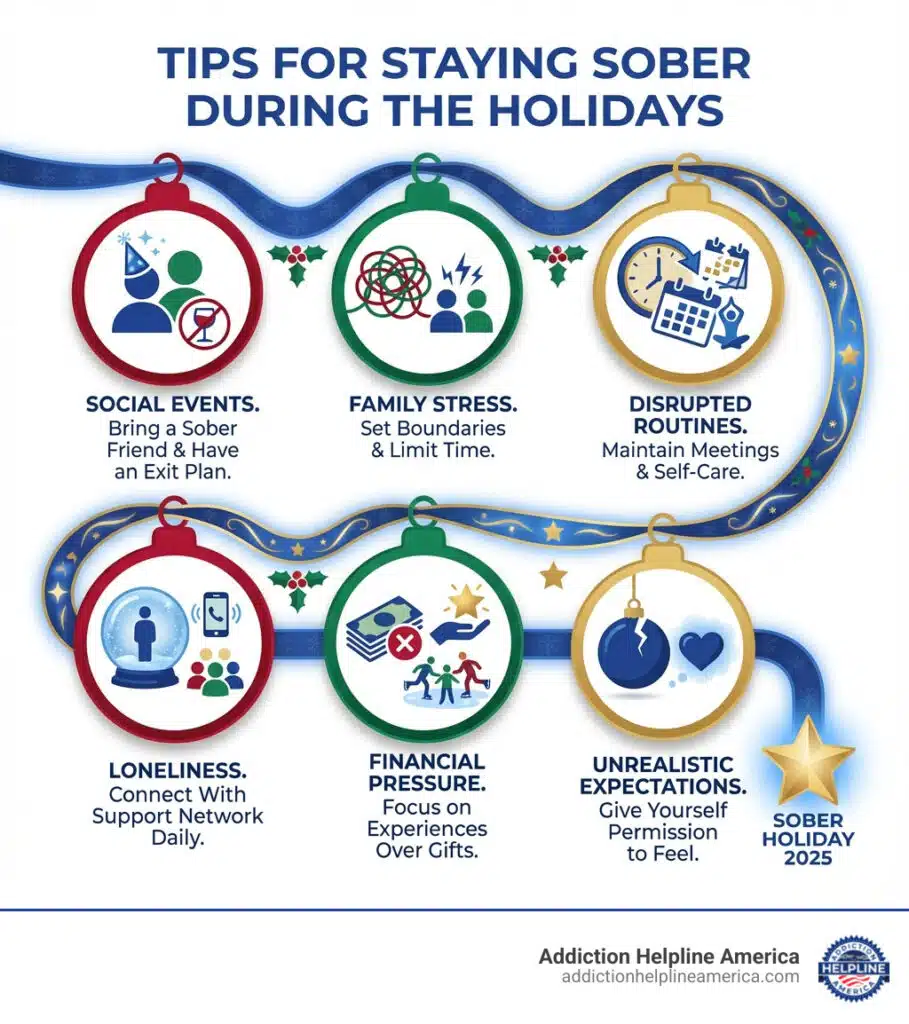
For individuals committed to sobriety, the holiday season can present a minefield of unique challenges. Recognizing them is the first step toward successful planning.

One of the most significant challenges is the increased alcohol consumption that accompanies holiday festivities. Studies show that alcohol use is particularly high on Christmas and New Year’s Eve. This pervasive presence of alcohol can create powerful triggers and make it difficult to focus on your recovery.
Family dynamics can also be a major source of stress. Holiday gatherings can bring up old conflicts, and unsupportive relatives might create uncomfortable situations, leading to feelings of judgment. Setting firm emotional boundaries is key to protecting your peace. We recognize that dealing with family can be tough, and we have resources dedicated to Family Support Addiction to help.
The general holiday stress—from financial pressures to social obligations—places extra strain on recovery. This, coupled with disrupted routines, can throw off established practices like meeting attendance or self-care.
Furthermore, many grapple with unrealistic expectations for a “perfect” holiday, often fueled by media portrayals. This reminds us that “perfect” holidays are a myth, and it’s okay for yours to be perfectly imperfect. Feelings of loneliness and grief can also intensify, sometimes triggering a desire to use substances as a coping mechanism.
The Connection Between Holiday Stress and Relapse
The holiday season is often a breeding ground for emotional triggers. The combination of social demands, family tensions, and financial strain can lead to heightened stress, anxiety, and depression. For many, these emotions were historically managed through substance use, making them significant relapse risks.
Effective coping mechanisms are paramount. Techniques like mindfulness can help you become aware of triggers and develop healthier responses. Learning to pause, observe your feelings, and choose a recovery-aligned action can make all the difference. Understanding how stress impacts mental health is crucial, especially for those managing co-occurring disorders like Bipolar and Addiction.
Financial pressure and social anxiety are also common stressors. Worries about gifts or the pressure to be cheerful can be draining. It’s okay to acknowledge these feelings and prioritize your peace. For more strategies, explore resources on How to avoid a relapse during stressful times.
Navigating Difficult Family Dynamics
Family gatherings can be a source of significant anxiety. Old conflicts may resurface, and you might encounter unsupportive relatives who don’t understand or respect your recovery journey. It’s natural to feel judged or on guard.
The key is setting emotional boundaries to protect your sobriety and mental well-being. Your peace is more important than pleasing others. It’s a sign of strength to walk away or decline an invitation if it threatens your recovery. We offer guidance on Helping Family With Addiction to foster more supportive environments.
Proactive Planning: Your Foundation for a Sober Holiday
When it comes to recovery, the holidays are a time for deliberate, thoughtful proactive planning. A clear strategy for maintaining your sobriety is your most powerful tool.
The importance of a plan cannot be overstated. It creates a safety net by allowing you to anticipate triggers, develop coping mechanisms, and reinforce your commitment to recovery. Part of this planning involves managing expectations and setting realistic goals for what you can handle. Choosing your events wisely is also critical; you don’t have to attend every party. Prioritize events where you feel supported and decline invitations to high-risk situations.
Consider assembling a “sobriety toolkit” for the holidays. This could include:
- Phone numbers for your sponsor, therapist, or sober friends.
- Non-alcoholic drinks you enjoy, especially for parties.
- A grounding object like a smooth stone or a fidget toy.
- AA slogans on index cards for quick mental resets.
- A sober buddy’s contact info for immediate support.
How to Create a Specific Plan for Holiday Events
A detailed plan for holiday gatherings is your best defense. It’s not about being rigid; it’s about being prepared.
- Have an exit strategy. Know how you’ll leave an event if you feel overwhelmed or triggered. This could be a pre-set time limit or a “pop-in” visit.
- Drive yourself whenever possible. This gives you the freedom to leave when you need to.
- Bring a sober buddy. This person can offer moral support and accountability.
- Identify potential triggers beforehand. Visualize the event and prepare your responses and coping mechanisms.
- Bring your own non-alcoholic drinks. This ensures you have a safe option and deters others from offering you alcohol.
For those considering a structured approach, understanding What to Expect in Rehab can provide a foundation for long-term sobriety planning.
The Power of Communication and Setting Boundaries
Effective communication with loved ones is a cornerstone of holiday sobriety. Let trusted family and friends know about your commitment and how they can support you.
Practicing how to say ‘no’ is a vital skill. You will likely be offered alcohol, and a prepared response makes declining easier. A simple, “No, thank you, I’m not drinking tonight,” or “I’m the designated driver” is enough. You don’t owe anyone a detailed explanation.
Being firm but polite in your boundaries is essential. Your recovery is your top priority. It’s okay to decline invitations or limit time with triggering people to protect your peace. This is a sign of strength, not weakness. Understanding the importance of setting boundaries is crucial, as highlighted in our Pre-Rehab Addiction Intervention Guide.
Essential Tips for Staying Sober During the Holidays in the Moment
Despite careful planning, the holiday season can still throw curveballs. This is where in-the-moment coping skills become invaluable for staying grounded.
When faced with unexpected triggers, in-the-moment coping skills can prevent a slip. Use techniques like deep breathing, taking a short walk, or using a “sober-sensory kit” (lavender lotion, a fidget toy, sour candies) to redirect focus. Focusing on connection with sober, uplifting people is also a powerful antidote to stress. You can also find joy in new ways by exploring activities that don’t revolve around alcohol, like baking or attending a sober event. Embracing these new experiences is a profound part of recovery, a concept often explored in Holistic Rehab Centers.
Lean on Your Support System
Your support system is your lifeline during the holidays, so lean on it more than usual.
- Attend extra meetings of your recovery program, like Alcoholics Anonymous or Narcotics Anonymous. Many groups offer “marathon” meetings around major holidays for continuous support.
- Call your sponsor regularly for advice, encouragement, and accountability.
- Connect with sober friends. Plan sober activities or simply check in with each other.
- Use online support groups or phone meetings if in-person options aren’t feasible. Resources like Al-Anon phone meetings and other forums provide a virtual connection. For specific resources, explore our guides on Meth Addiction Support.
Prioritize Self-Care with the HALT Method
The HALT method is a simple reminder to check if you are Hungry, Angry, Lonely, or Tired. These states increase vulnerability, so addressing them proactively is critical.
- Get enough sleep: Aim for 7-8 hours nightly. Poor sleep is a known relapse risk factor.
- Maintain healthy nutrition: Eat balanced meals to stabilize your mood and energy.
- Incorporate physical activity: Exercise is a fantastic stress reliever.
- Practice mindfulness: A few minutes of meditation or journaling can significantly reduce stress.
Prioritizing your mental health is key. Our Free Mental Health Guide offers more valuable insights.
More Tips for Staying Sober During the Holidays: New Traditions and Service
Redefine celebration by creating new, alcohol-free traditions. This strengthens sobriety and brings new joy to the season.
Consider volunteering your time. Helping others provides a powerful sense of purpose and gratitude, shifting focus away from triggers. Focusing on experiences over gifts is another great tradition. Research has proven experiences are more valuable than material objects. Plan low-stress activities like:
- Driving around to look at holiday lights.
- Baking cookies or building gingerbread houses.
- Having a family game night.
- Enjoying a winter hike or ice skating.
- Hosting an alcohol-free movie marathon.
These activities foster genuine connection and reinforce your commitment to a sober life. For further guidance, our Outpatient Alcohol Treatment Ultimate Guide provides comprehensive information.
Knowing When to Seek Professional Help
Despite your best efforts, sometimes the holiday challenges can feel impossible. It’s crucial to know the signs you or a loved one needs more support and that professional help is always available.
Don’t believe the myth that you must wait until the New Year to seek help. The benefits of treatment during the holidays are significant. It provides a safe, structured environment away from triggers, allowing you to focus on recovery. Many treatment centers remain open and fully staffed, offering a haven during this difficult time.
A structured, safe environment like a treatment center offers 24/7 support, medical supervision, and therapeutic care. This is invaluable for developing coping mechanisms and connecting with peers. If you’re wondering about options, our guide on How to Find the Right Rehab Center can help.
Signs You or a Loved One Needs More Support
Be vigilant for relapse warning signs in yourself or a loved one, including:
- Persistent cravings that feel overwhelming.
- Isolating from support systems, skipping meetings, or avoiding sober friends.
- Romanticizing past use, thinking about “the good old days” of drinking or using.
- Neglecting recovery routines and self-care practices.
- Feeling hopeless or overwhelmed by holiday stress, family dynamics, or loneliness.
- Increased irritability, anxiety, or depression.
If these signs emerge, additional support is needed. If you feel unsafe or are in crisis, call a local crisis line. Our team can also connect you to immediate help, including options in our Best Alcohol Detox Centers Guide.
How Treatment Centers Provide a Holiday Haven
Entering treatment during the holidays can be a proactive step for long-term sobriety. Treatment centers provide a holiday haven by:
- Removing triggers: You’re removed from stressful environments where alcohol is prevalent.
- 24/7 support: You have constant access to medical professionals, therapists, and support staff.
- Medical and therapeutic care: You receive comprehensive treatment for addiction and any co-occurring mental health disorders.
- Building coping skills: Treatment becomes an intensive learning period, equipping you with strategies for the future.
- Peer connection: You’re surrounded by others on a similar journey, which combats holiday loneliness.
Choosing treatment during the holidays is a powerful act of self-care that sets a strong foundation for the new year. For longer-term solutions, our Long Term Rehab Near Me Guide can provide valuable information.
Frequently Asked Questions about Holiday Sobriety
How do I handle being offered a drink at a party?
This is one of the most common scenarios you’ll face. The best approach is to politely decline. You are not obligated to provide a lengthy explanation. A simple, “No, thank you,” or “I’m not drinking tonight” is perfectly acceptable.
It’s helpful to have a prepared response ready. This reduces awkwardness and prevents you from feeling put on the spot. Many people find that keeping a non-alcoholic drink in your hand (soda, water, sparkling cider) helps deter others from offering you alcohol, as they assume you already have a beverage.
A classic and effective excuse, if you prefer not to disclose your recovery, is, “I’m the designated driver.” This is widely understood and respected. Your sobriety is your priority, and asserting your boundaries is a sign of strength.
What if I feel lonely or left out during the holidays?
It’s completely normal to acknowledge your feelings of loneliness or being left out. The holidays often amplify these emotions. Don’t suppress them; instead, act on them constructively.
Reach out to your support system. Call your sponsor, a sober friend, or a trusted family member. Share how you’re feeling. Connection is a powerful antidote to loneliness.
Attend a recovery meeting. Many AA, NA, and other support groups hold extra meetings during the holidays specifically to combat isolation. Being in a room with people who understand your struggles can be incredibly comforting.
Plan a sober get-together. Organize an alcohol-free activity with sober friends or supportive family members. This could be a movie night, a game night, or a volunteer activity.
Finally, focus on self-compassion and gratitude. Remind yourself why you chose sobriety and all the progress you’ve made. Keep a gratitude journal to reflect on the positive aspects of your life.
Is it okay to skip family events to protect my sobriety?
Absolutely, yes, your recovery comes first. This is a non-negotiable truth. Skipping a family event to protect your sobriety is a sign of strength and self-awareness, not weakness or disrespect. Your long-term health and well-being are paramount.
While it might feel difficult or lead to some disappointment from others, you have the right to protect your peace and avoid triggering situations. You can suggest alternative ways to connect, such as a one-on-one coffee or lunch outside of the main event, a video call, or a shorter, planned visit at a less stressful time. Open communication, explaining that you need to prioritize your health, can help loved ones understand your decision.
Your Sobriety is the Greatest Gift
Navigating the holiday season in recovery is a testament to your strength and commitment to a healthier life. By implementing these Tips for Staying Sober During the Holidays, you’re not just surviving; you’re thriving.
This guide has covered proactive planning, setting boundaries, using in-the-moment coping skills, leaning on your support system, and creating new traditions. Each strategy is a tool to help you succeed.
Recovery is a journey, not a destination. With each sober holiday season, you build confidence and reinforce the incredible progress you’ve made. Your sobriety is truly the greatest gift you can give yourself and your loved ones.
If you ever feel overwhelmed or need guidance, Addiction Helpline America is here to support you. For free, confidential help finding a treatment program that fits your needs, call us 24/7 at 844-561-0606. We can connect you to resources and treatment centers across the US, from Los Angeles to New York City, and everywhere in between.
To learn more about how to sustain your recovery journey year-round, explore our resources on Learn more about aftercare and relapse prevention.