
Taking the First Step Towards Healing
Local drug rehab centers offer hope and healing right in your community. If you’re searching for treatment nearby, here’s what you need to know:
Quick Guide to Finding Local Drug Rehab:
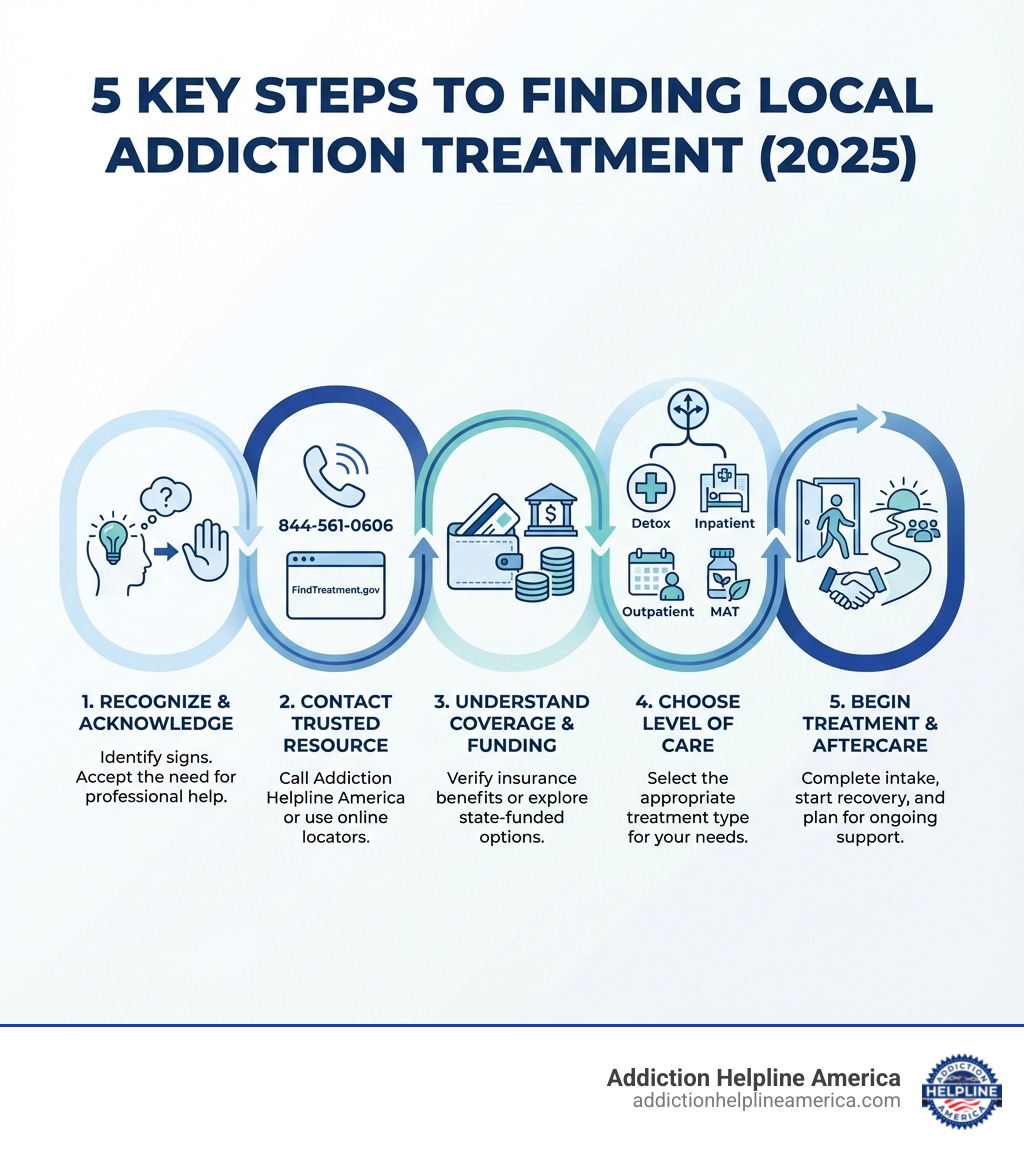
- Call a Free Helpline – Contact Addiction Helpline America at 844-561-0606 for immediate, confidential guidance.
- Use Online Treatment Locators – Visit FindTreatment.gov or SAMHSA’s national directory to search by zip code.
- Contact Your County Office – Reach out to your local drug and alcohol office for funding assistance and referrals.
- Verify Your Insurance – Call your insurance provider to understand coverage and find in-network facilities.
- Explore State-Funded Options – Ask about low-cost or free programs if you have limited financial resources.
Recovery is possible, and it often starts closer to home than you think. Across America, thousands of local drug rehab facilities provide evidence-based treatment for substance use disorders. Whether you’re struggling with alcohol, opioids, or other substances, professional help is available.
The main challenge is often knowing where to look and how to access care. Many people feel overwhelmed by the options or confused about costs, but treatment is more accessible than you might fear, and financial barriers shouldn’t stop you from seeking help.
In 2024, only a fraction of those who needed substance use treatment received it. Millions of Americans are on this same journey, and seeking help is a sign of strength.
Finding the right local drug rehab involves understanding your options, from detox to outpatient counseling, and knowing how to use insurance or access state-funded programs. Most importantly, it means taking that first step.
At Addiction Helpline America, we guide individuals and families through finding local drug rehab services that meet their unique needs. Our free, confidential helpline connects you with treatment options in your community, helping you start your recovery journey today.
Essential local drug rehab terms:
Recognizing the Signs: When Is It Time for Professional Help?
Recognizing the signs of addiction is the first step toward recovery. Addiction is a complex disease that changes brain chemistry and behavior, making it more than a matter of choice. Common indicators suggest it’s time to seek professional help.
Look for changes across several areas of a person’s life:
- Behavioral signs: Increasing secrecy, neglecting responsibilities, engaging in risky behaviors, or a sudden change in friends and hobbies.
- Physical signs: Changes in sleep patterns, appetite, or weight. You might also observe tremors, slurred speech, poor hygiene, or unexplained injuries. Stimulant users may show extreme energy followed by crashes, while opioid users might appear drowsy with constricted pupils.
- Psychological symptoms: Increased anxiety, depression, irritability, mood swings, or paranoia. A person might express guilt or become defensive about their substance use.
- Impact on daily life: The most telling sign is when substance use interferes with daily functioning, leading to job loss, academic failure, or relationship breakdowns. Life may begin to revolve around obtaining and using the substance.
It’s never too late to ask for help. Understanding these signs is crucial for knowing when to intervene. For more guidance, explore our guide on How to Tell if Someone is Using Drugs.
Understanding Addiction as a Chronic Disease
Addiction is not a moral failing; it is a chronic disease that changes the brain, similar to diabetes or heart disease. These changes lead to compulsive behavior and a loss of control, making it incredibly difficult to simply “stop.” This is why professional intervention at a local drug rehab is essential. It provides the medical and psychological support needed to address these brain changes and develop healthy coping mechanisms.
For a deeper dive, refer to our What is Addiction Complete Guide, which explains Addiction as a Disease.
For Families and Loved Ones
When a loved one struggles with addiction, families often feel helpless and overwhelmed, blurring the line between enabling and supporting. It’s vital to set boundaries and manage your own emotions.
Family support is a crucial component of recovery. Many local drug rehab programs offer family therapy and resources to help loved ones understand addiction, improve communication, and heal relationships. These programs teach families how to create a supportive environment without enabling destructive behaviors. Finding support for yourself is a necessary step to help both you and your loved one.
For more resources, please visit our page on Recovery for Families.
Your Guide to Finding a Local Drug Rehab
Navigating the system to find the right local drug rehab can feel overwhelming, but trusted resources can simplify the process. Making the call is often the quickest way to get personalized guidance.
How to Find a Local Drug Rehab Using Trusted Resources
Finding a local drug rehab starts with reliable information. We provide free, confidential guidance to connect you with the right program from our vast network. A great starting point is Addiction Helpline America’s confidential treatment locator.
For immediate, personalized support, call our free helpline at 844-561-0606. Our team is available 24/7 to assess your needs and connect you with local drug rehab options. You can also reach out through our Contact Us for Help page.
Several government resources can also assist you:
- SAMHSA’s National Helpline (1-800-662-HELP (4357)): A 24/7 confidential referral and information service for individuals and families.
- FindTreatment.gov: A confidential resource to find treatment facilities across the U.S., searchable by location and services.
- 988 Suicide & Crisis Lifeline: For immediate crisis support, call or text 988 anytime.
- National Institute on Drug Abuse (NIDA): Provides information on evidence-based treatments to help you identify a quality local drug rehab.
The Role of Local and State Agencies
Local and state agencies are crucial for accessing treatment, especially for those with limited financial resources.
- County Drug and Alcohol Offices: These are often your first point of contact for treatment funding, assessments, and referrals to local drug rehab centers. They can guide you through eligibility for state-funded programs in your area, with offices in states like Pennsylvania, California, Florida, Texas, and Ohio serving as vital community hubs.
- State-Level Departments: Departments of Health or Mental Health and Addiction Services oversee facility licensing and manage state and federal funds for free or low-cost rehab services.
- Assessments and Referrals: Agencies can facilitate initial assessments to determine the right level of care and provide referrals to suitable programs.
- Funding Assistance: County and state offices are excellent resources for exploring financial aid, including state funding, Medicaid, and grants.
For more information on resources in your area, visit our Free Drug and Alcohol Helplines page.
Understanding Your Treatment Options and Services

No single treatment is right for everyone. Local drug rehab centers offer diverse, personalized programs based on your history, mental health, and recovery goals. Understanding the levels of care is key to an informed decision. For an overview, see What is Drug Rehab Like?. To discuss the right level of care for you, call us at 844-561-0606.
Different Types of Treatment Programs
Local drug rehab facilities offer a continuum of care to support changing needs:
- Detoxification (Detox): The first step for many, providing medically monitored withdrawal management for safety and comfort. Facilities like Keystone Treatment Center in South Dakota offer these services. For local insights, see our Detox New Orleans Ultimate Guide.
- Inpatient/Residential Treatment: Provides 24/7 care in a structured, supervised environment, removing individuals from triggers. Programs can last 30 days or more. NIDA suggests that completing the full duration of treatment leads to better outcomes. Learn more in our Inpatient Alcohol Rehab Complete Guide.
- Outpatient Programs (OP, IOP, PHP): These programs offer flexibility. Partial Hospitalization (PHP) is the most intensive day treatment, followed by Intensive Outpatient (IOP) and standard Outpatient (OP) programs, which involve regular therapy sessions. Explore options in our Outpatient Alcohol Rehab Programs guide.
- Medication-Assisted Treatment (MAT): Combines therapy with medications (like buprenorphine or naltrexone) to treat opioid and alcohol use disorders by reducing cravings. Many centers integrate MAT, and SAMHSA offers locators for Buprenorphine Practitioners and Opioid Treatment Programs.
- Holistic Drug Rehab: Some centers integrate alternative therapies to treat the mind, body, and spirit. Learn more in our Holistic Drug Rehab guide.
Services and Therapies Offered
Local drug rehab centers provide various therapeutic services:
- Individual and Group Counseling: One-on-one sessions address personal issues, while group therapy provides peer support.
- Family Therapy: Involves loved ones to heal relationships and build a strong support system.
- Co-occurring Disorders Treatment: Many facilities offer integrated treatment for dual diagnosis, addressing both substance use and mental health disorders like depression or anxiety. Our Depression Rehab Inpatient Guide provides more insight.
- Life Skills and Relapse Prevention: Training helps with independent living and employment, while relapse prevention planning equips you with strategies to manage triggers.
- Specialized Programs: Some centers have programs for specific populations, such as veterans, pregnant women, or Native Americans.
Navigating Waitlists and Gaining Access
Waitlists for state-funded programs are common due to high demand. Here’s how to manage them:
- Inquire About Priority Admission: High-risk individuals (e.g., pregnant women) often receive priority.
- Stay Engaged: Check in regularly with the facility, as spots can open unexpectedly.
- Explore Bridge Options: Ask about outpatient services or MAT to receive support while you wait for an inpatient bed.
- Ask About Wait Time: Get an estimate of the wait and what you can do to prepare for admission.
Navigating the Costs of Addiction Treatment
Financial stress shouldn’t be a barrier to getting help. Treatment is an investment in your future, and many affordable options exist. We offer free, confidential guidance to help you explore payment solutions. For a comprehensive look at low-cost options, explore our Free Drug Rehab Centers Complete Guide.
How to Verify and Use Your Insurance
Verifying your insurance is a critical step. The Affordable Care Act (ACA) requires most health plans to cover substance use disorder services as essential health benefits.
Here’s how to verify your insurance:
- Call Your Provider: Use the number on your insurance card to ask about coverage, deductibles, and co-pays for substance use treatment.
- Understand Your Benefits: Ask about in-network vs. out-of-network providers and whether pre-authorization is required for services like detox.
- Let Us Help: We can verify your insurance for free. Our team can help you understand your benefits and find a local drug rehab that accepts your plan. Call us at 844-561-0606 for a free assessment. For a detailed guide, see our Verify Rehab Insurance Complete Guide.
State-Funded and Low-Cost Options
For those with limited resources, state-funded and low-cost rehabs are a lifeline, offering treatment at little to no cost. Eligibility typically requires proof of residency, income verification, lack of sufficient insurance, and a clinical need for treatment.
Funding comes from federal grants (SAMHSA), state budgets, and Medicaid Rehab Centers Ultimate Guide. Some facilities also offer sliding scale fees based on income. Contact your local county drug and alcohol office or use FindTreatment.gov to locate these options.
Comparing State-Funded vs. Private Local Drug Rehab
Understanding the differences between state-funded and private local drug rehab can help you decide:
| Feature | State-Funded Rehab | Private Rehab |
|---|---|---|
| Cost | Low-cost or free | Higher cost, varies widely |
| Waitlist | Common, can be long | Often immediate admission |
| Amenities | Basic, functional | Varies, can be more comfortable |
| Funding | Government grants, Medicaid | Insurance, private pay |
| Staff-to-Client Ratio | Typically higher ratio | Often lower, more individual attention |
State-funded programs provide essential, evidence-based care that removes financial barriers, though they may have waitlists. Private rehabs may offer immediate access and more amenities at a higher cost. Both aim to provide effective treatment.
Life in Recovery: Aftercare and Continued Support
Completing a local drug rehab program is a monumental achievement, but recovery is a lifelong journey. The transition from structured treatment back to daily life requires ongoing commitment, continued care, and community resources to build a sober life and prevent relapse.
Next Steps: Aftercare and Continuing Care
Aftercare is crucial for maintaining sobriety. These programs provide ongoing support and accountability for long-term recovery.
- Step-Down Programs: Facilities often transition individuals from inpatient to PHP, IOP, and then standard outpatient care, gradually reducing intensity to solidify recovery skills.
- Sober Living Environments: Recovery houses or halfway houses provide a supportive, drug-free environment with structure and peer accountability after formal treatment.
- Alumni Programs: Many local drug rehab centers offer alumni programs with support groups and events to foster a sense of community.
- Ongoing Therapy: Continuing individual or group therapy helps address new challenges and maintain mental well-being.
- Relapse Prevention: Workshops reinforce strategies for identifying triggers and managing cravings.
For more helpful advice, explore our Staying Sober Tips.
Essential Community and Family Resources
A strong support system is a cornerstone of lasting recovery.
- 12-Step Groups: Programs like Alcoholics Anonymous (AA) and Narcotics Anonymous (NA) offer free, accessible peer support meetings nationwide.
- Other Support Groups: Non-12-step groups like SMART Recovery offer different approaches to peer support.
- Support for Family Members: Groups like Al-Anon and Nar-Anon provide a safe space for families to learn coping strategies and support their loved one’s recovery. Our page on Support for family members offers guidance.
- Overdose Prevention: Access to naloxone (Narcan) is crucial. Many local health departments offer naloxone and drug testing strips to prevent fatal overdoses. In a crisis, the 988 Suicide & Crisis Lifeline and the National Helpline (1-800-662-HELP (4357)) are available 24/7.
- Building a Sober Social Circle: Connecting with others in recovery provides positive reinforcement and new opportunities for sober social engagement.
Conclusion: Your New Beginning Starts Today
The journey to recovery from addiction is one of the most courageous paths an individual can take. It’s a journey filled with challenges, but also with immense hope, healing, and the promise of a brighter future. You are not alone in this; millions of Americans have walked this path before you, and countless resources are available to light your way.
Finding the right local drug rehab and support system is within your reach, right in your community. Whether you’re seeking immediate medical detox, a comprehensive inpatient program, flexible outpatient care, or vital aftercare resources, the help you need is available. We’ve explored the different types of programs, how to steer costs and insurance, and the crucial role of ongoing support.
At Addiction Helpline America, we believe that every individual deserves the chance to live a healthy, fulfilling life free from the grip of addiction. We are here to guide you through every step of this process, offering free, confidential, and personalized assistance. Your new beginning starts today. Take that brave first step and explore treatment options now to connect with a local drug rehab that’s right for you.