

Breaking Down Barriers: Why Access to Free Treatment Matters
Free drug rehab centers in Massachusetts provide life-saving addiction treatment at no cost through state funding, Medicaid (MassHealth), and community support programs. If you or a loved one needs help immediately, here are your primary pathways to free care:
- Massachusetts Substance Use Helpline: Call 844-561-0606 for immediate referrals to free treatment programs
- MassHealth (Medicaid): Covers detox, inpatient, and outpatient addiction treatment for eligible Massachusetts residents
- State-Funded Facilities: Free or low-cost rehab centers funded through the Bureau of Substance Addiction Services (BSAS)
- Peer Recovery Support Centers: Free, peer-led recovery spaces across Massachusetts offering community support and resources
- Emergency Services: Protected under the Good Samaritan Law when seeking help for overdose situations
The reality is stark. Massachusetts saw more than 1,200 confirmed opioid-related overdose deaths between January and November 2021 alone. Opioid addiction in Massachusetts is more than twice the national average. Yet among people who need substance use treatment, only about 1 in 5 actually receive it.
Cost should never be the barrier between you and recovery.
Many people facing addiction believe they can’t afford treatment. They see the devastating impact on their lives—strained relationships, lost jobs, declining health—but feel trapped by financial limitations. This guide exists to show you that free, quality addiction treatment is available in Massachusetts right now.
You don’t need insurance. You don’t need thousands of dollars. You need information, hope, and the courage to take the first step.
Free drug rehab centers in Massachusetts offer the same evidence-based therapies used in private facilities: medical detox, individual and group counseling, cognitive behavioral therapy, relapse prevention, and dual diagnosis treatment for co-occurring mental health conditions. The difference is simply how they’re funded—through state and federal programs designed specifically to help people who otherwise couldn’t access care.
At Addiction Helpline America, we’ve helped thousands of individuals and families steer the path to free addiction treatment in Massachusetts, connecting them with state-funded programs, Medicaid resources, and community support that fit their unique situations. We understand that finding free drug rehab centers in Massachusetts can feel overwhelming, which is why we’re here to guide you through every step.
For immediate, confidential help finding free treatment options, call us 24/7 at 844-561-0606.
Similar topics to free drug rehab centers in massachusetts:
The Urgent Need for Accessible Addiction Treatment in Massachusetts
The Bay State is struggling with a significant substance use crisis, making the availability of free drug rehab centers in Massachusetts more critical than ever. Statistics paint a stark picture of the challenges facing our communities.
Massachusetts experienced more than 1,200 confirmed opioid-related overdose deaths between January 2021 and November 2021 alone. This isn’t just a number; it represents thousands of families torn apart and communities in mourning. What’s even more alarming is that opioid addiction in Massachusetts is more prevalent than twice the national average. When we consider that fentanyl is present in the majority of opioid-related overdose deaths, the urgency becomes undeniable.
Beyond opioids, other substances contribute significantly to the addiction landscape. Alcohol, crack cocaine, and marijuana account for a considerable number of admissions to Massachusetts drug rehabs. Addiction, as researchers understand it, is a chronic brain condition that alters brain chemistry, diminishing an individual’s capacity to voluntarily control substance use behavior.
Despite this pressing need, a significant gap remains between those who require treatment and those who receive it. In 2024, among people aged 12 or older classified as needing substance use treatment in the past year, only about 1 in 5 (19.3 percent or 10.2 million people nationally) actually received it. This highlights a critical barrier: access. For many, the financial burden of treatment is simply too high, making free drug rehab centers in Massachusetts a lifeline. We believe that removing these financial barriers is paramount to helping more individuals find the path to recovery and healing.
How Are Free Addiction Treatment Programs Funded?
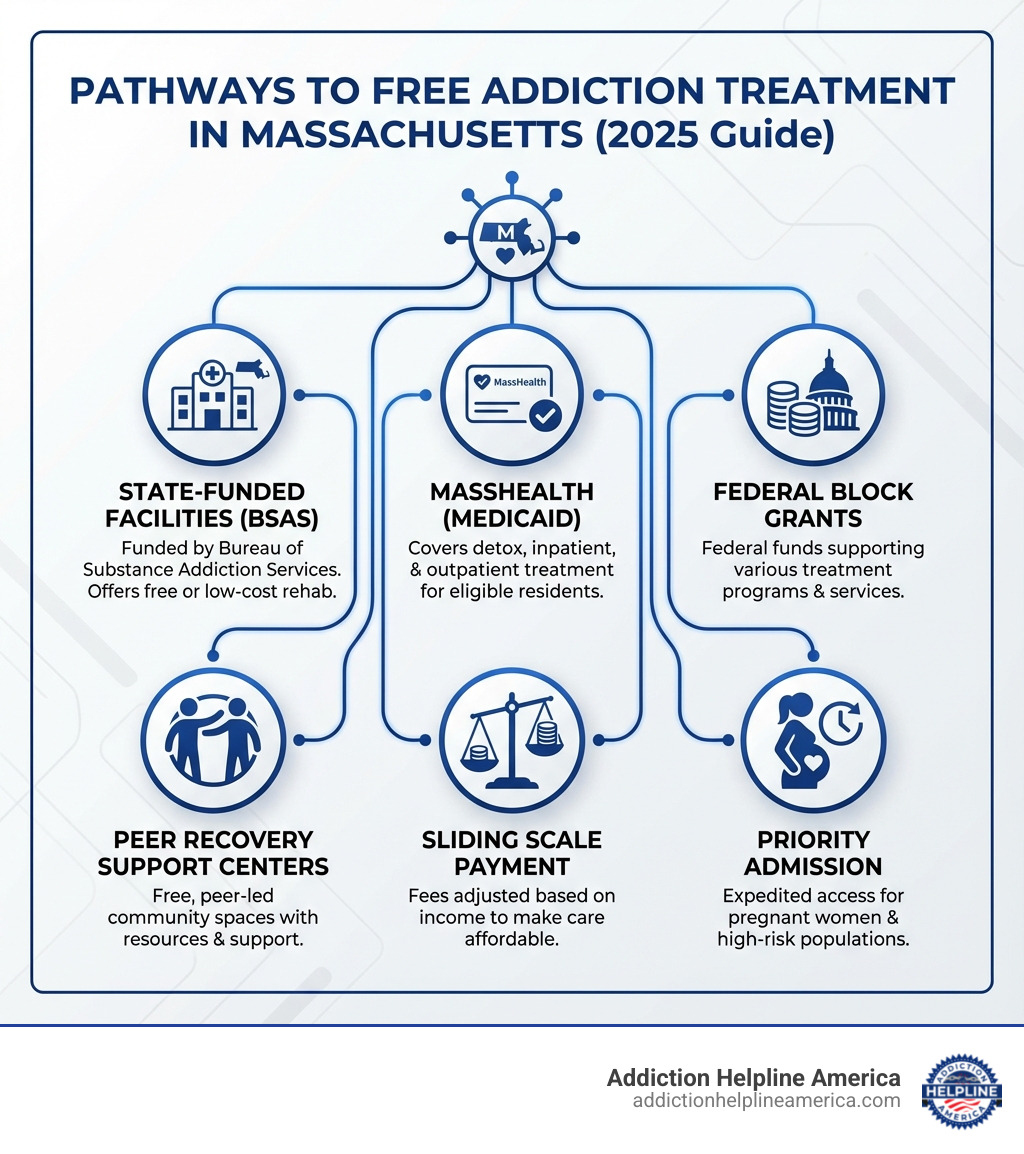
Free drug rehab centers in Massachusetts are made possible through a mix of state, federal, and community funding, ensuring quality care is available without a financial burden. These programs rely on several key resources to provide essential services.
State funding is crucial. The Massachusetts Bureau of Substance Addiction Services (BSAS) distributes government money to facilities across the Commonwealth, enabling them to offer free or low-cost drug and alcohol rehab.
MassHealth (Massachusetts’ Medicaid program) is a primary pathway to free or low-cost care. It covers a full range of services, including detox, inpatient, and outpatient treatment for eligible residents.
Federal grants from the Substance Abuse and Mental Health Services Administration (SAMHSA) also provide significant funding. These block grants help facilities operate at little to no cost to the patient.
Community and charitable contributions are also vital. Non-profits and faith-based organizations often provide free or low-cost treatment funded by donations and community support.
Finally, many providers use sliding scale fees, adjusting costs based on an individual’s income. This makes care affordable even if it’s not entirely free.
Eligibility for Free Drug Rehab Centers in Massachusetts
To access free drug rehab centers in Massachusetts, you generally must meet certain eligibility criteria, which direct resources to those most in need.
Common requirements include:
- Residency: You must be a legal resident of Massachusetts.
- Income Verification: Free programs are designed for individuals with low or no income. You will likely need to provide proof of your financial situation.
- Lack of Private Insurance: These programs are mainly for those without private health insurance or whose coverage is insufficient.
- Clinical Need: A clinical assessment will determine the severity of your substance use disorder and the appropriate level of care.
Certain populations are often given priority admission due to increased vulnerability:
- Pregnant Women: To protect both mother and child, pregnant women often receive priority access.
- Individuals Who Inject Drugs: This group is at higher risk for infectious diseases and often receives priority.
- Veterans: Many programs are designed to support veterans, often through VA benefits.
The application process involves gathering documents (ID, proof of income, etc.) and contacting agencies like BSAS or MassHealth. Help is available, so don’t hesitate to ask for assistance.
Benefits vs. Limitations of State-Funded Rehab
Choosing between state-funded and private rehab involves weighing the pros and cons. While free drug rehab centers in Massachusetts offer crucial advantages, it’s important to understand their limitations.
| Feature | State-Funded Rehab | Private Rehab |
|---|---|---|
| Cost | Free or very low-cost (often covered by MassHealth) | Significantly higher, often requiring private insurance or out-of-pocket payment |
| Accessibility | Designed to be accessible to low-income individuals; may have waitlists | Often quicker admission; broader range of locations |
| Amenities | Basic and functional; fewer luxury options | Can include private rooms, gourmet meals, holistic therapies, gyms, spas |
| Treatment Approach | Evidence-based clinical care; individual and group counseling, MAT | Evidence-based; wider variety of specialized therapies, holistic options |
| Individual Attention | May have larger group sizes, less one-on-one time | Often smaller groups, more individualized care |
| Wait Times | Can have significant waitlists, especially for inpatient programs | Generally shorter wait times, immediate admission often available |
| Duration | Varies; NIDA emphasizes remaining for full duration for best outcomes | Flexible; can be short-term (30 days) or long-term (90+ days) |
Benefits of State-Funded Rehab:
- Affordability: The primary benefit is eliminating cost, making treatment accessible to all.
- Evidence-Based Care: Centers provide scientifically proven, effective treatment methods.
- Peer Support: Programs emphasize community and peer support, which are critical for long-term recovery.
- Accessibility: Locations are spread across the state to serve diverse communities.
Limitations of State-Funded Rehab:
- Waitlists: High demand often leads to waitlists, which can be a barrier to immediate care.
- Basic Amenities: Facilities are safe and functional but lack the luxury amenities of private centers.
- Fewer Specialized Therapies: Treatment may be more standardized, with fewer alternative or highly specialized therapies.
- Larger Group Sizes: Group sessions may be larger, offering less individual attention.
Despite these limitations, the core mission is providing effective, accessible care. We believe the benefit of receiving treatment far outweighs any drawbacks.
8 Examples of Free Peer Support and Recovery Centers in Massachusetts
When we talk about free drug rehab centers in Massachusetts, it’s important to recognize the invaluable role of Peer Recovery Support Centers (PRSCs). These centers are not clinical rehab facilities, but they are free, accessible, and peer-led spaces that offer crucial support, community, and non-clinical resources. They serve as a bridge to clinical treatment and provide ongoing support for individuals in recovery, as well as their families and loved ones.

PRSCs are grounded in the values of hope, belonging, and empowerment. They emphasize human connection, community inclusion, and peer support to help individuals build “recovery capital” – the sum of resources that can be brought to bear to initiate and sustain long-term recovery. Programming is based on national standards and best practices, offering education, social events, recreational activities, one-on-one peer support, and referrals to other resources.
Here are 8 examples of peer support and recovery centers in Massachusetts that embody this spirit of community and connection:
- The RECOVER Project (Greenfield): Located in Franklin County, this center offers peer-to-peer support and a wealth of recovery resources, fostering a vibrant community.
- Hope for Holyoke (Holyoke): A safe and welcoming space that provides recovery support and builds a strong sense of community for individuals in Holyoke.
- Valor Recovery Center (Springfield): Empowering individuals through peer-led guidance and a supportive environment in Springfield, helping them steer their recovery journey.
- A New Way Recovery Center (Quincy): Offering multiple pathways to recovery, this center provides essential support and community south of Boston.
- Devine Recovery Center (South Boston): A hub for recovery activities and support, this center provides a vital community connection in South Boston.
- PIER Recovery Center of Cape Cod (Hyannis): Dedicated to providing peer support and resources for individuals and families across the Cape and Islands region.
- Everyday Miracles (Worcester): A peer-run center that offers a variety of services and support for Central Massachusetts residents, promoting health and wellness in recovery.
- The Bridge Recovery Center (Malden): Connecting people to recovery resources and fostering a supportive community environment north of Boston.
These centers are a testament to the power of shared experience and mutual support. They are vital components of the recovery ecosystem in Massachusetts, offering a place where everyone can feel understood and supported.
For more information about accessing these and other free recovery resources, call Addiction Helpline America at 844-561-0606.
How to Find and Access Free Drug Rehab Centers in Massachusetts
Finding and accessing free drug rehab centers in Massachusetts can feel like a daunting task, but we are here to guide you through a clear, step-by-step process. You don’t have to do this alone.

Step-by-Step Guide to Finding Free Treatment:
- Call the Massachusetts Substance Use Helpline (800-327-5050): This is your best first call. The helpline offers immediate, confidential referrals to treatment and recovery programs across the state, helping you find options that fit your needs.
- Explore the Mass.gov Website: The state’s official website has directories of state-funded resources and information from the Bureau of Substance Addiction Services (BSAS).
- Use National Resources: SAMHSA’s National Helpline (1-800-662-HELP) provides 24/7 confidential referrals. Their online Behavioral Health Treatment Services Locator also helps you find facilities near you.
- Check Your Insurance: If you have MassHealth, call the number on your card to find in-network facilities and confirm your coverage.
- What to Ask When You Call: Be prepared with questions. Ask if they offer free programs or accept MassHealth, what the eligibility rules are, what services they provide (detox, inpatient, etc.), program length, waitlist times, and if they offer specialized tracks or aftercare planning.
- Prepare Your Documents: To speed up the application, have your ID, proof of residency, income verification, and relevant medical records ready.
Every call you make is a step towards a healthier future. Don’t get discouraged if the first place you call isn’t the perfect fit. We are here to help you steer this journey.
For personalized help finding free treatment options, call Addiction Helpline America at 844-561-0606.
What to Expect During Treatment
Entering a free drug rehab in Massachusetts means joining a structured, supportive environment. While each center is unique, most follow a similar path to recovery.
Treatment often starts with Detoxification (Detox). This medically supervised process safely manages withdrawal symptoms from substances like alcohol or opioids, stabilizing you for the next phase of treatment.
Following detox, individuals typically transition to a higher level of care, such as:
- Inpatient/Residential Rehab: You live at the facility 24/7 in a highly structured and supervised environment.
- Partial Hospitalization Programs (PHP): Attend treatment for several hours a day but return home at night.
- Intensive Outpatient Programs (IOP): Structured therapy a few times a week, allowing for more flexibility.
- Outpatient Treatment: The least restrictive level, involving regular therapy sessions while living at home.
Program duration varies. Short-term programs may last 30 days, while long-term options can be 90 days or more. The length of your stay depends on addiction severity, co-occurring disorders, and your progress. According to the Principles of Effective Treatment from NIDA, remaining in treatment for an adequate period is critical for success.
Common therapies used in Massachusetts rehab centers are rooted in evidence-based practices:
- Cognitive Behavioral Therapy (CBT): Helps change negative thought patterns linked to substance use.
- Dialectical Behavior Therapy (DBT): Focuses on emotional regulation and mindfulness.
- Motivational Improvement Therapy (MET): Helps build motivation for change.
- Group Therapy: Provides peer support and a sense of community.
- Family Therapy: Addresses family dynamics and educates loved ones about addiction.
Many facilities also offer Dual Diagnosis Care, which integrates treatment for co-occurring mental health conditions (like depression or anxiety) alongside substance use disorders for a holistic approach.
Limitations of Free Drug Rehab Centers in Massachusetts
As mentioned earlier, free drug rehab centers can have limitations like wait times, basic amenities, and larger group sizes. While these are important to consider, the availability of no-cost, effective treatment is a life-saving advantage. If you encounter a waitlist, it’s crucial to stay proactive. We encourage you to attend peer support meetings (like AA/NA or the centers listed above), explore outpatient options, and connect with a peer recovery specialist. Any step toward recovery is a courageous one, and we are committed to helping you find resources to support you, even while you wait.
Frequently Asked Questions about Addiction Treatment in Massachusetts
Navigating addiction treatment can bring up many questions. Here, we address some of the most common inquiries about free drug rehab centers in Massachusetts and related treatment options.
What if I don’t qualify for free treatment?
If you don’t qualify for completely free treatment, don’t lose hope. Many affordable options exist:
- Sliding-Scale Fees: Many facilities adjust costs based on your income.
- Payment Plans: Some centers offer financial aid or allow you to pay for treatment over time.
- Insurance: Plans under the Affordable Care Act (ACA) must cover substance use disorder treatment. Check your plan’s benefits.
- Employee Assistance Programs (EAPs): Your employer may offer resources or financial help for treatment.
- Veterans Affairs (VA) Benefits: Veterans can use VA benefits to significantly reduce or eliminate costs.
Addiction Helpline America can help you explore all available options—call 844-561-0606 for guidance.
What laws should I know about when seeking help for an overdose?
Massachusetts has laws to protect you when seeking help for an overdose:
- Good Samaritan Law: This law protects you from drug possession charges if you call 911 to report an overdose. Its purpose is to save lives by removing the fear of arrest.
- Naloxone (Narcan) Access: Naloxone is a medication that reverses opioid overdoses. In Massachusetts, anyone can legally administer it in an emergency. It is available at many pharmacies without a prescription and through harm reduction programs.
These laws are vital tools in the fight against the opioid crisis, encouraging immediate action and emphasizing saving lives over punishment.
Are there specialized free programs for veterans, women, or LGBTQ+ individuals?
Yes, many free and low-cost programs in Massachusetts are custom for specific populations:
- For Veterans: The VA Healthcare Systems in Bedford and Boston offer comprehensive addiction treatment for veterans, often covered by VA benefits.
- For Women with Children: Specialized programs for women, especially mothers, may offer on-site childcare, prenatal care, and family therapy to keep families together during recovery.
- For the LGBTQ+ Community: Many centers offer an LGBTQ+ affirming environment with staff trained to address the unique challenges this community faces. Look for facilities that state they are LGBTQ+ friendly or ask a helpline for recommendations.
For help finding specialized programs, contact Addiction Helpline America at 844-561-0606.
Your Path to Recovery Starts Today
We understand that taking the first step towards recovery can feel overwhelming, especially when financial worries loom large. But we want to reiterate: cost should never be a barrier to a new life. The availability of free drug rehab centers in Massachusetts, supported by state funding, MassHealth, federal grants, and community efforts, means that quality addiction treatment is within reach for everyone.
Recovery is not just a possibility; it’s a reality for millions, and it can be yours too. It starts with the brave decision to seek help, and with the right support, you can build a life free from the grips of addiction.
For confidential guidance and to explore all your treatment options in Massachusetts, contact Addiction Helpline America. We are here to help you find a path forward, connecting you with resources that fit your unique situation and needs. Let us help you begin your journey to healing and hope.