
Why Finding Support for Sobriety Can Make All the Difference
Support for sobriety is essential for anyone on the challenging path of recovery. Support can come from many places, including:
- 12-Step Programs (e.g., AA, NA)
- Science-Based Groups (e.g., SMART Recovery)
- Secular & Specialized Groups (e.g., LifeRing, Women for Sobriety)
- Professional Treatment (Therapy, counseling)
- Family and Friends
The benefits are clear: reduced relapse risk, increased accountability, and a community of people who understand.
Recovery is a journey that continues long after formal treatment ends. Statistics show that while millions of Americans experience substance use disorder, few receive treatment, and maintaining abstinence in the first year is a significant challenge. This highlights a crucial truth: long-term recovery requires ongoing support.
Leaving treatment and building a new, substance-free life can be overwhelming. Old social circles and triggers don’t just disappear. This is why a strong support system is critical. Having people who understand your journey—whether in mutual-help groups, professional counseling, or from trusted loved ones—can be the difference between struggling alone and thriving in recovery.
At Addiction Helpline America, we connect individuals and families with comprehensive support for sobriety, including treatment referrals, recovery resources, and 24/7 guidance. We’re here to help you steer your options with compassion and expertise.
Why Support Networks are a Cornerstone of Recovery
Addiction is a complex disease, but you don’t have to overcome it alone. The right support for sobriety transforms a difficult climb into a shared journey.

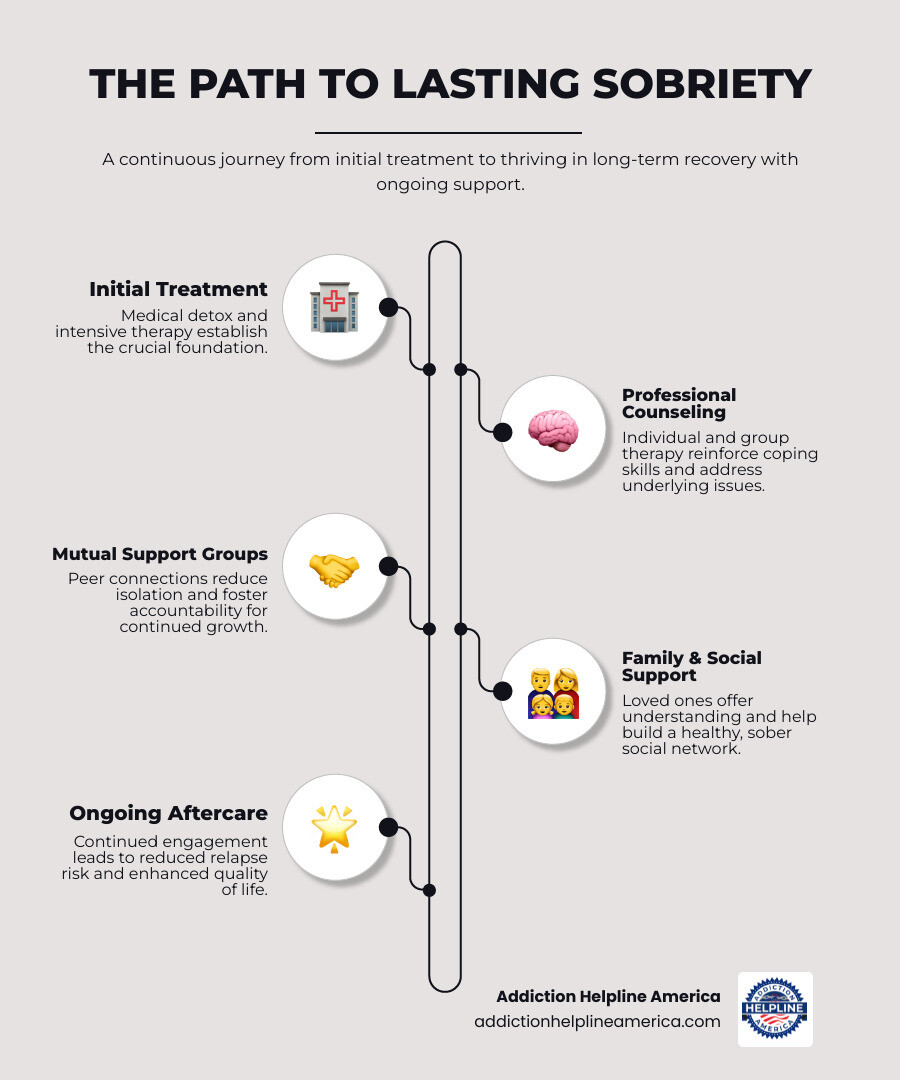
Connection is one of the most powerful aspects of recovery. When you connect with someone who’s been where you are, you realize you’re not broken or alone. Peer support networks provide this connection, creating a space to share experiences with others who truly get it. This validation breaks down the walls of isolation that addiction builds—and isolation is a dangerous trigger for relapse.
Beyond emotional support, these groups offer accountability. Knowing others expect you at a meeting or that a sponsor is waiting for your call provides a gentle, consistent reminder that your recovery matters. Research on group participation shows this collective responsibility reinforces positive behaviors.
Mutual support groups complement professional treatment, they don’t replace it. Therapy provides clinical expertise, while support groups offer real-world application and community. This combination helps build a new sober social network, replacing old, unhealthy patterns. If you’re curious about the first step, our guide on what drug rehab is like offers helpful insights.
The Benefits of Peer Support in Sobriety
The advantages of peer support for sobriety are well-documented.
- Reduced relapse rates: Studies show that regular attendance at support groups significantly lowers the risk of returning to substance use by providing ongoing coping strategies.
- Increased treatment satisfaction: The emotional and social reinforcement from peers creates a sense of progress and purpose that goes beyond just “not using.”
- Improved quality of life: Peer support positively influences how participants perceive stress and improves their daily experience of life.
- Stress reduction: Sharing your burdens with people who understand, without fear of judgment, creates an emotional buffer against relapse triggers.
- Hope and motivation: Hearing success stories from others reminds you that long-term recovery is possible and provides fuel for the days when your own motivation is low.
How Groups Complement Professional Treatment
Mutual support groups and professional treatment are partners in your recovery.
Groups reinforce therapeutic concepts by allowing you to practice coping mechanisms and communication skills in a safe, peer-led environment. They also provide crucial aftercare support long after formal treatment ends, which is a vulnerable period for many. Research shows that beginning participation in mutual support groups while still in treatment is associated with better long-term outcomes.
These groups help bridge the gap post-rehab, offering a safe space to discuss daily struggles and receive immediate feedback. However, mutual support groups are not a substitute for clinical care. They are not run by clinicians and cannot address complex issues like co-occurring mental health disorders. Maintaining a connection with a professional counselor is vital. For more information, you can learn about long-term recovery support.
A Guide to Support Groups for Sobriety
Finding the right support for sobriety is a personal journey, and there is a rich landscape of groups available. Groups vary in their philosophies, from spiritual to secular and from abstinence-based to moderation-focused. The key is finding a place where you feel understood and empowered.

To help you steer the options, here’s a comparison of some popular support group approaches:
| Group Type | Core Principles & Approach |
|---|---|
| AA (Alcoholics Anonymous) | A 12-Step spiritual program based on peer support, sponsorship, and anonymity to achieve abstinence. |
| SMART Recovery | A science-based program using CBT/REBT for self-empowerment and building skills in motivation, urge coping, and problem-solving. |
| LifeRing Secular Recovery | A secular, abstinence-based peer network focused on strengthening the “Sober Self” and weakening the “Addict Self.” |
| Secular Organizations for Sobriety (SOS) | A secular network of groups emphasizing self-reliance and personal responsibility to achieve and maintain sobriety. |
| Women for Sobriety (WFS) | An abstinence-based program for women, focusing on emotional growth and self-worth through 13 acceptance statements. |
| Moderation Management (MM) | A secular group for individuals seeking to moderate (not abstain from) alcohol use through self-management skills. |
Group Support Approaches
For many, traditional group support provides a time-tested foundation for sobriety.
Alcoholics Anonymous (AA) is the most widely recognized mutual-help group, guiding participants through 12 Steps that incorporate a spiritual component. Narcotics Anonymous (NA) operates on similar principles for drug addiction, and other specialized 12-Step groups like Cocaine Anonymous (CA) and Crystal Meth Anonymous (CMA) also exist.
A key feature is sponsorship and mentorship, where experienced members guide newcomers. The principles of anonymity and confidentiality create a safe space for open sharing. If you’re interested, we can help you find support meetings online or in your area.
Science-Informed and Self-Management Alternatives
For those who don’t connect with a spiritual approach, science-informed alternatives offer effective support for sobriety.
SMART Recovery (Self-Management And Recovery Training) is a leading example, grounded in cognitive behavioral therapy (CBT). It views addiction as a behavior that can be changed and empowers members to take control by building four key skills:
- Motivation to abstain
- Coping with urges
- Problem-solving
- Lifestyle balance
SMART Recovery is flexible, supporting both abstinence and moderation goals. The focus is on self-reliance and practical tools, without steps or sponsorship. You can learn about science-based recovery support with our help.
Specialized and Niche Support Groups
Specialized groups offer custom support for sobriety for specific needs and identities.
- Women for Sobriety (WFS) is a program designed by and for women, focusing on emotional growth and self-worth through 13 acceptance statements.
- LifeRing Secular Recovery and Secular Organizations for Sobriety (SOS) offer welcoming, non-religious peer support networks for those who prefer a secular approach to abstinence.
- Moderation Management (MM) is a secular group for individuals who want to reduce their alcohol use rather than stop completely. It teaches self-management to support healthier drinking patterns.
Moderation is not appropriate for everyone, particularly those with severe dependence. For those considering various treatment paths, we also provide more info on outpatient rehab options.
How to Find the Right Support for Sobriety
Choosing the right support for sobriety is like finding a comfortable pair of shoes—it needs to be a good fit for you. The process is clearer with some honest self-reflection.
First, consider what kind of environment helps you open up. Do you prefer large, anonymous meetings or a smaller, intimate circle? Your spiritual or secular preference is also key. 12-Step programs may resonate if you find strength in a higher power, while groups like SMART Recovery or LifeRing are great secular options.
Also, consider the logistics of online versus in-person meetings. Virtual meetings offer flexibility and privacy, while in-person gatherings provide face-to-face connection.
Most importantly, you don’t have to get it right on the first try. We encourage you to visit several different meetings before deciding. A group that works for a friend might not click for you, and that’s okay. Give each one a fair chance.
Key Questions to Ask Yourself
Before you search, reflect on these questions to narrow your options:
- Do I prefer a structured program? The 12 Steps offer a clear roadmap, while SMART Recovery provides flexible, adaptable tools.
- Is a spiritual element important to me? If not, secular alternatives like SMART Recovery, LifeRing, or SOS are excellent choices.
- Do I want to stop using completely or moderate? Most groups advocate for abstinence. However, Moderation Management supports reducing alcohol use for suitable individuals.
- Do I prefer a large group or a small one? Meeting sizes vary, so consider whether you feel safer in a large, anonymous crowd or a small, intimate circle.
- What is my budget? The good news is most mutual support groups (AA, NA, SMART Recovery, etc.) are free, relying on voluntary donations. Professional therapy involves fees, but is often covered by insurance.
Where to Look for Meetings
Finding meetings is straightforward once you know what you’re looking for.
- Official group websites are the best place to start. Alcoholics Anonymous, SMART Recovery, Narcotics Anonymous, LifeRing, and Women for Sobriety all have online meeting finders.
- Your treatment center’s recommendations are invaluable. Counselors can suggest local groups that align with your treatment plan.
- Community resources like local community centers, hospitals, and libraries often host support meetings.
If you’re exploring comprehensive treatment options, we’re here to help you find local drug rehab facilities. And remember, you can always reach out to our team directly—we can help you find support meetings that match your needs.
Integrating Support into Your Relapse Prevention Strategy
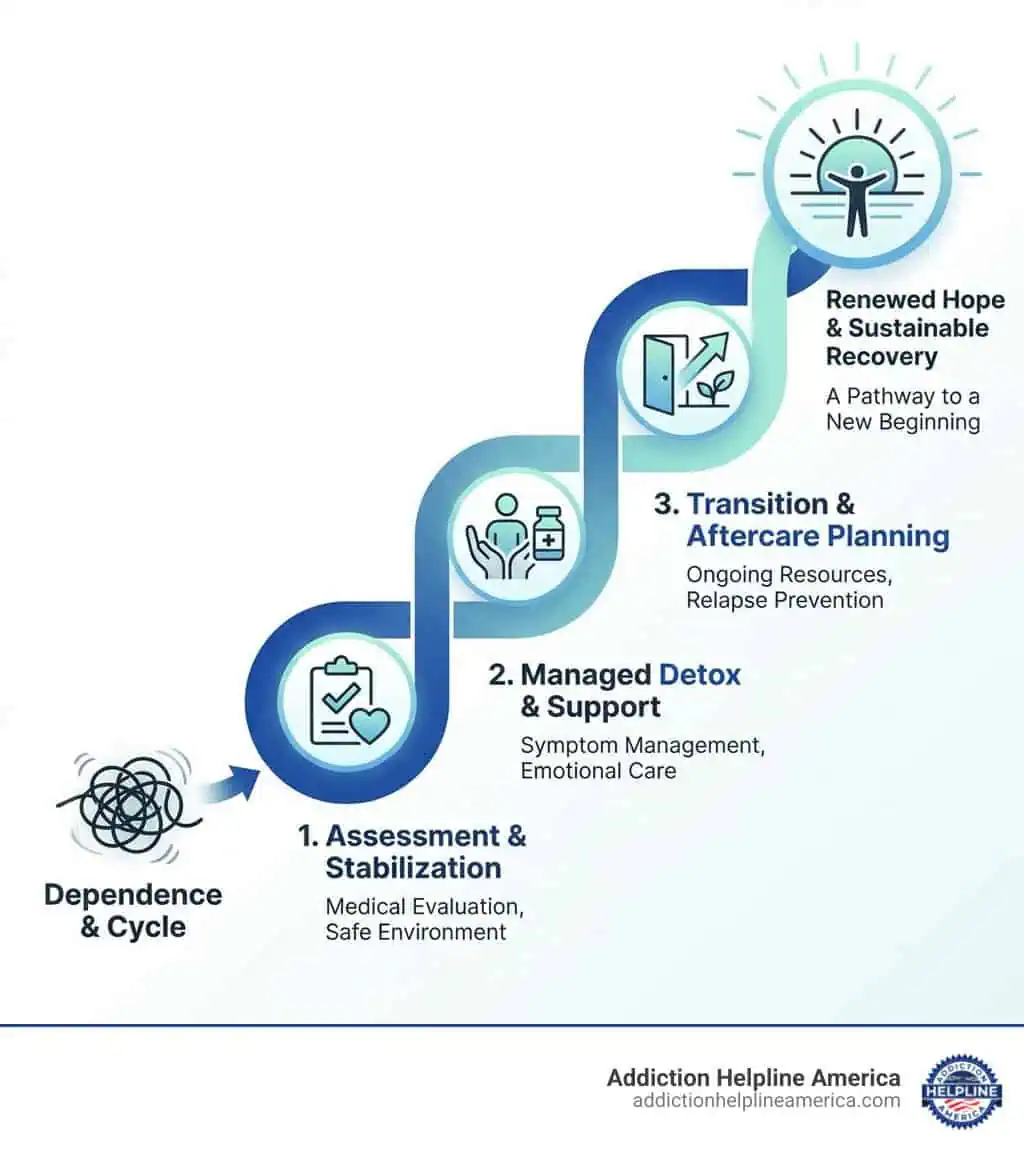
Getting sober is a huge achievement; staying sober is where the real work begins. Support for sobriety is an essential part of any relapse prevention strategy.
Research shows that participation in mutual-help groups significantly increases the chances of long-term sobriety. These groups help you build a new, sober routine. Early recovery can feel empty as the chaos of addiction is replaced by stability. Filling that time with new hobbies—like learning an instrument, hiking, or joining a sports league—is vital for building a fulfilling life that doesn’t revolve around substances.
Helping others is also a powerful tool. A study on the benefits of helping others found that it reinforces your own commitment. This is why sponsorship is so effective; by guiding someone else, you strengthen your own sobriety. Active engagement in your recovery community is a strong predictor of positive outcomes.
It’s also wise to create an emergency contact list with numbers for your sponsor, therapist, and supportive friends. When an urge hits, you can reach out immediately without having to think. For those facing repeated challenges, we offer specialized help for chronic relapse.
How Loved Ones Can Provide Effective Support for Sobriety
If you love someone in recovery, your support is crucial, but it must be offered in helpful ways.
- Understand addiction as a disease, not a moral failing. This fosters empathy over judgment.
- Avoid enabling behaviors. Don’t shield your loved one from the natural consequences of their actions. While it comes from a place of love, enabling can prevent them from taking ownership of their recovery.
- Use supportive language. Instead of “If you loved me, you’d quit,” try “I care about you. How can I support your recovery?”
- Celebrate milestones. Acknowledging their hard work—whether it’s 24 hours or one year—provides powerful positive reinforcement.
- Set healthy boundaries. Protecting your own mental health is not selfish; it’s necessary. This might mean setting limits on financial help or not tolerating certain behaviors. These boundaries are self-care. For more guidance, these tips for supporting loved ones offer practical advice.
Maintaining Professional Support for Sobriety
Mutual support groups are life-changing, but they are not run by professional clinicians. Peer support and professional treatment serve different, complementary roles.
Continuing therapy post-rehab is a smart investment in your long-term sobriety. A therapist can help you work through deeper issues that contributed to your addiction, such as trauma or co-occurring disorders like anxiety and depression. While peer groups offer empathy, they cannot diagnose or treat clinical mental health conditions. If you need this type of support, we can help you find a therapist for anxiety and depression.
A comprehensive aftercare plan, developed with professionals, integrates all your sources of support, including therapy, meetings, and possibly medication-assisted treatment (MAT). MAT can be vital for managing cravings for opioids or alcohol and requires monitoring by a healthcare provider.
The bottom line: you deserve both peer support and professional treatment. Together, they create a comprehensive system that addresses every aspect of your recovery. We can help you build that system. Learn more about relapse prevention strategies that integrate both.
Conclusion
Recovery from addiction is a lifelong journey that requires commitment, self-awareness, and, most importantly, support for sobriety. As we’ve explored, the right support network transforms an isolating struggle into a shared path forward with people who understand.
You have many options, from the spiritual approach of 12-Step programs to the science-backed tools of SMART Recovery and the specialized focus of other groups. If the first group you try doesn’t fit, keep looking. Finding your community is worth the effort.
Building a personalized support network means creating a connected life. It’s about surrounding yourself with a sponsor, a therapist, supportive loved ones, and peers who share their hope and resilience.
At Addiction Helpline America, we connect individuals nationwide with the addiction and mental health treatment resources they need. We provide free, confidential, personalized guidance to help you find the right program from our vast network. You don’t have to do this alone.
Asking for help is a sign of strength. Whether you’re starting your journey, returning after a relapse, or supporting a loved one, connection makes all the difference. To continue building your foundation, explore our guide on relapse prevention strategies for more tools and insights.
Your recovery journey is yours, but you don’t have to walk it alone. With the right support for sobriety, you can build a fulfilling life full of possibility. We’re here when you’re ready to take the next step.