
Understanding Dual Diagnosis in Arizona: What You Need to Know
Dual diagnosis Arizona refers to specialized treatment for individuals facing both a mental health disorder and a substance use disorder at the same time. These are also known as co-occurring disorders.
Quick Facts About Dual Diagnosis in Arizona:
- Arizona is home to 461 dual diagnosis treatment centers.
- Nearly half of all people with substance use disorders have a co-occurring mental health condition.
- Integrated treatment, which addresses both conditions simultaneously, leads to better outcomes.
- Options range from inpatient and outpatient care to specialized therapies.
- Insurance coverage is mandated by the Affordable Care Act and Mental Health Parity Act.
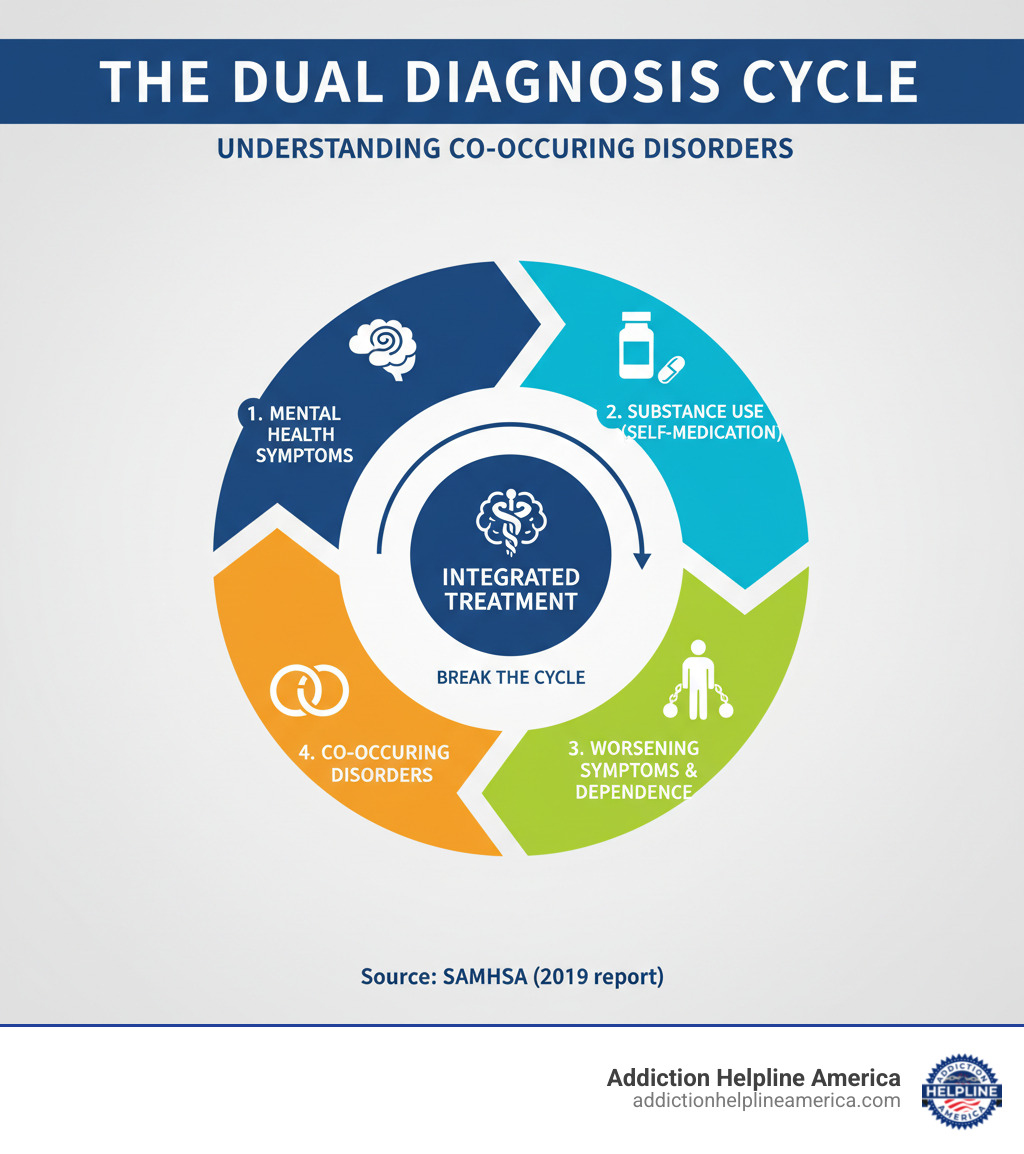
When someone struggles with addiction and a condition like depression, anxiety, or PTSD, the two issues often create a difficult cycle. One might use substances to self-medicate mental health symptoms, which in turn can worsen the mental illness. According to a 2019 SAMHSA report, 9.5 million adults in the U.S. had co-occurring disorders.
The hopeful news is that dual diagnosis is treatable. With integrated care, recovery is possible. At Addiction Helpline America, we help individuals and families find dual diagnosis treatment in Arizona, connecting them with resources to address both conditions. We’re here to guide you through every step.
Understanding Dual Diagnosis and Its Signs
Dual diagnosis, or a co-occurring disorder, means a person is dealing with both a mental health disorder and a substance use disorder (SUD) at the same time. These conditions are deeply connected, with each one often making the other worse.

For example, a person with anxiety might use alcohol to self-medicate, which can lead to alcohol dependence while the underlying anxiety worsens. Conversely, long-term substance use can alter brain chemistry, triggering conditions like depression or psychosis. This creates a difficult cycle that requires specialized help to break.
A key challenge in dual diagnosis Arizona is that symptoms often overlap or mask each other. Is fatigue a sign of depression or drug use? Is paranoia from stimulants or a mental health condition? A professional assessment is crucial to get a clear picture, often after a period of abstinence from substances.
These conditions are very common. A 2019 SAMHSA report found that 9.5 million U.S. adults had co-occurring disorders, and the National Institute on Drug Abuse notes that nearly half of those with an SUD also have a mental health disorder. This highlights the need for integrated treatment.
Common Co-Occurring Disorders
Certain pairings of mental health and substance use disorders are frequently seen:
- Depression and Addiction: Individuals may use substances like alcohol or opioids to cope with feelings of sadness, hopelessness, or worthlessness.
- Anxiety Disorders and Substance Abuse: People with intense worry, panic, or social phobia might use substances like benzodiazepines or cannabis to find temporary relief, which often worsens anxiety long-term.
- Bipolar Disorder and SUD: The extreme mood swings of bipolar disorder can lead to using stimulants during manic phases and depressants during depressive episodes.
- PTSD and Substance Use: To escape flashbacks, nightmares, and hypervigilance from trauma, individuals may turn to drugs or alcohol. Nearly half of people with PTSD also have an SUD.
- Personality Disorders and SUD: Conditions like Borderline Personality Disorder (BPD) involve emotional instability and impulsivity, and substances may be used to cope with intense distress.
- Schizophrenia and SUD: People with schizophrenia may use substances to self-medicate distressing symptoms like psychosis, which often complicates treatment.
Signs and Symptoms of a Need for Dual Diagnosis Arizona Treatment
Recognizing the signs of a dual diagnosis is the first step toward getting help. Look for a combination of mental health and substance use symptoms.
Mental health symptoms may include:
- Extreme and rapid mood swings
- Withdrawal from social activities and relationships
- Unusual or risky behavior and lack of motivation
- Difficulty controlling emotions like anger or anxiety
- Paranoia, delusions, or hallucinations
- Neglect of personal hygiene
Substance abuse symptoms may include:
- Needing more of a substance to get the same effect (tolerance)
- Failing to meet responsibilities at work, school, or home
- Trying to quit or cut down without success
- Lying or stealing to hide or fund the substance use
- Giving up hobbies and friends in favor of using
- Experiencing physical or mental withdrawal symptoms when not using
If you see a mix of these signs in yourself or a loved one, it strongly indicates that specialized dual diagnosis Arizona treatment is necessary. A professional assessment is essential to untangle these complex issues.
Why Integrated Treatment is the Gold Standard
When facing both a mental health disorder and a substance use problem, you need a comprehensive solution. That’s what integrated treatment provides.
In the past, treatment systems were fragmented. A person with depression and alcoholism might be turned away from a mental health clinic for their drinking, and then rejected by an addiction center for their depression. This left people caught between systems, unable to get the help they needed.
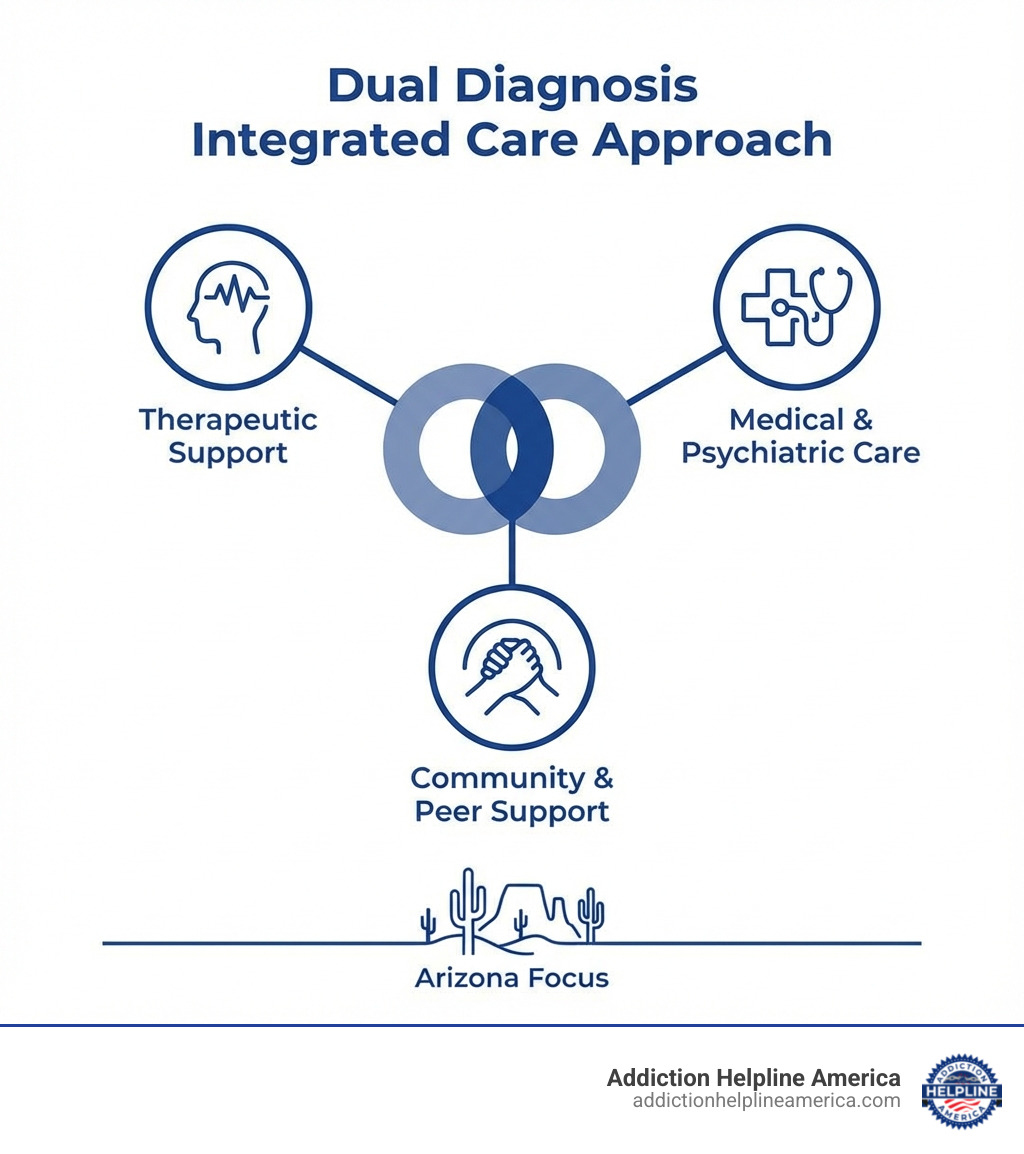
Today, integrated treatment brings care for both conditions under one roof. Instead of seeing separate providers who don’t communicate, you get a single, coordinated team and a unified treatment plan. This approach works because it treats the whole person, recognizing that substance use and mental health are deeply connected. By addressing the root causes of both issues simultaneously, integrated care breaks the cycle.
Research shows that people in integrated programs have lower relapse rates and improved overall outcomes, including better physical health and more stable lives. The National Institute on Drug Abuse has found that co-occurring disorders affect nearly half of all people with substance use disorders, making this comprehensive approach essential, not just optional.
At Addiction Helpline America, we connect you with facilities in Arizona that use this gold-standard approach, ensuring you receive the comprehensive, coordinated care needed for lasting recovery.
The Dangers of Treating Only One Condition
Treating only one condition in a dual diagnosis is like bailing water from a boat without patching the hole. It’s an incomplete solution that often leads to poor outcomes.
The primary danger is a high relapse risk. For example, if you get treatment for addiction but your underlying anxiety is ignored, that anxiety can easily trigger a return to substance use during a stressful time. Similarly, continuing to drink heavily can sabotage therapy for depression, as alcohol can interfere with medications and worsen mood.
This can lead to a “revolving door effect,” where people cycle through treatments without achieving stability. When one condition is left unaddressed, its symptoms often worsen, making both problems harder to treat over time. That’s why dual diagnosis Arizona centers emphasize treating both conditions at the same time. It’s the only way to build a solid foundation for real, lasting healing.
Navigating Treatment Programs for Dual Diagnosis Arizona
Finding the right help for co-occurring disorders can feel overwhelming, but Arizona has a range of resources. Effective dual diagnosis Arizona treatment follows a “continuum of care,” offering different levels of support as you move through recovery.
Your journey will start with a thorough assessment to create a personalized treatment plan. Arizona offers many treatment centers, from urban settings like Phoenix and Tucson to quieter, serene locations. The key is finding a program that fits your needs.
At Addiction Helpline America, we help you steer these choices. Our treatment locator is a great starting point, and our team offers free, confidential guidance to connect you with the right program.
Inpatient vs. Outpatient Treatment
One of the first decisions is choosing between inpatient and outpatient care. Both are effective but designed for different needs.
Inpatient or residential care involves living at a facility for 30, 60, or 90 days. It provides a structured, 24/7 supportive environment away from daily triggers, allowing you to focus completely on healing. This is often ideal for those with severe disorders or who need medical detox to manage withdrawal safely.
Outpatient programs offer flexibility, allowing you to live at home while attending scheduled treatment. This works well if you have a stable home environment and need to maintain work or family duties. Levels of care include Partial Hospitalization Programs (PHP), which are highly intensive, and Intensive Outpatient Programs (IOP), which involve fewer hours per week.
Many people transition from inpatient to outpatient care in a “step-down” approach, gradually reintegrating into daily life with continued support.
| Feature | Inpatient/Residential Treatment | Outpatient Treatment (PHP, IOP) |
|---|---|---|
| Environment | Structured, live-in facility, 24/7 supervision and support. | Live at home, attend scheduled therapy sessions/groups. |
| Intensity | Highly intensive, daily focused care. Often includes medical detox. | Flexible, allows for daily routines, less intensive than inpatient. |
| Focus | Comprehensive healing, removal from triggers, full immersion. | Ongoing support, skill application in real-world settings. |
| Typical Programs | Residential rehab, medical detox. | Partial Hospitalization Programs (PHP), Intensive Outpatient Programs (IOP). |
| Ideal For | Severe conditions, unstable home environments, need for medical supervision. | Step-down care from inpatient, mild-to-moderate conditions, strong home support. |
Types of Therapy Programs
Quality dual diagnosis Arizona treatment centers use a variety of evidence-based therapies to create a personalized plan.
- Cognitive Behavioral Therapy (CBT): Helps you identify and change negative thought patterns and behaviors that fuel both addiction and mental health issues.
- Dialectical Behavior Therapy (DBT): Teaches skills for mindfulness, distress tolerance, emotion regulation, and interpersonal effectiveness. It is especially helpful for intense emotions and conditions like BPD.
- Individual Therapy: Provides a confidential, one-on-one setting to explore personal issues, trauma, and the interplay between your conditions.
- Group Therapy: Reduces isolation by connecting you with peers who understand your struggles. It’s a space to share experiences and learn from others.
- Family Therapy: Helps repair relationships, improve communication, and address family dynamics that may contribute to the problems.
- Holistic and Experiential Therapies: Many programs incorporate activities like art, music, yoga, or equine therapy to promote healing of the mind, body, and spirit. These methods help process emotions and build confidence outside of traditional talk therapy.
- Trauma-Informed Care: This approach recognizes the role of trauma and creates a safe, supportive environment that avoids re-traumatization during treatment.
- Motivational Interviewing: A collaborative style that helps you explore and resolve ambivalence about change, strengthening your personal motivation for recovery.
Key Components of Effective Dual Diagnosis Care
Beyond therapy, several other components are vital for a strong foundation in recovery. These elements help build a healthier future.
Effective care often includes medication management to stabilize symptoms of anxiety, depression, or bipolar disorder, making it easier to engage in therapy. A solid aftercare plan is also crucial, acting as a roadmap for continued wellness with ongoing therapy and support. This plan is key for relapse prevention, equipping you with skills to manage triggers and cravings.
Life skills training provides practical tools for daily challenges, from stress management to financial planning. Finally, building strong support systems with family, friends, and peers provides the encouragement needed to sustain recovery. Many dual diagnosis Arizona treatment centers leverage the state’s natural beauty, incorporating outdoor activities that contribute to healing.
The Role of Medication-Assisted Treatment (MAT)
Medication-Assisted Treatment (MAT) is an evidence-based approach that combines FDA-approved medications with counseling and therapy. It is particularly effective for those with opioid or alcohol dependence alongside a mental health disorder.
In a dual diagnosis Arizona program, MAT helps by:
- Reducing cravings: Medications like naltrexone or buprenorphine can quiet the intense urges to use.
- Easing withdrawal: MAT makes the detox process safer and more comfortable.
- Stabilizing mood: Certain medications can work alongside mental health treatments to calm anxiety or level out moods.
- Preventing relapse: By addressing the physical side of addiction, MAT helps you stay in treatment longer and reduces the risk of relapse.
MAT is most effective when used as part of a comprehensive treatment plan that addresses both mind and body. Many dual diagnosis centers in Arizona offer MAT as part of their personalized care.
Verifying Insurance Coverage
Worries about cost should not prevent you from seeking help. The Affordable Care Act (ACA) and the Mental Health Parity and Addiction Equity Act (MHPAEA) mandate that most insurance plans cover mental health and substance use disorder services just like any other medical care.
To figure out your coverage for dual diagnosis Arizona treatment:
- Ask the Treatment Center: The easiest step is to call the admissions team. They are experts at verifying insurance and can explain your benefits, deductibles, and out-of-pocket costs.
- Check Your Plan: Log into your insurance provider’s online portal or call the number on your card to review your benefits. Ask specifically about in-network versus out-of-network coverage, as in-network facilities will be less expensive.
If you have limited or no insurance, don’t give up. Many treatment centers offer payment plans or can help you find other financing options. Our team at Addiction Helpline America can guide you through these choices to find a facility that fits your budget.
Long-Term Recovery and Outlook
Healing from a dual diagnosis is a long-term journey of ongoing management for both mental health and substance use challenges. It’s about building a sober life that is fulfilling and sustainable. While the path has ups and downs, the outlook is very positive for those who commit to integrated treatment.
An inspiring statistic shows that 75.5% of adults with co-occurring disorders report being in recovery or having recovered. This demonstrates that with the right support and commitment, a renewed sense of purpose is achievable.
A key part of long-term success is creating a robust support network of family, friends, therapists, and peers. This community provides encouragement, accountability, and understanding, helping you steer life’s challenges without returning to old coping mechanisms. The goal is to build resilience and create a life filled with meaning and connection.
Long-Term Recovery Prospects for Dual Diagnosis in Arizona
In Arizona, the prospects for long-term recovery are improved by strong aftercare and support systems.
Key elements for lasting recovery include:
- Continued Therapy: Regular therapy sessions help you reinforce coping skills and steer new challenges.
- Sober Living Homes: These structured, substance-free residences offer a supportive environment for transitioning back to daily life, which is crucial for preventing relapse.
- Alumni Programs: Many dual diagnosis Arizona treatment centers offer alumni programs that foster a supportive community of former clients.
- Peer Support Groups: Groups like Dual Diagnosis Anonymous (DDA), Alcoholics Anonymous (AA), and Narcotics Anonymous (NA) provide invaluable peer support and a structured path to recovery.
- Lifelong Journey: Viewing recovery as a continuous journey of self-awareness and commitment is essential. With the integrated tools and support available in Arizona, individuals can successfully manage their conditions and live healthy, fulfilling lives.
Find the Right Path to Recovery Today
We’ve explored what dual diagnosis Arizona means, why integrated care is essential, and the different treatment options available. We’ve looked at therapies, the role of medication, and how to steer insurance. Through it all, one truth shines brightest: dual diagnosis is treatable, and recovery is absolutely within reach.
At Addiction Helpline America, we understand how overwhelming this can feel. Our mission is to offer free, confidential guidance and connect you with the right support. We act as your compass, pointing you toward the best dual diagnosis Arizona treatment centers in our network that provide the integrated care you need.
Taking the first step is the most courageous one. Help is just a phone call away. Recovery is possible, and we’re here to help you begin.
Find a dual diagnosis treatment facility and start your journey to lasting healing and well-being today.