
Understanding Addiction Crisis Intervention
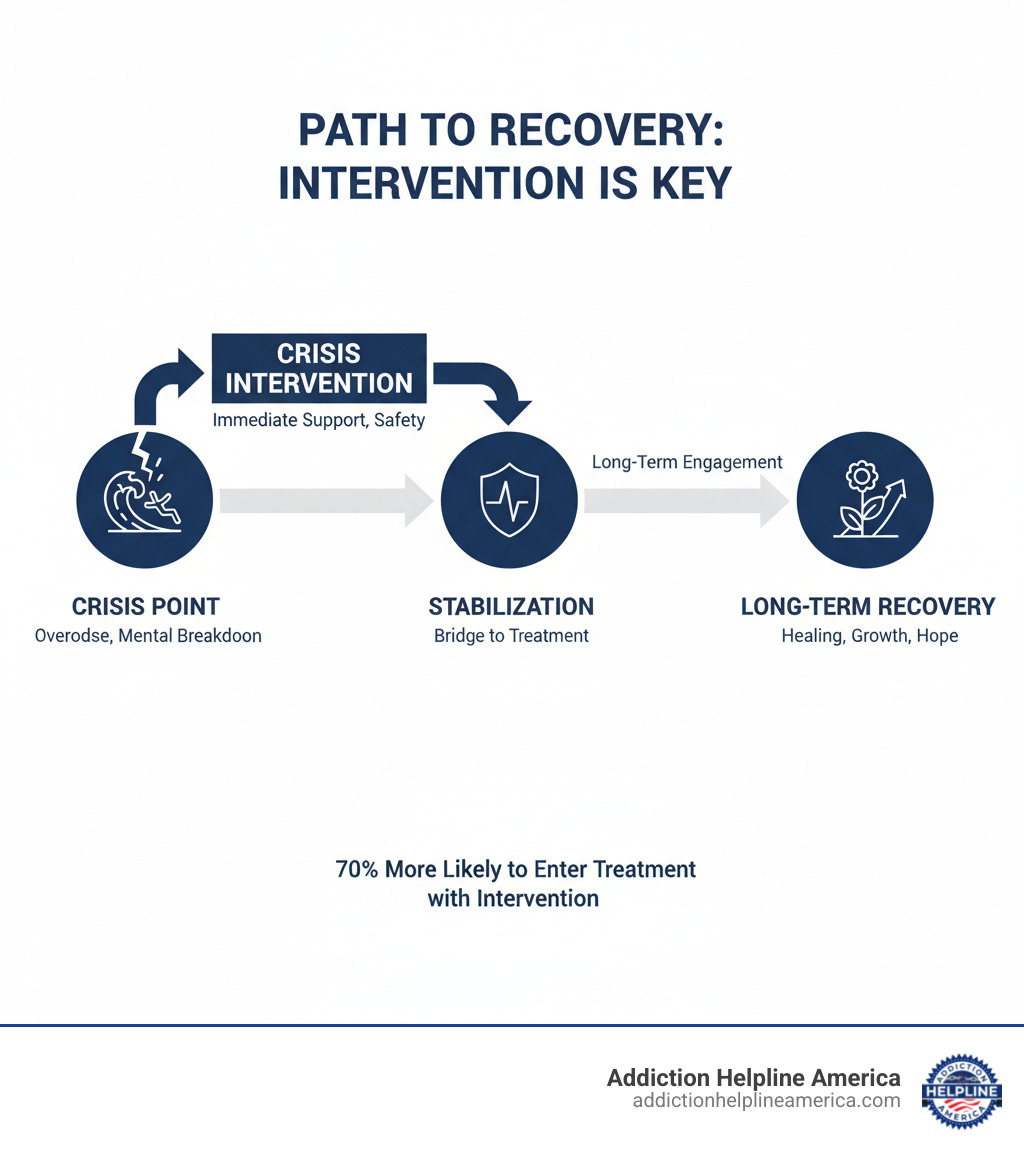
Addiction crisis intervention is immediate, short-term support for someone in acute distress from substance abuse. The main goal is to stabilize the situation, ensure safety, and prevent harm, acting as a bridge to long-term recovery.
When addiction reaches a crisis point, families face terrifying moments involving dangers like overdose, severe withdrawal, or acute mental health distress. Yet, this urgent situation is also a vital opportunity to offer life-saving help.
The reality is stark: nearly 49 million Americans struggle with addiction, but over 95% of those with substance use disorders don’t believe they need treatment. This often leads to tragic outcomes, including tens of thousands of overdose deaths annually.
However, there is hope. Timely crisis intervention makes a profound difference. Studies show that individuals who receive this immediate support are 30% more likely to engage in long-term treatment. It’s a critical first step toward recovery.
At Addiction Helpline America, our experienced professionals provide compassionate, confidential guidance in Addiction crisis intervention, helping families steer these urgent situations toward a path of healing.
Must-know Addiction crisis intervention terms:
Understanding Addiction Crisis Intervention
An addiction crisis is an overwhelming moment where substance use deeply affects a person’s physical, mental, or emotional well-being. It can involve an overdose, severe withdrawal, or acute mental health struggles. Addiction crisis intervention is short-term help designed to manage these immediate dangers, prevent harm, and guide the person toward professional support.
The main goals are clear and important:
- Stabilization: Helping the person reach a state where they are no longer in immediate danger by calming physical symptoms and emotional distress.
- Safety: Ensuring the well-being of everyone involved by preventing self-harm, harm to others, or further substance use.
By focusing on these goals, crisis intervention saves lives, reduces overdose risk, and de-escalates tense situations. It aims to break through the denial that prevents many from seeking help and creates an opening for lasting change. Scientific research confirms the effectiveness of this immediate support. While the focus is on the crisis, the ultimate goal is to connect the person with ongoing treatment, making this first step a crucial bridge to long-term recovery.
At Addiction Helpline America, we offer compassionate, private guidance to help families steer these urgent situations.
Must-know Addiction crisis intervention terms:
When to Seek Addiction Crisis Intervention
Knowing when to seek Addiction crisis intervention can save a life. Act fast when you see critical signs that the situation is beyond your control.
Seek immediate help for these signs:
- Life-threatening overdose: Unconsciousness, slow or stopped breathing, or blue lips/fingernails. Call 911 immediately.
- Severe withdrawal symptoms: Seizures, delirium tremens (DTs), extreme hallucinations, or severe confusion require urgent medical care.
- Suicidal thoughts or attempts: Any talk of suicide, threats, or self-harm signals a need for immediate intervention.
- Aggressive or violent behavior: Physical aggression or threats against others requires professional help to ensure safety.
- Acute mental health crisis (psychosis, paranoia): Severe paranoia, psychosis, or manic states triggered by substance use need urgent assessment.
- Inability to care for oneself: A decline in personal hygiene, eating, or safety, or severe health problems from substance use, warrants intervention.
How Crisis Intervention Prevents Overdose
Preventing an overdose is a vital function of Addiction crisis intervention, involving quick actions to reverse the drug’s dangerous effects.
Here’s how it works:
- Rapid assessment of risk: Professionals quickly evaluate the substance involved, the amount taken, and the person’s physical state to guide the response.
- Immediate medical attention: Calling 911 for a suspected overdose is the most critical step. EMS can provide life-saving care, like breathing support.
- Administration of naloxone: For opioid overdoses, naloxone (Narcan) can rapidly reverse the effects. As noted in the SAMHSA Overdose Prevention and Response Toolkit, this medication is a game-changer, even with challenges like fentanyl or xylazine.
- Creating a safety plan: After the immediate danger, a plan is created to identify triggers, develop coping skills, and outline steps for future crises. This includes removing access to substances by securing or disposing of any drugs or paraphernalia.
The SAMHSA Overdose Prevention and Response Toolkit also stresses post-overdose care. The person should be monitored for at least four hours, even if they refuse further care, and connected to resources like the 988 Crisis Lifeline for support. This approach handles the immediate crisis and opens doors to long-term recovery.
The Addiction Crisis Intervention Process: A Step-by-Step Guide
Navigating an Addiction crisis intervention requires a clear plan to turn desperation into a pathway for healing. While an informal talk can be a first step, a formal, planned intervention is often necessary when addiction takes hold. As the Mayo Clinic’s guide to helping a loved one overcome addiction notes, this is crucial when the person can’t see the problem. Preparation can take weeks and involves researching the addiction, exploring treatment, and deciding on consequences if help is refused.
A key part of planning is assembling an intervention team of 4 to 6 supportive people whom your loved one respects. A professional interventionist can help select the right team and guide the process. Our Drug Intervention Complete Guide offers more insights.
Key Techniques for Effective Addiction Crisis Intervention
Certain techniques are vital for stabilizing a crisis and guiding a loved one toward help.
- Rapid assessment: Quickly understand the person’s mental/physical state, substances involved, and any immediate dangers.
- Establishing rapport: Use a calm, non-judgmental, and empathetic approach to help them feel heard and understood.
- De-escalation strategies: If emotions are high, use a calm voice, open body language, and acknowledge their feelings to reduce tension.
- Active listening: Give your full attention and reflect their words and feelings to show you understand and respect them.
- SAFER-R model: This structured model (Stabilize, Acknowledge, Facilitate Understanding, Encourage, Recovery, Referral) guides individuals from crisis to treatment.
- Motivational Interviewing principles: Express empathy, highlight the gap between their actions and goals, and support their ability to change.
The Role of Family and Professionals
In an Addiction crisis intervention, family and professionals work together to pave the way for recovery.
Family’s Role: Family members provide crucial emotional support and motivation. It’s also vital to learn about setting firm boundaries. As the Mayo Clinic suggests, deciding on consequences if treatment is refused—like asking them to move out—is essential to stop enabling the addiction. Our guide on Helping A Loved One With Addiction offers more strategies.
The Benefit of a Professional Interventionist: A professional interventionist brings expertise to the complex process. They help plan the intervention, mediate and de-escalate emotions, provide resources for immediate treatment admission, and offer an objective viewpoint to avoid emotional pitfalls.
Crisis Intervention Team (CIT) programs are another vital resource. These community-based programs involve law enforcement and health professionals trained to divert individuals in crisis toward treatment instead of the justice system, reducing stigma and improving outcomes.

Crisis Intervention vs. Long-Term Treatment
Addiction crisis intervention and long-term treatment are connected but serve different roles. Crisis intervention is the emergency response, while long-term treatment is the ongoing journey to sustained recovery.
- Crisis Intervention: This is short-term (hours to days) and focuses on immediate safety, stabilization, and harm reduction. The goal is to manage the acute crisis and refer the person to further care. It often occurs in a community setting, home, or ER.
- Long-Term Treatment: This is a long-term commitment (weeks, months, or years) focused on addressing the root causes of addiction, building life skills, and achieving sustained recovery. It takes place in settings like residential centers or outpatient clinics and uses therapies like CBT, MAT, and counseling.
Integrating Crisis Care with a Recovery Plan
Addiction crisis intervention is not a standalone solution; it’s a crucial bridge to long-term recovery. Its purpose is to stabilize an individual so they can engage in ongoing treatment. Once stable, a person is more receptive to the deeper work of recovery.
Timely crisis intervention is highly effective. Individuals who receive it are 30% more likely to engage in long-term treatment programs. This initial support helps overcome denial and sets the stage for a full healing journey. For more on treatment options after a crisis, see our Addiction Complete Guide.
Potential Challenges During an Intervention
An Addiction crisis intervention presents several challenges that require patience and often professional guidance.
- Resistance and denial: A hallmark of addiction, over 95% of individuals with a substance use disorder don’t believe they need treatment. This can manifest as anger or defensiveness.
- Co-occurring mental health disorders: About 9.2 million U.S. adults have co-occurring substance use and mental health disorders, complicating the crisis and requiring integrated treatment.
- Unpredictability: Crisis situations are unstable. A person’s mood and symptoms can change rapidly, requiring a flexible approach.
- Ensuring safety: The risk of aggression or violence can be high. The safety of the individual, family, and professionals is the top priority.
- Emotional distress of family members: Family members’ own pain and fear can make it hard to remain objective. A professional can help manage these emotions and keep the focus on getting help.
Acknowledging these challenges is the first step in preparing for a successful intervention.
Finding Help: Resources for Immediate Support
When facing an Addiction crisis intervention, knowing where to turn for immediate support is crucial. Help is available to act fast and make a difference.
- For life-threatening emergencies like an overdose or severe withdrawal, always call 911 first. Emergency services are trained to provide vital assistance.
- Local Mobile Crisis Teams can respond directly to a crisis, offering on-site assessment and de-escalation.
- National Hotlines offer confidential, 24/7 support, connecting you to local resources and guiding your next steps.
- Community-Based Organizations provide support groups, harm reduction services, and referrals to treatment.
When you’re ready for the next step, our platform can help you Find Rehab Facilities for long-term recovery.
National Hotlines and Lifelines
For immediate, confidential support, national hotlines are invaluable. They are staffed 24/7 by trained professionals.
- The 988 Suicide & Crisis Lifeline is a key resource. Call or text 988, or chat online at www.988lifeline.org. Funded by SAMHSA, this network provides support for suicidal thoughts, substance use, and mental health crises. Talking to a trained counselor is proven to help people feel less overwhelmed and more hopeful. Learn more on SAMHSA’s website.
- SAMHSA’s National Helpline (1-800-662-HELP) offers free, 24/7 treatment referrals and information in English and Spanish.
- We at Addiction Helpline America are also here for you. Connect to support through our National Substance Abuse Helpline.
Frequently Asked Questions about Addiction Crisis Intervention
Navigating an Addiction crisis intervention is challenging. Here are answers to common questions.
What if my loved one refuses help during the intervention?
If your loved one refuses help, it’s disheartening but not the end. As the Mayo Clinic advises, you must be ready to follow through with the consequences discussed during planning. This isn’t punishment; it’s about ending enablement. This may mean stopping financial support or asking them to move out. These actions, often called “detaching with love,” help the person feel the impact of their addiction, which can motivate them to seek help later. Ensure your team is united in enforcing these boundaries, and remember you can offer help again when they are more receptive.
Can I legally force someone into rehab?
This is complex and depends on your state. While voluntary treatment is ideal, some states have involuntary commitment laws for individuals who are a danger to themselves or others. These laws, like Casey’s Law (in Kentucky, Ohio) or the Marchman Act (in Florida), allow a court to mandate assessment or treatment. However, the legal standard is very high and requires strong evidence of danger. We recommend consulting a legal professional and an addiction specialist in your state to understand your options.
How do I prepare for an intervention?
Proper preparation is key to a successful Addiction crisis intervention. Follow these steps, inspired by best practices from sources like the Mayo Clinic:
- Work with a professional: An interventionist or counselor is vital for guiding the process and managing emotions.
- Gather a supportive team: Assemble 4-6 people your loved one respects and who are committed to the goal. Avoid including anyone who enables the addiction.
- Write down specific examples: Each member should list factual, non-blaming examples of how the addiction has caused harm, using ‘I’ statements.
- Rehearse the meeting: Practice what each person will say to ensure a clear, consistent message and prepare for potential reactions.
- Arrange treatment in advance: Research and secure a spot in a suitable treatment program beforehand. The goal is immediate admission if they accept help, removing any delay.
Conclusion
An addiction crisis is a terrifying but powerful turning point. These moments of acute distress open a vital window for Addiction crisis intervention—a chance to offer life-saving help.
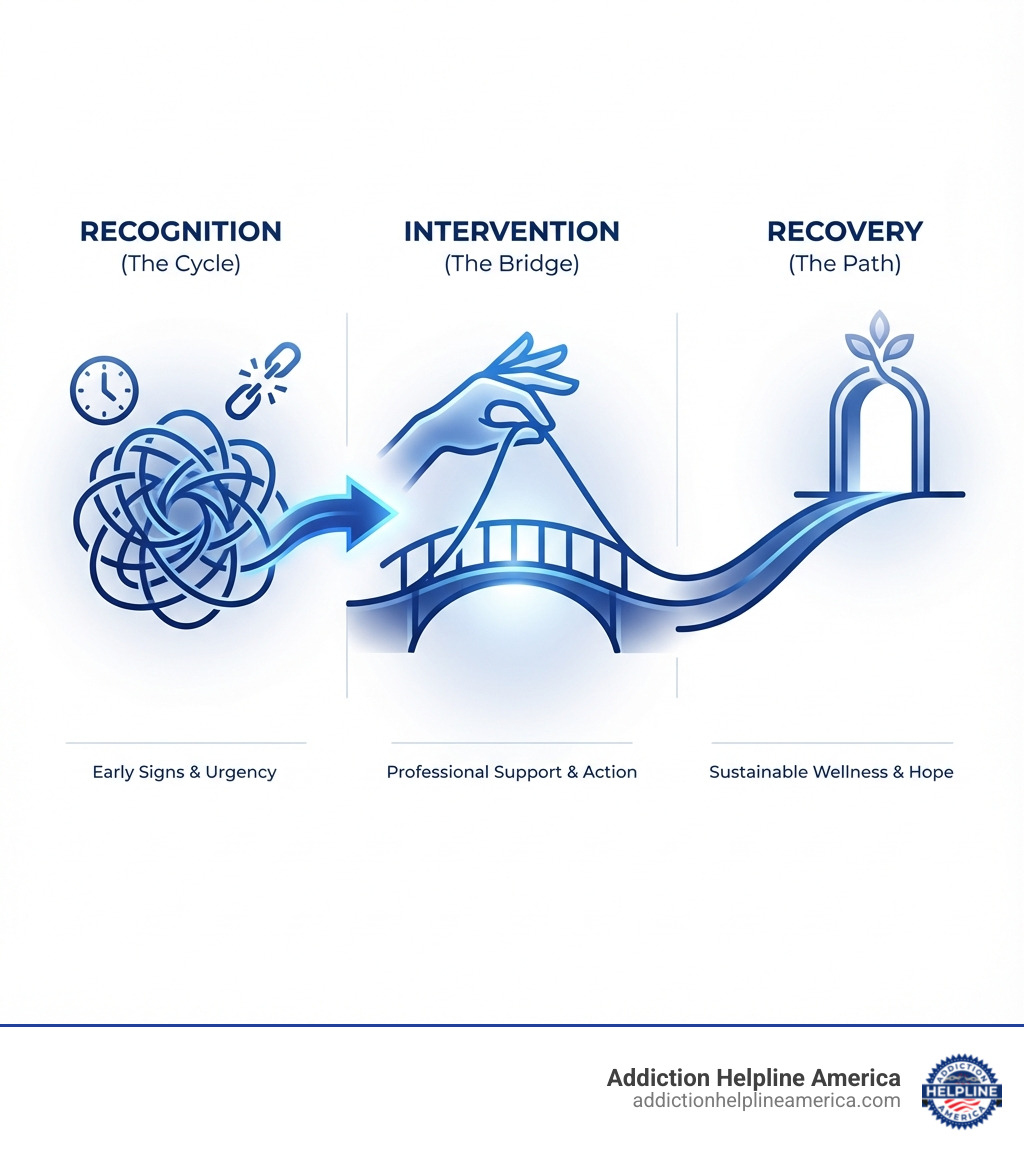
As we’ve explored, immediate action is crucial. Intervention stabilizes individuals, prevents overdose, and builds a bridge to long-term recovery, turning despair into hope.
Recovery is an achievable goal. With the right support at the right time, the chances of engaging in treatment and finding lasting healing increase significantly.
At Addiction Helpline America, we understand these challenges. We offer free, confidential, and personalized guidance, connecting you to a vast network of treatment centers nationwide.
If you or someone you love is struggling, don’t wait. Take the first brave step. Get addiction help for yourself or a loved one today. We are ready to help you find the right recovery program and begin the journey to a healthier life.