
Understanding Adderall Withdrawal and Why It Matters
Adderall withdrawal symptoms can be overwhelming and frightening, but understanding what to expect is the first step toward safe recovery. When you stop taking Adderall—whether it was prescribed or misused—your body and brain need time to readjust to functioning without the medication.
Common Adderall withdrawal symptoms include:
- Fatigue and extreme tiredness – feeling exhausted even after sleeping
- Depression and mood changes – intense sadness or inability to feel pleasure
- Sleep disturbances – either sleeping too much (hypersomnia) or struggling with insomnia
- Increased appetite and cravings – sudden hunger and strong urges to use Adderall again
- Anxiety and irritability – feeling on edge, agitated, or easily frustrated
- Difficulty concentrating – mental fog and trouble focusing
- Physical discomfort – headaches, muscle aches, nausea, or stomach cramping
Research shows that 87.6% of individuals with amphetamine dependence experience withdrawal symptoms when they stop taking the drug. Symptoms typically begin within 24 hours of your last dose and can last anywhere from 5 days to 3 weeks or longer, depending on factors like how long you took Adderall, your dosage, and your overall health.
Adderall is a prescription stimulant combining amphetamine and dextroamphetamine, primarily used to treat ADHD and narcolepsy. It works by increasing dopamine and norepinephrine in your brain—chemicals that help with focus and attention. Over time, your brain adapts to these higher levels. When you stop taking Adderall, your brain suddenly has less of these chemicals available, which triggers withdrawal symptoms.
The good news? Withdrawal is temporary, and with proper support, you can safely steer this challenging phase. Medical supervision is crucial because some symptoms—particularly severe depression and suicidal thoughts—require immediate professional care.
At Addiction Helpline America, we’ve helped thousands of individuals and families steer the complexities of Adderall withdrawal symptoms and find personalized recovery paths. Our team of addiction specialists and counselors provides 24/7 confidential support to connect you with safe detox programs and treatment options that match your unique situation—call us anytime at 844-561-0606.
What Causes Adderall Withdrawal and What Are the Symptoms?
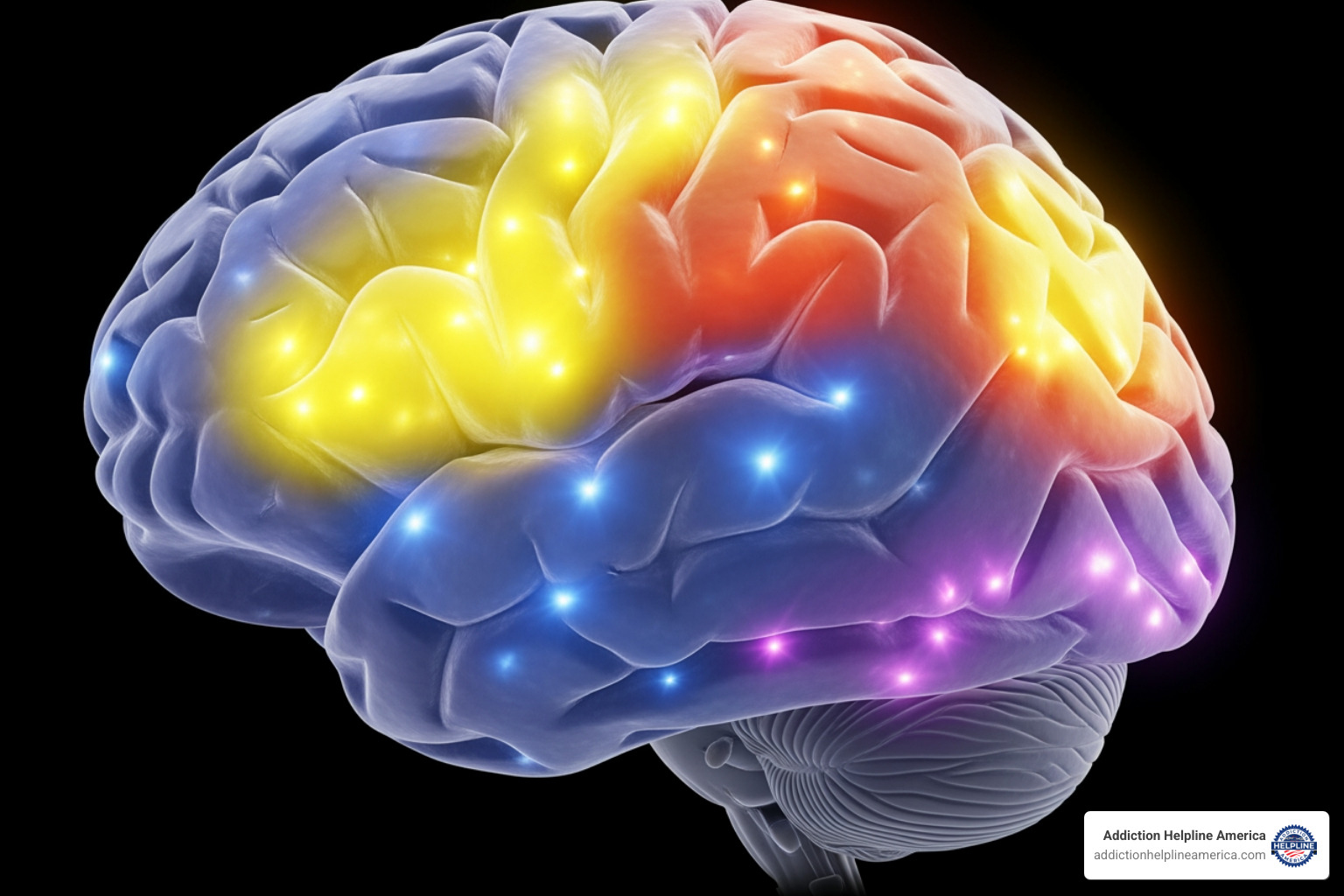
Adderall is a powerful stimulant that affects the central nervous system. It primarily works by boosting the levels of certain neurotransmitters in the brain, particularly dopamine and norepinephrine. These chemicals are crucial for regulating mood, motivation, attention, and energy. When someone uses Adderall regularly, their brain adapts to these artificially liftd levels.
This adaptation means the brain reduces its natural production of these neurotransmitters. It’s like having a helpful assistant (Adderall) doing a job the brain used to do. When the assistant suddenly leaves, the brain is left scrambling to pick up the slack. This sudden depletion of dopamine and norepinephrine is the core physiological reason behind Adderall withdrawal symptoms. The body, having grown accustomed to the drug’s presence, struggles to function normally without it, leading to a range of uncomfortable and sometimes severe symptoms.
This process highlights the difference between physical dependence and addiction. Physical dependence means your body has adapted and will experience withdrawal symptoms if you stop taking the drug. Addiction, or stimulant use disorder, goes further, involving compulsive drug-seeking behavior despite negative consequences. While withdrawal is a key symptom of dependence, it’s not the entire picture of addiction.
Research indicates that the prevalence of this withdrawal syndrome is extremely common. For instance, a study noted that 87.6% of individuals with amphetamine dependence reported six or more signs of amphetamine withdrawal when the drug was unavailable. This underscores just how widespread and impactful this experience can be.
If you’re curious to learn more about how different substances affect the body and lead to dependence, we offer more detailed information on various substances. More info about various substances.
Physical Symptoms
When your body is recalibrating to function without Adderall, a variety of physical sensations can arise. These are often the opposite of the drug’s stimulating effects:
- Fatigue and lethargy: One of the most prominent symptoms. After the stimulating effects wear off, profound exhaustion can set in, often referred to as the “crash.” This can manifest as unusual tiredness, lack of energy, and a general feeling of being slowed down.
- Hypersomnia or insomnia: While some people experience an inability to sleep, others may feel an overwhelming urge to sleep excessively. Sleep patterns become disrupted, leading to either prolonged sleep or difficulty initiating or maintaining sleep.
- Increased appetite: Adderall often suppresses appetite. During withdrawal, your appetite can rebound with a vengeance, leading to intense hunger and cravings for food.
- Headaches: Persistent or severe headaches are a common physical complaint.
- Muscle aches and pains: General body aches, muscle stiffness, and discomfort can occur.
- Nausea and stomach cramps: Digestive issues, including nausea, stomach aches, cramping, and sometimes vomiting, can be part of the physical withdrawal experience.
- Slowed movements: You might notice a decrease in psychomotor activity, feeling sluggish and moving more slowly than usual.
Psychological and Emotional Symptoms
The psychological and emotional toll of Adderall withdrawal symptoms can be particularly challenging, often impacting mental well-being more severely than physical discomforts.
- Depression and anhedonia: A profound sense of sadness, hopelessness, or despair is very common. Anhedonia, the inability to feel pleasure from activities you once enjoyed, can make daily life feel dull and meaningless. This depression can be temporary yet potentially severe, sometimes mimicking major depressive episodes.
- Anxiety and panic attacks: Feelings of intense worry, nervousness, and unease are frequent. Some individuals may experience full-blown panic attacks, characterized by sudden, intense fear and physical symptoms like a racing heart and shortness of breath.
- Irritability and agitation: You might find yourself easily frustrated, short-tempered, and agitated, reacting to minor annoyances with disproportionate anger.
- Intense drug cravings: The brain’s reward system, accustomed to Adderall’s dopamine surge, will strongly signal a desire for the drug, leading to intense psychological cravings.
- Difficulty concentrating or “brain fog”: Cognitive functions can be impaired, leading to trouble focusing, remembering things, and clear thinking. This “brain fog” can make simple tasks feel overwhelming.
- Mood swings: Rapid and unpredictable shifts in mood are common, ranging from deep sadness to sudden anger or anxiety.
- Paranoia: In some cases, individuals may experience paranoid thoughts or feelings of suspicion, though this is less common than other symptoms.
Experiencing these symptoms can be isolating and frightening. You don’t have to go through it alone. Call Addiction Helpline America at 844-561-0606 for confidential support and guidance on managing Adderall withdrawal symptoms.
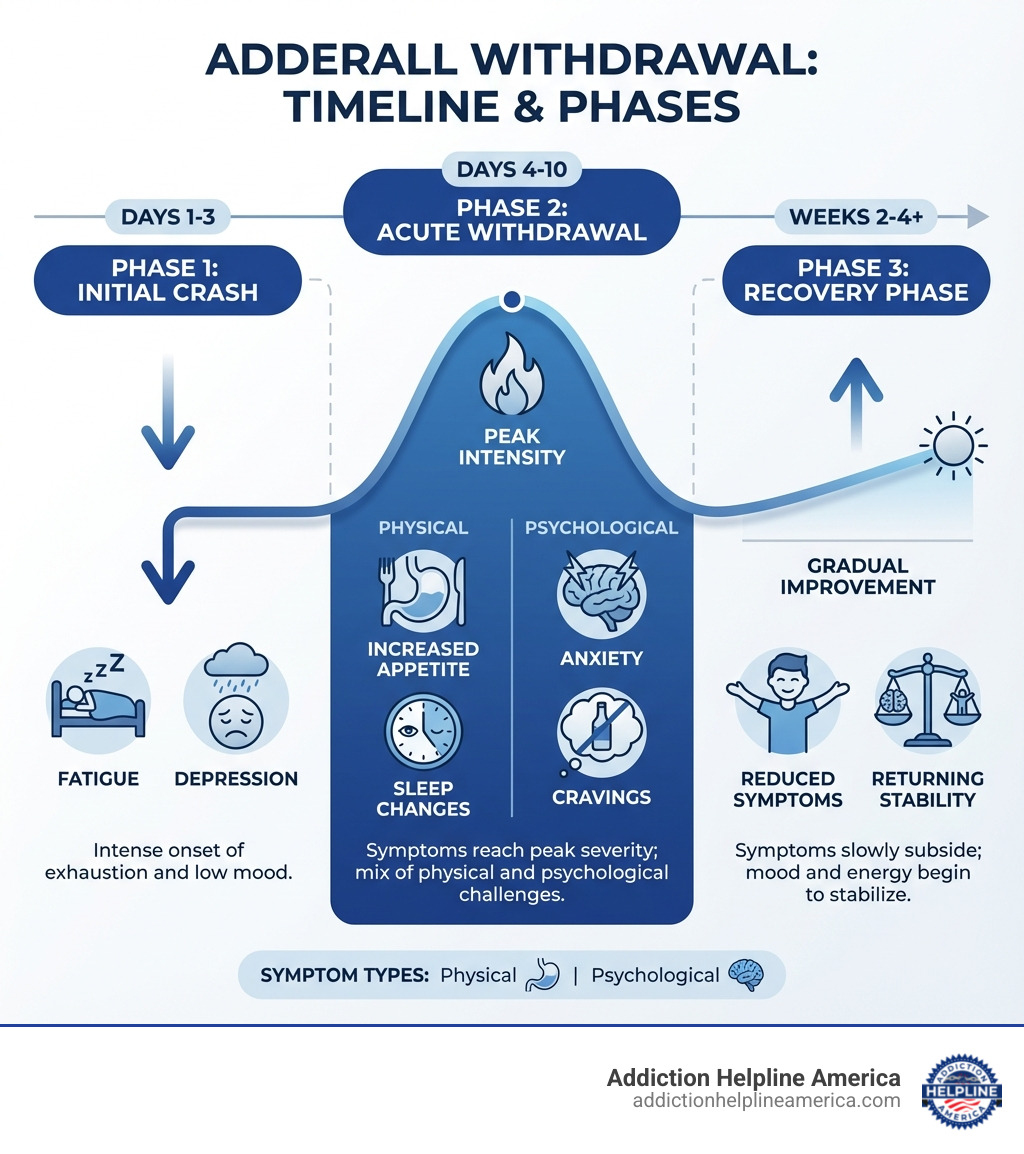
The Adderall Withdrawal Timeline: A Phase-by-Phase Guide
Understanding the typical Adderall withdrawal symptoms timeline can help individuals prepare for the journey ahead and recognize that each stage, however difficult, is temporary. While the general pattern is predictable, the exact duration and severity of withdrawal can vary significantly from person to person.

Several factors influence how long and how you experience withdrawal:
- Dosage: Higher daily doses of Adderall generally lead to more severe withdrawal symptoms.
- Duration of use: The longer someone has been taking Adderall, the more dependent their body becomes, potentially prolonging withdrawal.
- Individual health: A person’s overall physical and mental health, including any co-occurring mental health conditions (like anxiety or depression), can impact the intensity and length of withdrawal. Genetics and family history of addiction also play a role.
- Polysubstance use: If Adderall was used in conjunction with other substances, the withdrawal process can become more complex and potentially more severe.
The Initial Crash: Days 1-3
The first phase of Adderall withdrawal symptoms often begins within 12 to 24 hours of the last dose, sometimes referred to as the “comedown” or “crash.” This initial period is characterized by the sudden absence of the stimulating effects as the drug leaves the system.
- Onset within 24-48 hours: Symptoms typically manifest within the first day or two. For some, the effects of regular Adderall (immediate release) wear off in a few hours, leading to a quicker onset.
- Intense fatigue and exhaustion: This is a hallmark of the crash. You may feel profoundly tired, lethargic, and have an overwhelming urge to sleep. Some people experience hypersomnia, sleeping for extended periods.
- Rebound hunger: As Adderall’s appetite-suppressing effects fade, you might experience a significant increase in appetite, often accompanied by cravings for comfort foods.
- Severe depression: A dysphoric mood, characterized by intense sadness and a lack of motivation or pleasure (anhedonia), can be very prominent during this phase. This can be one of the most challenging aspects, and for some, it can be severe enough to warrant immediate medical attention.
- The “comedown” effect: This period can make a person seem hungover or intoxicated due to the sudden shift in brain chemistry.
Acute Withdrawal: Days 4-10
Following the initial crash, the acute withdrawal phase typically brings the most intense and uncomfortable Adderall withdrawal symptoms. This period can last for about a week, with symptoms peaking around days four to seven.
- Peak symptom intensity: Psychological symptoms often become more pronounced. You might experience continued and sometimes worsening depression and anxiety.
- Continued depression and anxiety: These mood disturbances can be persistent and debilitating, contributing to significant emotional distress.
- Sleep disturbances and vivid nightmares: While some might still experience hypersomnia, insomnia can also be a significant issue. Sleep, when it comes, might be fragmented or filled with unusually vivid and distressing dreams.
- Strong irritability: Agitation and irritability are common, making interactions with others difficult.
- Physical discomfort: Headaches, muscle pain, nausea, and other physical symptoms experienced during the crash may continue or even intensify.
Adderall IR vs. Adderall XR Withdrawal
The formulation of Adderall—immediate-release (IR) versus extended-release (XR)—can subtly influence the Adderall withdrawal symptoms and their timeline.
| Feature | Adderall IR Withdrawal | Adderall XR Withdrawal |
|---|---|---|
| Onset of Symptoms | Generally quicker, often within hours of the last dose. | May be slightly delayed, typically within 24-48 hours. |
| Duration of Acute Phase | Can be shorter, as the drug leaves the system more rapidly. | Potentially longer, as the drug’s effects taper more gradually. |
| Potential for Prolonged Symptoms | Less likely to have prolonged acute symptoms if well-managed. | Due to the sustained release, some may experience lingering symptoms for weeks longer. |
Adderall IR is designed to release its active ingredients immediately, with effects lasting several hours. When it’s stopped, the drop in neurotransmitter levels is more abrupt, potentially leading to a quicker onset of withdrawal. Adderall XR, on the other hand, is designed for around-the-clock use, releasing medication over an extended period. This sustained release means the drug tapers off more slowly in the body, which might delay the onset of withdrawal symptoms but could also prolong the acute phase. The body still needs to adjust to the absence of the stimulant, regardless of the release mechanism.
Navigating this timeline can be unpredictable and challenging. If you or a loved one are facing Adderall withdrawal symptoms, our team at Addiction Helpline America can help. Call us 24/7 at 844-561-0606 to connect with a specialist who can guide you toward a safe and supported detox.
How to Safely Manage Adderall Withdrawal Symptoms
Managing Adderall withdrawal symptoms safely is paramount, and it almost always requires professional guidance. While the acute phase of withdrawal from stimulants is typically not life-threatening, the intense psychological symptoms, particularly severe depression and suicidal thoughts, make medical supervision crucial. Quitting Adderall “cold turkey” without medical oversight is risky because it can lead to a sudden and overwhelming rebound of negative symptoms, significantly increasing the risk of relapse and psychological distress.
We strongly advise against attempting to stop Adderall abruptly on your own. Instead, talk to your doctor about the safest way to discontinue the medication. For personalized guidance and to connect with safe detox options, please call us at 844-561-0606. We’re here to help you steer this process safely and effectively.
Prevention and Minimization Strategies
The best way to manage Adderall withdrawal symptoms is to prevent them from becoming severe. This typically involves a controlled, medically supervised approach:
- Tapering dosage under a doctor’s care: Gradually reducing your Adderall dose over time, rather than stopping abruptly, is the safest and most effective method. Your doctor can create a personalized tapering schedule that slowly lowers the amount of Adderall you take, allowing your brain and body to adjust more gently. For example, some might reduce their dosage by 50% every few days, while others on high doses may need a slower reduction (e.g., 5mg every 2-4 weeks).
- Creating a gradual reduction schedule: This schedule is custom to your specific dosage, duration of use, and individual response. Medical monitoring ensures that if symptoms become too intense, the tapering can be slowed or paused.
- Maintaining hydration and nutrition: Staying well-hydrated and eating a balanced diet can support your body’s recovery process. Proper nutrition can help stabilize mood and energy levels, mitigating some physical discomforts.
- Gentle exercise: Physical activity, even light exercise like walking, can help boost mood, improve sleep, and reduce fatigue. It can be a powerful tool for coping with the lethargy associated with withdrawal.
- Establishing a consistent sleep schedule: Prioritizing sleep and maintaining a regular sleep-wake cycle can help regulate your body’s natural rhythms, which are often disrupted during withdrawal.
Long-Term Effects and Prolonged Adderall Withdrawal Symptoms
While the most acute Adderall withdrawal symptoms usually subside within a few weeks, some individuals may experience lingering issues known as Post-Acute Withdrawal Syndrome (PAWS). PAWS can extend for weeks or even months after discontinuing Adderall, making long-term recovery a continuous journey.
Symptoms of PAWS can include:
- Lingering depression and anxiety: Mood disturbances may persist, fluctuating in intensity.
- Chronic fatigue: A feeling of persistent tiredness and low energy, even after sufficient rest.
- Cognitive impairment: Difficulty with concentration, memory, and clear thinking, often described as “brain fog.”
- Cravings: Occasional urges to use Adderall can return, especially during stressful periods.
These prolonged symptoms can be frustrating, but understanding that they are part of the healing process can help. Research into amphetamine withdrawal treatment, as detailed in systematic reviews, continues to explore effective interventions for these prolonged challenges. For more information, you can review Evidence on amphetamine withdrawal treatment.
When to Seek Emergency Medical Help
While most Adderall withdrawal symptoms are not life-threatening, certain severe psychological symptoms demand immediate medical attention. Your safety is our top priority.
Seek medical help immediately if you experience:
- Severe depression or suicidal thoughts: The dysphoric mood during withdrawal can be intense and, in some cases, lead to suicidal ideation. If you or a loved one are thinking about suicide or going through an emotional crisis, please reach out for help. Call or text 988 anytime in the US and Canada. For immediate support, The National Suicide Prevention Lifeline has trained counselors ready to listen and help at any time.
- Psychosis, hallucinations, or paranoia: While rare, severe stimulant withdrawal can sometimes trigger psychotic symptoms, including seeing or hearing things that aren’t there, or experiencing intense, unfounded suspicion.
- Uncontrollable anxiety or panic attacks: If anxiety becomes overwhelming and unmanageable, or if panic attacks are frequent and debilitating, professional intervention is necessary.
In any emergency situation, do not hesitate to call 911.
Professional Treatment and Detox for Adderall Dependence
Overcoming Adderall dependence is a significant step towards a healthier life, and professional treatment offers the best chance for successful, long-term recovery. A structured recovery environment not only provides safety during withdrawal but also addresses the underlying reasons for substance use. It’s about healing the whole person, not just managing symptoms.
We believe in a comprehensive approach to recovery. You can find a path to recovery with our complete guide, which details various stages and options for treatment. Find a path to recovery with our complete guide.
Medically-Supervised Detox
The first and often most critical step in addressing Adderall withdrawal symptoms is medically-supervised detox. This process involves safely removing the drug from your system under the care of medical professionals.
- 24/7 monitoring in a safe facility: In a medical detox setting, you receive continuous supervision, ensuring that any severe withdrawal symptoms are immediately addressed. This is especially important for managing psychological distress like depression or anxiety.
- Managing severe physical and psychological symptoms: Medical staff can administer supportive medications to alleviate discomfort, reduce cravings, and stabilize mood. This makes the withdrawal process more tolerable and significantly reduces the risk of relapse.
- Ensuring patient comfort and safety: The primary goal of medical detox is to ensure you are as comfortable and safe as possible while your body adjusts to functioning without Adderall. This controlled environment minimizes the dangers associated with quitting abruptly. Many of our partner facilities in states like California, Florida, and New York offer state-of-the-art medical detox programs.
Medications and Therapies for Adderall Withdrawal Symptoms
While there are no specific FDA-approved medications solely for Adderall withdrawal symptoms, various supportive medications and therapeutic approaches can effectively manage the discomfort and psychological challenges.
- Supportive medications:
- Antidepressants: Often prescribed to help stabilize mood, combat severe depression, and reduce anhedonia.
- Anti-anxiety medications: May be used short-term to alleviate severe anxiety and panic attacks.
- Sleep aids: Can assist with insomnia, helping to re-establish healthy sleep patterns.
- Cognitive Behavioral Therapy (CBT): A highly effective therapy that helps individuals identify and change negative thought patterns and behaviors contributing to substance use. It equips you with coping mechanisms to handle cravings and triggers.
- Contingency Management: This approach uses positive reinforcement, offering tangible rewards for desired behaviors, such as negative drug tests, to encourage abstinence.
- Motivational Interviewing: Helps individuals explore and resolve their ambivalence about changing their substance use behavior, strengthening their motivation for recovery.
Research, including systematic reviews, has explored various pharmacological agents for amphetamine withdrawal. For example, studies on mirtazapine for methamphetamine withdrawal have shown mixed results, highlighting the complexity of finding specific pharmacological treatments for stimulant withdrawal. You can read more about this research here: Research on mirtazapine for withdrawal.
Inpatient and Outpatient Rehabilitation
After detox, ongoing rehabilitation is crucial for long-term sobriety. The choice between inpatient and outpatient care depends on individual needs, the severity of dependence, and personal circumstances.
- Inpatient rehabilitation: Offers a structured, immersive environment with 24/7 care. This is ideal for individuals with severe dependence, co-occurring mental health disorders, or unstable home environments. Inpatient programs, available across our network in states like Texas, Illinois, and Pennsylvania, provide intensive therapy, education, and support, helping you focus entirely on recovery.
- Outpatient rehabilitation: Allows individuals to live at home while attending therapy and counseling sessions. This option is suitable for those with strong support systems, less severe dependence, or work/family obligations. Programs like Partial Hospitalization Programs (PHP) and Intensive Outpatient Programs (IOP) offer varying levels of intensity.
- Building a sober support network: Both inpatient and outpatient programs emphasize connecting with peers who share similar experiences. Support groups, such as Narcotics Anonymous (NA), play a vital role in fostering a sense of community and shared understanding.
- Relapse prevention planning: A key component of rehabilitation is developing strategies to identify triggers and cope with cravings, equipping you with the tools to maintain abstinence outside of treatment.
- Aftercare support: Long-term recovery often involves ongoing support, including individual therapy, group counseling, and participation in alumni programs.
Finding the right combination of detox, rehabilitation, and aftercare is key to lasting recovery. At Addiction Helpline America, we specialize in creating personalized treatment plans. Call our confidential helpline at 844-561-0606 to explore your options and start your journey today.
Frequently Asked Questions and Your Next Steps
We understand that you likely have many questions about Adderall withdrawal symptoms and the recovery process. Here are some of the most common inquiries we receive:
How long does the “Adderall crash” last?
The initial crash phase, characterized by extreme fatigue, profound tiredness, increased appetite, and severe depression, typically lasts for the first 1 to 3 days after the last dose. This is when the immediate effects of Adderall wear off, and your brain adjusts to the sudden absence of the stimulant.
Is it dangerous to quit Adderall cold turkey?
Yes, quitting Adderall abruptly without medical supervision can be risky. While not typically life-threatening in terms of physical complications, the psychological Adderall withdrawal symptoms can be severe. This includes intense depression, anxiety, and in some cases, even suicidal thoughts. A medically supervised taper, where the dosage is gradually reduced over time, is the safest and most recommended method to minimize discomfort and prevent dangerous psychological rebound effects.
Can you get withdrawal from taking Adderall as prescribed?
Yes, absolutely. Physical dependence can develop even when taking Adderall exactly as prescribed by a doctor, especially with prolonged use. Your body adapts to the consistent presence of the medication. When you stop taking it, even if under medical guidance, you may still experience Adderall withdrawal symptoms as your system recalibrates. This is why a doctor-guided tapering plan is crucial for anyone discontinuing Adderall, regardless of whether it was misused or taken as prescribed.
Taking the First Step to Recovery
Recognizing that you or a loved one needs help with Adderall withdrawal symptoms and dependence is the courageous first step. We want you to know that while withdrawal can be challenging, recovery is absolutely possible, and you don’t have to face it alone.
At Addiction Helpline America, we are dedicated to providing free, confidential, and personalized guidance to help you find the right recovery program from our vast network of treatment centers across the nation, including facilities in states like Georgia, Washington, and Massachusetts. Our specialists are available 24/7 to listen to your unique situation, answer your questions, and connect you with the resources you need to begin your healing journey.
Whether you’re looking for medically-supervised detox, inpatient rehabilitation, outpatient programs, or simply need someone to talk to, we are here to support you.
Call our 24/7 helpline at 844-561-0606 to speak with a specialist now. Let us help you take the next step towards a healthier, Adderall-free life.