
Your Guide to Finding Hope and Healing in the Peach State
Drug and alcohol rehab in Georgia offers a comprehensive network of over 268 treatment centers providing specialized care for substance use disorders. Whether you’re seeking medical detox, residential treatment, intensive outpatient programs, or aftercare support, Georgia provides diverse options to meet your recovery needs.
Quick Overview: Drug and Alcohol Rehab in Georgia
- Treatment Centers: 268+ facilities offering various levels of care
- Common Programs: Detox, Inpatient, Outpatient, IOP, PHP, Sober Living
- Payment Options: Private insurance, Medicaid, Medicare, TRICARE, sliding scale fees
- Specialized Care: Programs for veterans, LGBTQ+ individuals, teens, professionals
- Cost Range: $1,200 (outpatient detox) to $10,000+ (residential inpatient)
- Key Accreditations: Joint Commission, CARF, SAMHSA
The need for professional addiction treatment in Georgia is urgent. In 2020, there were 1,710 drug overdose deaths in the state. One in 10 adults struggle with a substance use disorder, and Georgia has a higher rate of opioid prescriptions than the national average. The most commonly abused substances are alcohol, marijuana, cocaine, and methamphetamine.
Recovery begins with taking that first difficult step—acknowledging the problem and seeking help. Georgia’s treatment landscape includes everything from serene mountain retreats to urban outpatient clinics, offering evidence-based therapies like CBT, DBT, and medication-assisted treatment (MAT).
At Addiction Helpline America, we’ve spent years connecting individuals and families to quality drug and alcohol rehab in Georgia through our 24/7 confidential helpline and comprehensive network of accredited treatment providers. We understand the challenges you’re facing and are here to guide you toward the right treatment option for your unique situation.
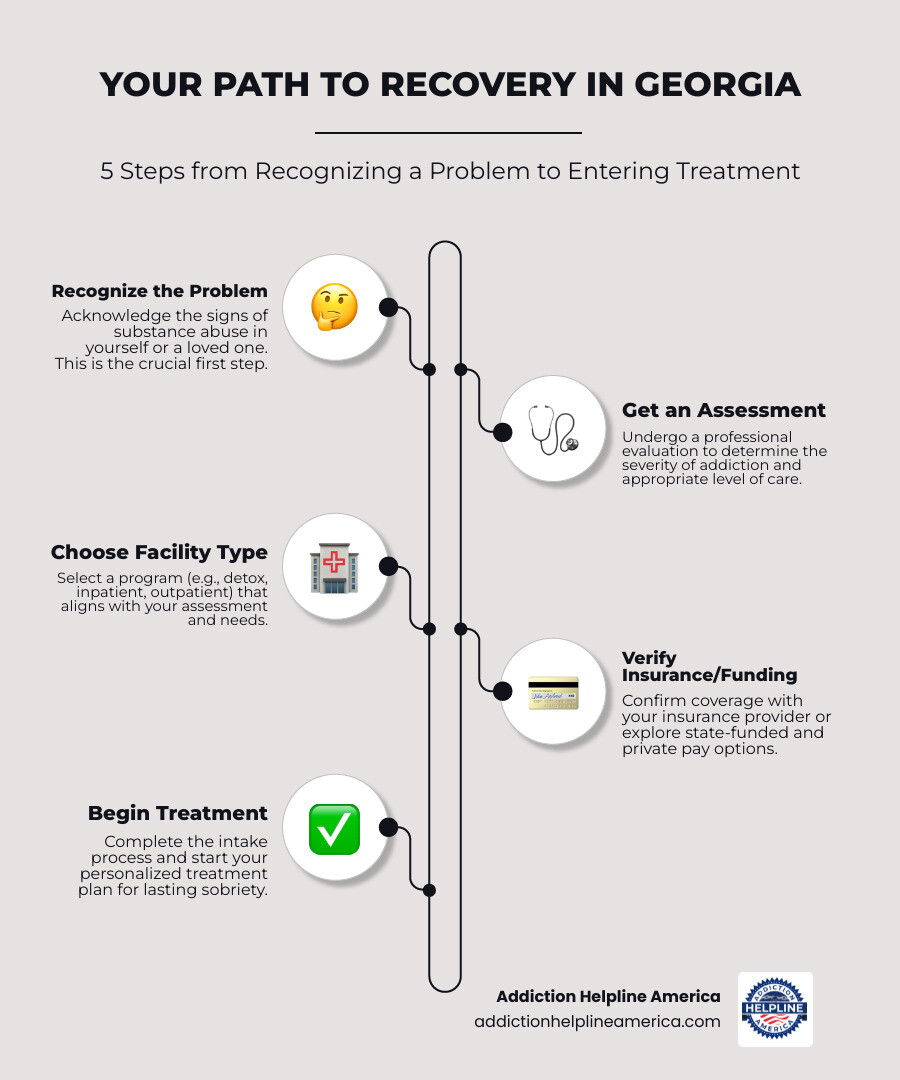
Understanding the Need for Professional Help in Georgia
Substance abuse is a pervasive issue, and Georgia is certainly not immune. We see its impact daily, from individual struggles to broader community challenges. The statistics paint a stark picture: 1 in 10 adults in Georgia grapple with a substance use disorder. This isn’t just a number; it represents friends, family members, neighbors, and colleagues facing profound difficulties.
The opioid crisis, in particular, has hit Georgia hard, with the state experiencing a higher rate of opioid prescriptions than the national average. This overprescription often serves as a gateway to addiction, leading to devastating consequences. In 2020 alone, Georgia tragically recorded 1,710 drug overdose deaths. More recent data indicates an even sharper rise, with opioid-related deaths increasing by 64% from 1,014 in 2023 to 1,663 in 2024. Heroin deaths have also surged, climbing from 40 in 2022 to 263 in 2024.
Beyond opioids, other substances contribute significantly to Georgia’s addiction landscape. Marijuana remains the most commonly used illicit drug, followed by cocaine and methamphetamine. Alcohol, however, takes the top spot as the most commonly abused substance, with 1 in 10 adults struggling with alcohol use disorder. The consequences are dire, as Georgia has a higher rate of alcohol-related deaths than the national average, with 2,555 alcohol-related deaths annually. This results in a staggering 79,183 years of potential life lost. In 2024, 16.6% of adults reported binge drinking, and even among youth, 7.7% admitted to drinking alcohol within the past month. These numbers underscore the urgent need for accessible and effective drug and alcohol rehab in Georgia.
Common Signs of a Substance Use Disorder
Recognizing when someone needs help can be challenging, especially when addiction is shrouded in denial and secrecy. However, there are common signs that indicate a substance use disorder has taken root:
- Neglecting responsibilities: Missing work or school, failing to meet family obligations, or letting personal hygiene slide.
- Increased tolerance: Needing more of a substance to achieve the same effect, a clear sign the body is adapting.
- Withdrawal symptoms: Experiencing physical or psychological discomfort when the substance’s effects wear off, such as nausea, tremors, anxiety, or irritability.
- Unsuccessful attempts to quit: Expressing a desire to stop or cutting back, but repeatedly failing to do so.
- Continued use despite problems: Persisting with substance use even when it causes legal, financial, health, or relationship problems.
- Hiding substance use: Becoming secretive, lying about consumption, or isolating oneself to use.
- Behavioral changes: Uncharacteristic mood swings, irritability, aggression, or a sudden loss of interest in hobbies and activities once enjoyed.
- Physical symptoms: Changes in appearance like unexplained weight loss or gain, bloodshot eyes, dilated pupils, poor skin health, or frequent illnesses.
- Social withdrawal: Pulling away from friends and family, losing interest in social activities, or forming new friendships with people who also use substances.
Recognizing these signs in a loved one can be heartbreaking, but it’s the first step toward getting them the help they need. While it’s crucial to approach the conversation with compassion and without judgment, addressing the issue directly and offering support for seeking professional help is vital.
Georgia’s Substance Abuse Landscape by the Numbers
Let’s reiterate some of the critical statistics that highlight the impact of substance abuse in Georgia:
- 1,710 drug overdose deaths in 2020, a number that continues to rise, with opioid-related fatalities increasing by 64% between 2023 and 2024.
- Georgia has a higher rate of opioid prescriptions than the national average, contributing to the state’s opioid crisis.
- The most commonly used illicit drug in Georgia is marijuana, followed by cocaine and methamphetamine.
- Alcohol is the most commonly abused substance, with 1 in 10 adults struggling with alcohol use disorder.
- Georgia has a higher rate of alcohol-related deaths than the national average, accounting for 2,555 deaths annually.
- In 2024, 1,405,000 adults in Georgia experienced a mental health condition, with 44.3% reporting symptoms of anxiety or depression. This often co-occurs with substance use disorders, creating a complex challenge.
These numbers aren’t just statistics; they represent a call to action for comprehensive and accessible drug and alcohol rehab in Georgia.
Types of Drug and Alcohol Rehab Programs in Georgia
When considering drug and alcohol rehab in Georgia, it’s important to understand that recovery is rarely a one-size-fits-all journey. The state offers a wide spectrum of care, often referred to as a “continuum of care,” designed to meet individuals at various stages of addiction and recovery. The Georgia Department of Behavioral Health and Developmental Disabilities (DBHDD) oversees substance abuse treatment services in the state, ensuring a level of quality and accountability.

What are the different types of drug and alcohol rehab programs available in Georgia?
Here’s a breakdown of the common types of programs you’ll find in Georgia, all of which are part of our extensive network at Addiction Helpline America:
- Medical Detox: Often the first crucial step, medical detox involves supervised withdrawal from substances. For some substances, like alcohol or benzodiazepines, withdrawal can be life-threatening without medical supervision. In a medical detox setting, patients receive medication to manage withdrawal symptoms, ensuring their safety and comfort. This can occur in hospital inpatient or residential inpatient settings.
- Inpatient/Residential Treatment: This level of care provides a structured, supportive environment where individuals live at the facility 24/7. It offers intensive therapy, counseling, and medical care, removing individuals from their triggers and daily stressors. Programs typically range from 30, 60, to 90 days, with some extending longer. Blue Ridge Mountain Recovery Center, for example, offers residential rehabilitation in a tranquil setting on 50 acres in the foothills of the Blue Ridge Mountains. Twin Lakes Recovery Center, recognized on Newsweek’s America’s Best Addiction Treatment Centers 2023 List, also offers residential treatment in Monroe, GA.
- Partial Hospitalization Programs (PHP): PHPs offer a high level of care without requiring an overnight stay. Patients attend treatment for several hours a day, typically five days a week, and return home or to a sober living environment in the evenings. This allows for intensive therapy while maintaining some connection to daily life. The Summit Wellness Group in Atlanta offers a PHP with 30 hours of treatment per week.
- Intensive Outpatient Programs (IOP): IOPs provide a step down from PHP, offering fewer hours of treatment per week, usually 9-15 hours. This flexibility makes them suitable for individuals transitioning from inpatient care or those with significant work, family, or academic commitments. Twin Lakes Recovery Center offers IOP services in Gainesville and Athens, GA.
- Standard Outpatient Programs (OP): The least intensive level of care, standard outpatient programs involve weekly therapy sessions or group meetings. These are ideal for individuals with mild substance use disorders, those stepping down from more intensive programs, or as part of a long-term aftercare plan.
- Sober Living Homes: These are transitional residences that provide a safe, drug-free environment for individuals in early recovery. Sober living homes offer structure, peer support, and accountability, helping residents practice recovery skills before fully re-integrating into independent living.
- Programs available through Addiction Helpline America’s network in Georgia: Our network includes a wide variety of these programs, ensuring we can connect you to the appropriate level of care.
The Critical Role of Dual Diagnosis Treatment
Addiction often doesn’t travel alone. We know that over half of people with a mental illness disorder also experience a substance abuse problem at some point in their lives. This phenomenon, known as “dual diagnosis” or co-occurring disorders, means an individual struggles with both a mental health condition (like anxiety, depression, bipolar disorder, or PTSD) and a substance use disorder simultaneously.
Ignoring one while treating the other can lead to poor outcomes and higher rates of relapse. That’s why integrated, dual diagnosis treatment is absolutely critical. In Georgia rehab centers, dual diagnosis treatment addresses both issues intensively and simultaneously, providing the most comprehensive path to recovery. Facilities like Black Bear Lodge and The Summit Wellness Group emphasize treating the whole person—physically, mentally, and spiritually—recognizing the interconnectedness of mental health and addiction.
Through Addiction Helpline America’s network, we can help you find dual diagnosis programs in Georgia that offer specialized care, ensuring that both your mental health and substance use disorders are addressed by qualified professionals.
Specialized Programs for Diverse Needs
Recovery is a personal journey, and some individuals benefit greatly from programs custom to their unique backgrounds, experiences, or demographics. Drug and alcohol rehab in Georgia offers a variety of specialized programs:
- Veterans programs: Military personnel often face unique challenges, including PTSD and trauma, which can contribute to substance abuse. Programs like those offered by The Shepherd Center provide outpatient addiction treatment specifically for military veterans, understanding their specific needs.
- LGBTQ+ affirming care: Individuals in the LGBTQ+ community can face stigma and discrimination, which may lead to higher rates of substance use. Inclusive and confidential treatment options are available in Georgia, providing a safe and supportive environment free from judgment.
- Programs for professionals: For individuals in high-stress professions (e.g., healthcare, law, aviation), discreet and flexible treatment options are often necessary to protect their careers and privacy. These programs often focus on maintaining professional licenses and reintegrating into the workplace.
- Gender-specific treatment: Some individuals feel more comfortable and open in single-gender environments, allowing them to address gender-specific trauma or issues without distraction. Right Side Up Recovery Center, for instance, focuses on women with drug and alcohol addictions, often accommodating their dependent children.
- Teen and adolescent programs: Addiction impacts all age groups. Specialized programs for teenagers and adolescents address developmental needs, family dynamics, and educational continuity, such as Alateen in Georgia for teens struggling with addiction.
- Specialized options available through Addiction Helpline America’s network: We can connect you with facilities that offer these and other specialized programs, ensuring a treatment approach that resonates with your specific needs.
How to Choose the Right Drug and Alcohol Rehab in Georgia
Choosing the right drug and alcohol rehab in Georgia can feel overwhelming, but it’s one of the most important decisions you’ll make on the path to recovery. It’s about finding a place where you feel safe, understood, and equipped with the tools for lasting sobriety.
Key Factors to Consider When Choosing a Center
When you’re evaluating options for drug and alcohol rehab in Georgia, we recommend focusing on several key factors to ensure you find a high-quality program that aligns with your needs:
- Accreditation (Joint Commission, CARF): Accreditation from reputable organizations like The Joint Commission or CARF (Commission on Accreditation of Rehabilitation Facilities) signifies that a facility meets rigorous standards for quality and safety. Twin Lakes Recovery Center, for example, is accredited by The Joint Commission. This is a strong indicator of a center’s commitment to excellence.
- Licensing: Ensure the facility is licensed by the Georgia Department of Behavioral Health and Developmental Disabilities (DBHDD). State licensing confirms that the center operates legally and adheres to state-mandated guidelines.
- Staff-to-patient ratio: A lower staff-to-patient ratio often means more individualized attention and support, which can be crucial for complex cases.
- Evidence-based practices: Look for centers that use therapies proven to be effective through scientific research. These include Cognitive Behavioral Therapy (CBT), Dialectical Behavior Therapy (DBT), and Medication-Assisted Treatment (MAT). Black Bear Lodge, part of the Foundations Recovery Network, emphasizes evidence-based, patient-centered treatment.
- Individualized treatment plans: Your journey is unique, and your treatment plan should be too. A good rehab center will conduct thorough assessments to create a personalized plan that addresses your specific addiction, co-occurring mental health issues, and personal circumstances.
- Top-rated centers available through Addiction Helpline America’s network in Georgia: We continuously evaluate and partner with top-rated centers across Georgia, helping you steer these choices with confidence.
Common Therapeutic Methods Used in Georgia Rehabs
Rehab centers in Georgia employ a variety of therapeutic methods to address the complex nature of addiction. The approach often combines individual counseling, group therapy, and holistic practices to heal the whole person. Some commonly used and highly effective methods include:
- Cognitive Behavioral Therapy (CBT): This therapy helps individuals identify and change negative thought patterns and behaviors that contribute to substance use. It teaches coping skills for triggers and cravings.
- Dialectical Behavior Therapy (DBT): Often used for individuals with co-occurring mental health disorders, DBT focuses on emotion regulation, distress tolerance, interpersonal effectiveness, and mindfulness.
- Medication-Assisted Treatment (MAT): MAT combines FDA-approved medications (like suboxone, buprenorphine, methadone for opioid use disorder, or Antabuse for alcohol addiction) with counseling and behavioral therapies. It can significantly improve recovery outcomes, especially during detox and early recovery.
- Holistic therapies: Many Georgia rehabs, including The Summit Wellness Group, integrate holistic approaches such as yoga, meditation, art therapy, equine therapy, and mindfulness to promote overall well-being and spiritual healing.
- 12-Step facilitation: Programs like Alcoholics Anonymous (AA) and Narcotics Anonymous (NA) are often integrated into rehab treatment, providing a framework for recovery and a supportive community.
- Family therapy: Addiction affects the entire family. Family therapy helps to heal relationships, improve communication, and educate loved ones on how to support the recovery process.
We can help you find a specialist through Addiction Helpline America’s network who uses the therapeutic methods best suited for your recovery journey.
Benefits of Seeking Treatment in Georgia
While some individuals consider out-of-state options, seeking treatment at a Georgia-based rehab facility offers several distinct advantages:
- Proximity to support systems: Staying in Georgia means you’re closer to your family and friends, who can participate in family therapy sessions and provide crucial support during and after treatment.
- Familiar environment: Recovering in a familiar environment can reduce the stress of adjusting to a new region, allowing you to focus solely on your healing.
- State-specific resources: You’ll have access to Georgia’s local support groups, community resources, and state-funded programs, which can be invaluable for long-term recovery. The Georgia Department of Behavioral Health and Developmental Disabilities (DBHDD) oversees substance abuse treatment services, providing a localized network of support.
- Easier aftercare transition: Transitioning from inpatient care to outpatient services or sober living is smoother when you’re already integrated into the local recovery community.
- Reduced travel stress: Avoiding long-distance travel for treatment can alleviate financial burdens and emotional strain, making the initial step into rehab less daunting.
- Potential for lower costs: Georgia’s relatively lower cost of living compared to some other states can make treatment more affordable, especially for long-term programs.
- Diverse settings: From the serene foothills of the Blue Ridge Mountains (like Blue Ridge Mountain Recovery Center) to vibrant urban centers like Atlanta, Georgia offers diverse environments to suit individual preferences for a healing setting.
Here are some top-rated cities for drug and alcohol rehab in Georgia:
- Atlanta
- Savannah
- Ball Ground
- Monroe
- Athens
- Gainesville
- Columbus
- Marietta
Navigating Costs, Insurance, and Treatment Timelines
Understanding the financial aspects of drug and alcohol rehab in Georgia is a common concern for many individuals and families. We know that worrying about costs can be a barrier to seeking help, but we’re here to assure you that various options exist to make treatment accessible.
What are the costs associated with drug and alcohol rehab in Georgia?
The cost of drug and alcohol rehab in Georgia can vary significantly based on the type of program, duration, and amenities offered. Outpatient detox programs might cost around $1,200, while residential inpatient services can exceed $10,000. Medical detoxification, due to its intensive nature, can be the most expensive, averaging around $136,766 without insurance.
However, there are numerous ways to cover these costs:
- Private insurance: Almost all health insurance providers, including major ones like Aetna, Blue Cross Blue Shield, Cigna, United Healthcare, Humana, and Optum, cover all or a portion of substance use disorder and addiction treatment. We can help you verify your insurance coverage to understand your benefits.
- Medicaid: Georgia’s Medicaid program provides healthcare coverage for eligible low-income individuals and families, often including substance abuse treatment. Many rehab centers in Georgia accept Medicaid.
- Medicare: Medicare provides health insurance for individuals 65 or older, and certain younger people with disabilities. It can cover various addiction treatment services.
- State-funded programs: The Georgia Department of Behavioral Health and Developmental Disabilities (DBHDD) oversees substance abuse treatment services and may offer state-funded programs or grants, often utilizing SAMHSA block grants, especially for vulnerable populations.
- Sliding scale fees: Many facilities offer a sliding scale fee structure, where the cost of treatment is adjusted based on your income and ability to pay.
- Private pay options: For those without insurance or who prefer to pay out-of-pocket, centers often offer various payment plans.
- Financing: Some rehab centers or third-party companies provide financing options or health loans to spread the cost of treatment over time.
We can connect you with options available through Addiction Helpline America’s network that align with your financial situation and insurance coverage.
Typical Program Duration and the Importance of Aftercare
The duration of a rehab program in Georgia can vary widely based on individual needs and the severity of the addiction.
- Initial programs often begin at about 28 days, allowing enough time for detox and initial counseling.
- Long-term residential treatment can extend to 30, 60, 90 days, or even longer, providing a more immersive and sustained recovery experience. Research shows that longer treatment durations often lead to better long-term outcomes.
However, completing a rehab program is not the end of the journey; it’s just the beginning. This is where aftercare comes in, playing a crucial role in sustaining long-term sobriety and preventing relapse. Aftercare involves a comprehensive plan designed to support individuals as they transition back into their daily lives. Key components of aftercare include:
- Aftercare planning: This begins on day one of treatment, with counselors working with individuals to develop strategies for maintaining sobriety post-rehab.
- Relapse prevention: Learning to identify triggers, develop coping mechanisms, and build a strong support system are essential skills taught in aftercare.
- Support groups: Participation in anonymous support group meetings like Alcoholics Anonymous (AA), Narcotics Anonymous (NA), SMART Recovery, or Al-Anon (for family members) provides ongoing peer support and a sense of community.
- Continuing care: This may involve ongoing individual therapy, group counseling, or participation in Partial Hospitalization Programs (PHP) or Intensive Outpatient Programs (IOP) as a step-down from residential care.
- Sober living homes: These provide a structured, drug-free environment that bridges the gap between inpatient treatment and independent living.
At Addiction Helpline America, we understand the importance of a robust aftercare plan and can help you find recovery meetings and resources available through our network in Georgia to support your ongoing sobriety.
Frequently Asked Questions about Georgia Rehabs
How bad is drug abuse in Georgia?
Georgia faces significant challenges with substance misuse, particularly with opioids, methamphetamine, and alcohol. According to the 2021 National Survey on Drug Use and Health (NSDUH), over 12% of the population over age 12 reported illicit substance use in the past month, highlighting the widespread need for accessible treatment. We’ve seen a tragic increase in opioid-related deaths, rising by 64% from 2023 to 2024, and a sharp increase in heroin deaths from 40 in 2022 to 263 in 2024. Alcohol abuse is also a major concern, with 1 in 10 adults struggling with alcohol use disorder and 2,555 alcohol-related deaths annually. These statistics underscore the critical need for comprehensive drug and alcohol rehab in Georgia.
Can I be forced to go to rehab in Georgia?
Generally, going to rehab must be a voluntary choice for treatment to be most effective. However, Georgia law does allow for involuntary commitment for substance abuse evaluation and treatment under specific circumstances if an individual is deemed a danger to themselves or others due to their substance use. This process typically requires a court order, often initiated by family members or concerned parties, and involves legal proceedings to determine if the criteria for involuntary commitment are met. While it’s understandable to want to help a loved one, we always encourage attempting to facilitate voluntary entry into treatment first, as it often leads to more successful long-term outcomes.
Do I need to go to rehab for detox, or can I do it alone?
Attempting to detox alone, especially from substances like alcohol, benzodiazepines, or opioids, can be incredibly dangerous and potentially fatal. Withdrawal symptoms can range from severe discomfort to seizures, delirium tremens (DTs), and cardiac complications. Medically supervised detox at a professional facility is always the safest and most recommended option. In a medical detox setting, healthcare professionals can administer medications to manage withdrawal symptoms, monitor vital signs, and provide a safe and supportive environment, ensuring your physical and psychological well-being. This significantly reduces the risks associated with withdrawal and provides a stable foundation for the next steps in your recovery journey.
Take the First Step Towards Recovery Today
The journey to a sober life may seem daunting, but we want you to know that recovery is absolutely possible, and hope and healing are within reach. Taking that first step—reaching out for help—is the bravest thing you can do for yourself or a loved one.
At Addiction Helpline America, we are dedicated to guiding you through this process. Our mission is to provide free, confidential, and personalized guidance to connect you with the right recovery program from our vast network of accredited drug and alcohol rehab in Georgia and across the nation. We understand the nuances of addiction and the complexities of finding appropriate care, and we’re here to simplify that process for you.
Don’t let uncertainty or fear hold you back. Your journey toward a healthier, happier life can begin today.
Find accredited drug and alcohol rehab in Georgia.