The Opioid Challenge in Colorado Springs
Facing opioid addiction is overwhelming, but finding opioid treatment Colorado Springs offers a path to recovery. While Colorado Springs has higher opioid overdose rates than the state average, there is hope. Effective treatment options are available locally.
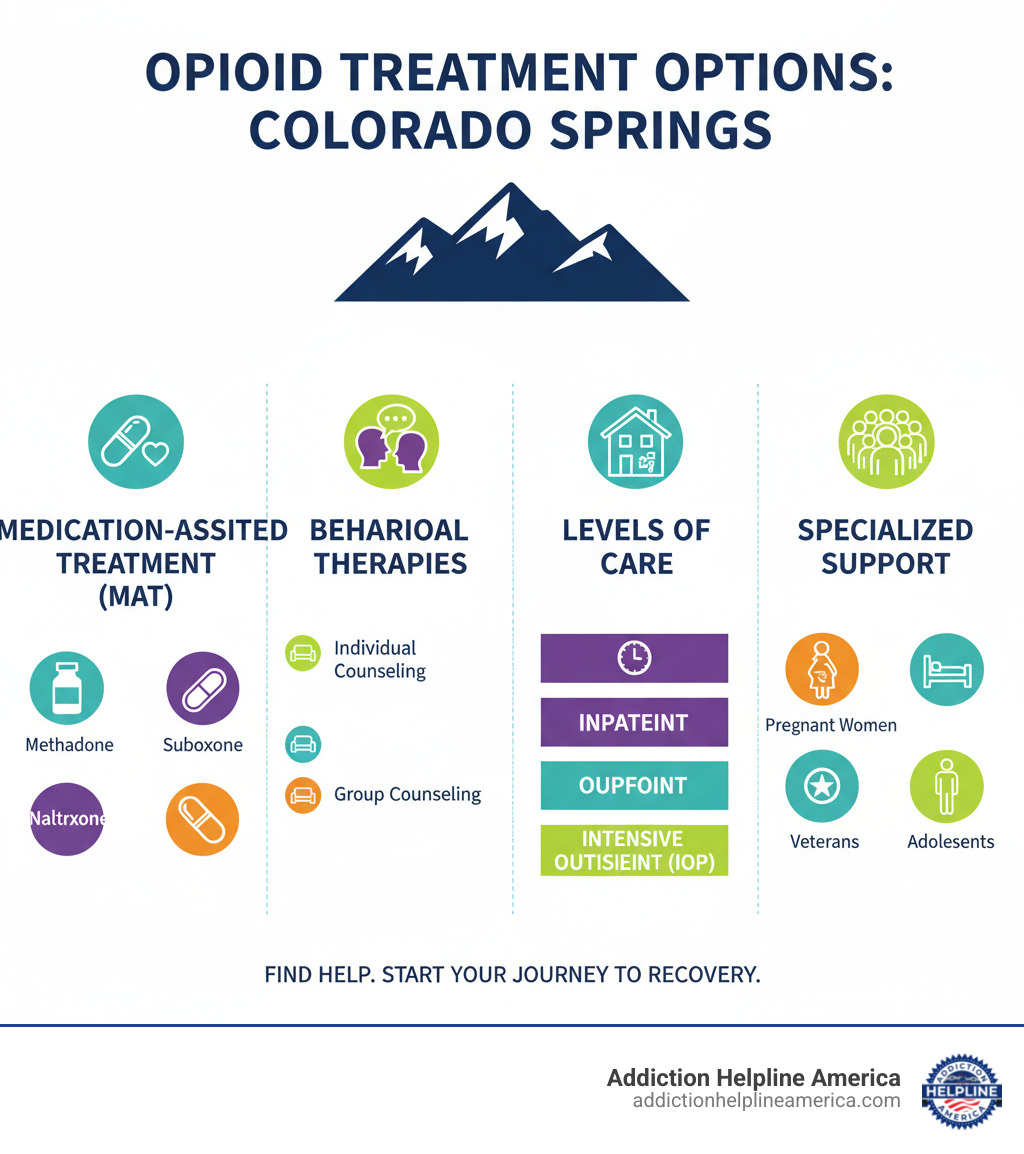
If you or a loved one needs help with opioid addiction in Colorado Springs, here are the main types of treatment available:
- Medication-Assisted Treatment (MAT): Combines medication (like Methadone, Suboxone, Naltrexone) with counseling to reduce cravings and withdrawal symptoms.
- Outpatient Treatment: Flexible programs, including Intensive Outpatient Programs (IOP), that allow you to live at home while attending appointments.
- Inpatient/Residential Treatment: A structured, live-in environment for intensive care.
- Counseling and Therapy: Individual, group, and family therapy to address the psychological aspects of addiction.
- Dual Diagnosis Treatment: Treats both addiction and co-occurring mental health conditions like depression or anxiety.
- Specialized Programs: Options for specific groups like pregnant individuals, veterans, and adolescents.
- Telehealth Services: Remote access to counseling and medical management.
Addiction Helpline America understands this urgency. We guide individuals and families to effective opioid treatment Colorado Springs, connecting them with vital resources for recovery.
Opioid treatment Colorado Springs terms you need:
Understanding Your Treatment Options
Taking the first step toward recovery from opioid addiction is a courageous act. Once you’re ready, you’ll find a variety of treatment programs in Colorado Springs designed to fit different needs. At Addiction Helpline America, we help you understand these choices and find the right path for your journey.
Inpatient vs. Outpatient Treatment: What’s the Difference?
The two main types of opioid treatment Colorado Springs offers are inpatient and outpatient programs. The primary difference is where you live during treatment. Both provide excellent support but are designed for different lifestyles.
Inpatient Treatment (Residential Rehab)
Inpatient treatment, or residential rehab, means you live at the treatment center 24/7. This provides a structured environment where your only job is to heal. The daily routine of therapy, group meetings, and educational sessions helps build healthy new habits. By removing you from daily triggers and stresses, this setting gives you the space to focus entirely on recovery.
You’ll have constant support from medical and therapeutic staff, which is especially helpful during early withdrawal. With distractions gone, inpatient programs allow you to dig deep into the root causes of your addiction. This intensive care is often ideal for those with severe opioid use disorder, co-occurring mental health challenges, or who need a safe place to detox.
Outpatient Treatment
If you need more flexibility, outpatient treatment may be a better fit. With this option, you live at home while attending scheduled therapy and medical appointments. It’s often ideal if you have a stable home, a strong support system, and responsibilities like work, school, or family.
The main benefit is that you can maintain your daily life while integrating recovery principles into your everyday experiences. Outpatient care is also an excellent step-down from inpatient treatment, providing continued support as you transition back to your routine.
Programs vary in intensity. Some involve just a few hours a week, while Intensive Outpatient Programs (IOPs) offer more structured therapy several days a week. IOPs bridge the gap between standard outpatient and inpatient care, offering substantial support with more freedom.
Here’s a quick comparison to help you understand the differences:
| Feature | Inpatient Treatment | Outpatient Treatment |
|---|---|---|
| Living Arrangement | Reside at the facility 24/7 | Live at home, attend scheduled appointments |
| Intensity | High, structured, constant supervision | Moderate to high, flexible scheduling |
| Support Level | Round-the-clock medical & therapeutic staff | Scheduled medical & therapeutic appointments |
| Ideal For | Severe addiction, co-occurring disorders, unstable home | Stable home, work/family commitments, step-down care |
| Focus | Immersion in recovery, removal of triggers | Integrating recovery into daily life, maintaining responsibilities |
The Gold Standard: Medication-Assisted Treatment (MAT) Explained
Medication-Assisted Treatment (MAT) is considered the gold standard for opioid addiction. This comprehensive approach combines FDA-approved medications with counseling and therapy. Similar to managing other chronic health conditions, MAT addresses both the physical and psychological aspects of addiction.
MAT helps normalize brain chemistry, which reduces intense cravings and eases uncomfortable withdrawal symptoms. When your body feels more stable, you can focus on therapy and learn new coping skills. A common myth is that MAT swaps one addiction for another, which is untrue. As explained by the Substance Abuse and Mental Health Services Administration (SAMHSA), the medications are prescribed at doses that do not produce a high but instead reduce cravings and withdrawal. This whole-person approach significantly lowers illicit opioid use and overdose risk.
To learn more about how MAT works, you can find more information from the National Institute on Drug Abuse (NIDA): More about MAT from NIDA.



Common Medications Used for Opioid Treatment in Colorado Springs
For opioid treatment Colorado Springs, several FDA-approved medications are used in MAT. Each works differently, but all aim to help you manage dependence and build a lasting recovery.
- Methadone: A long-acting medication dispensed at specialized clinics. It reduces cravings and withdrawal symptoms without causing a ‘high’ when taken as prescribed. With progress, patients may be allowed take-home doses.
- Buprenorphine: A partial opioid agonist that reduces cravings with a lower risk of overdose due to a ‘ceiling effect.’ It can be prescribed in a doctor’s office, making it highly accessible.
- Suboxone: A combination of buprenorphine and naloxone. The naloxone is an opioid blocker that activates if the medication is misused, which helps deter abuse. Suboxone is a popular and effective option.
- Naltrexone: An opioid blocker that prevents the euphoric effects of opioids. It is typically started after detox to help prevent relapse and is available as a daily pill or a monthly injection (Vivitrol).
These medications are powerful tools. Combined with counseling and support, they help restore balance to the brain, allowing you to focus on building a new life.

Your Path to Recovery: What to Expect from Opioid Treatment Colorado Springs
Taking the first step towards recovery is courageous. Knowing what to expect from opioid treatment Colorado Springs can ease your mind and prepare you for the journey ahead.
Your First Day: Intake and Assessment
Your first visit to a treatment program is when the care team gets to know you and creates a personalized recovery roadmap. The process typically includes:
- Initial Consultation: A confidential discussion about your substance use history, health, and treatment goals.
- Medical Evaluation: A physical exam and review of your medical history to ensure your safety and determine appropriate medical interventions, like Medication-Assisted Treatment (MAT). It’s vital to inform staff if you are pregnant so they can provide specialized care.
- Psychological Assessment: This helps identify any co-occurring mental health conditions, such as anxiety or depression, which is key for holistic healing.
Based on these assessments, the team will collaborate with you to develop a custom treatment plan outlining the best medications, therapies, and support for your needs. To ensure a smooth visit, bring a valid ID and your insurance card. Reputable providers emphasize this personalized approach, ensuring your recovery journey is as unique as you are.
The Role of Counseling and Therapy in Recovery
While medication is a powerful tool, counseling and therapy are the bedrock of long-term healing. They address the emotional, psychological, and behavioral aspects of opioid use disorder.
Therapy helps you explore the root causes of addiction, such as past trauma or stress. Key therapeutic approaches include:
- Individual Counseling: A private space to process emotions and develop healthy coping strategies with a therapist.
- Group Therapy: A supportive community where sharing experiences with others on a similar journey can be empowering and reduce isolation.
- Family Support: Counseling sessions to help mend relationships, improve communication, and create a supportive home environment.
- Cognitive Behavioral Therapy (CBT): A highly effective approach that teaches you to identify and change negative thought patterns and behaviors contributing to substance use.
Therapists help you build essential coping skills, including stress management and relapse prevention strategies. Providers in our network for opioid treatment Colorado Springs integrate counseling into every treatment plan, understanding that recovery requires comprehensive emotional and psychological support.
Finding a Program and Using Insurance
Finding the right opioid treatment Colorado Springs program doesn’t have to be daunting. We are here to connect you with certified providers that match your needs and financial situation.
It’s crucial to choose accredited and certified programs that follow federal and state regulations. You can use government resources like SAMHSA’s treatment locators to find certified programs.
Addiction Helpline America offers free, confidential, and personalized guidance. Our extensive network allows us to connect you to a wide range of suitable treatment centers. Explore our resources to find your path: Addiction Helpline America’s Colorado Directory.
Many opioid treatment Colorado Springs programs accept various insurance plans, making treatment affordable:
- Medicaid: Health First Colorado (Colorado’s Medicaid program) is widely accepted.
- Medicare: Many programs also accept Medicare, including some Medicare Advantage Plans.
- Private Insurance: A wide range of private insurance plans are typically accepted. Many providers also offer affordable rates and sliding fee scales based on income.
Don’t let financial concerns be a barrier to recovery. We can help you verify your insurance and understand your options. For more detailed information on local rehabs, we encourage you to check out: More info about rehabs in Colorado Springs CO.
Specialized Support and Overcoming Barriers
It’s natural to have concerns about seeking help for opioid addiction. Providers of opioid treatment Colorado Springs are focused on addressing common barriers by offering specialized programs and compassionate care to ensure everyone can access support.
Addressing Common Fears: Affordability, Withdrawal, and Anonymity
Effective solutions exist for the common fears surrounding addiction treatment. Help is more accessible than you might think.

- Affordability: The cost of treatment is a major concern, but many centers are committed to making care accessible. Most facilities accept Medicaid, Medicare, and various private insurance plans. Many also offer sliding scale fees based on income or self-pay options. We can help you steer these financial aspects.
- Withdrawal: The fear of painful withdrawal symptoms can be a significant barrier. Medication-Assisted Treatment (MAT) is designed to manage these symptoms safely. Medications like methadone and buprenorphine reduce the severity of withdrawal, making the process more comfortable and allowing you to focus on therapy.
- Anonymity: Concerns about privacy and life disruption are valid. Flexible outpatient programs are designed to help you maintain your job and family commitments while in recovery. Your privacy is protected by federal laws like HIPAA, which legally requires treatment centers to keep your information confidential.
Specialized Opioid Treatment in Colorado Springs for Diverse Populations
Opioid use disorder affects people from all walks of life. Many opioid treatment Colorado Springs programs offer specialized care custom to the unique needs of diverse populations.
- Dual Diagnosis: It’s common for opioid use disorder to co-occur with mental health conditions like depression or PTSD. Dual diagnosis programs treat both conditions simultaneously, which is crucial for lasting recovery. Many facilities in our network are equipped to treat these co-occurring disorders.
- Pregnant Women: MAT is the recommended standard of care for pregnant women with opioid use disorder. It is safe for both mother and baby and improves outcomes by reducing the severity of neonatal abstinence syndrome (NAS). Many providers offer specialized support that includes prenatal care.
- Veterans: Veterans often face unique challenges like trauma and PTSD. Many programs offer specialized, trauma-informed care designed to address their distinct needs.
- Adolescents and Other Groups: Specialized adolescent treatment options provide age-appropriate therapy and family involvement. Additionally, some programs offer affirming and culturally competent care for LGBTQ+ and BIPOC communities, addressing specific factors that can impact recovery.
Immediate Help and Crisis Resources
If you or someone you know needs immediate assistance, do not hesitate to reach out. Seek immediate help for an overdose, severe withdrawal, or suicidal thoughts.
Recognize the critical overdose signs: pinpoint pupils, slow or shallow breathing, blue or grayish skin, gurgling sounds, and unresponsiveness. If you see these signs, act quickly.
Naloxone (Narcan) is a medication that can rapidly reverse an opioid overdose. Many communities in Colorado Springs provide free naloxone and training.
For 24/7 mental health or substance use crisis support in Colorado, contact Colorado Crisis Services. Call 1-844-493-8255 or text “TALK” to 38255. More information is available on their website: Colorado Crisis Services.
The 988 Suicide & Crisis Lifeline is a national resource providing 24/7 free, confidential support. Simply dial or text 988.
For immediate guidance and connections to treatment, our hotlines at Addiction Helpline America are available around the clock. Reach out for confidential support: Best Colorado Addiction Rehab Hotlines.
Frequently Asked Questions about Opioid Rehab
It’s natural to have questions when considering opioid treatment Colorado Springs. Here are answers to some of the most common ones.
How long does opioid treatment typically last?
The duration of opioid treatment is highly individualized, custom to your specific needs and progress. While there’s no one-size-fits-all timeline, research suggests that treatment lasting 90 days or more is most effective for sustained recovery. This allows enough time for the brain to heal and for new, healthy habits to form.
For those in Medication-Assisted Treatment (MAT), especially with medications like methadone, treatment often continues for at least 12 months, and sometimes for several years. The goal is not to finish quickly but to build a stable foundation for a life free from addiction.
Is treatment for opioid addiction confidential?
Yes, absolutely. Your privacy is a top priority and is protected by strict federal laws, primarily the Health Insurance Portability and Accountability Act (HIPAA). This law legally binds healthcare providers, including addiction treatment centers, to protect your personal health information.
Your treatment records and conversations with therapists cannot be shared without your explicit permission, except in very specific, legally defined situations. This protection of your patient privacy rights creates a safe and trusting environment where you can feel comfortable sharing sensitive information and focusing on your recovery.
Can I keep my job while in treatment?
Yes, it is often possible to keep your job while receiving opioid treatment Colorado Springs, thanks to flexible program options. Outpatient treatment is specifically designed for individuals who need to balance recovery with work, school, or family responsibilities.
These programs offer flexible scheduling for counseling and medication, and many provide telehealth services for remote therapy sessions. Additionally, you may have rights under the Family and Medical Leave Act (FMLA), which can provide job-protected leave for medical reasons, including substance use treatment. This allows you to integrate recovery into your life without putting it on hold.
Take the First Step Towards a New Life
This guide has covered the key aspects of opioid treatment Colorado Springs, from different care levels and Medication-Assisted Treatment (MAT) to the role of counseling and overcoming common barriers. The journey to recovery can seem daunting, but it is a hopeful reality for many in Colorado Springs.
Like climbing a mountain, the path may seem overwhelming at first, but with the right guide and tools, the summit is reachable. You do not have to steer the complex world of treatment options alone. There is hope and healing waiting for you.
At Addiction Helpline America, we are here to be your trusted guide. We offer free, confidential, and personalized guidance to connect you with the right recovery program from our vast network of trusted treatment centers. Our mission is to ensure everyone has a chance at a healthier, happier life, free from the grip of addiction.
Taking the first step is the most courageous one. Let us help lighten your load. Reach out today, and together, we can find the right Colorado recovery program for you. Click here to get started: Find the right Colorado recovery program for you. We are here for you every step of the way.