
Why Outpatient Rehab Programs Offer Hope and Flexibility
Outpatient rehab programs provide addiction treatment without requiring you to live at a facility. You attend therapy sessions and receive support while continuing to live at home, work, or go to school.
Quick Answer: What Are Outpatient Rehab Programs?
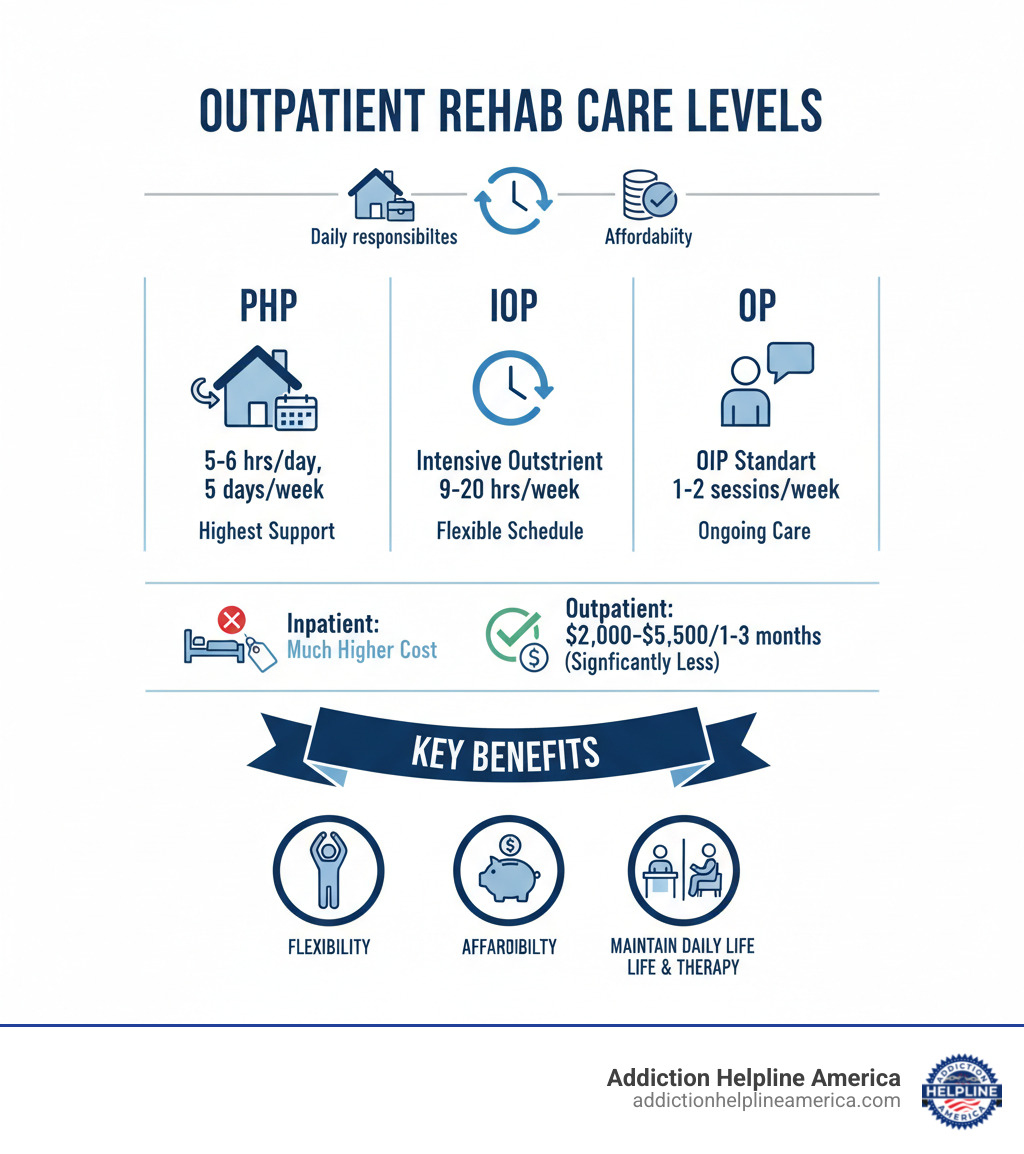
- Partial Hospitalization Programs (PHP): 5-6 hours daily, 5 days/week – highest level of outpatient care
- Intensive Outpatient Programs (IOP): 9-20 hours weekly – flexible day or evening scheduling
- Standard Outpatient Programs (OP): 1-2 sessions weekly – lowest intensity, ongoing support
- Cost: $2,000-$5,500 for 1-3 months (significantly less than inpatient)
- Best For: Mild to moderate addiction, strong home support, ability to maintain daily responsibilities
If you’re feeling overwhelmed by addiction—whether your own or a loved one’s—you’re not alone. The good news is that treatment doesn’t always mean leaving your life behind. Outpatient rehab programs allow you to get the help you need while staying connected to your family, keeping your job, and sleeping in your own bed each night.
These programs work because they meet you where you are. You can practice your new coping skills immediately in real-world situations, with ongoing professional support to guide you. For many people with mild to moderate substance use problems, this flexibility makes recovery more achievable and sustainable.
At Addiction Helpline America, we’ve connected thousands of individuals and families with effective outpatient rehab programs that fit their unique circumstances and recovery needs. Our team understands that finding the right treatment can feel confusing, which is why we’re here to guide you through every step of the process.
Handy outpatient rehab programs terms:
Understanding the Types of Outpatient Rehab Programs
Outpatient care isn’t a single option but a spectrum of different levels designed to match your recovery needs. The system is flexible, allowing you to start at a more intensive level and step down as you gain skills, or vice versa. This step-down approach means treatment adapts to you. Each level offers structured programming with varying time commitments and intensity. Let’s explore the options.



Partial Hospitalization Programs (PHP)
Partial Hospitalization Programs (PHPs) are the highest level of outpatient care, often called day treatment. They are ideal if you need significant support but not 24/7 supervision. You’ll attend treatment for 5-6 hours per day, five days a week, participating in a structured schedule of therapies, wellness activities, and medical monitoring if needed, before returning home each evening. PHPs are often used as a transition from higher levels of care, like inpatient rehab, providing clinical support without the residential stay. This level is best for medically stable individuals who need daily structure to build a strong recovery foundation.
Intensive Outpatient Programs (IOP)
Intensive Outpatient Programs (IOPs) offer substantial support with a reduced time commitment of 9-20 hours per week. A key benefit is flexible scheduling, with day and evening sessions available to accommodate work, school, or family duties. IOPs emphasize group therapy for peer support and accountability, supplemented by individual counseling and skill-building workshops. As you meet defined milestones, your time commitment may decrease. IOPs are effective for those with a stable home life and the motivation to engage in treatment while managing daily responsibilities.
Standard Outpatient Programs (OP)
Standard Outpatient Programs (OPs) are the lowest intensity option, involving just 1-2 sessions per week. They are ideal for ongoing maintenance after more intensive treatment or for individuals with milder issues. The primary focus is on relapse prevention, strengthening coping skills, and building a sober lifestyle. Sessions, which can be individual or group counseling, provide continued support that fits into your regular routine. OPs offer a vital safety net as you practice recovery in the real world, serving as a step-down from IOP or as a starting point for care.
Is Outpatient Treatment the Right Choice for You?
Choosing the right recovery path is a personal decision that starts with an honest self-assessment. A professional evaluation is crucial to determine the best level of care for your situation. At Addiction Helpline America, we empower you with knowledge and connect you to experts who can guide this choice.
Who is a Good Candidate for Outpatient Rehab?
Outpatient rehab programs are a highly effective option for many, but not all. You might be a good candidate if you have:
- Mild to Moderate Addiction: Outpatient care is best for those not experiencing severe addiction. Individuals requiring medical detox may need a higher level of care first.
- Strong Support System: A supportive network of family and friends is critical for encouragement and reinforcing positive behaviors.
- Stable Home Environment: A safe, stable, and substance-free home is essential to avoid derailing recovery efforts.
- High Motivation: Success depends on your commitment, as you’ll face everyday triggers and need a strong drive to stay sober.
- No Need for 24/7 Medical Supervision: Outpatient is suitable if you don’t need constant medical care or monitoring for severe withdrawal symptoms.
Key Benefits of Choosing an Outpatient Program
For suitable candidates, outpatient rehab programs offer several advantages:
- Affordability: Outpatient care is significantly less expensive than inpatient treatment because it excludes accommodation and 24/7 staffing costs. A 1-3 month program typically costs between $2,000 and $5,500.
- Maintain Employment and Attend School: Flexible scheduling allows you to continue working or attending school, maintaining stability and reducing life disruption.
- Live with Family: Living at home keeps you connected to your family support system. Family involvement is often encouraged to help heal relationships.
- Apply Recovery Skills in Real-Time: You can immediately apply coping skills learned in therapy to real-world situations, which reinforces positive behaviors and builds confidence.
Potential Drawbacks and Limitations
It’s also important to understand the limitations of outpatient rehab programs to make an informed decision:
- Less Structure: The lack of 24/7 supervision requires you to manage your time and choices outside of therapy, which can be challenging without strong self-discipline.
- Requires Self-Discipline: Resisting old habits and triggers requires a high degree of motivation and self-control without the oversight of a residential facility.
- Higher Exposure to Triggers: Daily life exposes you to people, places, and stressors that may have contributed to substance use, increasing relapse risk if you’re not prepared.
- Not Suitable for Severe Withdrawal or Medical Instability: Outpatient programs cannot manage acute medical emergencies or severe withdrawal. Inpatient care is safer for those who are medically unstable or require detox.
What to Expect: Services, Therapies, and Support
Knowing what happens inside outpatient rehab programs can make the process less intimidating. These are comprehensive programs designed to provide the tools and support for recovery while you live at home. The intensity varies by the level of care (PHP, IOP, or OP), but the goal is the same: to help you heal while maintaining your daily life.
Here’s a quick comparison of what each level of outpatient rehab programs looks like:
| Feature | Partial Hospitalization Programs (PHP) | Intensive Outpatient Programs (IOP) | Standard Outpatient Programs (OP) |
|---|---|---|---|
| Setting | Home/Sober Living | Home/Sober Living | Home/Sober Living |
| Intensity | Highest outpatient (day treatment) | Moderate to high | Lowest outpatient |
| Hours/Week | 25-30+ hours | 9-20 hours | < 9 hours |
| Days/Week | 5 days | 3-5 days | 1-3 days |
| Cost (per day) | $350-$450 (private pay) | $250-$350 (private pay) | Varies (usually per session) |
| Ideal Candidate | High structure needed, not 24/7 care | Stable home, work/school flexibility | Mild SUD, aftercare, long-term support |
| Duration | Weeks to a few months | Weeks to several months | Ongoing, long-term |
Core Therapies and Services in Outpatient Rehab
Outpatient rehab programs use evidence-based therapies to address your unique needs. Here are some core components:
- Individual therapy: One-on-one sessions provide a safe space to explore the roots of substance use and develop personal coping strategies.
- Group counseling: Sharing experiences with peers builds a powerful support network, reduces isolation, and fosters accountability.
- Family therapy: These sessions help repair relationships, improve communication, and teach family members how to support your recovery.
- Cognitive-Behavioral Therapy (CBT): A common approach that helps you identify and change negative thought patterns and behaviors related to substance use.
- Dialectical Behavior Therapy (DBT): Teaches skills in mindfulness, distress tolerance, and emotional regulation, which is especially helpful for co-occurring conditions.
- Motivational Interviewing (MI): A client-centered technique that helps you find and strengthen your internal motivation for change.
- Medication-Assisted Treatment (MAT): Combines therapy with FDA-approved medications (like Buprenorphine or Naltrexone) to reduce cravings and withdrawal symptoms for opioid and alcohol use disorders.
- Case management: Helps with practical needs like housing, employment, or legal assistance to remove barriers to recovery.
- Drug testing: Provides accountability and helps monitor progress in a structured, objective way.
- Wellness and holistic activities: Many programs include yoga, art therapy, or nutrition workshops to promote overall well-being and healthy stress management.
How Co-Occurring Disorders are Addressed
It’s common for substance use disorders and mental health conditions like depression, anxiety, or PTSD to occur together, a situation known as dual diagnosis. Treating one issue while ignoring the other is rarely effective. Quality outpatient rehab programs provide integrated treatment, addressing both conditions simultaneously. A coordinated team of therapists, psychiatrists, and medical doctors works together to create a holistic treatment plan. This approach treats you as a whole person, not just a collection of symptoms, which dramatically improves outcomes and builds a stronger foundation for lasting recovery.
Aftercare and Continuing the Journey
Completing a program is a major achievement, but recovery is a lifelong journey that requires ongoing support. Quality programs help you create a relapse prevention plan to steer future challenges. Continuing care options are essential for long-term success:
- Alumni support groups offer a sense of community with others who have completed the same program.
- Ongoing support groups like Alcoholics Anonymous, Narcotics Anonymous, and SMART Recovery provide invaluable peer-led support.
- A sober living environment can be a helpful transitional step, offering a structured, substance-free home with peer accountability.
At Addiction Helpline America, we know aftercare is essential. We connect you to initial treatment and the continuing care resources needed to support your long-term recovery.
How to Find and Choose the Best Program
Finding the right outpatient rehab program is a crucial step that requires careful research. The process can feel overwhelming, but we’re here to make it clearer and less daunting.

What to Look for in Quality Outpatient Rehab Programs
Knowing what to look for can make all the difference. Here is a checklist for finding a quality program:
- Accreditation and Licensing: Look for accreditation from organizations like the Commission on Accreditation of Rehabilitation Facilities (CARF) and ensure the facility is licensed by the state. This guarantees they meet high standards for safety and care.
- Qualified Staff: The team should include licensed mental health professionals and addiction specialists with relevant credentials (e.g., M.Ed, LCAS, CCS).
- Evidence-Based Practices: The program should use scientifically proven therapies like CBT, DBT, and MAT.
- Individualized Treatment Plans: Quality programs conduct a thorough assessment to create a personalized treatment plan that evolves with your progress.
- Comprehensive Services: The program should offer a full range of services, including individual, group, and family therapy, similar to what’s found in residential units.
How to Find Outpatient Rehab Programs Near You
Here are several resources to find programs near you:
- Addiction Helpline America: Our primary mission is to connect people with treatment centers nationwide. We offer free, confidential guidance to help you explore different types of treatment programs to find your path from our vast network.
- Your Doctor or Therapist: Your primary care physician or mental health professional can provide referrals to reputable local programs based on your health history.
- Your Insurance Provider: Contact your insurer for a list of in-network providers and to understand your coverage for outpatient treatment.
- SAMHSA National Helpline: The Substance Abuse and Mental Health Services Administration (SAMHSA) offers a national directory and helpline to find treatment facilities in your area.
Paying for Treatment: Costs and Options
The cost of treatment is a valid concern, but there are many ways to make it affordable. Outpatient care is significantly less expensive than inpatient, with a 1-3 month program typically costing $2,000 to $5,500. Here are your payment options:
- Insurance Coverage: Most private insurance, Medicaid, and Medicare plans cover outpatient rehab. The Affordable Care Act (ACA) requires mental health and substance use services to be covered like other medical needs. Contact your provider to understand your specific benefits.
- Medicaid and Medicare: These government programs often cover outpatient treatment at little to no cost.
- State-Funded Programs: Many states offer financial assistance or low-cost treatment options. Contact your state’s substance abuse agency or SAMHSA’s National Helpline at 1-800-662-HELP for information.
- Payment Plans and Scholarships: Many treatment centers offer payment plans, sliding-scale fees based on income, or scholarships. Don’t hesitate to ask the admissions team about financial options.
Conclusion: Take the First Step Towards Recovery
If you’ve made it this far, you’ve already taken an important step—you’re learning, exploring, and considering change. That takes courage, and we want you to know that recovery truly is possible.
Outpatient rehab programs offer something powerful: the chance to heal without putting your entire life on pause. You can continue to work, care for your family, and sleep in your own bed each night while receiving professional addiction treatment. Whether you need the intensive structure of a Partial Hospitalization Program, the flexibility of an Intensive Outpatient Program, or the ongoing support of Standard Outpatient care, there’s a level of treatment designed specifically for your situation.
The path to recovery isn’t the same for everyone. Some people need more support at first, others less. Some benefit from group therapy, while others thrive in individual sessions. What matters most is finding the right fit for you—a program that addresses your unique challenges, honors your strengths, and meets you exactly where you are.
That’s where we come in. At Addiction Helpline America, we’ve dedicated ourselves to one simple mission: connecting people to the help they need. We offer free, confidential, personalized guidance because we believe that no one should face addiction alone, and no one should struggle to find quality care. Our vast network of treatment centers across the country means we can help you find a program that works with your schedule, your budget, and your life.
We know that making the call, filling out the form, or even just admitting you need help can feel overwhelming. But here’s the truth: thousands of people just like you have taken this step, found the right support, and built lives they’re proud of. You deserve that same opportunity.
Don’t let another day go by wondering “what if?” Take the first step today. Explore different types of treatment programs to find your path, and let us help you find the personalized care that will change your life. Recovery isn’t just a possibility—it’s waiting for you.