Why Immediate Mental Health Support Matters
When crisis strikes, knowing where to turn can save a life. A mental health hotline provides immediate, confidential support for anyone experiencing emotional distress, suicidal thoughts, substance use concerns, or mental health challenges—24 hours a day, 7 days a week, at no cost.
Key Mental Health Hotline Numbers:
| Hotline | Number | When to Call |
|---|---|---|
| 988 Suicide & Crisis Lifeline | Call or Text 988 | Suicidal thoughts, mental health crisis, substance use crisis, emotional distress |
| Crisis Text Line | Text TALK to 741741 | Prefer texting over calling, need immediate support |
| SAMHSA National Helpline | 1-800-662-4357 | Mental health or substance use treatment referrals |
| Veterans Crisis Line | 988, Press 1 | Veterans and active-duty military in crisis |
| Disaster Distress Helpline | 1-800-985-5990 | Emotional support during disasters or traumatic events |
Mental health hotlines exist because life’s challenges can become overwhelming. Whether you’re struggling with depression, anxiety, suicidal thoughts, or addiction—or you’re worried about a loved one—these services connect you with trained counselors who listen without judgment. Studies show that follow-up calls from crisis hotlines help keep 80% of at-risk individuals safe.
The transition to 988 in July 2022 made crisis support as easy to remember as 911. When Californians dial 988, for example, they’re connected to one of 12 local crisis centers, with national backup available. The Disaster Distress Helpline saw call volumes surge by over 300% during national crises, proving these services are a vital safety net.
At Addiction Helpline America, we’ve dedicated ourselves to connecting individuals and families with life-saving mental health hotline resources and treatment options. Our team understands the urgent need for compassionate, confidential support when addiction or mental health crises strike, and we’re here to guide you toward the help you deserve.
Explore more about mental health hotline:
What Are Mental Health Hotlines and When Should You Call?
A mental health hotline is a lifeline, offering a direct and immediate connection to support for anyone struggling with emotional distress or a mental health crisis. Think of it as a safe harbor, available any time of day or night, where you can speak freely and confidentially without fear of judgment. These services are typically free, removing financial barriers to getting help when it’s needed most.
The core purpose of a mental health hotline is to provide immediate support, de-escalate crisis situations, and connect individuals with appropriate resources. Whether you’re experiencing severe emotional distress, contemplating self-harm, struggling with substance use, or simply feeling overwhelmed, these hotlines are designed to be your first point of contact. They’re not just for emergencies; many people call for non-crisis support, seeking a listening ear or guidance on coping strategies.
Key Features and Benefits of Using a Hotline
When you reach out to a mental health hotline, you’re tapping into a system designed with your well-being in mind. Here’s what you can expect and why these services are so beneficial:
- Compassionate Listening: The individuals answering these calls are trained to listen actively and empathetically. They understand that what you’re going through is real and often incredibly difficult. Their primary role is to hear you out, making you feel seen and understood.
- Judgment-Free Support: One of the biggest fears when seeking help is being judged. Hotlines offer a space where you can share your thoughts and feelings, no matter how dark or confusing, without fear of criticism or negative repercussions. Our team at Addiction Helpline America, for instance, emphasizes this non-judgmental approach in all our interactions.
- Problem-Solving: While not therapists, hotline counselors are skilled in helping you explore your situation, identify immediate concerns, and collaboratively brainstorm solutions or coping mechanisms. They can help you break down overwhelming problems into manageable steps.
- De-escalation: If you’re in a heightened state of distress, counselors are trained in de-escalation techniques. They can help calm intense emotions, reduce immediate risk, and guide you back to a more stable emotional state. Studies have shown the Lifeline is effective in reducing imminent risk through collaborative de-escalation.
- Resource Connection: Beyond immediate support, a key benefit is connecting you to ongoing help. Counselors can provide information about local mental health services, support groups, treatment centers, and other community resources that can offer long-term solutions.
- Anonymity: Most hotlines offer complete anonymity and confidentiality. You don’t have to give your name or any personal details unless you choose to. This privacy allows individuals to be completely open and honest about their struggles.



When to Reach Out for Help
It’s natural to wonder if your situation warrants a call to a mental health hotline. The truth is, if you’re asking that question, it probably does. Hotlines are there for a wide range of situations, from acute crises to simply needing someone to talk to. Here are some common reasons to reach out:
- Feeling Overwhelmed: If daily stressors, responsibilities, or emotions are becoming too much to handle, and you feel like you’re drowning, a hotline can provide immediate relief and perspective.
- Anxiety or Panic Attacks: During intense periods of anxiety or a full-blown panic attack, connecting with a calm, supportive voice can be incredibly grounding.
- Depression: If you’re experiencing persistent sadness, loss of interest, changes in sleep or appetite, or feelings of hopelessness, a hotline can offer support and guidance.
- Stressful Life Events: Major life changes, grief, job loss, relationship issues, or other stressful events can trigger significant emotional distress. A hotline can help you process these feelings. For example, the top four issues among callers to NYC Well have consistently been mood concerns, a stressful life event, interpersonal concerns, and anxiety concerns.
- Interpersonal Concerns: Difficulties in relationships, conflicts, or feelings of isolation can all be topics of discussion with a hotline counselor.
- Thoughts of Self-Harm or Suicide: This is a critical time to call. If you are thinking about harming yourself or attempting suicide, tell someone who can help right away. The 988 Lifeline is specifically designed for these situations, offering immediate support and safety planning.
- Concern for a Loved One: You don’t have to be in crisis yourself to call. If you’re worried about a friend or family member who might be struggling, hotlines can provide guidance on how to support them and encourage them to seek help. About 10% of calls to services like NYC Well come from friends or relatives seeking help for others.
There’s no problem too small or too big for a mental health hotline. Our team believes that reaching out is a sign of strength, and we encourage you to take that courageous first step.
How Do National Mental Health Hotlines Work?
National mental health hotlines are designed to be a helping hand for everyone, no matter where you are in the United States. They make sure that support is always just a call, text, or chat away. The best example of this is the 988 Suicide & Crisis Lifeline. It has truly changed how people can get crisis support.
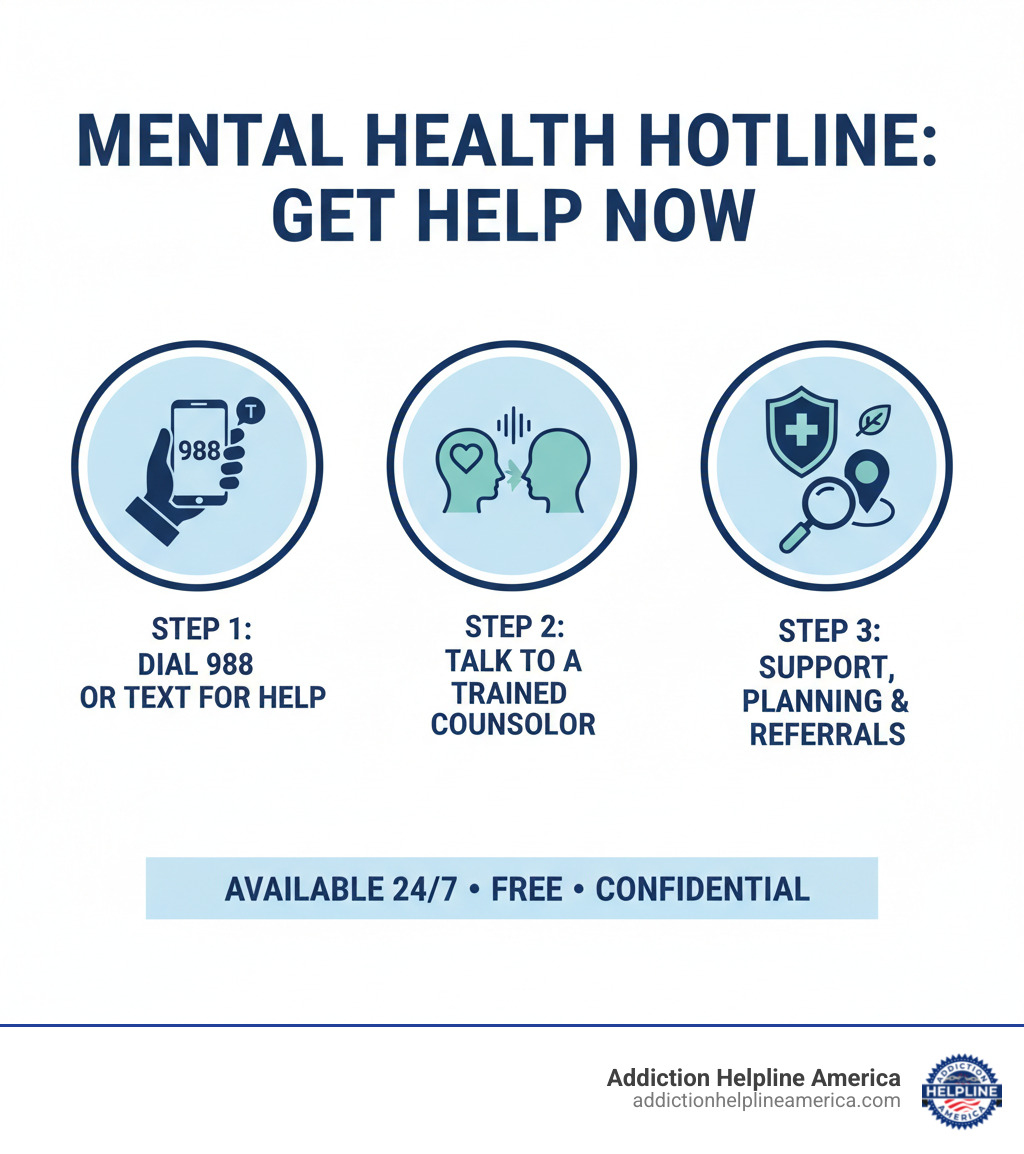
The 988 Lifeline, which started working across the country in July 2022, is like the 911 for mental health crises. This simple, three-digit number is super easy to remember when you’re in a tough spot. Its ease of use means anyone, anywhere, can quickly get help. This is part of its “National access” design.
When you reach out to a national mental health hotline like 988, your call usually goes to a local crisis center first. This is great because local teams often know about specific resources in your community. If the local lines are busy, don’t worry! Your call smoothly rolls over to a national backup center. This way, every single person who calls gets an answer.
These services offer different ways to connect, so you can choose what feels best for you:
- Call: This is the classic way, letting you talk directly with a trained counselor.
- Text: Perfect if you prefer to write things out, or if you’re in a situation where speaking aloud isn’t safe or possible. For example, you can text TALK to 741741 for the Crisis Text Line.
- Chat: You can also connect through websites like 988lifeline.org. This offers another private way to get support.
All these options connect you with trained crisis counselors. The best part? These services are free and confidential. Our team at Addiction Helpline America also provides free, confidential, and personalized guidance to help you find the right recovery program. You can find out more on our Addiction Helpline America’s Hotline Page.
What to Expect When You Contact a National Hotline
It can feel a bit scary to reach out, especially if you’re not sure what will happen. But when you contact a national mental health hotline, you can expect a caring and helpful process.
First, the counselor will offer active listening. This means they’ll let you talk and fully explain what you’re feeling without interrupting. They are there to hear your story.
Then, you’ll work together in collaborative problem-solving. The counselor won’t just tell you what to do. Instead, they’ll help you explore your options and find ways to cope right away.
If you’re having thoughts of self-harm, the counselor will help you create a safety plan. This is a special plan to identify triggers, find coping tools, and connect you with support to keep you safe. Studies show that follow-up calls from hotlines are really effective, with 80% of people saying these calls helped keep them safe.
Counselors also do a risk assessment. They are trained to understand how much risk you might be facing. Their main goal is always to calm the situation and make sure you are safe. Sometimes, they might even offer follow-up calls to check in and offer continued support, especially if you’re going through a very tough time. The overall goal is to provide immediate help with high effectiveness rates to guide you through the crisis.
Services Offered by National Hotlines
National hotlines, like the 988 Lifeline, are ready to help with many different kinds of needs.
A big focus is support for suicidal crisis. Counselors are specially trained to step in, offer emotional comfort, and help callers make immediate safety plans.
They also help with general mental health distress. Whether you’re dealing with really bad anxiety, deep sadness, panic attacks, or other mental health challenges, counselors are there to listen and share coping strategies.
For those struggling with substance use crisis, these hotlines can be a lifesaver. Many people facing a mental health crisis also deal with substance use. Hotlines can offer support during these difficult moments and connect you to resources for addiction treatment. The 988 Lifeline specifically supports crises related to substance use.
Sometimes, you simply need emotional support. You might just want to talk to someone who understands. Hotlines provide a safe place to process your feelings and feel heard.
Finally, if you’re worried about a friend or family member, hotlines offer guidance for helping loved ones. They can give you advice on how to talk to them, what signs to look for, and how to encourage them to get help.
These services are incredibly important because they offer immediate care, which means you don’t have to wait to get the help you need.
What Are Other Specialized and Local Hotline Numbers?
While national mental health hotlines like 988 offer incredible support for everyone, sometimes you need a resource that truly “gets” your specific situation. That’s where specialized and local hotlines shine! They offer niche support and targeted resources, often with a deeper understanding of unique challenges. Imagine finding a tailor-made solution when a one-size-fits-all approach might not quite fit. These services provide peer support and a community-specific understanding that can be incredibly validating, making you feel truly heard.
Resources for Specific Populations
Many people find comfort in speaking with someone who understands their specific life experiences. Thankfully, there are many mental health hotline resources designed just for certain groups:
For our veterans and active-duty military members, the Veterans Crisis Line is a lifeline. You can reach them by calling 988 and pressing 1, or by texting 838255. They also offer a Crisis Chat option. Many of their responders are veterans themselves, offering a unique level of understanding and empathy that can make all the difference.
For LGBTQ+ individuals, the LGBTQ+ National Hotline at 1-888-843-4564 provides free and confidential support, information, and local resources from trained LGBTQIA+ volunteers. Plus, the 988 Lifeline also offers support specifically for the LGBTQ+ community by simply pressing 3 when you call 988.
Spanish-language options ensure that language isn’t a barrier to getting help. The 988 Lifeline offers services in Spanish via text and chat, and you can press 2 when calling 988 for Spanish speakers. The Disaster Distress Helpline also offers services in Spanish, ensuring support during tough times.
Deaf/Hard of Hearing services make sure everyone can access crisis support. For individuals who are Deaf or Hard of Hearing, the 988 Lifeline can be reached using a preferred relay service or by dialing 711 then 988. Similarly, the Disaster Distress Helpline provides ASL users with direct access to crisis counselors fluent in ASL through their videophone-enabled device or by clicking “ASL Now” on their website.
Youth and Young Adults have their own unique needs. For parents with kids ages 0-12, resources like BrightLife Kids offer mental health coaching. For teens and young adults aged 13-25, apps like Soluna provide similar digital support. These tools often work hand-in-hand with traditional hotlines.
Maternal Mental Health is crucial for new and expectant parents. For additional resources about the emotional changes women experience during and after pregnancy, Postpartum Support International (PSI) is available to offer guidance and comfort.
Other National and State-Level Hotlines
Beyond 988 and hotlines for specific populations, there are several other fantastic national and state-level mental health hotline resources available:
Addiction Helpline America is here to connect you with the right support. We help individuals nationwide find addiction and mental health treatment centers, providing free, confidential, and personalized guidance from our vast network. Our team helps you explore your options and find a path forward.
The SAMHSA National Helpline at 1-800-662-HELP (4357) is a wonderful resource for finding treatment facilities, support groups, and community-based services for both mental health and substance use disorders. They offer assistance with both English and Spanish-speaking counselors.
If you prefer texting, the Crisis Text Line is a great option. Just text TALK to 741741 for free, 24/7 crisis support via text message. It’s discreet and always there.
The Disaster Distress Helpline is ready to help during tough times. Call or text 1-800-985-5990 (or text TalkWithUs to 66746) for 24/7 crisis counseling and support for emotional distress related to natural or human-caused disasters. This helpline saw a huge surge in calls during national crises, proving how vital it is.
The NAMI HelpLine from the National Alliance on Mental Illness offers a peer-support service at 1-800-950-NAMI (6264) (Monday-Friday, 10 a.m. to 10 p.m. ET) or by texting “Helpline” to 62640. They provide valuable information, resource referrals, and compassionate support.
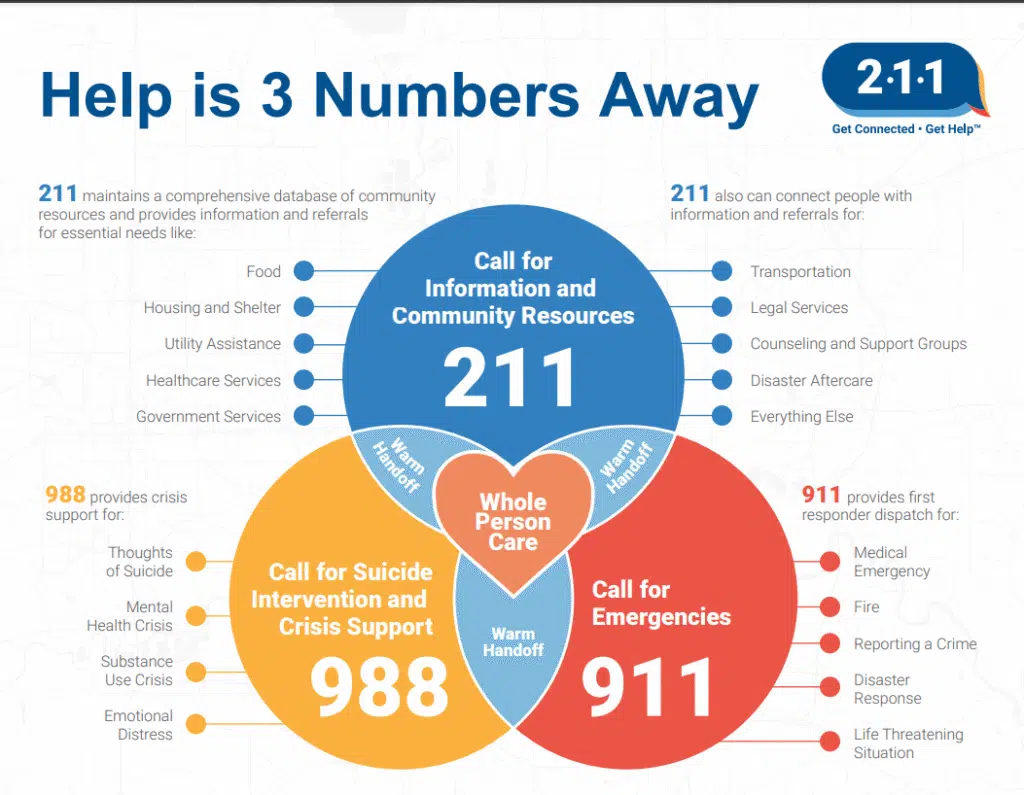
The 211 helpline is a national hotline that connects people with a wide range of local human and social services. While not just a mental health hotline, it can connect you to mental health support groups, financial assistance, housing, and substance misuse treatment programs. It’s available 24/7 in all 50 states and offers assistance in English and 180 other languages.
Many State and Local Youth Support Lines also exist. These often focus on young people and families. For example, California’s CalHOPE initiative provides digital mental health support for youth, young adults, and families, including a 24/7 peer-run crisis warm line (English: 833-317-HOPE, Spanish: 833-642-7696).
Finding a Local Mental Health Hotline
While national numbers are fantastic starting points, sometimes a local connection can offer specific, nearby resources. Here’s how to find local mental health hotline support:
The 211 helpline is truly your best friend here! Think of it as a “Google search” for social and human services information in your area. Dialing 211 connects you to a local specialist who can provide referrals to mental health services right in your specific community.
Your local County behavioral health services are another great resource. Most counties have a department dedicated to mental health. A quick online search for “[Your County] behavioral health crisis” or “[Your State] mental health hotline” will often lead you to local crisis numbers. For example, in Santa Cruz County, residents can call (800) 952-2335 24-hours a day for hospitalization assessment in a psychiatric crisis.
Many states have their own State-specific crisis numbers that work alongside the national 988 system. These can usually be found on your state’s health department websites.
Don’t forget about Local support organizations! Groups like local NAMI chapters or mental health associations often keep up-to-date directories of local hotlines and resources that can provide invaluable help.
How Do Hotlines Fit into the Broader Crisis Care System?
Think of a mental health hotline as a friendly, guiding hand in a much bigger, supportive network – what we call the crisis care continuum. This isn’t just about one phone number; it’s a whole system designed to make sure anyone facing a behavioral health crisis gets the right kind of help, right when they need it. The goal is simple: someone to call, someone to respond, somewhere to go. Hotlines absolutely shine as that crucial “someone to call.”
For a long time, if you were in a mental health crisis, your first instinct might have been to call 911. While 911 is fantastic for medical emergencies or crime, police and paramedics aren’t always best equipped to handle emotional distress. That’s where hotlines like 988 come in! They help reduce reliance on law enforcement for mental health situations, steering people toward mental health professionals who can truly help, rather than funneling them into emergency rooms or the justice system unnecessarily.
Behind the scenes, amazing organizations like the Substance Abuse and Mental Health Services Administration (SAMHSA) and the National Alliance on Mental Illness (NAMI) are working hard. They’re like the architects and advocates, helping to build and improve this crisis care system. And it’s not just national efforts; community partners – local organizations, support groups, and healthcare providers – also play a huge part in making sure help is available right in your neighborhood.
The entire crisis care continuum has three main pillars:
- Preventing Crisis: This means helping people before things get too tough, with things like peer support and community education.
- Responding to Crisis: This is where mental health hotlines truly shine! They’re your immediate connection, offering quick assessment, helping to calm things down, and linking you to more help. Mobile crisis teams, which can come to you in person, are also part of this response.
- Stabilizing Crisis: Once the immediate danger has passed, these services help you find your footing, whether it’s through short-term residential programs or safe, supportive places to recover.
It’s all about teamwork! While 988 is your go-to for mental health crises, sometimes a situation might involve immediate physical danger. In those cases, coordination with emergency services like 911 is super important, ensuring you get the best, most appropriate response for your unique situation.
The Future of Crisis Response
The world of mental health hotline services and crisis support is always growing and getting better. While we’ve made huge strides – especially with 988 – there are still some exciting challenges ahead:
- Challenges in Funding and Staffing: Imagine trying to answer every call when demand suddenly triples! Hotlines have seen massive increases in call volumes, like the 300%+ surge the Disaster Distress Helpline experienced during the pandemic. Making sure there’s enough funding and enough wonderful, trained counselors is a constant effort. It’s tough work, and counselors need support too!
- Increased Call Volumes: As more people learn about these hotlines and mental health stigma fades, even more people will reach out for help. This is fantastic, but it means we need robust systems ready to handle every single call, text, or chat.
- Importance of Public Education: For this system to really work its magic, everyone needs to know it exists! We need to keep spreading the word about when to call 988 (for mental health) versus 911 (for immediate physical danger or crime).
- Integration of Technology: Imagine even smarter ways to connect! Beyond calls, texts, and chats, we might see things like AI-assisted support or even better ways to connect you with local help super fast. Technology can make these lifelines even stronger.
- Mobile Crisis Teams: Picture this: instead of waiting for help, a team of mental health professionals comes directly to you. Expanding these mobile crisis teams means more in-person, mental health-focused support, further reducing the need for law enforcement in these situations.
- Crisis Stabilization Units: We also need more of those “somewhere to go” options. Crisis stabilization units are safe, therapeutic places for people in crisis, offering a much-needed alternative to busy hospital emergency rooms.
The dream for the future is a crisis care system that’s complete, fair, and easy for absolutely everyone to access. A mental health hotline will continue to be that crucial first step, leading you gently along a supportive path toward healing and well-being.
How Can a Mental Health Hotline Connect You to Long-Term Treatment?
A mental health hotline is so much more than just a quick chat in a moment of need. Think of it as a crucial bridge, guiding you from immediate support toward a lasting path of recovery and wellness. While these hotlines won’t offer ongoing therapy or a formal diagnosis, their ability to connect you with the right long-term care is truly invaluable. For many, that first brave call is the very beginning of a journey toward feeling better, for good.
At Addiction Helpline America, we know that finding the perfect treatment program can feel overwhelming—like trying to steer a huge, confusing maze. That’s where we come in! Our special role is to offer personalized guidance, helping you smoothly transition from needing immediate support to finding a trusted treatment center that truly fits your unique situation. We work with a wide network of excellent facilities across many states, ensuring that no matter where you are, we can help you explore your options. Hotlines also offer valuable support for family members, guiding them on how to encourage a loved one to seek and commit to treatment.
Finding Treatment Centers and Support
Once you’ve made that initial call to a mental health hotline, the next step often involves looking into long-term treatment options. These services are wonderful at helping you connect with the right kind of ongoing support.
They can help you by connecting you to inpatient or outpatient programs. Whether you’re looking for the focused, structured environment of an inpatient facility or the flexibility of an outpatient program that lets you stay home, counselors can guide you toward options that fit your life. They can also assist in locating support groups in your area or online. For many, connecting with others who understand what they’re going through, like in groups offered by NAMI or various addiction recovery programs, is a cornerstone of healing.
Navigating insurance can be tricky, but some hotlines, like ours at Addiction Helpline America, can even help with verifying your insurance benefits. This means you can understand what’s covered and connect with facilities that accept your plan. They’ll also help you with understanding the different levels of care available. Mental health and addiction treatment comes in many forms, from intensive detox and residential care to partial hospitalization and intensive outpatient programs. Hotlines can help you figure out which level might be just right for you.
For more information about various addiction and rehab hotlines and how they can connect you to treatment, visit our page on More info about addiction and rehab hotlines.
What to Expect from a Treatment Referral Mental Health Hotline
When you reach out to a mental health hotline specifically for help finding treatment, our team at Addiction Helpline America will guide you through a clear, caring process.
We start with some intake questions to get a better understanding of your situation, any current challenges you’re facing, and what kind of help you’re hoping to find. This might include questions about your mental health concerns, any substance use, and your living situation. Based on your answers, we’ll then do an assessment of your needs. This isn’t a medical diagnosis, but rather a way for us to figure out the best type of program or support that would suit you.
Next, we’ll have a discussion of treatment options. We’ll present you with various choices from our trusted network, explaining the good points of each and how they might fit with your personal preferences and circumstances. This is a completely confidential process—you can speak openly knowing your privacy is protected. And finally, we offer no-obligation guidance. Our main goal is to give you helpful information and support. There’s absolutely no pressure to pick a specific treatment center or commit to anything during your call. We’re here to guide you, so you can make the best, most informed decision when you’re truly ready.
Frequently Asked Questions About Using a Mental Health Hotline
We know that reaching out for help can bring up a lot of questions—and maybe even some worries. That’s completely normal. Before you pick up the phone, let’s walk through some of the most common concerns people have about using a mental health hotline. Our hope is that understanding what to expect will make that first call feel a little less daunting.
Are mental health hotlines truly anonymous?
Yes, your privacy matters, and mental health hotlines are built with that in mind. When you call, your conversation is confidential, and you have complete control over what information you share. You don’t have to give your name, address, or any personal details unless you want to. The counselor on the other end isn’t there to collect data about you—they’re there to listen and help.
This anonymity creates a safe space where you can be completely honest about what you’re experiencing. Whether you’re struggling with thoughts you’ve never voiced aloud, dealing with substance use, or simply feeling overwhelmed, you can speak freely without fear of judgment or consequences. The focus is always on providing you with the support you need, safely and respectfully.
What happens if I call a hotline for someone else?
Caring about someone who’s struggling can be incredibly stressful, and you don’t have to steer it alone. When you call a mental health hotline because you’re worried about a friend, family member, or loved one, the counselors are there to support you too.
They’ll help you understand what your loved one might be going through and offer practical strategies for how to approach them with compassion. You’ll learn how to recognize warning signs, communicate effectively without pushing them away, and encourage them to seek help when they’re ready. The counselor can also connect you with resources like family support groups or treatment options that might be appropriate for their situation.
About 10% of calls to crisis services come from concerned friends or relatives. You’re not alone in wanting to help, and reaching out shows tremendous care. At Addiction Helpline America, we regularly guide family members through these difficult conversations, helping them support their loved ones while also taking care of their own emotional well-being.
Can a hotline force me to get help or call the police?
This is probably the biggest fear people have, and we want to address it directly and honestly. The answer is: mental health hotlines are focused on de-escalation and working with you, not forcing anything upon you. Your autonomy and your choices are respected.
Emergency services like police or ambulance are truly a last resort. Counselors are trained to help you find solutions collaboratively, exploring every possible way to keep you safe that feels manageable to you. They’ll work with you to develop a safety plan, identify people you can reach out to, and discuss coping strategies—all without involving anyone else.
Intervention with emergency services only happens in very specific circumstances: when there’s an imminent and unavoidable risk of harm to yourself or others, and you’re unable or unwilling to agree to a safety plan that would keep you safe. Even then, counselors try to work with your collaboration whenever possible. The threshold for this is high because the goal is always to support you, not control you.
Studies have shown that the Lifeline is effective in reducing imminent risk through collaborative de-escalation, meaning that in the vast majority of cases, counselors can help people find safety without any outside intervention. You can speak openly about what you’re feeling and experiencing. That’s what these lines are for—to provide a judgment-free space where you can be heard and helped on your own terms.
Conclusion: Your First Step Towards Support and Recovery
Life can be tough, throwing challenges our way that sometimes feel too big to handle alone. But here’s a comforting thought: you don’t have to face any of it by yourself. A mental health hotline is a warm, welcoming hand extended to you, ready to offer immediate support. It’s there 24/7, a confidential and judgment-free place where you can talk, sort through your feelings, and begin to find your way forward. Making that first call or sending that first text is a truly brave act of self-care.
These amazing services are here to help, whether you’re dealing with deep emotional distress, struggling with a substance use crisis, or just need a kind person to listen. They connect you with trained counselors who genuinely care and want to help. From calming things down in an urgent moment to helping you find long-term treatment, hotlines are a vital part of our country’s safety net for mental well-being.
Here at Addiction Helpline America, we’re so proud to be part of this important network. We offer personalized, confidential guidance to help you or someone you care about find the perfect recovery program. We have a huge network of trusted treatment centers all across the states we serve. You are never alone, and finding the right program isn’t just possible—it’s absolutely within your reach.
Find addiction and rehab hotlines now.