
Why Family Drug Intervention Can Save Lives
A family drug intervention is a planned process where loved ones unite to help someone with an addiction recognize the problem and accept treatment. When approached with compassion, these interventions can be up to 90% successful in guiding a person toward the help they need.
Key elements of a successful family drug intervention:
- Not an ambush – A carefully planned meeting with professional guidance
- Rooted in love – Focuses on concern and support, not shame or blame
- Involves preparation – Team members write letters, research treatment options, and rehearse
- Offers immediate help – Presents a specific treatment plan ready to implement
- Sets boundaries – Establishes clear consequences if help is refused
It’s painful to watch a loved one struggle with addiction, and many families feel helpless, waiting for the person to “hit bottom.” But addiction is a family disease, and you don’t have to wait for things to get worse.
A compassionate family drug intervention is not the confrontation seen on reality TV. It’s a loving environment where your family member can hear how their substance use affects others and be offered a clear path forward.
At Addiction Helpline America, we’ve guided hundreds of families through this process, connecting them with professional interventionists and effective treatment programs. Our experience shows that when families use preparation, compassion, and professional support, recovery becomes possible for everyone.
Understanding the Purpose of a Family Drug Intervention
There’s often confusion about what a family drug intervention actually is. It’s a carefully planned process where family and friends help a loved one recognize their substance use problem and accept treatment. Think of it as a structured conversation with a clear purpose, not a spontaneous confrontation.
Most families consider an intervention when informal talks have failed and the person struggling with addiction cannot see how serious things have become. It’s for that moment when you realize gentle suggestions aren’t getting through.
Let’s be clear about what an intervention is not. Despite what you see on TV, a successful family drug intervention isn’t an ambush or a shaming session. Those dramatic scenes don’t reflect how effective interventions work. A real intervention is an act of love, honesty, and support—a compassionate effort to open a door to treatment, not slam it shut with anger.
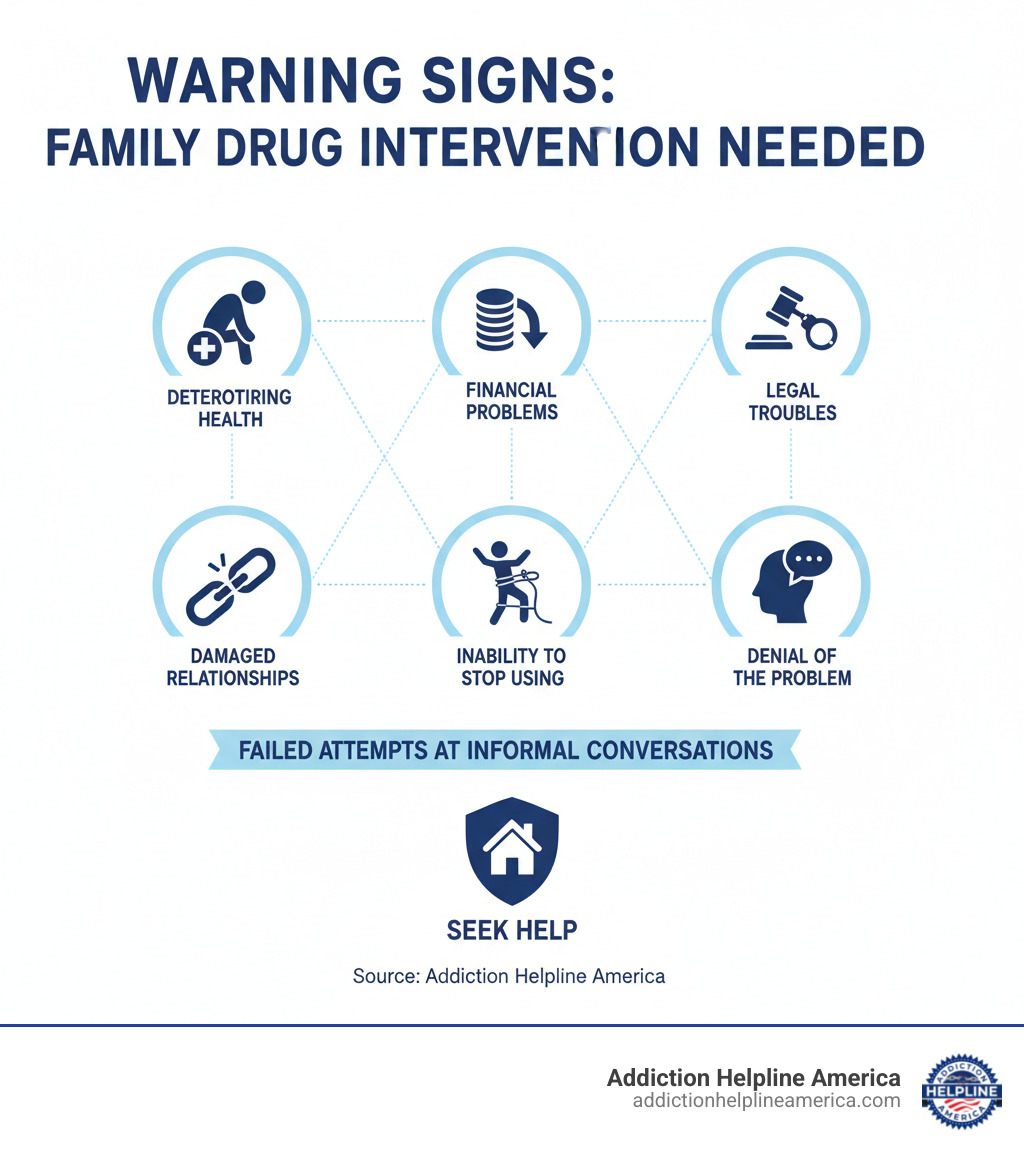
The signs you might need an intervention include persistent denial from your loved one, a lack of awareness about their impact on others, and escalating consequences like declining health, legal problems, and fractured relationships. When someone can’t connect these dots, a structured approach is necessary.
Here’s the good news: interventions work. Studies show a well-planned intervention can be up to 90% successful in convincing someone to accept help. If you’ve been wondering how to help a drug addict, this structured approach offers real hope.
When is an Intervention Necessary?
Many people wait for their loved one to hit “rock bottom,” but rock bottom is a feeling, not a fixed point. You don’t have to wait for things to get worse. Instead, look for persistent patterns of destructive behavior and negative consequences.
Consider a family drug intervention when you see deteriorating physical or mental health, like rapid weight changes, neglected hygiene, or worsening anxiety and depression tied to substance use.
Financial instability is another red flag. This includes unexplained debts, job loss, constant borrowing, or an inability to cover basic expenses.
Legal troubles like DUIs or arrests are clear signals that addiction has taken control. So are damaged relationships, marked by increased conflict, isolation, or an inability to maintain healthy connections.
When your loved one is failing to meet responsibilities at work, school, or home, or when they express a desire to quit but cannot do it on their own, an intervention is a vital step toward recovery.
What are the Different Approaches?
When planning a family drug intervention, it helps to know there are different approaches. The key is choosing what fits your family and your loved one’s personality.
The Johnson Model is a traditional approach where loved ones present their concerns and a pre-arranged treatment plan. The goal is to get the person to accept treatment on the spot.
ARISE is a gentler, more collaborative model that involves the whole family. It focuses on enrolling the person into treatment with less confrontation than the Johnson Model.
CRAFT (Community Reinforcement and Family Training) empowers family members with strategies to encourage change, even if the person is initially unwilling. It uses positive reinforcement, improved communication, and natural consequences to motivate treatment, with 65-75% of people eventually entering treatment.
Family Systemic Intervention views addiction within the whole family system. It encourages the entire family to seek help together and address patterns that may have enabled the addiction.
Working with a professional interventionist can make all the difference. An experienced guide can recommend the most suitable approach and help you steer the process. The Association of Intervention Specialists provides resources for finding qualified professionals who understand that family support and compassion are essential.
At Addiction Helpline America, we can help you choose the right approach and connect you with treatment programs that match your loved one’s needs.
How to Plan and Execute a Successful Intervention

Planning a family drug intervention can feel overwhelming, but a clear roadmap and professional guidance make it a structured act of love. This section outlines the step-by-step process to maximize the chances of a positive outcome.
Step 1: Assemble the Intervention Team
The heart of a successful intervention is the team. You are building a group of people who will present a unified message of love and concern. We recommend including four to six people who are significant in your loved one’s life, such as parents, siblings, a spouse, or a respected friend or mentor. The key is choosing people who can remain calm and supportive.
Just as important is knowing who not to include. Anyone with their own unmanaged mental health or substance abuse issues, or anyone who might become overly emotional or confrontational, should not participate. Their presence could derail the process.
Every team member must be committed to the plan and ready to follow through with boundaries. This unity prevents your loved one from using divide-and-conquer tactics.
The crucial role of a professional interventionist is clear here. An interventionist acts as an impartial guide, structuring the plan, leading the meeting, and managing emotions. They are essential if your loved one has a serious mental illness, a history of violence, or is abusing multiple substances. At Addiction Helpline America, we can help you find a qualified professional to support your family.
Step 2: Prepare for the Family Drug Intervention
Preparation is the cornerstone of an effective family drug intervention. This is a carefully orchestrated event designed to offer help and hope.
First, gather information on addiction. Research the specific substances your loved one is using and learn about addiction as a disease. This knowledge helps you speak from an informed place.
Next, research treatment options. You need a concrete plan. We can help you identify programs, such as inpatient vs. outpatient rehab, detox, and counseling. Having a pre-arranged slot in a facility shows that immediate help is available and removes barriers to acceptance.
Then comes the emotional work: writing impact letters. Each team member writes a heartfelt letter expressing love, concern, and specific examples of how the substance use has affected them. Focus on “I feel” statements (“I felt sad when…”) rather than accusations (“You always…”). This emphasizes the behavior’s impact, not an attack on their character.
As a team, you must set firm boundaries and consequences for what happens if your loved one refuses treatment. These are not punishments but protective measures. Examples include stopping financial support or asking them to move out. Everyone must commit to following through.
Rehearsing the intervention meeting is critical. Practice what each person will say and how you’ll respond to potential reactions. This ensures a smooth, calm delivery and helps manage emotions.
Finally, emotional preparation for the family is vital. An intervention is taxing. We encourage family members to seek their own support through therapy or groups like Al-Anon. Taking care of yourself is necessary to be a strong support system.
Step 3: Conduct the Meeting with Compassion
The day of the family drug intervention is here. Your preparation will now guide a compassionate, loving process.
Choose a neutral time and place. Hold the intervention in a private, neutral space where your loved one won’t feel cornered. Pick a time when they are likely to be sober and clear-headed. Ensuring the person is sober is non-negotiable. If they arrive intoxicated, it’s better to reschedule.
The flow of the meeting follows a careful structure. The interventionist or a designated family member begins with a brief, compassionate introduction. Then, each team member reads their impact letter, focusing on love and concern.

Following the letters, the pre-arranged treatment plan is presented as a tangible solution. Be ready with multiple options. Progress is progress, so be open to any commitment they are willing to make, even if it’s just seeing a counselor.
Maintain a calm, non-judgmental tone. Even if your loved one becomes defensive or angry, you must remain calm and loving. Avoid arguing or shaming. Addiction is a health problem, which reminds us to stay compassionate. Your body language should be open and inviting.
At the end, your loved one is asked for an immediate decision about accepting treatment. The goal is to get a commitment then and there. If they agree, the plan for immediate transport to the treatment facility is put into action.
Navigating the Aftermath: Outcomes and Next Steps

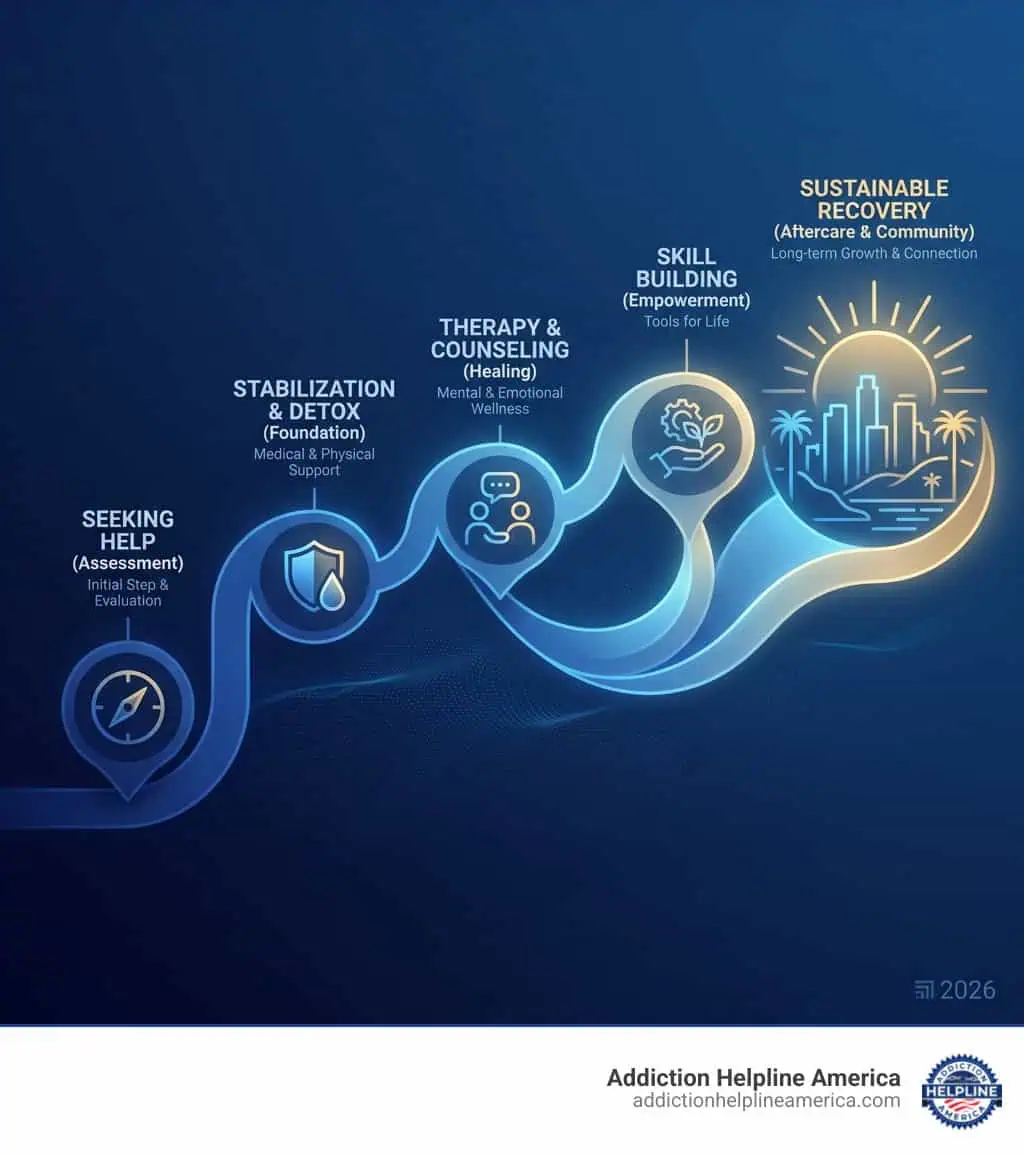
The family drug intervention is a pivotal moment, but it’s not the end of the journey. What happens next determines the path forward for everyone. This is where the real work of healing begins, not just for the person with the addiction, but for the entire family.
When Your Loved One Accepts Help
When your loved one agrees to treatment, it’s a moment of immense hope. But you must move quickly, as motivation can be fragile.
Immediate action is essential. This is why a treatment bed was arranged ahead of time. The goal is to get your loved one to the drug and substance abuse treatment facility as soon as possible, ideally within hours. We can help coordinate transport. The window of willingness can close quickly.
Once they enter treatment, your role shifts but doesn’t end. The family’s involvement during recovery is crucial for long-term success. This means staying engaged, communicating openly, and participating in family programming offered by the treatment center. Your support makes a significant difference in their recovery.
This is where family therapy becomes invaluable. Addiction impacts the entire household. Family counseling is highly effective in SUD treatment, helping to address relationship dynamics that may have contributed to the addiction. It provides a safe space to rebuild trust, improve communication, and develop healthier ways of relating. This shared healing process strengthens the foundation for lasting recovery.
What to Do if Your Loved One Refuses Help
It’s heartbreaking when your loved one says no. After so much preparation and emotional energy, a refusal feels devastating. But an intervention is not a failure, even when the answer is no.
The truth has been spoken. Your loved one has heard how their addiction affects those who love them. That message doesn’t disappear. It plants a seed for the future, and many people who initially refuse help later seek it, citing the intervention as the turning point.
Now comes the hardest part: following through with the boundaries and consequences you established. This isn’t about punishment; it’s about protecting your family and showing your loved one you are serious. If you agreed to stop providing money or ask them to move out, you must do it. This consistency is crucial.
Ending enabling behaviors is one of the most loving things you can do. When we shield our loved ones from the natural consequences of their addiction, we remove the motivation for change. Stepping back allows them to recognize they need help.
But you cannot pour from an empty cup. Family self-care is essential. Support groups like Al-Anon and Nar-Anon offer peer support from others who understand. Therapy provides professional guidance for coping with the stress and uncertainty. These resources help you maintain your well-being regardless of your loved one’s choices. Think of it as part of relapse prevention for your entire family system.
At Addiction Helpline America, we understand the aftermath of an intervention is overwhelming. We’re here to provide ongoing support and connect you with resources. Recovery is a journey for everyone, and you don’t have to walk it alone.
Frequently Asked Questions about Family Drug Interventions
We know that navigating interventions can bring up many questions. Here, we address some of the most common concerns families have.
What are the most common mistakes to avoid?
Even with the best intentions, certain missteps can undermine a family drug intervention. Avoiding these common mistakes significantly increases the chances of success:
- Spontaneity and lack of planning: A spur-of-the-moment intervention, without careful preparation, often devolves into arguments and will likely fail.
- Using shame, blame, or anger: An intervention is not the place to vent. Tactics based in shame or anger will push your loved one away. The focus must be on love and concern.
- Having too many people involved: Keep the team small and focused (4-6 people). Too many voices can be overwhelming and chaotic.
- Not having a specific treatment plan ready: A vague idea of “getting help” isn’t enough. You need a concrete, pre-arranged program ready for immediate entry.
- Failing to follow through on consequences: If you state boundaries for refusing treatment, you must follow through. Otherwise, your words lose their weight.
- Intervening when the person is intoxicated: This is a critical error. Your loved one must be sober to understand the conversation.
- Family members acting as interventionists without training: A family member is often too emotionally involved to lead effectively. A professional brings objectivity and expertise to de-escalate difficult situations.
Can I force my loved one into treatment?
This is a complex question. Every state has laws on involuntary commitment, which means sending someone to treatment against their will. These laws typically apply if a person is deemed a danger to themselves or others. You can find more information about Laws on involuntary commitment for your state.
However, opinions are mixed on the effectiveness of forced treatment for substance use disorders. Research suggests involuntary interventions may be less effective than voluntary ones. For instance, one study found that those involuntarily committed were more than twice as likely to die of an opioid-related overdose than those who went voluntarily.
Our approach focuses on motivation and voluntary acceptance. While involuntary commitment may be a last resort in extreme cases, the most sustainable recovery comes from an individual’s motivation to change. This is why our strategies focus on encouraging your loved one toward voluntary treatment, not coercion.
What resources are available for families?
You are not alone. Many organizations are dedicated to supporting families through this process. Here are some invaluable resources:
- Substance Abuse and Mental Health Services Administration (SAMHSA): This federal agency offers a wealth of information, treatment locators, and publications on substance use and mental health.
- National Alliance on Mental Illness (NAMI): NAMI provides advocacy, education, and support for individuals and families affected by mental illness, which often co-occurs with SUDs.
- Family Support Groups: Organizations like Al-Anon (for families of alcoholics) and Nar-Anon (for families of drug addicts) provide crucial peer support, helping you cope and find your own path to healing.
- Association of Intervention Specialists (AIS): AIS is a professional organization that can help you find a qualified, ethical interventionist in your area and provides educational resources.
- Addiction Helpline America: We connect individuals nationwide with addiction and mental health treatment centers. Our free, confidential guidance helps you find the right recovery program for your loved one and your family.
Your Family’s Path to Healing Begins Today
We know that considering a family drug intervention is one of the most difficult decisions you’ll face. It takes tremendous courage to seek help, and the fact you’re here shows how deeply you love your family member.
A compassionate, well-planned family drug intervention is a powerful act of love. It’s not about confrontation, but about creating a moment where your loved one can see their addiction’s impact and be offered an immediate path to healing. With preparation and professional guidance, interventions can be up to 90% successful in getting someone into treatment.
This journey is for your entire family’s healing. Addiction affects every relationship, creating stress and fear. Recovery offers everyone a chance to rebuild trust, improve communication, and find peace. Recovery is possible for everyone involved—not just your loved one, but for you and your whole family.
You don’t have to do this alone. At Addiction Helpline America, we’ve walked alongside hundreds of families in this exact situation. We provide free, confidential, personalized guidance to help you understand your options, connect with professional interventionists, and find the right program from our network of trusted treatment centers. We understand how to get addiction help, and we’re here to make this process manageable.
Your family’s path to healing begins with a single, courageous step. Let us help you turn your strength into action.
Contact us today. Your family deserves peace, healing, and hope for a brighter tomorrow.