What You Need to Know About Inpatient Alcohol Rehab Duration
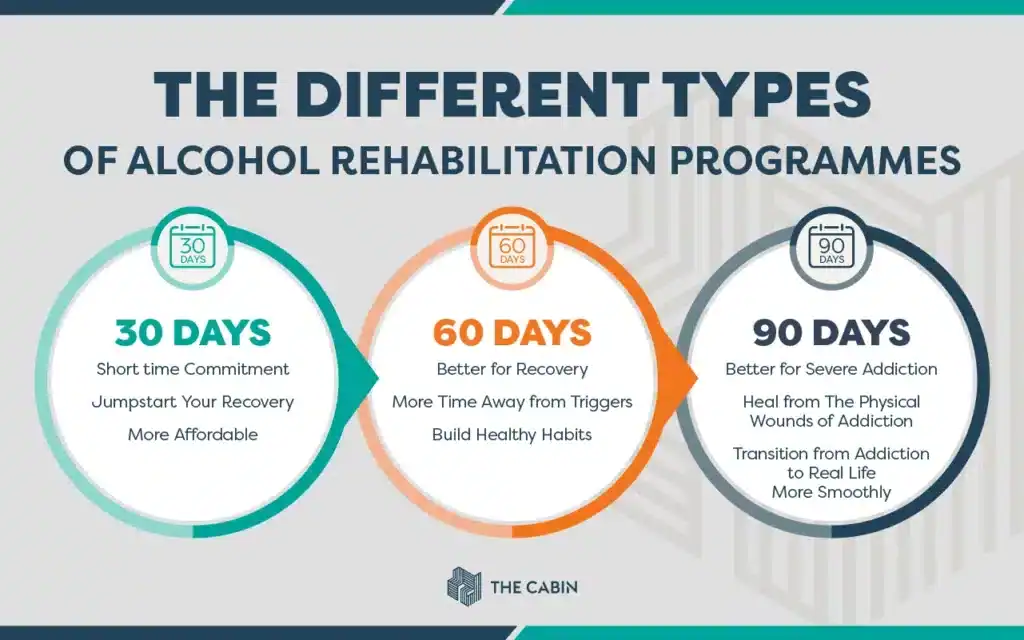
How long are inpatient alcohol rehab programs? Most inpatient programs range from 30 to 90 days, with some extending to six months or longer depending on individual needs.
Quick Answer:
- 30 days: Standard program for mild to moderate addiction
- 60 days: For deeper exploration and moderate cases
- 90+ days: Recommended for severe addiction and best long-term outcomes
- Medical detox: Typically 7-10 days, often preceding longer treatment
- Duration varies based on addiction severity, mental health, physical health, and insurance coverage
When considering treatment, one of the first questions is about time: How long will this take? It’s a practical concern, but the truth is there’s no one-size-fits-all answer. The right duration depends on your unique situation.
Research from the National Institute on Drug Abuse is clear: programs lasting fewer than 90 days have limited effectiveness. However, many people successfully start recovery with shorter programs. The key is matching the level of care to your specific needs.
Recovery isn’t just about time in a facility; it’s about building a foundation for long-term sobriety. Some need 30 days to detox and learn coping skills, while others require 90 days or more to address complex trauma or dual diagnosis conditions.
At Addiction Helpline America, we’ve guided thousands in finding the right treatment duration. Our experience with how long are inpatient alcohol rehab programs shows that the “right” length is the one that offers the best chance at lasting recovery.
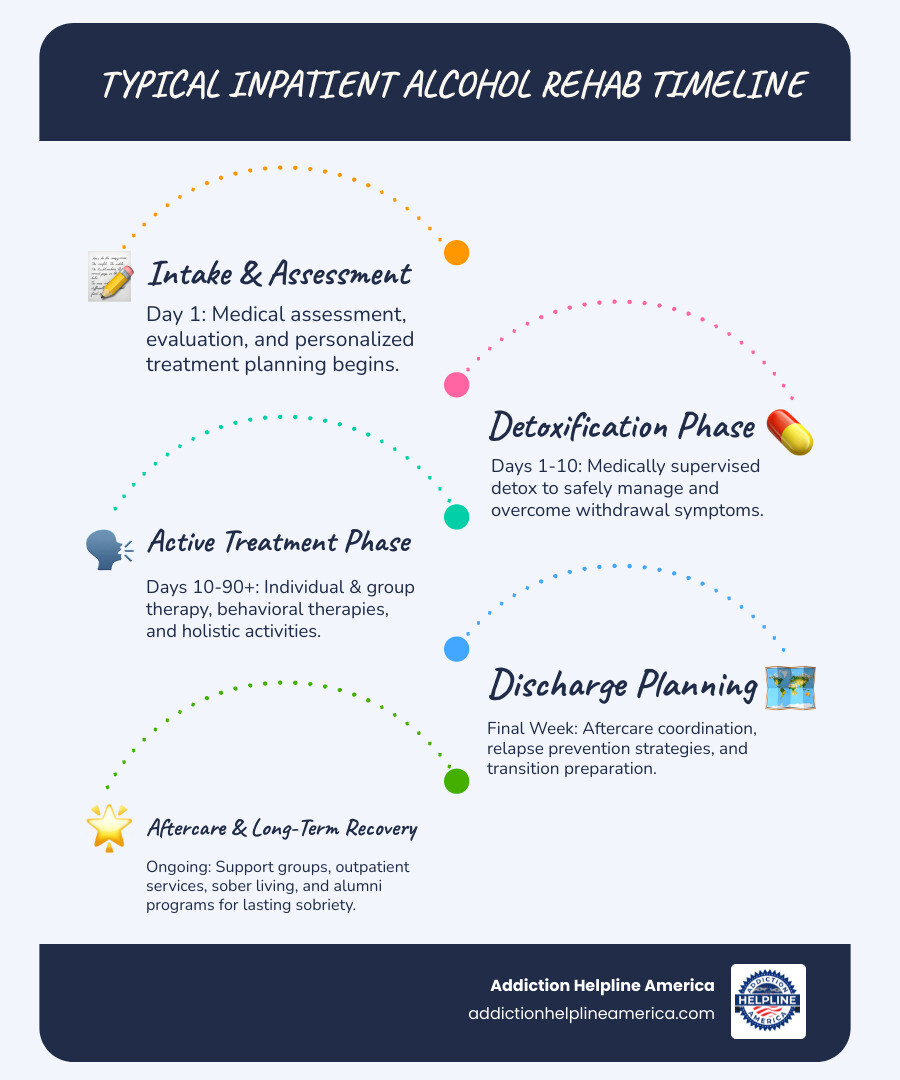
How long are inpatient alcohol rehab programs vocab explained:
Understanding the Standard Program Lengths
When people ask how long are inpatient alcohol rehab programs, they’re usually looking for a straightforward answer. While treatment centers offer standard program lengths—typically 30, 60, or 90 days—the real answer is more personal.
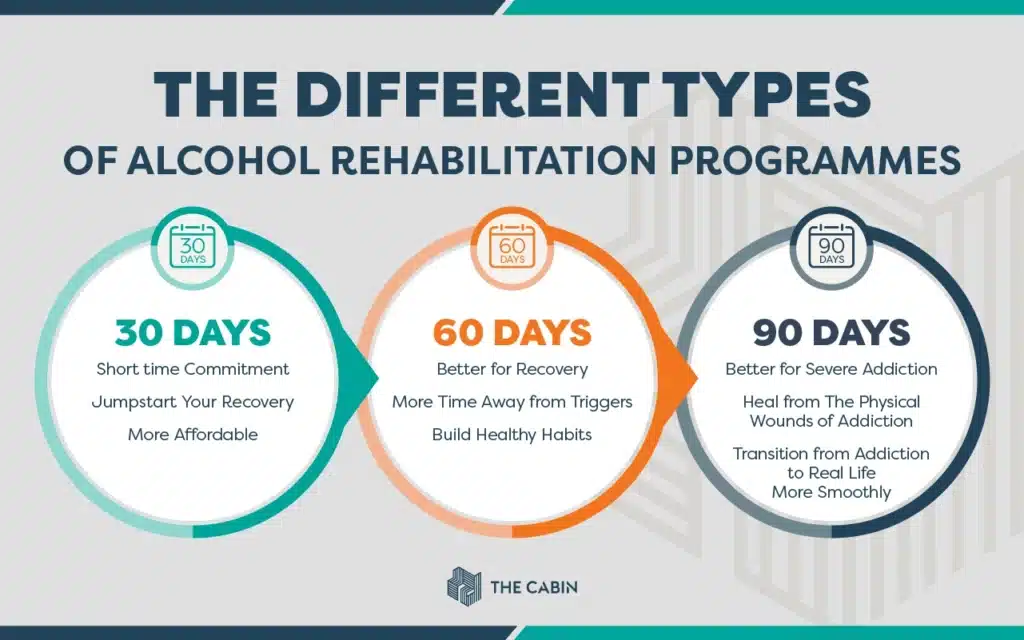
Think of these timeframes as starting points. A comprehensive clinical assessment at the beginning of treatment helps determine the right path by looking at your alcohol use history, physical and mental health, and support system. No matter the length, programs include core phases: detoxification, various forms of therapy, and relapse prevention training. Longer programs simply allow more time to work through each stage, address underlying issues, and solidify new habits.
30-Day Inpatient Rehab Programs
A 30-day program is a common starting point for recovery. It’s an intensive, focused period that provides a solid foundation, especially for those with mild to moderate alcohol use disorder or those balancing treatment with significant life obligations. The priority is stabilization. You’ll overcome withdrawal under medical supervision, learn essential coping skills, and begin to understand your addiction patterns. Being removed from daily triggers gives you space to focus entirely on healing.
While research on treatment principles shows longer stays often yield better outcomes, a 30-day program can be an effective jumpstart. Many use it as a launchpad, following up with outpatient care or extending their stay if more time is needed.
60-Day Inpatient Rehab Programs
If 30 days builds the foundation, 60 days allows for deeper work. This extra month is beneficial for individuals with moderate alcohol use disorder or those who have relapsed after shorter programs. The additional time allows for more intensive therapy sessions to explore the root causes of addiction, such as past trauma or anxiety. Sixty days gives you the space to work through these issues properly rather than just scratching the surface.
This length also allows for meaningful family involvement. Addiction impacts everyone, and two months provides time for family therapy to rebuild trust and educate loved ones on how to support your recovery. You’ll also have more time for solidifying new habits and practicing coping skills.
90-Day (and Longer) Inpatient Rehab Programs
Research is clear: for the best long-term success, 90 days is often considered the gold standard. The National Institute on Drug Abuse states that programs shorter than 90 days have limited effectiveness, and longer treatment periods consistently show better outcomes. This is supported by research on treatment duration.
Why three months? Lasting change takes time. This duration is crucial for people with severe or long-term addiction, those with dual diagnosis conditions (co-existing mental health disorders), or anyone who has relapsed after shorter programs. In 90 days, your brain begins to heal, and new neural pathways form. You move beyond just not drinking to building a strong foundation for sobriety that can withstand future challenges. You have time to work through complex issues, adjust medications if needed, and truly internalize the tools for lifelong recovery.
Some individuals benefit from even longer stays—six months or more—often transitioning to sober living environments. These extended programs offer the highest success rates, particularly for those with chronic addiction or limited support at home.
Key Factors That Determine Your Rehab Timeline
When people ask how long are inpatient alcohol rehab programs, they’re really asking how long it takes to heal. The answer is complex because everyone’s story is unique. Just as a broken bone’s healing time depends on the severity of the injury and your overall health, recovery from alcohol addiction is also highly individualized. This is why a professional assessment is the foundation of your treatment plan.
At Addiction Helpline America, our admissions navigators understand that effective treatment planning is about understanding your specific needs to build a lasting recovery.
How the Severity of Alcohol Addiction Impacts Length
The duration and intensity of your alcohol use play a major role in your treatment timeline. Someone with a long history of heavy drinking will likely need more time than someone with a more recent struggle. A clinical assessment will review your history of alcohol use, including how long and how much you’ve been drinking. Those with significant physical dependence and high tolerance levels have likely experienced deeper changes in brain chemistry that take more time to reverse.
Previous relapse history is also a key factor. A past relapse doesn’t mean failure; it indicates that a deeper approach is needed to build stronger defenses against addiction, which often requires a longer stay. Addiction is a chronic illness, and severe cases require a sufficient duration of care to give the brain and body the time they need to heal.
The Role of Co-Occurring Mental Health Disorders
It’s very common for alcohol addiction to co-exist with mental health conditions like anxiety, depression, trauma, or bipolar disorder. This is known as a dual diagnosis. Addiction and mental health issues often feed off each other, so treating one without the other is ineffective. Integrated treatment that addresses both conditions simultaneously is critical, and this takes time.
For example, many psychiatric medications need up to six weeks to become fully effective. A longer rehab stay allows the treatment team to monitor these medications and make adjustments. Time for psychiatric medications to work is a real factor that can’t be rushed. A 90-day program often provides the necessary time to address both the addiction and the underlying mental health concerns in a meaningful way.
Physical Health and the Need for Medical Detox
Alcohol withdrawal can be dangerous and even life-threatening. For anyone who is physically dependent, stopping suddenly can lead to severe alcohol withdrawal syndrome, with symptoms ranging from anxiety and insomnia to seizures and delirium tremens. The risks of severe withdrawal underscore why medical detoxification under 24/7 supervision is essential.
Detox typically takes 7 to 10 days and is only the first step. It stabilizes you physically so you can begin the real work of recovery. Furthermore, long-term alcohol use can cause other health problems like liver damage or heart conditions. A longer stay may be recommended to ensure you are physically stable and healthy enough to maintain sobriety after leaving treatment.
How Insurance and Finances Affect Program Duration
Cost is a real concern for most families. While the Affordable Care Act and other parity laws mean most insurance coverage includes substance use treatment, policies have limitations. Insurance companies use the term medical necessity to determine what they will cover, which is why a thorough clinical assessment is vital for obtaining approval.
Your policy may limit covered days, and you will likely have out-of-pocket costs like deductibles and co-pays. We know this can be overwhelming, but options exist for every budget. Beyond luxury programs, there are financing plans, state-funded programs, and other low-cost options. Understanding rehab costs can help you plan. At Addiction Helpline America, we work with people nationwide to find treatment that fits both clinical and financial needs. Cost should not be a barrier to getting help.
How Long Are Inpatient Alcohol Rehab Programs Compared to Other Levels of Care?
To understand how long are inpatient alcohol rehab programs, it helps to see them as one part of a larger continuum of care. Addiction treatment can be viewed as a ladder, with different levels of intensity, structure, and duration. Inpatient rehab is near the top, but many people use several rungs on their recovery journey, often stepping down in intensity as they grow stronger.
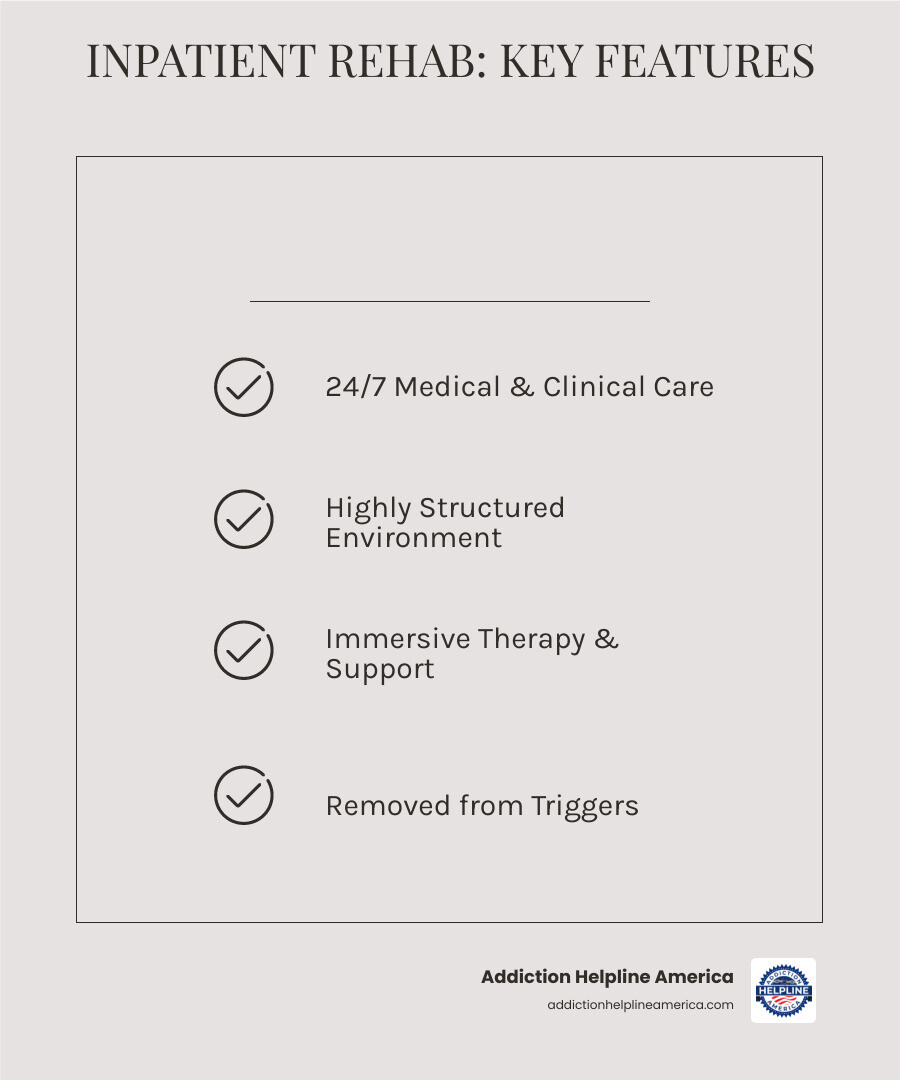
The key difference isn’t just time—it’s the environment and intensity of services. Let’s break down what makes inpatient treatment unique compared to other options.
Inpatient Rehab: Intensity and Structure
Inpatient rehab is the most comprehensive level of care. You live at the facility for 30 to 90 days or more, pausing your regular life to focus completely on healing. The power of this model lies in its 24/7 medical supervision and total immersion. Medical staff are always present to manage withdrawal complications or emotional distress, which can be lifesaving in the early stages.
The controlled environment removes you from triggers like stressful jobs or toxic relationships, allowing you to focus. Days are filled with immersive therapy, including individual and group counseling, educational workshops, and holistic activities. This intensive schedule is designed to rebuild your coping skills from the ground up. The peer support from living with others on the same journey creates powerful, life-changing bonds.
Other Levels of Care: Flexibility and Overall Timeline
While inpatient care offers intensity, other levels provide flexibility, allowing you to continue with work, school, or family life while receiving treatment.
Partial Hospitalization Programs (PHPs): Also called “day treatment,” PHPs are a step down from inpatient. You attend intensive, structured programming at a facility for 20+ hours per week but return home or to a sober living environment at night. This is ideal for those who have completed inpatient care or have a stable home life.
Intensive Outpatient Programs (IOPs): IOPs are less intensive, typically involving 9 to 20 hours of treatment per week, often during evenings. This allows you to maintain a job and other responsibilities while still receiving substantial therapeutic support and accountability.
Standard Outpatient Programs: Offering the most flexibility, these programs involve just a few hours of therapy per week. They are best for those with milder addiction or as a long-term maintenance plan after completing a higher level of care.
While an inpatient stay is a concentrated 30-90 days, outpatient treatment often continues for much longer—sometimes 3-6 months for an IOP or over a year for standard therapy. Many successful recovery journeys involve multiple levels of care in a “step-down” approach, gradually re-integrating into daily life while maintaining support. At Addiction Helpline America, we help you steer these options to find the path that works for you.
Beyond the Program: Aftercare and the Lifelong Recovery Journey
Completing an inpatient alcohol rehab program is a monumental achievement, but it’s not the finish line. Think of it as graduation day—the beginning of a new chapter, not the end of the story.
The skills you learn in treatment are your foundation, but the real work of staying sober happens after you leave. Aftercare and ongoing support are not optional extras; they are essential components of long-term sobriety. At Addiction Helpline America, we are committed to helping individuals find comprehensive care that extends far beyond an inpatient facility, ensuring they have the tools to steer life’s challenges without returning to alcohol.
Can Inpatient Rehab Be Extended if Needed?
Yes. Good treatment centers understand that recovery isn’t predictable, and flexibility is key. Your treatment plan is a living document. If you and your clinical team determine you need more time in a structured environment, your stay can often be extended. This decision is made during a clinical re-evaluation to assess your progress and readiness to step down to a lower level of care.
Sometimes, deeper issues like trauma emerge during treatment that require more time. In other cases, a co-occurring mental health condition may need further stabilization. Recognizing you need more time is a sign of self-awareness and commitment. If your home environment is not supportive of recovery, extending treatment or transitioning to a sober living facility can be a necessary step for success.
What Happens After Inpatient Rehab: The Role of Aftercare
The period after inpatient rehab is vulnerable. Old triggers and stressors will arise, which is why a personalized aftercare plan is so critical. This is your continuing care plan, the scaffolding that supports you as you build a new life.
Common components of a strong aftercare plan include:
- Support Groups: Programs like Alcoholics Anonymous or SMART Recovery provide invaluable peer support, accountability, and a sense of community with others who understand your journey.
- Individual Therapy: Continuing therapy helps you process new challenges and emotions, reinforcing healthy coping strategies with the help of a trusted guide.
- Outpatient Recovery Programs: Transitioning to an intensive outpatient (IOP) or standard outpatient program provides structured therapy while you reintegrate into your daily life.
- Alumni Programs: Many rehabs offer alumni networks that provide ongoing support, resources, and connection to a recovery community.
- Sober Living Homes: These provide a safe, substance-free transitional living environment with peer accountability, easing the return to independent living.
Recovery is a long-term process. Individuals can spend months or years in the maintenance stage of recovery, actively working to sustain sobriety. If a relapse occurs, it’s not a failure but a sign that your treatment plan may need adjustment. A robust aftercare plan is about building a life so meaningful that you don’t want to return to drinking. This is the real answer to how long are inpatient alcohol rehab programs—the formal program is just the start of a lifelong journey.
Conclusion
When you first asked how long are inpatient alcohol rehab programs, you likely wanted a simple number. The truth is, the right duration depends on your unique story—your addiction’s severity, your mental and physical health, and practical factors like insurance.
What we know with confidence is that time matters. Research from the National Institute on Drug Abuse shows that longer treatment periods, particularly 90 days or more, lead to better long-term outcomes. This isn’t an arbitrary rule; it’s about giving yourself enough time to heal, understand the roots of your addiction, and build lasting coping skills.
Whether you choose a 30, 60, or 90-day program, you are taking a courageous first step. Inpatient rehab provides an intensive, focused environment to begin healing, but it is just the beginning. The journey continues with strong aftercare, like support groups and ongoing therapy, which provides the tools to steer life’s challenges sober.
If you feel overwhelmed, you don’t have to figure this out alone. At Addiction Helpline America, we offer free, confidential guidance to help you find a program that fits your needs. We work with centers across all 50 states and understand that every path to recovery is different.
The most important decision isn’t the number of days, but the choice to start. Reaching out for help is the step that changes everything. Explore different types of treatment programs to find the right one for you or your loved one.
Your recovery journey is waiting. We’re here to help you take that first step.