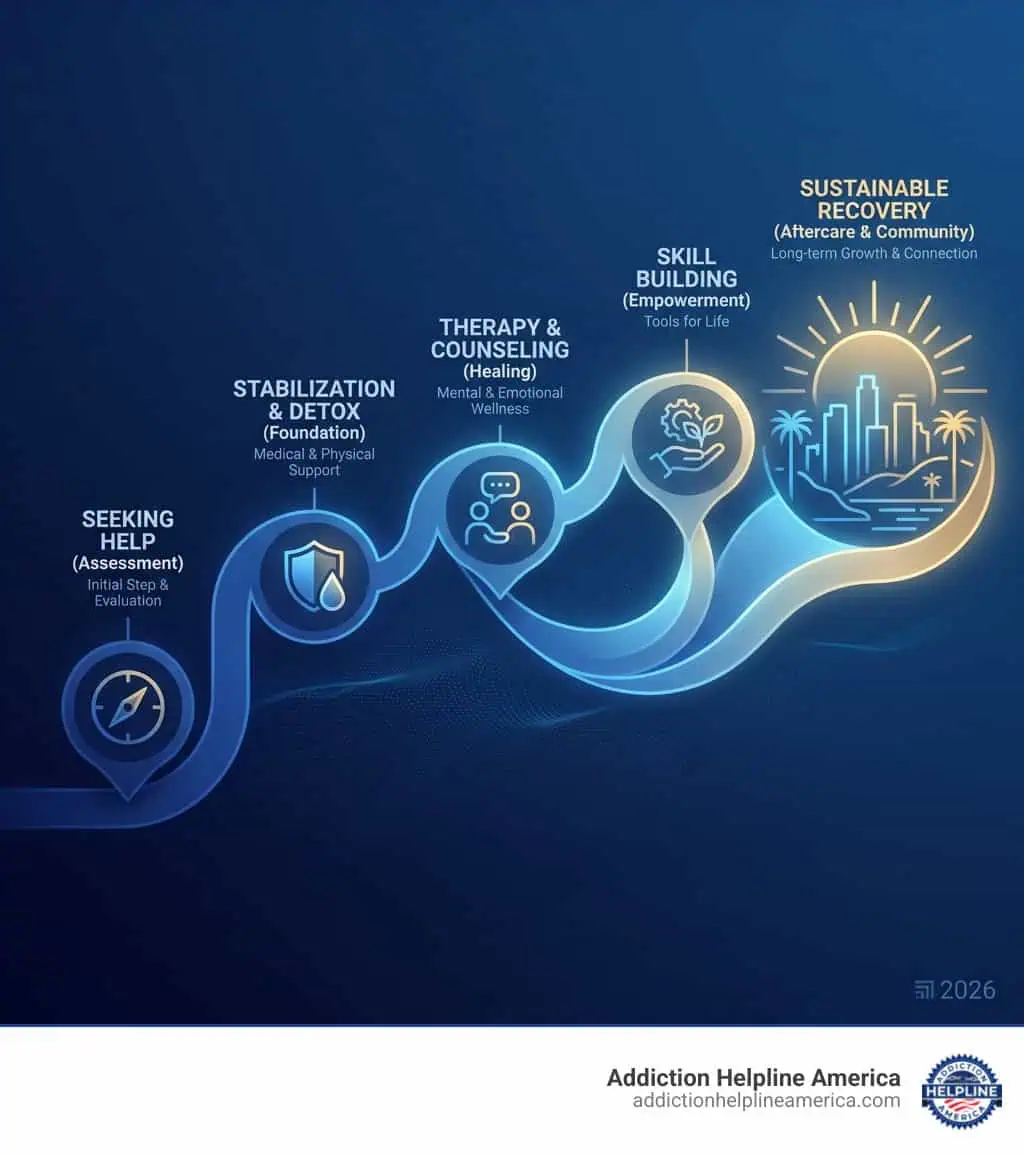

Understanding Intensive Outpatient Programs: A Path to Recovery
What is IOP? An Intensive Outpatient Program (IOP) is a structured treatment program for substance use and mental health conditions that allows you to live at home. It provides intensive therapy for 9 to 19 hours per week while you maintain daily responsibilities like work, school, or family care.
Quick Overview:
- Time Commitment: 9+ hours per week, over 3-5 days
- Duration: Typically 4-12 weeks
- Setting: Outpatient facility; you return home after sessions
- Treatment: Group and individual therapy, family counseling, medication management
- Best For: Individuals needing more than weekly therapy but not 24/7 supervision
- Cost: More affordable than inpatient care and often covered by insurance
IOPs bridge a critical gap in the recovery spectrum, offering a middle ground between intensive inpatient care and traditional weekly therapy. This model provides the structure needed for change while allowing you to practice new coping skills in your real-world environment. The number of facilities offering IOPs has grown to approximately 16,000, serving 1.4 million people annually, reflecting their effectiveness.
At Addiction Helpline America, we help individuals and families understand what is IOP and if it’s the right fit. Our specialists are available 24/7 to provide confidential support and connect you with programs that meet your needs.
Important what is IOP terms:
Understanding the Fundamentals: What is IOP?
If you’re wondering what is IOP, you’re not alone. An Intensive Outpatient Program—also called IOT—is a middle ground in mental health and addiction care. It’s a serious, structured program that doesn’t require you to live at a facility. You attend scheduled therapy sessions for several hours a day, three to five days per week, and then return home. This allows you to sleep in your own bed, see your family, and continue with work or school.
An IOP is designed for people who are medically stable but need more than weekly therapy to make progress. It fills the crucial gap between occasional counseling and round-the-clock residential care.
Conditions Treated by IOPs
Initially developed to help professionals with addiction, IOPs now treat a wide range of challenges.
Substance use disorders are a primary focus. Whether it’s alcohol, opioids, or other substances, an IOP provides the intensive support needed to build a foundation for lasting recovery while you maintain your daily life.
IOPs are also highly effective for mental health conditions. For depression or anxiety disorders that aren’t improving with weekly therapy, an IOP offers more frequent support and skill-building. They also treat eating disorders by providing an intensive therapeutic environment to address harmful behaviors and underlying emotional issues.
Crucially, IOPs excel at treating co-occurring disorders, where a mental health condition and substance use disorder exist simultaneously (e.g., depression and alcoholism). An integrated approach treats both conditions together, which is essential for long-term success.
The value of IOPs is clear from their growth. According to the National Survey of Substance Abuse Treatment Services, the number of facilities offering IOPs grew to approximately 16,000 by 2020, with 1.4 million people receiving care annually. This demonstrates that IOPs are a proven, effective treatment option.

IOP vs. Other Levels of Care
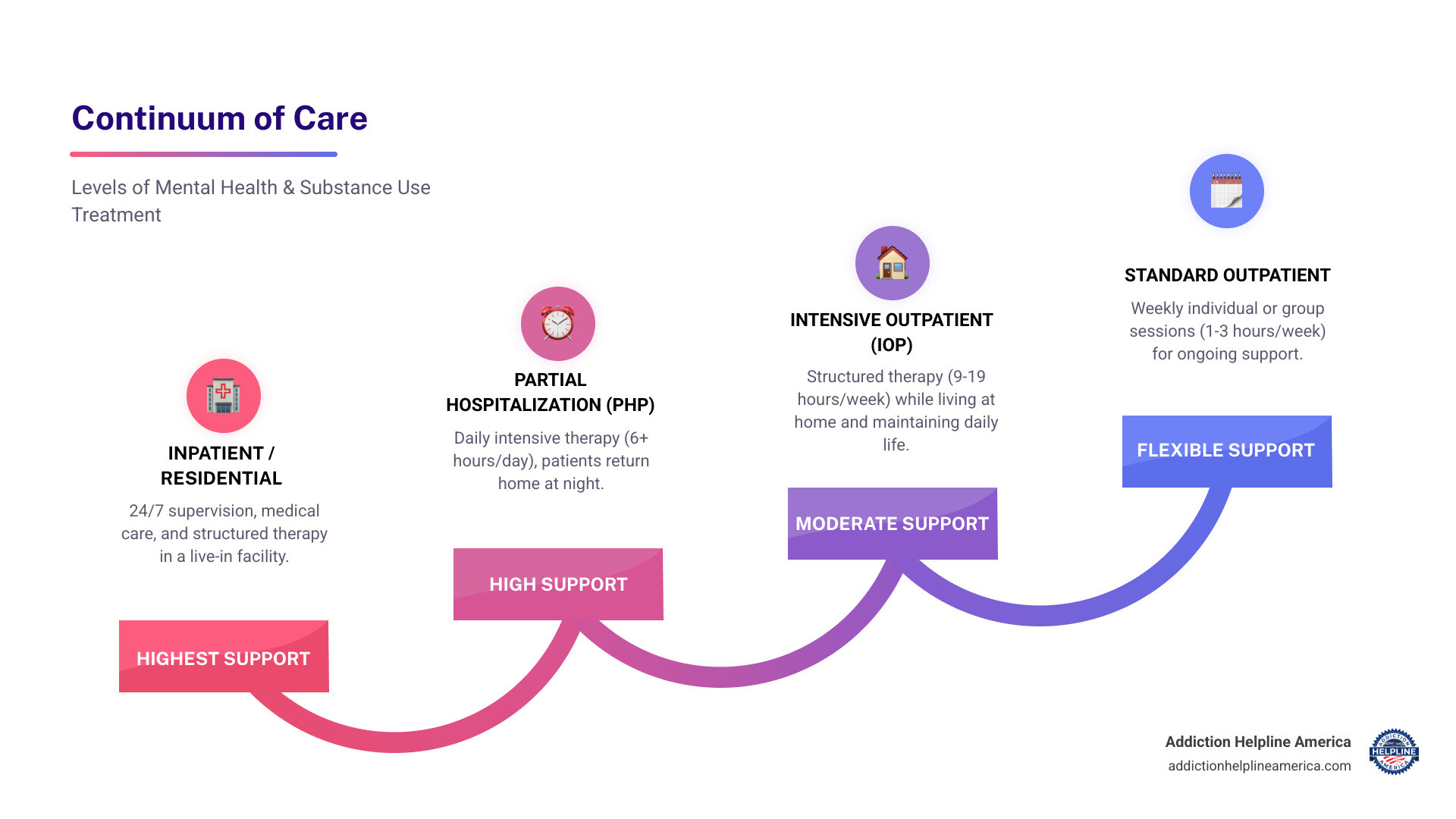
Understanding what is IOP involves seeing how it fits within the spectrum of care. The American Society of Addiction Medicine (ASAM) Criteria helps match individuals to the right level of care. IOPs are typically Level 2 treatment, offering significant support without 24/7 supervision.
Here’s how IOPs compare to other common treatment options:
| Feature | Inpatient/Residential Treatment | Partial Hospitalization Programs (PHP) | Intensive Outpatient Programs (IOP) | Standard Outpatient Therapy |
|---|---|---|---|---|
| Living Situation | Live at facility | Live at home | Live at home | Live at home |
| Time Commitment | 24/7 supervision | 5+ days/week, 4-6 hours/day | 3-5 days/week, 3-4 hours/day | 1-2 times/week, 1 hour/session |
| Weekly Hours | 168+ hours | 20-30+ hours | 9-19 hours | 1-3 hours |
| Intensity | Highest | High | Moderate-High | Low |
| Supervision | Round-the-clock | Daily clinical oversight | Regular clinical oversight | Periodic clinical oversight |
| Cost | Highest | High | Moderate | Lowest |
IOP vs. Inpatient/Residential Treatment
Inpatient treatment is the most intensive option, requiring you to live at the facility with 24/7 supervision. It’s ideal for those needing medical detox, facing severe symptoms, or lacking a safe home environment. In contrast, IOP allows you to live at home, integrating treatment with daily life. For medically stable individuals with a supportive home, research suggests IOPs can be as effective as inpatient care for substance use disorders, often at a significantly lower cost.
IOP vs. Partial Hospitalization Programs (PHP)
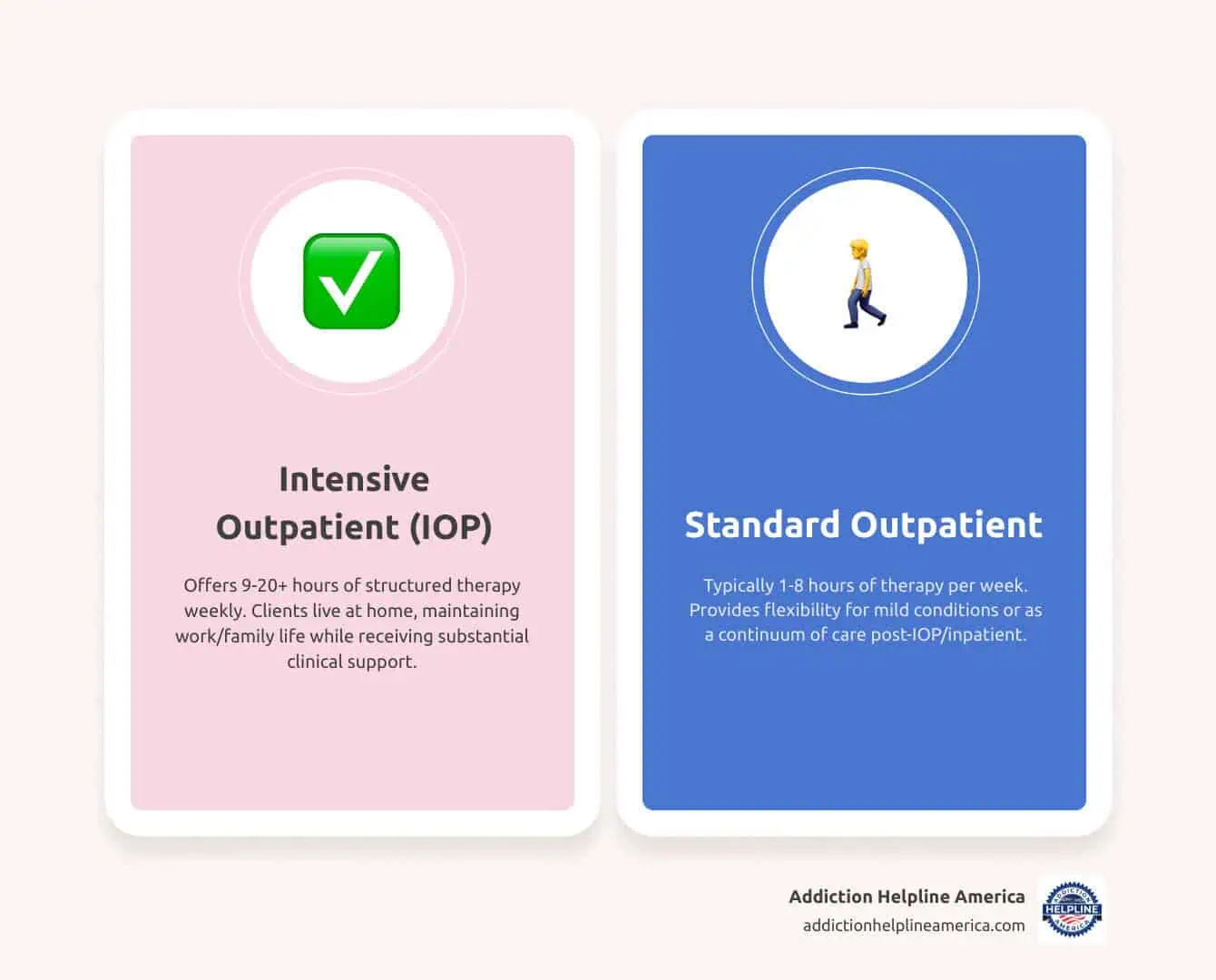
PHPs are a step-down from inpatient care, with a higher time commitment than IOPs (20+ hours/week vs. 9-19). Patients attend treatment for 4-6 hours daily, 5 or more days a week, but live at home. PHPs are for those needing substantial daily structure. IOP is a common step-down from PHP, offering more flexibility as you progress in recovery while still providing robust therapeutic support.



IOP vs. Traditional Outpatient Therapy
Traditional therapy typically involves weekly therapy sessions of one or two hours. This may not be enough for those with more acute substance use or mental health challenges. An IOP provides a crucial “step up” in care, requiring a minimum of 9 hours per week. This increased structure and group support offers more accountability and a consistent, recovery-focused routine that weekly therapy cannot provide.
At Addiction Helpline America, we help people steer these choices daily. Our team can answer your questions, verify insurance, and connect you with the right level of care for your situation. You don’t have to figure this out alone.
The Structure and Components of an IOP
An IOP provides a structured therapeutic environment that balances comprehensive care with the flexibility to manage your daily life. While every program is unique, the fundamentals of what is IOP remain consistent.
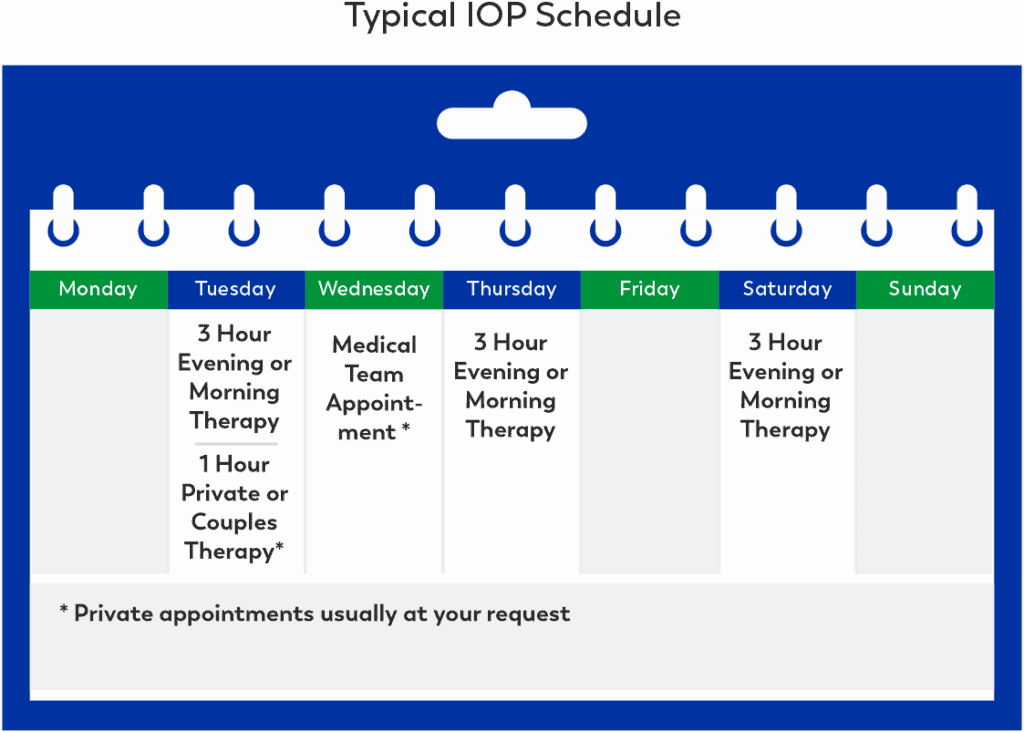
A Typical Week: Scheduling and Duration
Most IOPs require a minimum of 9 hours of treatment per week, often spread across three to five days in three-hour sessions. To accommodate work and family life, many programs offer flexible morning and evening sessions. The average program length is about 12 weeks, but this is custom to your individual progress and treatment goals. The focus is on building a strong foundation for lasting recovery, not adhering to a rigid timeline.
Core Components and Therapies
An IOP uses a multi-faceted approach to address recovery from all angles. Key components include:
- Group Therapy: The core of most IOPs, providing peer support and a safe space to share experiences and practice new skills.
- Individual Counseling: Private sessions to address personal issues, trauma, and specific recovery goals.
- Family Therapy: Helps repair relationships, improve communication, and create a supportive home environment.
- Psychoeducation: Teaches the science behind addiction and mental health, empowering you with knowledge.
- Coping Skills and Relapse Prevention: Practical training on managing triggers, cravings, and high-risk situations.
- Life Skills Training: Focuses on practical areas like stress management, communication, and problem-solving.
- Medication Management: A psychiatrist or nurse practitioner oversees any necessary medications.
- Case Management: Provides logistical support with housing, employment, or legal issues.
Common Therapeutic Modalities Used in IOP
IOPs use evidence-based therapies proven to be effective. Common approaches include:
- Cognitive Behavioral Therapy (CBT): Helps identify and change negative thought patterns that drive destructive behaviors.
- Dialectical Behavior Therapy (DBT): Teaches skills for mindfulness, distress tolerance, emotion regulation, and interpersonal effectiveness.
- Motivational Interviewing (MI): A client-centered approach that helps you explore and strengthen your own motivation for change.
- 12-Step Facilitation: Introduces the principles and peer support structure of programs like AA and NA.
- The Matrix Model: A structured, multi-component approach often used for stimulant use disorders.
- Complementary Therapies: Many programs also include mindfulness, yoga, or art therapy to support overall well-being.
For more details, SAMHSA’s resource on Clinical Issues in Intensive Outpatient Treatment offers comprehensive guidance.
Who Is a Good Candidate for an IOP?
Choosing the right treatment is a critical decision. At Addiction Helpline America, we help guide you to the best fit. IOPs are a powerful option for those who need significant support but not 24/7 supervision. They can serve as a step-down from residential care or a step-up from weekly therapy.

Identifying the Ideal Candidate for what is IOP
A professional assessment determines if what is IOP is right for you, but a good candidate generally meets the following criteria:
- Is medically stable: Does not require medical detoxification or 24/7 medical monitoring.
- Has a supportive home environment: A safe, substance-free living situation is crucial for success.
- Is motivated to participate: Willing to commit to regular attendance and engage actively in therapy.
- Needs more than weekly therapy: Finds that traditional outpatient counseling is not enough to manage symptoms or prevent relapse.
- Can function independently: Able to manage daily life outside of treatment hours without constant supervision.
- Is transitioning from a higher level of care: An IOP is an excellent step-down from inpatient or residential treatment, providing a bridge back to daily life.
An IOP allows you to maintain responsibilities like work or school, which is not only convenient but also therapeutic, as you can apply new skills in real time.
The Admission and Insurance Process for what is IOP
Getting started is straightforward. The process typically involves:
- Initial Phone Call: A confidential conversation with admissions staff to discuss your situation and needs.
- Clinical Evaluation: A comprehensive assessment with a mental health professional to determine the appropriate level of care and create a personalized treatment plan.
- Insurance Verification: Our admissions team are experts at navigating insurance. We will verify your benefits, explain your coverage, and clarify any out-of-pocket costs. IOPs are generally much more cost-effective than inpatient treatment and are covered by many insurance plans.
We want you focused on recovery, not paperwork. If you want to learn more about your options, visit our Intensive Outpatient Program Complete Guide. Our team is available 24/7 to help you take the first step.
The Journey Through and Beyond IOP
Completing an IOP is a major milestone, but recovery is an ongoing journey. An IOP provides the training ground for lasting change, and the real work begins as you apply these new skills to your daily life.
Key Benefits of Participating in an IOP
When people ask what is IOP and why it works, the answer often lies in its unique balance of structure and freedom. Key benefits include:
- Flexibility: You can maintain your work, school, and family commitments while receiving intensive treatment.
- Real-World Application: You immediately practice new coping skills in your actual life, making them more likely to stick.
- Cost-Effectiveness: IOPs provide intensive care at a fraction of the cost of residential programs and are often covered by insurance.
- Peer Support: Connecting with others who share similar struggles creates a powerful, non-judgmental support network.
- Structured Accountability: Regular sessions provide a recovery-focused rhythm and guardrails against relapse, while still promoting autonomy.
The Role of Family Involvement
Recovery impacts the entire family. Many IOPs include family members in the healing process through education programs and therapy sessions. This helps improve communication, repair damaged relationships, and create a home environment that supports long-term recovery by replacing judgment with compassion and understanding.
Life After IOP: Aftercare and Continued Support
Sustainable recovery requires ongoing support. Before you finish your program, you’ll work with your team to create a comprehensive step-down plan. This aftercare plan is your roadmap for the next phase and typically includes:
- Transitioning to outpatient therapy (e.g., weekly sessions).
- Joining support groups like Alcoholics Anonymous (AA), Narcotics Anonymous (NA), or SMART Recovery.
- Participating in alumni programs to stay connected to your treatment community.
- Utilizing a relapse prevention strategy that identifies your triggers, warning signs, and a clear plan of action for when you’re struggling.
At Addiction Helpline America, we know that finding the right treatment is just the beginning. Our team is available 24/7 to help you explore various types of treatment programs and understand your options for continued support.
Frequently Asked Questions about IOPs
It’s natural to have questions when considering treatment. Here are answers to some of the most common questions we hear about IOPs.
How long does an IOP typically last?
The duration is custom to your individual needs and progress. While most programs average between 4 to 12 weeks, some may be longer, especially for those with co-occurring disorders. The goal is to ensure you meet your treatment goals and feel prepared for your next steps in recovery, not to rush you through a fixed timeline.
Can I work or go to school while in an IOP?
Yes. This is a primary advantage of an IOP. Programs are structured with morning or evening sessions to accommodate work, school, and family responsibilities. This flexibility makes intensive treatment accessible to those who cannot step away from their lives completely.
Is IOP as effective as inpatient treatment?
For many people, yes. Research shows that for individuals who are medically stable and have a supportive home environment, IOP outcomes are comparable to inpatient treatment. An IOP provides significant therapeutic intensity (9-19 hours per week). However, those needing 24/7 medical supervision or detox should start with a higher level of care. A clinical assessment is the best way to determine the right fit for you.
Our team at Addiction Helpline America can help you understand which level of care will give you the best chance at lasting recovery. Call us anytime for a confidential conversation.
Conclusion
You now have a clear picture of what is IOP and how it serves as a flexible, effective bridge to recovery. An Intensive Outpatient Program provides the structure and therapeutic intensity needed for real change, while allowing you to continue with your daily life. You learn to steer challenges in your real-world environment, building a strong foundation for a healthier future.
Whether you’re stepping down from a higher level of care or need more support than weekly therapy can offer, an IOP provides a balanced, evidence-based approach. The skills you learn and the connections you make become the cornerstones of a lasting recovery.
At Addiction Helpline America, we understand that taking the first step is the hardest part. Our compassionate specialists are available 24/7 to provide free, confidential guidance. We will help you understand your options, verify your insurance, and connect you with a program that fits your unique needs. You don’t have to do this alone.
Explore various types of treatment programs on our website, or call us today. Your journey to a healthier life can start with a single conversation.