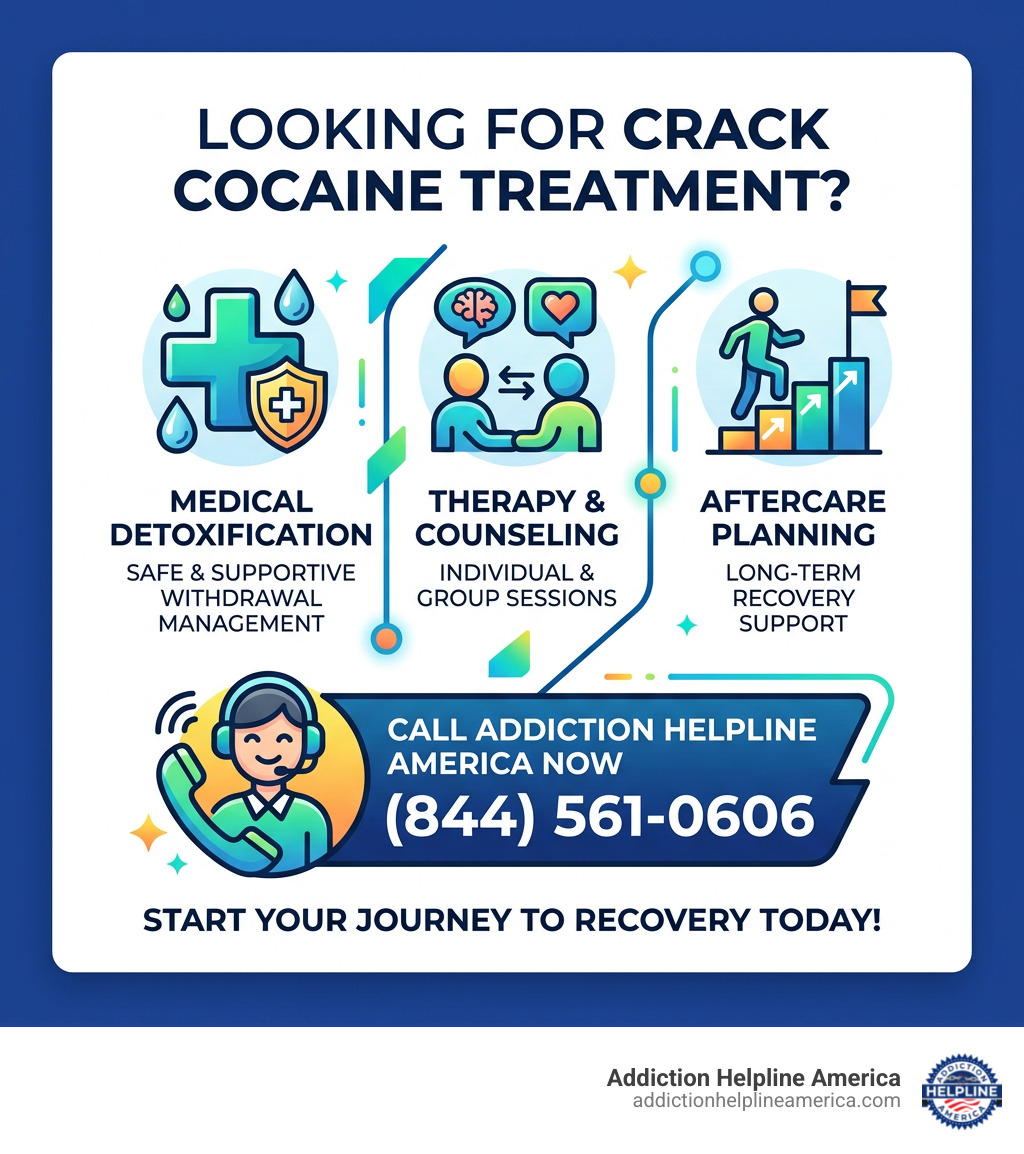
Crack cocaine treatment programs are structured recovery plans that help people break free from crack addiction through medical detox, behavioral therapy, and ongoing aftercare support.
Here is a quick overview of the main treatment options:
| Treatment Level | What It Is | Best For |
|---|---|---|
| Medical Detox | 24/7 supervised withdrawal management | First step for all users |
| Inpatient Rehab | Live-in treatment, typically 30-90+ days | Severe addiction, unstable home life |
| PHP (Partial Hospitalization) | Intensive daily treatment, return home at night | Moderate to severe addiction |
| IOP (Intensive Outpatient) | Structured sessions 10-15 hours/week | Moderate addiction, strong support system |
| Aftercare | Ongoing counseling, support groups, sober living | Everyone post-treatment |
Crack cocaine is one of the most addictive substances in existence. It delivers an intense but short-lived rush of dopamine that can last as little as 5 to 10 minutes — and that rapid cycle of highs and crashes is exactly what makes addiction develop so fast. According to the CDC, cocaine overdose deaths more than doubled between 2011 and 2016, and the numbers have continued to climb since then. Between 2015 and 2017 alone, cocaine overdose deaths rose from roughly 6,000 to 14,000 per year. Today, an estimated 1 million Americans are living with a cocaine use disorder.
Dr. Lawrence Weinstein, Chief Medical Officer at American Addiction Centers, notes: “The physiological and psychological grip of crack cocaine requires a comprehensive approach that addresses both the brain’s reward circuitry and the patient’s environmental triggers.”
The good news: recovery is possible — and professional treatment dramatically improves the odds.
At Addiction Helpline America, we connect individuals and families with trusted crack cocaine treatment programs across the country, 24 hours a day, completely free and confidentially. Our team of addiction specialists and recovery advocates has helped thousands of people find the right level of care for their unique situation.
Crack cocaine is the smokable form of powder cocaine. It is made by dissolving powder cocaine in a mixture of water and baking soda (sodium bicarbonate) or ammonia. This mixture is boiled until a solid substance forms, which is then cooled and broken into small “rocks.”
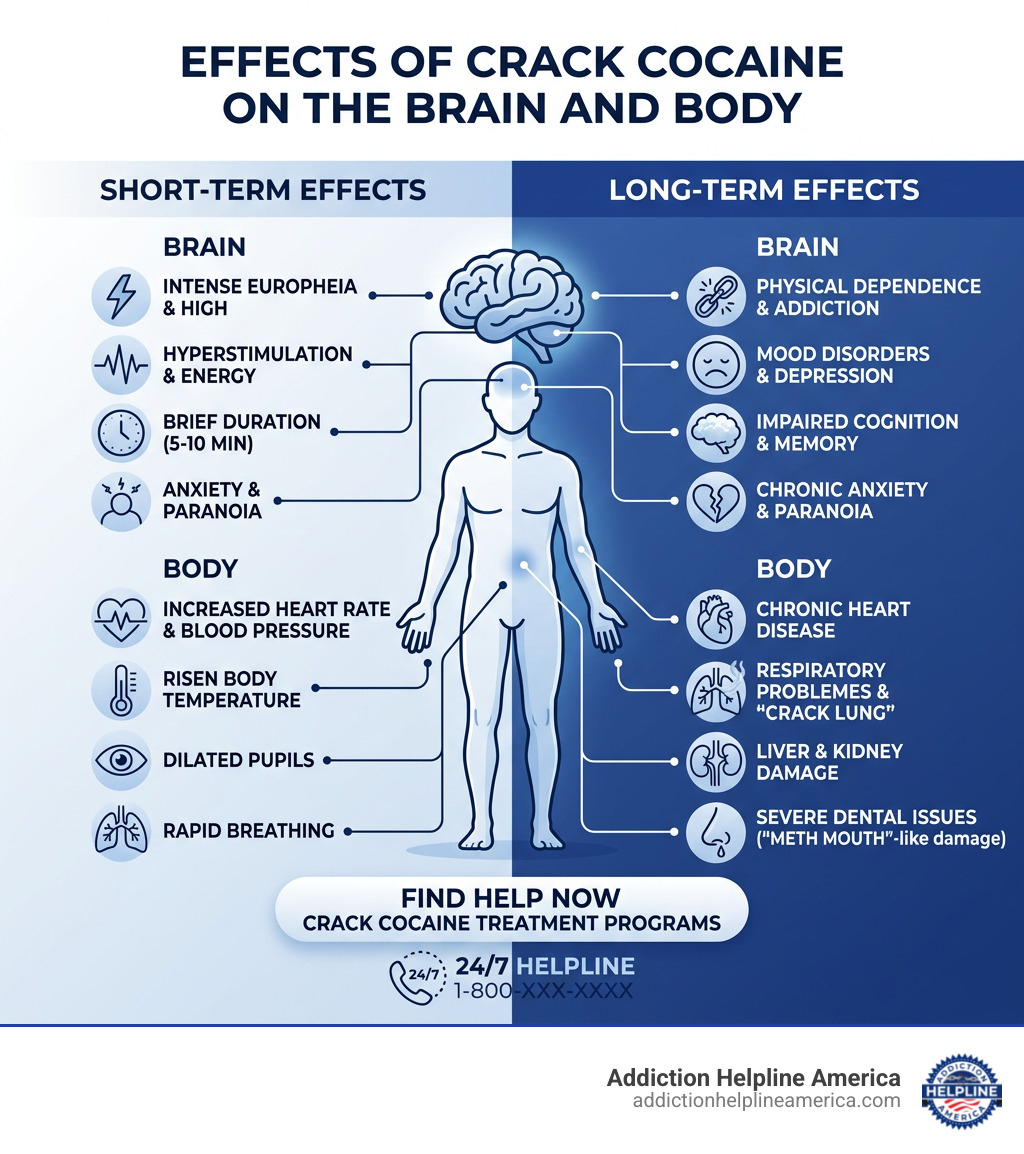
Because crack is inhaled, it reaches the brain much faster than snorted powder cocaine. This results in a near-instantaneous surge of dopamine in the brain’s reward center. However, the euphoria is fleeting, usually disappearing within 5 to 10 minutes. This creates a “binge and crash” cycle where users smoke repeatedly in a short period to maintain the high, leading to a rapid development of physical and psychological dependence.
The health risks associated with crack use are severe and multifaceted. Beyond the immediate risk of overdose, chronic use leads to significant Health outcomes associated with crack-cocaine use. One of the most specific complications is “crack lung,” a series of pulmonary issues including chest pain, breathing difficulties, and high fever caused by inhaling the caustic byproducts of the drug.
Cardiac complications are also a major concern. The American Heart Association warns that crack causes the heart rate and blood pressure to skyrocket while simultaneously constricting the blood vessels. This “perfect storm” can lead to heart attacks, arrhythmias, and strokes, even in young users with no prior history of heart disease. Behavioral indicators of addiction often include extreme mood swings, manic energy followed by deep depression, and a total neglect of personal or professional responsibilities.
While they share the same base chemical, the difference between powder and crack cocaine lies in their production, administration, and intensity. Powder cocaine is a hydrochloride salt that is typically snorted or dissolved and injected. Crack is the “freebase” form that has been processed to have a lower melting point, allowing it to be smoked.
The intensity of crack is significantly higher because the lungs provide a massive surface area for immediate absorption into the bloodstream. This leads to a more rapid addiction cycle compared to snorting. Furthermore, street purity is a major variable. In recent years, a terrifying trend has emerged: crack cocaine is increasingly found contaminated with fentanyl. This synthetic opioid is so potent that even a microscopic amount can lead to a fatal overdose.
Clinically, crack addiction is diagnosed as a “Stimulant Use Disorder.” We look for specific signs of drug addiction when helping families identify if a loved one needs help. Physical signs include dilated pupils, a chronic runny nose (if snorting is also involved), significant weight loss due to suppressed appetite, and tremors.
Behaviorally, the signs are often more telling. You might notice:
Choosing between various crack cocaine treatment programs can feel overwhelming, but understanding the levels of care is the first step. For most, the journey begins with an assessment to determine the severity of the addiction and whether dual diagnosis treatment for co-occurring mental health issues (like depression or PTSD) is required.
Most successful recoveries involve a “continuum of care,” moving from the most intensive environment to more independent living. Inpatient rehab is often the gold standard for crack addiction because it removes the individual from the environment where they used drugs, providing 24/7 supervision and support during the most vulnerable weeks of early sobriety.
If you are looking for a facility near you, our 30-day rehab near me guide provides a comprehensive look at how to select a program that fits your geographic and clinical needs.
When evaluating a recovery center, we recommend looking beyond the amenities. While a nice setting helps, the following metrics are more critical for long-term success:
The first 72 hours after stopping crack use are often the hardest. This is known as the “crash.” According to SAMHSA’s TIP 45, while crack withdrawal is rarely life-threatening on its own, the psychological toll is immense. Research on the Clinical Management of Psychostimulant Withdrawal notes that symptoms include profound fatigue, irritability, intense drug cravings, and severe depression that can lead to suicidal ideation.
Medical detox provides a safe, monitored environment where clinicians can use medications to manage these symptoms. While there isn’t a “replacement” drug for crack (like methadone is for heroin), doctors can prescribe non-addictive sleep aids, anti-anxiety medications, or antidepressants to help stabilize the brain’s chemistry. This stabilization is vital; without it, the intense cravings usually drive the person back to use before they can even start therapy.
Because crack addiction is so heavily rooted in the brain’s reward system, behavioral therapies are the cornerstone of treatment. At Addiction Helpline America, we emphasize the importance of Cocaine Addiction Treatment that utilizes evidence-based methods.
One of the most effective strategies is Contingency Management (CM). The National Institute on Drug Abuse (NIDA) confirms that CM, which involves giving patients tangible rewards for drug-free urine tests, is highly effective. In clinical trials, 47% of patients receiving voucher-based reinforcement achieved sustained abstinence for at least two weeks, compared to only 6% in control groups.
Cognitive Behavioral Therapy (CBT) is another essential tool. It helps patients identify the “triggers” (people, places, or feelings) that lead to use and teaches them new coping mechanisms. A Comparative efficacy of psychosocial interventions study found that combining CM with CBT provides the best balance of short-term abstinence and long-term relapse prevention.
Currently, there are no FDA-approved medications specifically for cocaine or crack addiction. However, medical research is making significant strides. Research on Topiramate for cocaine dependence has shown promise; in one trial, 20% of patients using this medication achieved three weeks of continuous abstinence compared to 6% in the placebo group.
Other medications being studied include:
Recovery doesn’t end when you leave a treatment center. Many patients transition to an intensive outpatient program to maintain structure. Relapse prevention involves a total lifestyle overhaul, including identifying high-risk situations and having a plan to navigate them.
We encourage our clients to adopt healthy routines, such as:
There is no “one-size-fits-all” answer, but research suggests that longer durations lead to better outcomes. Medical detox usually lasts 3 to 7 days. Following detox, we typically recommend a 90-day program, which may include 30 days of inpatient treatment followed by 60 days of PHP or IOP. For severe or long-term addictions, some individuals stay in sober living near me for six months to a year to ensure they have a solid foundation.
As mentioned, there are currently no medications specifically FDA-approved to treat crack addiction. Treatment relies primarily on psychosocial interventions like CBT and Contingency Management. However, doctors often use “off-label” medications to treat the symptoms of withdrawal or co-occurring disorders like depression and anxiety, which can indirectly help a person stay sober.
Supporting a loved one is a delicate balance. We recommend:
The grip of crack cocaine is undeniably strong, but it is not unbreakable. With the right combination of medical detox, evidence-based therapy, and long-term support, thousands of people reclaim their lives every year. The rise in overdose deaths is a stark reminder of the dangers of delay, but the advancements in crack cocaine treatment programs offer more hope today than ever before.
At Addiction Helpline America, we are here to help you navigate these choices. Whether you are looking for a high-intensity inpatient program or need addiction treatment resources on how to start the conversation with a loved one, our services are free, confidential, and available 24/7. You don’t have to face this journey alone.
If you or someone you love is struggling, call us today. A new beginning is possible, and it starts with a single, courageous step toward help.